Asian Federation of Exhibition and Convention Associations' (AFECA) honorary president, Edward Liu, details how the federation united Asia's business events industry from its 2005 start, and the success of its A20 initiative
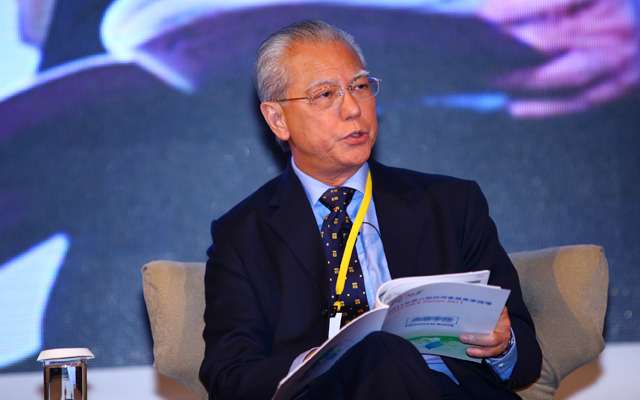
This year marks the 20th anniversary of AFECA. Looking back to its beginnings in 2005, how did the association come about?
AFECA was founded in 2005. At that time, Dylis Yong, who was then president of SACEOS in Singapore, proposed the idea of forming a federation for the Asian business events community. We supported her idea because we believed it was the right move for Asia.
She reached out to associations from six other economies – Indonesia, Malaysia, the Philippines, China, Taiwan, and Japan – and together with Singapore, these seven associations became the founding members of AFECA. Yong served as the founding president, and two years later, in 2007, I succeeded her as president.
Since then, AFECA has grown steadily. Every year, we have added new members and expanded across Asia. I personally helped to connect with China, as my company was involved in organising events there. This led to partnerships with CCPIT and the creation of the China Expo Forum for International Cooperation, which also celebrates its 20th anniversary this year.
What does this 20-year milestone represent for both AFECA, and you on a personal note?
For me, this anniversary is not just a reflection of longevity – it’s about resilience, growth, and collaboration. Over the years, we’ve gone through challenges, but AFECA has continued to bring committed members from across China, India, and South-east Asia together.
It’s about celebrating what we’ve built: a regional platform that connects associations, governments, and industry professionals across 19 (soon 20) economies under one shared vision.
AFECA’s A20 concept has become one of its key initiatives in recent years. Can you explain what it stands for and what it aims to achieve?
A20 stands for Asia 20. It was introduced by our current president, Vincent Lim, about three years ago. The idea is to represent the 20 economies in Asia that contribute to the business events industry. Although we currently have 19 members, we are working to bring in one more to complete the “20”.
A20 is built on two principles – cooperation and collaboration. Each host country brings its own strengths, and together, we showcase Asia’s diversity and potential. This year, A20 was organised jointly with ASPERAPI in Indonesia, alongside the Indonesia Business Event Forum. I think it has been a great success and a strong example of regional partnership in action.
AFECA is also launching its inaugural Annual Awards this year. What inspired this initiative?
Since it’s our 20th anniversary, we wanted to create something meaningful, and honour the pioneers and visionaries who helped shape Asia’s business events industry. Many of these individuals and organisations have been working for more than 20 years, building conferences, exhibitions, and venues that drive economic development.
So we established the AFECA Annual Awards with five core categories (including) Outstanding leaders in conventions, Outstanding contributions to exhibitions, Excellence in contracting and business services, Leadership in venue management, and Visionary contributions to the overall business events ecosystem.
We decided to honour 20 individuals this year – one for each year of AFECA’s journey. Seven of them represent our founding associations, two are past presidents (myself and Yeh), and the remaining 11 were selected through an international jury process.
Our jury includes representatives from UFI, IAEE, ICCA, AFECA’s advisory council, and media partners like TTG Asia Media. Together, they reviewed nominations and selected the honourees. These pioneers are then formally inducted into the AFECA Hall of Fame.
How do you see the role of governments across Asia evolving in supporting the business events industry post-pandemic?
The pandemic was a very difficult period for everyone globally, not just in Asia. But one key reason our industry survived was the strong government support across many Asian economies.
In Singapore, for example, the government subsidised part of our companies’ salaries, which helped us sustain operations for three years. We also saw great examples of public-private partnerships, where the private sector and government worked hand-in-hand to rebuild the industry.
Today, many governments not only provide financial support but also help stimulate demand by bringing buyers and organisers together. Across Indonesia, Singapore, Malaysia, Taiwan, Hong Kong, and the Philippines, public agencies have played a major role in helping the business events ecosystem recover.
We must acknowledge that our industry is an engine of economic development. Events drive trade, investment, job creation, and innovation. When the public and private sectors collaborate effectively, the entire economy benefits.
Looking ahead, what is your vision for AFECA in the next 20 years?
The first 20 years were about building connections. The next 20 should be about empowerment and legacy – nurturing young leaders, strengthening sustainability practices, and ensuring Asia continues to be a driving force in the global business events landscape.
We want to see AFECA become a thought leader, and shape the future of business events through collaboration, education, and innovation.