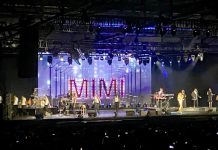
Known as the country’s science and technology hub, Daejeon is a city where knowledge and innovation, premier facilities and connectivity meet

Brought to you by Daejeon Convention Bureau

Located in the heart of South Korea, Daejeon is a vibrant city that has established itself as a strong contender for MICE.
The city has held more than 5,500 events at the Daejeon Convention Center and ranks 36th in Asia-Pacific according to ICCA 2024 rankings. It is also the country’s science and technology hub, giving it a unique edge for scientific congresses and events.
With strong infrastructure, efficient transport links and a deep scientific identity, Daejeon is increasingly positioning itself as one of Korea’s most exciting events destinations.
The ideal stage for knowledge-driven events
Widely recognised as the science and technology hub of Korea, Daejeon’s reputation has been earned through decades of government-driven innovation.
It is home to Daedeok Innopolis, Korea’s largest and most established science cluster, housing more than 30 national research institutes and around 2,400 high-tech companies. These include leading national laboratories and organisations driving advances in sectors such as advanced technology, engineering, aerospace, biomedicine and clean hydrogen.
This concentration of knowledge and innovation gives Daejeon a unique advantage — a natural home for events such as scientific congresses, technical symposia, academic summits and industry-led innovation forums in sectors such as advanced technology, biomedicine, engineering, aerospace, hydrogen and more.
Facilities for business and leisure
Daejeon offers event planners a well-developed MICE ecosystem supported by modern facilities and logistical efficiency.
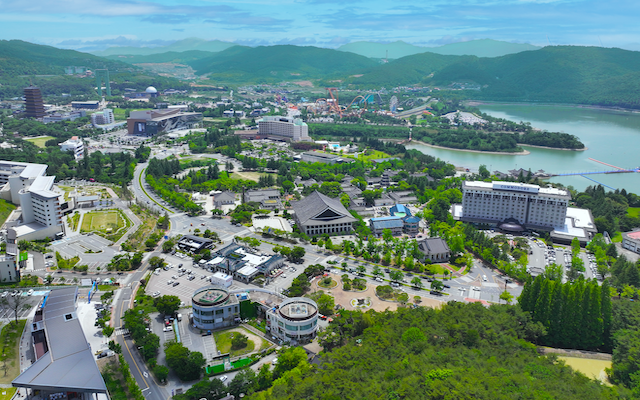
Central to this is the Daejeon Science Convention Complex, a walkable precinct of conference venues, hotels, shopping belts, cultural attractions and riverside leisure options. Sitting at its core is the city’s flagship venue, the Daejeon Convention Center, a two-building complex capable of welcoming up to 15,000 people.
DCC I, spanning 30,453m2, has a large exhibition hall that can be separated into four halls and hold up to 110 exhibition booths, while DCC II, spanning 49,766m2 can accommodate 520 exhibition booths. Both complexes also hold various meeting rooms.
Both buildings connect seamlessly and sit close to entertainment, dining and hotel options, ensuring that delegates can transition easily between conference and business meetings and post-work downtime.
A city of connectivity
One of Daejeon’s greatest advantages is how easy it is to reach from major cities in South Korea.
Domestic and international delegates can arrive via Seoul, Gimpo or Gimhae International Airports and travel to Daejeon by public transport. It can be reached within two hours by the KTX high speed train or two-and-a-half hours by airport limousine bus.
If travelling from Seoul city, it takes about 50 minutes and 1.5 hours from Busan, both by KTX, making it extremely convenient to plan multi-city programmes.
Within Daejeon itself, planners have access to around 4,500 hotel rooms, from five-star to business properties, many within a 10-minute walk or a short drive from the Daejeon Convention Center — ensuring comfort and efficiency for delegates.
One-stop support
Support is readily available from the Daejeon Convention & Visitors Bureau (CVB), which offers one-stop support services that include bid assistance, venue identification, accommodation coordination, promotion, and logistical facilitation. Daejeon CVB has also developed a handy Meeting Planners’ Guide with details about the city, venues and rooms.
Whether it is a major conference or trade show, Daejeon is able to accommodate events and meetings of all types.

Representing the scientific community and looking for your next event destination? Daejeon might just be the city for you. Visit Daejeon CVB for more information.