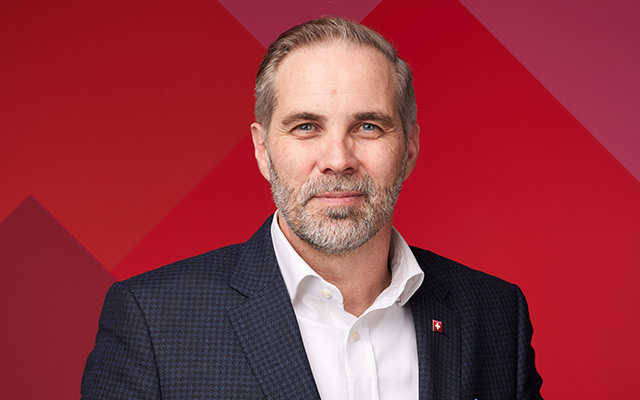
Martin Nydegger, CEO at Switzerland Tourism outlines Switzerland Convention & Incentive Bureau’s (SCIB) strategy for attracting knowledge-driven events, and helping visitors to travel better and be more “Swisstainable”
How is SCIB working with local players to grow international meetings and events?
SCIB was the first national convention bureau to be established in Europe over 60 years ago, back in 1964. Today, we work closely with around 30 destination partners across Switzerland and coordinate meeting and incentive offers in collaboration with local suppliers.
Additional partners include transportation companies such as Swiss International Air Lines, the Swiss Federal Railways (SBB/STS) and Chauffeur Drive from Europcar, who enhance the value of our offers by ensuring seamless mobility. All our core partners have dedicated staff for meetings and incentives within their own convention bureaus.
What is SCIB doing to attract a larger number of international conferences and events?
Our dedicated staff in 13 Switzerland Tourism offices across Europe, North America and Asia maintain direct contact with current and potential clients. This proximity allows us to understand their specific needs and match them with tailored solutions.
Switzerland’s reputation for excellence in innovation and technology, life sciences and finance gives us a significant advantage, where a substantial share of the international events we attract are closely tied to these sectors.
A key challenge for many destinations is overtourism in a few hotspots. How is SCIB actively working to disperse events and tours to a wider range of cities and regions beyond the traditional main hubs?
To begin, Switzerland is not confronted with overtourism on the scale of some European cities like Venice or Barcelona. Our country is a premium destination with much smaller scales and sizes, and thus is not equipped to transport and accommodate large volumes of tourists. Beyond that, we are landlocked and lack any cruise ship ports, which are a significant driver of overtourism.
That said, we are proactively working to prevent potential future tensions between visitors and local communities.
Whether in the context of leisure travel or business events, our philosophy Travel Better is based upon five strategic fields of action: promoting year-round tourism, encouraging travel to lesser-known destinations, increasing the length of stay for a deeper experience, strengthening the integration of tourism into local communities, and preserving the quality of the visitor experience.
The SwissTourism4SDGs initiative is very interesting. What is the business events industry’s role in helping Switzerland achieve those goals?
Sustainability plays an important role in all of Switzerland’s business events activities.
We have a dedicated programme, aptly named, Swisstainable. This initiative has a dual purpose: first, it helps Swiss tourism providers strengthen their efforts in the economic, social and environmental dimensions of sustainable development; second, it supports our clients in identifying providers who are committed to sustainability and improving their products and services accordingly.
We also maintain a dedicated landing page for sustainable business events. It features best practice examples, checklists, and a searchable database of Swisstainable-certified providers, allowing planners to design the most sustainable event possible according to their specific needs.
Additionally, we offer practical guidance for planning events that are align with each of the 17 UNSDGs.
What are the biggest opportunities and challenges for the Swiss business events industry over the next five years?
The main challenge we currently face is the global economic and geopolitical uncertainty, which often results in shorter lead times and reduced planning visibility for organisers.
However, Switzerland’s flexibility, reliability, and premium service quality position it well to respond to these challenges and continue attracting high-calibre international events.