Spain has identified corporate incentive travel as its primary growth driver for the Asia-Pacific (APAC) region, with Singapore, Indonesia, and Thailand emerging as the priority outbound markets.
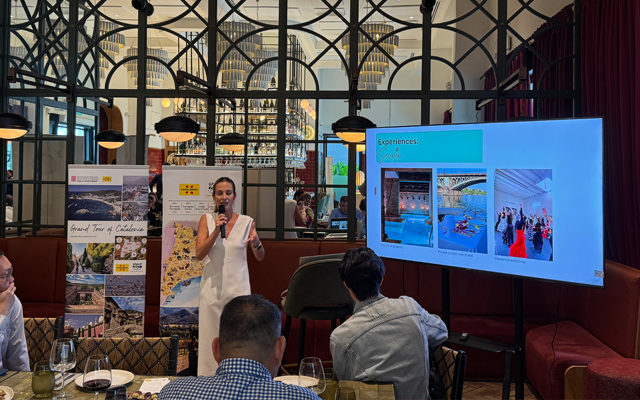
While Europe and the US traditionally dominate large-scale conventions, Raul Guerra, director of APAC for the Catalonia Tourism Board, noted that the APAC market is heavily driven by the incentive segment.
Guerra estimates that corporate incentives represent approximately 10 per cent of all arrivals to Catalonia. While segregated data for APAC is difficult to track, he shared that the region’s share of incentives is likely “higher than average” compared to other global markets.
A surprising shift in the region’s hierarchy was noted by the Spain Tourism Board, which revealed that Thailand has recently surpassed Singapore in terms of incentive volume to Spain.
“For leisure travellers, Singapore is still the top inbound market for South-east Asia. But within the MICE sector, it has not been the case for the past year,” Irene Valencia, market analyst and trade manager of the Spain Tourism Board, told TTGmice. “Last year, Thailand surpassed Singapore because they have held several large events in Spain. It also helps that connectivity is improving, including the direct flight between Bangkok and Madrid on Iberojet.”
Guerra added that the Philippines is another South-east Asian market to watch. While currently dominated by leisure tourists, it has growing potential for incentive groups.
For 2026, Valencia plans to cultivate closer relationships with regional event planners through highly personalised engagement and “MICE-specific fam trips”. In 2025, the Spain Tourism Board organised two such trips – one specifically for Thai planners and another for other South-east Asian planners – to showcase the country firsthand.
Valencia believes that personal experience is the only way to build trust with the trade. “If they don’t know the country, they cannot sell it. We really want them to experience it for themselves, because a presentation is not the same as being on location.”
Beyond the major gateways of Madrid and Barcelona, she pointed out that cities like Malaga, Seville, and Valencia are making “huge efforts to position themselves as great options for MICE”. These secondary cities offer high-speed rail connectivity, and unique cultural assets while being less crowded than the primary hubs.
Despite global economic shifts, Guerra stated he has not yet noticed shrinking budgets among the trade. “I think corporates realise that incentive trips bring far more value (than their cost), as travel is something people appreciate more now after Covid,” he opined.
To sweeten the deal, Guerra highlighted several “off-the-catalogue” experiences that cater to the APAC market’s desire for exclusivity. These include gala dinners in UNESCO-listed heritage sites like the Hospital Sant Pau in Barcelona, and bespoke corporate events involving iconic global brands like FC Barcelona.