Vietnam is emerging as a regional business events powerhouse, capitalising on infrastructure, diverse event offerings, and integrated bleisure experiences
Vietnam is rapidly planting its position as a regional business events powerhouse, with corporate travellers accounting for about one fifth of the country’s total visitors and the market forecast to hit US$7.8 billion in 2025.
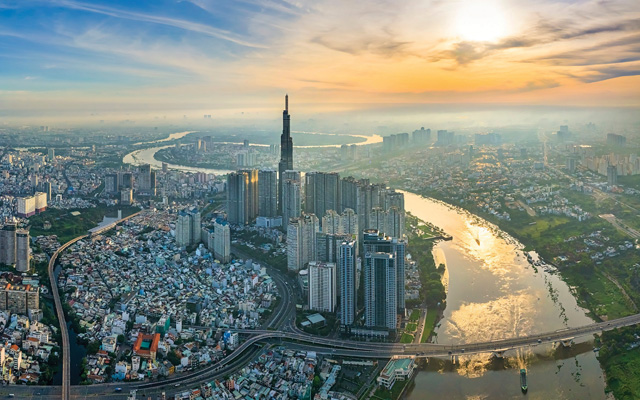
“Major economic hubs like Ho Chi Minh City (HCMC) and Hanoi are clear anchors in Vietnam’s drive in becoming a leading business events destination,” said Sebastien Kaeuffer, Hilton’s vice-president of commercial operations and South-east Asia.
Vietnam’s early 2026 event schedule is geographically diverse: major international trade events – such as the International Food Expo (April 15 to 18), HortEx Vietnam (May 20 to 22), and Home Show Vietnam (June 24 to 26) – will be held at the Saigon Exhibition and Convention Centre in HCMC, alongside a key academic conference (International Conference on Climate Change Mitigation and Adaptation Practices) in Hue, and a manufacturing fair in Hai Phong.
“The country’s growing network of business spaces and unique cultural and natural landscapes presents an attractive proposition for event organisers,” opined Kaeuffer.
Further proof lies in the fact that Vietnam is currently Hilton’s third-largest market in the region, with 21 properties in operation and plans to double its presence in the coming years.
He added that the brand’s expansion plans aim to meet the evolving demands of the business events segment, which today spans beyond large conventions to include corporate retreats, incentive trips and smaller, high-impact gatherings.
“Attendees increasingly combine business with leisure, seeking immersive experiences alongside meetings”, he noted, adding that Hilton recently signed an agreement with long-term partner Sun Group in Vietnam to introduce its Conrad Hotels and Resorts, LXR Hotels and Resorts, and DoubleTree by Hilton brands in both established and emerging business events cities.
Vietnam has also flagged business events as a key segment for 2025 to 2030. According to Vietnam National Authority of Tourism, the sector is slated to grow from US$7.8 billion in 2025 to US$10.8 billion by 2030. This is being driven by infrastructure improvements, including upgraded airports, convention centres and visa-facilitation policies.
“Combined with cost-efficient luxury services, these give Vietnam an edge as a destination for business events,” said Donna Tran, cluster director of sales and marketing at InterContinental Halong Bay Resort, which opened in October 2025 with a strong focus on business events.
“Vietnam is increasingly positioning itself as a very competitive destination for business events in the region, offering a strong value proposition compared to more established hubs such as Singapore and Hong Kong,” she pointed out.
Kaeuffer said another factor driving demand is the rise of secondary business events cities such as Danang and Phu Quoc, where major developments, such as the expansion of Phu Quoc International Airport and the launch of Sun Phu Quoc Airways, are adding appeal. The island will also host the Phu Quoc has also been selected to host the Asia-Pacific Economic Cooperation Economic Leaders’ Meeting in 2027.
However, Kaeuffer noted that this comes with challenges.
“While the outlook is transformative, we acknowledge that there are also headwinds, such as infrastructure gaps in secondary cities. Emerging destinations may encounter challenges with limited Tier Two venue capacity and robust digital infrastructure, such as high-speed connectivity and seamless ticketing ecosystems, which is required for large, high-tech exhibitions and conferences,” he said.
Tran noted a “clear uptick” in business events demand in north Vietnam over the past 12 to 18 months, especially in Halong Bay and the broader Quang Ninh province, which are strongly positioning themselves for business-events and incentives.
She added that across Vietnam, the finance, insurance, property and real‑estate sectors are among the most active in the business events sector, with manufacturing, technology and industrial firms increasingly exploring incentive and conference programmes.
“Vietnam sees big opportunities in business events over the next three years in premium, luxury-driven MICE, where clients increasingly seek venues that combine world-class meeting infrastructure with unforgettable experiences,” Tran said.
She also predicted that demand for hybrid and incentive-integrated formats that blend business with leisure, wellness and cultural experiences will continue to grow.