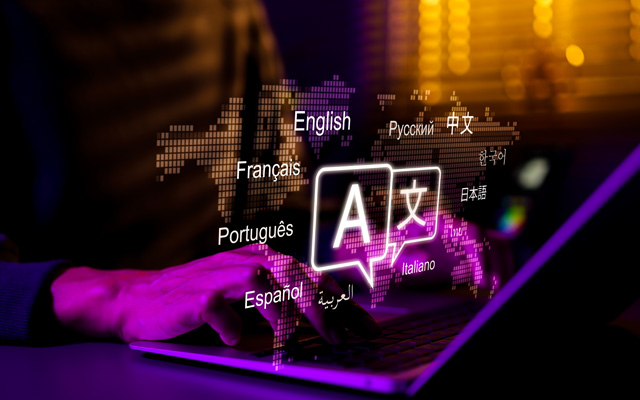
For years, multilingual support at events in the Asia-Pacific region (APAC) was treated as a premium add-on, something reserved for major international conferences or high-profile keynote sessions. Today, that mindset is rapidly becoming outdated.
In 2026, multilingual communication across the region is becoming part of the everyday fabric of business events. From internal town halls and training sessions to exhibitions, incentives, association congresses and hybrid conferences, language access is no longer viewed as a technical add-on. Instead, it is increasingly tied to audience experience, delegate engagement and participation outcomes, and is fast becoming a baseline expectation for event organisers working across diverse APAC markets.
This shift reflects a broader change in how organisations operate. Workforces across APAC are more distributed, more cross-border and more hybrid than ever before. English may still function as a common business language, but relying on a single language often limits engagement, confidence and contribution, particularly in internal meetings and knowledge-sharing environments where participation really matters.
Recent research commissioned by Interprefy highlights the scale of this change. In APAC, 71 per cent of event organisers report strong demand for multilingual support, and internal business meetings are among the fastest-growing use cases for live translation and interpretation. At the same time, frustration levels are high when language access is missing: more than nine in 10 APAC professionals report feeling frustrated when they cannot fully participate in an event due to language gaps or communication barriers.
What’s changing is not just where multilingual services are used, but how. Instead of being planned on a one-off basis, language access is increasingly embedded into meeting design from the outset. Organisers are adopting plan-based approaches that allow multilingual support to be deployed consistently across recurring meetings, training programmes and event portfolios, without having to start from scratch each time.
AI-enabled language solutions are playing a major role in making this possible. Advances in live speech translation and AI-powered captions have dramatically reduced the cost and logistical complexity of providing multilingual access at scale. This has opened the door for organisers to support more languages, more sessions and more formats, including smaller meetings and breakouts that were previously excluded.
However, inclusivity is not just about scale. Language is nuanced, contextual and deeply human. That’s why the future of multilingual events is not an “AI versus human” debate, but a hybrid one. In practice, we are seeing organisers combine AI-powered live translation for broad accessibility with professional interpreters for high-stakes, nuanced or culturally sensitive sessions. This flexible model allows events to be both inclusive and precise.
In APAC, this matters across industries; from technology and finance to education, healthcare and government. As organisations expand regionally and globally, multilingual access supports not only understanding but also equity. It enables participants to engage in their own language, ask questions with confidence and contribute meaningfully to discussions and decisions.
Accessibility expectations are also rising beyond language alone. Live captions, subtitles and searchable multilingual content are increasingly valued by diverse audiences, including people who are hard of hearing, as well as attendees joining remotely or in noisy environments. AI-powered solutions make it possible to deliver these features consistently, without placing additional strain on event teams.
Looking ahead, the events industry in APAC is reaching a clear inflection point. Multilingual communication is no longer a specialist consideration or a discretionary upgrade; it is becoming a core component of standard event delivery.
For event organisers, this shift presents a clear opportunity: to engage more diverse audiences, unlock greater participation and extend the long-term value and reach of their events across borders. Ultimately, access to language is access to opportunity. And as expectations continue to rise in 2026 and beyond, inclusion is no longer optional.
 Oddmund Braaten is the CEO of Interprefy. Previously the chief operating officer and a board member, Braaten has been leading Interprefy’s commercial and operational success for five years.