Artificial Intelligence (AI) is reshaping the business events landscape. However, its competitive advantage depends on human judgement, quality data, ethical frameworks and the ability to earn and keep trust.
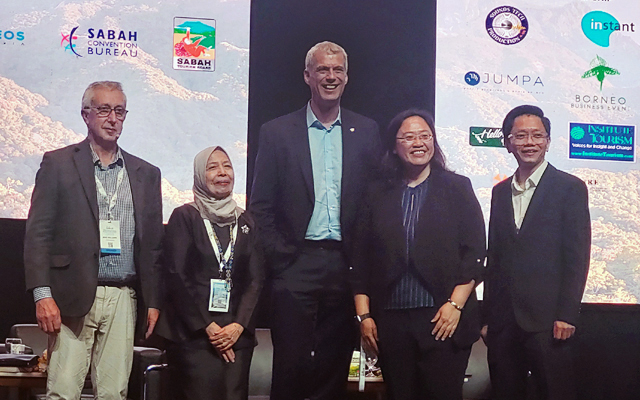
This is according to panellists on the Synergy unlock: Claiming the AI advantage in the new era of business events session, at the 3rd International Business Events Forum – BE in Sabah 2026 held at Sabah International Convention Centre last week.
Halimah Badioze Zaman, emeritus professor at Universiti Tenaga Nasional (UNITEN) in Kuala Lumpur, said: “AI is tremendous when you need data at scale. But at the end of the day, the decision is made by humans,” she said.
She warned that AI reliability depends entirely on data quality; fragmented or unstructured datasets inevitably lead to misleading results. Despite supportive policies, Halimah identified data governance as a persistent challenge, especially where inter-organisational sharing remains limited.
Ultimately, AI cannot deliver full value without comprehensive data, requiring event organisers to invest as much in cleaning and structuring their data assets as they do in the tools themselves.
Florence Chua, managing director, APAC at Professional Convention Management Association (PCMA), identified governance and policy gaps as one of the most significant obstacles to meaningful AI adoption in the business events industry.
While many use generative AI daily, most activity remains informal and outside organisational frameworks. This lack of clear guidelines exposes organisations to risks regarding privacy, intellectual property, and compliance.
As event professionals use AI for tasks like agenda generation and delegate analysis, questions persist over data ownership and storage. Chua pointed out that these unresolved issues could undermine confidence among industry clients, partners, and participants.
Kai Hattendorf, managing director, jwc GmbH and former CEO of The Global Association of the Exhibition Industry (UFI), cautioned that the sheer speed at which artificial intelligence is evolving presents one of the biggest challenges for the business events industry.
While enthusiasm for AI adoption is high, he argued that the technology is still in a formative and unstable phase.
“AI evolves very, very fast. We are at the stage like we were with internet browsers, Netscape versus Internet Explorer versus Safari, with new releases every few weeks. It is not yet a stable system to really rely on and work with,” he said.
For event organisers and technology providers, this volatility creates both operational and strategic risk. Heavy investment in customised AI solutions may deliver short-term gains, but can also result in wasted resources if underlying models change direction.
Yusno Yunos, CEO, Evenesis, also dismissed the notion that AI will lead to widespread job losses in the business events industry, arguing instead that it will fundamentally reshape how people work.
From his perspective as an event management software provider, AI is best deployed as a productivity amplifier which takes over repetitive, time-consuming tasks so humans can focus on higher-value work.
“Use AI as a copilot, not autopilot. You are the pilot,” he said, underscoring that responsibility, judgement and creativity must remain firmly in human hands.