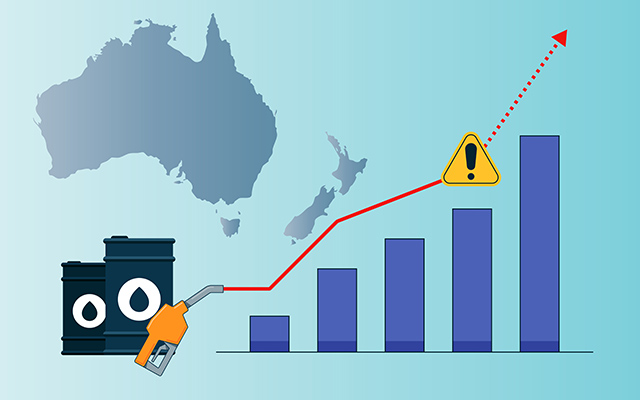
Smaller event suppliers across Australia and New Zealand are bearing the brunt of rising fuel and freight costs, as increases of up to 30 per cent squeeze margins and force difficult pricing decisions across the business events supply chain.
While the Iran conflict is pushing up fuel prices and disrupting longhaul travel from Europe and the Middle East, industry leaders across both countries say conferences are largely proceeding, albeit with tighter margins, delayed decisions and a gradual pivot towards Asia-Pacific markets.
Melissa Brown, CEO of Australian Business Events Association (ABEA), said the most immediate impact on Australia’s sector is financial rather than operational.
“It’s not any widespread shutdown or cancellations, it’s mainly cost pressure,” she said. “Fuel costs are going up 25 to 30 per cent, and it has to be covered somewhere.”
These increases are flowing through every layer of event delivery, from freight and catering to waste management and on-site logistics, as well as delegates’ airfares. Larger venues and organisers are trying to hold quoted prices where possible, but many smaller suppliers simply cannot absorb the hikes.
“The industry is made up of a lot of small businesses, so it’s very difficult for them to absorb anything,” Brown said. “People are putting buffers into quotes and increasing the cost of some things where it can be transparent, just so they aren’t cutting their margins too much.”
In response, some organisers are trimming programme elements or adjusting venues to protect overall budgets without overtly raising prices, particularly for incentive and high-touch programmes with multiple moving parts.
Early data from ABEA, based on around 100 responses from its 220 members, points to consistent pressure across the sector. Recurring themes include tighter client budgets, uncertainty around international delegate attendance, rising logistics costs and additional strain on staff who must travel to and work on site.
A similar pattern is emerging across the Tasman. Lisa Hopkins, CEO of Business Events Industry Aotearoa (BEIA), identified three key impacts: travel disruption, rising costs, and growing tension in decisions about whether to cancel, postpone or proceed.
“New Zealand is still seen as one of the most stable, safe and secure destinations in the world, but we are not immune to these global impacts,” she said.
Both markets are particularly sensitive to aviation costs due to their geographic positioning. Hopkins noted that New Zealand relies heavily on fuel imports from Singapore and South Korea, with supply currently stable but pricing the key concern as it flows through to airfares and event budgets. Industry leaders in Australia are observing similar dynamics, with longhaul access and rising transport costs shaping forward planning and competitiveness.
So far, any feared wave of cancellations has not materialised in either country.
Hopkins said New Zealand is seeing some attendee‑level withdrawals, but “no material evidence of events being cancelled outright”. Brown echoed that picture for Australia, describing the prevailing mood as “concern and caution” rather than retreat. Where international delegates have booked via the Middle East, some are rerouting through Asia or North America and absorbing schedule changes or higher fares.
International speakers are also proving a pressure point. Australian organisers report disrupted schedules and increased costs for speakers travelling through affected regions, prompting some cancellations and renegotiations in the short term.
At the same time, the disruption is creating pockets of opportunity. Emma Bowyer, CEO of ICMS Australasia, said international association clients are increasingly shifting their focus towards Asia-Pacific, redirecting both marketing activity and delegate recruitment.
“Short‑term, they are holding off vital decisions like opening registrations or pushing out major marketing while people are uncertain. Medium‑term, it is all about timeline management and when to make the big calls,” she said.
One international client has deferred its registration launch to avoid putting price‑sensitive travellers off, while another has instructed ICMS to pause European activity and “go harder into Asia Pacific” for the next three months.
Across both countries, confidence remains intact but more measured. Organisers are delaying key decisions, building greater flexibility into contracts and allowing longer lead times to respond to uncertainty.
“This is a very different situation to Covid, but what the industry has taken from that period is a much stronger capability in scenario planning and managing uncertainty,” Hopkins said.
However, she warns that if the conflict drags on, the biggest risk to New Zealand’s competitiveness will be confidence and cost perception, with organisers favouring closer‑to‑home destinations and taking longer to commit.
Brown sees Australia’s main vulnerability in persistently high operating costs and reduced longhaul travel confidence, though she also notes the potential for more domestic events and increased appeal to Asia-Pacific markets now avoiding the Middle East.
Both ABEA and BEIA are in regular contact with their respective governments, feeding in real‑time examples and data.
“Our focus is on keeping confidence, having a coordinated response and making sure that response is evidence‑based,” Brown said. “The industry is experienced, and it’s practical and very collaborative. I have confidence that we will ride through it.”