Asia/Singapore Monday, 22nd December 2025
Page 1034

Ravamped Sukosol sees more business events, plans greater sales efforts

0

A MASSIVE refurbishment of The Sukosol, Bangkok has resulted in a 40 per cent growth in meeting and conference business, according to the hotel’s top level personnel.

Executive vice president, Marisa Sukosol Nunbhakdi, said the renovations had brought about a “real surge in incentives as well as many more…events from China, (South) Korea and even Europe”.

Speaking to TTGmice e-Weekly, Songsri Toperngpong, vice president – sales & marketing of The Sukosol, Bangkok, said: “A lot of our European MICE business is coming from the east, from markets such as Poland and Romania. I believe that this emerging interest in Bangkok from Eastern European markets is due to clients’ desire to experience new destinations, and South-east Asia is relatively fresh.”

Besides refurbishment of guestrooms, F&B venues, meeting rooms and public spaces – a project that carried a 400-million baht (US$12.7 million) price tag – the hotel has also invested in human resource development through an extensive training programme aimed at raising MICE service standards to a global level.

The hotel has also leveraged its award-winning F&B team to develop a number of innovative themed parties and meeting breaks to enhance delegates’ experience.

Songsri said the hotel, which belongs to home-grown hospitality group, Sukosol Hotels, has plans to expand its global sales presence to maintain growth momentum.

“We have sales representatives in several countries today, such as Japan, Australia and Italy, but we need to keep growing. We are now looking to establish sales representation in Russia and China.

“We are especially interested in tapping China, as it has contributed a lot of MICE traffic to our properties in Bangkok and Pattaya,” she said.

Australia sees rebound in business events

0

THE business events industry in Australia has finally recovered from the recent economic downtown, according to the latest report from Business Events Council of Australia (BECA) which shows a rise in international conference delegate numbers last year as the nation increased its share of the global meetings market.

According to the BECA 2012 State of the Industry Report, 190,000 people visited Australia in 2012 to attend a conference or convention, up 11 per cent on 2011.

New Zealand remained the major source of conference visitors, with numbers rising 2.5 per cent since 2011, while convention arrivals from the US, China and Japan grew 26 per cent, 23 per cent and 16 per cent respectively.

At the same time, Australia’s ranking on ICCA’s top destinations for international association meetings rose to 13th spot in 2012 comapred to 16th in 2011.

The State of the Industry Report also reflected a smaller deficit between inbound and outbound convention travel with a 10 per cent rise in arrivals and a three per cent decline in departures.

BECA executive manager, Inge Garofani, said in a press statement that a majority of the key performance indicators showed continued growth for the industry, which had now recovered from the impact of the recent global financial crisis.

“The outlook is extremely positive. We are ahead of our 2020 target for arrivals and well on track to achieving our goal of being an A$31 billion (US$29.2 billion) industry by (that year),” said Garofani.

Venues most concerned with government attitudes towards business events: AIPC study

0

GOVERNMENT attitudes toward business events have emerged as a major concern among convention and exhibition centres that participated in a recent survey conducted by AIPC, the International Association of Convention Centres.

The annual survey, carried out between April and June this year, also found respondents paying particular attention to intensifying international competition.

AIPC president, Geoff Donaghy, said: “Growing competition among centres worldwide has been an issue for some years, but this spike in concern about government attitudes toward business events is a disturbing new development.

“At a time when economic growth and stabilisation is a big priority among governments all over the world, we have hoped that they (governments) would have made the connection (business events have) with business and professional interactions, but our member experiences are suggesting otherwise. This shows we need to work even harder on making sure our value proposition is better understood and appreciated by policy makers.”

Respondents also projected a slower growth of one per cent in revenue this year – as compared to a six to seven per cent growth over the past few years – against a backdrop of ongoing stagnation in economic recovery, with European venues expected to lag behind peers from other parts of the world.

Corporate events are also found to drive growth while conventions and exhibitions remain stagnant.

As such, many centres are pursuing alternative revenue streams including event creation, sponsorship, advertising, enhanced services and risk-sharing with clients.

Other challenges identified by the survey include greater facility investments required at a time of modest revenue growth by rapid changes in event formats, technology and connectivity demands, as well as limitations in hotel and airline capacity and pricing.

“This tells us that there is no instant business upswing in the cards for centres in the near future”, said Donaghy.

“As in many other sectors in today’s economy, success in ours will have to be based on innovation, flexibility and an ability to be competitive in a highly contested market”.

The Venetian | The Palazzo | Sands Expo, Las Vegas

0

Five star, more than 3,000 rooms, 209,032m2 of meeting space
Tel: 1 (888) 283 6384       Email: Nicholas.MCCoy@venetian.com    Website: www.venetianpalazzomeetings.com


I don’t like big hotels and I don’t like theme hotels. And here I am in a hotel that is both.

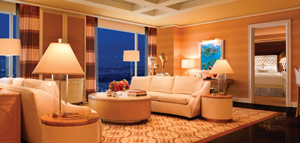
First surprise: virtually no queue at reception. A friendly staff asks for my surname, leads me to an available receptionist and I’m barely there when the receptionist welcomes me with my full name. Second surprise: it is not tacky at all. I marvel how extremely detailed and loving the work is in recreating a Venice in Las Vegas. Third surprise, a staff delivers a basket full of Japanese crackers and other Asian snacks, a plate of fruits and chocolates, and a little kettle along with a selection of teas, just as I have finished unpacking and settling into my suite. Talk about good timing and a warm welcome with a touch of Asia.

Meeting facilities

At 209,032m² Sands Expo and Convention Center is not the largest exhibition and meeting space in Las Vegas – it is the largest privately-owned MICE space in the US. I asked for a site inspection of the facility and put on my jogging shoes, expecting this to be my full work-out for the day. Yet another surprise: hardly a sweat. The layout is delegate-friendly as the venue is equidistant from The Venetian and The Palazzo, the two hotels within the whole complex. Spread over a few floors, it is a logical and compact layout that is easy to navigate and it seems made for MICE of all sizes, be it for a meeting of just 50 pax, or 12,000 pax. The convention sales manager who is showing me around, Nicholas McCoy, says hardware aside, it is their well-trained people who make meetings at the property successful. Going by the service and friendliness I’m getting so far, I’m inclined to believe.

Rooms

So how do you choose between The Venetian and The Palazzo if there is no difference in product standard and rate? I think it comes down to personal preference. If your delegates would prefer Renaissance art and architecture, go for The Venetian. I’m at The Palazzo as I prefer a more contemporary design. Both hotels offer only suites of average 65m², a size they claim is roughly twice that of a typical Las Vegas room. Indeed, I have enough space to throw a small party in my sunken living room, which has a fantastic view of the city, especially as it starts to turn dark and the strip starts twinkling with lights. At US$189 a night, it is good value.

F&B

There are more than 30 restaurants, from casual to expensive, to choose from. My best find is Morels French Steakhouse & Bistro – classic service and flavourful French cooking. My worst is AquaKnox, where the service is offensively impersonal, and the fish is either old or frozen for a long time (and not even a lemon slice going with it).

For a fun and casual place, head straight to Tintoretto Restaurant, where you could watch the world go by while tucking into pasta. Here, the owner herself takes care that everything is going well – I feel like I’m in the bosom of mama.

Other facilities

Entertainment with a capital E! At the time of visit, in July, it’s Carnevale, and each year this stretches till September. More than 300 events are rolled out during the festival which mimics celebrations of summer in Europe and the famed Carnevale in Venice. Events range from a cook-and-dine with Wolfgang Puck to free fashion shows at the Palazzo Waterfall.

There are also resident shows to watch, including Human Nature – The Motown Show  and Rock of Ages, and Headliner Shows featuring stars like Tim Allen (check the calendar each month). There are three nightclubs and many more pubs/lounges. The shopping is great.

And of course there’s the casino.

Longhaul prizes

0

For those who have achieved high targets, nothing less than an incentive in faraway lands will do. The good news is, many longhaul destinations are now wooing Asian MICE groups with a seriousness never seen before

Uncle Sam wants you

Increased Brand USA presence in Asia, more marketing efforts and friendlier visa rules are a fillip for US players to look east for new sources, reports Raini Hamdi

Uncle Sam  is saying ‘I want you’ to Asian leisure and MICE groups and is stepping up engagement in the region to ensure there is no Lost in Translation in communicating the desire.

Brand USA is beating the drums for the first time at ITB Asia this month and launching a consumer advertising campaign in Asian markets this quarter, on the heels of campaigns done in Canada, Japan and the UK last year, which increased intent to travel from those markets by 12 to 14 per cent, according to Brand USA Taiwan & Hong Kong managing director, Reene Ho-Phang.

The ensuing higher recall among Asian consumers and the travel trade is expected to have a rub-on effect on MICE as the higher interest to visit the US trickles down to Asian meeting planners. It is also empowering US destination providers, including big brand names such as Las Vegas Sands (LVS) and Trump Hotel Collection (THC), to invest more on cultivating Asian markets.

THC opened its first Asian representative office, in Shanghai, in March and, apart from China, is also keen on South-east Asian markets Singapore and Thailand. LVS’ The Venetian & The Palazzo in Las Vegas is building a dedicated sales team for Asia and has just hired its director for Asia leisure sales, Elizabeth Hanson. Until now, Asian sales was handled by the overall sales team but the property believes that having an Asian who understands Asian markets’ social and cultural nuances better, and who knows the product well, will enable it to “adjust the experience to match the expectations”, said Robert Rippee, The Venetian & The Palazzo’s SVP for marketing. Hanson, Chinese, continues to be based in Las Vegas, where she has been for almost seven years.

“Having a dedicated Asian sales team gives us a solidified strategy to deepen our relationship with wholesalers and the media in the Asian marketplace,” said Rippee. “We also want the Asian meetings market. Las Vegas compares well with New York, Chicago and Miami in quality and availability of air services and, from that perspective, is a strong alternative as a MICE destination for the Asian markets.”

Rippee has his eyes peeled on China, Japan and South Korea, saying much of this prioritisation was based on the markets’ growth projections and a function of visa waiver and friendlier visa processing. Currently, the Asian market mix is “relatively small” for The Venetian & The Palazzo, with business being “overwhelmingly the US and Canada”.

“Las Vegas has always been that way. The number of inbound Chinese to Las Vegas is a little over a million right now and the goal is to grow that by about 10 per cent a year. So we’re looking at what our fair share of that is. We think we will do quite well because we have a high-end product and a brand they (Asians) are familiar with (thanks to LVS’ footprint in Macau and Singapore),” said Rippee.

In February 2012, president Barack Obama signed an Executive Order to increase visa-processing capacity in China and, since March 16 this year, the US Embassy and all six Consulates located in Beijing, Chengdu, Guangzhou, Shanghai, Shenyang and Wuhan have implemented a new system that makes it easier for applicants to schedule visa interview appointments, pay visa processing fees and check on the status of their issued visas.

China is expected to yield a total of 3.4 million visitors through 2018 – a 299 per cent  growth –  the second largest number of additional visitors behind Canada.

Likewise, in Hong Kong, new, streamlined procedures to schedule appointments, pay visa application fees and deliver passports free to home or office have been implemented since March 16 this year.

Asian countries such as Taiwan and Singapore are included in a Visa Waiver Programme.

In Asia, Brand USA – a public-private partnership established in 2010 to spearhead global marketing efforts for the US – is now represented in Australia, New Zealand, China, India, Japan, South Korea and, most recently, Taiwan and Hong Kong.

Along with the advertising campaign in Asian markets it is launching this quarter, Brand USA will also be holding MegaFam trips for the media and travel trade from markets where it has international offices, said Ho-Phang.
“The MegaFam trips will feature multiple itineraries to showcase parts of the USA that remain unexplored, including the West Coast/California, the Pacific Northwest, the West, the Upper Midwest, the Southeast/Texas, and the Northeast,” she said.

“In addition, sales missions featuring US travel suppliers will be organised for the Hong Kong, Taiwan and Singapore markets.”

Added Ho-Phang: “As part of Brand USA’s marketing effort, we are the global sponsor for World Baseball Classic which gives us broadcast, social media, event and in-stadium marketing opportunities. The tournament features the world’s best players representing 16 countries and territories during 39 games to be played in Japan, Taiwan, Puerto Rico and the US. Fifty per cent of the participating teams are from countries that are in our top-tier inbound markets, which give us great strategic outreach.”

WHERE TO GO

Natural and manmade wonders

Brand USA Taiwan & Hong Kong managing director, Reene Ho-Phang, picks a few US destinations that are actively pursuing Asian markets. Here’s her take:

Las Vegas, Nevada

Las Vegas hosts over 2,000 MICE groups every year. In 2012, this international renowned city welcomed a record of 39.7 million visitors and hosted 21,615 meetings, tradeshows and conventions, up 13.6 per cent from 2011. It also saw 4.9 million delegates attending a convention, tradeshow or meeting in 2012, a 1.6 per cent increase over 2011 and the highest convention attendance in four years.

The populous city in the US state of Nevada offers a multitude of leisure options. For Asians, the iconic city is the window to the Grand Canyon. The world famed Las Vegas Strip is home to some of the world’s best hotels, resorts and Michelin-starred establishments.

Capitol Region: Washington DC, Virginia and Maryland

The city of Washington, in the District of Columbia, and the surrounding states of Virginia and Maryland are collectively known as the Capital Region. With over 25 museums, monuments, memorials and landmarks, the two-mile National Mall which includes the Lincoln Memorial and the White House is a quintessential place for Asians to learn about the history of America.

Visitors can journey beyond the capital city to discover natural escapes, distinctive cuisines, indulgent wineries, exciting shopping and culture-rich cities across Virginia and Maryland.

Michigan

For Asians seeking a getaway and to enjoy the beauty with nature, Michigan is the place to be. From the shores of the Great Lakes to the peaks of the Porcupine Mountains, the hum of the thriving Motor City to the bounty of pastoral farmland, the peninsula unveils a different side of the US. Travellers can also find nearly 800 public golf courses at this spring-summer vacation sanctuary.

Los Angeles, California

Universal Studios Hollywood is a favourite leisure and MICE destination among Asians. The key highlight is The Studio Tour where travellers can visit the 13 city blocks on four acres of historic studio lot in the largest set construction project in studio history, built with creative consultation from Steven Spielberg himself. The Studio Tour also includes the award-winning King Kong 360 3-D created by Peter Jackson and the Wisteria Lane from ABC’s hit series Desperate Housewives.


Finland’s direct intentions

With Asia at the centre of Finnair’s growth strategy, Finland tourism authorities are rolling up their sleeves to see how the country can attract more Asian MICE groups, reports Xinyi Liang-Pholsena

Thanks to Finnair’s Asia-centric strategy, the Northern lights are twinkling for Asian planners. The flag carrier has been aggressively pushing itself as “the most direct route” between Europe and Asia via Helsinki, helping to banish any notions Finland might be too far away for a meeting. Add to that a decent network: Finnair now connects Helsinki to 13 Asian destinations, the most recent additions being Xi’an, China and Hanoi, Vietnam, with the carrier set to expand further in the region in the years ahead.

All this is encouraging the country’s tourism authorities, Visit Finland – as how the Finnish Tourist Board (FTB) is known outside Finland – and the Finland Convention Bureau (FCB) to court more Asian guests.

“We would surely like to see more meetings and incentives from Asian countries,” said Jaana Koivistoinen, FCB’s marketing manager of international association meetings. “Finnair has good connections from Asian markets to Finland, so that is one basic requirement to make it easy to come to Finland.”

The bureau is conducting an Asian market research, according to Koivistoinen. It expects the strongest growth to come from China in the next two years. Both FTB and FCB are also participating at ITB Asia in Singapore this month, with FCB keen to meet MICE operators from the region, according to Koivistoinen.

“We try to make it easy (for operators) to contact us. We meet MICE buyers from China, Japan, India and other parts of Asia at IMEX and EIBTM in Europe and ITB Asia in Singapore.

“FTB representatives in Japan, Hong Kong (handling Hong Kong and South China), Beijing (handling Beijing and Chongqing), Shanghai (handling East China) and India are also working for FCB and are in touch with the travel trade, including incentive operators, in their respective regions. MICE operators are also invited to our trade events in these countries and regions,” she said.

Papori Bharati, FTB’s marketing representative for India, said most Indian MICE traffic to Finland comprised incentive travel. FCB had conducted training programmes and MICE workshops to convince Indian incentive houses to take their clients to Finland, she said.

“Lapland is the most sought-after destination because of snow and the winter activities. During summer, (the demand) is mostly for cruises and the Helsinki Region, including Turku, as well as the midnight sun,” observed Bharati.
If only there were more flights and marketing dollars, there would be a lot more Indian incentive groups to Finland, she opined.

“India does not have the frequent flight connections to Finland as China and Japan have, hence a big chunk of (potential) travel and tourism is lost. Finnair flies only from Delhi, so it does not work out for the rest of the country,” she said. “We also need a bigger marketing budget to spread the awareness (of Finland).”

Agreeing, Petri Vuori, Finnair’s area vice president, global sales, commercial division, said: “Helsinki is well-known for conferences during summer but we would like to increase the awareness of other areas in Finland too. Northern Finland has exotic destinations where we fly to and there is a lot to offer, especially to incentive groups from Asia.

“We are happy to co-operate with many Asian agents specialising in MICE travel, but also welcome more agents to explore the potential Finnair and Finland can offer.”

As well, he pointed out: “Finnair is offering a European network of about 60 destinations to all MICE agents across Asia.”

WHERE TO GO

Break the ice and enjoy the midnight sun

Lapland

Finland’s northernmost region of Lapland is one of the best destinations to view the natural phenomenon of Aurora Borealis, which can be observed between late August and late April. In winter, delegates can stay in a traditional snow igloo or glass igloo – a perfect vantage point to lie back and look up to the Northern Lights. To complete the Polar experience, luxuriate in a sauna and enjoy meals of reindeer meat. The Igloo Village is also home to a snow chapel and ice bar, both built every winter, and open between December/January and (depending on the weather conditions) until end-April.

In summer, delegates can experience 24 hours of sunlight in Finland, providing ample opportunities to partake in outdoor activities such as river-rafting, sailing schooners or river boats, fishing, biking and barbecuing in the middle of the ‘white night’. With good timing, they can enjoy the scores of outdoor events and festivals taking place across the country during this period, such as the Midnight Sun Film Festival in Lapland’s Sodankylä. Lighting bonfires and bathing in saunas are two of the most typical traditions in Midsummer celebrations.

Kemi

Sampo (www.sampotours.com), the former icebreaker for the Finnish government, has been turned into cruiseship in the northern port town of Kemi since 1987. Delegates will be given a guided tour of the ship, complete with visits to the engine room and the captain’s bridge. They will also have the unique opportunity to witness the icebreaker in action as the majestic vessel calls through the thick coat of ice in the Gulf of Bothnia. For gutsy incentive winners, the ultimate experience is to gear up in a thermal floatation suit and take a dip in the icy waters.

Helsinki

Known as a congress destination, Helsinki (www.meethelsinki.fi) has ample high-quality hotels, meeting facilities and pre- and post-meeting activities for delegates.

One of the most established MICE venues in Helsinki is Finlandia Hall (www.finlandiatalo.fi). Centrally located amid park-like surroundings, Finlandia Hall is ideal for conferences and exhibitions, with a new 2,200m² Veranda space, 27 meeting rooms and a 650-seat restaurant. A masterpiece by the great Finnish architect Alvar Aalto, Finlandia Hall is worth a visit in its own right.

Finland’s largest MICE facility, the 130,000m² Helsinki Exhibition & Convention Centre (www.messukeskus.com) has seven exhibition halls, 40 meeting rooms and a 2,000-seat restaurant, all of which can be modified to suit events of different sizes.

The centre’s makeover is being unveiled this autumn.

Helsinki Congress Passitorni ( www.paasitorni.fi) is housed in a 100-year-old restored building by the sea. Passitorni has 30 conference rooms that can accommodate a maximum of 800 pax and four restaurants. In August 2012, the opening of three new conference rooms, a restaurant and the adjoining 170-room Scandic Paasi hotel expanded the centre’s facilities.

Bonjourno, bon apetito!

By Shekhar Niyogi

In an enviable position of having no fewer than 60 conference centres, each with a minimum capacity of 1,000 delegates; a string of large exhibition grounds in key cities; and a massive network of important industries including fashion, machinery, automobile and food, Italy is a natural magnet for MICE events, including incentive travel.

ENIT, the Italian state tourist board, has been taking these offerings to Asian planners through roadshows and various cultural, art, musical and gastronomic promotions in major Asian cities, and through fam trips to Italy.

Leading travel trade events such as BIT in Milan, TTI in Rimini and BTC, an exclusive MICE event in Florence, have their fair share of Asian outbound tour operators and MICE event planners as hosted delegates. Regional events like Buy Tuscany, Buy Emilia Romagna and Via Veneto have also courted the Asian outbound travel professionals.

Said Salvatore Ianniello, head, ENIT India office: “MICE is an important segment. It has shown a constant growth in the last four years. We have conducted several initiatives (in India) and have seen a growth of 70-80 per cent yearly. We are confident that Italy will become a preferred destination for MICE (for Indians). MICE is definitely one of our major targets and will be part of our strategy.”

Asians, according to Alice Pellegrino, incentive tour manager, Toscana Promozione, a regional NTO, love Asian food and wine, making it easy for a gourmet heaven like Tuscany to host a business event or an exclusive incentive tour.

In general, Tuscany and Emilia Romagna are preferred destinations for incentive travel for most Asians, while destinations such as Milan, Bologna and Turin are popular for meetings and high-end Asian incentives.

For congresses and conventions, the most popular destination cities are Rome, Florence and Venice.

Margherita Ruggiero, director of marketing, Rome-based Motivation MICE, said: “Major Asian companies have shown a distinct preference for historical venues for meetings while incentive tours have their focus on gastronomy, motor cars and art. So visits to Parma, Florence, Modena and Maranello are preferred by Asians.”

Francesca Soffici, general manager, Modenatur, agreed, saying: “Asian MICE clients love the gourmet presentations of prosciutto, parmigiano-reggiano and lambrusco in Parma and Modena. They also love the Museo Casa Enzo Ferrari for events, as the setting is both historical and modern, in the home of Enzo Ferrari.”

WHERE TO GO

Fast cars and certainly not fast food

Imola

Perhaps the most popular activity that Asian MICE planners can consider is the Motor Valley incentive tour to the F1 race track in Imola where participants in small groups can drive Ferraris on the race track, supervised by expert drivers. This experience is usually followed by a visit to the museum at the Ferrari factory or to the production line at the Lamborghini factory.

Ambra Pezzoli of Societa Turismo Area Imolese (STAI) said, “Our promotion of various experiential tours using Ferrari 430 cars has become extremely popular with Asian incentive groups.”

Tuscany

Another popular incentive itinerary is to the Chianti region in Tuscany where farmhouse stays in the famous wineries are coupled with tasting of the region’s best wines, truffles, balsamic vinegar and top quality olive oils while touring the production facilities of each.

Florence

Remodelled structures like Stazione Leopolda in Florence have emerged as popular venue for Asian conferences and meetings. It has even hosted a fashion show by an Asian designer.

Running of the bulls

By Shekhar Niyogi

Spain Tourism is conducting training seminars and destination/venue presentations for MICE planners in Malaysia, the Philippines, Indonesia, Thailand, India and Singapore in a bid to attract more Asian meetings and incentives.

It finds a willing audience among the Spain industry, as seen by the participation of some 20 DMCs, hotels and regional tourist boards in an Indian roadshow organised by Spain Tourism last month in Mumbai, Delhi and Bangalore. This was followed by a trade fam for Indian travel consultants in September, and another this month, to Madrid, Ibiza and UNESCO World Heritage Sites in Spain, to familiarise them further with the product, according to Arturo Ortiz Arduán, tourism counsellor and director, Spain Tourism, in India.

Carlos de Garriz, commercial director-MICE, Viajes Iberoservice, said: “We attend all major trade events in Asia and partner with Spain Tourism to promote MICE destinations in Spain. We have seen an average 15 per cent growth year-on-year (from Asia) in the last 10 years.”

Spain has long been a strong MICE destination. Barcelona, which hosts EIBTM each year, ranks as the second MICE city in the world, while Madrid is among the top five on ICCA’s world ranking. The country has the infrastructure to cope with business events of any size, having over 50 airports, the largest high-speed railway network in Europe and more than 10,000 hotels and 50 conference venues in the main cities.

“Opportunities to shoot Bollywood movies (in Spain) add to the destination’s popularity in India but direct flights – none exist now – will help (to grow) incentive travel,” said Ashwani Gupta, managing partner, Dove Travels.

It is not just in India that Spain Tourism is active. “Similar promotions are being done in the Asia-Pacific region. The results are encouraging,” noted Mercedes Garcia, deputy director, Barcelona Convention Bureau.

Online campaigns have been done within the websites of the travel trade associations in Thailand, and the same will be done in the Philippines and in Indonesia soon. As well, brochures in Thai and Bahasa Indonesia have been printed and distributed.

WHERE TO GO

Real Madrid and beautifully gaudy

Madrid

“Hold an event in Santiago Bernabeu stadium, 85,454-seat home of the famous football club, Real Madrid. Do cocktails, then tour the club, peek at the players’ dressing room and have dinner in a private section of the stadium. If planned ahead, (the group can also catch) a Real Madrid game.” – Koushik Goswami, general manager-outbound, Travelcorp India

“A popular itinerary for Asian incentive groups is a tablao flamenco dinner at  El Corral de la Morería, Madrid. Group members may participate in impromptu flamenco lessons.” – Yvonne Otto, director, Unique Trex, Spain

Barcelona

“Our banking and insurance incentive groups love the Anton Gaudi tour in Barcelona at Park Guell and on Passeig de Gracia, followed by a tapas sampling tour on Las Ramblas. – Sushil Wadhwa, chairman, Platinum Incentives, India

A sterling proposition

By Greg Lowe

A steam train passes above beach huts in Devon By VisitBritain

Business travel and events tourism have become a focus of the UK’s three NTOs – Visit England, VisitScotland and Visit Wales – all of which are looking to the Asian market and are receiving collaborative support from VisitBritain.

VisitEngland is focusing on the Indian market for Asian MICE groups. The organisation now has a dedicated representative based in the country to help build relationships with leading corporates, agencies and MICE-focused media.

“Promoting England as a must-visit destination is key, that’s why we attended IBTM India in Mumbai in September,” said VisitEngland’s spokesperson Natalie Ashworth.

“Asia-Pacific is also a key focus for us and we will be showcasing at AIME in February next year as we did earlier this year.”

VisitScotland is also focused on India and China, to a lesser extent, and is working with partners to educate the Asian market about the destination.

James Cuttica, managing director, Interopa Holidays, said attending May’s Destination Britain Asia-Pacific, Middle East, Asia, which was hosted in Bangkok by VisitBritain, provided his company, which focuses on sports products such as the English Premier League, with its first foray into the Asian market.

Cracking the longhaul Asian market is not without its challenges for DMCs, however. Frances Wyatt, director of sales & marketing at SPECTRA, said the company had only fielded 42 enquiries from the region in the past few years, most of which were China-related.

Average groups sizes were 30-40 pax, though there had been requests for up to 650 guests.

“Of the above we have approximately five per cent conversion, which is dramatically down in comparison to the majority of the other markets we work with, although some of this may be due to the competitiveness of this market, the number of agencies which bid for the programme and the issues with visas which we understand are improving,” she said.

WHERE TO GO

Whiskies and curries

Given its size, history and diversity of cultures, Britain has a lot to offer MICE planners.

While executive groups may look to take in a Premier League match at one of England’s top clubs in London, Manchester or Liverpool fans of track-and-field events may look to incorporate a pre- or post-event visits to Scotland, which is hosting the 2014 Commonwealth Games in Glasgow next July and The Ryder Cup at Gleneagles next September, the first time the world’s premier golfing event has been held in the country in four decades.

Heritage visits, whisky tours and a choice of more than 500 golf courses provide planners with plenty of other elements to add to their itineraries, said Richard Knight, marketing manager for North America & Emerging Markets at VisitScotland.

“The Royal Yacht Britannia and historic castles are a firm favourite with overseas visitors into Scotland, along with many of the historic unique venues we have in the country,” he said.

“There are also over 100 whisky distilleries that can be toured for a true taste of the national drink.”

Fans of food, which includes Britain’s favourite dish – curry – may want to visit the country’s curry capital of Birmingham, which is also home to a wide range of other Asian restaurants, said VisitEngland’s spokesperson Natalie Ashworth.

“Whether you’re in the city centre or heading out to the legendary Balti Triangle, there are plenty of places to spice up an evening,” she said, adding that groups after a more chichi experience could opt for a fine dining experience in Europe’s second tallest building.

“Just a couple of months ago Hutong opened at The Shard – the new restaurant sits at level 33 of the tallest building in Europe and specialises in the relatively unknown cuisine of Northern China and boasts panoramic views of London’s skyline.”

SPECTRA’s director of sales and marketing, Frances Wyatt, recommends a night out in London’s West End to take in a musical such as Phantom of the Opera, rounded off with a stay in one of the city’s classic five-star hotels such as The Savoy, The Dorchester or Grosvenor House.

Kelly Kuhn

0

Generation Y – people born between 1982 and 2000 – is the fastest growing segment of the modern workforce. Carlson Wagonlit Travel’s Asia-Pacific president, Kelly Kuhn, tells Karen Yue what that means to the consumption of business travel and corporate meetings


How are Generation Y travellers impacting the meetings business? What comes to mind immediately?

The rapid rise in the use of video conferencing. The technology is fast improving and it is inexpensive to use. Young people – Generation Y – are more comfortable with using that technology to have effective meetings, than to have traditional meetings where one gets on a plane and travels to customers, shakes their hands and closes a deal face-to-face.

That’s just as well, as companies are always under pressure to look for ways to be more effective in their spending. Virtual meetings will play a very important part in how businesses conduct their meetings.

Clients are now looking at how to incorporate virtual meetings into their corporate policy and working out how their travel partners can help manage that.

If virtual meetings are the future with this generation, what will happen to corporate travel suppliers like airlines?

You know, every flight I’ve been on recently was full, especially in Asia-Pacific. Hotels and airlines here have become really good at managing their yield, and are able to make sure their capacity perfectly matches demand. That’s why prices are projected to rise in major business cities in this region.

Business travel takes up time too. Here at CWT (Carlson Wagonlit Travel), our executive team sits in all continents and we cannot possibly meet as often as we need to. So we have bi-weekly or monthly calls instead of flying everyone to meet all the time.

The way I see it, virtual meetings will help to fill the gap in capacity and allow more connections between people. You can now have more conversations with people, which may not have been possible in the past because the flight was full or because your company was trying to control cost. You can now have better attendance at meetings and events in a more cost-efficient way.

But when this generation of people does travel for business, what do they look for in a product? And are they brand loyal?

They are not brand loyal and I know this is true for many different (product) sectors. They look for features and functionality above the brand. They want hotels that offer really fast Wi-Fi and really convenient locations, for instance. They want airlines that offer the best selection of flight times, and they are used to flying with low-cost carriers.

I’ve also noticed that social media content is a big factor in Generation Y’s travel decisions. They will find out where their friends have stayed in a destination, and that information can influence where they choose to be accommodated for leisure and business. I find that very interesting. I work hard to keep my leisure side of life separate from my business movements, but this generation of people melds both together.

So what we have done is to create a tool called CWT Hotel Intel (launched November 2012), which incorporates a hotel review function into a controlled corporate environment. It allows the client to promote preferred properties in the programme while enabling travellers to share with colleagues reviews on hotels they have stayed at. It is very cool, as it allows Generation Y travellers to do what they like – i.e. to share product reviews – while driving policy compliance.

L’Oreal in France is one of the companies piloting it right now. It believes that if it doesn’t do this, it will lose its Generation Y travellers to outside the policy. L’Oreal wanted good information and to give good feedback to its preferred hotel partners, and CWT Hotel Intel is a really good way to gather that precious feedback.

Will CWT be developing more tools for smart devices, seeing how addicted this generation is to apps?

I remember a recent GBTA survey saying that China will surpass the US in business travel spend in the next couple of years, and none of that travel is being booked on a computer today. Bookings will leapfrog computers and laptops and go right to tablets and phones.

The need to get really good information on a tablet or phone, and to be able to make a booking on smart devices, is the future.

Across the world, we have deployed a new app called CWT To Go. It is very cool. I use it for all my trips. It is especially useful when there is a flight delay, as I will be the first to be informed of it, before the announcement is even made at the airport. I can research alternative flights right away, as well as look for hotels and ground transport, although I cannot make a booking. Yet. We are working on that now.

The check-in alert is also a delight. I’ll get this alert 24 hours before my flight, and when I click on it, I will be taken straight to the airlines’ website. All my information is captured on the website and I can just pick my seat and check right in. It is powered by Worldmate, a publicly available app that is also owned by CWT.

Last September, we launched CWT Online, an online booking tool just for China-based business travellers. It is available in both English and Mandarin, and users can book with this app. We are the first to do this, although I imagine someone else will do something similar eventually. For now, it is fun to be first-mover.

So, technology is king when it comes to pleasing the Generation Y traveller then.

Exactly. Technology will help companies accommodate Generation Y travellers. If travel information is easily available and (booking tools) appear to be customised for them, rather than something basic, these travellers will be even more interested in using it and keeping to policy.

Generation Y individuals are generally known to prefer breaking with tradition and to want greater control of their lives. Even with such cool booking technology, do you suppose they will still demand freedom in travel booking and therefore prefer unmanaged travel?

We asked that question in our recent travel industry forecast and found that they were not any more inclined to book outside of policy than any of the other age groups. (The tendency to book outside of policy) was a less than two-per-cent variance between (the age groups of) 35-45 and 45-55.

I think one of the common misunderstandings of this generation is that its people do not want to follow rules. I think the real rebels who will push the boundaries of communication and change the way people meet are those of the next generation, those who will join the workforce in 10 years’ time.

I think Generation Y travellers just want things at their convenience. If all the information is easily available to them, and if the company makes it fun for them to comply, they will book within policy like everyone else.

How do you make complying with travel policy fun?

We are just rolling out the idea of gamification – creating a gaming environment to encourage travel policy compliance – in the US and will eventually bring it to Asia. Travellers who book according to policy can earn points, compete against colleagues who also travel, and win something that is determined by the company. This appeals to the nature of Generation Y people who are used to gaming.

A programme like this also makes policy education fun. Nobody is interested in reading 150 pages of compliance rules, but make it a game and people are more likely to remember who their preferred suppliers are.

It takes the young to understand the young. Is CWT bringing in new blood to find ways to reach out effectively to Generation Y travellers?

Our customers are getting younger and, indeed, our employees must reflect the age of our customer base. Our head of social media for the region, for instance, is in her mid-20s. She’s fantastic and incredibly creative.

Here in Singapore, we have great programmes with the local universities and the Ministry of Manpower that provide internship and on-the-job training opportunities.

Generation Y is our future. These people will be the ones who will talk to our next generation of clients, the travel managers, who are from the same generation. They will be the ones speaking the language of the new workforce.

Oh, guess what? Nobody says ‘cool’ anymore.

Oh dear. I say ‘cool’ all the time!

(Laughs) Me too! We really are so uncool.

We have only just started this exciting new programme to bring Generation Y into our company, whether they are still in university or have graduated, through active internships. We aim to get them interested in the travel industry, specifically in sales and programme management.

How have such internship programmes helped CWT?  

Our head of innovation here, who is part of our global innovation team, had two interns recently for two months. One of them was a boy from UCLA (University of California, Los Angeles), who worked on finding out what sort of technologies and applications would be important to the next generation of travellers (during his stint with us). He conducted surveys and talked to our clients.

CWT To Go and CWT Hotel Intel are some of the tools that came out of our innovation team. We are now testing an idea that allows one to book door-to-door.

Women Deliver 2013

0

Executing numerous quality dining events on time is a challenge for Kuala Lumpur Convention Centre, but the venue rises to the occasion, discovers S Puvaneswary


Women Deliver 2013, hailed as the decade’s largest meeting focused on women’s health and empowerment, boasted a gathering of more than 3,500 attendees when it took place at the Kuala Lumpur Convention Centre in Malaysia.

The event utilised the entire Centre, featuring more than 100 sessions led by some of the world’s leading voices on girls’ and women’s issues such as Melinda Gates, co-chair of the Bill & Melinda Gates Foundation; Chelsea Clinton, board member of the Clinton Foundation; Babatunde Osotimehin, executive director of the United Nations Population Foundation; and Cecile Richards, president of the Planned Parenthood Federation of America. Malaysian prime minister, Mohd Najib Abdul Razak, led the opening ceremony.

Due to the high-profile attendees, security was tight and only delegates were allowed entry into the venue.

Besides the security issue, the biggest challenge the Centre faced during the conference was the need to cater for numerous dining events on time.
Describing the complexity of operations, executive chef Richmond Lim, said:  “On the first day, we had to cater breakfast for the partner’s programme. It involved five different menus at five locations over two floors. In the evening, we had to cater 15 cocktails, all happening at the same time over two floors.”

As the same meeting venues were being used for back-to-back cocktail functions, the Centre’s staff had less than 30 minutes to transform layouts.

Lim said: “On the second day, we had to cater 16 breakfasts and come evening, we did seven cocktails and a street fair for dinner. We offered a variety of local dishes, including satay, for 3,500 delegates. It was a challenge to serve up 18,400 sticks of grilled satay and keep them hot while retaining moisture during the course of the dinner.

“Our kitchens were kept busy preparing 1,700 lunch boxes of different menus daily, each comprising a main course, salad and dessert as well as muesli bars and apples on the go. These were for delegates who attended lunch seminars. At the same time, in two exhibition halls, we had to deliver standing buffets for 1,800 delegates every day,” said Lim.

To cope with the F&B requirements, 51 full-time chefs worked almost round the clock and a pool of casual labour was utilised to help out in the kitchens, move food items to various venues and set up venues for meetings and breaks.

According to Lim, months of planning went into F&B logistics. He said: “We had to ensure that the food was always delivered on time and at the right temperature. We also had to be sensitive to the dietary requirements of delegates from 149 countries. Understanding that everyone has their own preference, we opted for a combination approach, offering a variety of local and international fare as well as vegetarian and gluten-free options.”

Deputy general manager Alan Pryor added that the Centre took an innovative approach to lunch service.

A standing lunch was provided for 1,800 delegates across four exhibition halls, allowing delegates the opportunity to network and continue browsing the exhibition booths.

Jill Sheffield, president of Women Deliver, commented: “It was the perfect venue for our meeting (and we achieved) wonderful outcomes.”

Australia – AIPC

0

Senior AEG Ogden executive, Geoff Donaghy, has been elected AIPC president. Based in Sydney, he succeeds Edgar Hirt from Hamburg, Germany.

China – Pullman Sanya Yalong Bay Resort & Spa

0

Morgan Lin is now resident manager of Pullman Sanya Yalong Bay Resort & Spa. He was hotel manager at Amanfayun, Hangzhou.

China – Grand Kempinski Hotel Shanghai

0

Patrick Martinez now leads Grand Kempinski Hotel Shanghai, while David Traynor joins the team as director of sales & marketing. Traynor previously held the same title at Shangri-La Hotel and Traders Hotel in Macau.

Reviews

Hyatt Regency Kuala Lumpur at KL Midtown

A polished urban retreat designed for business travellers, Hyatt Regency Kuala Lumpur at KL Midtown combines thoughtful design, seamless service, and exceptional facilities.

A versatile powerhouse

Arena @ Expo, a multipurpose concert hall at the Singapore Expo is a flexible space for high octane concerts and lifestyle events.

Amari Bangkok

The five-star property excels in backing its expansive facilities with seamless service and personalised attention, setting the benchmark for luxury in Bangkok.