Shanghai may not be the country’s top MICE destination, but no other Chinese city has the same star quality and power. Caroline Boey finds out more
MICE rankings are a useful yardstick to measure a destination’s success and popularity and ICCA’s annual ranking reports provide a glimpse into Shanghai’s standing.
In tracking regularly occuring association events, which rotate between at least three countries, ICCA’s 2012 Asia-Pacific International Association Meetings Market Rankings placed Shanghai in 10th spot with 64 meetings and Beijing second with 109, behind Singapore with 150.
In ICCA’s 2012 Top 20 Rankings for Cities and Countries, China was placed 10th with 311 meetings; Beijing, 13th. Shanghai was not on the list.
Janet Tan-Collis, chief executive of Singapore-based East West Executive Travellers who has been doing business in China for a dozen-odd years, observes that foreigners are fascinated by Shanghai but Beijing with ancient Chinese culture still intact is more real: “It satisfies their impression of what China is or should be.”
Glamorous, modern Shanghai tends to attract high-end incentives and trendy lifestyle events like watch exhibitions and car launches, aimed at the affluent domestic market. Anything new, curious or novel grabs local media attention.
With the likes of Accenture, Standard Chartered and other Fortune 500 companies operating in Shanghai, the international market wants to do business in the city. Tan-Collis said: “Event planners who choose Shanghai are willing to spend because the economy is strong and the pace is unbelievable. It’s F1, not Rolls Royce. There is a willingness and the ability to do things in Shanghai. There is total excitement and the perception is this is the future.”
If budgets are tight, Shanghai can be out of reach. The president of a PCO in Taipei said Shanghai is expensive and she has not done any business there recently.
Still, Shanghai manages to attract new events such as Global Business Travel Association’s China Conference, and retain longer-standing ones such as China Business Forum, ILTM Asia and IT&CM China.
In addition, ICCA picked Shanghai for the association’s 52nd congress in November last year. The event attracted 936 delegates from 61 countries, who stayed in four different hotels. The congress was held at the Shanghai International Convention Center; the welcome reception at Golden Hall, Expo Center; and the social networking CAT Night at Shanghai Exhibition Center.
CEOs and delegates whose companies plan to invest in China were taken to Shanghai World Expo to learn how a major event transformed a city. They also visited the R&D facility of SKF, a global engineering company, to learn how MNCs are engaging with China as a target business market, centre of innovation and source of highly skilled personnel.
Martin Sirk, ICCA CEO, told TTGmice: “The ICCA Congress in Shanghai not only attracted more attendees than any previous event held outside Europe – and the second highest number ever – it also scored some of the highest delegate evaluations ever, with combined ‘excellent/good’ scores for on-site instant surveys and post-event questionnaires on educational content and organisational efficiency of almost 82 per cent, on a par with the best results ever.
“About 65 per cent of delegates were visiting Shanghai for the first time, and the city excelled in delegate perceptions of its qualities: warmth of welcome scored 72.3 per cent combined ‘excellent/good’, overall level of services scored 64.2 and overall safety scored 83.4, while quality of hotel accommodation, air accessibility and suitability for international meetings scored 84.1, 87.9 and 70.5 respectively.
“It’s clear the congress has created an army of highly influential brand ambassadors for Shanghai!”
Sirk credited the highly motivated local host team which understood from the start what ICCA was trying to achieve, and that this was a rare opportunity to showcase Shanghai and China to the meetings world.
“The attention to detail was exceptional and every effort was made to bridge any gaps of cultural understanding or business practice. It was also critical that this was an event supported by China’s entire meetings industry, and the support from city authorities in Beijing and national tourism institutions was highly valuable and visible.
“I think the delegates found Shanghai to be such a success because of the incredible creativity shown during the social events, the genuine smiles of the host venue employees and volunteers and the opening of delegates’ eyes to Shanghai’s business buzz and economic dynamism.”
Market intelligence shows a decline in the MICE market in 2H2013, but the industry remains cautiously optimistic.
According to Adelina Ye, area director of sales and marketing, East China, Marriott International, business from the pharmaceutical industry and government fell. However, the group, which operates the most number of hotels in Shanghai with more than 20 properties, still enjoyed year-on-year market share growth of 8.9 per cent in 2013.
Ye said corporate meetings and exhibitions would continue to be strong in 2014, although the market witnessed a decline from Japan with Sino-Japan relations under pressure.
For Fairmont Peace Hotel, 2013 was “very challenging” and 2014 will be “equally challenging”, said George Wee, its general manager. “But the establishment of the Shanghai Free Trade Zone will propel the city to a world-class hub, attracting key corporate brand names to set up offices.”
Although targeted at the domestic market, Wee said Shanghai Disneyland Park, Asia’s biggest and opening in 2015, would increase awareness of the city as a choice destination and attract more Chinese corporates to hold their events in Shanghai.
Daniel Aylmer general manager, Le Royal Méridien Shanghai and area managing director, East China, Starwood Hotels & Resorts, said demand from state-owned enterprise and government-driven business will remain soft, but agrees there are opportunities for MICE and domestic business, and the opening of Shanghai Disneyland will generate demand. “With the addition of the world’s largest exhibition centre, the Shanghai New International Expo Center (SNIEC) opening in Hongqiao (in 2015), there will be more reasons to visit one of the world’s most exciting cities,” he said.
Marriott’s Ye believes Shanghai will continue to be “the champion of the modern service sector” and drive the economic engine of the Yangtze delta boosted by the opening of SNIEC: “Shanghai aims to be one of the leading MICE destinations in Asia, competing with Hong Kong and Singapore.”
MICE mission possible
With 24 18-hole championship golf courses, to-date, Mission Hills wears the Guinness World Records crown as World’s Largest Golf Club. While the company is still expanding its golf courses, it has also taken mega steps to add a new feather in its cap.
Gaining popularity as a meetings mecca in China’s southern Guangdong Province, the company’s Mission Hills Shenzhen opened in 1990 and is only 15 minutes from Hong Kong International Airport, while Mission Hills Dongguan opened in 2000, 40 minutes from Guangzhou.
Both locations are a 20 minutes’ ride from each other and a regular shuttle bus service operates between them, with a stop in-between at the Mission Hills Mid-Valley Clubhouse.
Mission Hills Dongguan houses a 334-room hotel, and the hotel in Mission Hills Shenzhen has 188 rooms.
The total meeting space in Shenzhen and Dongguan is 7,348m², with rooms of various sizes for board meetings, accommodating up to 3,000 pax in The Grand Ballroom in Mission Hills Dongguan’s Convention Center, and everything in-between.
The Dongguan ballroom measures 2,000m2 and other spaces include 38 multi-purpose function halls, an auditorium and a media centre, making it a popular venue for international events. The Grand Ballroom at Mission Hills Shenzhen’s resort is 400m²; the Clubhouse Ballroom, 324m².
Companies which hosted events in both locations last year included Australian Trade Commission, Callaway, Credit Suisse, China Resources Power, Dell, and more. Group size ranged from 10 pax for a meeting, 100 for a teambuilding event, 300 for an exhibition, 800 for a tradeshow, and 1,600 for an annual meeting, according to hotel manager Brian Cheng.
Cheng said Dongguan with its convention centre was developed with MICE in mind, and Missions Hills has begun to adopt a green programme to meet RFPs with such requirements and to grow the business.
It is sourcing for produce within a 5km radius to maintain freshness and to reduce transportation. It will be introducing recycling bins in its hotel rooms and meeting spaces and replacing bottled water with reliable drinking water, among others.
Cheng added: “Stations for freshly prepared sandwich and fruit have been introduced, and more healthy meals with less salt, sugar and oil will be used for buffet menus.” Semi-buffet and live cooking stations help prevent hot food wastage, and butter and sugar are provided in loose form.
New teambuilding activities will include activities that teach better nutrition and how to cook more healthily. Mission Hills Dongguan also runs a small organic farm. Other green Mission Hills initiatives include the use of solar-powered golf carts.
Fun teambuilding activities can also be tailor-made for non-golfers at the Golf Academy, as well as other sporting activities around its tennis facilities and swimming pools.
Meanwhile, the opening of Mission Hills Centreville late-2014, at the entrance of Mission Hills Shenzhen, will enhance its MICE appeal, Cheng noted. Attractions include a Hard Rock Hotel and a second 700-room property, a spa, an auto exhibition centre and a cinema, among others.
Mission Hills, which also operates in Hainan, plans to expand into Yunnan, Beijing, Shanghai, Xi’an, and Chongqing. – Caroline Boey

Ideas
One-day tour of Puxi
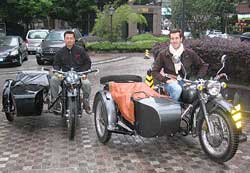 Start your delegates’ day with a ride in the side-car of a vintage 1930s motorcycle along the tree-lined streets of Shanghai’s old French quarter, as they catch a glimpse of locals going about their everyday chores.
After the ride, put your group on a coach to Nanjing Road shopping area. This pedestrian-only area is said to be the busiest retail district in China. Watch people from all over the country and the world flock together to hunt for local craft and brand name merchandise.
Before leaving the busy People’s Square/Nanjing Road area, delegates will visit the best Bronze Age collection in China, housed in the nearby Shanghai Museum.
It is now time to sample authentic Shanghai cuisine and the famous xiao long bao – soupy dumplings – are not to be missed. Lunch is at the Lubolang Restaurant just outside Yu Garden, next to the pond and the Bridge-of-Nine-Bends.
After lunch, travel back in time and discover a typical Chinese landscaped garden built by a high-ranking court mandarin. The numerous pavilions, corridors, cobbled pathways, man-made rock and water scenes provide the perfect backdrop for more photos.
From the peace and tranquility of the garden, head back to modern-day Shanghai. Explore the famous Bund riverbank with its wide boulevard lined with awe-inspiring, restored historical buildings of the 1920s. Take in the sights from across the river, a contrasting picture of new Shanghai and the Pudong skyline.
Itinerary by Associated Tours, Hong Kong
Need to know
Peace Hotel adds spaces
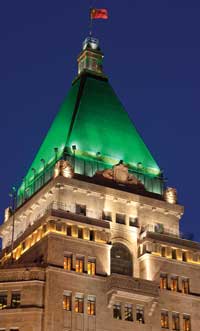 Shanghai’s iconic Fairmont Peace Hotel has added 1,200m² of meeting space on its roof terrace and mezzanine level.
The roof terrace houses the 25m² Scotland Room and the 35m² England Room. Adjacent to the roof terrace is the Nine Heaven Hall, which has been restored to its original 1920s splendour. The roof terrace doubles up as a recreational area where guests can practise tai chi before breakfast.
The mezzanine level houses the 215m² Chun Shen Room with floor-to-ceiling windows and capacity for 160 pax, theatre-style. Adjacent to this is the 110m² Thames Room which can accommodate a 50-pax banquet.
These spaces are equipped with advance audiovisual technology and high-speed wireless Internet access.
Email peacehotel@fairmont.com.
On a mission to go green
Mission Hills Resorts (www.missionhillschina.com) has launched green meeting programmes for its properties in Shenzhen, Dongguan, and Haikou, valid for groups with a minimum of 10 people. The half- and full-day Green Meeting Package goes for RMB418 (US$68) and RMB518 respectively, and includes use of a meeting room, audiovisual equipment, stationery, candies, refreshment, healthy lunch/buffet lunch for groups of more than 30 people and Wi-Fi. Half- and full-day Meeting Business Package options are also available, and are priced at RMB420 and RMB520 respectively.
Eco-themed activities such nature walks – led by naturalists – that showcase the flora and fauna in and around the resorts are available too.
Tall order
J Hotel Shanghai Tower will become the world’s highest luxury property when it is completed in 2Q2015.
Timur Senturk, managing director, said an opening date had not been confirmed as the hotel was still under construction and in the design phase. Many details are yet to be finalised.
 Located in Pudong’s Lujiazui CBD and sitting on levels 84th to 105th floors in Shanghai Tower, J Hotel will have 180 rooms, each about 70m2 in size. The lobby will be on the 101st floor.
Managed by Interstate China Hotels & Resorts, the property carries the J Hotel label, the new prestige brand of Jin Jiang Group.
Shanghai Tower itself is being developed as a mixed-use complex with exhibition, shopping and leisure facilities.
Holiday Villa beefs up software to better cater to international business events
Holiday Villa Hotel & Residence Baiyun Guangzhou (holidayvillaguangzhou.com) is hiring more English-speaking staff and management personnel with experience in organising large international conferences in a bid to grow its MICE business. It is targeting regional seminars and conferences from North and South-east Asia in particular where Holiday Villa’s brand image is well established and where many companies are keen to penetrate the growing China consumer market.
International companies which have held meetings in the hotel recently include Hong Kong’s Watsons and South Korea’s Hanhoo. The hotel’s MICE business so far has come from established Chinese consumer goods companies, with groups of between 100 and 600 people coming from all over China attending annual planning meetings.
 Broadly, Asia-Pacific will see the highest rate increases compared with North America and Europe, according to American Express Global Business Travel Forecast 2014. But you don’t have to put your road-warriors in a hole.