Asia/Singapore Monday, 13th April 2026
Page 1048

Heart of a lion

0
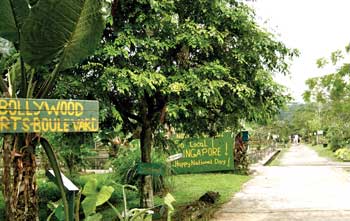
Get into the drama of a green environment at Bollywood Veggies

Don’t dismiss Singapore as a fertile ground for CSR opportunities, say event experts here, as there are plenty of good options beneath the city-state’s sleek veneer. By Paige Lee Pei Qi

There is a growing interest among companies to engage their event participants in corporate social responsibility (CSR) activities, and although Singapore is as bright and shiny as any developed society could get, there are plenty of options available for interested delegates to help the local community and environment.

DMCs and event organisers said the trick was to know where to look for such opportunities.

World Express managing director, Darren Tan, said: “It is of course more challenging to find blatant poverty in Singapore but in any city in the world, no matter how rich they are, if you dig deeper below the surface you will surely find people in need.”

Tan attributed the greater interest in CSR among his clients to heightened awareness of the importance of giving back to the society.

He said: “The US and European corporate markets probably pioneered this whole (CSR) concept but we can see that this is no longer just limited to Westerners now.”

Visits to children’s homes are some of the community programmes World Express had done for corporate clients.

Janet Tan-Collis, managing director of East West Planners Singapore, said four out of ten companies today would request for CSR to be injected into their incentive or teambuilding programme.

She said: “Corporates are becoming more conscious about their social responsibility and instead of just (giving) donations they want to engage the community directly.”

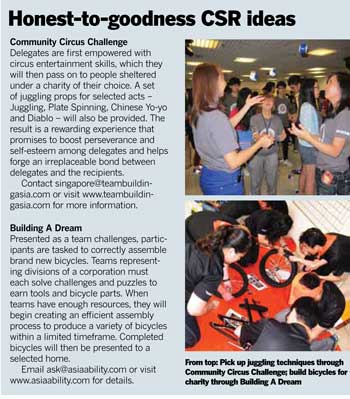
According to Tan-Collis, one of the more popular activities under its Do For Better programme is the assembling of bicycles to be presented to children at orphanages. Other available programmes include creating batik prints for the community and donation-linked drives.

Teambuilding specialist Asia Ability’s managing director, David Powell, said: “CSR activities create a powerful teambuilding experience and has a feel-good factor.”

According to Powell, CSR activities that are preferred by corporates revolve around helping children. However he admitted that such homes in Singapore already have sufficient support.

He said: “Most organisations and homes in Singapore have a lot of government and community support and require far less when compared to (their peers in) other Asian countries in Asia.”

As such, Asia Ability sees more clients building bicycles and toys from scratch to donate to homes in Singapore instead.

Tan-Collis pointed out that Singapore “does not come first to mind” when companies are purposefully seeking community-based activities due to the country’s image as a prosperous nation.

However, she said CSR need not be restricted to caring for the society, but can also be extended to the environment.

Lee Meng Tat, CEO of Wildlife Reserves Singapore, which manages four parks – Singapore Zoo, Jurong Bird Park, River Safari and Night Safari – said there have more requests from corporate groups to participate in educational programmes at the attractions.

Lee said: “Such programmes provide an up-close and more personal encounter with wildlife as well as opportunities to learn about animal behaviour and how to protect the species. Allowing visitors to have close contact with these animals can actually galvanise an individual into caring and doing more for his or her environment.”

Corporate groups desiring a more ‘green’ experience can head to Bollywood Veggies farm in the Kranji countryside, where delegates can partake in teambuilding programmes such as potting, treasure hunts and culinary classes that promise fresh, farm-to-table cuisine.

Farm owner Ivy Singh-Lim told TTGmice: “Farming activities are novel and they allow participants to get out to the countryside and enjoy nature in a true kampong (instead of) a prim and proper garden, and that is quite rare in Singapore.”

According to Singh-Lim, the four-hectare farm welcomes 100,000 visitors a year, half of which is made up of traffic from event groups.

CSR options in the Lion City were recently expanded with the opening of two new green facilities at the Singapore Botanic Gardens (SBG) – the SBG Heritage Museum and the City Developments Limited Green Gallery.

Through interactive exhibits, visitors can learn more about the rich history behind the 154-year old garden and Singapore’s greening journey over the last five decades.

Hoteliers are also jumping in to support their guests’ CSR needs. For example, under Shangri-La Hotels and Resort’s Shangri-La’s Care for Nature Project, the beachfront Shangri-La’s Rasa Sentosa Resort & Spa is currently developing a new nature centre, slated to open early this year. Research is now underway to select the types of flora to be planted in the nature centre.

According to Ben Bousnina, general manager of the hotel, the nature centre will play host to nature-related activities for hotel guests.

On the broader scope of things, sustainable practices down the MICE supply chain are being enforced through a new set of guidelines established by the Singapore Tourism Board (STB). The Sustainability Guidelines, referenced from international standards such as ISO 20121, covers seven industry categories including hotels, venues, planners, transportation, F&B and audiovisual set-up. Areas covered include advice on waste management and the efficient use of water and energy, and initiatives that encourage employees to develop a commitment to sustainable practices.

STB executive director for business tourism development, Chew Tiong Heng, said: “With corporate clients and delegates becoming increasingly concerned about the environment, business event organisers and meeting planners are turning to destinations and venues with strong sustainability policies in place.”
Ideas

One-day marine themed incentive tour

Kick off the incentive progamme with a hearty breakfast at the hotel before embarking on a journey into the ocean on Sentosa island.  First, dive into Resorts World Sentosa’s Marine Life Park, the world’s largest oceanarium with thousands of marine animals. Sign your delegates up for a number of memorable marine activities here, such as the Sea Trek Adventure, Shark Encounter and Open Ocean Dive.

Break for lunch at celebrity restaurant Ocean Restaurant by Cat Cora. Located inside the enormous S.E.A. Aquarium, the world’s largest aquarium, diners get to savour both an exquisite meal and a magnificent view of the Open Ocean habitat. The restaurant serves sustainably sourced seafood.
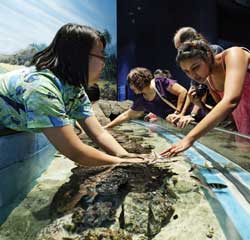
Learn about marine life at Discovery Touch Pool, S.E.A. Aquarium

After satisfying their tummies, whisk your delegates off to meet and greet the dolphins in Dolphin Island. Expect some close interaction with these gentle creatures. Options to swim with the dolphins are available too. Spend the rest of the afternoon at Adventure Cove Waterpark.

End the day on a high note with the Songs of the Sea performance which features water jets, flame bursts, lasers and music. Watch this space though, as the popular performance will be given a spectacular update come mid-2014.

Need to know

Trickeye Museum debuts in Singapore


Keep an eye out for a whole new world of optical illusions at the Trickeye Museum which will open at Resorts World Sentosa by mid-2014.

Originating from South Korea, the 800m2 museum will feature six theme zones with 80 three-dimensional paintings and optical illusion masterpieces which will take into account the unique aspects of Singapore, including the city-state’s ecosystem of nature and wildlife. The six theme zones include Love, Circus, Masterpiece, Safari, Fairytale and Adventure.

Visitors can ‘walk’ into these artpieces, strike poses and become part of the story.

Trickeye Museum will be one of the anchor tenants at the integrated resort’s waterfront strip, which will be developed to a “Little Korea” cluster of Korean F&B and fashion retail outlets.

Grease is the word


The multi-million dollar musical Grease will blaze into Singapore’s MasterCard Theatres at Marina Bay Sands on April 25, direct from London’s West End.

This popular musical production needs little introduction and promises to rock the stage and the audience with explosive energy, featuring a spectacular international cast, slick dance moves, dazzling costumes and all those unforgettable songs from the hit movie, including Summer Nights, Sandy, Hopelessly Devoted To You, You’re The One That I Want, Greased Lightnin’ and Grease Is The Word.

Grease will end its run in Singapore on May 11. Tickets from S$60 (US$47.40).

Jazz it up

Catch UK jazz sensation Jamie Cullum in action Picture by Universal Studio Singapore

The Singapore International Jazz Festival – slated to be the largest of its kind here – will kick off on February 27 at Marina Bay Sands. Jamie Cullum will headline a gala performance on opening day, and the musical gathering will roll out back-to-back performances by jazz and R&B greats such as Natalie Cole, James Morrison and India Arie over the next three days. Local acts will be in on the action too. Tickets cost from S$78 (US$62) for a one-day general admission for adults. The festival ends on March 2.
 

Setting the price right

0

Further rate hikes may place already expensive Hong Kong hotels on thin ice, prompting players to make moderate adjustments and seek out alternative strategies. Prudence Lui reports

Hong Kong hotels have been blamed for aggressive price hikes in recent years, but given the volatile global economy along with the implementation of China’s new tourism law last October that impacted Chinese outbound, hoteliers are now feeling the pinch and making mild rate adjustments for 2014.

Harbour Plaza 8 Degrees in Kowloon, for instance, has opted for a marginal room rate increase and the same meeting package rate as 2013 to stay competitive. Its general manager, Christina Cheng, explained: “The supply of hotel rooms and (event) venues has been increasing in Hong Kong (and) there are now fewer Chinese governmental events being held due to China’s new travel policy.

“The MICE segment has become more competitive with increased venue vacancies in the market. However, we have so far received a good number of MICE enquiries pertaining to 1H2014, most of them pending confirmation.”

To combat the situation, the property has worked on designing attractive meeting packages that offer theme coffee/tea breaks, cooking classes for teambuilding, etc. (See other offers in Hong Kong on Take Your Pick Of These Offers)

Cheng added: “We are also focusing more on shorthaul markets such as South Korea, Japan, India and South-east Asia. We see great potential from these markets whose economy and MICE segment have been progressing in recent years.”

Courtyard by Marriott Hong Kong Sha Tin has projected a mild rate increase of four to six per cent. Its director of marketing, Chris Wong, said: “We remain conservatively optimistic considering there is still uncertainty in the region, like (the impact from) China Central Government’s new policies relating to leisure and business travel.”

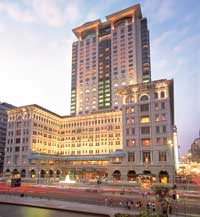
Meanwhile, The Peninsula Hong Kong remains cautiously optimistic regarding rate growth. Its price adjustments for both room and meeting packages in 2014 will be in line with the market. A spokesman said: “We will adopt a moderate approach to attracting business from longhaul and regional markets through our new conference centre’s offerings. Currently, the outlook for 2014 is fairly positive. The pace of our group bookings (so far) is much stronger compared to the same period last year.”

Amway Hong Kong general manager, Louisa Chan, hopes to see less aggressive rate adjustments among Hong Kong hotels.

“Savings from rooms and venue rental rates allow us the flexibility to consider better quality land programmes, such as the engagement of top-notch outside speakers for our meetings,” said Chan.

PC Tours and Travel, general manager, Cary Chiu, welcomes the hotels’ decision to impose only mild rate hikes, as he feels that “Hong Kong is not a must-visit destination compared with other countries such as Thailand, so the savings may help” to entice clients who are increasingly budget-conscious.

While Hong Kong hotels are voicing intentions to make upward adjustments to their rates, Diethelm Travel Hong Kong’s general manager, Edward Chan, predicts a five to 10 per cent drop in prices this year due pressures from a growing hotel room supply.

“It is possible for large group bookings to bargain rates down. In fact, I’ve heard it only cost HK$2,000 (US$258) to book (a room at) The Peninsula last November.”

Hong Kong’s hotel room inventory will continue to expand in 2014 against a backdrop of weaker arrivals in 2013 and tighter corporate travel budgets this year.

Harbour Plaza 8 Degrees’ Cheng said some 5,804 additional rooms will come into the market by end-2014, bringing the total room count to 74,484 and exerting further pressure on existing hotels.

According to statistics from Hong Kong Tourism Board, MICE overnight arrivals from longhaul and shorthaul markets dropped 2.4 per cent (262,882) and four per cent (322,979) respectively between January and November 2013.

Jones Lang LaSalle Property Consultants, Hotels & Hospitality Group vice president for research and strategic advisory (Asia), Frank Sorgiovanni, warned that major industries such as banking and insurance will continue to see travel budgets being trimmed, resulting in shorter stays and pressure on room rates.

“Nevertheless, Hong Kong will remain a vibrant business and leisure hub and its hotel market will continue to trade well, although the pace of growth of five to 10 per cent is likely to temper. Despite continuing uncertainty in the global economy and operators’ expectations earlier this year of a decline in performance, upscale hotels in Hong Kong have (so far) continued to exhibit stable trading performance,” he added.

Take your pick of these offers

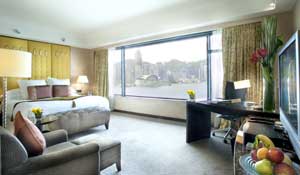
InterContinental Hong Kong

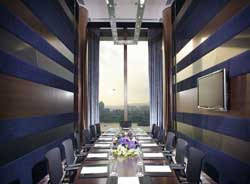
The hotel’s 2014 Meetings to Inspire package offers the use of Harbourview Function Room; a personal meeting butler; complimentary coffee, tea, distilled water, candies and dried fruit; special offer on LCD projector rental; stationery for each delegate and 10 per cent discount on I-Spa treatments, among others.

Valid till December 31 for a minimum of 20 pax, a full-day meeting is priced at HK$950 (US$122) per pax subject to 10 per cent service charge; half day at HK$850, half day without lunch at HK$700, breakfast enhancement at HK$200, lunch at Nobu InterContinental Hong Kong at HK$150, and Harbourside Buffet lunch supplement at HK$100.

Email enquiries to hongkong@interconti.com.

Kowloon Shangri-La

The hotel’s Meetings Go Well package with accommodation from HK$2,550 (subject to 10 per cent service charge) per room night includes one night in a deluxe room with daily buffet breakfast and complimentary in-room wired Internet and Wi-Fi. A full-day meeting package includes use of a private function room from 9.00 to 17.00, refreshments for morning and afternoon coffee/tea breaks, and lunch in a private function room or at Cafe Kool.

Valid till September 30 for single occupancy with a minimum booking of 10 rooms and maximum of 40, group bookings of 25 rooms or fewer can choose from a complimentary upgrade to a deluxe harbour view room for VIP, 25 per cent discount on all business centre services, or complimentary use of LCD projector with wireless microphones.

Group bookings of more than 25 rooms enjoy three additional perks, such as one complimentary round-trip hotel limousine airport transfer, complimentary coffee/tea throughout the event for 40 pax, etc.

Contact ksl@shangri-la.com for more information and bookings.

Harbour Grand Hong Kong

The hotel offers a full-day meeting package starting from HK$698 per pax, subject to 10 per cent service charge. Perks include use of a meeting room from 9.00 to 17.00, coffee and tea service throughout the meeting, refreshments for one morning and one afternoon coffee break, dedicated butler service, choice of lunch served in the same meeting venue (subject to venue availability) or international buffet lunch at Harbour Grand Café, stationery, bottled water and candies, among others.

A half-day package starts from HK$590 per pax and includes the above perks, except use of the meeting room is from 9.00 to 13.00 or 13.00 to 17.00 and refreshments are provided for one coffee break only.

Audio-visual equipment rental charges are priced at HK$1,200 net per port per day for wired or wireless Internet access in the meeting venue, and HK$2,000 net per set per day for portable LCD projector and screen.

Offers are valid from January 1 till December 31, for a minimum of 10 pax.

Email enquiries to hghk@harbourgrand.com.

Regal Airport Hotel

The hotel’s We CARE Residential Conference package is priced from HK$880 per pax per day for a full-day meeting and includes one night’s accommodation (on twin-sharing basis) and use of Pegasus, Polaris, Phoenix or London Suite.

Other We CARE options (chargeable per pax) include upgrading the entire meeting to a green meeting at HK$180, one extra coffee break with refreshments at HK$60,  free flow of coffee/tea through the meeting at HK$20, a 55-minute body massage at HK$388, a three-hour teambuilding activity at HK$1,000, upgrading the normal refreshment break to theme break  at HK$80, among others.

Offers are valid from now until December 31 for 16-60 pax per day.

Email enquiries to meet@airport.regalhotel.com.

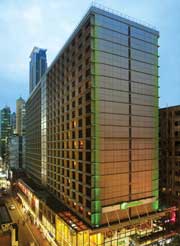
Holiday Inn Golden Mile

The hotel’s Executive Meetings package for a minimum of 15 pax is offered at as low as HK$650 per pax (subject to 10 per cent service charge). Perks include the use of the conference room from 9.00 to 17.00, lunch menu choices (international buffet or Chinese style), morning and afternoon coffee breaks, and standard meeting equipment.

Email enquiries to reserv@goldenmile.com.

Ideas

A day in Hong Kong

Hong Kong boasts miles of scenic coastline and beaches, so small MICE groups may want to embark on a relaxing sea excursion post-meeting. Here’s a simple itinerary comprising cruise and land activities.

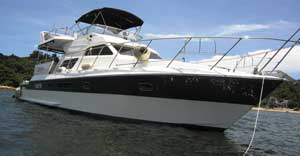
morning Be picked up at 10.30 from Central Pier 10 by private yacht charter, The Lazydays [tel: (852) 3488-1534], and be greeted on board with the aroma of fresh coffee, gourmet tea and full breakfast featuring bacon rolls and homemade pastries. During the hour-long journey to Saikung, sunbathe on deck to enjoy the fresh sea breeze and natural scenery along Hong Kong’s shorelines. Alternatively, have some light-hearted distraction by an Xbox with a Karaoke function. A Versatile assortment of books, magazines and board games are also available.

afternoon Cruise and berth at Tapmun Island (nicknamed Grass Island) tucked away in a remote corner of Hong Kong Sai Kung East Country Park. Here, enjoy a meal of fresh local seafood at New Hon Kee waterfront restaurant and have a chat with owner Pekky Lam, who will tell you the history, culture, and life of Tanka fisherfolk, the island’s inhabitants.
Outside of the waterfront village, the island is a hotspot for camping and hiking. After lunch, gear up for a teambuilding activity, such as treasure hunt, or divide into small teams and to run along the circular route dotted with ecological highlights like pebbled beaches and cultural icons like the Tin Hau Temple. While weighing anchor at about 16.00 on the stylish motor launch, enjoy snacks and free-flowing drinks including Prosecco, a selection of wines, beers and soft drinks as you return to the city.

evening Back in the city, choose from an array of F&B and entertainment outlets and party the night away.

The Lazydays is available for charter

Need to know

Refreshing changes, new experiences

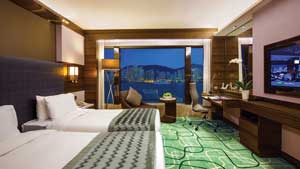
Hotels are attempting to outperform one another with revamps. Hotel Nikko Hongkong (left) has refurbished its Nikko Floor and Toh Lee Chinese Restaurant. The in-room amenities for all 136 guest rooms are upgraded with a blue-ray player, iDock and trousers presser. The 180-seat Toh Lee welcomes all five upgraded VIP rooms; the restaurant now also uses partitions between tables in the main dining area. Meanwhile, on the other side of Victoria Harbour, the 454-room Cosmopolitan Hotel Wan Chai will complete its revamp of guestrooms, hotel lobby, gym and the hotel’s exterior later this year, blending Victorian style with oriental elements. Some of the new in-room features include long mother-of-pearl executive desk, built-in ironing board, ample storage space and ultra high-speed Wi-Fi.

Work, dine, relax all at once

Plaza Premium Lounge (email: hongkong@plaza-network.com) unveiled another pay-in lounge at Hong Kong International Airport’s West Hall last December. It operates 24 hours with special zones for relaxation, work and dining. Executives may stay connected with free Wi-Fi or complete a deal at the private workstations. Another highlight is The Market Place, which features F&B stalls ranging from a tea station serving Chinese milk tea to a noodle bar serving signature Hong Kong delicacies.

Further links with America

Air connectivity with the US is reinforced in 2014 following American Airlines’ announcement of DFW International Airport’s first flights to Hong Kong. The new daily service will start on June 13 using Boeing 777-300ER aircraft. Meanwhile, Delta Air Lines will launch a daily nonstop service from Seattle-Tacoma International Airport to Hong Kong on June 18 (tickets already available for booking). The service will operate via Airbus 330-200 aircraft with BusinessElite, Economy Comfort and Economy cabins.

Kung fu fighting, anyone?

The five-hour Wing Chun Kung Fu Experience Tour (www.shoestringtravel.com.hk) starts with a one-hour Wing Chun class at the school of Yip Man Martial Arts Athletic Association, followed by a stroll along the Avenue of Stars. Then, tuck into a delectable dim sum lunch before heading to the Hong Kong Heritage Museum for the Bruce Lee: Kung Fu, Art, Life exhibition. The tour is conducted in English with departures every Monday, Thursday and Friday at 9.50. A minimum of three participants are required per tour.

Dine like an elite

Newly opened restaurant Elite Dining (email: eld@elite-concepts.com) boasts a private dining room concept offering a seasonal Chinese menu. Located on the 31st floor of iSquare shopping complex, it features eight private rooms commanding panoramic views of Tsim Sha Tsui and Victoria Harbour. The premise could cater for a small group of four people (minimum spending of HK$800 per pax) to a maximum of 170. For private groups, the outlet offers a set menu for a minimum of six people to a maximum of 170.

Kurt Knackstedt

0

The 25-year-old Association of Corporate Travel Executives (ACTE) has elected its first Asia-based president. Rio Tinto’s global category leader of travel & expense management, who lives in Singapore, tells Caroline Boey what members can expect

Congratulations Kurt on your appointment. So how will having an Asia-based president benefit members in the region and the association?
Asia being the epicentre of the world economy is great for ACTE and the association has seen the most rapid growth in this region. Membership has grown about 50 per cent, with new members from Pakistan and Mongolia joining in 2013. ACTE is also seeking new members in Kazakhstan, where Asia regional director, Benson Tang, recently participated in a travel event.

Asia is maturing rapidly in its knowledge about corporate travel and ACTE has proven it is ideally placed to lead this knowledge growth.

I believe I bring a unique perspective to both the president role and the region having been based here for 10 years across Sydney, Hong Kong and Singapore, with a year in London in the middle of the decade. I began my travel industry career 12 years ago in North America at Rosenbluth International, moved to Sydney and London with Galileo, returned to Sydney with American Express, set up my own consultancy before I joined Rio Tinto and moved to Singapore in 2011.

Technology, rapidly maturing payment and expense management systems, and the emergence of world-class Asian-based suppliers have risen rapidly in the last 10 years.

I have been active with ACTE since 2001 when I attended the inaugural ACTE Asia Education Conference in Singapore and I feel strongly that I can help adapt corporate travel best practices and knowledge to help make it relevant for Asia.

What are your goals and objectives over the next two years of your presidency?

They are numerous, but my key areas of focus are to further enhance ACTE’s global corporate travel education and advocacy capabilities, extend its already significant reach into Greater China, India, Japan and ASEAN, and bring new, innovative and visionary companies and leaders into our association.

In the past decade, corporate travel in Asia has developed from being an area of expertise among MNCs to one which is now pervasive across local, regional and global Asian-based businesses. We now see strong travel purchasing strategies being deployed in companies of all sizes, and more and more companies are realising the benefits of a well-managed corporate travel programme.

What are the top corporate travel trends in the US and Europe now, and how will they impact Asia in the future?

What will be interesting to watch is whether Asia will leapfrog the US or Europe in the coming year or two in finding new and innovative ways to manage corporate travel. The US and European economies still face significant challenges. Although Asia has slowed since the dizzying heights of the mid-2000s, there is still much to do and lots of opportunity to invest in Asian corporate travel. The region is well placed to continue to invest in its future around corporate travel.

What are the key challenges and opportunities for companies in Asia?

The big challenge is for companies to decide how corporate travel will be managed. Do you want to focus on compliance and company-specific objectives or a long-lasting relationship with suppliers not necessarily based on cost analysis and open sourcing? If you ask me, I believe it will be a balance of the two. Businesses are aware of the need to balance relationships and competition. The big trend among buyers in China is how to apply proper procurement and sourcing processes. It’s the same in India and South-east Asia.

Companies such as Lenovo, Haier, Tata, Samsung, Alibaba and Qunar are growing bigger and are expanding their economic base. Will they adopt local or global practices, or blend the two? What’s exciting for me is the prospect of meeting the buyers – expatriates and local talent, in particular, which has been emerging in the last couple of years.

Another thing that is very exciting is the technology. It’s not the same in Asia like in the past with online booking tools in North America. A lot is being done and can be done with mobile technology and on smartphones. Yes, Asia is fragmented but that gives it vibrancy and its lack of legacy offers a lot of opportunities.

What ACTE initiatives are being planned in Asia, what new innovations?

We are enhancing our education teams worldwide to bring new and innovative networking and learning opportunities to our Asian events, including more in-depth workshops on hot topics, utilising interactive technology and social media to engage our members and attendees to make our events more “alive”. We’re also going to some new and exciting locations in Asia to continue to spread our vision for the corporate travel industry.

There will be different types of learning opportunities. ACTE started exploring virtual conferences in 2012 and it looks more feasible now with the technology. In Asia, budgets and visas can be an issue, so we want to offer a range of options.

ACTE will go where the buyers are, Central Asia, Kazakhstan where there are big oil and gas government-linked, state-owned enterprises, Chengdu and Harbin. India, for example, is being looked at as a more specialised market needing specialised events. Japan is underserviced and we are addressing it.

ACTE is also looking at new destinations and may move the ACTE Asia Education Conference, which has been in Singapore for many years, to stay fresh. If we do move the conference there will be other events in Singapore.

Watch this space as we will be announcing the exciting locations for all our 2014 events very soon, including some new locations for events in Asia.

We are getting different feedback from different regions regarding membership and we are looking at a different fee structure as a top priority. It will be a different model by 2014.

Why did you put your name down for the ACTE President’s role?

I do spend a fair bit of time on ACTE since being elected to the board in 2012 as the Asia Region Board Representative. But it is worthwhile because I get to meet other industry peers and suppliers, which is very valuable, and learning from them is beneficial for what I do at Rio Tinto. It’s win-win.

What new destinations will you be travelling to in the coming year as ACTE president?
As ACTE is a truly global organisation, I will be attending board meetings, conferences, events and networking opportunities on nearly every continent to connect with as many people as possible.

How do you balance work and family life, and what keeps you sane on the road?

Thankfully, my family loves to travel as much as I do. So at every opportunity I either meet them before or after a business trip or we plan our holidays on the back of my work travel. Also, my son, who is now seven years old, knows how to use the video applications on our smartphones so we can chat face-to-face rather than just talk on the phone. This has made a world of difference in sharing my travel experiences with him.

What are the three most important things on your checklist before you leave for the airport?

Passports – I hold US and Australian citizenship, mobile phone, and at least one complete set of clothes.

If there is one thing you could change about your business trips in 2014, what is it?

Have more of them and to take my family with me on all of them!

Mandarin Oriental, Macau offers value-adds for meeting planners

0

MANDARIN Oriental, Macau has rolled out a Meetings with More package, priced from HK$1,900 (US$245) per room per night, and a full-day meeting package supplement at HK$730 per pax per day.

Meeting planners who take up the offer for events hosted by December 31 this year will enjoy complimentary room upgrade for the entire group, Internet access within the hotel, tailor-made coffee break items and a pre-meeting breakfast which can be upgraded to daily buffet breakfast at an additional HK$100.

Call (852) 3690 9888 or email momac-sales@mohg.com for more details.

Go green and save at Grand Hyatt Singapore

0

A DISCOUNT of five per cent is being dangled by Grand Hyatt Singapore to encourage meeting clients to go green with their events at the city hotel.

The offer is only valid when clients adhere to a five-step green programme that requires clients to plan ahead by providing the hotel’s event team with all information and event orders 10 days in advance to reduce the use of last minute resources; order only from the hotel’s sustainable menu; distribute meeting materials from a single, central location so that attendees can take only what they need; set meeting roooms at reasonable temperatures; and ban the use of water bottles.

Indrani Bit, spokesperson of the hotel, told TTGmice e-Weekly that event specialists from the hotel would be on hand to assist clients in achieving these green goals.

“We are excited to have launched this (Meet and Be Green) package as it blends in perfectly with our overall philosophy of doing good for the environment, the communities and our guests. With our food philosophy of sourcing sustainable ingredients when possible and the removal of shark’s fin from our menus, I believe that this package gets us closer to the next level of looking after our environment,” said Julie Goleman, director of events in a press release.

Meeting deals at Grand Hyatt Singapore are now priced from S$115++ (US$91++) per person and include a welcome break, two coffee breaks and lunch, suitable for groups of 10 to 350 guests.

Call (65) 6416 7073 or email singapore.grand@hyatt.com for more information on this offer.

TTG Events, ACTE join forces for industry education

0

TTG Events has rekindled its relationship with the Association of Corporate Travel Executives (ACTE), which is coming on board as education partner for IT&CM China in Shanghai, and IT&CMA and CTW Asia-Pacific in Bangkok this year.

ACTE was TTG’s education partner when CTW Asia-Pacific was launched in the 1990s following the publication of BTN Asia-Pacific in 1995, and which ceased publication in mid-2000.

The collaboration with ACTE will kick off in April in Shanghai with the proposal that Benson Tang, ACTE regional director, facilitate a panel discussion comprising corporate travel managers from three MNCs looking at travel policy, compliance and adapting a global corporate travel programme in the Chinese context.

Tang said: “ACTE’s aim in China is to raise the corporate travel industry to a new level through further education and knowledge sharing, and the cooperation between ACTE and TTG should be a win-win for the industry.”

In 2013, TTG held corporate travel roundtable discussions targeting local professionals representing MNCs and Chinese companies across China in Shanghai, Beijing and Chengdu.

Until recently the Global Business Travel Association was TTG’s education partner at IT&CM China and CTW Asia-Pacific since early-2000.

Philippine association executives power up with own society

0

THE Philippine Council for the Advancement of Association Executives (PCAAE) has been formed to raise the professionalism of association executives through activities such as seminars and workshops.

Emy Chavez, president of PCAAE, told TTGmice e-Weekly that through these training opportunities the new association wants to eventually make the association executive a recognised profession by the Professional Regulatory Commission (PRC).

Skills that needed upgrading include governance and ethics, besides daily operation and planning, according to Octavio Peralta, chair of the PCAAE board of trustees.

Peralta said: “In most associations that I know of in this country, there’s no distinction or delineation between governance and management. The board of directors or board of trustees runs the associations (and the individuals) come and go, so there’s no continuity.”

“If the members were well governed and well managed, wouldn’t they be bankable?” Chavez said, adding that PCAAE would give association executives “a louder voice”.

PCAAE has 104 founding members and wants to raise membership to 500 in the next one to two years’ time.

While the focus is currently on Metro Manila, the goal is to form chapters in Visayas and Mindanao, for instance, and eventually establish a federation of national societies of association executives in Asia-Pacific.

By : Marianne Carandang

Global surgeons to congregate in Perth in 2015

0

PERTH Convention Bureau (PCB) has secured hosting rights for the Royal Australasian College of Surgeons Annual Scientific Congress (RACS ASC 2015) for 2015, an event that will see the attendance of up to 3,500 surgeons from Australia, New Zealand, South-east Asia, India and the Middle East.

According to a press release by the PCB, the RACS ASC 2015 will be the largest, highest yielding medical congress staged in Perth to date, and has the potential to expand to 4,500 international surgeons through an invitation to Fellows of the Royal College of Surgeons Edinburgh.

PCB’s long standing relationship with RACS, supported by the bureau’s Aspire scholarship, has helped to expand the event’s attendance by potentially 1,000 more international delegates.

“The benefits to Western Australia’s economy and surgical knowledge base will be substantial. The Perth Annual Scientific Congress will be one of the largest conferences in the state since CHOGM 2011, and the highest yielding ever,” said PCB CEO, Paul Beeson.

As part of the event, RACS will offer attendees customised pre and post touring packages to both the north-west and south-west of Western Australia. The tours will include a visit to Albany which coincides with a commemorative event for the Anzac Centenary.

PICC ramps up offerings in competitive Philippine market

0

RENOVATIONS at the Philippine International Convention Centre (PICC) are slated for completion before the start of the APEC Summit ministerial meetings in 2015, as the venue fights to stay ahead of the competition.

PICC is reconstructing the 1,687m2 Meeting Room 1, which burned down in 2001, and will reopen it in October or November.

Roberto Garcia, deputy general manager and director for marketing and events management said the room will be suitable for events for between 800 to 1,200 people.

“We have huge venues like the plenary hall (4,000 pax in theatre style) and reception hall (2,500 pax banquet style), and then we go down to rooms at 800m2, so there’s nothing in between,” Garcia commented.

He shared that the venue is also enhancing and modernising its security equipment to meet the requirements of the APAC meetings. Other aspects of the venue upgrade include structural retrofitting for earthquake tolerance and improvements to lighting, flooring and carpeting, among others.

PICC recently unveiled its new brand identity, Home to the (greatest/grandest/brightest/classiest), intended to attract events and reach markets beyond its “staple” conferences and regional congresses.

PICC is also making a more active pitch for association business by hosting quarterly meetings and special events organised by the recently formed Philippine Council for the Advancement of Association Executives (PCAAE), Garcia remarked.

PICC is still the largest events venue in the country but faces increased competition, including the three upcoming integrated resorts in Manila, a convention centre rising at the Marriott Manila, and a number of independent venue operators, said Garcia.

The art of shaping, keeping talents

0

From free skills training and encashable points for best performance to matchmaking parties, Asian convention centres are beating the industry’s manpower crunch with unique solutions to build staff capability, loyalty and retention. By Karen Yue

The acute shortage of talents in Asia’s business events industry is not a new problem, but it is one that is being compounded over time as destinations rapidly expand their arsenal of event hardware – which must be brought to life by humans – to cater to intensifying MICE demand and higher quality expectations.
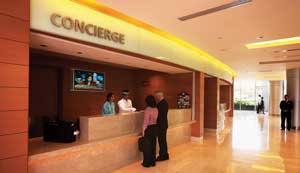

Factors contributing to the manpower strain include the short supply of new blood and what is said to be the arduous working conditions of the business events industry.

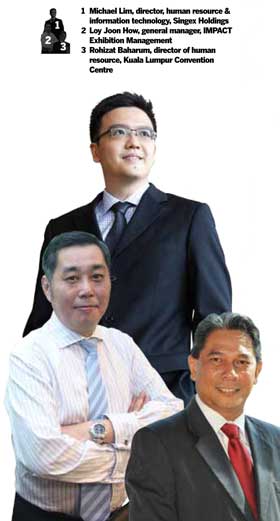
“Not only does the industry grow faster than the rate schools can churn out trained individuals for the marketplace, many MICE professionals exit due to the long hours and heavy workload,” said Michael Lim, director, human resource & information technology at Singex Holdings, the company behind Singapore Expo Convention and Exhibition Centre.

Oh, what woes!

Besides an inability to deliver quality service, convention centres lacking sufficient and experienced staff can risk a “loss of current and potential clients”, said Rohizat Baharum, director of human resource at Kuala Lumpur Convention Centre, and be put at a “serious competitive disadvantage” according to Loy Joon How, general manager of IMPACT Exhibition Management, Thailand.

“The impact of poor service on an organisation’s reputation cannot be underestimated as it can affect business and revenue,” warned Rohizat.

“High staff turnover and frequent changes (in personnel) is disruptive to operations and the business too,” said Tony Xu, vice president of China National Convention Center (CNCC).

Middle and senior management personnel are said to be the hardest to hire.

“The dearth of good mid-level manpower affected our ability to scale our business effectively and efficiently in the way we had envisioned. While we had an ambitious growth plan, our journey was hindered by the labour crunch and we had to rely heavily on technology by either upgrading our current system or buying new ones to ensure consistency and predictability in service delivery and (client satisfaction),” said Lim.

Once the right people are hired, there comes the challenge of retention.

“The turnover rate of the Gen X and Y workforce, which makes up the bulk of staff in many corporations today, tends to be higher,” Loy observed. “These generations have organisational needs and expectations that are different from those of the baby boomer era.

“Unfortunately, most companies are not doing enough to actively engage these (people) to provide them with a stimulating working environment.”

Rohizat added: “It is not easy to retain staff as they constantly have doors opening for them.”

Human resource chiefs bemoaned poaching by competing venues and other related or similar businesses as being all too common.

Staying power

Convention centres in Asia have devised numerous solutions to retain staff, most of which seek to grow the individual’s capabilities and improve his/her career advancement opportunities within the company.

Kuala Lumpur Convention Centre’s Ambassador Programme targets flexible employees who are often the first to interact with clients and guests. It offers a skills training module developed by experienced departmental trainers and meeting industry professionals. Participants are given a ‘Passport to Success’ in which classes undertaken by the ‘ambassador’ are recorded. Since its launch in 2005, over 6,700 individuals have graduated from the programme.

Kuala Lumpur Convention Centre went on to launch the Talent Acceleration Programme (TAP) on November 18 last year, an 18-month scheme designed to expedite the development of its managerial talent pool. Starting off in December with an intake of 24 people, the programme comprises field trips, experiential learning sessions, internal and external leadership sharing and mentoring, as well as exposure to competencies such as commercial awareness, customer focus and change management, among others.

Rohizat said TAP graduates would be “eligible for higher positions” within the organisation.

Peter Brokenshire, who will retire from his position as general manager of Kuala Lumpur Convention Centre at end-March, shared at a session at the 52nd ICCA Congress that communication with all staff is encouraged through an activity called Coffee With Datuk.

“Once a month rank-and-file members are welcome to have an open conversation with me in my office. They can raise any issues and offer ideas. It was through this that we heard the concerns of our staff and responded by improving the quality of staff meals and maternity benefits, for instance,” he said.

At Singex Holdings, incentive trips and opportunities to enrol in overseas diploma and degree courses by the International Association of Congress Centres (often referred to as AIPC) are offered to staff.

Lim said the management of Singex Holdings would “even realign (employees’) job scope to allow them to be more engaged with the overall strategic corporate direction.”

IMPACT Exhibition Management rewards top performers with all-expense-paid incentive trips to destinations like South Korea, Hong Kong and Japan, and implements an annual staff engagement survey index that measures how the company is doing in fostering and developing a stimulating working environment.

According to Loy, the index is an integrated part of the company’s KPI, as “equal focus” is placed on both financial and human capital performance.

“The saying, ‘staff don’t quit working for companies; they quit working for their bosses’, rings true. We believe that good leadership is key to hiring, developing and retaining talents, (and will help to) create a healthy, dynamic and positive company culture that fosters a motivated and engaged workforce. (Such a) workforce is less likely to suffer from high staff turnover,” said Loy.

IMPACT Exhibition Management not only focuses on cultivating good leadership, it also invests in training and skills development. Loy revealed that the company’s human resource training and skills development budget had tripled “over the last couple of years”.

“We have also adopted a management style based on staff engagement and empowerment. This has helped to develop a sense of ownership and accountability among all levels of staff (which boosted loyalty and) reduced staff turnover.”

At CNCC, staff retention initiatives take an unusual spin. “China’s one-child policy has created a generation of lonely people who crave friendship. So we play the role of the parent and hold regular matchmaking parties for all our single employees and have eight staff clubs that provide recreation and self-improvement activities,” Xu said.

Money talks

Monetary rewards are also dangled to encourage the best in service delivery and inspire loyalty.

Brokenshire said staff who “go above and beyond their call of duty” are rewarded with shopping vouchers and points that come with a cash value. Bonus points are also given whenever a staff  member receives a compliment from a guest and when the entire team excels in a particular job or project.

CNCC helps to lighten employees’ financial burden by offering heavily subsidised accommodation.

Xu said: “Accommodation is very costly in Beijing, so CNCC bought over a building, converted it into a staff dormitory and offered a roof over employees’ heads for just US$20 a month. Free Wi-Fi is also thrown in so they can stay in touch with loved ones.”


Returns on investment

Kuala Lumpur Convention Centre has maintained an enviable staff turnover of under two per cent since its opening in 2003, while its regular senior management retreats, which comprise teambuilding activities and meetings on future business strategies, have yielded “fantastic” and profitable ideas.

“For example, in 2008 when business was challenging, the management retreat proposed offering free flow of food and drinks to attract meetings. That idea spurred the creation of meeting packages that are now a RM10 million (US$3.1 million) business,” said Brokenshire.

CNCC sees a six to seven per cent staff turnover, a figure Xu is comfortable with.

Loy said: “By and large, from the results of our staff engagement surveys, I think we have been rather successful in attracting, developing and retaining our talents. Our turnover rates and cost of hiring and replacing staff have all been reduced.

“More importantly, we are achieving better than expected scores in our Customer Satisfaction Survey Index which shows an increase in our capability as a company to (meet and exceed) the needs of our customers.

“With a better engaged workforce, ideas on new and innovative products and services such as our Complete Meeting Package, Healthy Coffee Break Package, Customized Logo booth catering services, etc have all been rolled out successfully over the last few years. Productivity and internal communications have also improved.”

Reviews

The Ritz-Carlton, Bangkok

The newly-opened Ritz-Carlton, Bangkok anchors the One Bangkok development with cosmopolitan elegance. Featuring the city's largest ballroom and a spectacular new penthouse suite, it delivers exceptional hardware and deeply authentic, soulful service for business and leisure travellers alike

Mama Shelter Zurich

Behind the imposing, Brutalist concrete that defines Zurich’s Oerlikon district lies a surprising secret. While its exterior honours the neighbourhood’s industrial roots, stepping inside Mama Shelter reveals a vibrant, neon-soaked world that is a far cry from its rigid shell

Hyatt Regency Kuala Lumpur at KL Midtown

A polished urban retreat designed for business travellers, Hyatt Regency Kuala Lumpur at KL Midtown combines thoughtful design, seamless service, and exceptional facilities.