Twenty-five years after its founding in Hong Kong by Paul Woodward, Business Strategies Group (BSG), a consultancy focused on the Asian business events and exhibitions industry, will transition to new ownership.
An agreement has been reached for the current managing director, Mark Cochrane, to acquire the company.
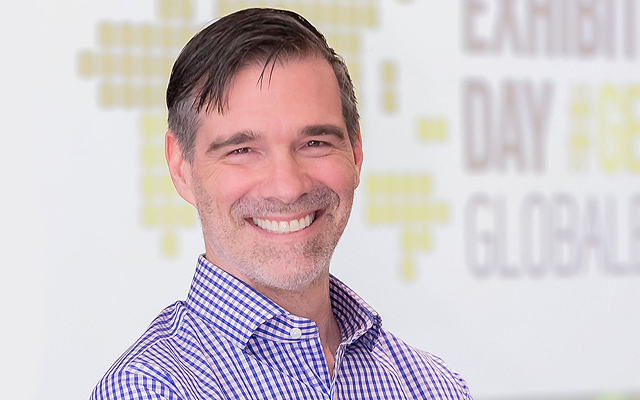
Mark Cochrane
Since its inception in 2000, BSG has provided specialised research and advisory services to over 200 international businesses and government organisations within the region. The firm also manages the Asia-Pacific office for UFI, the Global Association of the Exhibition Industry, a role Cochrane currently holds as regional director.
The transfer of ownership will be a phased process, with completion expected in March 2027. Woodward will remain actively involved with BSG as chairman and senior advisor.
Cochrane joined BSG as a consultant in 2006 and assumed the role of managing director in 2010 when Woodward moved to Paris to serve as CEO of UFI, a position he held until the end of 2015.
BSG’s clientele includes a diverse range of stakeholders in the business events sector, such as exhibition organisers, venues, private equity funds, and government bodies like convention and visitor bureaus (CVBs) and tourism boards. The consultancy offers a comprehensive suite of services, including business development strategy, competitive intelligence, portfolio analysis, feasibility studies, launch planning, and commercial due diligence. Additionally, BSG provides representation services.
Beyond its consultancy work, BSG has managed the Asia-Pacific office of UFI since 2004 and maintained a continuous partnership with the Thailand Convention and Exhibition Bureau since 2006, overseeing TCEB’s exhibition-related activities in Greater China.
The platform showcases the country’s amenities in the meetings and incentives sector, providing a comprehensive guide for global event professionals
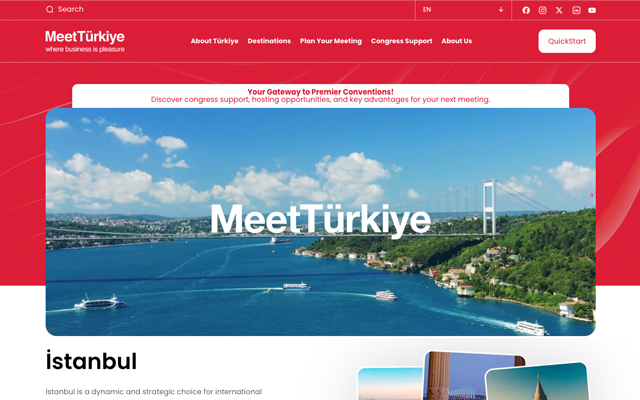
Türkiye has launched a new digital platform, MeetinginTurkey, under the overarching brand of MeetTurkiye, at IMEX Frankfurt 2025.
The user-friendly and content-rich platform presents comprehensive, up-to-date information about the country’s hosting opportunities and key advantages, including its destinations and innovations. It also features an integrated congress support system, providing essential resources to help event professionals to plan, promote, and organise their events in Türkiye.
The platform (screenshot pictured) showcases the country’s amenities in the meetings and incentives sector, providing a comprehensive guide for global event professionals
Türkiye is intensifying efforts to enhance its global standing in the business events sector, with Istanbul taking a leading role.
A new initiative uniting key public and private stakeholders, spearheaded by the Ministry of Culture and Tourism and the Türkiye Tourism Promotion and Development Agency, aims to elevate Istanbul’s competitiveness as a premier global congress destination. The collaboration will streamline bidding processes, increase delegate engagement, and provide comprehensive support for international congresses.
The new online form, accessible via the MeetinginTurkey platform, provides a user-friendly interface for international associations and conference organisers.
A key highlight of this initiative is the upcoming Public-Private Sector Industry Declaration, a formal commitment by all partners to actively welcome, support, and facilitate major international congresses in İstanbul.
This new model of collaboration is set to be extended to other major business events cities across Türkiye, including Antalya, and İzmir.
Purpose-built for business travel, the Carbon Strategy Planner gives travel managers clarity on emissions scenarios, and carbon budgeting
Advito, the consulting division of BCD Travel, has introduced a carbon forecasting and budgeting tool called Carbon Strategy Planner.
Developed in response to a rising demand for clarity, accountability, and strategic planning in corporate travel, the tool enables travel managers to forecast carbon emissions and spend, compare reduction strategies, and build actionable carbon budgets at both company and divisional levels to achieve sustainability targets.
Purpose-built for business travel, the Carbon Strategy Planner gives travel managers clarity on emissions scenarios, and carbon budgeting
Built on Advito’s ISO Certified GATE4 methodology, and compatible with any emissions standard, Carbon Strategy Planner enables travel managers to forecast future emissions by modelling a wide range of decarbonisation levers that all clients can implement.
The standard set of scenarios include reducing travel demand, future staffing projections, shifting modes of transportation, investing in sustainable aviation fuel (SAF), or choosing more efficient aircraft and hotels, among others. Clients can either work toward an existing target or use the tool to set a realistic target based on the levers that would make the most impact in their travel programme.
Advito’s tool was built specifically to help travel managers and sustainability leaders model a variety of carbon strategies. Unlike other carbon calculators, the tool transforms the forecast into carbon budgets that can guide real-world travel decisions. These budgets provide a framework for internal goal-setting, performance tracking, and aligning with an organisation’s broader business operations, answering questions like: “What if we shift 10 per form of our flights to rail?” or “Can we afford to send a team to New York without exceeding our sales division’s carbon budget?”
The Carbon Strategy Planner can be integrated directly into Advito’s Sustainability Consulting analytics suite – a centralised platform that allows clients to forecast, budget, and track emissions all in one place.
The two-year partnership will amplify BestCities’ offerings for the global meetings community
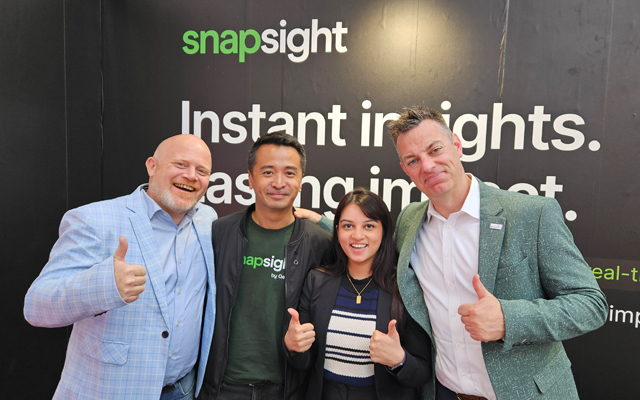
BestCities Global Alliance has entered into a two-year partnership with Snapsight, an artificial intelligence platform that generates summaries and analyses of event content in real-time.
Through the partnership, Snapsight will provide BestCities with instant insights, takeaways, and idea clouds from its events and online information sessions. Snapsight’s technology can generate summaries of presentations or sessions in multiple languages; identify and deliver the most important elements of a live session in real time; and generate visual representations of content.
The two-year partnership will amplify BestCities’ offerings for the global meetings community
By leveraging Snapsight’s technology, BestCities can further enhance the learning experience of attendees to the annual Global Forum, online Community Cafés, and other alliance events.
Attendees will benefit from immediate, personalised insights supported by technology that analyses speech patterns, extracts main themes, and summarises discussions as they happen. Summaries can also be shared with anyone unable to attend a session, helping to keep colleagues and team members updated with accurate, well-organised insights.
Sustainability consciousness is sharper than ever among meeting and event planners, evident in increasingly common environmental and legacy initiatives being made part of professional gatherings.
At the 2024 ICCA Congress in Abu Dhabi, the global community of association meetings professionals implemented a high-performance sustainable event management system, which included initiatives around waste management, reduction in carbon emissions, attendee engagement, and detailed reporting on carbon footprint. Delegates were also given thermal water bottles as a functional keepsake that encourage a more responsible way of hydrating themselves throughout the event.
PATA, a Bangkok-based not-for-profit membership association that pushes for the responsible development of travel and tourism to, from, and within the Asia-Pacific region, has – for the first time – achieved carbon-neutral status for all of its in-person activities in 2024.
PATA has been able to offset the emissions from its events through projects in Cambodia, with support from PATA member Sustainable Travel International, a global non-profit organisation dedicated to promoting responsible tourism. Other operations, including training, staff travel, and office emissions, were offset in Thailand through the Thailand Greenhouse Gas Management Organisation.
To tackle emissions that cannot be fully eliminated, PATA supports credible carbon offset projects while simultaneously minimising emissions at the source. This includes exploring sustainable event design, optimising digital solutions to reduce travel-related emissions, and strengthening collaboration with venues and suppliers that prioritise sustainability.
Sustainability shapes event decisions
Edward Koh, executive director, conventions, meetings & incentive travel, Singapore Tourism Board, shares his observations that sustainability is increasingly becoming a top-of-mind concern, resulting in a growing demand for sustainable events as organisations prioritise the reduction of their environmental footprint to address pressing global concerns.
Responsible considerations will influence destination selection and event procurement decisions. Koh noted that the ICCA Meeting Needs Survey 2023 showed 44 per cent of international associations are incorporating sustainability and legacy into their RFPs.
At the 2024 ICCA Congress in Abu Dhabi, the global community of association meetings professionals implemented a sustainable event management system
He added: “Our efforts in sustainability have been recognised by MICE event organisers looking to hold their sustainability-related events with us. We have built a robust pipeline of green events in 2025 such as Asia Energy Week 2025, Carbon Forward Asia 2025, buildingSMART International Standards Summit 2025, Ecosperity Week 2025, AtoZero Asia 2025, International Conference of the International Society for Industrial Ecology 2025, Singapore Carbon Market & Investor Forum 2025, and Conference of the Electric Power Supply Industry 2025.”
Singapore’s resort island, Sentosa, has also seen its sustainability credentials and achievements giving it an advantage in the destination selection process.
Kelly Yoong, divisional director, corporate planning & development, Sentosa Development Corporation, told TTGmice that the organisation’s attainment of the Global Sustainable Tourism Council – For Destinations (GSTC-D) certificate in 2022 “has validated our sustainability commitment, resonating with event planners and international corporations where environmental responsibility is a key priority”.
“Our sustainability initiatives and achievements have enhanced Sentosa’s reputation as a destination that can meet diverse sustainability requirements for events of all scales,” said Yoong.
“In the past six months, this positioning has helped us secure several environmental conferences which champion sustainability and drive industry changes. The GSTC Global Summit, Blue Water Edufest, and IAAPA Sustainability Summit chose Sentosa as a location, partly for our green credentials.
“These events leveraged our island as a living classroom, where delegates experienced our sustainability initiatives firsthand – from environmentally-conscious venues and sustainable dining options to low carbon activities, showcasing our environmental projects in action. Our growing credibility in this space also attracted the Bureau of International Recycling Convention to host its welcome event on Sentosa.”
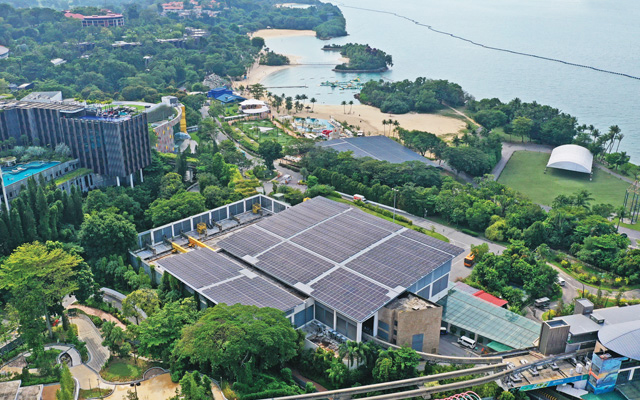
Sentosa draws its power from solar panels atop the Southern Transport Complex
Yoong shared that interest in sustainability-related educational tours from corporate groups and conferences from various industries is on the rise.
“There is an increasing curiosity in sustainability management and the implementation of sustainability initiatives for a destination like Sentosa, with interest to observe real-life examples,” he said, adding that Sentosa also offers corporate social gatherings plenty of eco-conscious activities with a large dose of fun. Options include non-motorised races at the Skyline Luge Singapore and HyperDrive, water sports at Ola Beach Club, SentoSights tours for natural heritage exploration, and more.
Opportunity to do better
When asked if PATA’s quest for low-emissions in-person events directs it to consciously weigh bidding destinations’ environmental and emissions policies, CEO Noor Ahmad Hamid said: “While environmental credentials such as walkability and electric public transport are certainly advantageous, PATA represents a diverse membership of over 60 destinations – each at different stages of their sustainability journey.
“We believe it would be limiting and, perhaps, inequitable to consider only destinations that already meet ideal environmental standards. Instead, we assess each bid holistically. We are open to working with destinations that may not yet meet these benchmarks, but are committed to collaborating with us on implementing sustainable practices and reducing emissions. Our focus is on progress, not perfection.”
Noor added that “sustainability is not a one-size-fits-all approach”, and recognises that “every city operates within its own set of circumstances and constraints. Some are further along the path, while others are just beginning”.
As such, PATA is keen to use its events “as catalysts for positive change”.
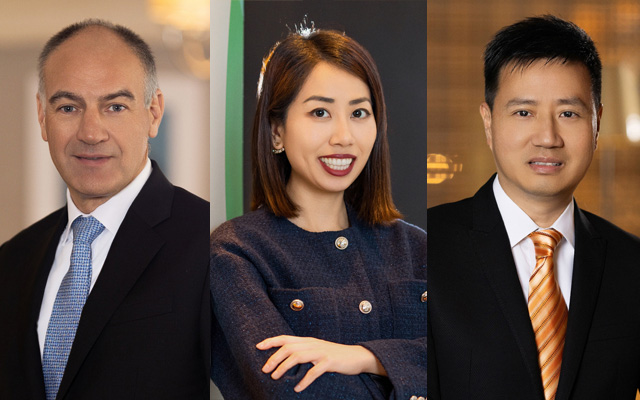
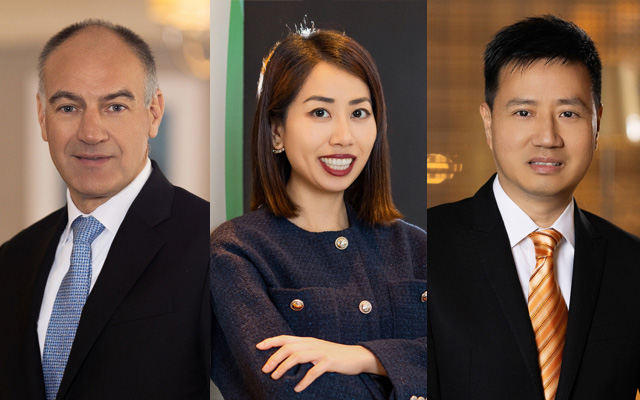
Wharf Hotels has announced the appointments of Jürgen Dörr as vice president, operations; Eva Wong as group director, digital marketing; and Vireo Yeung as group director, global sales. All three will be based at the company’s headquarters in Hong Kong.
Dörr joins from Vinpearl Holding Company in Vietnam, where he served as CEO overseeing a large portfolio of hotels and leisure assets. He brings extensive operational experience from previous roles at Regent, Hyatt Hotels, Shangri-La Group and Fullerton Hotels and Resorts, and will lead Wharf Hotels’ operations across rooms, food and beverage, events and technical services.
From left: Jürgen Dörr, Eva Wong and Vireo Yeung
Wong brings experience from previous leadership roles at Christian Dior Couture, Ralph Lauren and various beauty brands. She will oversee digital strategy across all group brands and work closely with the commercial and IT departments to enhance digital engagement and drive online-to-offline integration.
Yeung has been promoted from his prior role as regional director sales – Hong Kong and Taiwan. With over 20 years of experience, including at Hyatt Hotels and Miramar International Hotel Management, he will now lead global sales strategy across key international markets.
Brand experience agency Uniplan has appointed Eric Chan as executive creative director of its Hong Kong office.
Chan will report directly to Judd Christie, CEO of Uniplan Greater China, and will take on the creative leadership role across all Uniplan Hong Kong projects, as well as experience design projects across Greater China.
Chan has over 15 years of global experience in advertising, branding, content design, product design and experiential marketing. During this time, he has built agencies, led game-changing campaigns, and pioneered immersive experiences for a diverse group of brands including Alibaba, Google, Genesis, Haier, Mercedes-Benz, and Tencent.
Chan joins the Uniplan team after eight years with George P Johnson in the capacity of creative director in Singapore, and most recently, group creative director in Shanghai.
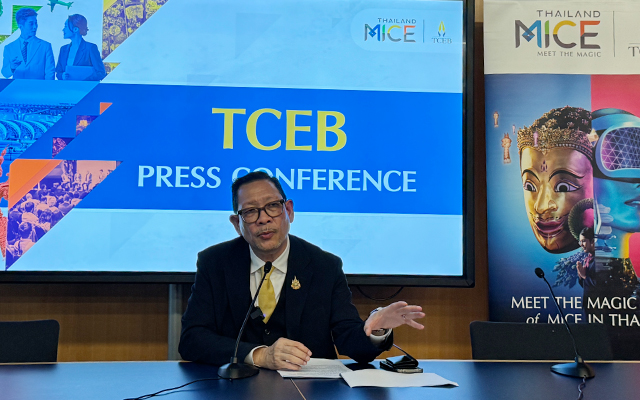
TCEB’s Puripan Bunnag shares updates on Thailand IMEX Frankfurt; photo by Rachel AJ Lee
The Thailand Convention and Exhibition Bureau (TCEB) has unveiled its latest business events initiative, Meet in Thailand: Your Success, Your Moment, which will put a fresh perspective on the value and purpose of events.
Presenting the new initiative at IMEX Frankfurt, Puripan Bunnag, TCEB’s senior vice president international marketing, said the initiative comprises three M elements – MaxiMICE, Meaningful, and Memorable.
TCEB’s Puripan Bunnag shares updates on Thailand IMEX Frankfurt; photo by Rachel AJ Lee
He shared that MaxiMICE invites clients to explore and maximise the new products and services available throughout Thailand. These range from better accessibility and more destination options for business events, to investment in business events venues and stronger government support.
“For example, Air France will start flying from Paris to Phuket starting November 27 this year, which will be in time for Phuket’s hosting of Global Sustainable Tourism Conference in 2026. We are also working with Thai Airways to create new air routes globally,” elaborated Puripan.
Accessibility has also been improved in Bangkok, where the recent opening of the MRT Pink Line means that eight major convention centres – such as IMPACT Muang Thong Thani and Queen Sirikit National Convention Center – are now connected by MRT or Skytrain..
When asked whether new convention centres would be built outside of Bangkok, Puripan shared that a feasibility study for an option in Nakhon Ratchasima – the location for the International Horticultural Expo 2029 – is currently in the works.
Several Thai airports are also undergoing expansion. Suvarnabhumi Airport’s East Terminal will be ready in 2028, increasing passenger load from 65 million to 80 million a year; Don Mueang International Airport’s Terminal 3 is slated to open in 2030 and will handle 23 million passengers a year; U-Tapao Rayong–Pattaya International Airport’s third terminal and second runway are expected to come online in 2029.
The initiative’s Meaningful component covers Environmental, Social and Governance and sustainability frameworks, offering clients the opportunity to hold events that have measurable impacts. This includes TCEB’s development of low-carbon MICE Routes, certifying that suppliers are sustainable, and ensuring that business event activities will involve and benefit local communities across the country.
The final M represents Memorable, which TCEB aims to deliver a Return on Experience, by helping clients craft events that have cultural immersion, encouraging bleisure travel, and the promise of human touch to create lasting memories for guests.
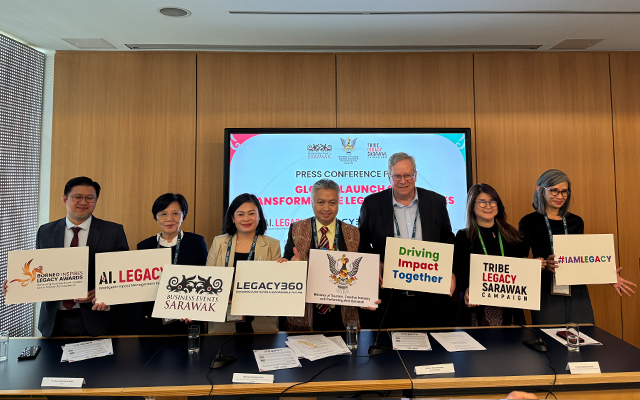
Business Events Sarawak (BESarawak) has launched the revamped Tribe Legacy Sarawak campaign on May 20 at IMEX Frankfurt. Anchored by the tagline Driving Impact Together, it carries three initiatives – AI.Legacy, Legacy360, and Borneo Inspires Legacy Awards (BILA).
AI.Legacy is an AI-driven impact management system developed in collaboration with Universiti Malaysia Sarawak. The dashboard helps event planners measure and report the long-term impact of business events on communities, ensuring sustainable benefits.
The Business Events Sarawak team with partners from ICCA and GainingEdge; photo by Rachel AJ Lee
Next, Legacy360 is a platform dedicated to advancing business event legacies, bringing together government officials, industry leaders, and community representatives to discuss strategies for economic, social, and environmental transformation.
Lastly, BILA recognises outstanding contributions in the business events sector, celebrating individuals and organisations that drive positive change in Sarawak’s communities through knowledge-sharing and economic development.
Amelia Roziman, CEO of BESarawak, said: “Our three key offerings – AI.Legacy, Legacy360, and BILA 2025 – are complementary to each other towards a holistic framework to enhance the long-term impact of business events, starting first with Sarawak and then the world.”
She told TTGmice that AI.Legacy is the first of its kind, and that there was “no benchmark” when the dashboard was created. It was also created over years of trial and error. Meanwhile, Legacy360, is a “complementary platform that BESarawak created to advocate legacy impact for business events not just in Malaysia, or Asia, but for the world”.
“We can’t do it alone. We want everyone to be part of this journey, and help destinations start somewhere, because being sustainability-certified is not enough. There are so many certifications, but it will not change the value of your organisation or destination,” she pointed out.
BLIA – an evolution of the former Anak Sarawak Awards that celebrates the lasting impact of business events in Sarawak – “is also now open to any event that has a strong element of legacy”, said Amelia. “By opening this up, it will help us promote the legacy of business events on a global scale.”
Snowdan Lawan, deputy minister for creative industry and performing arts of Sarawak, stated: “This reinforces Sarawak’s commitment to legacy-driven business events on an international scale, ensuring that every event contributes to economic growth, knowledge exchange, sustainability, and community advancement.”
He added that the Sarawak government is also reinforcing its green commitment with the Sarawak Sustainability Blueprint 2030. Set to be launched at the end of May, this blueprint will serve as a strategic roadmap for Sarawak’s transition to a green economy.
With this global launch, BESarawak is nearing the end of its Legacy Impact Master Action Plan 2023-2025, which has the goal of transforming Sarawak into the Legacy Capital of Business Events in Malaysia and Borneo by 2030.
ICCA’s latest GlobeWatch Business Analytics – Country & City Rankings for 2024 has identified Japan as the top-ranked country in Asia-Pacific while Singapore holds first position among cities.
The top five countries in Asia-Pacific, in descending order, are Japan with 428 meetings, China (249 meetings), South Korea (243 meetings), Australia (227 meetings), and Thailand (158 meetings).
Singapore claims top spot in the ICCA 2024 city rankings for Asia-Pacific
The region is also becoming increasingly competitive, noted ICCA, with 13 countries now ranked among the global top 50, just behind Europe.
At the city level in Asia-Pacific, Singapore claims top spot with 144 meetings, followed by Seoul (124 meetings), Bangkok (115 meetings), Tokyo (97 meetings), and Hong Kong (86 meetings).
There has been a significant rise in association meetings in the region, as countries/territories like China, Hong Kong, Indonesia, Japan, Macau and Sri Lanka have all shown growth relative to previous years.
At the global country level, the US maintains top position, followed by Italy, Spain, Germany, and the UK.
Latin America and the Middle East continue to demonstrate rising influence as emerging regions. From 2022 to 2024, they were the only regions to show consistent year-over-year growth in the number of meetings recorded.
Meanwhile, there is growing government interest across Africa in strengthening infrastructure and capacity for international meetings, signalling potential for accelerated growth in the years ahead.
While large, city-wide congresses still draw attention, ICCA’s 2024 data confirms that most international association meetings are moderate-sized (150 to 999 participants), creating opportunities to foster deeper engagement.
By subject matter, Medical Sciences, Technology, and Science lead the way, followed by Industry and Education. These five sectors have remained in the top positions for over a decade, underscoring sustained interest globally in healthcare innovation and digital transformation.
Overall, the report indicates a positive trajectory for the industry, with in-person events nearing the levels seen in 2019.
The 2024 rankings include data from over 11,000 meetings, marking an increase compared to the previous year.
Just 10 minutes from Phuket International Airport on the serene northern coast, this 178-key, Bill Bensley-designed resort offers delegates a quiet, tropical paradise steeped in Phuket’s tin-mining heritage
The newly-opened Ritz-Carlton, Bangkok anchors the One Bangkok development with cosmopolitan elegance. Featuring the city's largest ballroom and a spectacular new penthouse suite, it delivers exceptional hardware and deeply authentic, soulful service for business and leisure travellers alike
Behind the imposing, Brutalist concrete that defines Zurich’s Oerlikon district lies a surprising secret. While its exterior honours the neighbourhood’s industrial roots, stepping inside Mama Shelter reveals a vibrant, neon-soaked world that is a far cry from its rigid shell