Asia/Singapore Saturday, 20th December 2025
Page 1051

Ambassadors help Sydney snag events worth millions

0

BUSINESS Events Sydney’s (BESydney) Ambassador Program has helped New South Wales (NSW) secure a number of events that will generate almost A$400 million (US$395 million) in economic impact over the next few years.

These events include the 12th Congress of the International Society for Organ Donation and Procurement 2013, secured with assistance from Jeremy Chapman, director, Renal and Urology Unit of Westmead Hospital; and the International Bar Association 2017, secured by a bid led by Fred Chilton, partner of Emil Ford Lawyers.

NSW deputy premier Andrew Stoner, patron of the Ambassador Program, acknowledged the value of business events as a key driver of the state’s visitor and knowledge economies.

Stoner said: “Business events benefit not only our economy, but our communities and our industries, through the opportunities they create for global networking, trade and investment, information exchange and innovation.”

Meanwhile, the Ambassador Program has grown in size, with 24 individuals inducted into the body on Monday.

Twenty of these individuals took on ambassador roles while the remaining four are Future Leaders, an extension of the programme involving early career researchers and industry leaders.

New ambassadors include Peter Schofield, executive director and CEO of Neuroscience Research Australia; Ron Trent, director, Department of Molecular and Clinical Genetics, Royal Prince Alfred Hospital; Bruce Spivey, president, International Council of Ophthalmology; and Timothy Walker AM, chief executive and artistic director, London of Philharmonic Orchestra.

New Future Leaders are Yvette Blount, lecturer in Accounting Department of Accounting and Corporate Governance, Macquarie University; Richard Payne, lecturer of Organic Chemistry and Chemical Biology, School of Chemistry, University of Sydney; Pep Serow, senior lecturer, School of Education, University of New England; and Kate Fairlie, chair of FIG Young Surveyors Network.

BESydney CEO Lyn Lewis-Smith said the bureau now had 78 ambassadors and eight Future Leaders, with plans to expand the programme even further over the next year.

“I have no doubt that, in 2013, our ambassadors and Future Leaders will continue to help BESydney to secure a diverse mix of events across a growing range of industry sectors and cement our position as Australia’s premier business event destination,” she said.

Beerfest Asia offers group booking deals

0

THE fifth edition of Beerfest Asia, a four-day event at Marina Promenade, Singapore from June 13 to 16, is offering VIP packages for groups with up to 200 pax.

Tickets cost S$130 (US$104) per person for entry on June 13 and 16, and S$180 for June 14 and 15. The package includes express entry, admission to a reserved VIP area with air coolers and seating, S$50 worth of Beerfest Asia credits, buffet dinner from 19.00 to 21.00, one festival T-shirt and one souvenir programme.

A minimum booking of 10 pax per group applies.

Beerfest Asia, first launched four years ago to raise the profile of the beer industry, draws microbrewers and distributors who are keen on growing their brand in Asia. The event will feature more than 300 types of beer from all over the world, live performances, a comedy club, beer auctions and tasting workshops.

Trade day is set for June 13 and the event will open to members of the public over the following three days.

Better air links inspire hopes for stronger Eastern Europe MICE demand

0

INBOUND agents in Malaysia are projecting growth in the incentive business from Eastern Europe this year, thanks largely to improved air connections to the region offered by Middle Eastern airlines.

Qatar Airways bumped up frequencies to Warsaw from four flights weekly to daily services on February 1, while Emirates commenced daily flights between Dubai and Warsaw on February 6. The latter, which has been flying daily to Prague since July 1, 2010, also increased its services between Dubai and Kuala Lumpur from 26 weekly flights to 28 from April 1.

Alex Lee, CEO of Ping Anchorage Travel & Tours in Terengganu, expects to see a 10 per cent year-on-year increase in business mainly from the Czech Republic, Poland and Hungary for the coming European summer this year.

Although Lee noted that most incentive groups from Eastern Europe were small, with less than 50 people each, he said that it was nonetheless a “good market to tap as the economy is growing, as compared to Central Europe”.

“(Eastern European incentive travellers) look for good beaches and shopping. We will work with our partners in Europe and attend trade shows such as ITB to further tap this market,” he said.

Luxury Tours Malaysia senior manager, Arokia Das, projects a 50 per cent increase in incentive business from the region for the European winter season based on advanced requests.

He said: “Our advantage is that many incentive groups have already been to Bali, Phuket and Bangkok and are now looking for new destinations in (Asia). Eastern Europe is a good market as incentive groups usually spend about five nights in Malaysia.”

Lee added there had been a heightened demand from corporate clients in Eastern Europe for corporate social responsibility programmes. To cater to this demand, Ping Anchorage Travel & Tours is working with the Department of Wildlife and National Parks, Terengganu and NGOs to develop day and night programmes on turtle and terrapin conservation in Terengganu.

Despite observations of stronger demand from Eastern Europe since late-2012, Malai Adventure managing director, Nasha Abdullah, said the market’s awareness of Malaysia as a destination was still low. “With Visit Malaysia Year just round the corner, we hope (awareness of Malaysia) will improve through government efforts,” she said.

Business Events Australia to target tummies of Singapore planners

0

BUSINESS Events Australia will make food and wine experiences one of the key selling points in its destination promotion efforts targeted at Singapore event planners in the next financial year beginning July 1.

Karyn Kent, general manager of South/South East Asia & Gulf Countries with Tourism Australia, told TTGmice e-Weekly: “Our consumer demand research last year showed that Singaporeans who had been to Australia rated very highly their food and wine experiences in the destination. With that, we know there are huge opportunities in the food and wine aspect of Australia and we want to highlight the dining experiences in our branding activity next year.”

Kent believes that Business Events Australia must devise new ideas, such as by leveraging on dining experiences, to “keep Australia fresh and desirable” for Singapore event planners because it is an important source market with a high repeat visitor segment of 82 per cent.

“Singapore ranks the fifth largest in terms of overall arrivals and is our eighth largest business events market. In the South-east Asian region, Singapore is right at the top,” she said.

Australia welcomed 350,000 visitors from Singapore in 2012.

Dining festivals and events across Australia, especially those that can be included in a business programme, will be promoted. Examples of annual major festivals are Melbourne Food and Wine Festival in March, Noosa International Food & Wine Festival in May and Margaret River Gourmet Escape in November.

To further increase options in Australia for repeat clients, the bureau will also step up promotions of regional destinations, such as Phillip Island and Ballarat’s Sovereign Hill which are close to Melbourne, through roadshows and familiarisation trips.

“Singapore event planners know about the activities that can be done around iconic locations, such as the Sydney Harbour Bridge Climb, but not all are aware of our regional areas. Some of these destinations are not far from the big cities and are easily accessible within an hour or two, but they offer a completely different experience,” Kent said.

Lantau MICE players join hands for MICE promotion

0

ASIAWORLD-EXPO and seven other tourism players, including hotels and attractions, have come together to launch a new promotion to drive MICE bookings into Hong Kong’s Lantau Island.

Events confirmed with any of the eight sellers by September 30 this year and held by August 31 next year will enjoy a 10 per cent discount on their total bill.

The partnership, formed to demonstrate the destination’s all-in-one business and leisure capability, also comprises Auberge Discovery Bay Hong Kong, Hong Kong Disneyland Resort, Hong Kong SkyCity Marriott Hotel, Ngong Ping 360, Noah’s Ark Hong Kong, Novotel Citygate Hong Kong and Regal Airport Hotel.

In the lead up to the promotion’s debut, the eight Lantau tourism players held a networking luncheon and a two-day tour of the destination for PCOs, PEOs and DMCs. The programme included a visit to Baby and Mother Carnival at AsiaWorld-Expo, a dining event at Novotel Citygate Hong Kong and a night’s stay at Regal Airport Hotel.

Yokohama adopts dedicated MICE brand

0

YOKOHAMA Convention & Visitors Bureau (YCVB) has developed a new brand and tagline to better reflect the Japanese city’s status as a destination for conventions.

Kana Nomoto, chief coordinator, convention sales department of YCVB, told TTGmice e-Weekly that the new brand and tagline, Japan’s First Port of Call, “was constructed to target the international and regional associations, with a focus on life sciences, environment, medical, IT and biotechnology industries”.

Japan’s First Port of Call was inspired by the city’s history – it was the first Japanese port to open up to the rest of the world, some 154 years ago.

Nomoto said: “(We found that) Yokohama is first in many ways, from being the first Japanese port to open up, to hosting first-time-in-Asia congresses, and to being the first in innovation, research and development. For international meeting organisers who want to bring their events to Yokohama, YCVB is, of course, their first port of call as we are a full service bureau.”

The new brand is reflected in a logo that uses a Japanese nami pattern, representing waves and reinforcing Yokohama’s status as a harbour city that is open and dynamic, and at the same time offering Japanese tradition, hospitality and efficiency.

A key image, capturing the port of Yokohama and the main convention area which is anchored by PACIFICO, has also been created.

Besides adopting a new and targeted MICE branding, YCVB is also revamping its website to incorporate fresh content and brand visuals, as well as creating a promotional movie that will be made available to event planners.

Meanwhile, Nomoto revealed that MICE business was promising for Yokohama last year.

“Last year, YCVB secured multiple high-profile meetings like the Goldschmidt Conference (2016), Biennial Congress of the Asian-Pacific Hepato-Pancreato Biliary Association (2017) and the International Orthodontic Congress (2020).

“Also in 2012, Yokohama hosted large-scale international meetings such as the 2012 IEEE 75th Vehicular Technology Conference VTC2012 Spring (800 delegates), Annual Meeting of the International Society for Stem Cell Research (3,500 delegates), 15th International Conference on Behçet’s Disease (500 delegates), 4th Congress of the World Union of Wound Healing Societies (3,000 delegates), and the 48th Session of the International Tropical Timber Council (1,000 delegates),” she said.

Yokohama continues to be on a roll this year, with the 5th Tokyo International Conference on African Development coming to town for the second time. The event, hosted by the Japanese government, United Nations, United Nations Development Programme and the World Bank, will be attended by more than 3,000 attendees.

The city will also host the International Congress of Chemotherapy and Infection (2,500 attendees) and the Human Proteome Organisation Congress (2,000 attendees) this year.

Semarang invests in MICE infrastructure

0

THE capital of Central Java is developing infrastructure to support its goal of becoming a MICE destination, with a convention centre among the first of several facilities to open.

The new Marina Convention Centre, slated for a July opening, can accommodate events with up to 5,000 people, while another venue is now on the drawing block of the regional government. The latter will be part of the 40-hectare Recreation and Development Centre near the airport. It will have capacity for 15,000 to 20,000 people, and is expected to be ready by 2016.

Currently, a toll road connecting Semarang and Solo – Central Java’s other future MICE city – is under construction.

Achmad Yani International Airport in Semarang will start work on a new terminal this year, while Tanjung Emas Seaport is being expanded to enable larger cruise ships with more than 2,000 passengers to dock.

Air access improvements will come in the form of a Singapore-Semarang flight by SilkAir. The thrice-weekly service will commence on July 29.

Central Java Tourism Office director, Prasetyo Aribowo, said: “We expect Semarang to have good MICE facilities and infrastructure within the next three years, enabling it to compete with neighbouring destinations.”

However, the concept of MICE is not unfamiliar among tourism players in Semarang. Hotels in the city have been drawing corporate meetings, and most of these properties are equipped with function rooms of various sizes.

According to Horison Semarang regional general manager, Benk Mintosih, corporate events contribute an average of 40-46 per cent of business for all hotels in Semarang.

Benk said: “The meetings segment is important for the city, especially during weekdays. We hope that both the Central Java and Semarang City governments will focus on further developing the MICE sector.”

Robust business in Indonesia boosts corporate travel performance

0

A BUOYANT economy and rising domestic and international investments in Indonesia are spurring the growth of business travel within the country.

Buyers attending the Indonesia Corporate Meeting & Incentive Travel Mart 2013, which concluded in Semarang, Central Java last Saturday, told TTGmice e-Weekly that their clients were spending 10 to 20 per cent more on business travel and taking their events to more destinations in Indonesia.

Carlson Wagonlit Travel programme executive, Deesy Ngelyaratan, said: “We have been getting new businesses since last year, especially from the energy service sector. This year we expect business to grow up to 50 per cent compared to 2012.”

Illustrating how better business sentiments are encouraging companies to invest more in events, pharmaceutical company Sandoz Indonesia has allotted more budget for training this year, in anticipation of a 20 per cent growth in business.

Business events are also spilling out of major Indonesian cities and into secondary destinations, as companies expand their business network deeper into the country.

Insurance firm Tugu Pratama, which has been expanding its business across Indonesia, is sourcing for hotels located around its branch offices in cities such as Balikpapan, Medan and Surabaya.

“Business growth leads to more movements, be it for training, meetings or sales. It is more convenient for our travellers to be accommodated in hotels near our offices,” explained Gilang Gita Purchila, senior administrator – HRD and GA Group with Tugu Pratama Indonesia.

Agility general affairs manager, Lina Salim, said the development of event facilities and services outside of key cities gave her an opportunity to organise events in new destinations.

“I met a seller who offers teambuilding facilities in Garut (located two hours from Bandung), which can be suitable for my company’s events,” she said.

According to Aston Pontianak Hotel and Convention Center’s director of sales and marketing, Bambang Wijanarko, corporate clients tend to first explore the more familiar or developed cities in Kalimantan, before bringing their events to other destinations in the region.

Bambang said: “They will start with Balikpapan and Samarinda in East Kalimantan, followed by Banjarmasin in South Kalimantan and then to Pontianak. Hence, the number of corporate events (at Aston Pontianak Hotel and Convention Center) may not be that many yet, although we have groups from heavy equipment, building and construction, and pharmaceutical companies with 50 to 100 pax each.”

Soon-to-open Ramada Singapore offers mid-market venues, stay options

0

THE first Ramada property in Singapore will throw open its doors in nine days’ time, placing a selection of indoor and outdoor event venues in the heart of the Balestier heritage district.

The four-star Ramada Singapore at Zhongshan Park is said to be the first international hotel of that category in the Balestier and larger Novena area, where the central business district is mere minutes away by train. The hotel is armed with 540m2 of meeting and banquet space which will be filled by local and regional corporate events, according to general manager Tony Cousens.

The Balestier Ballroom is a pillarless space with a six-meter high ceiling, adorned with eye-catching red lanterns. It can accommodate up to 300 guests in a theatre setting, and be divided into three smaller function rooms.

The Zhongshan meeting room, well-lit with floor-to-ceiling windows, can seat 150 guests in a theatre setting, and be converted into two separate rooms.

“We expect 80 per cent of our business to come from Asia-Pacific, so we are targeting the powerhouses of Singapore, Hong Kong, China, Taiwan, India, Indonesia and Australia for our meetings segment,” said Cousens.

“There is a good catchment of companies (across Singapore) and we know that (corporate event planners) in the central business district want to come out here and not do their meetings in Orchard Road, where they will lose the attention of their audience. On top of that, more companies are seeking mid-market properties to conduct training events, and we have been getting a lot of interest from technology and banking firms,” he added.

The first corporate event at the hotel will be a two-day conference with 200-300 pax, taking place on May 18 and 19.

Meeting packages and corporate dinner deals at Ramada Singapore at Zhongshan Park are priced from S$50++ (US$40.70) per person and S$648++ per table of 10 pax respectively. Guestrooms are priced from S$180++ per night during the promotional period, ending August 31.

Besides indoor venues, event planners can also use Zhongshan Park, a tree-lined space next to the hotel that overlooks the iconic Sun Yat Sen Memorial Museum. It is suitable for cocktail receptions with up to 500 guests.

A breezy terrace by the pool on the third storey is also available for private hire. It can take 150 guests for standing events and no more than 100 for sit-down dinners.

Life of the party

0

Who does not love a good theme party? But throwing one is not a piece of cake anymore for hotels. Raini Hamdi plays party pooper and asks, is the life of the ballroom theme party over?

Interviews by Raini Hamdi, Karen Yue, Xinyi Liang-Pholsena, S Puvaneswary and Rosa Ocampo


An explosion of F&B concepts in Asian cities from Singapore to Shanghai and resorts from Bali to Penang is giving planners more choices on where to take groups for a theme dinner.

The life of the ballroom theme party may be dimming – for who wants to be cooped up within four walls and a fake setting, when there are so many venues and leisure attractions outside hotels that are natural themes in themselves and bring guests closer to the destination?

A check with hotels however shows the party is not over yet for them, for there are good reasons still why the hotel venue is a practical choice for groups (see page 12, Hotels vs offsite venues). But it is not exactly rock-and-roll for hotels to secure and pull together memorable theme parties.

Old formulas do not work anymore when clients are changing faster than hotels can change props, so hotels have to think up new theme party ideas or rewire tried-and-tested ones. Hotels also have had to literally rewire ceilings for fibre-optic lighting which can create moods that impress today’s younger, IT-savvy clients; tear down four walls to make way for concept meeting spaces (such as Grand Hyatt Erawan Bangkok’s The Campus), or build new spaces (such as Ayana Resort & Spa, Bali, already with seven restaurants and a multitude of outdoor venues, yet, to cater for bigger productions and numbers of participant, opened a 20,000m2 designer frangipani garden which has its own entrance).

If they do not have the grounds to build new spaces, hotels find themselves scouring for unique venues outside their property to secure a booking. Resorts World Genting, for example, uses the nearby Chin Swee Caves Temple and the Awana Longhouse, situated amid a million-year-old rainforest.

As well, the rise of third-party event organisers reduces the scope of and, consequently, revenue from theme parties for hotels. Clients increasingly prefer to use a third-party event organiser to handle the theme, decor, entertainment, light-and-sound, etc, according to Christine Divinagracia, assistant director of events, Dusit Thani Manila.

“Sometimes, we get leads from local and overseas organisers to bring events to the hotel. Some organisers come up with their own packages to sell to their clients,” she said. “We work well with them in ensuring the event is successful.”

Pullman Kuching’s general manager, Eric Tan, said most companies holding theme parties at the hotel engage their own event organiser but this makes it easier for the hotel, as it deals only with the organiser.

Who buys theme parties?

Overall, the theme parties market, far from tapering off, is becoming more alive than ever. Corporates may have smaller budgets, or even lesser time for them in an effort to show some restraint post-GFC, but “social” theme parties are on the rise.

It seems everybody wants to theme everything. Whereas the traditional theme party as the industry knows it originates from the Western incentive, now even the birthday party for the husband or wife, weddings, prom balls, corporate Christmas parties and small meetings want to be themed, several hoteliers interviewed said.

Also contributing to the good health of the market is a blurring of theme parties and teambuilding.

Janine Watton, director of sales and marketing for Four Points Sukhumvit 15, Bangkok, said TV reality shows contribute to the popularity of “interactive” theme parties.

“Most parties now have games and interactive elements such as live cooking stations, so guests can see chefs in action,” Watton said. In response, one of the hotel’s first two theme party ideas, launched recently, is an ExecutiveChef dinner, inspired by the reality show MasterChef. Guests compete in a cooking challenge, creating their own dish to impress judges, before sitting back to relax and enjoy the rest of the evening with free-flow of beer, wine and soft drinks.

Jenifer Dwyer-Slee, director of sales-business events, Accor, also noted that “clients today like to simulate TV (reality shows), so we are getting plenty of requests to do theme parties and team activities themed around My Kitchen Rules and MasterChef.

A rise in new Asian MICE markets such as China and India produces yet another stream of parties, with hotels tweaking the F&B selection and themes to cater to their needs.

Said Philippe Le Bourhis, general manager of Pullman Jakarta: “The growth of Indian and Chinese groups is impressive, even though the budgets can vary significantly based on the type of clients.

“New paradigms in food requirements are explored as some groups have their own cooks or need separate kitchens and culturally, Indian weddings require many specific details that surprise hotel teams. New language skills are also needed (when dealing with markets such as China), although most (of its) upscale clients would speak English.”

Andre A Gomez, general manager, Hilton Phuket Arcadia Resort & Spa, agrees. “Chinese and Indian incentive groups have different budgets, depending on the group. We need to be aware of their cultural requirements and our culinary teams must develop greater skills in catering to their cuisines.

“With emerging markets such as India, where most of the disposable income is with the younger age group, events require style but also need to be relaxed and innovative in food, theming and service.”

Paul Yiu, director of sales & marketing of The Westin Denarau Island Resort & Spa, Fiji, said theme parties that are “old news” to the more mature markets are new to these customers.

“Because of the evolving customer base, we are not putting to bed any of our events/themes at this time. Clients from further abroad will find the Fijian Culture dinner as entertaining as our (more mature) Australian clients did the first time they experienced it. The change is in how we present the ideas to the markets based on our understanding of what works for their needs. We just need to keep the older ideas refreshed, not axed.”

Popular venues

But the advent of the smart and sophisticated traveller is reshaping how theme parties are booked, where they are held and how they are organised.

And yes, the ballroom theme party has seen a drop due to more experienced travellers, with offsite venues or more unique spaces on property grounds being preferred today, hoteliers admitted.

Rex Loh, director of sales & marketing, Ritz-Carlton Hotel Millenia Singapore, said: “We are seeing an increase in requests for offsite catering. This can be attributed to (the emergence of) more event venues such as Gardens by the Bay.

“But theme parties still tend to be popular with the society set for gala dinners, charities and even weddings, or for luxury product launches. Although the number of theme parties (in hotels) have decreased, offsite catering has grown even more and this trend looks set to continue.”

Grand Hyatt Erawan Bangkok said its clients prefer to have parties at historical venues such as the 400-year-old Wat Chaiwatthanaram, a UNESCO World Heritage Site, by the Chao Phraya River in Ayutthaya, or in Suan Pakkad Palace, Phya Thai Palace and the National Museum. The hotel provides offsite services to these events. Its own event venues such as The Residence and The Campus are also preferred as they are unique themes in themselves.

DMCs such as Dave Chang, managing director of Asia MICE Planner in Phuket, said: “We have definitely seen more demand for offsite theme parties too. For corporate groups staying at a resort for meetings that last several days, an offsite party is a good way to break the monotony.”

Four Points’ Watton observed: “People definitely know what they want more now than ever. In the past, people would look to hotels and venues for ideas, now they come with examples of what they would like to do and a budget. Unique venues which offer flexibility are the most popular – people are moving away from ballrooms and traditional spaces as they want something different, something to wow their guests.”

One reason why MICE organisers and delegates have become more sophisticated is because many of them have travelled extensively; thus, their expectations are higher, noted Andrew Leong, Resorts World Genting sales & marketing manager.

“Theme parties, as a result, have evolved to become more in-depth. The changes started taking place three to four years ago. It is no longer just about the décor or entertainment, but the total experience. Participants want to be more involved with activities, rather than just watch a show, then say goodbye. Off-the-rack theme parties don’t sell anymore,” said Leong.

Added Wendy Teo, director of sales-MICE, Fairmont Singapore and Swissotel The Stamford: “Participants are definitely more well-travelled and IT-savvy these days. By being well-travelled and IT-savvy, they get inspiration or ideas from places they have travelled to. They also have easy access to web tools for research and comparison. Their levels of expectations are naturally higher as a result.”

Teo said the accessibility and availability of different types of venues – i.e., beachside resorts, luxury hotels, etc – pose increased competition to city hotels which have limited land space.

“Hence, we need to be creative and multi-faceted in space utilisation to maximise the area we have. We also try to offer new and interesting packages to our guests who are also attending trainings/seminars at Raffles City Convention Centre. An example would be including Singapore Grand Prix race tickets as part of the stay/meeting package during the race period.”

Bigger needs, not budget

The dilemma however is, while clients want more sophisticated theme parties, budgets are not growing in tandem with higher expectations. Moving a theme party outdoors to a unique venue means higher costs as it involves moving furniture, IT equipment, props and settings, Resorts World’s Leong pointed out.

Organisers may want more than a single singer performance, but that well-choreographed entertainment for the whole evening, again, costs more.

Yet, post-GFC, the “no-expense spared” phrase is now “rarely heard”, said Amanda Thompson, executive assistant manager-sales & marketing, The Langham Melbourne.

“Event organisers are more careful with company funds and are no longer the final decision-makers when securing a venue. They often need to seek approval from senior management and provide a strong case why a five-star hotel is the right fit for their event. They want value for money, good service and for the event to reflect the quality of their own business, but at the same time they do not want to be seen as spending unnecessarily.

“Clients are looking for more value when booking a gala dinner/themed event. Some of the value adds might include alternate serve menus, upgrade in beverage package or additional complimentary half-an-hour of beverage service, table centrepieces, gift vouchers for a door prize and partnering with suppliers to cost effectively provide elements of their event,” said Thompson.

Westin Denarau’s Yui too saw “a huge focus from certain corporate markets to avoid conspicuous spending in case of public backlash”.

Yui said: “Budgets may be tighter, but clients still expect a wow factor. This means hotels have to get creative with offerings that keep costs down but give more perceived value to the customer. Partnerships with our external suppliers are a good way to assist the customer with this. Selling the package rather than just the hotel and banquet is more the strategy now since the overall budget is the main concern for the client; the costs for the programme are not in a silo and therefore hotel sales needs to work harder to win the business.”

Farizal Jaafar, group director of marketing, Sunway Hotels & Resorts, Kuala Lumpur, said she noticed group sizes have become smaller over the last two to three years. “A typical size now is 100 to 300 people whereas the average theme party size was between 500 and 700 delegates before.

“It could be that companies have increased their qualifying criteria, thus fewer delegates qualify, or costs have escalated so companies reduce their numbers, or willing to spend more but with fewer people,” Farizal said.

But Ayana Bali’s general manager, Edward Linsley, said the hotel’s guests are not “so cost-conscious as they are value-conscious”.

“We don’t find that our clients have lower budgets or are trying to cut costs, in fact the opposite. Our group budgets rise every year as a result of bigger groups in terms of both production and number of participants. They do not want to cut costs so much as they want to get more value for their money, in terms of a memorable, world-class experience that will leave a lasting impression on participants. They want unique experiences and activities, such as a group spa session for 40-50 people in the Aquatonic Seawater Therapy Pool or a perfume-making class where everyone creates their own signature fragrance to take home,” said Linsley.

Agreeing, Sunway’s Farizal said: “Companies look for quality in terms of flawless execution and they do not mind paying for it.”

Popular themes

As to what themes are selling well, Linsley said anything that is “different” sells. The hotel has even hosted a theme based on the Survivor TV reality show and dared participants to eat cockroaches and wash them down with Bintang beer.

“Pop culture inspires many events, with people wanting to remake a Hollywood movie or reality show into their own unique event. In the past, we have hosted themed events based on the movies The Avengers and Pirates of the Caribbean. Due to elaborate productions, a lot of the budget goes into decoration. Pirates, for example, involves creating a life-sized pirate ship as the backdrop for the gala dinner, and this requires close management to ensure such events do not exceed the budget. We work closely with event organisers to ensure this.

“Theme party ideas that always work for incentive groups in general are Balinese cultural nights, such as our Langit Theater experience which consists of a Balinese buffet dinner and Kecak dance performance.”

Resorts World’s Leong agreed with views that local themes, far from being outdated, still sell to foreign visitors. “Certain theme party ideas, like the kampung (village) night or the rainforest theme party, may be old ideas for locals, but they still appeal to foreign markets. Local groups usually choose movie themes such as Men in Black and colour themes, like all black or all white.

“However, a trend we are seeing is organisers wanting to custom-make their theme parties. Most of the time the organiser will sit down with us and tell us the delegates’ likes and dislikes, the objectives they wish to achieve, and we will tailor-make a theme party to their liking.”

Westin Denarau’s Yui also observed that guests want an experience and not just a pretty venue. So concepts that incorporate the local culture with a level of participation by the customers have become increasingly popular.

“As budgets decrease, we have to find other innovative ways to sell to the customer, such as leveraging on the stunning sunsets that can be seen from our property as well as our lush garden settings that can be used to create an ‘otherworld’ ambience for their events,” he said.

“Fiji is fortunate enough to have beautiful landscapes that can be monopolised for events if the client has little in the way of budget to spend on lighting and décor.”

Said Hilton Phuket’s Gomez: “The common requests previously were all about table centrepieces. We have now added equipment in our newly-refurbished ballroom such as state-of-the-art audio-visual system and a ceiling fully-fitted with fibre-optic lighting to provide a venue that can create moods and feeling to suit any occasion and to better theme our events instead of the standard enhancements.

“Easy travel today sees people across all cultures and different time zones attend any given event. As a result, any single event needs to be tailored to suit as many people as possible with considerations of food, culture and religion.”

Behind the scenes, the effort to put up a great theme party has become greater than ever.

But, as they say: the show must go on.

Hotels vs offsite venues

A theme party in a hotel instead of an offsite venue removes logistical headaches, offers better cost-control and often, better security and management, but the disadvantages include limited possibilities and less creativity, according to planners interviewed.

Bastiaan Brüning, director, dmASIA, said: “While it is a lot easier to organise a party at or in cooperation with a hotel, especially with logistics, often, hotel management and staff have limited imagination and think within their hotel policy’s boundaries only.

“I rather organise parties with my own event, catering and entertainment team at a fully-privatised location, e.g. private island, part of the forest, hill tribe village, luxurious villa, rooftop of a skyscraper, super yacht, etc. This gives me the full opportunity to be creative.”

Shan David, president, Corporate International Travel & Tours, Manila, said: “Outside venues offer bigger space and allow for more creative ideas – fireworks, lighting up the lanterns and different outdoor themes. But they can be more expensive due to logistics – preparing the stage, light and sound system, and hiring a caterer. Security is also a concern.

“We have difficulties finding hotel venues in Manila, except the Sofitel, which has huge open grounds and garden areas. Outside venues we have tried included the restaurants Ilustrado in historical Intramuros, Casa Roces in front of the Malacanang presidential palace and Antonio’s Garden in Tagaytay, an hour’s drive from Manila.”

Carla Mariano, manager-groups, MICE and special projects, Blue Horizons Travel and Tours, Philippines, considers a hotel venue as a one-stop shop. “You only have to talk to one person – the hotel’s event manager. All requirements can be coursed through him. Professional hotel staff are also apt in handling various types of people amiably. But hotels can be more pricey if not properly negotiated with,” Mariano said.

And hotels are the better option when alcohol levels shoot up, according to Dave Chang, managing director of Phuket-based Asia MICE Planner. “Timing and safety are the two main concerns when clients decide between hotels and offsite venues. At a hotel party, getting a drunk guest back to his/her room is less of a hassle, and we do think of this when organising parties elsewhere.

“However, parties at hotels, whether in the ballroom or garden, are often required to end by a certain time. Parties at offsite venues can go on much longer, sometimes beyond midnight.”

Hot and not 


Interactive theme parties tailored after reality TV shows

The Westin Denarau Island Resort and Spa, Fiji, for example, tailors a theme after the Iron Chef series, where competitors pitch their cooking skills against each other. The competition portion of the event does not take too much time and is a way to get the group interacting. Once completed, the group enjoys a gourmet lunch or dinner together.

“This event addresses clients’ requirements in terms of tighter budgets, food focus and interaction. It is executed solely by the hotel associates and our resources on property. This keeps costs low,” said general manager Paul Yui.

Edward Linsley, general manager of Ayana Resort & Spa, Bali, said to find out what’s a hot theme party, just ask, what’s on at the movies? “Perhaps we (the hotel) will see something along the lines of Star Wars, or maybe even Ted,” he said.

 Traditional themes, with a surprising or new twist

Said Mark Shrives, director of sales and marketing, Hansar Bangkok: “We organised a nostalgic Thai style party for a local publishing house, where guests come dressed up in bright, colourful costumes to enjoy a street-like atmosphere with carts offering somtum and accompanied by Isan singing. It was tacky but fun.”

Christine Divinagracia, assistant director events of Dusit Thani Manila, also noted that Filipiniana is still in demand, including the Barrio Fiesta theme, “but clients appreciate a modern twist, stylish details and personal touch”.
She said: “Last year, we hired style consultant Henry Pascual to help us conceptualise a Filipiniana theme but with modern elements; so not just using native baskets and local cloths for decoration, but combining them with other elements like glass, metal and candelabra.

“It also addresses the challenge of really transforming a function room or the ballroom into a glamourous venue to bring out that wow factor that everybody is looking for.”

Shangri-La’s Mactan Resort & Spa, Cebu, Philippines is revamping its local theme party and coffee breaks to make them more contemporary and experiential, said Agnes Pacis, director of sales & marketing. “We plan to make the decorations more colourful and source more options for entertainment, not just do the regular cultural show. Local souvenirs are also to be sourced out.”

 Nostalgia theme parties

A theme that is no longer in trend today may become popular a couple of years from now. Wendy Teo, director of sales-MICE of Fairmont Singapore and Swissotel The Stamford, gave the example of Shanghai Tang, which she noted is becoming popular again.

“This theme has timeless appeal and unique quality, where classy old world charm of the East is perfectly intertwined with Western influence. Guests of such parties, local or international, can easily relate to the theme and have convenient access to the era’s fashion and hairstyles, enabling them to soak in the essence of the event easily.

“The venue as well may be transformed completely with exotic backdrops of grand old Shanghai complemented with cheongsam-clad service staff, antique furnishings and enhanced by classical music of an era gone by,” she said.

Agreeing, The Langham Melbourne’s executive assistant manager-sales & marketing, Amanda Thompson, said: “With nostalgia parties you will always see a revival of the good ones, perhaps presented in a different way.”

 Wine and celebrity chef parties, described as “so over and boring” by Hansar’s Shrives. “Such events only repeat what has been done. Hence, we are looking at collaboration and partnerships with external suppliers to bring interesting concepts to Hansar Bangkok. For example, a focus on more international cuisine by importing beers from the US and barbeque parties on the Rooftop Sky Terrace.

 Pirates and Hawaiian. Not popular anymore and have been done a lot of times in different locations, said a few sources.

 Black & white and formal bow tie theme parties. “Organisers want parties to be filled with fun, not the traditional dinner and dance where guests of multinational companies put on their formal suit like they do every day. With the current theme parties, all attendees have the opportunity to create their own costumes, thereby creating more excitement,” said Eric Tan, general manager, Pullman Kuching.

What’s new?

Digging in together

Restaurant Associates, exclusive caterers to some of Australia’s most iconic venues including The Taronga Centre, The Australian Museum, Sydney Town Hall, Customs House and the Theatre Royal in Sydney and Queensland Museum in Brisbane, has seen a move towards shared dining during corporate events.

Adam Smogurzewski, manager-catering and events of Restaurant Associates, told TTGmice: “Over the last six to 12 months, we have noticed clients moving away from fine-dining and banquets, and going towards what we call shared options. That means, many dishes are presented on the table and guests will sit together and pick off these plates.

“Shared options bring people closer together and that is what many event organisers seek to achieve through their dinner parties. It also allows a larger variety of dishes to be offered to guests without actually costing substantially more, so that’s value for money for the client.”

Although dishes are shared, Smogurzewski insisted that the essence of high-end dining would not be lost.

“Shared dishes are still presented beautifully and top quality ingredients are used. For instance, a full wagyu roast.”

Smogurzewski added that dining events could feature a mix of shared options and live cooking stations.

He has also observed stronger interest in dishes that are made with local produce.

“We grow a lot of herbs at the back of our production kitchens, and we source produce from New South Wales. We also serve bio-dynamic wines. Most of such demand had come only from Australian clients, though. Where possible, we will use organic, local or sustainable products in all of our catering,” he said. – Karen Yue

Dancetastic!

As exclusive sponsor of the TV show, Dancing with the Stars Thailand, Amari properties in Bangkok and Pattaya are now staging “dancetastic” theme events.

Feathers and sequins are the theme from the moment guests arrive. They are greeted by professional salsa dancers and presented with branded room keys. Planners can opt for a theme conference and/or a gala dinner.

The conference has plenty of ‘dancing’ touch points including mirror ball pens, a judge’s notepad and a judging panel desk for meeting presenters. All breaks and meals will follow the theme of a different style of dance with appropriate music and performances to accompany.

Team bonding and a sense of achievement are guaranteed as conference participants can learn to dance during break-outs, or before the conference proper.

During the gala evening, teams can then showcase their new-found skills to their colleagues – and of course face the critique of the judging panel.

The dinner will include dance performances from professionals and the opportunity to bring the English-speaking Thai TV show hosts to act as emcees for the event. The dinner can be held in a variety of locations, including the TV studio where the TV show was filmed or the hotel’s ballroom.

There are options of four day and three night packages, for 100 to 600pax. Conferences can be extended by additional days or shortened to a minimum of two nights.

David Barrett, executive director of events for Amari Watergate Bangkok and Amari Orchid Pattaya said: “Many corporate meeting planners and DMCs are asking for new and creative theme dinners.

“The launch of our Dancing with the Stars theme dinner is timely, meets a clear demand in the market and is guaranteed to engage delegates while injecting plenty of glitz, glamour and rhythm into a conference.”

Reviews

Hyatt Regency Kuala Lumpur at KL Midtown

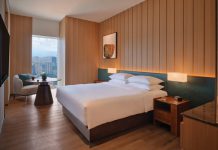
A polished urban retreat designed for business travellers, Hyatt Regency Kuala Lumpur at KL Midtown combines thoughtful design, seamless service, and exceptional facilities.

A versatile powerhouse

Arena @ Expo, a multipurpose concert hall at the Singapore Expo is a flexible space for high octane concerts and lifestyle events.

Amari Bangkok

The five-star property excels in backing its expansive facilities with seamless service and personalised attention, setting the benchmark for luxury in Bangkok.