


Alejandro Helbling has been made general manager of Capella Singapore. He joins from Dorado Beach, a Ritz Carlton Reserve in Puerto Rico where he was pre-opening general manager.

Singapore – Capella Singapore
Mauritius – Outrigger Mauritius Resort and Spa
Frederic Chretien is now general manager of Outrigger Mauritius Resort and Spa, which will open next month. He joins from The Residence, Mauritius where he was general manager for 14 years.
Indonesia – InterContinental Bali Resort
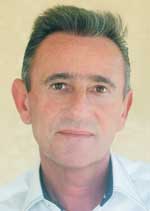
Vineet Mahajan has been appointed both director of sales & marketing at InterContinental Bali Resort and area director of sales & marketing, Bali resorts at the group level. He also oversees Holiday Inn Baruna and Holiday Inn Penang. He was last director of sales & marketing at Ayana Resort and Spa.
Hong Kong – Hotel Indigo Hong Kong Island
Mark Irwin is now general manager of Hotel Indigo Hong Kong Island. Irwin, who has more than 13 years of hospitality experience, was last with Holiday Inn Golden Mile Hong Kong.
China – Tourism Australia
Tourism Australia has appointed Tony Everitt regional general manager for Greater China, based in Shanghai. He was general manager Asia at Tourism New Zealand, where he was responsible for all commercial and marketing activities.
China – Le Méridien Yixing
Lars van der Most is now general manager of Le Méridien Yixing. He has held senior management positions with leading hotel chains worldwide, and joins the hotel from Westin Bund Center Shanghai.
China – HRG China
Hogg Robinson Group (HRG) has promoted Yates Fei to general manager of HRG China, succeeding Harald Weber-Liel. Fei was last director of sales and account manager, and has been with HRG for eight years. Meanwhile, Weber-Liel will take up a key position within the senior management team at HRG Germany.

Australia – Association of Australian Convention Bureaux
The Association of Australian Convention Bureaux has appointed chief executive of Business Events Sydney, Lyn Lewis-Smith, as its new president. She takes the reins from Damien Kitto, chief executive of the Adelaide Convention Bureau.

Danny Budiharto
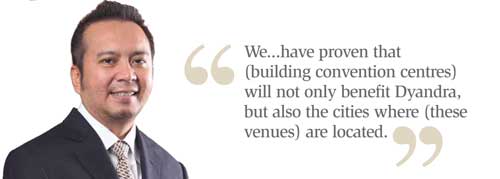
Indonesian PEO/PCO Dyandra Media International, which organises 700 events each year, is aggressively growing its property arm by building convention centres and hotels, a move COO Danny Budiharto tells Mimi Hudoyo is critical for organic growth
Why is Dyandra Media International taking this property development direction? Isn’t the construction of venues under the domain of the government?
You should ask our government why it isn’t building venues in the country. Being in the MICE business, Dyandra Media International regards convention centres as a raw material that is necessary for growth. How can the company grow its exhibition and conference businesses without venues to host them in?
As part of Kompas Gramedia (Indonesia’s largest media conglomerate), we are lucky to have stakeholders who are willing to invest in properties that require huge outlay but bring in returns over a long period.
We believe and have proven that such investments will not only benefit Dyandra, but also the cities where the convention centres are located.
Which cities have benefited from Dyandra’s investment?
Surabaya is the second largest business city in Indonesia after Jakarta, but it did not have a large and proper exhibition hall back in 2008. The only space available then was around 2,000m², which was not big enough to host Dyandra’s exhibitions. We could not wait around for the regional government to build us a venue, so we went ahead and built one ourselves – the 4,000m² Gramedia Expo.
The convention and exhibition business in Surabaya grew over the years, attracting other investors to build even larger venues. Today, Grand City Surabaya (which comprises a mall and a convention and exhibition centre) is the largest facility in the city.
When our exhibitions outgrew Gramedia Expo’s capacity, we moved them to Grand City Surabaya. That prompted us to renovate Gramedia Expo to enable it to better cater to more conferences and weddings. We rebranded it to Dyandra Convention Center a few months ago.
The same was seen in Medan. Medan International Convention Center stimulated the growth of meetings and exhibitions in the city. We would not have been able to introduce (Medan Automotive Fair) there without a proper, sizeable venue.
Dyandra is also building a 150,000m² convention centre in Serpong, Tangerang, which is far from Jakarta city centre. Are you not worried that the city’s notorious traffic jams will cause organisers and delegates to shun it?
When we moved the Indonesia International Motor Show (belonging to the Association of the Indonesian Automotive Industries, it is the country’s largest automotive show and covered 75,000m²in gross area this year) from Jakarta Convention Center (in the city centre) to Jakarta International Expo in Kemayoran (north of the city) a few years ago, exhibitors complained. They were afraid of losing the crowd as the venue was far from the city centre. But look what happened. Now, Jakarta International Expo is too small for the motor show. We lost 30 per cent of potential business that was put on the waiting list this year because of the lack of space.
We will move the event to Indonesia International Expo, Serpong, which opens next June and I’m confident of the turnout. For participants and guests from out of town, Serpong is more accessible from the airport than the city.
We are building a hotel within Indonesia International Expo and plan to add more in the coming years to support the venue.
The company doubled the size of Bali Nusa Dua Convention Center (BNDCC) within two years of its opening to cater to the APEC meetings, making it the largest venue in Indonesia. Is that necessary for Bali, the country’s smallest province?
BNDCC 1 was built for the East Asian Summit in 2011. At that time, we thought the 25,000m2 venue was very big for Bali’s standards. As it turned out, that was too small for the APEC Summit this year. But even with both BNDCC 1 and 2 (the latter opened in September), the summit had to also utilise the Bali International Convention Centre.
BNDCC 1 became profitable within two years of operation. This year’s performance is above target, with 60 per cent occupancy and revenue of more than 100 billion rupiah (US$8.9 million). Normally, 30 per cent occupancy is considered good for a new convention centre.
Coming up in December, the WTO Ministerial Conference (with some 7,000 delegates) will occupy the entire venue.
Massive events like that do not come to Bali every year, so how will you fill the venue?
It is true that we will not get massive events every year, and that is why BNDCC 2’s halls are divisible to accommodate smaller meetings for a few hundred people. A five-star hotel on site (slated to open in December) will support the facility.
Presently, the BNDCC complex has at least 16 association meetings with more than 1,000 participants each in the books, as well as other smaller corporate meetings. While January to March is usually a quiet period for MICE in Bali, BNDCC will be busy then.
Considering how the world economy is still slow and the Indonesian currency has dipped in the last few months, how do you expect 2014 to pan out?
It will be a challenging year, due also to the upcoming general and presidential elections.
Our sales team at BNDCC will need to work very hard to maintain the strong momentum, but Bali is an international destination and its potential for inbound MICE is high.
Elsewhere, our plans to begin building a convention centre in Makassar, South Sulawesi next year have been put on hold as we wait and see how the economic situation will impact business.
However, ongoing projects such as Indonesia International Expo and the 11 hotel projects we are targeting to open progressively throughout 2014 will continue according to schedule.
Accor’s Songtsam Retreat reports surge in corporate groups
THE 75-key Songtsam Retreat at Shangri-la – MGallery Collection, which sits 3,300m above sea level among the peaks of Yunnan and Tibet, has seen a twofold increase in corporate event business this year compared to the last.
Patrick Druet, general manager of the five-star Songtsam Retreat which belongs to Accor’s Mgallery Collection of unique boutique hotels, said most of these clients had come from Hong Kong, Shenzhen and Guangzhou, with bookings made for an average of five nights.
Druet said the property’s “sacred location” offered “a refuge at the end of the world where travellers can immerse in genuine local hospitality”.
He added: “It makes a big difference when you host business events in such peaceful sanctuaries instead of in big cities.
“Furthermore, we can offer an exclusive experience here as we tailor the programme according to the client’s needs.”
Spread across 8.5 hectares on a hillside, the hotel features Tibetan-style handcrafted furniture and fittings and offers a 104m2 meeting hall that can accommodate 100 guests in a classroom setting. The space is equipped with a projector, audiovisual equipment, flip chart and stage, and also comes with a 73.4m2 multifunction terrace.
Other facilities that can support a corporate gathering include a selection of dining facilities and a spa that offers Tibetan and oriental therapies.
Reviews

The Ritz-Carlton, Bangkok
The newly-opened Ritz-Carlton, Bangkok anchors the One Bangkok development with cosmopolitan elegance. Featuring the city's largest ballroom and a spectacular new penthouse suite, it delivers exceptional hardware and deeply authentic, soulful service for business and leisure travellers alike

Mama Shelter Zurich
Behind the imposing, Brutalist concrete that defines Zurich’s Oerlikon district lies a surprising secret. While its exterior honours the neighbourhood’s industrial roots, stepping inside Mama Shelter reveals a vibrant, neon-soaked world that is a far cry from its rigid shell
Hyatt Regency Kuala Lumpur at KL Midtown
A polished urban retreat designed for business travellers, Hyatt Regency Kuala Lumpur at KL Midtown combines thoughtful design, seamless service, and exceptional facilities.


