


Rex Loh has moved from The Ritz-Carlton, Millenia Singapore to his new role as director of sales and marketing of InterContinental Singapore. Loh brings with him over 15 years of experience helming sales, marketing and revenue functions in the hospitality industry.

Rex Loh
Darren Shaw
Centara Hotels & Resorts has promoted Darren Shaw from general manager of Centara Karon Resort Phuket to area general manager of both Centara Grand Phuket Beach Resort Phuket and Centara Villas Phuket. Shaw has over 20 years’ experience in the hotel industry.
Denis J Thouvard
Denis J Thouvard has taken on the role of general manager at Dusit Thani Laguna Phuket. Thouvard was last area general manager at the Centara Grand Beach Resort in Karon Beach, Phuket.

Franck LaFourcade
Franck LaFourcade is returning to Sofitel Legend Metropole Hotel in Hanoi for a second stint as general manager. Previously general manager of the hotel between 2000 and 2005, LaFourcade’s homecoming follows nine years managing Sofitel properties in Shanghai as general manager and area general manager.

Conrad Macao to take meeting planners to bed with new promotion
A NEW campaign by Conrad Macao, Cotai Central is giving meeting planners a chance to take home a bed worth US$5,000 for free when they book a residential meeting with at least 100 cumulative room nights by the end of July.
To qualify for the Take Me to Bed promotion, meetings must be valued at US$40,000 and include a full-day meeting package that costs HK$680 (US$87) per room. The meeting must also be held by December 31, 2015.
Besides Take Me to Bed, Conrad Macao is offering a variety of packages that suit events of all kinds.
The Meetings More Rewarded programme offers various perks, including five per cent off the master bill and welcome entertainment performance, to groups that consume at least 25 rooms and a meeting package for one night. Bookings must be made by August 31 this year and held by December 31, 2015.
The Intimate Meetings programme gives away one room with every 10 Deluxe Rooms or Suites booked. Meetings must be contracted by December 31, 2014 for arrivals by December 31, 2015.
Email conrad.macao.sales@conradhotels.com for more information.
Mandarin Orchard Singapore puts new club lounge in a prime spot
A NEW executive club lounge has opened on levels 38 and 39 of Mandarin Orchard Singapore, taking over the location of the hotel’s iconic revolving rooftop restaurant.
Meritus Club Lounge at Top of the M features a separate reception and meeting rooms on the lower level while the upper floor has a main dining area for 95 guests. Meritus Club guests can enjoy a 360-degree panoramic view of the city skyline through floor-to-ceiling glass windows as well as all-day culinary refreshments.
To meet business meeting and conferencing needs, an eight-seat boardroom is available. It is fitted with state-of-the-art audiovisual capabilities, high-speed Internet connectivity and overhead projection.
Marriott Hotel Manila appoints convention sales chief
JOY Florentino has joined Marriott Hotel Manila as its first director for convention sales, in anticipation of the January 2015 opening of the 6,800m2 Marriott Grand Ballroom and 228-room Hotel Tower.
Florentino has a strong background in the MICE trade. She is a certified meeting planner, former associate vice chair of the California Society of Association Executives and past president of Meeting Professionals International, Sacramento Sierra Nevada Chapter.
She also worked with Marriott International as director of sales for the Sacramento Area Cluster and senior market account executive for Western Mountain Pacific Sales where she implemented strategies for identifying key association accounts.
Oakwood, Travelport back CTW Asia-Pacific with sponsorship
CTW Asia-Pacific, an annual conference and exhibition for the region s corporate travel professionals, has sealed a sponsorship deal with accommodation and hospitality specialist, Oakwood Worldwide, and global travel technology, solution and service provider, Travelport.
Explaining the company’s decision to put its money behind the trade show, Oakwood Worldwide managing director, Craig Ryan, said: “The event’s ability to attract valuable decision-makers involved in corporate travel procurement has been the key motivating factor in our leap to be a first-time CTW Asia-Pacific sponsor.
“The show has proved to be a very important one in the annual calendar of corporate travel managers in Asia-Pacific. Being a sponsor ensures we are able to directly engage and better acquaint the industry with the Oakwood Worldwide brand and its suite of accommodation solutions.”
Sharing the same sentiments is returning sponsor Travelport. Corporate account director, Dirk Mertens, said: “By exclusively hosting a segment for the event’s attendees, we had a captive platform to interact with corporate travel professionals from around the region. As a result of this direct engagement, we gained a deeper understanding of the needs of business travellers.”
He added: “Returning as a sponsor enables us to meet with new corporate professionals and build on the working relationships we had forged with this sector in 2013.”
CTW Asia-Pacific is organised by TTG Events, a division of TTG Asia Media. It will be held from September 30 to October 2 at the Bangkok Convention Centre at CentralWorld.
Staging Connections appointed audiovisual supplier for Merivale
FOLLOWING an intensive tender process, Staging Connections has been given the contract to provide all audiovisual requirements at Ivy Ballroom and the Sunroom, venues under Australian hospitality and entertainment company, Merivale.
According to a press release, Staging Connections was chosen for its “varied experience and global reputation for delivering engaging event solutions”.
The Ivy Ballroom is a 509m2 open plan venue in the middle of Sydney’s CBD. It boasts six-metre high ceilings with white chandeliers. The full Ivy compound provides additional bookable spaces such as a lawn and a terrace, and various dining outlets.
Destinations need a new marketing approach for meetings: MCI’s Cerezales
THE existing marketing model to attract meetings is “broken” and destinations must adopt new methods, according to MCI Group COO for Asia-Pacific, Oscar Cerezales.
“Current strategies are not client-centric. Corporation and association event planners (have) a completely different approach,” he said in the new Global Report on the Meeting Industry which was presented by the UN World Tourism Organization at its headquarters in Madrid last Thursday.
Calling for destinations to “reinvent the game”, Cerezales noted that almost 90 per cent of destination management organisations/convention bureaus “cannot (make) quick decisions as they belong to regional or national tourism bodies… therefore the number of levels of bureaucracy can make decision-making extremely complicated”.
Cerezales also observed that destinations are still using traditional marketing strategies that “have not been updated for 20 years” with limited use of new technologies or “smart and social media campaigns”.
He suggested that destinations could develop a brand for meetings and to “position themselves” as how the Scandinavian members of ICCA had done by claiming to be the world’s first sustainable meetings region.
There are now too many destination management organisations/convention bureaus, he opined, leading to a “stretching of resources (that) does not provide a high level of efficiency”.
He also urged destinations to be better funded and more technologically friendly.
According to Cerezales, destinations will eventually become “the owners of events”, a change that will coincide with “an explosion in the number of events” that will be “smaller and more targeted to suit the locality, which often means they fly under the radar of destinations where the focus is big is best”.
In introducing the report, UNWTO secretary general Taleb Rifai said that with business events accounting for a quarter of travel, it was important that the sector be seen “not just as a product but a collection of many products” as it links with other trading sectors in a local economy.
Reviews
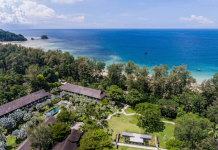
The Slate Phuket
Just 10 minutes from Phuket International Airport on the serene northern coast, this 178-key, Bill Bensley-designed resort offers delegates a quiet, tropical paradise steeped in Phuket’s tin-mining heritage

The Ritz-Carlton, Bangkok
The newly-opened Ritz-Carlton, Bangkok anchors the One Bangkok development with cosmopolitan elegance. Featuring the city's largest ballroom and a spectacular new penthouse suite, it delivers exceptional hardware and deeply authentic, soulful service for business and leisure travellers alike

Mama Shelter Zurich
Behind the imposing, Brutalist concrete that defines Zurich’s Oerlikon district lies a surprising secret. While its exterior honours the neighbourhood’s industrial roots, stepping inside Mama Shelter reveals a vibrant, neon-soaked world that is a far cry from its rigid shell


