


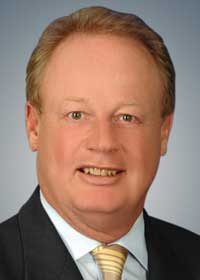
Charles Marshall is now general manager of Hilton Petaling Jaya. Marshall has over 30 years of hospitality experience and was most recently general manager for Crowne Plaza in Kuala Lumpur.
MALAYSIA – Hilton Petaling Jaya
SINGAPORE – Parkroyal on Beach Road in Singapore
David Donald is now general manager of Parkroyal on Beach Road in Singapore. He was previously general manager of the 196-room Parkroyal hotel in Parramatta in the Greater Sydney area.
SINGAPORE – Fairmont Singapore & Swissôtel The Stamford
Fairmont Singapore & Swissôtel The Stamford has promoted Ng Sok Hia to executive assistant manager, sales & marketing. She was previously director of sales & marketing for the hotel complex.

SINGAPORE – Sofitel So Singapore
Sofitel So Singapore has named Jessica Khoo director of sales and business development. Khoo has held directorial positions in sales and marketing for hospitality bigwigs such as The Ascott and The Millennium & Copthorne Group.
THAILAND – Centara Hotels & Resorts
Jamie Crisp has been nominated director of sales for the Maldives, Centara Hotels & Resorts. Based at Centara’s headquarters in Bangkok, Crisp will be responsible for the company’s three resort properties in the Maldives. He was last director of sales for Evason & Six Senses Resorts in Hua Hin.

THAILAND – Four Points by Sheraton Bangkok, Sukhumvit 15
Starwood Hotels & Resorts has picked hotel veteran Jesselyn Koh as general manager of the hotel group’s first Four Points by Sheraton property in Thailand, Four Points by Sheraton Bangkok, Sukhumvit 15. Koh was most recently general manager of Four Points by Sheraton Qingdao, China.

Asia, Europe fuel MICE growth for Thailand
SPURRED by strong demand from Asian feeder markets and expanding trade from Europe, Thailand’s MICE industry grew 12 per cent over the past three quarters, chalking up a revenue of 64.3 billion baht (US$2 billion), according to the Thailand Convention & Exhibition Bureau (TCEB).
TCEB is confident the industry will bring 940,000 delegates to the country with a revenue of 88 billion baht this financial year which ends in October.
Nopparat Maythaveekulchai, TCEB’s president, said: “We expect the fourth quarter shall bring (similar) growth. The progress will be (driven) by the execution of strategic marketing movements… as well as the strengthening of Thai MICE to tackle the launch of AEC (Asean Economic Community in 2015),” he said.
International conventions were the key driver of the industry’s growth during the first three quarters of the current financial year, drawing 223,463 delegates, or 29.9 per cent of total MICE arrivals, and generating a revenue of 22.1 billion baht. Incentives drew 196,088 travellers (26.3 per cent), generating 12.5 billon baht, followed by meetings (174,701 delegates,18.2 billion baht) and international exhibitions (152,820 delegates, 11.5 billion baht).
Asia accounted for 72.7 per cent of MICE travellers (543,016 delegates), delivering revenue of 46.8 billion baht. During the same period, 83,772 European delegates visited Thailand, generating 7.2 billion baht, while MICE arrivals from the US was 43,165, contributing 3.7 billion baht.
Thailand-based DMCs have witnessed similar trends.
James Drysdale, director of Inspired Event Travel, told TTGmice e-Weekly: “The MICE market has been very buoyant, driven primarily from the Asian markets. We have seen both conference and incentive groups coming into Thailand from Australia, the UK, Europe and the US, so while Asia is the larger of the feeder markets, the other markets are performing too. Yields from Australia, the UK and the US remain higher than Asia, as has typically been the case.”
“Quoting activity is up on prior years. However, we are seeing significant downward pressure on costs. Clients are looking more than ever to maximise the reach for their spend,” he added.
Asian Trails also saw growth in its MICE business but had not experienced shortening lead times from Asian clients, which is an emerging trend across the industry.
Melbourne expands conference ambassador programme
CLUB Melbourne Ambassador Program, which has won more than 70 international conferences for the Australian city through leaders of multiple industries since 2005, was relaunched on August 27 with a fresh direction and six new ambassadors.
The new direction will addresses increasing international competition to create an even stronger, focused and more supportive network to secure and host international conferences in Melbourne.
The governor of Victoria, Alex Chernov, who is the patron-in-chief of the programme, said: “Club Melbourne provides a unique opportunity to connect prominent thinkers and leaders in the promotion of Melbourne as one of the world’s premier conference and event destinations. Its influence is global and the way it drives knowledge is pivotal to all our future as a forward thinking, smart economy.”
According to a press statement from the Melbourne Convention and Exhibition Centre (MCEC), where the programme’s relaunch was celebrated, business events contribute over A$1.2 billion (US$1.1 billion) annually to the local marketplace.
Over the last 12 months, Melbourne hosted 10 international conferences that were secured by CLUB Melbourne Ambassador Program over the last eight years. These events brought in almost 10,000 visitors from 49 countries, and contributed A$41 million in economic impact to Victoria.
MCEC chief executive, Peter King, said: “Through our ambassadors’ hard work, MCEC regularly hosts some of the largest and prestigious conferences in the world.
The six new faces that will join the programme in promoting Melbourne as a destination for conferences include Cathy Foley, chief of CSIRO’s Materials Science and Engineering Division; Milton Hearn, director of the Victorian Centre for Sustainable Chemical Manufacturing and deputy director of the Green Chemical Futures Centre at Monash University; Christina Mitchell, dean of the Faculty of Medicine, Nursing and Health Sciences at Monash University; Ingrid Scheffer, chair of Paediatric Neurology at The University of Melbourne and The Florey Institute of Neuroscience and Mental Health; Hugh Taylor, chief of the Indigenous Eye Health Unit at The University of Melbourne; and Jan Tennent, CEO of the Bio 21 Cluster.
Edward Chia
Beer Fest Asia is young but it is recognised as a foremost event in Singapore for all lovers of a good brew and great entertainment. Edward Chia, managing director of Timbre Group, reminds Karen Yue that the event’s tradeshow component is just as critical to its success
This year marks the fifth instalment of Timbre Group’s Beer Fest Asia. Has the event progressed as you had envisioned it would?
Beer Fest Asia has grown into an excellent platform for new beer entrants, often used to launch new beer companies and products. Some established companies, like Asia Pacific Breweries, use this event to test beers that could potentially be distributed in this region, should they be suitable for the Asian palate. Unlike HOFEX and Food&HotelAsia (held in Hong Kong and Singapore respectively and are Asia-Pacific’s key food and hospitality tradeshows) which showcase many products, Beer Fest Asia focuses on the world of beers, from lagers to pilsners to ales. Beer Fest Asia also offers a look at commercial and craft beers.
The event this year had 40-45 exhibitors with 400 different beers from all over the world. We had 30,000 attendees over four days. Up to 15 per cent of that were from Asia. We want to grow this percentage. In the years ahead, we will invest more in regional marketing. In fact, the next phase for us is to increase Beer Fest Asia’s presence and garner more consumer and trade attendees. Most of the trade in Singapore have attended Beer Fest Asia. It is now time for us to encourage more trade attendees from South-east Asia who are interested in marketing new beers to their market.
This is a natural progression for the appreciation of FMCG (fast-moving consumer goods). Consumers always start off with a mainstream brand before desiring something premium and unique. When that transition happens, there is a gap between demand and supply, and Beer Fest Asia helps to create that supply of more varieties of beer. South-east Asia is ready for the evolution of beer consumption.
I imagine the growing population of educated and well-travelled Asians must play a part in this evolution.
Definitely. The increase in education, wealth and middle-class population spurs the demand for a greater variety of higher quality products. South-east Asia has the world’s highest concentration of fastest-growing middle class. As the middle class emerges, trade buyers will have to supply better products. If they don’t, they will lose out on tremendous opportunities.
Beer Fest Asia is an interesting concept. Besides the trade day, the event is a big party with great entertainment.
At a typical trade event, you come, you exhibit, you meet people and discuss business further at meetings later on. This formula works for some industries, like aerospace, where people don’t just walk right up and say, “OK, I’ll buy this jet”. For FMCG companies, it is not enough to just engage the trade; they need to create a relationship with end-consumers because ultimately it is them who drive business.
Therefore we feel that Beer Fest Asia has to be a hybrid event. It has to be a trade event with a huge consumer angle so that exhibitors can build a relationship between their brands and consumers. The event also provides an annual platform that brings true beer lovers together with companies that want to test their new beers.
So the entertainment aspect plays an important role.
Absolutely. It has to be a fun event as beer is a fun product, and people need to experience it in a fun environment. Furthermore, the entertainment component of Beer Fest Asia presents a strong front for event marketing in some Asian countries where beer is a sensitive product. In our regional marketing, we would actually like to harness more of social media, but we realised that in some geography, beer is a word that is censored. You won’t go far with Google and Facebook ads. We have to respect the culture and religion of different countries.
How has the entertainment lineup on consumer days evolved through the years?
Live music goes hand in hand with beers, so we started Beer Fest Asia with a rock stage and later grew to include blues. Beyond live music, we think Asians need to laugh a bit more, so we added a stand-up comedy club three years ago. Besides entertaining people, such content also acts as a marketing tool for exhibitors. A lot of beer brands, such as Guinness and Magners Irish Cider, are co-marketed with comedy. For the past two to three years, our comedy central had Magners as the official beer.
Beer is an interesting product – it needs to be attached to emotions.
Do you think the consumer part of Beer Fest Asia has overshadowed the trade aspect? It is such a popular festival among beer lovers and party-goers.
No. Having one day just for the trade is sufficient for buyers to connect with exhibitors. Like most trade events, Beer Fest Asia acts as a platform for buyers and exhibitors to introduce themselves to one another, and further their discussions later on.
Although the event has only one trade day, we have not forgotten the importance of having a strong trade element, and are continuously investing in strengthening the event’s value for exhibitors. We have added new components over the years, one of them being the Asia Beer Awards which sees an assembly of professional brew masters and established industry players judging participating beers. The awards provide an additional marketing tool for beer companies, as they can later promote their award-winning brews.
We also featured a whisky tent this year, as we believe that beer and whisky go hand in hand. We had three or four whisky companies showcasing their products in an air-conditioned tent with lounge seating and rock and jazz bands.
The consumer part of Beer Fest Asia does not overshadow the trade aspect because both are not mutually exclusive. Buyers are also consumers of beers and they must themselves enjoy what they eventually list in their restaurants, bars and hotels. We see them returning after the trade day as consumers. Remember – it is the consumer that drives FMCG demand, and it is in the interest of every beer company to make sure their beers and brands are exposed to the consumer. That creates the latent demand that encourages restaurants, bars and hotels to list their products.
Furthermore, the sale of beers during the consumer days allows exhibitors to recover some of their cost of participation. There is also nothing better than letting consumers experience the beer for themselves.
Beyond Beer Fest Asia and your hugely popular Timbre Rock & Roots, is Timbre Group looking to grow its events portfolio?
We are now at a phase where we are no longer looking to grow new events, but are instead focused on scaling our existing ones. Our priority now is to take successful events and bring them to other cities in the world. Having said that, we will consider opportunities to develop new events.
In the case of Beer Fest Asia, we find that it is now well positioned for South-east Asia. Therefore, we would like to develop a beer festival for North Asia and make the event more accessible for trade buyers in that part of the region. We are looking at destinations like Shanghai and Hong Kong.
How close are you to materialising this North Asian version of the festival?
We have identified a couple of partners and are looking at some venues. The toughest part is in identifying the right location for the event.
Will the North Asian event be a replica of what you have in Singapore?
We will replicate the current model, as it is successful. Beer will still be the focus, and entertainment will complete the whole experience. It is best not to reinvent the wheel. Coming up with the event idea is often simple. It is the execution – ensuring that everything goes smoothly and that content is perfect and draws people – that is the most challenging.
One can always dream. If you had all the resources at your disposal now, what sort of event would you create, and why?
(Long pause, with a smile) Oh, I believe in the power of festivals. I love them, as they bring people together. If I had all the resources in the world, I would create a festival that combines the best music of all genres and the best food and beverage. Food and drinks feed the body and music feeds the soul. Human beings are communal creatures, so the best event will have to be one that can pull everyone from different countries, cultures and backgrounds together.
Edward Chia
No. Not here, not in Asia. There are no events in this region that bring together different cultures through music, food and drinks. There are great dining events and music events here, but not a single one that offers music, food and beverage components at an equally high standard. You are more likely to find a wonderful music festival with so-so dining options, or a great dining event with average music and entertainment. Why? Because it takes a lot of resources to create something like that. It is also a very risky project because the event will need a lot of people (in attendance) to make economic sense.
Asia is a very fragmented region due to different cultures, religions and languages, so it takes a lot of effort to bring everyone to a single location. It requires immense resources and stamina to build such an event. In Singapore, where the cost of doing business is very high, events must draw huge (attendee) numbers and be very profitable from the get-go. Organisers do not have the time to grow the event slowly, or to experiment and tweak it along the way. Organisers must get the right mix and succeed right from the start.
Starwood sharpens claws for MICE; reports good growth in Asia
STARWOOD Hotels and Resorts will continue to focus its MICE strategy on expanding domestic trade across its Asian properties, while tapping inbound and outbound travel in China and India to drive future growth.
Double-digit growth in outbound travel from China and the fact that India is emerging as the world’s second-fastest growing tourism economy provide significant opportunities for the hotel group to service domestic trade in each market, as well as to target the increasing volume of outbound incentives and meetings travellers, according to Lothar Pehl, senior vice president operations and global initiatives, Starwood Hotels and Resorts Asia Pacific.
“For China, the domestic market continues to drive our MICE business in the country while international conferences are also on the rise,” said Pehl, adding that the company would focus on domestic business to drive growth in all of its regional markets.
“Gateway cities such as Shanghai, Beijing and Guangzhou continue to be MICE hotspots. With the opening of (the 4,000-room) Sheraton Macao Hotel Cotai Central last year, we have seen a huge number of meeting requests and forward bookings in this market.”
Elsewhere in the region, Thailand continues to do brisk business from its offering as a total destination. Bangkok and Phuket are most popular, with the latter benefitting from an increase in direct flights from India, which has spurred solid growth in the lucrative weddings market.
Sydney, Delhi, Singapore and Hong Kong also remain hot favourites, while Japan has posted strong growth, partly due to a weakening Japanese yen.
Taiwan and South Korea are gaining momentum as popular group destinations, while demand has surged in Malaysia and Indonesia.
However, the rise in Asian incentive travel had resulted in lead times for bookings coming out of China and India being slashed to as little as one week, noted Pehl.
“It’s short haul and short term,” said Pehl. “You can get a group booking with just a week’s lead time simply because there’s air-seat availability and the package was right.”
Other emerging trends, according to Pehl, include a rise in high-end executive-level groups holding events at Starwood’s luxury resorts, renewed growth in motivational sales incentives, and an increase in overall meetings spend with both the number of events and participants per event forecast to rise throughout the year.
Reviews

The Ritz-Carlton, Bangkok
The newly-opened Ritz-Carlton, Bangkok anchors the One Bangkok development with cosmopolitan elegance. Featuring the city's largest ballroom and a spectacular new penthouse suite, it delivers exceptional hardware and deeply authentic, soulful service for business and leisure travellers alike

Mama Shelter Zurich
Behind the imposing, Brutalist concrete that defines Zurich’s Oerlikon district lies a surprising secret. While its exterior honours the neighbourhood’s industrial roots, stepping inside Mama Shelter reveals a vibrant, neon-soaked world that is a far cry from its rigid shell
Hyatt Regency Kuala Lumpur at KL Midtown
A polished urban retreat designed for business travellers, Hyatt Regency Kuala Lumpur at KL Midtown combines thoughtful design, seamless service, and exceptional facilities.


