Asia/Singapore Friday, 17th July 2026
Page 1074

Kurt Knackstedt

0

The 25-year-old Association of Corporate Travel Executives (ACTE) has elected its first Asia-based president. Rio Tinto’s global category leader of travel & expense management, who lives in Singapore, tells Caroline Boey what members can expect

Congratulations Kurt on your appointment. So how will having an Asia-based president benefit members in the region and the association?

Asia being the epicentre of the world economy is great for ACTE and the association has seen the most rapid growth in this region. Membership has grown about 50 per cent, with new members from Pakistan and Mongolia joining in 2013. ACTE is also seeking new members in Kazakhstan, where Asia regional director, Benson Tang, recently participated in a travel event.

Asia is maturing rapidly in its knowledge about corporate travel and ACTE has proven it is ideally placed to lead this knowledge growth.

I believe I bring a unique perspective to both the president role and the region having been based here for 10 years across Sydney, Hong Kong and Singapore, with a year in London in the middle of the decade. I began my travel industry career 12 years ago in North America at Rosenbluth International, moved to Sydney and London with Galileo, returned to Sydney with American Express, set up my own consultancy before I joined Rio Tinto and moved to Singapore in 2011.

Technology, rapidly maturing payment and expense management systems, and the emergence of world-class Asian-based suppliers have risen rapidly in the last 10 years.

I have been active with ACTE since 2001 when I attended the inaugural ACTE Asia Education Conference in Singapore and I feel strongly that I can help adapt corporate travel best practices and knowledge to help make it relevant for Asia.

What are your goals and objectives over the next two years of your presidency?

They are numerous, but my key areas of focus are to further enhance ACTE’s global corporate travel education and advocacy capabilities, extend its already significant reach into Greater China, India, Japan and ASEAN, and bring new, innovative and visionary companies and leaders into our association.

In the past decade, corporate travel in Asia has developed from being an area of expertise among MNCs to one which is now pervasive across local, regional and global Asian-based businesses. We now see strong travel purchasing strategies being deployed in companies of all sizes, and more and more companies are realising the benefits of a well-managed corporate travel programme.

What are the top corporate travel trends in the US and Europe now, and how will they impact Asia in the future?

What will be interesting to watch is whether Asia will leapfrog the US or Europe in the coming year or two in finding new and innovative ways to manage corporate travel. The US and European economies still face significant challenges. Although Asia has slowed since the dizzying heights of the mid-2000s, there is still much to do and lots of opportunity to invest in Asian corporate travel. The region is well placed to continue to invest in its future around corporate travel.

What are the key challenges and opportunities for companies in Asia?

The big challenge is for companies to decide how corporate travel will be managed. Do you want to focus on compliance and company-specific objectives or a long-lasting relationship with suppliers not necessarily based on cost analysis and open sourcing? If you ask me, I believe it will be a balance of the two. Businesses are aware of the need to balance relationships and competition. The big trend among buyers in China is how to apply proper procurement and sourcing processes. It’s the same in India and South-east Asia.

Companies such as Lenovo, Haier, Tata, Samsung, Alibaba and Qunar are growing bigger and are expanding their economic base. Will they adopt local or global practices, or blend the two? What’s exciting for me is the prospect of meeting the buyers – expatriates and local talent, in particular, which has been emerging in the last couple of years.

Another thing that is very exciting is the technology. It’s not the same in Asia like in the past with online booking tools in North America. A lot is being done and can be done with mobile technology and on smartphones. Yes, Asia is fragmented but that gives it vibrancy and its lack of legacy offers a lot of opportunities.

What ACTE initiatives are being planned in Asia, what new innovations?

We are enhancing our education teams worldwide to bring new and innovative networking and learning opportunities to our Asian events, including more in-depth workshops on hot topics, utilising interactive technology and social media to engage our members and attendees to make our events more “alive”. We’re also going to some new and exciting locations in Asia to continue to spread our vision for the corporate travel industry.

There will be different types of learning opportunities. ACTE started exploring virtual conferences in 2012 and it looks more feasible now with the technology. In Asia, budgets and visas can be an issue, so we want to offer a range of options.

ACTE will go where the buyers are, Central Asia, Kazakhstan where there are big oil and gas government-linked, state-owned enterprises, Chengdu and Harbin. India, for example, is being looked at as a more specialised market needing specialised events. Japan is underserviced and we are addressing it.

ACTE is also looking at new destinations and may move the ACTE Asia Education Conference, which has been in Singapore for many years, to stay fresh. If we do move the conference there will be other events in Singapore.

Watch this space as we will be announcing the exciting locations for all our 2014 events very soon, including some new locations for events in Asia.

We are getting different feedback from different regions regarding membership and we are looking at a different fee structure as a top priority. It will be a different model by 2014.

Why did you put your name down for the ACTE President’s role?

I do spend a fair bit of time on ACTE since being elected to the board in 2012 as the Asia Region Board Representative. But it is worthwhile because I get to meet other industry peers and suppliers, which is very valuable, and learning from them is beneficial for what I do at Rio Tinto. It’s win-win.

What new destinations will you be travelling to in the coming year as ACTE president?
As ACTE is a truly global organisation, I will be attending board meetings, conferences, events and networking opportunities on nearly every continent to connect with as many people as possible.

How do you balance work and family life, and what keeps you sane on the road?

Thankfully, my family loves to travel as much as I do. So at every opportunity I either meet them before or after a business trip or we plan our holidays on the back of my work travel. Also, my son, who is now seven years old, knows how to use the video applications on our smartphones so we can chat face-to-face rather than just talk on the phone. This has made a world of difference in sharing my travel experiences with him.

What are the three most important things on your checklist before you leave for the airport?

Passports – I hold US and Australian citizenship, mobile phone, and at least one complete set of clothes.

If there is one thing you could change about your business trips in 2014, what is it?

Have more of them and to take my family with me on all of them!
Mandarin Oriental, Macau offers value-adds for meeting planners

0

MANDARIN Oriental, Macau has rolled out a Meetings with More package, priced from HK$1,900 (US$245) per room per night, and a full-day meeting package supplement at HK$730 per pax per day.

Meeting planners who take up the offer for events hosted by December 31 this year will enjoy complimentary room upgrade for the entire group, Internet access within the hotel, tailor-made coffee break items and a pre-meeting breakfast which can be upgraded to daily buffet breakfast at an additional HK$100.

Call (852) 3690 9888 or email momac-sales@mohg.com for more details.

Go green and save at Grand Hyatt Singapore

0

A DISCOUNT of five per cent is being dangled by Grand Hyatt Singapore to encourage meeting clients to go green with their events at the city hotel.

The offer is only valid when clients adhere to a five-step green programme that requires clients to plan ahead by providing the hotel’s event team with all information and event orders 10 days in advance to reduce the use of last minute resources; order only from the hotel’s sustainable menu; distribute meeting materials from a single, central location so that attendees can take only what they need; set meeting roooms at reasonable temperatures; and ban the use of water bottles.

Indrani Bit, spokesperson of the hotel, told TTGmice e-Weekly that event specialists from the hotel would be on hand to assist clients in achieving these green goals.

“We are excited to have launched this (Meet and Be Green) package as it blends in perfectly with our overall philosophy of doing good for the environment, the communities and our guests. With our food philosophy of sourcing sustainable ingredients when possible and the removal of shark’s fin from our menus, I believe that this package gets us closer to the next level of looking after our environment,” said Julie Goleman, director of events in a press release.

Meeting deals at Grand Hyatt Singapore are now priced from S$115++ (US$91++) per person and include a welcome break, two coffee breaks and lunch, suitable for groups of 10 to 350 guests.

Call (65) 6416 7073 or email singapore.grand@hyatt.com for more information on this offer.

TTG Events, ACTE join forces for industry education

0

TTG Events has rekindled its relationship with the Association of Corporate Travel Executives (ACTE), which is coming on board as education partner for IT&CM China in Shanghai, and IT&CMA and CTW Asia-Pacific in Bangkok this year.

ACTE was TTG’s education partner when CTW Asia-Pacific was launched in the 1990s following the publication of BTN Asia-Pacific in 1995, and which ceased publication in mid-2000.

The collaboration with ACTE will kick off in April in Shanghai with the proposal that Benson Tang, ACTE regional director, facilitate a panel discussion comprising corporate travel managers from three MNCs looking at travel policy, compliance and adapting a global corporate travel programme in the Chinese context.

Tang said: “ACTE’s aim in China is to raise the corporate travel industry to a new level through further education and knowledge sharing, and the cooperation between ACTE and TTG should be a win-win for the industry.”

In 2013, TTG held corporate travel roundtable discussions targeting local professionals representing MNCs and Chinese companies across China in Shanghai, Beijing and Chengdu.

Until recently the Global Business Travel Association was TTG’s education partner at IT&CM China and CTW Asia-Pacific since early-2000.

Philippine association executives power up with own society

0

THE Philippine Council for the Advancement of Association Executives (PCAAE) has been formed to raise the professionalism of association executives through activities such as seminars and workshops.

Emy Chavez, president of PCAAE, told TTGmice e-Weekly that through these training opportunities the new association wants to eventually make the association executive a recognised profession by the Professional Regulatory Commission (PRC).

Skills that needed upgrading include governance and ethics, besides daily operation and planning, according to Octavio Peralta, chair of the PCAAE board of trustees.

Peralta said: “In most associations that I know of in this country, there’s no distinction or delineation between governance and management. The board of directors or board of trustees runs the associations (and the individuals) come and go, so there’s no continuity.”

“If the members were well governed and well managed, wouldn’t they be bankable?” Chavez said, adding that PCAAE would give association executives “a louder voice”.

PCAAE has 104 founding members and wants to raise membership to 500 in the next one to two years’ time.

While the focus is currently on Metro Manila, the goal is to form chapters in Visayas and Mindanao, for instance, and eventually establish a federation of national societies of association executives in Asia-Pacific.

By : Marianne Carandang

Global surgeons to congregate in Perth in 2015

0

PERTH Convention Bureau (PCB) has secured hosting rights for the Royal Australasian College of Surgeons Annual Scientific Congress (RACS ASC 2015) for 2015, an event that will see the attendance of up to 3,500 surgeons from Australia, New Zealand, South-east Asia, India and the Middle East.

According to a press release by the PCB, the RACS ASC 2015 will be the largest, highest yielding medical congress staged in Perth to date, and has the potential to expand to 4,500 international surgeons through an invitation to Fellows of the Royal College of Surgeons Edinburgh.

PCB’s long standing relationship with RACS, supported by the bureau’s Aspire scholarship, has helped to expand the event’s attendance by potentially 1,000 more international delegates.

“The benefits to Western Australia’s economy and surgical knowledge base will be substantial. The Perth Annual Scientific Congress will be one of the largest conferences in the state since CHOGM 2011, and the highest yielding ever,” said PCB CEO, Paul Beeson.

As part of the event, RACS will offer attendees customised pre and post touring packages to both the north-west and south-west of Western Australia. The tours will include a visit to Albany which coincides with a commemorative event for the Anzac Centenary.

PICC ramps up offerings in competitive Philippine market

0

RENOVATIONS at the Philippine International Convention Centre (PICC) are slated for completion before the start of the APEC Summit ministerial meetings in 2015, as the venue fights to stay ahead of the competition.

PICC is reconstructing the 1,687m2 Meeting Room 1, which burned down in 2001, and will reopen it in October or November.

Roberto Garcia, deputy general manager and director for marketing and events management said the room will be suitable for events for between 800 to 1,200 people.

“We have huge venues like the plenary hall (4,000 pax in theatre style) and reception hall (2,500 pax banquet style), and then we go down to rooms at 800m2, so there’s nothing in between,” Garcia commented.

He shared that the venue is also enhancing and modernising its security equipment to meet the requirements of the APAC meetings. Other aspects of the venue upgrade include structural retrofitting for earthquake tolerance and improvements to lighting, flooring and carpeting, among others.

PICC recently unveiled its new brand identity, Home to the (greatest/grandest/brightest/classiest), intended to attract events and reach markets beyond its “staple” conferences and regional congresses.

PICC is also making a more active pitch for association business by hosting quarterly meetings and special events organised by the recently formed Philippine Council for the Advancement of Association Executives (PCAAE), Garcia remarked.

PICC is still the largest events venue in the country but faces increased competition, including the three upcoming integrated resorts in Manila, a convention centre rising at the Marriott Manila, and a number of independent venue operators, said Garcia.

The art of shaping, keeping talents

0

From free skills training and encashable points for best performance to matchmaking parties, Asian convention centres are beating the industry’s manpower crunch with unique solutions to build staff capability, loyalty and retention. By Karen Yue

The acute shortage of talents in Asia’s business events industry is not a new problem, but it is one that is being compounded over time as destinations rapidly expand their arsenal of event hardware – which must be brought to life by humans – to cater to intensifying MICE demand and higher quality expectations.
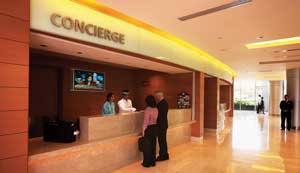
Factors contributing to the manpower strain include the short supply of new blood and what is said to be the arduous working conditions of the business events industry.

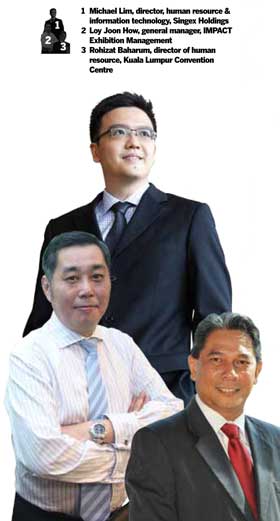
“Not only does the industry grow faster than the rate schools can churn out trained individuals for the marketplace, many MICE professionals exit due to the long hours and heavy workload,” said Michael Lim, director, human resource & information technology at Singex Holdings, the company behind Singapore Expo Convention and Exhibition Centre.

Oh, what woes!

Besides an inability to deliver quality service, convention centres lacking sufficient and experienced staff can risk a “loss of current and potential clients”, said Rohizat Baharum, director of human resource at Kuala Lumpur Convention Centre, and be put at a “serious competitive disadvantage” according to Loy Joon How, general manager of IMPACT Exhibition Management, Thailand.

“The impact of poor service on an organisation’s reputation cannot be underestimated as it can affect business and revenue,” warned Rohizat.

“High staff turnover and frequent changes (in personnel) is disruptive to operations and the business too,” said Tony Xu, vice president of China National Convention Center (CNCC).

Middle and senior management personnel are said to be the hardest to hire.

“The dearth of good mid-level manpower affected our ability to scale our business effectively and efficiently in the way we had envisioned. While we had an ambitious growth plan, our journey was hindered by the labour crunch and we had to rely heavily on technology by either upgrading our current system or buying new ones to ensure consistency and predictability in service delivery and (client satisfaction),” said Lim.

Once the right people are hired, there comes the challenge of retention.

“The turnover rate of the Gen X and Y workforce, which makes up the bulk of staff in many corporations today, tends to be higher,” Loy observed. “These generations have organisational needs and expectations that are different from those of the baby boomer era.

“Unfortunately, most companies are not doing enough to actively engage these (people) to provide them with a stimulating working environment.”

Rohizat added: “It is not easy to retain staff as they constantly have doors opening for them.”

Human resource chiefs bemoaned poaching by competing venues and other related or similar businesses as being all too common.

Staying power

Convention centres in Asia have devised numerous solutions to retain staff, most of which seek to grow the individual’s capabilities and improve his/her career advancement opportunities within the company.

Kuala Lumpur Convention Centre’s Ambassador Programme targets flexible employees who are often the first to interact with clients and guests. It offers a skills training module developed by experienced departmental trainers and meeting industry professionals. Participants are given a ‘Passport to Success’ in which classes undertaken by the ‘ambassador’ are recorded. Since its launch in 2005, over 6,700 individuals have graduated from the programme.

Kuala Lumpur Convention Centre went on to launch the Talent Acceleration Programme (TAP) on November 18 last year, an 18-month scheme designed to expedite the development of its managerial talent pool. Starting off in December with an intake of 24 people, the programme comprises field trips, experiential learning sessions, internal and external leadership sharing and mentoring, as well as exposure to competencies such as commercial awareness, customer focus and change management, among others.

Rohizat said TAP graduates would be “eligible for higher positions” within the organisation.

Peter Brokenshire, who will retire from his position as general manager of Kuala Lumpur Convention Centre at end-March, shared at a session at the 52nd ICCA Congress that communication with all staff is encouraged through an activity called Coffee With Datuk.

“Once a month rank-and-file members are welcome to have an open conversation with me in my office. They can raise any issues and offer ideas. It was through this that we heard the concerns of our staff and responded by improving the quality of staff meals and maternity benefits, for instance,” he said.

At Singex Holdings, incentive trips and opportunities to enrol in overseas diploma and degree courses by the International Association of Congress Centres (often referred to as AIPC) are offered to staff.

Lim said the management of Singex Holdings would “even realign (employees’) job scope to allow them to be more engaged with the overall strategic corporate direction.”

IMPACT Exhibition Management rewards top performers with all-expense-paid incentive trips to destinations like South Korea, Hong Kong and Japan, and implements an annual staff engagement survey index that measures how the company is doing in fostering and developing a stimulating working environment.

According to Loy, the index is an integrated part of the company’s KPI, as “equal focus” is placed on both financial and human capital performance.

“The saying, ‘staff don’t quit working for companies; they quit working for their bosses’, rings true. We believe that good leadership is key to hiring, developing and retaining talents, (and will help to) create a healthy, dynamic and positive company culture that fosters a motivated and engaged workforce. (Such a) workforce is less likely to suffer from high staff turnover,” said Loy.

IMPACT Exhibition Management not only focuses on cultivating good leadership, it also invests in training and skills development. Loy revealed that the company’s human resource training and skills development budget had tripled “over the last couple of years”.

“We have also adopted a management style based on staff engagement and empowerment. This has helped to develop a sense of ownership and accountability among all levels of staff (which boosted loyalty and) reduced staff turnover.”

At CNCC, staff retention initiatives take an unusual spin. “China’s one-child policy has created a generation of lonely people who crave friendship. So we play the role of the parent and hold regular matchmaking parties for all our single employees and have eight staff clubs that provide recreation and self-improvement activities,” Xu said.

Money talks

Monetary rewards are also dangled to encourage the best in service delivery and inspire loyalty.

Brokenshire said staff who “go above and beyond their call of duty” are rewarded with shopping vouchers and points that come with a cash value. Bonus points are also given whenever a staff  member receives a compliment from a guest and when the entire team excels in a particular job or project.

CNCC helps to lighten employees’ financial burden by offering heavily subsidised accommodation.

Xu said: “Accommodation is very costly in Beijing, so CNCC bought over a building, converted it into a staff dormitory and offered a roof over employees’ heads for just US$20 a month. Free Wi-Fi is also thrown in so they can stay in touch with loved ones.”


Returns on investment

Kuala Lumpur Convention Centre has maintained an enviable staff turnover of under two per cent since its opening in 2003, while its regular senior management retreats, which comprise teambuilding activities and meetings on future business strategies, have yielded “fantastic” and profitable ideas.

“For example, in 2008 when business was challenging, the management retreat proposed offering free flow of food and drinks to attract meetings. That idea spurred the creation of meeting packages that are now a RM10 million (US$3.1 million) business,” said Brokenshire.

CNCC sees a six to seven per cent staff turnover, a figure Xu is comfortable with.

Loy said: “By and large, from the results of our staff engagement surveys, I think we have been rather successful in attracting, developing and retaining our talents. Our turnover rates and cost of hiring and replacing staff have all been reduced.

“More importantly, we are achieving better than expected scores in our Customer Satisfaction Survey Index which shows an increase in our capability as a company to (meet and exceed) the needs of our customers.

“With a better engaged workforce, ideas on new and innovative products and services such as our Complete Meeting Package, Healthy Coffee Break Package, Customized Logo booth catering services, etc have all been rolled out successfully over the last few years. Productivity and internal communications have also improved.”

New moon rising

0

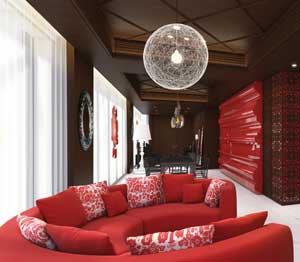
The Moonshine Suite at the new Mira Moon hotel in Hong Kong is an exquisite space on the 36th floor that functions as both a guest room and a venue for intimate events for up to 20 guests.

Its interior, a stunning medley of red, white and black, bears the beautiful and eccentric signature of Dutch designer Marcel Wanders who is behind the hugely popular Knotted Chair.

We love the luxurious circular lounge area and the grand all-black six-seater dining set – perfect spaces for some serious strategy brainstorming and intensive post-meeting networking drinks. Extra points for the private cocktail bar tucked in a corner – ask for a bartender to kick the fun factor up a notch.

Designed for the fashion-forward tech-savvy business traveller, Mira Moon offers 90 rooms that are fully equipped with modern features such as 32-46” HD IPTV and iPad mini as well as free Wi-Fi and complimentary minibar.

The hotel also offers a complimentary Delegate Concierge Service that provides porters to assist guests with post-conference baggage. At guests’ request, porters will be stationed at the Hong Kong Convention and Exhibition Centre during selected fairs, ready to whisk guests’ belongings back to their hotel rooms.

Visit www.miramoonhotel.com for details.

L’Appart

0


With its certain je ne sais quoi, this rooftop French restaurant and bar in Bangkok will mesmerise groups with its elevated views, classy interiors and delectable cuisine. By Xinyi Liang-Pholsena

Perched on the 32nd floor of Sofitel Bangkok Sukhumvit, L’Appart embodies the French spirit in its elegance and culinary approach, taking its design cues from a 19th century Haussmann-style apartment in Paris.

The 80-seat venue boasts an interesting play of spaces, with each interconnected room exhibiting its own character: the laidback lounge features a full bar and a DJ station, plus plush armchairs and black-and-white photos of Parisian life; the quiet library is adorned with soft lighting, books and objets d’art; the classy dining room is set in neutral tones with parquet flooring; and the lively open kitchen showcases a red Le Cornue stove, white-marble tables and leather banquettes.

Step outdoor and the open-air terrace, which extends 180 degrees, offers panoramic views of Bangkok’s crowded skyline and the bustling Sukhumvit Road below.

MICE application

The flexibility of L’Appart’s multi-faceted spaces enables it to cater to a wide gamut of events, including product launches, cocktail receptions, art display, fashion walks and annual corporate parties.

For cocktails, L’Appart can accommodate up to 300-350 pax but 150 pax will be the optimum number, advised Anthony Slewka-Armfelt, Sofitel South-east Asia & India regional director of sales and Sofitel Bangkok Sukhumvit director or sales & marketing.

The eight-pax private room can be booked for intimate gatherings. For bigger groups seeking exclusivity, the entire venue can be bought out for 400,000 baht (US$12,500) for typically four hours of private usage, according to Slewka-Armfelt, who recommends corporate groups starting the evening at 17.00 to catch the sunset over aperitifs on the outdoor terrace before venturing indoors for dinners.

F&B concept

Led by chef de cuisine Jeremy Tourret, L’Appart serves contemporary French cuisine with Asian touches.

Our dinner started with a beef tartare graced with quail eggs and black truffle, and the second appetiser – an onion soup capped with a crisp-golden pastry dome – kept sending out aromatic wafts. For the main courses, the dishes tasted as delightful as their artful presentations: my order of steamed snowfish and king crab, served with black-ink risotto and tom kha-flavoured beurre blanc, balanced delicate and savoury flavours, while my partner’s medium-cooked duck breast was juicy and tender.

A well-curated drinks list, from Old World Reds to Champagnes and cocktails, makes good company for the exquisite food.

Service and ambience

The venue eschews the typical restaurant layout, with tables spaced apart and tucked into intimate corners to retain the ambience of an upclass Parisian residence, so much so that a dinner at L’Appart feels like attending a soirée at a friend’s sumptuous penthouse.

Although there was a bit of waiting between courses, L’Appart manager, Sylvain Neveu, and a waitress checked on us from time to time, providing attentive yet discreet service.


Contacts
32nd floor, Sofitel Bangkok Sukhumvit, 189 Sukhumvit Road Soi 13-15
Tel: (66-2) 126-9999
Email: h5213-fb10@sofitel.com
Opening hours
Daily; dinner: 19.00-22.30; bar: 17.00-01.00; and tapas: 17.00-00.00


Reviews

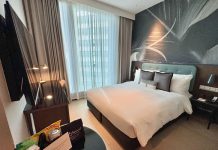
Oakwood Premier Raffles Place Singapore

Oakwood Premier Raffles Place Singapore brings serviced apartment-style accommodation to the heart of the city's financial district, offering business and leisure travellers a base within walking distance of the CBD and key attractions.

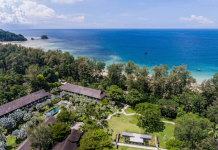
The Slate Phuket

Just 10 minutes from Phuket International Airport on the serene northern coast, this 178-key, Bill Bensley-designed resort offers delegates a quiet, tropical paradise steeped in Phuket’s tin-mining heritage

The Ritz-Carlton, Bangkok

The newly-opened Ritz-Carlton, Bangkok anchors the One Bangkok development with cosmopolitan elegance. Featuring the city's largest ballroom and a spectacular new penthouse suite, it delivers exceptional hardware and deeply authentic, soulful service for business and leisure travellers alike