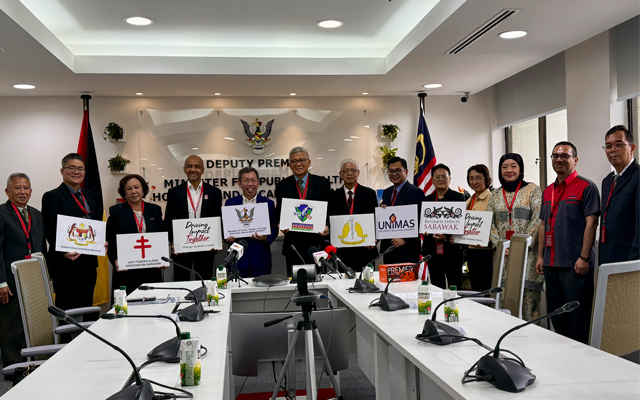
Press conference announcing Sarawak as host of APRC 2028
Sarawak has won hosting rights for the 11th Asia Pacific Regional Conference 2028 (APRC 2028) of the International Union Against Tuberculosis and Lung Disease.
Scheduled to be held in March 2028 in Kuching – and also in conjunction with World Tuberculosis Day – the conference is expected to attract over 1,000 delegates from across the Asia-Pacific region, generating an estimated total economic impact of RM8.2 million (US$2.1 million).
Press conference announcing Sarawak as host of APRC 2028
APRC 2028 is organised by the Malaysian Association for the Prevention of Tuberculosis in collaboration with the Sarawak State Health Department, Malaysian Thoracic Association, the Anti-Tuberculosis Association of Sarawak, and Universiti Malaysia Sarawak. It is supported by the Ministry of Public Health, Housing and Local Government Sarawak, and Business Events Sarawak.
It will be the first time APRC is hosted on Borneo Island, and the second time in Malaysia since Kuala Lumpur in 2007.
Millennium & Copthorne Hotels has appointed David Michels and Howard Panter as non-executive directors.
Michels is chairman of Michels & Taylor and a former chief executive of Stakis Hotels, with prior senior roles at Hilton Group. Panter is co-founder of Ambassador Theatre Group, where he led its growth into a global theatre operator.
From left: David Michels and Howard Panter
In their new roles, they will contribute to board governance and strategic direction, with a focus on strengthening commercial capabilities, customer experience and international growth.
The two platforms will better connect professionals, accelerate career growth and strengthen performance across the global business travel industry
The Global Business Travel Association (GBTA) has unveiled two digital platforms, GBTA Community+ and GBTA Learning, to enhance member connection and professional development.
GBTA Community+ replaces the former Member Hub as a member-exclusive environment for daily professional support. The platform features an enhanced member directory and topic-based communities, allowing travel professionals to solve real-world challenges with global peers. Key upgrades include AI-powered search across documents and video transcripts, centralised access to expert-developed toolkits and templates, and integrated spaces for GBTA’s mentorship programmes and committee discussions.
The two platforms will better connect professionals, accelerate career growth and strengthen performance across the global business travel industry
Launching alongside it, GBTA Learning introduces a structured approach to career advancement. The platform offers a growing catalogue of on-demand, instructor-led courses tailored for every career stage, from emerging talent to experienced leaders. It also serves as the primary hub for earning and maintaining the Global Travel Professional certification, providing members with formal pathways to recognise and validate their industry expertise.
“GBTA Community+ and GBTA Learning represent a strategic shift in how we support our members by combining collaboration with long-term professional advancement,” said GBTA CEO Suzanne Neufang.
Existing members can access both platforms using their current credentials. Community+ is available at community.gbta.org, while the education portal can be found at learning.gbta.org.
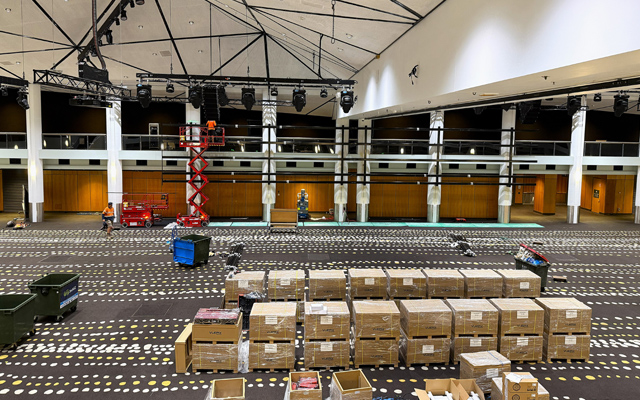
Large venues can play in reducing environmental impact through thoughtful planning, procurement and delivery of major works
The Brisbane Convention & Exhibition Centre (BCEC) recently revealed that its latest major refurbishment has achieved a remarkable 90.7 per cent resource recovery rate.
During the extensive upgrade programme – which included refurbishing the Plaza Auditorium, replacing core infrastructure like the Great Hall’s operable walls, and installing new large-format LED screens – the Centre diverted over 151 tonnes of material from landfill.
Large venues can play in reducing environmental impact through thoughtful planning, procurement and delivery of major works
This was made possible by embedding strict sustainability criteria into the procurement phase, ensuring that 100 per cent of metals and 80 per cent of plasterboard were recycled through dedicated on-site separation systems.
A standout feature of the project was the prioritisation of reuse over simple recycling to maximise environmental value. This circular approach saw 3.5 tonnes of removed carpet diverted to local community pathways and 620 auditorium chairs refurbished rather than replaced, eliminating the carbon costs of new manufacturing.
BCEC’s general manager, Kym Guesdon, noted that these results reflect the standards BCEC has applied throughout its 30-year history, supported by 14 years of EarthCheck Platinum Certification.
Jane’s Singapore Tours, led by veteran operator Jane Iyer, and The Urbanist Singapore, the heritage platform founded by Yong Min Ho, have launched Best of Both, a limited-time partnership merging polished guiding with deep-dive urban storytelling.
The partnership offers a streamlined, high-quality menu of experiences for the business events sector, featuring a hand-picked selection of 10 flagship tours that cover a vast chronological and thematic range.
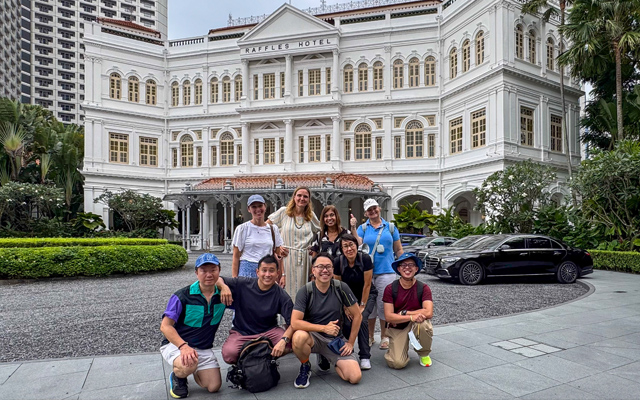
A group tour taking a photo at Raffles Hotel
For example, The Flagship: The Vanished Shore of Beach Road is a brand-new, co-developed experience tracing Singapore’s original coastline. The tour explores how the shoreline shifted from the days of orang laut traders to the brutalist architecture of Golden Mile and the iconic Raffles Hotel.
Meanwhile, the Stamford Canal tour is a deep dive into the waterway that shaped the development of Orchard Road and Bras Basah, revealing how hidden infrastructure still dictates the modern cityscape. There is also Alexandra Park, an architectural and military history study of Singapore’s famous black-and-white bungalows, exploring the lives of those who occupied them through various eras.
To ensure an intimate, high-quality learning environment, a dedicated guide is assigned for every 20 participants, regardless of the total group size.
“We aim to explain how our small island has evolved into such a successful nation. Our combined approach will ensure visitors enjoy learning about the real Singapore through curated walks that represent our unique cultural mosaic,” shared Iyer.
Ho added: “Singapore’s streets hold far more than most people realise. By joining forces, we can offer a wider menu, a stronger guide bench, and a more complete picture of this city.”
Best of Both is currently slated to run through the end of 2026.
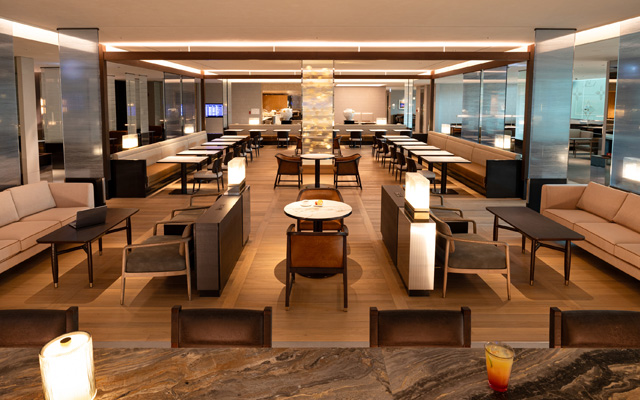
Prestige Class West Lounge at Incheon International Airport Terminal 2
Korean Air has completed a 110 billion Korean won (US$80 million) infrastructure overhaul of its its flagship First Class and Prestige Class West lounges at Incheon International Airport Terminal 2.
This expansion more than doubles the airline’s total lounge footprint to 12,270m2, bringing total seating capacity to 1,566 as the carrier prepares for increased passenger volumes ahead of its integration with Asiana Airlines.
Prestige Class West Lounge at Incheon International Airport Terminal 2
The 921m2 First Class Lounge has been reimagined as a home away from home, prioritising privacy with 11 individual suites and an interior inspired by traditional Korean architecture. The space doubles as a curated art gallery featuring works by Anish Kapoor and serves à la carte meals on artisanal brassware and Bernardaud porcelain. For wellness, the lounge includes a dedicated zone with massage chairs and private shower suites.
Meanwhile, the Prestige Class West Lounge is now the largest single lounge facility at Incheon, spanning 2,615m2 with over 420 seats. Designed for both productivity and leisure, it features a Tech Zone for business travellers and an expansive buffet with live cooking stations and seasonal menus updated quarterly.
Following this completion, Korean Air plans to extend its infrastructure upgrades to major hubs including Gimpo International Airport and New York’s JFK to ensure service consistency across its global network.
Zürich Tourism is spearheading a new strategy designed to increase the city’s average length of stay by positioning the city as the ultimate base for exploring the country’s many facets.
This strategy was recently showcased during the Asia Trophy 2025. Unlike previous editions that rotated through various cities, delegates remained anchored in Zurich. Using the city’s high-frequency transport links, they accessed mountain peaks and surrounding attractions – including Rapperswil, Uto Kulm, and Mount Titlis – as seamless day trips.
Event planners can utilise Zurich (pictured) as a central hub to explore all of Switzerland
The shift is a calculated move to stabilise occupancy during the quieter winter months, and serves as a cornerstone of Zurich’s sustainable growth strategy.
Anita Berardi, market manager for South-east Asia, Korea, told TTGmice: “We want to increase the length of stay for travellers in Zurich. By using Zurich as a hub, you still can access the mountains and the lake. This is also why we are pushing for more events in the winter (January to March), when occupancy typically sits between 55 and 60 per cent.”
Opened on July 31, 2025, Mama Shelter Zurich recently hosted the Asia Trophy 2025 as its largest-ever Asia-Pacific (APAC) group. To cater to this market, management is actively tailoring the brand to be more accommodating and flexible. For instance, during the event, the property introduced rice to its breakfast buffet – a simple yet effective touch to help Asian guests feel at home.
“Requests are flourishing, with five out of 50 requests we receive on a weekly basis coming from APAC,” said Alexandra Hatzigogos, groups & events manager at Mama Shelter Zurich.
She expressed strong interest in the Asian incentive market, adding that the property’s business events calendar is already “looking good” as interest from APAC continues to build.
While the brand is well-known in Western Europe, the team is working on visibility in APAC, noting that the recent opening of a Mama Shelter in Singapore is a helpful bridge.
Michael Baur, the hotel’s director of sales, added that Mama Shelter Zurich is working closely with Zurich Tourism and Switzerland Convention & Incentive Bureau (SCIB) through fam trips to further build this connection.
When asked which markets in South-east Asia Zurich Tourism was most keen on, Berardi shared: “Singapore is still the top inbound market. For Thailand and Malaysia, numbers are stabilising towards 2019 (pre-Covid) levels. Indonesia is well below 2019 levels, and I hope this will come back.”
Of keen interest are the Philippines and Vietnam outbound markets, where the former saw a “huge jump in travellers” following SCIB’s investment in in-market sales visits and destination education.
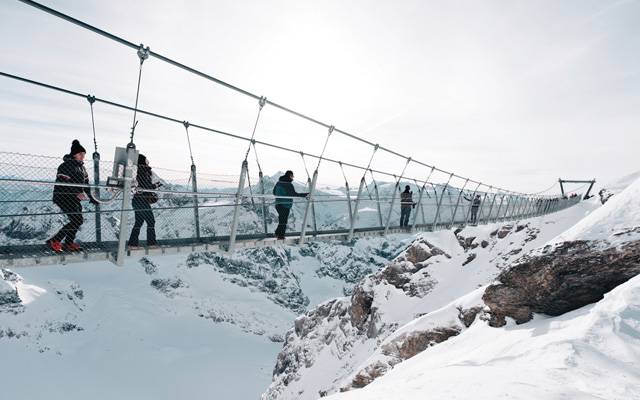
Titlis Cliff Walk is the highest suspension bridge in Europe
“Vietnam is currently at the level the Philippines was at before Covid, and it is growing fast,” Berardi noted. She revealed that Switzerland Tourism has also held talks with Vietnam Airlines regarding a potential direct route to Zurich. “If they decide to have the direct connection, we will get the jump from Vietnamese people traveling to Switzerland as well.”
However, she acknowledged that specific challenges remain for these growing markets.
For one, strict visa requirements for most South-east Asian nations – excluding Singapore and Malaysia – remain a barrier. Furthermore, Halal catering for large groups is hampered by the country’s limited restaurant capacity and venue-mandated catering policies.
These frictions are often weighed against the country’s stability; while Switzerland remains a premium-cost destination, stakeholders point out that its logistical security provides a level of certainty that justifies the higher investment.
Reto Kaufmann, senior vice president for South-east & South Asia at Kuoni Tumlare, noted that Zurich’s public transport network is a “major passport” for the city.
“The mode of transportation in Switzerland supports large mass movements perfectly. For seasoned APAC groups seeking new winter experiences, the logistical reliability here is a massive advantage.”
He also noted that utilising the country’s dependable public transport aligns with the sustainability mandates now standard among large organisations.
When asked how Switzerland ranks as an outbound incentive destination for APAC planners, Kaufmann said: “Looking toward 2027, Switzerland remains high on the buying list alongside Scandinavia and a resurgent Spain and Portugal.”
Air Intelligence has been developed with a practical, human-first approach
EventsAir has launched Air Intelligence, a suite of AI-powered assistants designed to replace manual data navigation with real-time, conversational interaction.
The rollout includes three specialised assistants tailored to different stages of the event lifecycle. The Attendee Assistant, available now, acts as a conversational guide within the EventsAir mobile app to provide instant navigation and session recommendations. The Content Assistant is also live, generating brand-consistent communications across various channels.
Air Intelligence has been developed with a practical, human-first approach
The final component, Planner Assistant, is scheduled for release soon and will allow organisers to analyse registration, revenue, and engagement metrics through simple natural-language queries.
The platform leverages 35 years of historical and live event data to allow planners and attendees to query information using natural language, moving away from traditional report-building and manual troubleshooting.
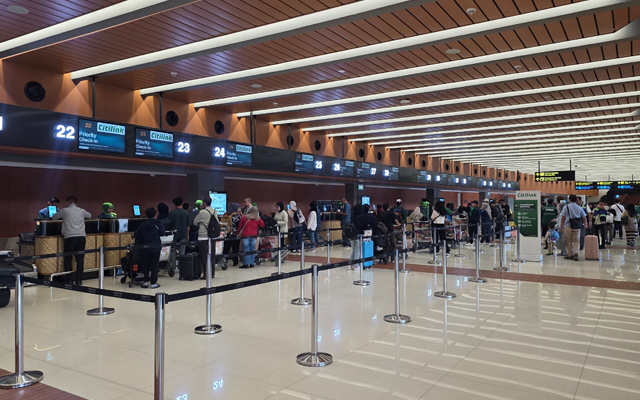
Middle East conflict concerns are forcing Indonesian firms to reroute Europe-bound incentive trips or replace them with cash rewards; Soekarno–Hatta International Airport pictured
Indonesian outbound business events players are reporting that more corporate incentive trips to Europe are being postponed or rerouted as the Middle East conflict disrupts transit routes and raises safety concerns.
Vidya Hermanto, CEO of Panorama JTB Tours Indonesia, said the impact has evolved gradually rather than through sudden cancellations.
Middle East conflict concerns are forcing Indonesian firms to reroute Europe-bound incentive trips or replace them with cash rewards; Soekarno–Hatta International Airport pictured
“In the first week of airspace closures, there were no cancellations. By the second week, some corporates started postponing, especially those using Middle Eastern carriers. By the third week, postponements continued even after flight schedules had returned to normal,” she said.
Some companies are proceeding with their plans but switching destinations, with Japan as the leading alternative followed by Australia and New Zealand, according to Vidya.
Despite the decline in Europe-bound trips, Vidya shared that overall demand remains higher than last year. “In 1Q2025, we had about 150 groups, while this year it’s around 200. But since there are fewer Europe trips, margins have come down,” she said.
Edhi Sutadarma, director of Golden Rama Tours and Travel, is also seeing postponements, with trips scheduled for April and May being pushed to September and October as companies wait for conditions to stabilise.
“Most corporates are now avoiding Middle Eastern carriers or routes passing through the region, with decisions driven primarily by internal risk assessments,” Edhi said.
In some cases, companies are choosing not to reroute at all, instead canceling trips and replacing them with cash rewards.
“Postponing creates timing challenges when the next programme is already coming up, so some companies choose to give cash rewards instead,” said Pauline Suharno, chairman of The Association of Indonesian Travel Agents (ASTINDO).
However, she added that a bigger concern lies in forward demand, with many clients holding back on new bookings to Europe. “With ongoing global uncertainty and the domestic economy slowing, incentive trips to Europe could decline by more than 10 per cent in 2026,” Pauline said.
Meanwhile, Harry Dwi Nugraha, CEO of Ego Global Asia, said clients are likely to focus more on domestic and regional trips in 2026.
“With tighter budgets, companies are not only looking for unique destinations, but also new and creative activities to make trips more meaningful,” he said.
Canada has emerged as the clearest winner from current geopolitical disruption in incentive travel planning, while the Gulf States is seeing the sharpest fall in confidence, according to the latest SITE Pulse Survey.
Canada recorded a net sentiment score of +66.7% among European respondents and +46.4% among the Rest of World, while the Gulf States fell to -82.1% among US respondents, -72.4% among Europeans, -54.2% among Rest of World respondents and -21.4% among Asian respondents.
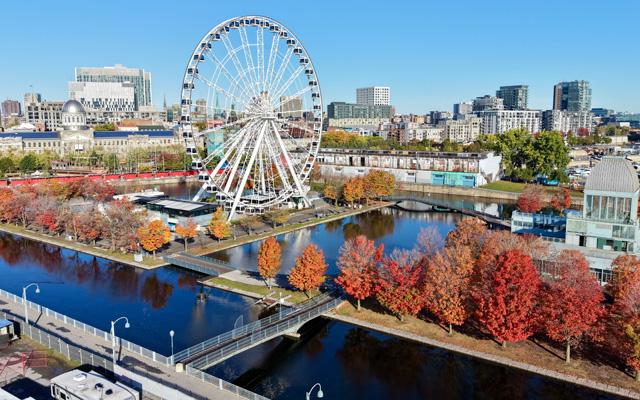
Montreal, Canada pictured
The findings show planners rotating away from destinations perceived to be close to the current Middle East conflict and towards destinations seen as more stable. Europe also benefited from that shift, posting +53.7% among European respondents, while Asia and Oceania scored +31.0% and +32.1% respectively with the same group.
Canada’s strength is particularly striking because it cuts across source markets. It remains positive among US respondents at +15.1%, climbs to +66.7% among Europeans and also reaches +46.4% among Rest of World respondents, making it the most consistent beneficiary in the survey.
The US presents a more mixed picture. US respondents remain positive about domestic programmes, with the US scoring +22.8% among that group, but the destination is negative with every non-US cohort: -19.4% among Europeans, -33.3% among Asians and -34.6% among Rest of World respondents.
Taken together, the results point to a fast-moving reallocation of incentive demand, with Canada and Europe attracting business that might previously have gone to the Middle East and nearby destinations.
Commenting on the findings, Melissa Moten, vice president experience & event solutions – BCD Meetings & Events & chair of the SITE Research Committee, said: “What we’re seeing is not a drop in demand for incentive travel, but a shift in mindset. Planners are highly attuned to global developments and are making thoughtful, strategic decisions about where to place their programmes. Destinations that are perceived as stable, accessible and aligned with client expectations are rising to the top.”
The survey highlights the resilience of the incentive travel sector, even in times of uncertainty, while making clear that destination perception is now being reflected in hard sentiment shifts across major source markets.
Pádraic Gilligan, head of research & consultancy at SITE, added: “Incentive travel has always been both rational and emotional. Right now, the emotional dimension – how a destination feels in terms of safety, stability and alignment – is playing a more prominent role. What’s particularly interesting is how quickly sentiment can shift, and how clearly that shift is reflected in destination preference.”
“For destinations and DMCs, the opportunity lies in understanding these signals and responding with clarity. Those who can position themselves as trusted, reliable and experience-rich will be best placed to capture demand as it reorients.”
The SITE Pulse Survey is designed as a rapid-response research tool, capturing industry sentiment in real time and providing actionable insights for destinations, DMCs and incentive travel professionals. The figures cited are net sentiment scores, calculated by subtracting the percentage planning less travel to a destination, or ruling it out altogether, from the percentage planning more travel or newly considering it.
This edition of the survey was conducted between March 25 and April 6 2026 and gathered 193 valid responses from incentive travel professionals across the US, Europe, Asia and a broader Rest of World cohort.
Just 10 minutes from Phuket International Airport on the serene northern coast, this 178-key, Bill Bensley-designed resort offers delegates a quiet, tropical paradise steeped in Phuket’s tin-mining heritage
The newly-opened Ritz-Carlton, Bangkok anchors the One Bangkok development with cosmopolitan elegance. Featuring the city's largest ballroom and a spectacular new penthouse suite, it delivers exceptional hardware and deeply authentic, soulful service for business and leisure travellers alike
Behind the imposing, Brutalist concrete that defines Zurich’s Oerlikon district lies a surprising secret. While its exterior honours the neighbourhood’s industrial roots, stepping inside Mama Shelter reveals a vibrant, neon-soaked world that is a far cry from its rigid shell