Asia/Singapore Wednesday, 8th April 2026
Page 15

Spain bets on outbound APAC incentives

0
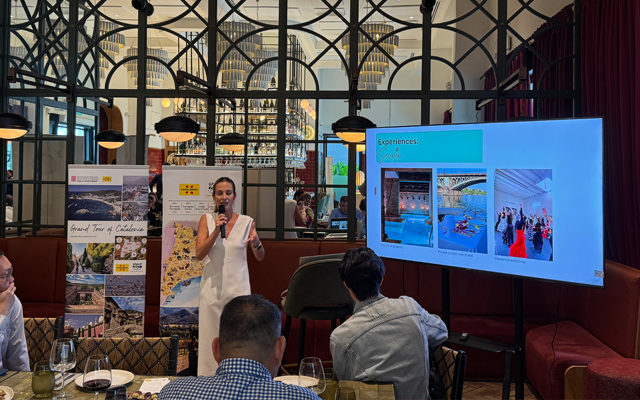
Spain Tourism Board’s Irene Valencia giving a presentation in Singapore; photo by Rachel AJ Lee

Spain has identified corporate incentive travel as its primary growth driver for the Asia-Pacific (APAC) region, with Singapore, Indonesia, and Thailand emerging as the priority outbound markets.

While Europe and the US traditionally dominate large-scale conventions, Raul Guerra, director of APAC for the Catalonia Tourism Board, noted that the APAC market is heavily driven by the incentive segment.
Spain Tourism Board’s Irene Valencia giving a presentation in Singapore; photo by Rachel AJ Lee

Guerra estimates that corporate incentives represent approximately 10 per cent of all arrivals to Catalonia. While segregated data for APAC is difficult to track, he shared that the region’s share of incentives is likely “higher than average” compared to other global markets.

A surprising shift in the region’s hierarchy was noted by the Spain Tourism Board, which revealed that Thailand has recently surpassed Singapore in terms of incentive volume to Spain.

“For leisure travellers, Singapore is still the top inbound market for South-east Asia. But within the MICE sector, it has not been the case for the past year,” Irene Valencia, market analyst and trade manager of the Spain Tourism Board, told TTGmice. “Last year, Thailand surpassed Singapore because they have held several large events in Spain. It also helps that connectivity is improving, including the direct flight between Bangkok and Madrid on Iberojet.”

Guerra added that the Philippines is another South-east Asian market to watch. While currently dominated by leisure tourists, it has growing potential for incentive groups.

For 2026, Valencia plans to cultivate closer relationships with regional event planners through highly personalised engagement and “MICE-specific fam trips”. In 2025, the Spain Tourism Board organised two such trips – one specifically for Thai planners and another for other South-east Asian planners – to showcase the country firsthand.

Valencia believes that personal experience is the only way to build trust with the trade. “If they don’t know the country, they cannot sell it. We really want them to experience it for themselves, because a presentation is not the same as being on location.”

Beyond the major gateways of Madrid and Barcelona, she pointed out that cities like Malaga, Seville, and Valencia are making “huge efforts to position themselves as great options for MICE”. These secondary cities offer high-speed rail connectivity, and unique cultural assets while being less crowded than the primary hubs.

Despite global economic shifts, Guerra stated he has not yet noticed shrinking budgets among the trade. “I think corporates realise that incentive trips bring far more value (than their cost), as travel is something people appreciate more now after Covid,” he opined.

To sweeten the deal, Guerra highlighted several “off-the-catalogue” experiences that cater to the APAC market’s desire for exclusivity. These include gala dinners in UNESCO-listed heritage sites like the Hospital Sant Pau in Barcelona, and bespoke corporate events involving iconic global brands like FC Barcelona.
Stakeholders call for formal frameworks in strategic partnerships: BE in Sabah 2026

0
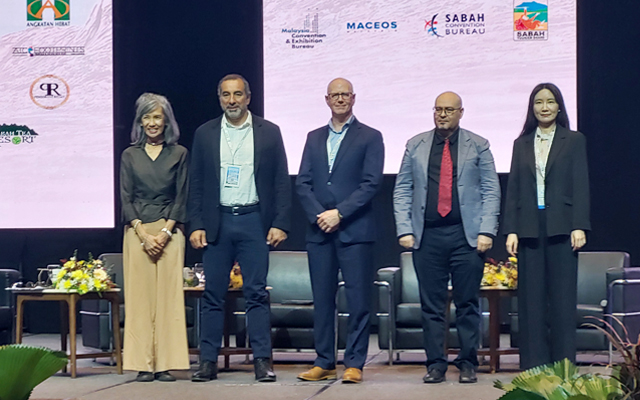
From left: GainingEdge’s Jane Vong Holmes (moderator); Dubai World Trade Centre’s Mahir Abdulkarim Julfar; Northstar Meetings' Martin Balmer, Institute of Tourism’s Reza Soltani; and BornTiger’s Bona Nahyun Lee

Strategic partnerships are the primary driver for destination competitiveness and event scalability. However, industry experts warn that these alliances must be structured with formal frameworks and clear KPIs, rather than relying on informal goodwill.

That was the message from panellists speaking at the Limitless Horizon: How strategic partnerships define the future of business events session, held during the 3rd International Business Events Forum – BE in Sabah 2026.

From left: GainingEdge’s Jane Vong Holmes (moderator); Dubai World Trade Centre’s Mahir Abdulkarim Julfar; Northstar Meetings’ Martin Balmer, Institute of Tourism’s Reza Soltani; and BornTiger’s Bona Nahyun Lee

Mahir Abdulkarim Julfar, executive vice president of Dubai World Trade Centre (DWTC), stressed that partnerships must be anchored in long-term intent, not short-term wins.

He shared: “It’s not about the outcome of this year or next year only, but about how we are going to grow together.”

Mahir highlighted how DWTC works with organisers on three-year business plans that map out projected growth by industry, sub-sector and geography. These plans are reviewed annually, allowing both parties to assess whether assumptions made earlier still hold true in a fast-changing market, and to recalibrate resources, capacity and strategy accordingly.

“Every year, we review where we said we would be and where we are actually heading,” Mahir explained, positioning partnership planning as an ongoing performance exercise rather than a static agreement.

Martin Balmer, account director at Northstar Meetings Group, pointed to the need for clarity and alignment. Effective partnerships, he said, begin with shared objectives, clearly defined roles and agreed KPIs.

Meanwhile, Reza Soltani, president, Institute of Tourism in Belgium, noted that collaborations rarely fail because of misaligned goals. Instead, they break down due to unspoken expectations and an absence of shared understanding when conditions deteriorate.

Soltani stressed that while organisations often focus on credentials, scale and capability during partner selection, these factors offer limited insight into how a partnership will hold up under pressure.

He said: “Understanding how a partner reacts in difficult situations is just as important as assessing technical expertise or market reach.”

Bona Nahyun Lee, CEO of BornTiger, and a seasoned business events strategist, emphasised that differences between partners are not the problem, but ambiguity is. She argued that partnerships break down not because organisations have different goals or philosophies, but because those differences are never made explicit at the outset.

Lee indicated that when partners are clear about where they align and where they diverge, including how each defines success, differences can become a source of complementary value rather than tension.

UPGroup Asia and The MasterPlan LLP choose collaboration over competition

0
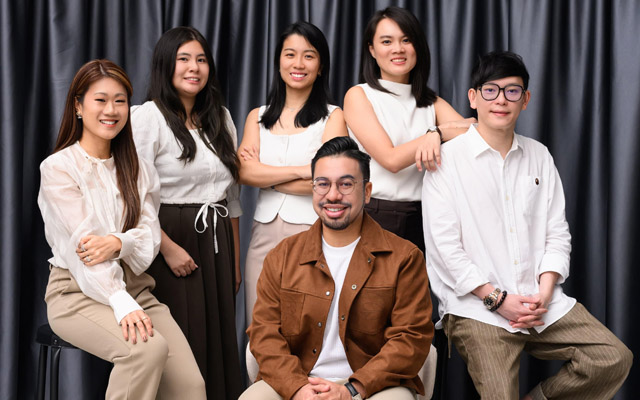
Jasmine Ho (extreme left) and Adam Piperdy (in brown) with their leadership teams

UPGroup Asia and The MasterPlan LLP (The MasterPlan) have entered into a strategic partnership, formalising a collaboration designed to streamline event delivery and integrated experience design across the Asia-Pacific region.

While both companies will continue to operate independently, the partnership marks a deliberate move toward joint pitching and execution. Speaking to TTGmice in an exclusive interview, Jasmine Ho, founder and managing partner of The MasterPlan, noted the significance of the alliance.

Jasmine Ho (extreme left) and Adam Piperdy (in brown) with their leadership teams

“It has been a while since the industry has seen local smaller businesses partnering officially rather than competing. I’ve tried partnering in the past, but I don’t think I had the right experience or network then. After my time with SACEOS (Singapore Association of Convention & Exhibition Organisers & Suppliers) and the Entrepreneurs’ Organization, I found the ‘missing puzzle piece’ in a partner who shares the same values and leadership direction,” she explained.

The partnership will have a clear division of expertise. The MasterPlan leads in programme strategy, hospitality, and stakeholder management, while UPGroup Asia provides production depth and regional infrastructure.

Adam Piperdy, founder and CEO of UPGroup Asia, noted: “Our clients are looking for integrated support. By aligning our teams from the start, we eliminate coordination gaps and duplication for the client.”

This synergy is vital to UPGroup Asia’s ongoing regional expansion. Since March 2025, the group has grown its regional team to 12 members, sharpening its focus on high-growth markets in Bangkok, Vietnam, and Indonesia. The partnership with The MasterPlan will extend into these markets, allowing Singapore-based programmes to scale regionally with “consistency, speed, and confidence”, said Piperdy.

Over the coming months, the two firms will showcase their combined approach through industry initiatives in Singapore. When asked if a formal joint venture is on the horizon, Ho expressed: “We’d love to eventually offer clients a true one-stop solution. It’s always on my mind to expand.”

Song Saa Private Island expands into corporate wellness

0

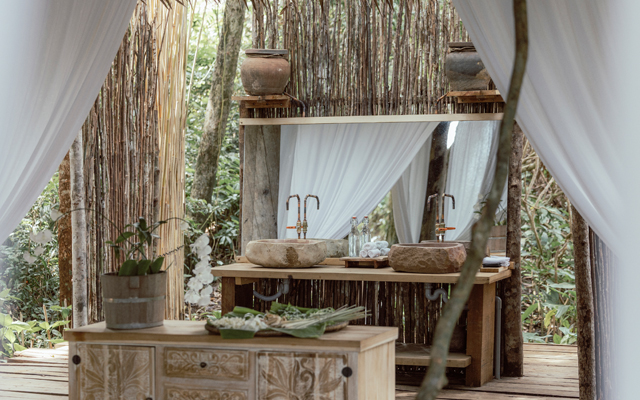
Song Saa Private Island, off the coast of Cambodia, has expanded its offerings from luxurious leisure to curated corporate retreats and small meetings, with a strong focus on wellness.

To coincide with the launch of Saraan Sanctuaries – a series of nature-centric wellness spaces dotted around the private island – Song Saa has compiled a diverse range of activities tailored for groups.

These include visiting bat caves, kayaking through mangroves and jungle treks, cooking classes, botanist workshops, foraging and essential oil making. There’s also the option to receive a monk’s blessing, indulge in spa treatments and visit local communities Song Saa works with.

Song Saa can also organise a digital detox day for corporates seeking to switch off during their retreat.

The new 65m2 Wellbeing Centre with a sweeping ocean view can also host 22 pax. Mana Kannoi, the resort’s associate director of wellbeing and spiritual care, noted that introducing wellness elements into meetings is a growing trend.

“Corporate groups can start the day with a yoga or meditation session, enjoy their meeting, and then relax at the end of the day with a soothing sound bath. It’s a good combination,” he said.

Amora Hotels and Resorts welcomes new COO

0

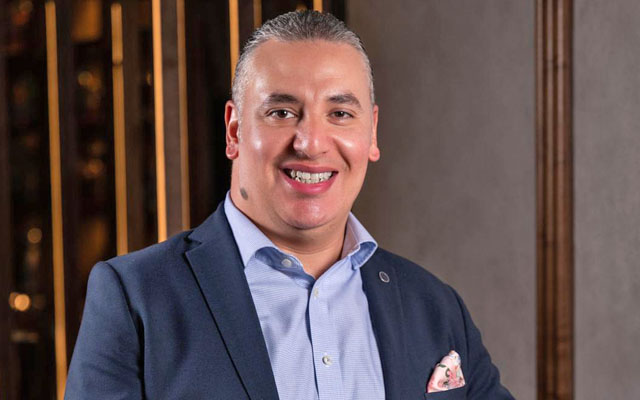
Amora Hotels and Resorts appoints Tamer Habib as chief operating officer. In this role, he will lead the group’s commercial strategy and overall vision.

With more than three decades of hospitality experience, Habib most recently served as vice president of operations at Amora Hotels and Resorts.

His career includes senior roles with Marriott, Hyatt, InterContinental, and Stamford, bringing deep operational and commercial expertise to the group’s continued growth across Australia and Asia.


Waldorf Astoria Kuala Lumpur appoints GM

0

Etienne Dalançon has been named general manager of the upcoming Waldorf Astoria Kuala Lumpur, set to open in late 2026.

He brings over 20 years of luxury hospitality experience and most recently served as general manager of Waldorf Astoria Maldives Ithaafushi. His career spans senior leadership roles across Asia and Europe, with a strong focus on service excellence and operational leadership.

Singapore Airshow 2026 hits record trade attendance

0
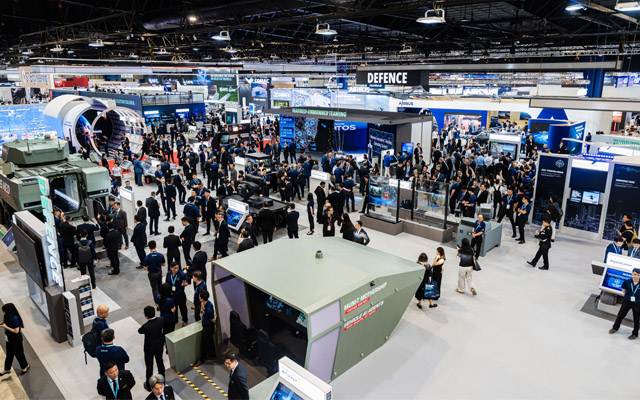
Singapore Airshow 2026 (pictured) showfloor

The 10th edition of the Singapore Airshow concluded on February 6, shattering previous records with 65,000 trade attendees, a clear signal of the robust momentum currently driving the global aerospace and defence sectors.

The four-day event, held at the Changi Exhibition Centre, brought together over 1,100 participating companies from 130 countries and facilitated approximately 1,300 delegate meetings, underscoring the show’s role as the primary engine for deal-making in the Asia-Pacific region.

Singapore Airshow 2026 (pictured) showfloor

“Achieving record trade attendance at our 10th edition reflects the strength and resilience of the aerospace and defence sector,” said Leck Chet Lam, managing director of Experia Events. He noted that the high turnout highlights the sector’s vitality, with nearly 95 per cent of exhibitors already indicating their intent to return for the 2028 edition.

The 2026 show transitioned from a platform for innovation to a site of significant capital investment. Leading the announcements was GE Aerospace, which committed US$300 million to expand engine repair capabilities in Singapore through 2029.

Singapore’s Economic Development Board also secured multiple memoranda of understanding with global leaders to expand Maintenance, Repair, and Overhaul (MRO) capabilities and establish new R&D technology centres. Local company ST Engineering made waves by unveiling advanced unmanned systems and ground vehicles, backed by new strategic alliances with Shield AI and Airbus Defence and Space.

Beyond the tarmac, the AeroForum sessions drew nearly 1,000 delegates to discuss the industry’s most pressing challenges. Over 50 speakers addressed critical shifts in artificial intelligence, cybersecurity, and sustainable aviation, aiming to set the industry’s priorities for the next decade. The event also looked toward the next generation of aerospace professionals; the “AeroCampus” initiative reached its largest scale to date, engaging 2,500 students and featuring international aviation training institutions for the first time.

TCEB targets 371 billion baht in revenue in 2026

0
Supawan announcing TCEB’s 2026 target of 371 billion baht in revenue; photo by TCEB

The Thailand Convention and Exhibition Bureau (TCEB) has set a target of 371.3 billion baht (US$11.7 billion) in business events expenditure for 2026, aiming to elevate the sector’s GDP contribution to around 1.8 per cent following a robust performance in 2025.

Speaking at the TCEB Strategic Direction 2026 announcement last week, TCEB president Supawan Teerarat revealed that the industry had successfully entrenched itself as a critical economic engine over the past fiscal year.

Supawan announcing TCEB’s 2026 target of 371 billion baht in revenue; photo by TCEB

According to bureau data, business events expenditure in 2025 hit 338.2 billion baht, generating a GDP contribution of 310.8 billion baht, and creating 300,000 jobs.

Supawan opined that “these numbers still have the potential to increase”, which is why TCEB’s 2026 roadmap projects significant growth across all key metrics.

Beyond the expenditure target, the bureau forecasts tax payments to the state rising to 27.5 billion baht, up from 25.1 billion in 2025, while job creation is expected to swell to 334,817 positions.

Supawan also outlined a vision positioning prioritising deep expertise and data over generic destination marketing, stating that the bureau has identified a fundamental structural change from traditional B2B models to B2C dynamics, where individual participants now drive market demand.

This shift introduces non-traditional competitors from the creator economy. Media entities and influencers owning community data are now effectively functioning as organisers, challenging established players who lack specific expertise or follower bases.

“MICE is no longer just about thinking in terms of organisation to organisation. We must design experiences that cater to participants directly,” Supawan stated.

To counter digital saturation and what TCEB’s MICE Intelligence centre terms the “AI-Trust Paradox”, TCEB’s positioning of Thailand as “Global Asia’s Trusted Gateway” prioritises face-to-face interaction as a verification tool.

As AI-generated content creates scepticism regarding what is real, physical events offer authenticity that digital platforms cannot replicate.

“The more digital the world becomes, the more we need MICE to meet in person. We can touch the ‘six senses’ within that MICE space. MICE itself must build trust, which is the most important factor above all because the trust economy is a new currency,” Supawan said.

Looking further ahead, the bureau is actively bidding for mega-events between 2027 and 2030, including a potential Formula One race in Bangkok for 2028, Korat Expo 2029, and WorldPride 2030.

Reframing India’s global pitch

0

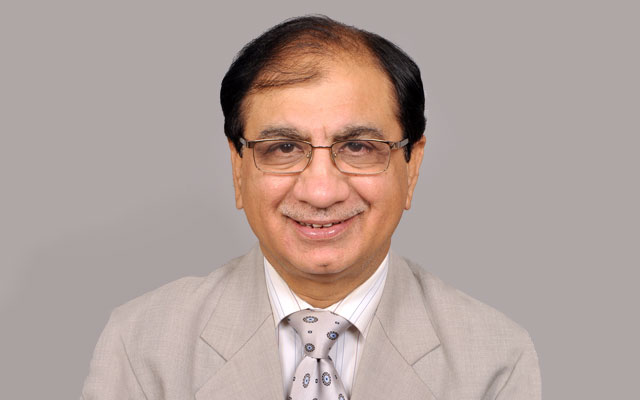
What are ICPB’s plans this year?
This year looks promising for India’s inbound MICE growth as we expect the Ministry of Tourism to address several key bottlenecks.

Last year, we organised an interactive session with 20 industry representatives and our new chairman, Harikishore S. (joint secretary at the Ministry of Tourism), to deliberate on the sector’s future. During these discussions, we emphasised the urgent need for a centralised marketing agency to effectively promote India in international markets.

While India’s infrastructure is now capable of hosting world-class events, the lack of a centralised marketing agency limits our ability to attract large-scale global conventions. We have proposed a stronger presence at major tradeshows like IMEX and multi-city roadshows in markets like Europe to the Ministry of Tourism, receiving a positive response.

Beyond physical venues, India needs a more competitive ecosystem. This includes offering organisers incentives – such as hosted dinners or non-cash benefits – and ensuring venue pricing remains globally competitive.

For instance, we recently lost an international congress to Abu Dhabi because they offered GST rebates via venue rental discounts; addressing these gaps is essential to winning high-stakes global bids.

The Ministry of Tourism has advised states to establish state-level bureaus to drive growth in the business events sector. How important is it for Indian states to recognise the benefits of attracting business events?
The Ministry of Tourism strongly believes state governments must lead the charge in marketing their destinations for MICE. It is vital for states to recognise that this sector is a significant economic driver with a direct impact on employment, knowledge exchange, and trade.

We have already engaged with several states –including Rajasthan, Odisha, and Tamil Nadu – regarding the establishment of dedicated MICE bureaus, and we expect a few to be operational by the end of this year.

Is ICPB moving towards a restructuring?
Yes. At present, ICPB functions as a typical membership-driven organisation. However, to build a more effective structure with dedicated marketing professionals, a CEO, and essential resources, we require assured funding.

We are therefore exploring a restructure that would see ICPB operate more like a national MICE board. This framework would allow the Ministry of Tourism to allocate funds specifically for marketing initiatives. In this new role, ICPB would also serve as a central advisory body to state-level MICE bureaus across the country.

What about bidding support?
The Ministry of Tourism has agreed to support states bidding for international business events by sharing a portion of the costs. States must clearly outline their financial commitment, after which the Ministry will contribute a defined share of the overall expenses.

We must also observe how competitors like Thailand, Singapore, and South Korea attract international events and learn from their practices to remain globally competitive.

What needs to be done to promote India as a preferred destination for international business events?
The Ministry of Tourism has been promoting India through international media and outdoor platforms, such as bus advertising in London. However, this broad approach is ineffective for the business events industry, which requires targeted strategies.

Consequently, we have proposed that at least 25 per cent of the overall advertising budget be earmarked exclusively for MICE-focused promotion.

What else is in the pipeline?
We are planning to organise a MICE-focused event in India tentatively scheduled for August or September. The idea is to invite senior representatives from international associations along with foreign media with the objective of showcasing and positioning India as a competitive global convention destination.

GBTA warns proposed ESTA overhaul threatens US corporate travel economy

0
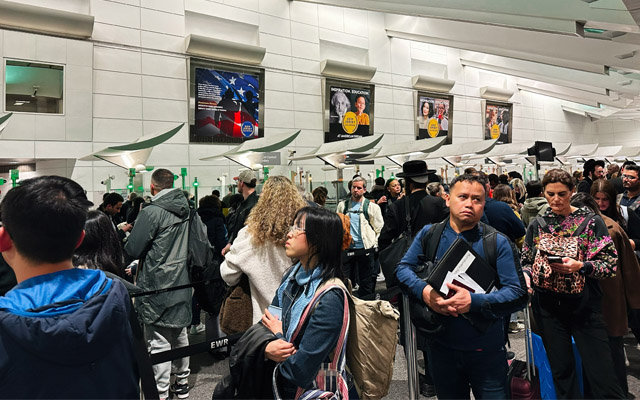
GBTA files formal comments urging US Customs and Border Protection to mitigate travel disruptions; immigration area at Newark Liberty International Airport pictured

The Global Business Travel Association (GBTA) has issued a stark warning to US Customs and Border Protection, arguing that proposed changes to the Electronic System for Travel Authorization (ESTA) could derail international commerce and weaken American competitiveness.

In formal comments filed last week, GBTA urged the federal government to adopt a balanced and practical approach. The association contends that overly aggressive data collection and restrictive application processes will discourage high-value international travellers and create significant legal friction with global privacy laws.

GBTA files formal comments urging US Customs and Border Protection to mitigate travel disruptions; immigration area at Newark Liberty International Airport pictured

“Security and efficient business travel are not mutually exclusive. While GBTA strongly supports efforts to protect US borders and enhance traveler security, the proposed changes pose significant risks and could undermine the benefits that business travel brings to organisations who send their employees on international trips to the US and the American destinations who welcome them,” said Suzanne Neufang, CEO of GBTA.

“A balanced approach will strengthen national security while ensuring that the US remains an accessible, desired and competitive meeting and conference destination for global business.”

The GBTA outlined several unintended consequences that could ripple through the travel ecosystem, including a greater administrative burden due to requirements for multi-year social media histories, phone numbers, and expanded family details. There is also a significant risk of compliance conflicts with international data protection laws, such as the European Union’s strict mandates on personal data collection. Furthermore, a mobile-only application system could create technical barriers that conflict with corporate security protocols, while longer processing windows may reduce confidence in predictable travel timelines.

New data released by the GBTA revealed a widespread sense of alarm, with a January 2026 poll of 571 travel professionals across 40 countries showing that 78 per cent are concerned about the proposed shifts. The impact is particularly sharp among European professionals, 67 per cent of whom say employees would prefer not to travel to the US if required to disclose extensive personal information.

This effect is already influencing corporate strategy; 43 per cent of companies reported they are now more likely to hold meetings outside the US, and nearly 20 per cent plan to revise travel policies to limit US trips.

The economic stakes are substantial, as business travel previously generated a US$484 billion impact in the US and supported six million American jobs.

The GBTA warns that if these requirements divert meetings, events, and investments to other markets, the US stands to lose its position as a premier global destination. The association is calling on the CBP to refine these measures to protect national security without sacrificing the vital economic contributions of international business travel.

Reviews

The Ritz-Carlton, Bangkok

The newly-opened Ritz-Carlton, Bangkok anchors the One Bangkok development with cosmopolitan elegance. Featuring the city's largest ballroom and a spectacular new penthouse suite, it delivers exceptional hardware and deeply authentic, soulful service for business and leisure travellers alike

Mama Shelter Zurich

Behind the imposing, Brutalist concrete that defines Zurich’s Oerlikon district lies a surprising secret. While its exterior honours the neighbourhood’s industrial roots, stepping inside Mama Shelter reveals a vibrant, neon-soaked world that is a far cry from its rigid shell

Hyatt Regency Kuala Lumpur at KL Midtown

A polished urban retreat designed for business travellers, Hyatt Regency Kuala Lumpur at KL Midtown combines thoughtful design, seamless service, and exceptional facilities.