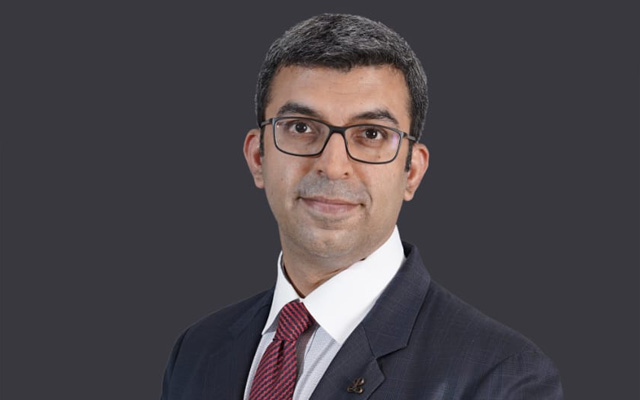
From left: The Kenyatta International Convention Centre’s Jeff Omondi and Wilfred Njau; photo by Rachel AJ Lee
The Kenyatta International Convention Centre (KICC) in Nairobi, Kenya, is keen to grow its business beyond the dominant local and European markets, and is looking to Asia-Pacific to make this happen.
“Exhibitions make up about 60 per cent of our business. We recently held the 8th China Africa Agric Expo and China Trade Week Expo. We also have exhibitions from India, mainly in the agricultural, dairy, machinery, and printing and packaging sectors,” Wilfred Njau, KICC’s customer care assistant, shared with TTGmice.
From left: The Kenyatta International Convention Centre’s Jeff Omondi and Wilfred Njau; photo by Rachel AJ Lee
International meetings take place at KICC as well, with most coming from the Commonwealth countries and global organisations such World Trade Organisation and ICCA, he added.
Njau shared: “Right now, we’re working on attracting meetings and events from Singapore as well as Malaysia- and Thailand-based companies. Many East African students head to these countries for education, and I’m thinking of ways to tap on that (for potential conferences).”
He added that KICC has yet to welcome any business events from Singapore.
KICC is able to offer memorable event ideas. With it being housed within a 30-storey building, event attendees can enjoy panoramic views of the city from an observation deck on the top floor.
KICC is also able to work with planners to build a safari tour of Nairobi National Park – a 10-minute drive away from the venue – for overseas event attendees. The wildlife activity is ideal as a treat to mark the end of the business event.
While KICC is keen to grow its Asian business, Njau acknowledged that the lack of direct flights from business hub Singapore is a challenge. The venue is working to tackle this issue through “regular dialogues” with Kenya Airways, the national carrier.
KICC also works closely with the Kenya Tourism Board on potential event bids.
“I want more awareness in this region that Kenya is ready for meetings,” he concluded.
Tides, the new 1,500-capacity mid-sized venue by Live Nation, officially launched on October 14.
Located in Kowloon, the facility is available for corporate functions, brand activations, and mid-scale productions. Inspired by waves, voyages, and journeys, the design theme of Tides pays homage to the sea and the area’s maritime history.
Tides is Hong Kong’s latest mid-size event venue
The 2,787m2 space emphasises plug-and-play efficiency, offering integrated production with 360-degree sound, lighting, and cutting-edge stage technology. This touring-grade infrastructure ensures rapid setup and execution for demanding events.
Key corporate amenities include The Upper Deck, a modern VIP lounge ideal for exclusive client entertainment and private events. Tides’ versatile design makes it an inclusive platform for all event organisers seeking a high-specification venue.
The space also serves as a purpose-built home for live entertainment, providing a platform for emerging acts, but its immediate utility is its capacity to host large-scale, professional non-performance events.
The career fair at the inaugural first Singapore Hospitality & Tourism Conference; photo by Rachel AJ Lee
The inaugural Singapore Hospitality & Tourism Conference (SHTC) 2025 is taking place today at Marina Bay Sands, in conjunction with ITB Asia.
In addition to panel discussions, student attendees also have access to a career fair which offers close to 700 immediate opportunities across more than 20 companies in tourism such as Mandai Wildlife Group, Conrad Singapore Orchard, and Singapore Airlines.
The career fair at the inaugural Singapore Hospitality & Tourism Conference; photo by Rachel AJ Lee
These extensive job opportunities reflect the tourism sector’s strength, supported by strong employment trends, where between June 2023 and June 2025, Singapore’s total tourism workforce grew by more than eight per cent from 69,000 to 75,000. The sector is actively hiring, with over 5,000 job postings covering around 6,700 vacancies available in 2Q2025 on Workforce Singapore’s MyCareersFuture portal.
Rachel Loh, executive director of hospitality and tourism talent at the Singapore Tourism Board (STB), told media during a group interview that, beyond traditional roles such as HR executives, new positions have emerged, including a data scientist at Marina Bay Sands and an international ski and snowboard management trainee at EU Holidays.
Additionally, the hospitality sector, which employs over 43 per cent of the tourism sector’s workforce, is set to grow even further, with another 1,500 new hotel rooms expected to open by end-2026.
Loh asserted that “tourism has a bright future”, backing this claim with IHL statistics that show some 1,500 students now select tourism and hospitality as their top choice – a 66 per cent growth compared to two years ago.
For mid-career individuals, work-study programmes have seen “very encouraging growth”, with participants rising from 70 two years ago to 100 this year (based on Republic Polytechnic figures). This development is supported by accredited courses offered through CET (Continuing Education and Training) centres like the NTUC LearningHub, which has a three-year partnership with STB.
Responding to a query raised by TTGmice about SHATEC’s closure earlier this year, Loh reassured: “There is sufficient supply to continue this pipeline of training, both for students as well as industry professionals, into the broader tourism sector as well.”
In response to another query about how difficult it is to hire within Singapore’s business events sector, Loh acknowledged that while demand is high – driven by the goal to triple business events receipts by 2040 – hiring is challenging because roles are now far more specialised and sophisticated.
Business events are no longer just about basic logistics, but about creating “really good and immersive” experiences, and this shift requires specific competencies in technology, data analysis, and sustainability, forcing the sector to compete for talent with industries that traditionally own those skillsets. Loh cited the creation of specialised audiovisual courses as an example, illustrating how deeply the required skills have evolved.
This inaugural SHTC 2025 evolved from the annual Tourism Transformation event, building on five editions led by the Tourism Sector Coordinator Team, comprising six IHLs (Institute of Technical Education, Nanyang Polytechnic, Ngee Ann Polytechnic, Republic Polytechnic, Singapore Polytechnic, and Temasek Polytechnic).
Now rebranded and enhanced, this iteration with new partners including STB, Singapore Institute of Technology, and Singapore University of Social Sciences, aims to deliver a more comprehensive programme and job opportunities for students, signalling a strong commitment to build Singapore’s talent pipeline for the hospitality and tourism sector.
Auckland has added over 5,000 hotel rooms in the past five years
Auckland is entering a defining new chapter in its evolution as a premier business events destination, fuelled by a dynamic blend of strategic vision and new infrastructure, headlined by the upcoming New Zealand International Convention Centre (NZICC).
“We’ve got a really powerful story to tell,” said Ken Pereira, head of Auckland Convention Bureau.
Auckland has added over 5,000 hotel rooms in the past five years
“We want Auckland to be an incubator of ideas born in this part of the world, and to be able to compete with Singapore and Vienna. Tech and innovation are a big focus for our city, and our event strategy is about connecting business events with economic development and broader city aspirations.”
Major transformation is translating into impressive results.
According to Nick Hill, chief executive of Tataki Auckland Unlimited: “This year, we estimate a 35 per cent increase in the economic impact of business events, up from NZ$35 million (US$20.4 million) last year to NZ$48 million. Visitor nights have increased by 48 per cent to reach 113,000.”
The momentum looks set to accelerate, with Hill noting that a strong pipeline forecast will “lock in business for NZ$107 million”.
Infrastructure is front and centre in Auckland’s rise. The NZICC, opening in February 2026, is hailed as “game-changing” by Pereira, and is expected to reshape New Zealand’s ability to attract and deliver major global events.
“It will allow us to operate at a scale that no other convention centres in New Zealand can currently match. For both Auckland and New Zealand, it’s a huge opportunity,” said Pereira.
The centre offers 7,000m2 of flexible exhibition space, and a 2,850-seat theatre that can convert into a banquet hall. Already, 23 international events are confirmed between 2026 and 2028, bringing 23,000 delegates, 126,000 visitor days, and an estimated NZ$90 million in economic impact, according to NZICC’s general manager Prue Daly.
A rendering of the New Zealand International Convention Centre
Supporting the venue is an expanded hotel inventory, with more than 5,000 new hotel rooms added in the past five years, many within walking distance. The City Rail Link, nearing completion, will further enhance access to the city centre.
Auckland Airport is also undergoing its most significant transformation in decades, with NZ$300 million committed to expanding terminal capacity and building an integrated domestic jet terminal. The project will deliver 23 per cent more gates, and a 44 per cent increase in passenger processing capacity.
Air connectivity is still catching up. According to Auckland Airport’s chief customer officer Scott Tasker, the current number of airline seats remains 11 per cent below pre-pandemic levels, though routes and capacity are rebuilding.
There is heightened awareness of what is at stake.
“If we do this right, all the other consequential outcomes like visitation numbers, GDP, economic impact – all that good stuff will happen,” said Pereira. “We’re genuinely on a journey to learn from world leaders, to see how they connect investment and tech outcomes through business events. We don’t have to reinvent the wheel.”
South-east Asia is a priority market, especially Singapore, Malaysia, Indonesia, and Vietnam.
“Singapore makes the strongest strategic sense, given its influential role in the region, both for associations and the corporate sector,” Pereira noted.
Thanks in large part to NZICC, Auckland is preparing to host some major events over the coming months, including the International Coral Reef Symposium for the first time, expected to bring 2,500 delegates and 15,000 visitor days in July 2026, generating NZ$6 million in economic impact.
Also confirmed are the International Society for Microbial Ecology next July and the Royal Australian and New Zealand College of Ophthalmologists (RANZCO) 57th Annual Scientific Congress in November 2026 with about 1,700 delegates each.
From left: Sumate Sudasna; Caroline Knies; and Jean-Paul da Levison
The World PCO Alliance has elected new officers for the upcoming term.
At the Alliance’s Annual General Meeting, held on June 19, 2025, Sumate Sudasna of Thailand’s CDM (Conference & Destination Management) was elected president, succeeding André Vietor of Spain’s Bco Congresos, who now serves as Immediate Past President.
From left: Sumate Sudasna; Caroline Knies; and Jean-Paul da Levison
Caroline Knies, founder and managing director of Sweden’s Meetagain, was elected vice president, while Jean-Paul da Levison, founder of Canada’s JPdL International, was elected treasurer.
The new officers will serve a two-year term with immediate effect.
InterContinental Bali Resort has appointed Abdul Hafid bin Mohamed Gaus as resort manager.
A Singapore native with over 20 years of experience across Asia, Hafid has held leadership roles at Crowne Plaza Changi Airport, Shangri-La Jakarta, Hotel Jen Tanglin Singapore, and Shangri-La Mactan Resort & Spa.
He brings extensive operational expertise and a focus on innovation, with a passion for using technology to enhance efficiency and guest experience.
Marriott International has appointed Gautam Bhandari as chief development officer for Asia Pacific excluding China (APEC), effective January 1, 2026.
Bhandari, who joined Marriott in 2007, brings over two decades of leadership experience across revenue management, operations, sales, marketing, and development. He currently serves as senior vice president, development and operations, overseeing Marriott’s Premium and Select brands in Singapore and the Maldives.
In his new role, he will drive Marriott’s growth strategy across APEC, which includes more than 650 open hotels in 22 countries and over 380 in the pipeline. His responsibilities cover development across key markets such as Australia, India, Indonesia, Japan, Malaysia, the Maldives, New Zealand, the Philippines, Singapore, South Korea, Thailand, and Vietnam.
Based in Singapore, Bhandari succeeds Shawn Hill, who will assume the role of executive vice president and chief development officer, global, for Marriott International in early 2026.
The Indonesian Exhibition Companies Association (ASPERAPI), the umbrella organisation for Indonesia’s exhibition industry players, will host the Asian Federation of Exhibition and Convention Associations (AFECA) Convention 2025.
The AFECA Convention 2025 series will be held concurrently with the Asia 20 (A20) Forum and the Indonesia Business Events Forum (IBEF) Conference and Expo 2025. All three will take place on November 5 to 6, 2025, at the Jakarta International Expo (JIEXPO) Convention Centre in Kemayoran, Jakarta.
ASPERAPI will host the triple gathering of AFECA, A20, and IBEF next month
During the IBEF launch in Jakarta last week, Hosea Andreas Runkat, chairman of ASPERAPI, said: “Indonesia’s appointment as host is a source of pride, and a significant opportunity to showcase the nation’s capacity to lead and strengthen Asia’s position in the global MICE industry.”
This year, A20 is adopting the theme, From Complexity to Clarity: The A20 Vision – Resilience, Agility, Leadership, reflecting a shared commitment to strengthening Asia’s role as a global growth hub through resilience, agility, and leadership in the face of a constantly changing global economic landscape.
Through a series of forums, exhibitions, showcases, and business matching sessions, the events aim to foster cross-sector collaboration and create a space for dialogue among domestic and international industry players. This is designed to strengthen business networks, create new opportunities, and accelerate the growth of the national exhibition and creative economies.
Meanwhile, the IBEF Expo 2025 will serve as ASPERAPI’s main exhibition, a rebrand of last year’s INDES 2024. The Expo will promote the business events industry to the wider public, providing insights into the potential of the exhibition industry, and serving as a major reunion for Indonesian business events professionals.
Hosea said: “Hosting this exhibition concurrently with the AFECA event is a huge opportunity for Indonesia to show off its capabilities in front of 19 major nations, including China, Japan, and South Korea, who will be attending this year.”
IBEF 2025 is set to be the largest platform for Indonesia’s business events industry players, integrating both a trade show and a consumer show. It will also include a conference and thematic discussion sessions to explore the latest developments, business opportunities, and the future policy direction of the business events industry.
Additionally, the MICE Youth Challenge – a competition for students from 19 Asian countries will also be held on the sidelines of IBEF. The competition challenges tourism and event management students to present their innovative ideas within three minutes, using AFECA’s international standard format.
The Summit saw participation from policymakers and leaders from Australia, Korea, the Philippines, Singapore, the UK, and Malaysia
The inaugural Legacy Event Advocacy Policy (LEAP) Summit concluded on October 3, 2025, with the landmark adoption of the Borneo Legacy Declaration.
This new standard is set to redefine the global business events industry by establishing a universal, yet locally adaptable, framework for measuring and advocating for long-term, positive legacy impact.
The Summit saw participation from policymakers and leaders from Australia, Korea, the Philippines, Singapore, the UK, and Malaysia
Organised by The Iceberg and powered by Business Events Sarawak (BESarawak), LEAP Summit convened government leaders, international policymakers, and industry captains to strategically leverage business events for progress in social, economic, and environmental areas.
The Borneo Legacy Declaration formalises a shared global commitment to placing legacy at the core of event planning. Its key aims include shifting the perception of business events from simple revenue generation to strategic tools for national and global development; adopting a practical, common framework for destinations and organisations to measure non-economic impact; and encouraging governments to embed legacy-driven criteria into event funding, procurement, and policy-making.
“Sarawak intends to witness the transformation of the business events sector and to demonstrate its importance across all industries,” said Amelia Roziman, CEO of BESarawak. “By creating and supporting the LEAP Summit, we are sharing a bigger vision with the world – one that encourages collaboration and amplifies impact.”
The Declaration’s principles are closely aligned with the UN Sustainable Development Goals (UNSDGs) and call for business events to be recognised as a full-fledged industry sector driving national transformation.
Tran: increase in corporate events that blend cultural discovery with social responsibility
Vietnam’s teambuilding sector is undergoing a transformation, with planners reporting growing demand for programmes that are community-driven, immersive and designed to leave a lasting impact on both participants and local partners.
Justin Tran, CEO of Quiet Asia, told TTGmice that in the last year he has seen a noticeable shift from classic teambuilding formats towards more engaging alternatives that deliver real meaning for participants.
Tran: increase in corporate events that blend cultural discovery with social responsibility
“We tailor all of our teambuilding activities based on corporates’ requests. Before, we received a lot of requests from companies wanting to do teambuilding activities on the beach or in the mountains,” Tran said, citing corporates from Amazon, Google and Microsoft who have enjoyed the company’s “Business Team Escapes” programme.
“Now, there is a lot more demand for teambuilding activities based on experiences that directly involve communities and that have a positive impact in some way. We build our activities hand-in-hand with local communities, meaning teams can learn from them and help transform lives.”
Tram Nguyen, branch office sales and marketing manager at Viettourist DMC, noted a similar pattern. She said the Dalat farmstay they partner with – once a favourite for leisure tourists – is now increasingly popular with corporates looking for more immersive programmes.
“It used to be mainly leisure bookings, but now we are seeing an increase in requests for teambuilding. Companies want to engage in more hands-on activities, where they can learn about communities and engage with them,” she elaborated.
Nguyen pointed out that such impactful activties are “directly helping the farmers to increase their salaries”, and is a “win-win” collaboration for all parties.
The trend is also fuelling opportunities for the creative sector. Huy Nguyen Van Anh, design director at The Decor Hub, collaborates with artisan groups to run 12 workshops ranging from ceramics and weaving to embroidery and silk printing.
“We are definitely seeing higher demand from teambuilding planners wanting to organise activities based around the workshops. They combine cultural immersion, tradition, fun and learning, while supporting these communities’ livelihoods.”
A polished urban retreat designed for business travellers, Hyatt Regency Kuala Lumpur at KL Midtown combines thoughtful design, seamless service, and exceptional facilities.
The five-star property excels in backing its expansive facilities with seamless service and personalised attention, setting the benchmark for luxury in Bangkok.