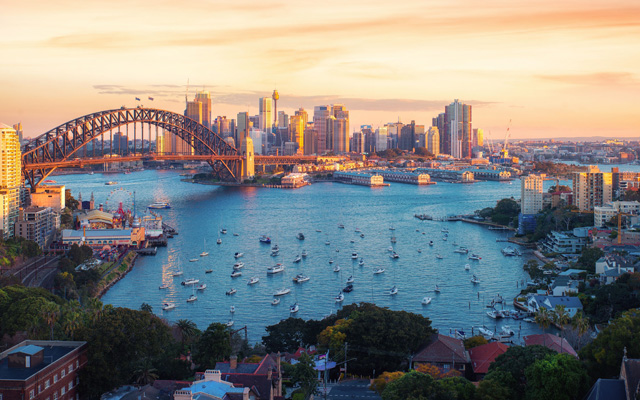
Business Events Sydney (BESydney) is extending a helping hand to South-east Asian event planners with the Sydney Meetings Fund (SMF), where the financial incentive aims to support smaller international business events held in Sydney before June 30, 2025.
The SMF provides A$40 (US$27.30) per delegate for events with a minimum of 75 participants. The funding can be used to offset various costs, including venue hire, transportation, and welcome dinners.
Sydney Harbour pictured
Also making it easier to choose Sydney, BESydney’s Event Planning Portal offers comprehensive tools to research, plan, pitch, and promote events. A supplier search tool allows users to create a Sydney supplier list tailored by delegate numbers and any unique requirements. The portal also offers tips for organising events in Sydney and itinerary suggestions.
Additionally, Sydney continues to evolve as a destination for business events. Recent additions include a new wildlife experience at Taronga Zoo, a new Australian First Nations restaurant Midden by Mark Olive at the Sydney Opera House, and the upcoming Urbnsurf wave park.
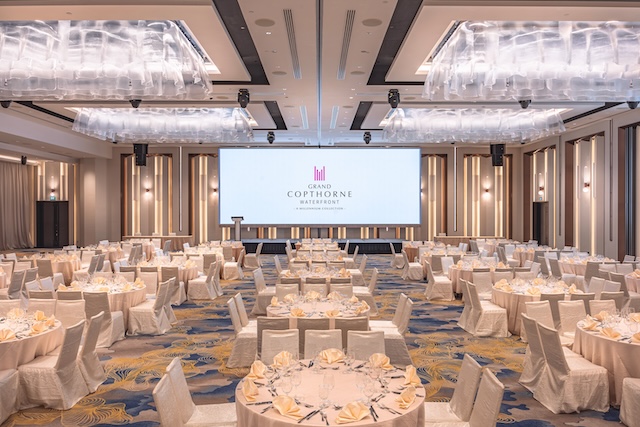
Grand Copthorne Waterfront’s Grand Ballroom comfortably fits 580 in banquet format and up to 1,000 in reception style. It can also be divided into smaller rooms
Following a US$30 million (S$40 million) renovation in 2023, the Grand Copthorne Waterfront Hotel Singapore, part of Millennium Hotels and Resorts (MHR), unveiled a new look with a redesign of its 573 guestrooms and suites incorporating eco-friendly features and upgraded public spaces.
At the forefront of its transformation is its expanded conference facilities spanning over 6,200m² across three floors.
Located along the Singapore River, the hotel offers guests respite from the busy city but still remains in close proximity to various restaurants in the vicinity, as well as easy access to Singapore’s business and shopping districts.
As Singapore continues to reinforce its position as the “World’s Best MICE City”, Grand Copthorne Waterfront is poised to welcome the return of corporate events.
“This is a timely refresh for Grand Copthorne Waterfront Hotel, particularly as MICE travel resumes normalcy and in-person events return to the agenda. As more companies prioritise Environmental, Social and Governance (ESG) goals to reduce impact, the demand for greener events has also increased with corporate planners preferring hotels with strong sustainability features and initiatives. We are well positioned to capture this fast-growing MICE market, increase our competitive edge, and reinforce Singapore’s status as a leading sustainable MICE destination for a strong business recovery,” said MHR executive director Kwek Eik Sheng.
The pillarless 850m² Grand Ballroom is the centrepiece of its MICE facilities, capable of accommodating up to 1,000 people in reception style. Equipped with double giant LED screens on walls, the ballroom and screens can be divided for smaller events.
For smaller events, make use of the 33 versatile function rooms. From junior ballrooms offering splendid views of the Singapore River, to the multiple breakout rooms with floor-to-ceiling windows, there are a plethora of options to choose from.
Fully carpeted, filled with an abundance of natural light and LED lighting, as well as high resolution LED video walls, wireless video signal transmission, and laser projectors, the function rooms provide all the technology and comfort for seamless events.
Be treated like VIP at the Executive Club Lounge
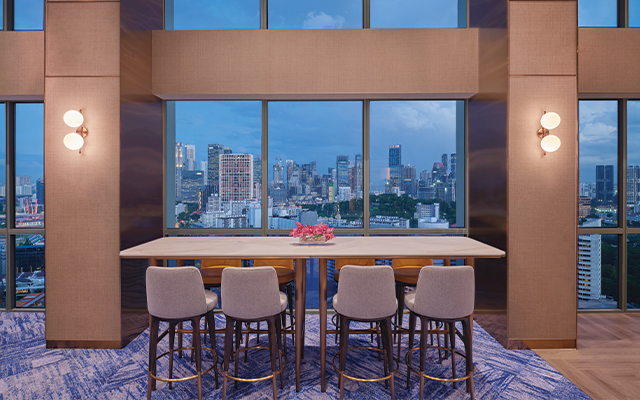
To pamper your guests, consider a stay in the club rooms. Guests who stay in a club room gain exclusive access to the Executive Club Lounge on level 29, which boasts stunning views of the Singapore skyline. They get complimentary breakfast, live food stations in the afternoon, and evening cocktails.
Setting the standard in sustainability
What sets Grand Copthorne Waterfront apart is its commitment to sustainability. Every aspect of the hotel was approached with an eco-conscious mindset, integrating features that minimise environmental impact while enhancing guest experience.
The hotel’s conference and event spaces are outfitted with energy-efficient LED lighting and biodegradable stationery, while filtered drinking water replaces single use plastic bottles.
Event attendees can also look forward to a curated menu that features locally sourced, renewable, and ethically produced ingredients.
“To solidify our dedication to sustainable hospitality and cater to the rising expectations and demands of today’s corporate planners and guests, we have incorporated innovative and high-efficiency technology that reduces electricity and water consumption, installed eco-friendly features such as in-room water dispensers, and adopted new wall coverings and carpets from recycled materials as part of the renovation process. We also implemented green practices in various aspects of our business operations including sustainable sourcing, recycling, and food waste management,” said Andy Tan, senior vice president, Sales & Partnership, MHR.
Eco-conscious guests will appreciate the hotel’s approach to dining across its four restaurants. Its menus feature locally sourced, renewable and ethically produced ingredients.
Food Capital, the hotel’s main buffet restaurant offers international cuisine, while Riverside Terrace offers eco-friendly cocktails and alfresco dining alongside the Singapore River. For spicy, punchy flavours, SanSara, the hotel’s signature restaurant serves Northern Indian Awadhi cuisine, and there’s also The Lobby Lounge for cocktails and tapas.
The hotel group’s efforts have clinched it several sustainability accolades, including the Global Sustainable Tourism Council certification, a global industry standard for sustainability tourism; Green Mark Platinum by Singapore’s Building and Construction Authority, and Singapore Hotel Sustainability Awards.
To host your next event at Grand Copthorne Waterfront, visit Millennium Hotels and Resorts or email meetings.gcw@millenniumhotels.com.
Global events tradeshow organiser RX has scuppered plans for IBTM Hong Kong.
The inaugural tradeshow was supposed to be held from March 19-20, 2025, however, an email correspondence with RX Global stated that “IBTM APAC will no longer take place as scheduled in 2025″.
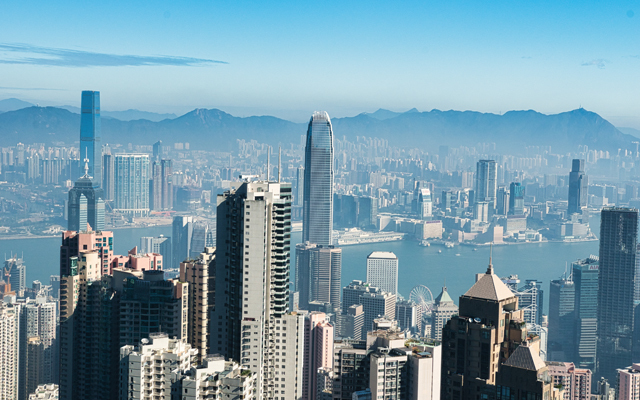
Hong Kong skyline
In the email, RX Global stated that the “coinciding growth in international representation at IBTM World 2024”, and Chinese outbound business travel planners becoming “increasingly adventurous in their choice of destination” led to this decision.
The company is encouraging those who were planning to participate in IBTM APAC to join IBTM World in Barcelona, happening from November 19-21, 2024.
Previously in 2020, initial plans to launch an IBTM Asia Pacific at Singapore’s Marina Bay Sands Expo and Convention Centre were postponed due to the pandemic.
The event will focus on cutting-edge aviation technologies, operational synergies across cargo, and logistics and MRO
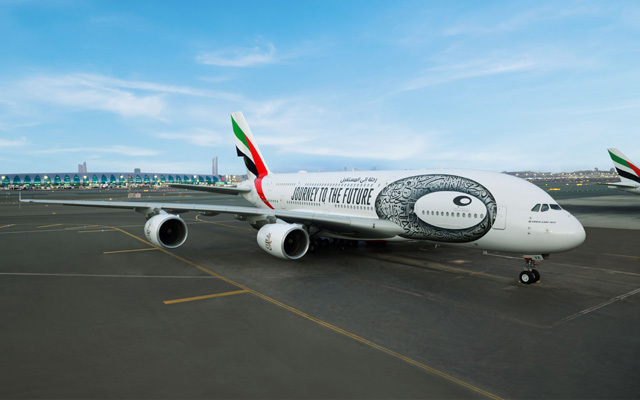
Emirates and the Museum of the Future will host the first Aviation Future Week, taking place from October 15-17, 2024 in Dubai.
Aviation Future Week will include keynotes, panels and workshops over three days. The first day includes a packed programme led by speakers and industry experts who will address air travel demand and airport infrastructure and how airports, airlines, aerospace manufacturers and other stakeholders can deliver an enhanced passenger experience using technology.
The event will focus on cutting-edge aviation technologies, operational synergies across cargo, and logistics and MRO
The second day will be dedicated to developments within airfreight and logistics, while the second half of the day with focus on MRO (Maintenance, Overhaul & Repair) development within the region.
The third and final day will navigate the boundary-breaking potential of Web3, AI and XR-infused solutions to drive workflow efficiencies and service delivery. Sessions will also tackle strategies required to rethink existing processes through AI, and the collaboration necessary to upskill the aviation workforce today to embrace, adopt and leverage these technologies.
In addition to the main programme track, Aviation Future Week will also feature an exhibition platform showcasing the latest in aviation technologies. Visitors can learn about new products and concepts, and network with industry representatives. A series of interactive workshops will be spearheaded by Emirates and Museum of The Future, supported by Emirates CX teams, dnata, Emirates SkyCargo, Flight Operations, Emirates and dnata environment teams, Boeing, and the Emirates Group Youth Council.
1. Rotorua Canopy Tours, New Zealand
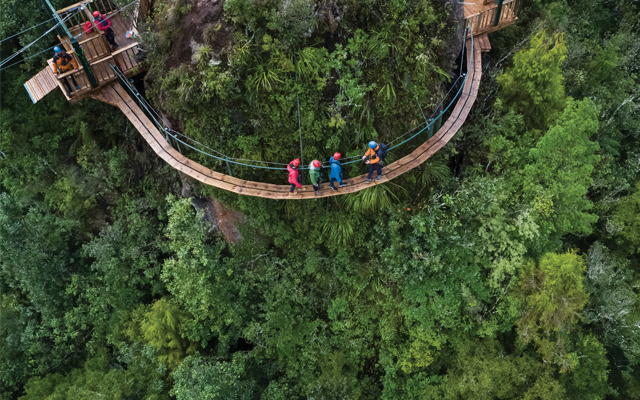
Rotorua Canopy Tours provides fully guided epic adventures high above one of New Zealand’s ancient forests. The 3.5-hour-long Ultimate Canopy Tour takes corporate groups of 10 each to traverse a 250,000-year-old volcanic cliff, revel in stunning views of Lake Rotorua at the top of a three-storey floating staircase, walk over suspended swing bridges, and race down an epic 400-m tandem zipline. During the 3.5-hour-long experience, groups will bond, overcome fears, and go beyond their comfort zones while learning about the country’s precious biodiversity.
Rotorua Canopy Tours can accommodate a range of group sizes, and custom departures can be created to suit a group’s schedule. Guests will also be given access to free photos of the experience after the tour.
photo credit to Myra Kierulf
2. Tuna Adventour, Philippines
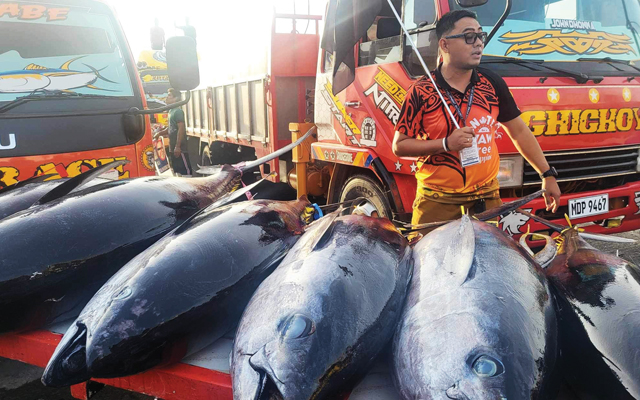
General Santos City or Gensan in the Sarangani Province is best known for tuna – about 80 per cent of which is exported to Japan.
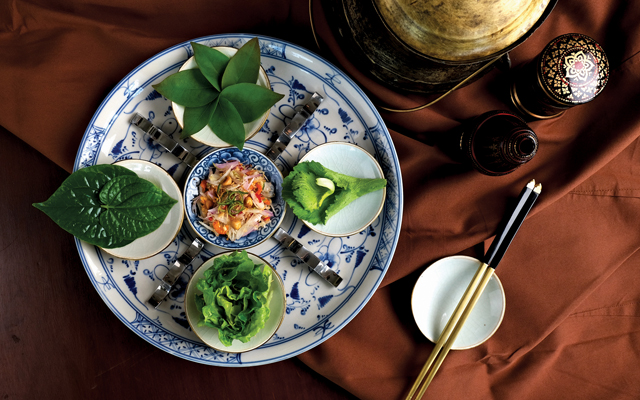
Cadge an early morning trip to Gensan Fish Port Complex to experience how the day’s catch is weighed, graded and traded for export, canning, and local consumption. A visit to tuna canneries and buying sun- and air-dried fish onboard tuna fishing boats can also be arranged, followed by lunch where all parts of tuna, including sperm sac and roe, are eaten and served in various savoury ways.
3. Dusky Leaf Adventures, Malaysia
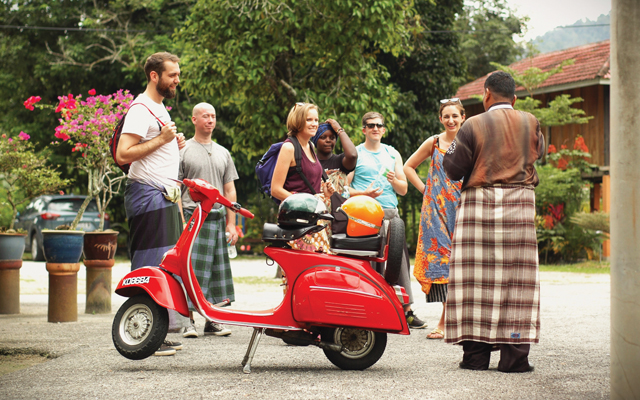
Experience the tranquillity of the countryside on a Dusky Leaf Adventures Vespa tour through the outskirts of Kuala Lumpur.
As a pillion passenger, participants get a glimpse into authentic kampung (village) life, learning about local customs, beliefs, traditions, and cuisine. Highlights include making a popular local dessert, exploring a herb garden, trying their hand at batik printing, and cooling off with a refreshing waterfall swim.
photo credit to Lamo
4. Chef Nak, Cambodia
To celebrate Cambodia’s rich culinary culture, celebrity chef Rotanak Ros, AKA Chef Nak, has crafted an exclusive private cooking experience on the grounds of her traditional home, complete with a pool.
As guests savour a five-course meal, they are serenaded by local artists performing traditional music. Chef Nak enriches the dining experience by sharing personal anecdotes about each dish, revealing its history and the story behind the ingredients.
5. Northern Territory Tours, Australia
Corporate gatherings looking for impactful experiences but are short on time may find their solution in a mini Northern Territory excursion, showcasing Australia’s stunning outback landscapes/
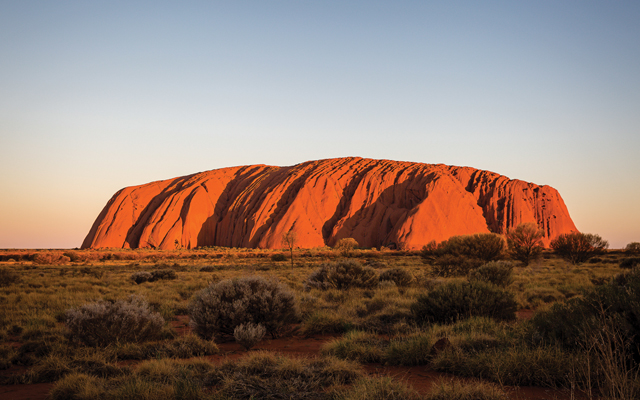
Run by AAT Kings, these two- to four-day tours transport guests to iconic destinations like Uluu-Kata Tjua and Kings Canyon in the Red Centre, plus Kakadu and Litchfield National Parks. Journeys are expertly guided and can be personalised to suit a group’s needs.
6. Jakarta tour, Marintur Indonesia
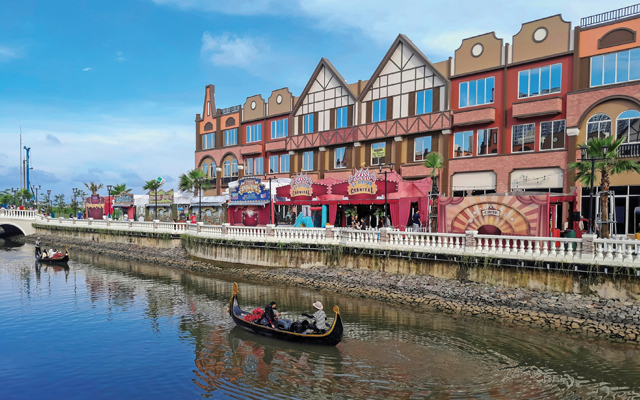
Discover Jakarta’s dynamic evolution from historical charm to modern metropolis on this one-day excursion with Marintur Indonesia. Explore the Kota Tua (Old City), a living testament to Dutch colonial influence, and contrast it with the vibrant Pantai Indah Kapuk (PIK 2), a burgeoning hub of international entertainment and shopping.
Delve into Jakarta’s rich history with a visit to the old town, once the heart of Dutch colonial administration. Explore historic museums and former banks that played a pivotal role during colonial times and the early years of independence. These iconic locations also offer unique settings for thematic corporate and social events.
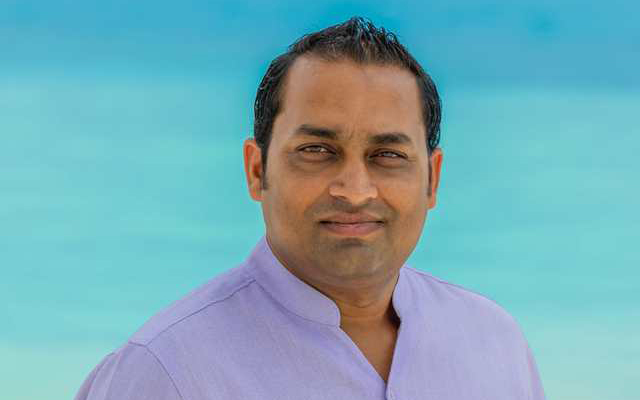
Conrad Maldives Rangali Island has appointed Amit Kumar Prasad as the new director of F&B.
In his new role, Prasad will oversee the comprehensive repositioning of the resort’s food and beverage outlets, ensuring they align with the resort’s overall strategic vision. His responsibilities will include managing dining operations, developing innovative dining concepts, and enhancing the overall guest dining experience through attention to detail and a commitment to excellence.
With over 18 years of experience in the hospitality industry, Prasad’s career includes leadership roles at resorts such as Villa Park Sun Island Resort & Spa, JW Marriott Resort & Spa Maldives, and Waldorf Astoria Maldives.
He was most recently director of F&B at Villa Park Sun Island Resort & Spa.
A conference in session at last year’s IT&CM Asia and CTW Asia-Pacific 2024
Slated to be held from September 24-26 at the Bangkok Convention Centre at CentralWorld, the annual IT&CM Asia and CTW Asia-Pacific 2024 is currently in its final preparations.
The exhibition hall will host a wide range of pavilions and booths from different countries and regions in the Asia-Pacific region, such as IHG Hotels & Resorts, Meet Taiwan, Thailand Convention and Exhibition Bureau (TCEB), Singapore Expo, and Hong Kong Tourism Board. Exhibitors will be ready to showcase the latest technologies, products, and services that can enhance business events, as well as corporate travel experiences.
A conference in session at last year’s IT&CM Asia and CTW Asia-Pacific 2024
There will also be a series of conferences, seminars, and workshops will offer valuable insights and knowledge on industry trends and best practices.
Aside from highlighting the recent launch of the Thailand MICE Visa Prepaid Card, Chiruit Isarangkun Na Ayuthaya, president of TCEB, shared that there will be 39 Thai exhibitors – representing six destinations from Khao Lak to Chiang Mai – present.
Special features include a dedicated Singapore Pavilion highlighting the country’s advancements in technology and business; a Sea & Air Zone focusing on the airline and cruise industries; a Tech and Engagement Zone featuring the latest technological innovations; and a Corporate Zone showcasing products and services tailored for corporate events with a focus on sustainability and community engagement.
Networking opportunities will abound, with the Tourism Promotion Board (TPB) Philippines hosting a by-invitation-only luncheon on September 26, and the PATA Power of Networking Session providing insights on the impact of visa-free waivers on visitor arrivals.
The event reflects Macao’s growing reputation as a medical conference hub and its goal to promote the Big Health industry
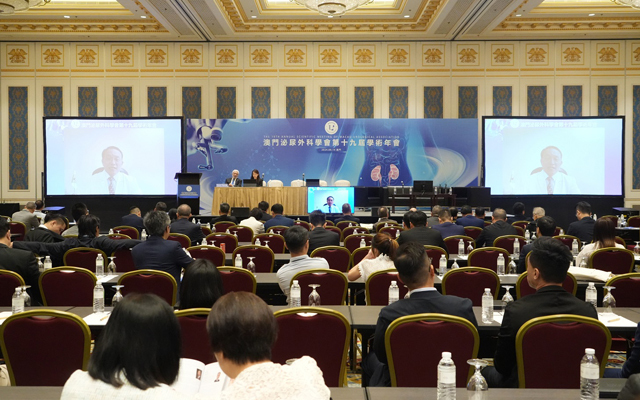
The 19th Annual Scientific Meeting of the Macau Urological Association (MUA) – organised by Macau’s first professional organisation dedicated to urology – recently concluded on September 14, 2024,
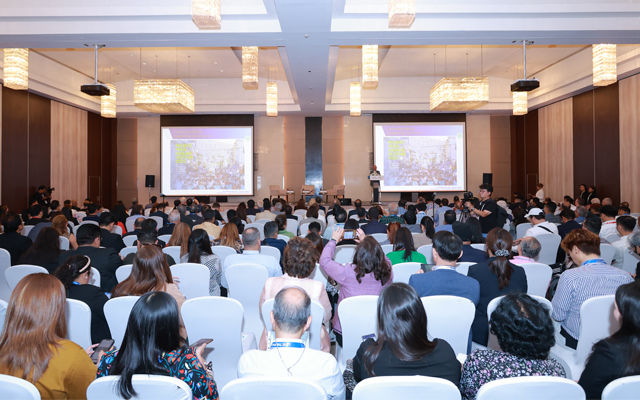
Held at The Parisian Macao, the event brought together over 250 experts from the Greater Bay Area and beyond to discuss urological topics.
The event reflects Macaou’s growing reputation as a medical conference hub and its goal to promote the Big Health industry
The meeting showcased Macau’s growing reputation as a hub for medical conferences and professional gatherings, while Sands China’s support for the event aligns with the Macau SAR Government’s “1+4” strategy for moderate economic diversification, which places a strong emphasis on the Big Health industry.
Kris Kaminsky, senior vice president of hotel operations at Sands China, stated: “… By supporting events like the Annual Scientific Meeting of the Macau Urological Association, we are not only providing world-class facilities but also contributing to the city’s broader goals of becoming a global hub for the Big Health industry. Our commitment to the MICE sector is deeply intertwined with supporting initiatives that drive long-term growth for Macao’s economy and its healthcare ecosystem.”
Founded in 2006, MUA is a professional academic organisation for urology, comprising all urologists in Macau.
Registrations are now open for the Business Events Industry Aotearoa (BEIA) 2024 conference, which will be held in Taranaki for the first time from November 25-27, 2024.
This year’s conference and annual general meeting will take place at The Devon Hotel in New Plymouth, andl include a day and a half of education sessions, panel discussions and workshops, plus a relaxed social programme.
This is the first time the conference is going to Taranaki. Mount Taranaki pictured. Photo credit: Marvin Rozendal
On November 25, industry first-timers will be welcomed, and Regional Convention Bureaux will meet before the conference Welcome Function at Fitzroy Beach that evening.
Education sessions on November 26 and 27 will draw on the best of the business events industry, as well as experts in their field including Brad Olsen, principal economist at Infometrics; Maretha Smit, CEO of Diversity Works; and professor Carmel Foley, from University of Technology Sydney, an internationally-recognised business events’ researcher.
Their topics will include diversity, equity and inclusion, cultural integration, legacy and impact, and improving collaboration within the industry.
The BEIA Mentorship Programme 2024 will wind up during the conference, with a chance for mentors and mentees to gather and celebrate their achievements.
The conference wraps up at lunchtime on November 27, after a gala evening at Bowl of Brooklands where BEIA’s annual Outstanding Contributor Award will be announced.
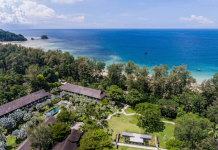
Just 10 minutes from Phuket International Airport on the serene northern coast, this 178-key, Bill Bensley-designed resort offers delegates a quiet, tropical paradise steeped in Phuket’s tin-mining heritage
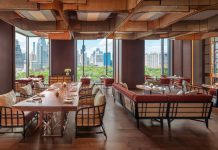
The newly-opened Ritz-Carlton, Bangkok anchors the One Bangkok development with cosmopolitan elegance. Featuring the city's largest ballroom and a spectacular new penthouse suite, it delivers exceptional hardware and deeply authentic, soulful service for business and leisure travellers alike
Behind the imposing, Brutalist concrete that defines Zurich’s Oerlikon district lies a surprising secret. While its exterior honours the neighbourhood’s industrial roots, stepping inside Mama Shelter reveals a vibrant, neon-soaked world that is a far cry from its rigid shell






 He has been with BWH for over 16 years, previously managing procurement, quality analysis, and project development for property hotels in this region.