


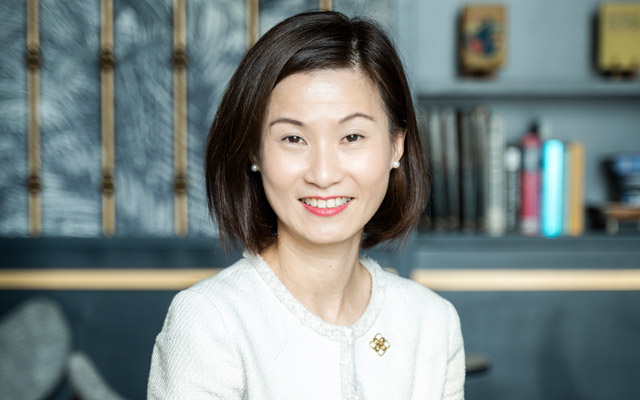
The Eve Hotel Sydney names new GM
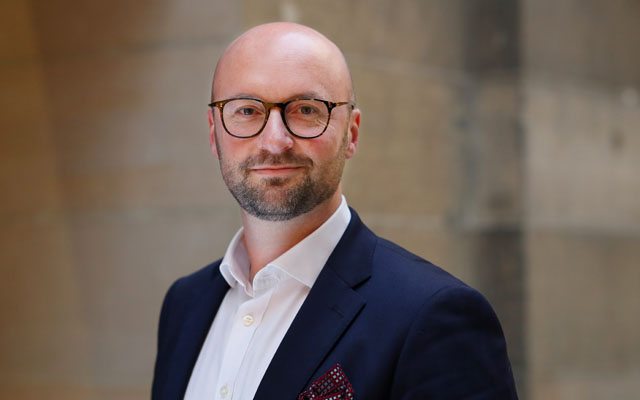
The Eve Hotel Sydney welcomed Ben Mellor as general manager ahead of the boutique luxury hotel’s summer debut in Sydney’s new Wunderlich Lane precinct.
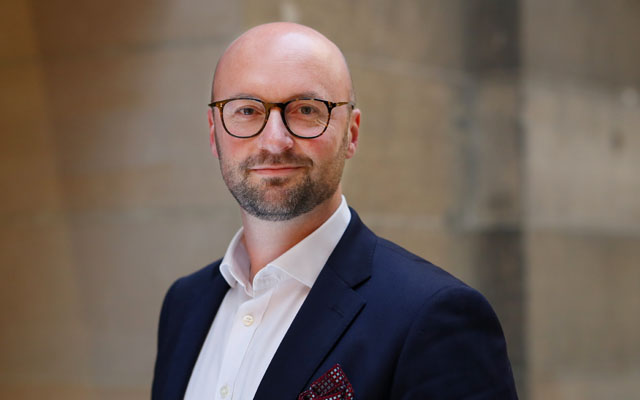 With more than two decades of experience in luxury hospitality, he brings a wealth of leadership and expertise to his new role. He has held senior management positions at Sydney’s top five-star hotels, including Sofitel Sydney Wentworth, Fairmont Resort Blue Mountains and, most recently, as general manager of InterContinental Sydney Double Bay.
Massimo Brancaleoni joins Kempinski Hotels as chief commercial officer

Kempinski Hotels has named Massimo Brancaleoni as its chief commercial officer with effect from November 1.
Having worked in destinations such as Paris, Genoa, Hong Kong, Madrid, Miami and Monaco, he brings over 25 years of commercial experience to his new role.
 Prior to joining Kempinski Hotels, he served as the senior vice president sales and revenues at Silversea Cruises.
Photo of the day: Australia’s CVBs out in full force at Australia Next
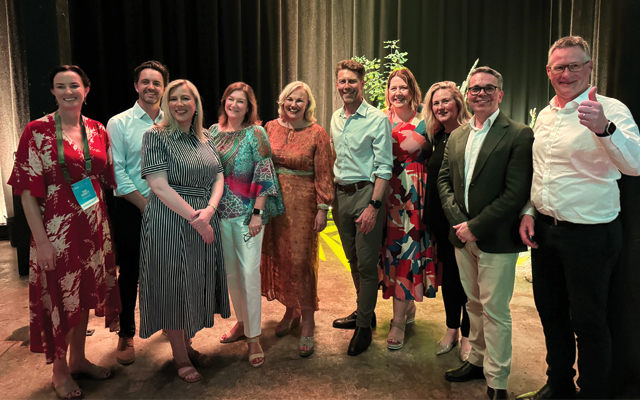
Business Event’s Australia’s major incentive showcase, Australia Next (previously known as Dreamtime) was brought to a close at the Tanks Art Centre in Cairns.
The Tanks Arts Centre is a multi-use, contemporary arts and events facility creatively housed in three repurposed WWII oil storage tanks situated within the Cairns Botanic Gardens.
Over the two days, 80 international business events buyers, 15 media, and 96 Australian sellers – with all Australian CVBs in attendance – conducted pre-scheduled appointments at the recently-renovated Cairns Convention Centre, as well as experienced Tropical North Queensland’s event delivery capabilities. International buyers and media also took part in pre- and post- familiarisations in destinations around the country.
Tourism and Events Queensland CEO Patricia O’Callaghan said the event was a great opportunity to welcome some of the key markets to Australia Next in Cairns.
“Australia Next supports bringing high-value incentive travellers to our state which will be key in growing our international overnight visitor expenditure to A$11 billion (US$7.4) billion by 2032,” O’Callaghan said.
“Tourism and Events Queensland’s Business Events strategy sees us aiming to achieve 20 per cent of the Australian market share by 2027, a growth of four per cent which will bolster our international visitor numbers.”
Tripseed pioneers initiative on tracking tours’ economic distribution
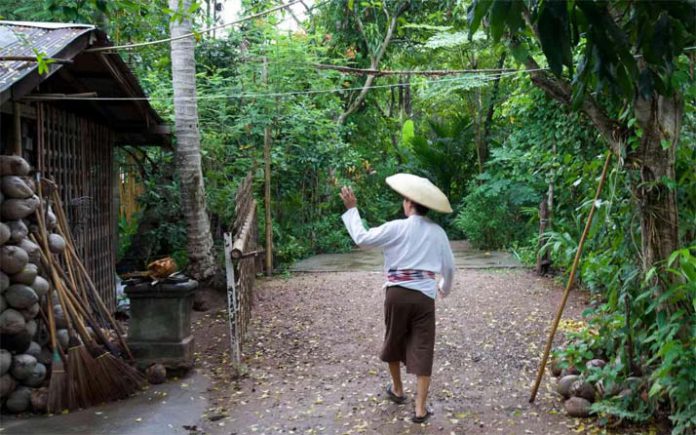
Thailand-based DMC Tripseed has launched the first phase of its Economic Distribution Disclosure Initiative, a project that aims to map and label the economic benefit distribution of its Thailand operations.
To date, over 80 day tours and half-day tours have been labelled on the Tripseed website, identifying where the economic benefit from each tour goes geographically.
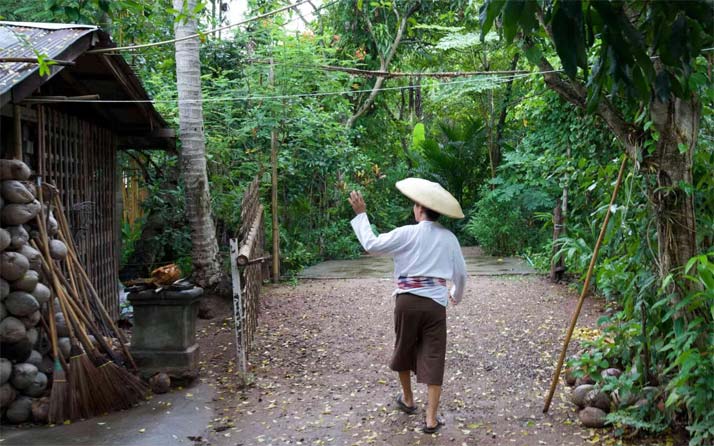
This initiative is said to be the first in the touring industry.
Tripseed defines economic leakage as the phenomenon where money spent by tourists does not remain in the local economy, but instead flows out to other regions or countries. This often occurs when tourism-related businesses are owned by foreign entities and individuals, or when goods and services are imported rather than sourced locally.
Measuring and reporting on leakage transparently is crucial to creating a more sustainable and positively impactful tourism industry. By addressing these imbalances, the tourism sector can lead efforts to create fairer economic opportunities, ensuring that tourism benefits genuinely reach locals.
Reducing leakage benefits destinations by ensuring more revenue remains within destinations and local communities, and goes hand-in-hand with ethical tax conduct towards fostering sustainable development and providing funds for improving public services and infrastructure.
Tripseed’s methodology for calculating leakage reveals insights into revenue distribution. This first phase introduces a labelling system that highlights the geographical beneficiaries of touring activities. Secondary and tertiary phases will disclose further details about the genuine economic beneficiaries of tours, while a complete company-wide disclosure will detail how much of Tripseed’s cost base goes toward local individuals and businesses versus leaks overseas to foreign-owned businesses and multinational corporations.
Ewan Cluckie, co-founder and director of growth at Tripseed, said: “We ensure that all our revenue and profits attributable to Thailand products and services are recorded in Thailand, where we also pay our taxes. Although this might appear minor, profit shifting to foreign countries is a significant issue in the DMC sector, diverting essential income away from local economies. This practice often prioritises maximising profitability over truly investing in the sustainable development of the destinations where they operate.”
“By refining our methodology, we strive to uncover genuine socio-economic contributions to local communities and foster a tourism model prioritising ethical practices over profits.”
Melbourne’s incentive sector takes off with new South-east Asian flights
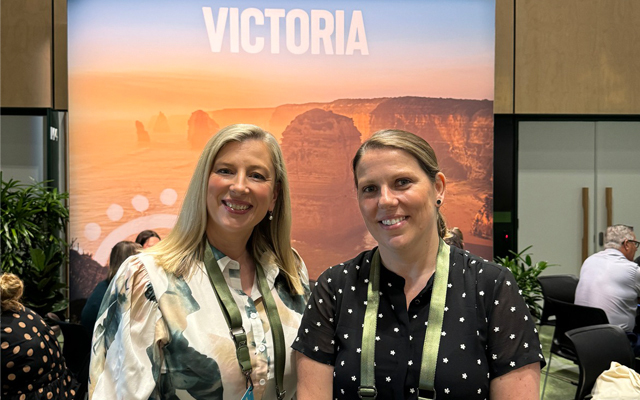
New direct flights to Melbourne from Vietnam and Philippines have expanded incentive market potential for Melbourne Convention Bureau (MCB).
There are currently three direct air services – operated by Vietjet (Hanoi), Vietnam Airlines (Hanoi), and Jetstar (Ho Chi Min City) – from Vietnam to Melbourne.
Joanna Garrie, MCB’s director corporate meetings and incentives, who spoke to TTGmice at Australia Next 2024, said: “We are seeing incentives from Vietnam that are 20 to 30 people strong (which may not seem as large as inbound groups from China), but there is quite a big volume of these smaller-sized groups.”
“With the rise of the middle class in Vietnam, we’re seeing more direct selling, insurance, and pharmaceutical companies based there running incentives,” she added.
As most of the Vietnamese delegates are first-time visitors, they favour iconic products such as the Great Ocean Road and the Penguin Parade at Phillip Island.
Last year, the Victoria state government opened a trade and investment office in Vietnam’s Ho Chi Minh City, which will bring indirect contributions to the inbound incentive travel sector.
Another South-east Asian market that is on MCB’s radar is the Philippines, thanks to direct flights operated by Philippines Airlines and Cebu Pacific.
Garrie said the Philippines’ rising middle class and direct selling agencies were fuelling interest in Melbourne.
“We have received some incentive interest out of the Philippines, but it has yet to materialise,” she added.
Sales efforts in these two markets are led by regional sales director, Kelvin Yin, who conducted sales calls in Vietnam last year. MCB also hosted a delegation from Vietnam in partnership with Visit Victoria and Australian Trade and Investment Commission. Garrie described the event as a “sharing of ideas” that explored both the inbound and outbound markets, as “Australians also love travelling to Vietnam”.
Marketing activities will likely happen in the future.
Melbourne’s traditional inbound incentive markets are India and China, while Singapore, Indonesia, and Malaysia are considered established markets.
IT&CMA 2024, CTW Asia-Pacific weaves in fun and rewards for delegates
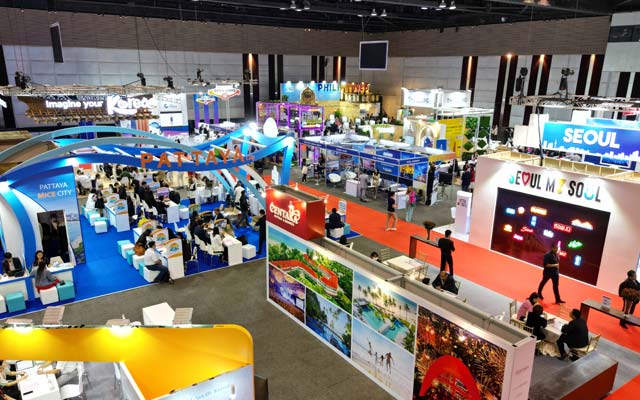
Set for September 24 to 26 at Bangkok Convention Centre at CentralWorld, this year’s IT&CMA 2024 and CTW Asia-Pacific will offer delegates a vibrant start to the event with a fast-paced musical ice-breaker as well as a gamified format that will earn them rewards for participation.
Asia Ability, the creative teambuilding experts, will host Boomtime, a lively and inclusive musical ice-breaker using Boomwhackers. This activity is designed to energise and unify teams, providing a dynamic environment for networking and exploring potential collaborations.
As the exhibition begins so will Game On, an interactive challenge where the hall is one big dynamic game floor. Attendees can check in at multiple checkpoints, tackle exciting tasks, and watch their name rise on the live scoreboard. Organisers have lined up exclusive prizes for this.
David Fotheringham, director, Asia Ability Creative Teambuilding, said: “Our first major collaboration was celebrating IT&CMA’s 15th anniversary and CTW’s 10th anniversary back in 2007, and it’s been a pleasure to maintain that partnership over the last 14 years.
“Although we were disappointed when Covid-19 restrictions halted our plans to gamify the exhibition floor at IT&CMA 2020, we were pleased that the show continued in a virtual format, and we were able to support it virtually. With restrictions lifted, we’re now moving full steam ahead to gamify the exhibition floor for 2024, enhanced by the digital innovations developed during lockdown.”
There are more opportunities to win prizes through the Buyer’s Incentive Programme. This presents exclusive rewards to those who complete the highest number of business appointments, whether pre-scheduled or walk-in while earning top ratings from exhibitors.
Additionally, organisers are stepping up knowledge retention with the introduction of an AI Technology Partner, Gevme, providing participants with instant sharable summarised takeaways and a topic-aggregated Idea Cloud, designed to be inclusive for all delegates, especially those for whom English may not be the first language.
Additional collaboration with Audience Engagement Partner, Pigeonhole, will allow audience inputs to live Q&A sessions, polls, quizzes, and word clouds to be collected for analysis and use towards event improvement.
IT&CM Asia and CTW Asia-Pacific 2024 are expected to welcome more than 1,000 delegates who will meet with suppliers from around the region and beyond to exchange industry knowledge and open up new business avenues.
Cairns Convention Centre readies for slew of business events over the next 12 months
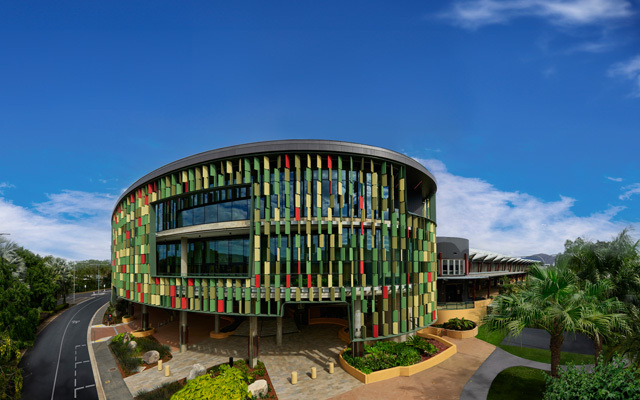
Some 21,000 delegates from Australia and overseas are expected to gather at Cairns Convention Centre between now and June 2025, as the centre grows its calendar of business events.
Upcoming meetings at the venue include the Australasian Genomic Technologies Association Annual Conference in October 2024; Australian Archaeological Association Annual Conference in December 2024; Congress of the Asia Pacific Orthopaedic Association in April 2025; and Australian & New Zealand College of Anaesthetists Annual Scientific Meeting in May 2025.
The strong line-up follows on from a successful first half of 2024, when the venue welcomed several leading scientific meetings. Among them was the Viruses of Microbes (VoM) 2024 Conference, which drew over 500 global experts across five days.
Commenting on Cairns’s appeal, Jeremy J Barr, associate professor from Monash University and co-chair of VoM, said: “Hosting the meeting in Cairns was an easy choice. Cairns’ unique wildlife, scenery, and setting offer a one-of-a-kind experience. It’s rare to have a conference with a tropical coral reef one side of the venue and a rainforest, the other.”
He added that “the facilities at the Cairns Convention Centre are among the country’s best”.
Janet Hamilton, general manager, Cairns Convention Centre, said the venue “serves as an ecosystem for knowledge sharing, education, and community engagement”. She welcomes these conferences as a way to “not only stimulate the Cairns economy but also provide a platform for collaboration and learning”.
Australia Next heads to Melbourne in 2025
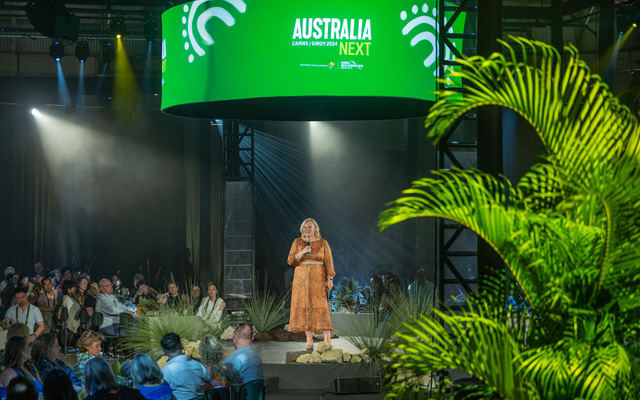
Business Events Australia’s signature incentive showcase, Australia Next, will be held for a third consecutive year with the event to return to Melbourne/Narrm in 2025.
Australia Next 2025 will be held from December 1-3, and will be delivered in partnership with the Melbourne Convention Bureau. It will be prefaced or followed by a familiarisation visit in key incentive destinations across Australia for international buyers and media.
This announcement was made at the conclusion of Australia Next 2024 in Cairns/Gimuy last night. It will be the first time since 2013 international business events planners have been to Melbourne for the showcase.
Tourism Australia’s managing director, Phillipa Harrison, said after having the showcase on pause for four years it is been important to hold the event in in 2023, 2024 and again in 2025 to highlight all the new product on offer around the country.
“Traditionally our signature incentive showcase has been held every two years but as we ramped up efforts to secure a strong pipeline of international business it was important to give more buyers an opportunity to take part,” Harrison said.
“The leads generated from Australia Next are driving real business outcomes which continue to play a critical role in the recovery of the business events industry.”
Dagmar Lyons joins Raffles Hotel Le Royal as GM

Raffles Hotel Le Royal, the 95-year-old luxury heritage hotel in Phnom Penh, Cambodia, has appointed Dagmar Lyons as its new general manager.
She joins Raffles Hotels from Fairmont Pacific Rim in Vancouver, Canada, where she served as hotel manager for the past two years.
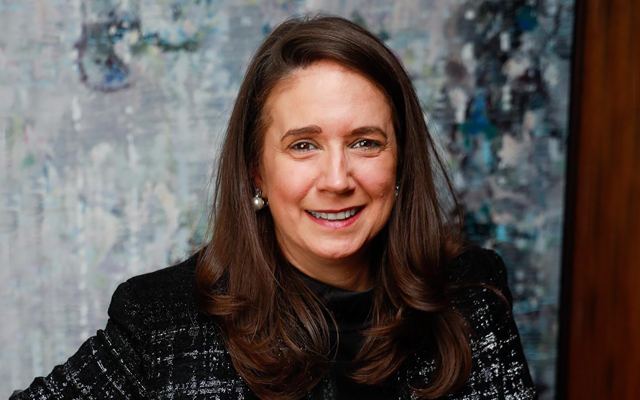 Her hospitality career has included postings at numerous luxury hotels and resorts around the world, including in North America, Asia, the Middle East and Europe.
Reviews
The Slate Phuket
Just 10 minutes from Phuket International Airport on the serene northern coast, this 178-key, Bill Bensley-designed resort offers delegates a quiet, tropical paradise steeped in Phuket’s tin-mining heritage
The Ritz-Carlton, Bangkok
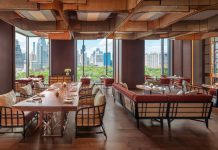
The newly-opened Ritz-Carlton, Bangkok anchors the One Bangkok development with cosmopolitan elegance. Featuring the city's largest ballroom and a spectacular new penthouse suite, it delivers exceptional hardware and deeply authentic, soulful service for business and leisure travellers alike
Mama Shelter Zurich
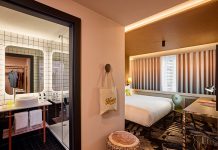
Behind the imposing, Brutalist concrete that defines Zurich’s Oerlikon district lies a surprising secret. While its exterior honours the neighbourhood’s industrial roots, stepping inside Mama Shelter reveals a vibrant, neon-soaked world that is a far cry from its rigid shell


The Robertson House has appointed Kris Wong as its new general manager, where she is set to enhance the hotel’s offerings by creating unique, personalised experiences that connect guests with Singapore’s culture and history.
With a career spanning over 20 years in the hospitality industry, she brings a wealth of experience and a commitment to excellence to her new role.