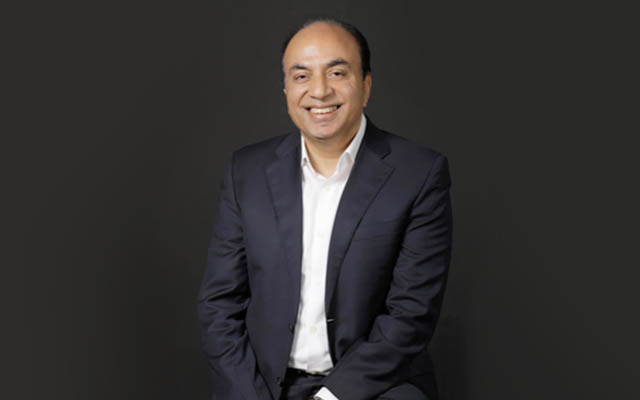
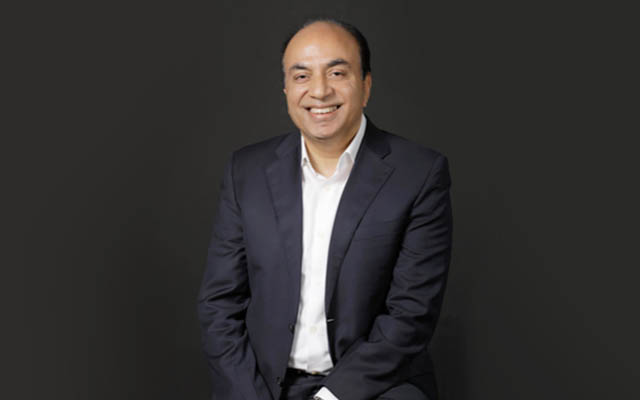
Hyatt Hotels Corporation has appointed Vikas Chawla as president, India and South-west Asia, effective April 1, 2026.
He brings more than 30 years of experience in food and beverage and consulting. He joins with a background in building and scaling businesses, and will lead Hyatt’s strategy and growth across the region.
The ATTA annual general meeting and Thailand Tourism Resilience Conference was held at The Sukosol Hotel, Bangkok on March 27, 2026; photo from ATTA’s Facebook page
Thailand’s inbound recovery is gaining momentum, underpinned by a surge in Chinese and Taiwanese arrivals that appear resilient.
Data from the Association of Thai Travel Agents (ATTA) reveals that Thailand welcomed more than 8.4 million international visitors between January 1 and March 21, with China reclaiming its position as the top source market.
The ATTA annual general meeting and Thailand Tourism Resilience Conference was held at The Sukosol Hotel, Bangkok on March 27, 2026; photo from ATTA’s Facebook page
Speaking at the ATTA annual general meeting and Thailand Tourism Resilience Conference, honorary secretary-general Adith Chairattananon highlighted that these regional markets have demonstrated year-on-year growth even after the start of the ongoing geopolitical volatility in the Middle East.
He pointed to an 82.4 per cent year-on-year increase in Chinese arrivals this February.
While January figures initially showed a deficit, the market share for Thai destinations has expanded significantly from the middle of the first quarter.
A critical driver for this growth is the reduction in negative virality on social media platforms — a factor that has been resolved by a stabilised “Safe Destination” image.
He also cited the charter flights from China to Thailand subsidised by the Thai government, and a strategic shift in corporate travel patterns as contributing factors. Adith noted that regional instability has diverted lucrative business from competing corridors.
“Our recent engagements in Shanghai indicate a strategic advantage for Thailand. With Chinese restrictions on incentive and MICE movements to the Gulf markets, we are successfully capturing that redirected demand,” said Adith.
The Taiwanese market has also mirrored this rebound, posting 12.2 per cent year-on-year growth in February and six per cent in March.
Looking ahead, ATTA remains optimistic about hitting a seven-million-arrival target for China, provided economic factors remain stable.
“Overall, the Taiwanese and Chinese markets have not been affected by war, safety concerns, or the impacts of war. However, they are mainly affected by psychological factors regarding travel costs,” he stated.
Adith concluded: “A critical variable for the second half of the year will be monitoring geopolitical developments over the coming months, coupled with fluctuating fuel surcharges, airfares and impacts on the costs of living. Should these factors significantly inflate travel costs, the Chinese outbound market may pivot toward domestic alternatives.”
TICA is set to escalate government talks on mitigating the Middle East crisis’s impact; photo from TICA’s Facebook
Rising fuel costs and a softening Middle Eastern market are beginning to weigh on Thailand’s business events sector, with longhaul bookings bearing the brunt of the ongoing regional conflict.
“Short-haul traffic continues to materialise, but longhaul clients are delaying their plans. They forwarded them to later this year, or the very end of this year, or early next year,” noted Prachoom Tantiprasertsuk, president of the Thailand Incentive and Convention Association (TICA).
TICA is set to escalate government talks on mitigating the Middle East crisis’s impact; photo from TICA’s Facebook
“Clients with distant travel dates have not officially postponed indefinitely, but they are withholding deposits due to situational uncertainty,” she noted.
Prachoom highlighted significant headwinds for the upcoming May-to-October low season, a period traditionally defined by lower volumes that is now further strained by a lack of demand from primary source markets.
While Chinese arrivals remain steady, they have yet to reach the high-volume benchmarks of previous years, while the Indian market is only seeing a gradual recovery in booking pace. Most concerning is the total stagnation of the Middle Eastern market – typically a primary driver during this window – where demand has flattened to near-zero as new bookings fail to materialise.
Compounding these suppressed arrival figures are surging airfares driven by increased fuel prices. Prachoom warned that elevated flight costs are already forcing unconfirmed business to downsize or pivot to alternative destinations entirely.
“Thai MICE suppliers are adapting through a mix of market diversification, product adjustment, and tactical promotions. Additionally, there is increased flexibility in terms of pricing, programme structure, and booking conditions. Shorter programmes and more cost-efficient packages are becoming more common,” Punnaporn Wongjanpen, founder and CEO of Paula & Co. (Thailand) Co., told TTGmice.
To stimulate volume, suppliers are rolling out aggressive tactical offers, ranging from early-payment deals valid through September to “come 4 pay 3” structures and enhanced value-added incentives.
According to the Bangkok Post, Khon Kaen’s hospitality and business events sectors are facing a crisis “more severe than the pandemic”.
Nattiya Tantasook, president of the Khon Kaen Tourism and MICE Association, reported that the province has lost nearly half of its hotel reservations as the local business events calendar is wiped clean by a wave of cancellations and indefinite delays.
Attributing the downturn to the twin pressures of the global fuel crisis and the Gulf conflict, Nattiya – who also serves as acting chair of the Tourism Council of Khon Kaen – is urging financial institutions to drop the “high-risk” designation for tourism operators. This classification, she warns, is currently stifling the sector’s ability to secure the critical capital needed to navigate the slump.
In response, the private sector is convening a series of strategy meetings in early April to address the fallout across both the leisure and business events segments.
These initial sessions aim to consolidate private-sector proposals for government intervention, which will then be elevated to the state level as TICA consults with the Tourism Authority of Thailand, and the Thailand Convention and Exhibition Bureau, on crisis mitigation measures.
Business events must move away from being performative and overcrowded, as the industry enters a critical era of recalibration.
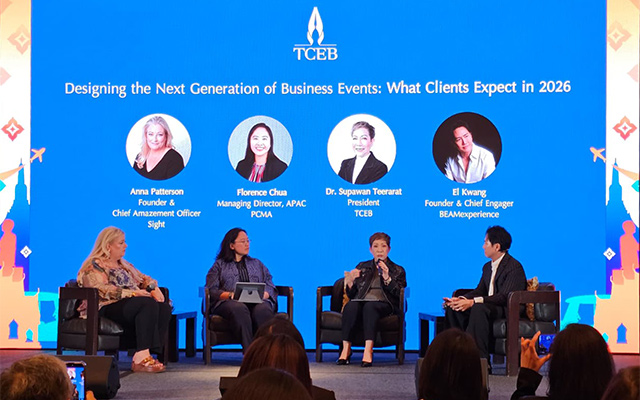
This was the consensus at the Thailand MICE Roadshow in Singapore 2026 last Thursday, where the panel discussion, Designing the Next Generation of Business Events: What Clients Expect in 2026, explored the evolving demands of the market.
From left: Sight Agency’s Anna Patterson; PCMA’s Florence Chua; TCEB’s Supawan Teerarat; and BEAMexperience’s El Kwang (moderator); photo by Lynette Tey
“Success is not only defined by attendance or numbers anymore, but more on impact, experiences, and meaningful outcomes,” stated Supawan Teerarat, president of the Thailand Convention and Exhibition Bureau (TCEB).
During the session, Supawan also spoke about Return on Experience (ROX) and Return on Relationship as the new benchmarks for Thai business events.
“We are moving from the counting of numbers to diving deep into the experiences that matter. When you have your event in Thailand, you can explore more on ROX for yourself and your clients,” she elaborated.
While digital transformation remains a priority, the panel noted a growing paradox. As AI further integrates into the industry, delegates increasingly crave physical connection.
Anna Patterson, founder & chief amazement officer, Sight Agency, opined that technology alone is not a cure-all. “New and shiny technology needs new and shiny experiences… It’s the user touchpoints and the value of their time that matters,” she said.
Florence Chua, managing director APAC at Professional Convention Management Association (PCMA), supported this with a preview of PCMA’s global outlook study, which revealed an infrastructure gap.
“While we are saying we are working harder and planning better, less than 20 per cent (of event organisations) have actual infrastructure frameworks to help in planning,” Chua noted, adding that “real-life scrambling” remains the industry norm.
The discussion also sparked a debate over the industry’s talent gap. Chua emphasised the need for digital literacy and data science to alleviate low-value tasks, allowing humans to focus on higher-level strategy. However, Patterson countered that the industry faces a “mindset gap” rather than a pure talent shortage.
“Everyone wants (tasks to be done) quicker, but we’ve lost sight of what’s important to us as individual humans. We need to spend more time mentoring our people and being human – because an overwhelmed attendee does not remember the brand,” Patterson observed.
Planners must take the lead in guiding clients toward responsible choices, even when not explicitly requested
Planners must take the lead in guiding clients toward responsible choices, even when not explicitly requested
Is sustainability truly a driver of responsible decision-making in the meetings and events industry or are we adjusting to a variety of expectations from clients with diverse priorities?
It is our responsibility to guide clients toward more sustainable meetings and events, even when it is not explicitly requested in the brief.
Sustainability as a driver of event planning and decision‑making
Adopting this “sustainability militant” mindset is not always simple. Our industry is built on operational efficiency, especially for large global organisations like BCD Meetings & Events (M&E).
Designing more sustainable events demands more planning time, the right methodologies and tools, and a commitment to integrating sustainability indicators into every stage. This includes destination and venue selection, event design, emissions compensation, and post-event reporting. Sustainability is no longer a trend but a structural transformation in business and society.
From a macro perspective, many global companies have ambitious decarbonisation goals, yet meetings and events are often overlooked in these strategies. By 2030, an essential milestone toward net zero by 2050, our sector will face renewed scrutiny. With its strong ties to business‑travel emissions, meetings and events will gain more visibility and accountability.
Some believe companies might step back from sustainability because of geopolitical tensions.
According to PwC’s State of Decarbonization Report (2025), companies now set carbon targets nine times more frequently, and 37 per cent are increasing the ambition of their goals. The European Union’s recent simplification of CSRD (Corporate Sustainability Reporting Directive) requirements, which exempts many companies, did not lead to disengagement.
Based on a survey by sustainability and compliance software company Osapiens, 90 per cent of exempted companies still intend to continue sustainability reporting, and 86 per cent plan to follow full European Sustainability Reporting standards . Companies understand that dismantling hard-won systems and culture would only create long-term costs.
Post‑event sustainability actions and impact measurement
Transformation is accelerating. Today, we have affordable, collaborative tools that integrate seamlessly into the planning cycle. Impact measurement has evolved from a post-event emissions report to a strategic early-stage tool guiding destination and venue selection.
How sustainable choices influence event quality
Creating sustainable events is not complicated; the data, tools, and processes all exist. The real challenge is transforming these habits and traditions.
To help guide decision‑making, BCD M&E uses structured tools that outline high‑impact actions and provide scoring to compare event performance. These sustainability indicators work best when considered alongside other strategic factors: budget, business needs, travel inconvenience, and participant effort.
Hotels are also advancing quickly with net-positive properties, net-zero strategies, AI tools reducing food waste, and brands incorporating CO2 compensation for M&E spaces and services. Beyond measurable impacts, public opinion is a powerful driver. As climate-related extreme weather increases, social expectations rise.
According to the 2024 People’s Climate Vote, 80 per cent of people want stronger action, and 68 per cent say climate considerations influence major life decisions.
Communication in advancing sustainable event practices
This is why communication is essential. Meetings and events remain one of the most impactful corporate communication tools. We must speak more openly about how sustainable events can reduce costs, increase efficiency, and strengthen brand credibility, to contribute to more responsible corporate practices.
As BCD M&E’s global sustainability director, Thiago Araujo brings extensive experience in developing and implementing sustainability strategies across multiple sectors. Based in France with more than 15 years in business development and sustainability management, he leads the company’s global sustainability strategy by aligning operations with environmental and social objectives, and managing sustainable partnerships.
Previously, he held key roles at Volvo Group, GL Events, the 2016 Summer Olympics in Rio de Janeiro, the UN Department of Public Information, and the UN Rio+20 Conference, where he led significant sustainability initiatives.
IBTM Asia Pacific will debut at the Bangkok International Trade & Exhibition Centre from June 9 to 10, 2027.
The event aims to capitalise on the Asia-Pacific’s status as the world’s third-largest business events market – currently valued at US$231.5 billion – by connecting global suppliers with high-tier regional buyers.
Bangkok (pictured) will be the staging ground for IBTM Asia Pacific next year
Supported by the Thailand Convention and Exhibition Bureau, the tradeshow will utilise IBTM’s “Hosted Buyer” model and AI-driven matchmaking to facilitate high-value partnerships. The choice of Bangkok as the host city highlights Thailand’s strategic position as a regional hub, bolstered by its extensive hotel infrastructure and accessible visa policies for major markets including China, India, Europe, and the US.
Beyond the exhibition floor, the event will feature a conference programme focused on interactive workshops and industry wellbeing, alongside a cultural welcome event designed to foster local networking.
The 2027 launch follows several previous attempts to establish a regional presence. IBTM originally planned to debut in Singapore in 2020, but the event was deferred several times due to the pandemic and ultimately did not proceed after a final 2022 date.
A subsequent move to Hong Kong was announced for March 2025; however, organisers RX Global eventually withdrew the event in late 2024, citing commercial considerations and a shift in focus toward the growing international representation at their flagship IBTM World show in Barcelona.
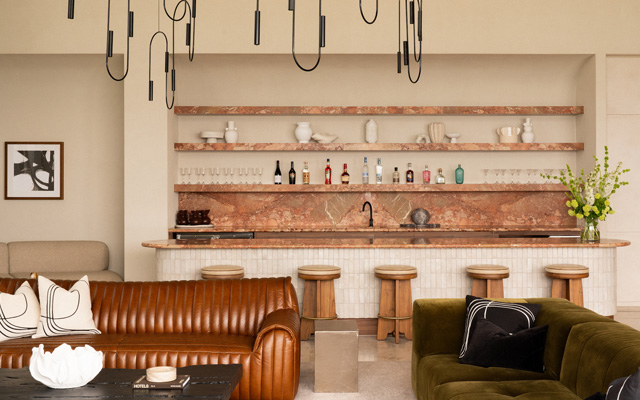
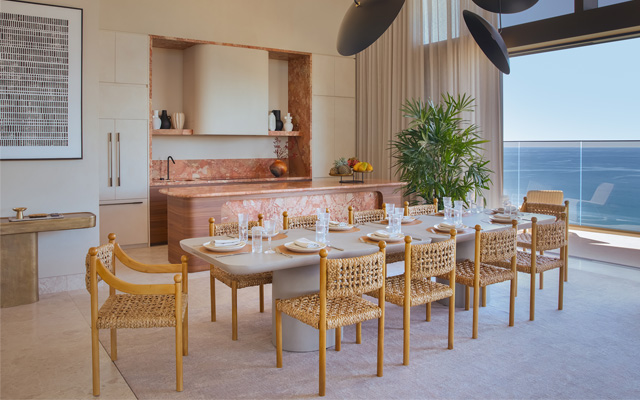
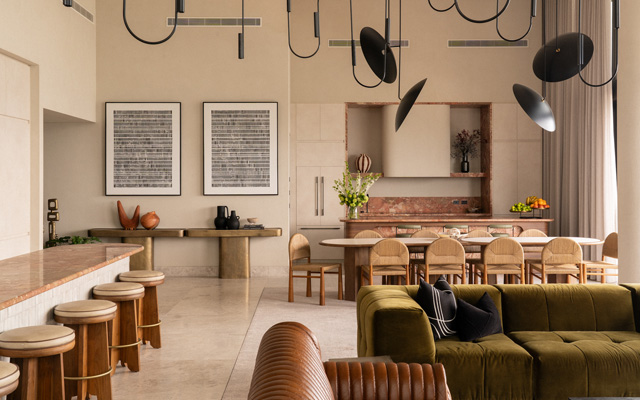
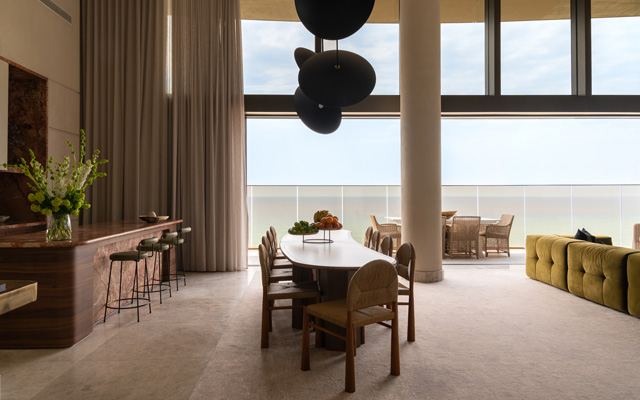
Mondrian Gold Coast has debuted its crown jewel, the Sky House, a 320m2 space on level 24 designed to redefine high-end corporate and private events.
Suspended between the Pacific Ocean and the hinterland, the venue offers a cinematic 180-degree panorama framed by five-metre-high floor-to-ceiling glass, capturing the coastline’s shift from blue to amber against the iconic Burleigh Headland.
Sky House
1 of 4
Marketed as the VeeRoom for functions, the open-plan residence is optimised for hosting with an entertainer’s kitchen, a full personal bar, and an alfresco balcony that merges sculptural design with the drama of its natural surroundings.
The space accommodates 100 guests for cocktail sets or 70 for seated dining, supported by in-house AV specialists for tailored sound and DJ requirements. Minimum spends for the exclusive venue begin at A$18,500 (US$12,778) from Monday to Wednesday, increasing to A$23,500 on Thursdays and A$28,500 for weekend bookings from Friday through Sunday.
Beyond its capacity as a premier meeting place, the residence includes three king ensuite bedrooms and access to the CIEL Spa, offering a seamless transition from a high-stakes event to an ultra-luxury executive retreat.
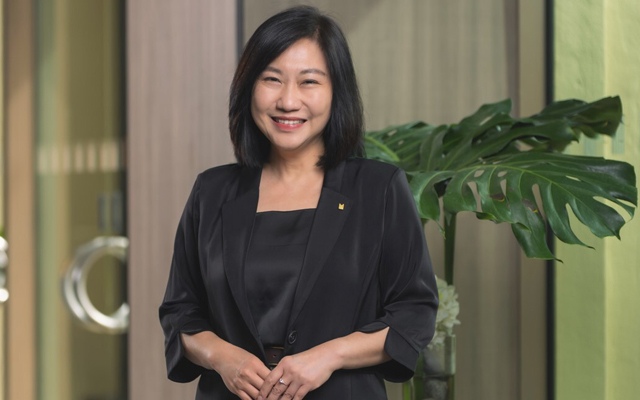
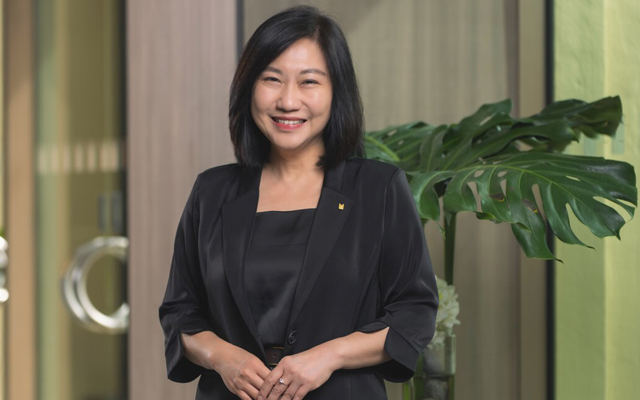
Millennium Hotels and Resorts has named Cinn Tan as chief commercial officer.
She brings more than 30 years of experience across Asia-Pacific, China, Europe and the US.
She joins from Pan Pacific Hotels Group, where she was chief commercial and marketing officer, and has previously held senior roles at Jin Jiang International and Ascott .
The Cairns Convention Centre has launched its Innovate Reconciliation Action Plan (RAP) 2026–2028, a framework designed to integrate First Nations cultures and economic opportunities into the venue’s global operations.
Endorsed by Reconciliation Australia, the plan was developed in collaboration with Gimuy Walubarra Yidinji Elder professor Henrietta Marrie.
Elverina Johnson’s Reef Connections
The RAP outlines 17 specific actions and 82 deliverables focused on four core pillars: Relationships, Respect, Opportunities, and Governance. Key initiatives include the implementation of staff cultural awareness training, the development of a First Nations-inspired culinary menu, and a commitment to increasing procurement from Indigenous-owned businesses.
General Manager Janet Hamilton emphasised that the plan moves beyond symbolic gestures to create “lived and visible” change. “This plan strengthens our commitment to creating employment pathways for First Nations Peoples… (and ensuring) our industry sees reconciliation as something we do, not just something we say,” Hamilton stated.
The Centre, situated between two UNESCO World Heritage sites in a region home to 18 First Nations groups, aims to make cultural storytelling a central component of the delegate experience. Practical applications include featuring Indigenous art – such as Elverina Johnson’s Reef Connections in the main foyer – and prioritising First Nations suppliers for event programming and gifting.
South-east Asian firms are leveraging AI to balance policy compliance with traveller productivity
As companies scale across borders, a new SAP Concur study reveals that South-east Asian corporate travel management is moving from simple cost control to total trip value.
The 2026 Southeast Asia Business Travel Pulse Survey, which surveyed over 150 travel decision-makers across Singapore, Malaysia, Indonesia, Thailand, and the Philippines, indicates that the traditional race to the bottom on ticket prices is being replaced by a focus on traveller productivity and operational resilience.
South-east Asian firms are leveraging AI to balance policy compliance with traveller productivity
The survey identifies a widening “expectation gap” between business travellers and travel managers. While business travellers now view flexibility as a prerequisite for business travel, travel managers are struggling with the manual work required to deliver it.
Key findings for South-east Asia include:
Flexibility is a must: 59.5% of regional travel managers identify flexibility in bookings and cancellations as a top three priority for their travellers.
Operational friction vs. cost: 51% of respondents cite “managing last-minute changes and cancellations” as their primary operational challenge, significantly outranking concerns regarding high costs (38.6%).
Balance between policy, cost, and productivity: 57.5% of decision-makers prefer using AI that suggests “optimal” itineraries that balance policy, cost, and productivity, over tools that merely offer the cheapest options (32.7%).
Integration as a mandate: 58% of regional travel managers now require seamless integration with HR and finance functions to ensure a unified view of traveller bookings and their spend.
Personalisation over efficiency: Over half of respondents (52.9%) rate hyper-personalisation as “very important”, viewing it as a core efficiency mechanism to reduce decision fatigue.
Why total trip value matters now: The data suggests that minor fare savings can end up as a net loss for the business if it results in traveller fatigue that diminishes performance during high-stakes engagements. As organisations navigate high-cost environments, organisations should pivot toward intelligent, automated ecosystems that prioritise traveller productivity and business resilience.
The 2026 Southeast Asia Business Travel Pulse Survey offers a detailed breakdown of findings across Singapore, Malaysia, Indonesia, Thailand, and the Philippines — including actionable insights on how organisations can close the expectation gap and unlock total trip value.
Just 10 minutes from Phuket International Airport on the serene northern coast, this 178-key, Bill Bensley-designed resort offers delegates a quiet, tropical paradise steeped in Phuket’s tin-mining heritage
The newly-opened Ritz-Carlton, Bangkok anchors the One Bangkok development with cosmopolitan elegance. Featuring the city's largest ballroom and a spectacular new penthouse suite, it delivers exceptional hardware and deeply authentic, soulful service for business and leisure travellers alike
Behind the imposing, Brutalist concrete that defines Zurich’s Oerlikon district lies a surprising secret. While its exterior honours the neighbourhood’s industrial roots, stepping inside Mama Shelter reveals a vibrant, neon-soaked world that is a far cry from its rigid shell



 He brings more than 30 years of experience in food and beverage and consulting. He joins with a background in building and scaling businesses, and will lead Hyatt’s strategy and growth across the region.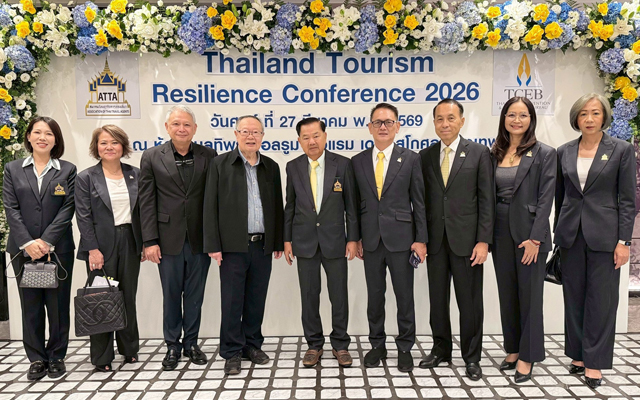


 As BCD M&E’s global sustainability director, Thiago Araujo brings extensive experience in developing and implementing sustainability strategies across multiple sectors. Based in France with more than 15 years in business development and sustainability management, he leads the company’s global sustainability strategy by aligning operations with environmental and social objectives, and managing sustainable partnerships.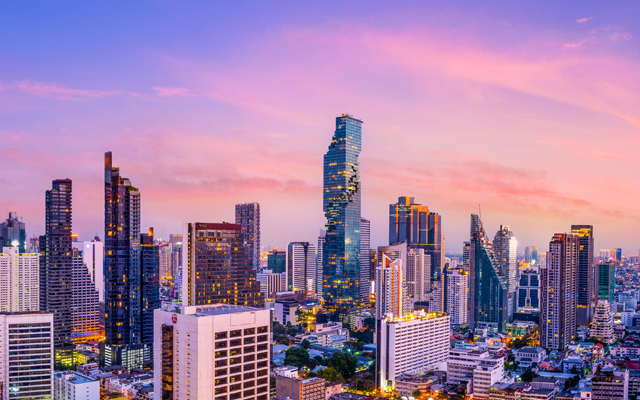
 She joins from Pan Pacific Hotels Group, where she was chief commercial and marketing officer, and has previously held senior roles at Jin Jiang International and Ascott .