Asian enterprises are doubling down on face-to-face interaction
Three in four businesses across Asia (74 per cent) now cite employee engagement as their primary reason for hosting meetings and events, according to new research from FCM Meetings & Events (FCM M&E).
The finding comes from FCM M&E’s 2026 Global Trends Report, which highlights that businesses are prioritising internal connection, capability building, and culture over acquisition or brand activities.
Asian enterprises are doubling down on face-to-face interaction
In Asia, 67.3 per cent of respondents expect their meetings and events budgets to increase in 2026, outpacing the global average of 59.4 per cent. This represents a substantial vote of confidence in face-to-face connection during a year marked by continued uncertainty.
The report reveals that 35 per cent of organisations globally now expect to manage between US$1 million and US$10 million in meetings spend in 2026, a 19-percentage-point increase from the previous year.
However, the higher budgets also come with higher expectations. Respondents cited safety and security as the top priority globally (78.9 per cent) and in Asia (80.5 per cent).
Meanwhile, effective project management came second at 77.9 per cent in the region, reflecting the pressure of planning windows that have compressed by 18 per cent over the last two years.
Asian teams are working with an average 71-day lead time between RFP and event, forcing faster decisions without room for error.
“Expectations around experience continue to climb,” says Manpreet Bindra, regional leader Asia, FCM M&E. “Audiences want sessions and content that feel relevant and interactive, with stronger pacing and better use of time.”
The research also highlights a fundamental shift in event strategy. Rather than single mega-conferences, organisations are increasingly favouring regional events that reduce visa complexity, manage travel fatigue and maintain engagement.
Incentive travel is also experiencing renewed momentum across Asia, particularly in Malaysia, Thailand, the Philippines, China and India.
“Programmes are being designed around clear outcomes for teams and the business, with experience used to reinforce performance and connection,” Bindra noted.
Organisations are also tightening control across markets that used to operate locally, with more regional oversight and greater consistency in suppliers, processes and reporting.
“This is happening without forcing every market into the same mould,” said Bindra. “The practical goal is simpler delivery and fewer surprises in an uncertain environment.”
Technology adoption continues to accelerate, with 78 per cent of respondents globally now using AI, primarily to save time and reduce costs. Sustainability considerations also remain a priority across the region’s meetings programmes.
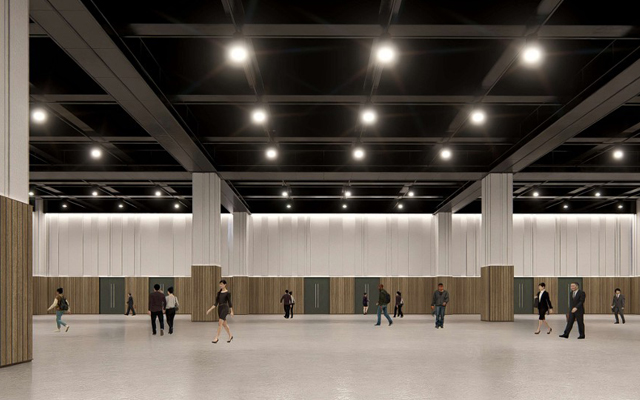
Artist’s rendering of the SMX Convention Center Trade Halls
SM Hotels and Conventions Corporation (SMHCC) will expand its events portfolio in 4Q2026 with the opening of three new SMX Trade Halls in Cabanatuan, Santo Tomas, and Santa Rosa.
The new venues will add more than 13,000m2 of leasable exhibition space to the SMX network. Strategically located within commercial hubs in Nueva Ecija, Batangas, and Laguna, the halls are designed to meet rising regional demand and support the expansion of the business events sector beyond Metro Manila.
Artist’s rendering of the SMX Convention Center Trade Halls
Designed for scalability, the new trade halls feature flexible layouts and modern infrastructure integrated with adjacent SM retail and hospitality developments.
SMHCC’s senior vice president Walid Wafik said that these investments “reflect our confidence in the Philippines’ growing MICE potential and our mission to deliver accessible, high-quality event spaces across the country”.
The expansion aligns with SMX’s broader growth strategy, which includes the upcoming SMX Convention Center Seaside Cebu – set to become the country’s largest convention venue – and SMXCITE (Center for International Trade and Exhibitions), billed as the the largest exhibition and trade hall venue in the country.
The Athenee Hotel, a Luxury Collection Hotel, has completed a 10 million baht (US$308,356) upgrade to its event technology, installing the largest in-hotel LED screens in Bangkok.
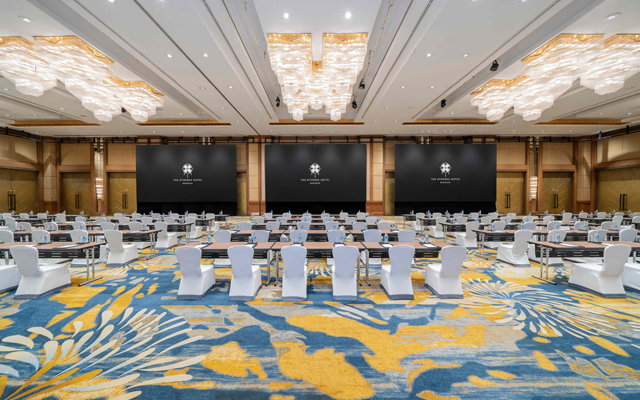
Integrated into the Crystal and Grand Hall ballrooms, the new P2.6 LED system measures up to 27 metres wide and five metres high. The modular installation allows organisers to split or resize screens into nine-metre, 18-metre, or 27-metre configurations to suit different staging needs.
Crystal Hall
The investment aims to increase the hotel’s competitiveness in the regional business events market by providing convention-centre-grade technology within a luxury setting, said the hotel’s general manager Blair Fowler.
“Our LED infrastructure enables us to meet world-class production standards while improving operational efficiency and sustainability,” Fowler added.
The digital transition also reduces environmental impact by eliminating the need for single-use printed backdrops, vinyl panels, and temporary scenic constructions. The high-definition screens also consume less energy than traditional projection systems, and offer 800 nits of brightness optimised for ballroom lighting.
The Athenee Hotel features 30 meeting rooms in Bangkok’s CBD, including the Crystal Hall and Grand Hall ballrooms, which accommodate 1,500 and 1,200 guests respectively.
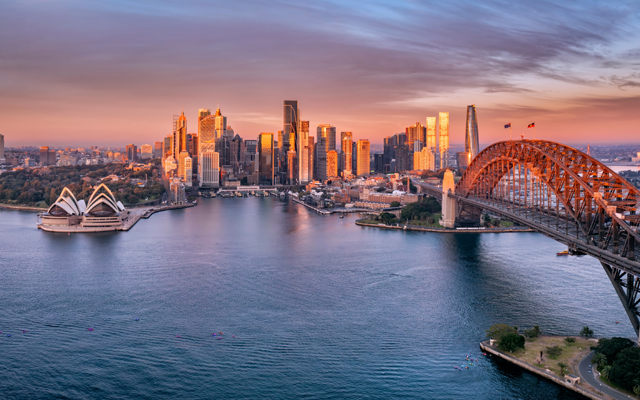
Expo organisers converge on Sydney (pictured) for the AIPH conference
The International Association of Horticultural Producers (AIPH) convened its 2026 International Horticultural Expo Conference in Sydney on March 9, gathering its global network of exhibition organisers to coordinate a decade of upcoming events.
Hosted by Greenlife Industry Australia, the summit served as a progress review for events scheduled between 2026 and 2031 across Asia, North America, the Middle East, and Europe.
Expo organisers converge on Sydney (pictured) for the AIPH conference
The conference highlighted several immediate milestones. Organisers of GREEN×EXPO 2027 Yokohama announced that ticket sales will launch on March 19, 2026, while preparations for Expo 2029 Korat in Thailand are focusing on sustainable agriculture, and horticultural innovation.
Looking toward late 2026, infrastructure for the Udon Thani International Horticultural Expo is reportedly 70 per cent complete, and South Korea’s Taean International Horticultural-Healing Expo is finalising plans to welcome around 820,000 visitors starting April 25.
Further updates were presented on other events across the Expo programme, including the2028 Ulsan International Garden Expo in the South Korea and Expo 2027 Izmir, Türkiye.
The event also marked the first formal progress reports for two major future sites: Expo 2031 Minnesota, the first such event in the US, and Expo Garden Baghdad 2029 in Iraq. Both teams outlined long-term visions for urban regeneration and international collaboration.
Following the conference, the AIPH General Meeting officially approved two new trade exhibitions: GreenItaly in Parma, and Myplant & Garden Middle East in Dubai. These additions expand the organisation’s portfolio of B2B platforms aimed at integrating horticultural innovation into the global economy.
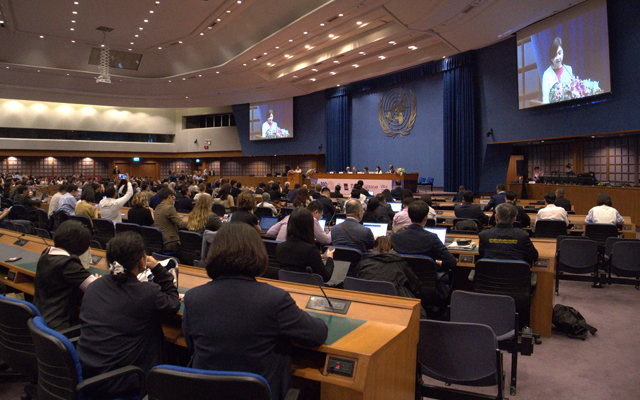
Global leaders, scientists, and environmental advocates gathered in the Thai capital last week for the 12th Better Air Quality (BAQ) Conference 2026, marking a decisive moment in the regional fight against toxic air pollution.
The three-day event, which concluded on March 13 at the United Nations Conference Centre, saw over 1,100 delegates from 56 countries convene to address an escalating public health emergency.
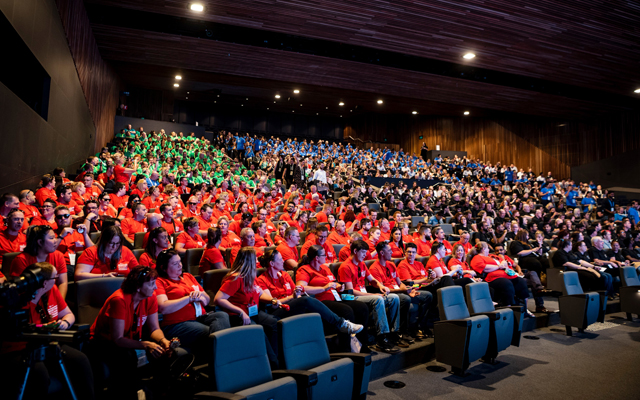
Attendees at BAQ 2026
Organised by Clean Air Asia in partnership with the Asian Development Bank, the Climate and Clean Air Coalition, United Nations Economic and Social Commission for Asia and the Pacific, and United Nations Environment Programme, the conference focused on the theme Together for Clear Skies: Driving Action, Accelerating Investment.
The conference opened against a backdrop of sobering data. According to the State of Global Air 2025 Report, one in eight deaths worldwide is now attributed to air pollution. Despite the WHO tightening its safety guidelines for fine particulate matter (PM2.5) to 5 µg/m³ in 2021, statistics shared at the summit revealed that 99 per cent of the global population still breathes air exceeding these health standards.
“BAQ 2026 underscores the urgent need for collective investment and strengthened partnerships,” said Bjarne Pedersen, executive director of Clean Air Asia, during the opening plenary. “We are here to unlock the health, economic, and climate benefits that only clean air can provide.”
The selection of Thailand as the 2026 host was no coincidence. As a regional hub for diplomacy, Thailand has faced its own hurdles with seasonal agricultural burning, industrial emissions, and urban traffic. By hosting the summit, the nation positioned itself as a leader in regional environmental cooperation.
BAQ 2026 conference moved beyond theoretical discussions, focusing heavily on financing and scalable solutions. Key objectives tackled during the sessions included unlocking investment for long-term economic resilience, driving multi-sectoral action to reduce emissions from energy and agriculture, and building stronger partnerships between the private sector and civil society.
The event concluded with a series of high-level financing roundtables designed to accelerate the flow of capital into clean air programmes.
From laidback city vibes to diverse wildlife, there’s no shortage of memorable experiences in the Queensland capital
Brisbane’s reputation as Australia’s lifestyle capital is accelerating, with global publications such as TIME Magazine, Frommer’s and The New York Times naming it a must-visit destination.
For international planners designing incentive programmes, the city delivers far more than meetings and events. Compact, connected and walkable, Brisbane makes it easy to craft immersive pre- and post-conference experiences where delegates can move seamlessly between wildlife encounters, outdoor adventure, world-class dining and rich cultural discovery, all within minutes of the city.
Here are some quintessential Brisbane experiences to help you craft the ultimate itinerary.
Meet the local residents through wildlife and marine encounters
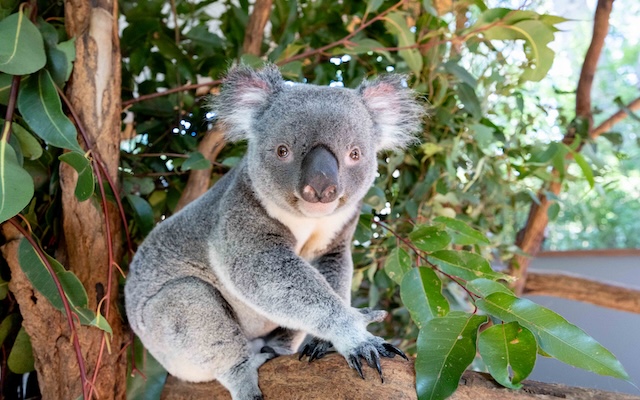
Meet the local residents
Australia’s wildlife remains a powerful drawcard for international delegates. At Lone Pine Koala Sanctuary, the exclusive Nocturnal Tour allows small groups to observe native species after dark in an intimate setting.
A short ferry ride from the city, TangaloomaIsland Resortpairs sunset dolphin feedingwithsnorkellingaround the iconic shipwrecks and sand tobogganing on towering dunes. Named by Lonely Planet as the world’s best beach to see nature in 2024, it delivers a quintessential Australian marine adventure just off Brisbane’s coast.
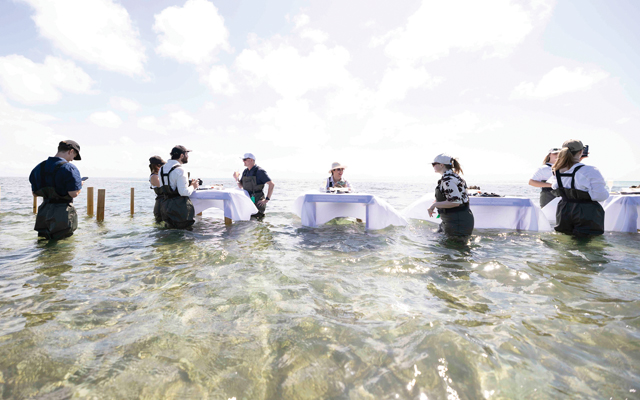
For a hands-on coastal immersion, Brisbane Oyster Farm Tours offers a unique in-water dining experience, where delegates can learn to shuck and savour oysters straight from the pristine waters of Moreton Bay, perfectly paired with premium Australian champagne for a memorable, indulgent experience. With vessel charters available for larger groups, it is a fresh and memorable way to bring local produce into an incentive itinerary.
Adventure on the river and beyond
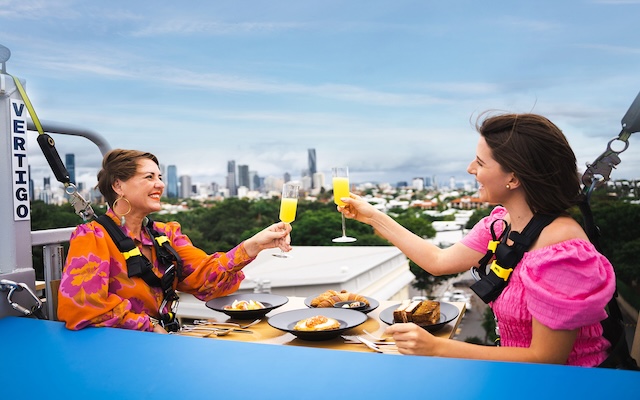
Wine and dine on the edge – safely!
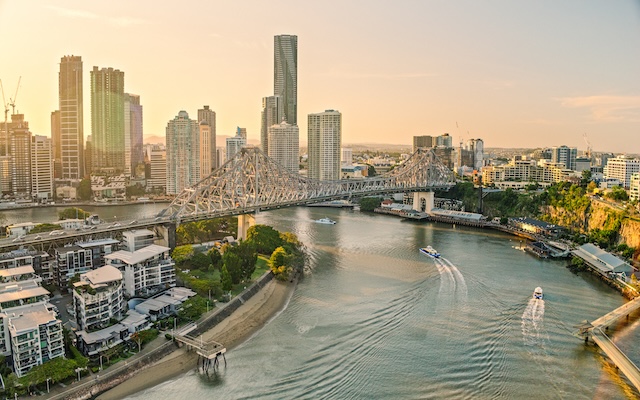
Brisbane’s subtropical climate and riverfront setting naturally invite outdoor adventure. The Story Bridge Adventure Climb delivers a true sense of achievement, guiding groups to the summit of one of the city’s most recognisable landmarks for panoramic views across the skyline, river and hinterland.
Nearby,Vertigo elevates dining into a playful challenge, suspending guests above the Brisbane Powerhouse for a skyline-framed culinary experience unlike anywhere else in Australia.
On the water, Riverlife Adventure Centre offers twilight kayaking beneath the illuminated bridge, blending activity with connection and spectacular city views.
See Moreton offers a full-day coastal adventure to Moreton Island (Mulgumpin), where delegates can snorkel among colourful fish, spot dolphins and dugongs, explore the Tangalooma Wrecks, and enjoy a tropical buffet on pristine beaches — an unforgettable pre- or post-conference escape just a short journey from Brisbane.
Dive into culture and be creatively inspired
Brisbane’s creative identity adds depth and sophistication to any programme. QAGOMA, the Queensland Art Gallery and Gallery of Modern Art, is unique for its world-leading focus on contemporary Asian and Pacific art, offering private viewings, curator-led tours and riverfront cocktail events that elevate cultural engagement, while Vast Yonderworkshops offer hands-on aerosol art experiences.
Brisbane also stands on the lands of the Turrbal and Jagera peoples, whose connection to Country spans tens of thousands of years. Incorporating First Nations experiences into anincentive programme offers delegates meaningful insight into the world’s oldest living culture. At Birrunga Gallery, delegates can create Indigenous artwork and sample native foods. A Welcome to Country, guided cultural walks, storytelling sessions or native ingredient dining experiences can be seamlessly woven into pre- or post-conference events, adding authenticity and a powerful sense of place.
Indulge in culinary exploration
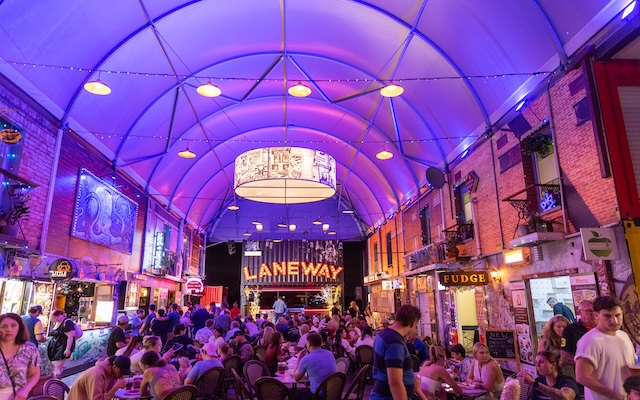
Head for a street market to try the different creative local dishes on offer
Food is central to Brisbane’s incentive appeal, with flavours that reflect the city’s premium produce, coastal bounty, and multicultural influence. Walter’s Steakhouseshowcases classic Australian beef, Tillerman Seafood offers Moreton Bay bugs and local catch, and Supernormal celebrates inventive Asian-inspired cuisine. Precincts like Howard Smith Wharves and Queen’s Wharf Brisbane provide versatile, group-friendly spaces with spectacular views for bespoke dining experiences.
For casual, vibrant evenings, Eat Street Northshore offers an unmatched sensory experience with global street food, live music, and neon-lit waterfront lanes– perfect for relaxed group connections.
Just beyond the city, SirrometWines invites delegates to enjoy vineyard tours, wine tasting sessions, and long-table dining overlooking rolling hills, providing a serene rural escape within reach of Brisbane.
Enjoy curated retail therapy and lifestyle discovery
For tailored lifestyle experiences, Spree With Me, a personal stylist agency, offers personalised shopping tours,ensuring international delegates enjoy curated access to Brisbane’s boutiques and precincts with ease and cultural understanding.
Start planning your next incentive in Brisbane
Discover why global businesses are choosing Brisbane for programmes that go beyond expectations. Visit Choose Brisbane to start planning your next world-class incentive in Brisbane.
1. Sydney Fish Market, Sydney
The Southern Hemisphere’s largest fish market reopened in January 2026 following a 6,000m2 redevelopment.
The early-morning Dutch-style fish auction remains the centrepiece, delivering a fast-paced, loud and visually intense experience as buyers bid on the day’s catch straight from the boats. Beyond the auction, the waterfront precinct now hosts more than 40 food and retail outlets, complemented by group tours, tastings and cooking classes at the Sydney Seafood School.
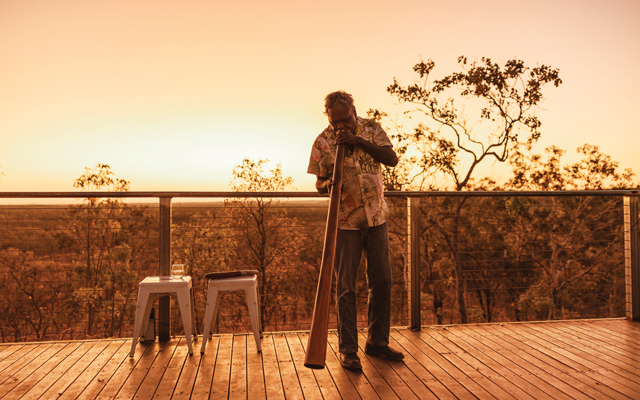
2. Dalabon Aboriginal Cultural Experience, Northern Territory
Located three hours south-east of Darwin, Dalabon Aboriginal Cultural Experience is an invitation to engage deeply with living Aboriginal culture through food, storytelling and hands-on learning.
Set against the natural landscapes of the Katherine River region, the three-hour experience highlights Pamkal Family Cookups featuring classic bush tucker, including kangaroo tail, enjoyed alongside cultural practices such as weaving. Guests gain authentic insights into Indigenous traditions while supporting the local Dalabon community.
3. Brisbane Oyster Farm Tours, Brisbane
Set against the clear waters and sweeping coastal scenery of Moreton Bay, Brisbane Oyster Farm Tours offers an interactive and Instagrammable farm-to-table experience.
Guests learn how premium Queensland oysters are sustainably grown, shuck their own oysters immersed in the ocean and enjoy the tastings. A short ferry ride from Brisbane, tours run for up to four hours, accommodating groups of up to 100 guests, or 300 guests total via private vessels.
4. Seven Mile Beach Golf Course, Tasmania
Seven Mile Beach Golf Course offers a scenic, links-style golf experience just 10 minutes from Hobart Airport. Bordering Seven Mile Beach, the course combines ocean views with a relaxed playing environment suited to mixed-ability groups.
The 18-hole championship South Course winds through undulating coastal dunes, with 37 bunkers and three routing zones spanning high dunes, sheltered valleys and the ocean’s edge, making it suited for incentives, networking rounds, and informal corporate competitions.
5. SOL Elements, Gold Coast
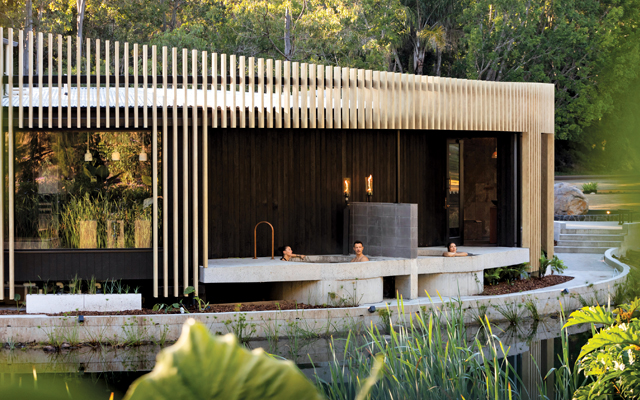
Inspired by Japanese bathing traditions, SOL Elements is Australia’s first “floating” elemental bathhouse set on a tranquil lake and immersed in subtropical rainforest at Tamborine Mountain.
Designed for mindful immersion, the experience combines magnesium pools, cold plunges, sauna, steam and curated spa rituals within a serene, phone-free environment. With limited guest numbers and a strong connection to nature, it is a distinctive option for incentives and wellness-led programmes.
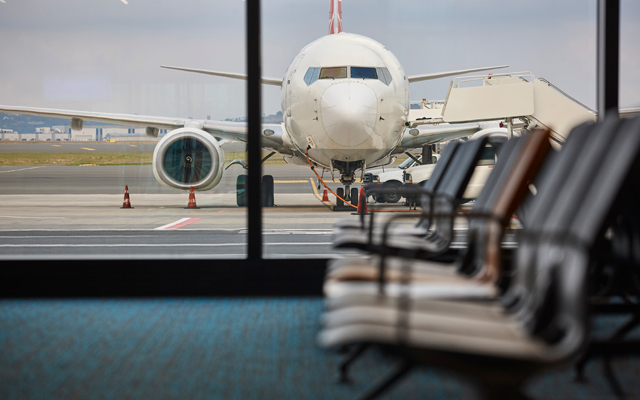
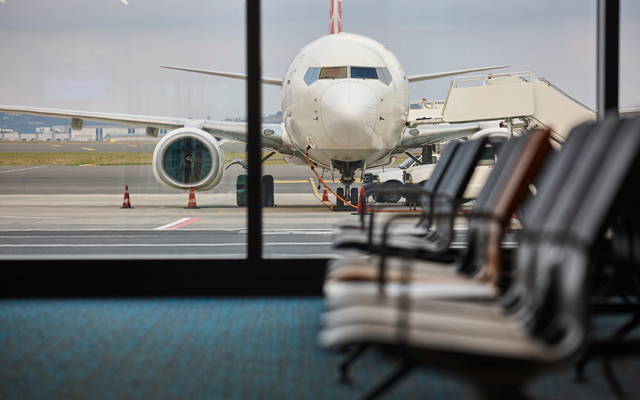
Airlines across the Asia-Pacific region have moved into an emergency defensive posture this week, implementing a wave of flight cancellations, steep fare hikes, and phased fuel surcharges.
The drastic measures come as the US-Israel-Iran conflict sends jet fuel prices toward a staggering US$200 per barrel, nearly tripling costs from earlier this year. Aviation fuel currently accounts for up to 40 per cent of an airline’s operating expenses.
Surging fuel prices are forcing airlines to adjust their flight schedules and raise fuel surcharges
Air New Zealand has taken the most aggressive action to date, announcing the cancellation of approximately 1,100 flights – roughly five per cent of its total schedule – through early May. The cuts primarily target off-peak domestic rotations to consolidate fuel use, affecting an estimated 44,000 passengers. The carrier has also implemented immediate fare increases, adding NZ$10 to domestic tickets and up to NZ$90 (US$52) for longhaul services. While the airline is heavily hedged against crude oil, it remains exposed to the cost of refining oil into jet fuel, which has spiked from US$22 to over US$115 per barrel in mere days.
Air India and Air India Express have introduced a three-phase surcharge expansion to combat rising costs and high domestic taxes. Starting March 12, a new Rs 399 (US$4.30) fee applies to all domestic routes, while surcharges to South-east Asia have risen to between US$40 and US$60. A second phase on March 18 will see longhaul surcharges jump to US$125 for Europe and US$200 for North America and Australia, with further adjustments for Hong Kong and Japan expected shortly.
Both Cathay Pacific and Qantas are raising international fares while shifting capacity toward Europe. As travellers avoid Middle Eastern transit hubs, Qantas reported that its European flights are reaching over 90 per cent capacity. Cathay Pacific has suspended flights to Dubai and Riyadh through March, but is adding frequencies to London and Zurich to meet redirected demand. Qantas has flagged a general fare increase of approximately five per cent, warning that some routes may become uneconomical if prices stay at US$200 per barrel.
Across the rest of the region, Malaysia Airlines, Firefly, and Batik Air is set to implement phased rollouts of surcharges. Malaysia Airlines has extended the temporary suspension of its Doha services until March 20, but all other services including Jeddah Madinah, London and Paris continue to operate as scheduled. Malaysia Airlines is also increasing widebody capacity between Asia and Europe to support onward journeys, with flights operating on alternative routes that avoid affected regions.
Vietnam Airlines and VietJet have seen operating costs jump 60 to 70 per cent, leading the former to petition the government for waivers off environment taxes on jet fuel to remain viable.
Over in South Korea, Korean Air has entered discussions regarding significant increases to fuel surcharges for April. Surcharges for longhaul routes like Incheon–New York could triple, potentially reaching 325,000 won (US$220) per ticket.
Singapore Airlines (SIA) and its budget subsidiary Scoot have extended the suspension of their Middle East services. SIA flights between Singapore and Dubai are now cancelled through March 28, while Scoot has suspended its Jeddah services until March 17 at the earliest.
SIA is regarded as having one of the more robust fuel hedging programmes, providing some protection against the refined jet fuel price surge. TTG Asia has reached out to SIA for comments on potential network-wide surcharges, but a response was not provided at press time.
Satair has made three leadership appointments in Asia-Pacific and China, naming Andy Lee as managing director of Asia-Pacific, Liu Bo as managing director of Satair China and Mingyang Chen as general manager of Satair Chengdu.
Lee assumed the role on January 1, 2026, after previously serving as managing director of Satair China, where he led market growth and capability development. He succeeds Rene Frandsen, who has moved into a strategic advisory role.
From left: Andy Lee, Liu Bo and Mingyang Chen
Liu will take over as managing director of Satair China on June 1, 2026. He joins from Airbus, where he spent 14 years in roles across France and China covering engineering, procurement and programme management.
Chen was appointed general manager of Satair Chengdu in November 2025. The entity supports the company’s expansion of used serviceable material activities and strengthens local operations in the region.
The upcoming launch of Lufthansa Airlines’ direct, non-stop flights between Frankfurt and Kuala Lumpur this October has been warmly welcomed by the Malaysian travel trade, with industry players saying the route will strengthen connectivity between Malaysia and Europe.
Lufthansa had suspended its Kuala Lumpur operations in February 2016, ending the Frankfurt–Kuala Lumpur service due to high operating costs and weak profitability. The airline will now resume the route on October 25, 2026, with five-weekly flights operated by the Boeing 787 Dreamliner.
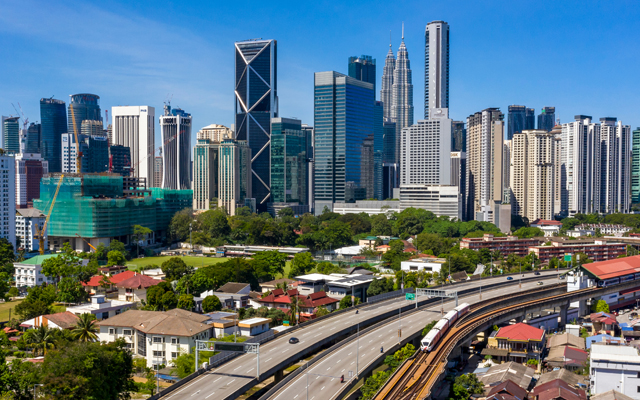
Kuala Lumpur skyline
Flights will depart Frankfurt at 21.30 and arrive in Kuala Lumpur at 16.40 the following day, while the return service leaves Kuala Lumpur at 23.55 and arrive in Frankfurt at 06.00. The timings are designed to connect seamlessly with Lufthansa’s extensive global network via Frankfurt.
With its return, Lufthansa will become the third European airline operating direct services to Kuala Lumpur, alongside British Airways and Turkish Airlines.
Adam Kamal, CEO, Suka Travel & Tours, said the timing of the announcement was positive for Malaysia’s business events sector. He shared: “Europe continues to be one of the most sought-after destinations for corporate meetings, incentive travel, conferences and exhibitions.
“Due to the ongoing uncertainty in parts of the Middle East connectivity options from Malaysia to Europe have been somewhat limited. The addition of Lufthansa’s direct flights will provide much-needed capacity and flexibility for corporate groups and incentive planners.”
Adam opined that Frankfurt’s role as a major aviation hub would further enhance Europe’s accessibility for Malaysian travellers.
“Frankfurt is one of Europe’s key gateway airports, offering onward connections to major business and incentive destinations across Germany and the wider continent. This will certainly strengthen Europe’s appeal as a preferred destination for Malaysian MICE groups.”
Saini Vermeulen, executive director of Within Earth Holidays, also welcomed the return of the service, describing it as “fantastic news” given that Germany is one of the company’s key European inbound markets.
He noted that ongoing Middle East geopolitical developments have triggered cancellations in European leisure and incentive travel inbound to Malaysia, primarily due to concerns over flight transits.
“The direct connection will benefit not only travellers from Germany, but also those from Austria and Eastern Europe.
“I had to cancel my trip to ITB Berlin recently because of travel disruptions in the Middle East. However, I plan to travel to Germany and Austria next month for sales calls with partners. This new route will certainly be part of those discussions, especially to see how viable it could be for group travel,” shared Vermeulen.
Faeez Fadhlillah, CEO and co-founder of Tripfez, described the move as a strong signal of confidence in Malaysia’s travel market.
He said: “Lufthansa’s return with direct services is a strong vote of confidence in Malaysia. With over 700 German companies here and 42.2 million visitors in 2025, the fundamentals for business and leisure are strong.
“What this route adds is the connectivity corporate travel programmes value most. It will support inbound European business travel while giving Malaysians easier access to Europe. From a travel management perspective, this is a route we can immediately put to work.”
Just 10 minutes from Phuket International Airport on the serene northern coast, this 178-key, Bill Bensley-designed resort offers delegates a quiet, tropical paradise steeped in Phuket’s tin-mining heritage
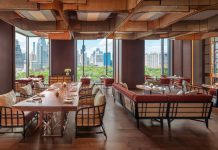
The newly-opened Ritz-Carlton, Bangkok anchors the One Bangkok development with cosmopolitan elegance. Featuring the city's largest ballroom and a spectacular new penthouse suite, it delivers exceptional hardware and deeply authentic, soulful service for business and leisure travellers alike
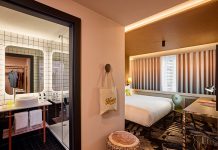
Behind the imposing, Brutalist concrete that defines Zurich’s Oerlikon district lies a surprising secret. While its exterior honours the neighbourhood’s industrial roots, stepping inside Mama Shelter reveals a vibrant, neon-soaked world that is a far cry from its rigid shell