Asia/Singapore Wednesday, 8th April 2026
Page 21

Why bigger is not always better: rethinking corporate events for real impact

0
Big impact does not require a big room

For years, the prevailing belief in our industry has been simple: bigger events deliver bigger impact. Bigger venues, bigger audiences, bigger production budgets designed to impress.

Today, the context around events has changed. Audience are more selective with their time, budgets are under closer scrutiny, and organisations now need to justify not just how an event looks, but what it actually achieves.
Big impact does not require a big room

In practice, the events that tend to work best today are not always the largest ones. They are the ones with clarity of purpose, know exactly who they are for, and what they are meant to achieve.

As a result, the most successful events today are not necessarily the biggest. They are more focused and more intentional. Increasingly, this means smaller but better-designed formats that deliver deeper engagement, clearer outcomes, and more meaningful value for both attendees and organisers.

When “big” becomes the goal
Large-scale, one-size-fits-all events often look impressive on paper: thousands of attendees, packed agendas, and expansive exhibition floors. Yet many attendees leave having made only surface-level connections, or attended sessions that were not fully relevant, resulting in them struggling to cut through the noise.

This is not to say that there was a failure in execution, but more of a mismatch of expectations between audience and organisers. The scale may be right, but the experience may not land.

Audiences today are more discerning. They are short on time and clear about what they want: relevance, context, and opportunities to engage in ways that they cannot replicate anywhere else. And so when events try to cater to everyone at once, they often fail to truly engage anyone.

Smarter events start with focus, not scale
Smaller event formats can facilitate better decisions. With fewer people and less room for filler, organisers have to be crystal clear about audience, content, and outcomes from the outset.

Technology has made this kind of precision more achievable. Organisers can plan more efficiently, forecast costs with greater accuracy, and design programmes around specific participant preferences rather than make broad assumptions.

What this looks like in practice
During the event, targeted matchmaking, personalised content pathways, and facilitated discussions help participants spend time where it matters most. After the event, structured follow-ups and ongoing communities extend value beyond the day itself.

Crucially, the focus is no longer on creating a single “wow” moment that we are all familiar with – the fireworks, the headline performance, the visual spectacle designed to impress. Instead, attention shifts to the audience: what they came to achieve, the conversations they want to have, and the content that is most relevant to them.

This also could mean fewer generic keynote sessions and more curated conversations – focused breakouts, roundtables, and purpose-led networking. These environments make it easier for people to participate actively, build stronger relationships, and leave with insights they can actually apply.

Smaller events, greater efficiency
There is also a practical efficiency to smaller formats. They are easier to manage, easier to adapt, and easier to measure. Resources are spent more deliberately, logistics are deployed with more streamline, and sustainability goals are more achievable.

Rather than spreading attention across scale and spectacle, organisers can focus on experience quality – from content relevance to how people connect and contribute throughout the event.

Rethinking success
The question is no longer, “How big can we make this event?” or “How can we implement a ‘wow’ moment to impress?” but “What do we want participants to walk away with – and what will still matter once they return to their desks and day-to-day?”

These days, events that are smaller and more intentionally designed tend to create more space for real conversation, clearer thinking, and outcomes that extend beyond the room. They are easier to adapt, easier to measure, and more honest about what success actually looks like.

What stays with people after an event is rarely the scale, it’s the quality of the experience and how it felt considered.


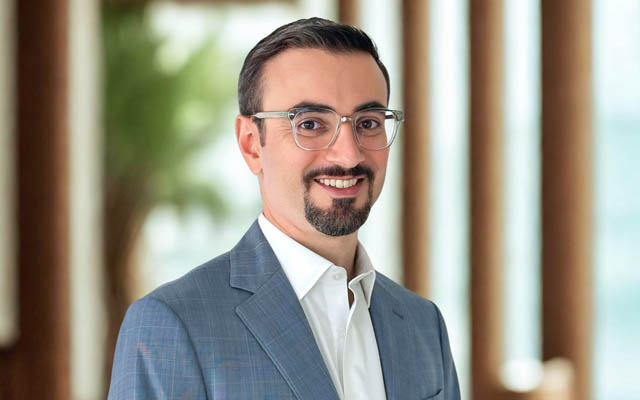
Qinxin Khoo is head of Asia Pacific at Live Group. She leads the company’s Asia Pacific strategy and regional operations from Singapore, with responsibility for market growth, client relationships and delivery across the region. With over a decade of experience in the events industry, she works closely with clients and global teams to align commercial objectives with thoughtful experience design and consistent standards across the region.

Bleisure top of mind for APAC travellers in 2026: Agoda

0
Bleisure travel remains a priority for business travellers across Asia-Pacific

Digital travel platform Agoda’s 2026 Travel Outlook Report reveals that business travellers across Asia-Pacific are increasingly blending work with play, with a striking 76% of surveyed business travellers planning to combine business trips with personal leisure.

Some markets are seeing interest from travellers exceeding 90%, signalling a fundamental transformation in how professionals approach corporate travel, turning airport layovers into extended getaways.

Bleisure travel remains a priority for business travellers across Asia-Pacific

Business travel among respondents remains a priority for 2026, with Indonesia leading at 27%, followed by the Philippines at 20% and Vietnam at 19%. However, the real story emerges once their meetings wrap up.

Among those planning business trips, the appetite for extending stays to include leisure activities proves overwhelming. This is especially so in the Philippines, Thailand, and Vietnam, where more than 85% of business travellers stated they are eager to extend their stays for some downtime. Filipino respondents topped the bleisure rankings at 95%, while Thai travellers followed closely at 92% and Vietnamese at 86%.

In markets like Japan and Indonesia, where work culture is traditionally more reserved, a majority of business travellers appear to embrace the trend. In Japan, 58% of business travelers plan to tack on personal time to their corporate itineraries, while South Korea showed strong adoption at 76%.

These findings reflect broader industry momentum, with the global bleisure travel market projected to reach as high as US$1.7 trillion by 2032.

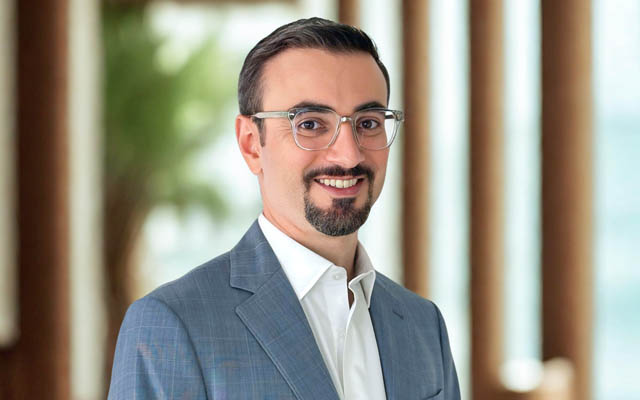
Omri Morgenshtern, CEO at Agoda shared: “Across Asia-Pacific, we’re seeing professionals plan to intentionally extend their work trips with personal days to enjoy local experiences and make the most of their time on the road. At Agoda, we’re focused on making it easy for travellers to seamlessly plan both the business and leisure parts of their journey, all in one place and at great rates.”

Curtin University Malaysia takes ownership of IJBEL

0
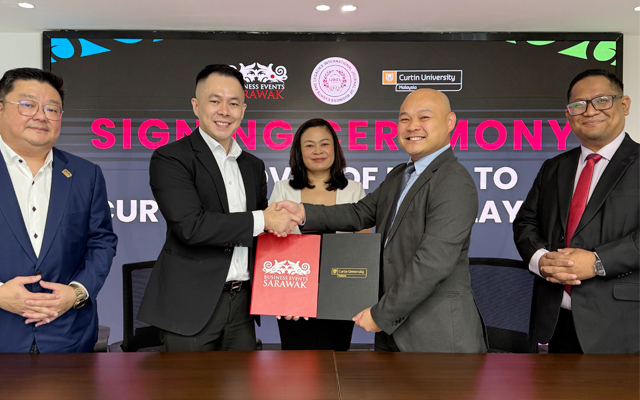
From left: BESarawak’s Jason Tan Chin Foo; and Curtin University Malaysia’s Vincent Lee Chieng Chen at the Memorandum of Agreement signing. The event was witnessed by Amelia Roziman, BESarawak CEO (centre)

Curtin University Malaysia has officially assumed full managerial and operational responsibility for the International Journal of Business, Events and Legacies (IJBEL), following a formal handover from Business Events Sarawak (BESarawak).

The transition, finalised on January 20, 2026, solidifies the university’s role as the academic lead for the world’s first journal dedicated to the economic, social, and environmental legacies of business events. While Curtin University Malaysia takes over operations, BESarawak will remain the founding and strategic partner, providing ongoing advocacy and guidance.

From left: BESarawak’s Jason Tan Chin Foo; and Curtin University Malaysia’s Vincent Lee Chieng Chen at the Memorandum of Agreement signing. The event was witnessed by Amelia Roziman, BESarawak CEO (centre)

Vincent Lee Chieng Chen, pro vice-chancellor of Curtin University Malaysia, indicated that this agreement “marks an important step in strengthening academic–industry collaboration to advance research, knowledge sharing, and thought leadership in business events and legacy studies”.

Established in 2022, IJBEL has rapidly gained international traction. Under Curtin University Malaysia, the journal is set to expand its global influence with the upcoming 2026 IJBEL Korea Special Edition. This project, a collaboration with the Goyang Convention Bureau, will feature a dedicated legacy forum during Goyang Destination Week.

Jason Tan Chin Foo, deputy CEO of BESarawak, noted that the transfer aligns with the organsation’s “legacy principles of continuity and sustainability”, ensuring the journal remains a key piece of global intellectual capital for the business events sector.

Hilton expands flagship brand in Bangkok

0
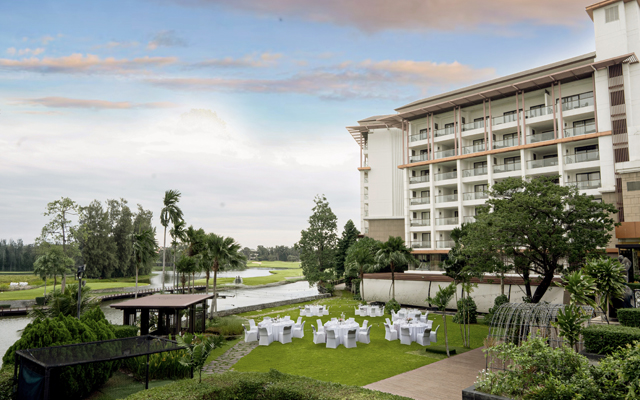
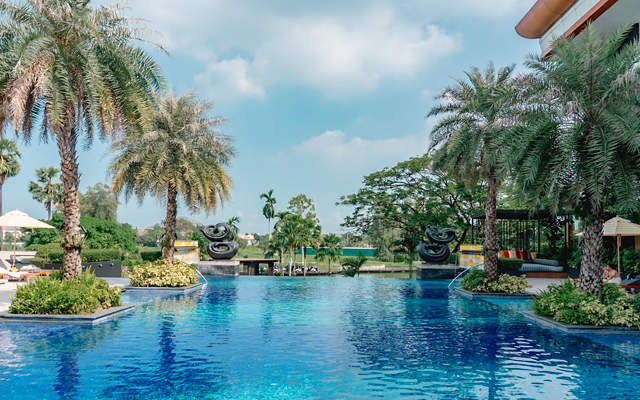
Infinity Lawn

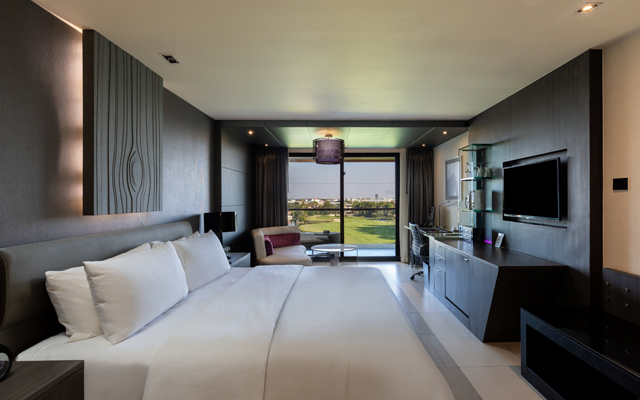
Hilton has launched the 233-key Hilton Bangkok Suvarnabhumi Golf Resort & Spa, its fourth Hilton Hotel & Resorts property in Bangkok.

Located 15 minutes from Suvarnabhumi Airport, the property features over 1,200m2 of flexible event space, anchored by two primary ballrooms of 330 and 260m2. These venues are supported by professional event planning services and are configured to host a range of functions from corporate retreats and board meetings to large-scale international conferences.

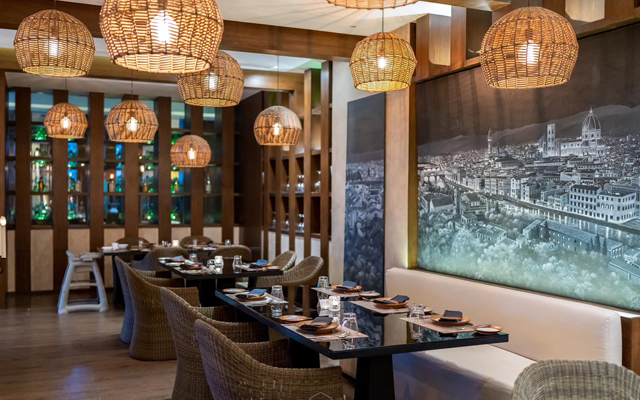
These business facilities are complemented by diverse dining venues, including the Lobby Lounge for informal meetings and Kitchen Craft, the hotel’s all-day dining venue for larger groups.

Leisure facilities include a spa, outdoor swimming pool, fitness centre, and a dedicated Kids’ Club designed for family travellers.

Formerly operating under another brand, Hilton Bangkok Suvarnabhumi Golf Resort & Spa will undergo minor refurbishments through late 2026.

Gloria Guevara to lead WTTC as president and CEO

0

The World Travel & Tourism Council (WTTC) has appointed Gloria Guevara as president and CEO. She returns to the role she previously held from 2017 to 2021.

In her new term, Guevara will lead WTTC’s work with members globally, with a focus on advocacy, member engagement and sector development.

Guevara has more than 30 years of experience across government and the public and private sectors. Her previous roles include secretary of tourism in Mexico, chief special adviser to the Saudi Arabia minister of tourism, special adviser on government affairs at the Harvard TH Chan School of Public Health, and board positions at AMEX Global Business Travel, HSBC Mexico, Playa Hotels and Resorts and Palace Company. She also played a role in coordinating public and private sector efforts during the Covid pandemic.
Imaginative settings

0


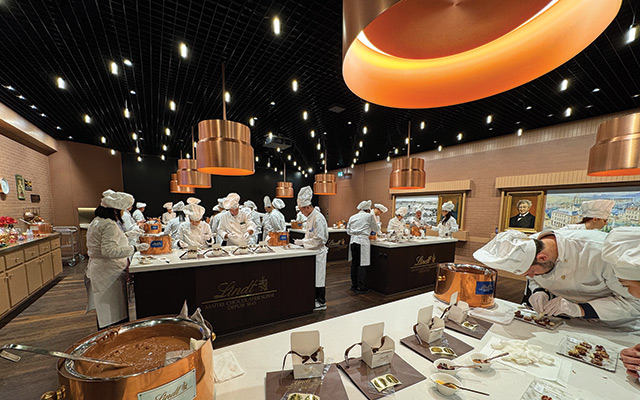
1. Lindt Home of Chocolate
Aside from a Chocolate Museum that offers tours that last around 1.5 hours, this attraction features two main event spaces: Auditorium (Ground Floor) and Lounge (Third Floor), where each can hold up to 100 people.

For a memorable incentive activity, consider the Chocolate Figures & Pralines course. Held in the Chocolateria (Third Floor), this hands-on workshop can accommodate 60 people every 75 minutes. Participants will get to pour chocolate into a bear mould, and decorate custom pralines with nuts and dried fruit.

2. Mount Titlis
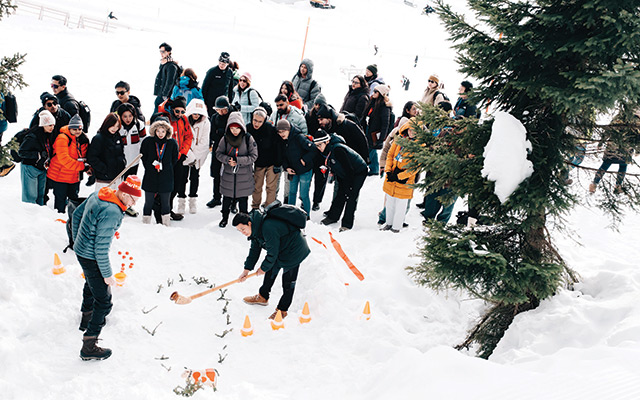
Located about 1.5 hours from Zurich, Mount Titlis is able to deliver unparalleled experiences for corporate groups. Delegates can engage in winter teambuilding challenges, race each other on snowtubes, ride on electric snowmobiles at SnowXpark on Trübsee, or traverse the suspended Titlis Cliff Walk – Europe’s highest suspension bridge.

Opening end May 2026 is the Titlis Tower, a cross-shaped steel landmark at 3,000 metres above sea level. When fully open, the Tower will feature a viewing platform, an exhibition/event space, as well as a restaurant and lounge offering casual fine dining for 120 pax.

3. Christmas Markets
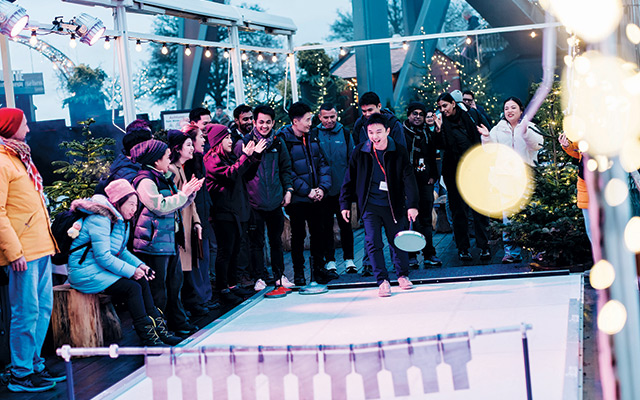
Zurich Tourism provides event planners with the exclusive opportunity to arrange private bookings for select Christmas Markets, before the market’s official opening hours during the winter season. For example, the restaurant within the popular Christmas Village at Sechseläutenplatz (in front of the Opera House) can seat a maximum of 500 guests for a private brunch event, while also accommodating smaller groups of 20 or more during its standard operating times.


4. The “Churchill” Red Arrow
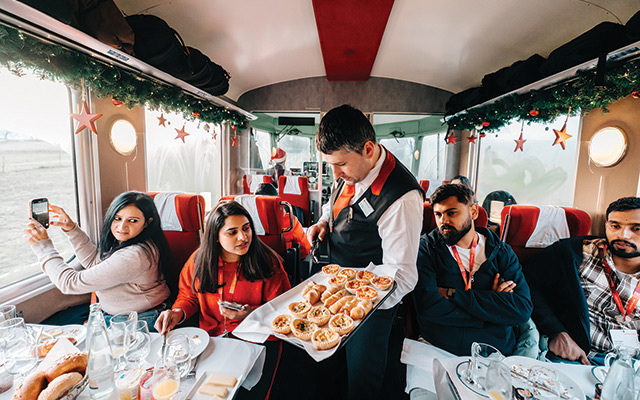
This historic two-carriage mobile venue can be privatised for up to 96 people, seated at comfortable tables of four. The train is also equipped with a built-in kitchen and bar, allowing for culinary experiences – from aperitifs to full-course meals – to be provided throughout the ride that typically comes with amazing landscape views. Journeys normally start from Zurich, though it is possible to enquire about other starting points, such as Lausanne.


5. Uto Kulm
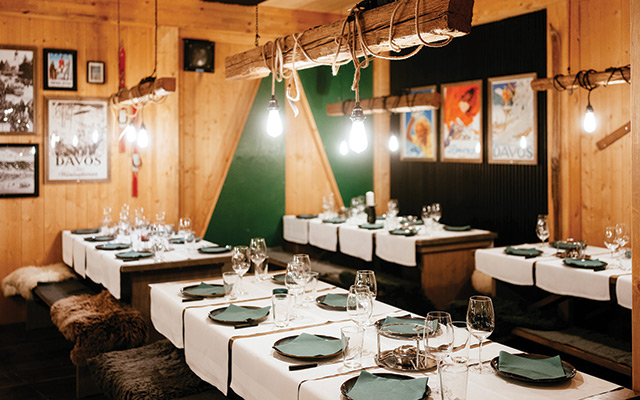
This 54-key property perched atop Zurich’s Uetliberg mountain offers comprehensive facilities for corporate groups, including several restaurants, numerous meeting spaces, and a viewing tower. A standout venue is the Winter Garden, a light-flooded glass pavilion that accommodates up to 100 guests while offering panoramic views of Zurich and its lake.

Additionally, the car-free hotel grounds are ideal for various teambuilding activities, ranging from wooden cart-building workshops and Farmer’s Olympics to seasonal curling and art sessions.


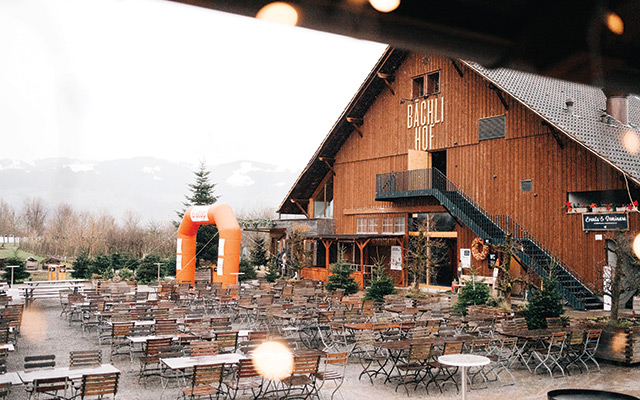
6. Bachlihof Jona
A counterpoint to more formal spaces, this adventure farm in Rapperswil-Jona, just outside Zurich, specialises in in experiential events built around the seasons. There are two farm buildings: Schopf can hold up to 150 theatre-style, while Heugade can hold up to 200 theatre-style.

Groups can also engage in rustic, hands-on teambuilding activities such as launching a rubber chicken with a catapult accurately into a frying pan, throwing horseshoes at a target, or test their dexterity during a challenge where a golf ball must be titled and shifted on a wooden board to drop through the hole that offers the most points.

Karim von Alvensleben helms as GM of Avani+ Lanexang Vientiane

0

Minor Hotels has appointed Karim von Alvensleben as general manager of Avani+ Lanexang Vientiane, ahead of the hotel’s opening in 2Q2026.

Von Alvensleben brings experience in hotel pre-openings and operations, having held senior leadership roles with Mandarin Oriental, Ritz-Carlton, Wynn, Regent, One&Only and Six Senses.

In his new role, he will oversee the pre-opening and launch of the 197-room Avani+ Lanexang Vientiane, with responsibility for operations, team development and brand positioning in the Lao capital.
Tribe Legacy campaign propels Sarawak to record business events growth in 2025

0
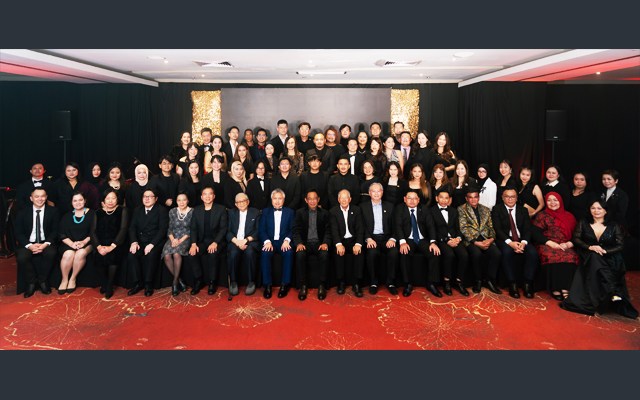
BESarawak team and board members

Sarawak’s business events sector reached a historic milestone in 2025, driven by the Tribe Legacy Sarawak campaign.

In FY2025, Sarawak secured 160 business events, achieving 115 per cent of its annual target. These secured events, scheduled between 2025 and 2030, are projected to generate a total economic impact of RM483.5 million (US$119.2 million).

BESarawak team and board members

Projected direct delegate expenditure stands at RM262.8 million, generating RM29 million in tax revenue across 177,453 delegate days. Sarawak also maintained a 100 per cent bid success rate from 2022, demonstrating sustained international confidence in Sarawak’s destination leadership and ecosystem readiness.

On the hosting front, Sarawak successfully delivered 159 business events in 2025, a 27 per cent increase compared to the previous year. The events generated RM491.4 million in total economic impact, including RM267 million in direct delegate expenditure. These events attracted 59,926 delegates, contributed RM29.5 million in tax revenue, and supported more than 38,000 jobs across the state.

Minister for Tourism, Creative Industry and Performing Arts, Abdul Karim Rahman Hamzah, stated that the results have repositioned Sarawak from an overlooked destination to the “legacy capital” of business events in the region.

He added that as Business Events Sarawak (BESarawak) approaches its 20th anniversary in 2026, the sector is entering the final phase of the Post Covid-19 Development Strategy (PCDS) 2030.

The next five years will focus on deepening data intelligence and digitalisation. Under the legacy initiative, 13 high-value international events have already been aligned with strategic sectors like hydrogen, the digital economy, and aerospace. Additionally, a pilot programme is currently measuring the social and community outcomes of 60 legacy-focused events to ensure sustainable value for the state.

Pullman Kuching aligns with BESarawak’s 2026 strategy following major facility upgrade

0
Song: the hotel’s collaboration with BESarawak is centred on positioning Kuching as a future-ready destination for business events; Colosseum Grand Ballroom pictured

Pullman Kuching has completed a major refurbishment of its key event spaces, supporting the hotel’s plans to work more closely with Business Events Sarawak (BESarawak) as demand for business events in the state capital is expected to grow in 2026.

Sunardi Song, general manager, Pullman Kuching, explained: “Working in tandem with BESarawak from the co-bidding stage, we will shape destination proposals with clear venue capabilities, tailored hospitality solutions, and curated site inspection experiences that build confidence in both scale and delivery.

Song: the hotel’s collaboration with BESarawak is centred on positioning Kuching as a future-ready destination for business events; Colosseum Grand Ballroom pictured

“Any direct MICE enquiry that comes to us is promptly escalated to BESarawak, ensuring a unified state-wide strategy that positions Sarawak as a single, compelling proposition.”

Central to Pullman Kuching’s refreshed offering is the newly-transformed Colosseum Grand Ballroom, now Sarawak’s largest pillarless ballroom, accommodating up to 2,800 guests, alongside flexible exhibition space for up to 30 booths.

This is supported by 13 purpose-built meeting rooms, hybrid-ready technology, and an accommodation inventory of 389 guestrooms.

“The hotel is designed to support complex, large-scale events with ease. Our transformation responds directly to the evolving expectations of modern meeting planners, where flexibility, reliability and experiential impact matter most,” Song said.

He added that corporate and group business is expected to remain a substantial share of the hotel’s revenue mix in 2026, supported by Sarawak’s broader business events pipeline.

The state has secured 150 events from 2025 to 2030, with an estimated economic impact of RM445 million (US$94.7 million), signalling long-term opportunities for Pullman Kuching and Pullman Miri Waterfront under the Interhill Hospitality portfolio.

Meanwhile, Amelia Roziman, CEO of BESarawak, forecasted 2026 as a strong year, describing it as the “harvesting” phase of the Tribe Legacy Sarawak campaign launched in 2020.

Major events include the Asia Pacific Aerospace Conference and Exhibition 2026, an inaugural homegrown event taking place from January 26 to 29 and expected to attract 1,000 participants; 51st World Polymer Congress in July with an estimated 800 delegates; and 24th Asian Congress on Occupational Health 2026 in August with around 2,000 delegates.

As for source markets, Amelia said the strongest demand pipelines for 2026 are coming from Asia Pacific, particularly Singapore and Indonesia, as well as from Europe, where BESarawak participates with an independent pavilion at IMEX Frankfurt.

“We have also been receiving strong interest from China, hence we will be participating for the first time at the China International MICE Exchange in November,” she added.

Electrify Queenstown 2026 to be held in May

0
A previous edition of Electrify Queenstown; photo by Will Nelson

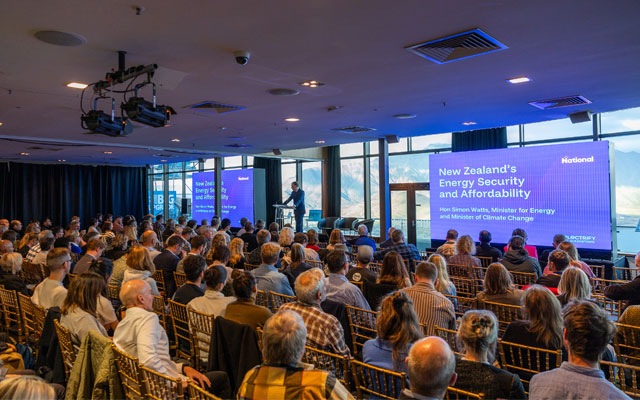
The Electrify Queenstown summit returns this May, offering a comprehensive three-day programme dedicated to the practical and strategic transition to electric energy.

Running from May 17–19 at the Queenstown Events Centre, the event brings together industry leaders, technology innovators, and policymakers to explore the scalable solutions driving the electrification movement.

A previous edition of Electrify Queenstown; photo by Will Nelson

The 2026 lineup features high-profile speakers, including renewable energy advocate Saul Griffith, Xero founder Rod Drury, and Rewiring Aotearoa’s Mike Casey.

The summit is structured to provide value across various professional levels by integrating high-level strategy with practical application. It features sessions focused on finance, investment, and long-term energy policy for decision-makers and boards, alongside hands-on workshops designed for business owners and operators seeking immediate cost savings and efficiency gains. These insights are complemented by immersive, real-world demonstrations of e-mobility, solar integration, and smart-tech solutions for both commercial and residential use.

A highlight of the event is a moderated discussion on the future of the national energy system, providing attendees with direct insight into the policy frameworks that will shape New Zealand’s infrastructure.

For the first time, Electrify Queenstown 2026 will also introduce ticketing, including early-bird pricing, to ensure the event remains financially sustainable into the future. There are options to to attend individual days, events, or the full three-day programme.

Reviews

The Ritz-Carlton, Bangkok

The newly-opened Ritz-Carlton, Bangkok anchors the One Bangkok development with cosmopolitan elegance. Featuring the city's largest ballroom and a spectacular new penthouse suite, it delivers exceptional hardware and deeply authentic, soulful service for business and leisure travellers alike

Mama Shelter Zurich

Behind the imposing, Brutalist concrete that defines Zurich’s Oerlikon district lies a surprising secret. While its exterior honours the neighbourhood’s industrial roots, stepping inside Mama Shelter reveals a vibrant, neon-soaked world that is a far cry from its rigid shell

Hyatt Regency Kuala Lumpur at KL Midtown

A polished urban retreat designed for business travellers, Hyatt Regency Kuala Lumpur at KL Midtown combines thoughtful design, seamless service, and exceptional facilities.