InterContinental Danang Sun Peninsula Resort has promoted Jean-Louis Angulo to chef de cuisine of La Maison 1888, the only Michelin-star restaurant in Central Vietnam.
Angulo, who served as the establishment’s sous chef for the past two years, succeeds a lineage of culinary icons including Michel Roux and Pierre Gagnaire. He will lead the kitchen under the direction of chef Christian Le Squer, his long-time mentor, and the three-Michelin-star veteran of Le Cinq at Four Seasons Hotel George V Paris.
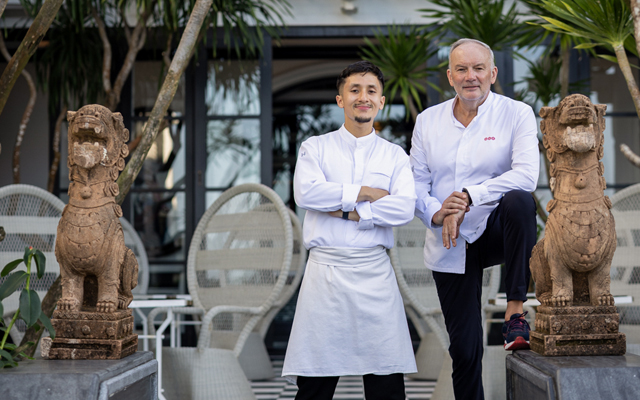
From left: Christian Le Squer; and Jean-Louis Angulo
Born in France to Peruvian parents and trained in Paris, Angulo’s career includes high-pressure roles at L’Espadon at the Ritz Paris and Gordon Ramsay au Trianon in Versailles.
In his new role, Angulo will manage the restaurant’s “haute couture” culinary operations in collaboration with head sommelier Amedeo Bellini.
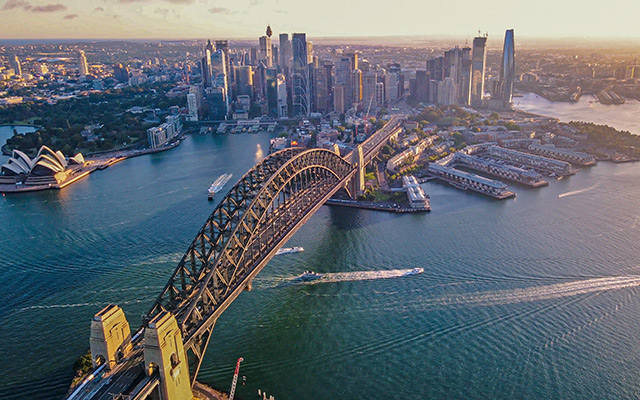
Such business events serve as a primary driver for the New South Wales Government’s Visitor Economy Strategy 2035; Sydney pictured
Kuoni Tumlare has strengthened its global reach by bringing its Sydney and Auckland offices into full alignment with its international network.
The expansion arrives at a critical juncture; as the Middle East conflict disrupts established travel patterns, the DMC is pivoting resources toward Oceania to meet growing demand for stability and logistical certainty.
Kuoni Tumlare aligns Oceania offices to meet demand for logistical certainty; Sydney pictured
This integration, part of Phase Two of Kuoni Tumlare’s growth plan, sees the full absorption of parent company JTB’s destination management offices in Australia and New Zealand. By bringing these teams into the global fold, the DMC leverages a regional legacy dating back to 1962 in Australia and 1998 in New Zealand.
Reto Kaufmann, chief marketing officer and senior vice president for South & South-east Asia and the Middle East, told TTGmice that the expansion is a direct response to a “clear client preference” for a single, end-to-end service provider.
“Beyond any short-term developments, it was important for us to ensure that we can continue to host our clients’ business with the same level of quality and service beyond our traditional core regions in Europe,” Kaufmann said.
As Middle East tensions complicate longhaul travel from Asia to Europe and vice versa, Kaufmann indicated there is a clear “uplift in demand” for alternative destinations. For example, Japan remains a dominant force for the remainder of 2026, supported by a favourable exchange rate and strong connectivity. Meanwhile, Australia and New Zealand are seeing increased interest from corporate incentive groups looking for stability and seasonal appeal.
Despite higher fuel prices, Kaufmann dismissed the idea of a return to the era of virtual-only meetings.
“Face-to-face interaction remains essential. For programmes already committed, corporates are generally proceeding as scheduled, even if it means stretching budgets to accommodate higher costs. These trips are seen as vital investments in employee engagement,” Kaufmann opined.
To mitigate rising costs, Kaufmann identifies two primary client strategies: regional re-routing toward short- and mid-haul destinations within APAC and Oceania to reduce fuel surcharges, and logistical optimisation for European travel, which leverages Kuoni’s scale and long-standing supplier relationships to incorporate rail solutions and secondary city hubs.
“Europe remains a core destination for our Asian client base, with consistently strong demand and proven revenue potential, and our objective is to support our partners in maintaining momentum in this important region,” he stated.
While owned offices in Australia and New Zealand provide a physical anchor, Kuoni Tumlare is also proactively expanding its Global Affiliate Programme. Launched in the wake of the pandemic, the programme has become a vital expansion pillar, particularly in fast-moving markets such as Singapore and Malaysia.
The programme operates on an invitation-only basis, selecting local DMCs to act as exclusive representatives. According to Kaufmann, the benefits are mutual. Local partners gain access to a global sales engine, while Kuoni Tumlare gains deep, on-the-ground expertise without the overhead of a full-service office.
Overall, Kaufmann remains optimistic about the sector’s ability to weather the current storm.
“I have seen many crises come and go. Each brings its own challenges, but also valuable learnings. For the MICE industry, resilience has always been a defining characteristic. History shows that our industry adapts quickly and recovers strongly,” he concluded.
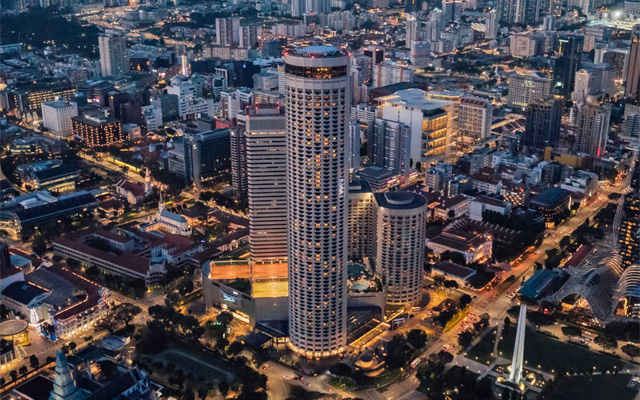
Aerial view of Fairmont Singapore and Swissôtel The Stamford
Fairmont Singapore and Swissôtel The Stamford, a dual-brand integrated resort incorporating the Raffles City Convention Centre in Singapore’s civic district, is expecting a busy year on the business events front, following on from an eventful 2025.
William J Haandrikman, managing director of both Fairmont Singapore and Swissôtel The Stamford, shared that both the Fairmont and Swissôtel brands, as well as a convenient blend of 2,000 guestrooms, 10,000m2 of meetings space and numerous F&B outlets have helped to attract high-end events to his complex.
Aerial view of Fairmont Singapore and Swissôtel The Stamford
Some notable events held at the integrated resort in 2025 included Cvent Accelerate Singapore 2025, which Haandrikman regarded as an important gathering for the events industry, private events hosted by major banks and consultancy agencies, and association congresses.
“The last quarter of 2025 was especially strong for us,” said Haandrikman, who added that corporate bookings are now coming in with short lead times of several months.
“We are still hearing from companies wanting to do their events in September. These are large events. In the past, events of similar scale would book two or three years ahead,” he reflected.
He noted that few companies are comfortable with planning events far ahead due to the current volatile macro environment.
Associations, however, are still planning years ahead and have placed bookings for 2028 to 2030.
Corporate bookings and meetings are strong for 2H2026 even though current geopolitical tensions are disrupting longhaul travel into Asia, and creating uncertainty in business for the coming months.
Haandrikman remains optimistic that a “bright side” remains.
“People who planned trips to and through the Middle East are now diverting to Asia,” he remarked, adding that Singapore has an opportunity to capture more longhaul transits and international visitors now, especially as the island nation is regarded as a “safe and stable” destination while Asia offers “great opportunities” for businesses.
Although Fairmont Singapore, Swissôtel The Stamford and Raffles City Convention Centre are able to offer business and social programming under one roof, Haandrikman said delegates would only make the best memories when they ventured out. As such, his team is “drawing on our strong connections with Singapore’s tourism players” to recommend and create a memorable destination connection.
“Last year, we brought in 50 sidecars for a conference, and delegates went out for a downtown ride. The attendees posted photos everywhere, forming a great memory of the event and Singapore,” he said.
Haandrikman sees more creative opportunities for the business events sector. His team is now working on several experiential ideas that would not only attract leisure guests, but also offer creative social ideas to meetings and events. These activations would also allow the property to better utilise its meeting spaces and hotel facilities throughout the year.
One such experiential idea stems from a collaboration with luxury fragrance house, Amouage and Luxasia, to offer an exclusive fragrance discovery experience for guests of Fairmont Singapore.
The two hotels have also started the ball rolling on Singapore Grand Prix race day specials. Hospitality suite packages for both Fairmont Singapore and Swissôtel The Stamford are now on sale for October 9 to 11, 2026.
Prices start from S$38,000++ (US$29,795++) for two days in Fairmont Singapore’s Deluxe Marina Bay Suite, and from S$40,000 two days in Swissôtel The Stamford’s Swiss Marina Bay Suite. Both are suitable for watch parties for up to 15 guests.
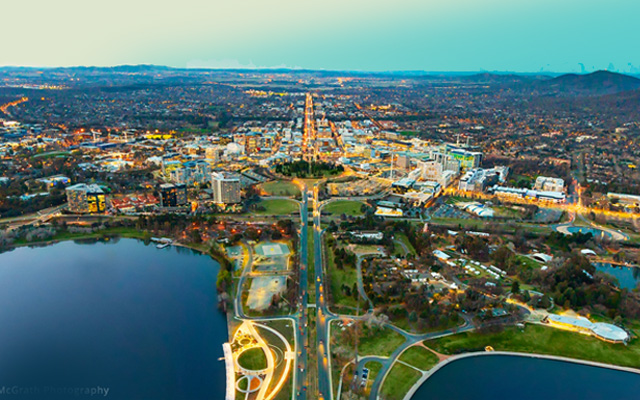
Aerial view of Canberra; photo by Adam McGrath Photography
The ACT Government has reached a key milestone in planning the new Convention and Entertainment Centre Precinct, a project the Canberra Convention Bureau (CCB) indicates will finally allow the capital to host major international events and large-scale exhibitions.
While the project is moving forward, officials confirmed that no official completion date is currently available. A full business case is not expected until mid-2028, leaving the final timeline for the A$750 million (US$532 million) development fluid as it enters the detailed design phase.
Aerial view of Canberra; photo by Adam McGrath Photography
The precinct will enable Canberra to host multiple concurrent conferences and major 8,000-seat arena events. The plan also includes a new aquatic facility at Commonwealth Park to replace the ageing Canberra Olympic Pool.
The site will sit close to the new UNSW Canberra City Campus, creating a centralised hub for education, business, and tourism.
CCB’s CEO Michael Matthews noted strong existing interest from organisers, stating the infrastructure is vital to meet “unprecedented” demand.
He added: “This is about much more than conferences and events, however. It’s about creating more activity in the city, attracting new visitors, supporting local businesses and generating jobs across hospitality, tourism and the broader events sector.”
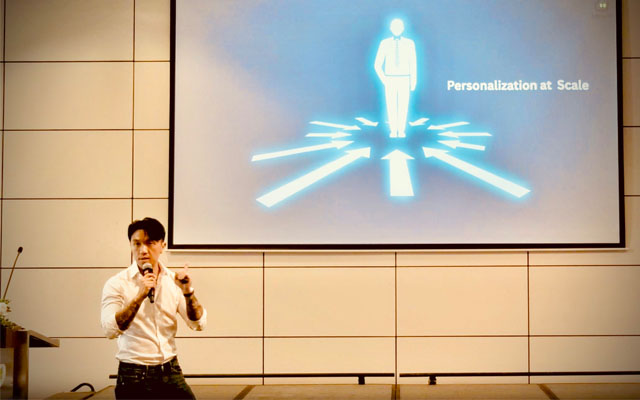
Jublia AI’s Kevin Ng outlines how organisers can leverage AI for scaled matchmaking and targeted sales; photo by Anne Somanas
Artificial intelligence is evolving from an operational luxury into a primary revenue driver for the exhibition industry, according to Kevin Ng, head of commercial, Asia-Pacific for Jublia AI, speaking at the TEA InnoTech Talk #2 in Bangkok.
Hosted by the Thailand Exhibition Association (TEA) and Expopass at Bangkok International Trade & Exhibition Centre, the session outlined how organisers are moving past simple automation to leverage the “hidden” market demands revealed by attendee data.
Jublia AI’s Kevin Ng outlines how organisers can leverage AI for scaled matchmaking and targeted sales; photo by Anne Somanas
The most immediate application involves automating the heavy lifting of hosted buyer programmes. AI eliminates the tedious logistical work of manual scheduling by instantly pairing buyers and exhibitors based on mutual commercial interests and platform behaviour.
“Without a system like ours, it will be very tedious. You have 300 buyers, then you create an Excel sheet, and you need to update it every time ,” Ng said.
By deploying intelligent matchmaking platforms, organisers can now process thousands of profiles simultaneously, ensuring pairings are based on actual user actions rather than just static registration data.
Beyond operational efficiency, these tools provide a clear roadmap for future exhibition space sales. By tracking digital footprints – such as search queries, profile bookmarks, and meeting requests – sales teams can strategically target high-yield exhibitor demographics that were previously invisible.
Ng pointed to the Singapore Week of Innovation and Technology (SWITCH) as a prime example. Backend analytics during the event revealed massive delegate interest in Japanese companies, despite that demographic making up only two per cent of total registrations.
“If you know that Japan was the second most popular country, that will allow your sales team to sell to more Japanese exhibitors. Event managers can utilise this intelligence to direct their commercial teams toward high-yield markets that attendees actively seek,” Ng explained.
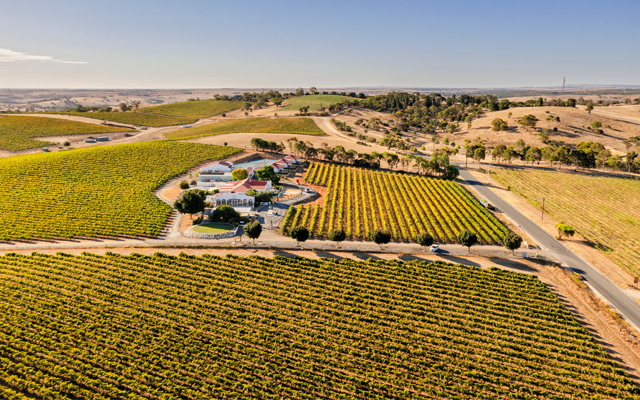
Barossa Valley (pictured) is a one-hour drive from Adelaide
Business Events Adelaide kicks off the 22nd annual Destination South Australia (DSA) today, where the three-day showcase welcomes 35 high-level business event decision-makers and media to the state.
This year’s itinerary includes a dedicated tradeshow for pre-scheduled appointments with local venues and suppliers, alongside immersive regional visits to the Barossa Valley and McLaren Vale to highlight the state’s unique character and accessibility.
Barossa Valley (pictured) is a one-hour drive from Adelaide
The showcase follows a recent A$10 million (US$7 million) boost to the Business Events Bid Fund by the Malinauskas Government.
Business Events Adelaide’s CEO Damien Kitto noted that the event provides first-hand insight into the state’s collaborative approach and strong economic credentials. “There is forward momentum being generated – be it through infrastructure development or the acquisition of major events. I hope DSA delegates feel the energy,” said Kitto.
The DSA initiative remains a significant economic driver, with last year’s programme securing over A$36 million in future business.
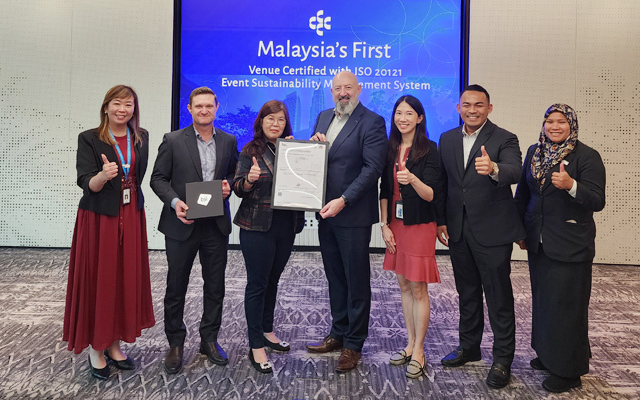
The ISO 20121 status ensures that event delivery is backed by measurable sustainability outcomes and responsible operational governance
The Kuala Lumpur Convention Centre (the Centre) has become the first purpose-built venue in Malaysia to earn the ISO 20121 Event Sustainability Management certification.
The international standard, presented by BSI Malaysia’s managing director Evelyn Chye to the Centre’s general manager John Burke, provides a formal framework for resource efficiency, waste management, and ethical sourcing within the global events industry.
The ISO 20121 status ensures that event delivery is backed by measurable sustainability outcomes and responsible operational governance
For event organisers and delegates, the Centre’s ISO 20121 status ensures that event delivery is backed by measurable sustainability outcomes and responsible operational governance.
This milestone follows the venue’s recent PM Hibiscus Award for Sustainable Convention and Exhibition Centres.
JW Marriott Singapore South Beach has debuted a Stay & Explore room package, a curated offering designed to streamline the arrival and sightseeing experience for travellers in the Marina Bay precinct.
Valid for stays through August 31, 2026, the promotion targets leisure and first-time visitors seeking a seamless transition into the city.
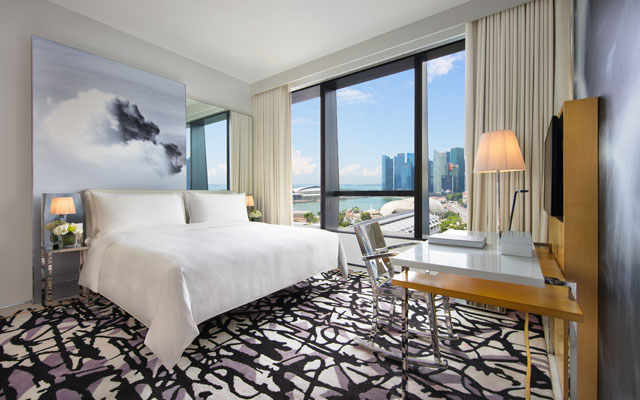
JW Marriott Singapore South Beach Premier Room
The package requires a minimum three-night booking and includes complimentary two-way airport transfers and a pair of “Discover Tickets” for either the Singapore Big Bus Tour or the DUCKtours.
Situated at the intersection of the civic district and Marina Bay, the 634-room hotel positions guests within walking distance of major cultural landmarks and Singapore’s CBD.
On-site, the property features specialised F&B outlets including modern Cantonese at Madame Fan and Korean-Japanese fusion at Akira Back. Guests also have access to the Flow18 Sky Garden, which offers panoramic views of the city skyline.
Rates for the package fluctuate based on room category and seasonal demand, and all inclusions must be utilised during the booked stay period.
AI-powered travel marketing platform, Sojern, has appointed Sylvia Weiler as president and general manager of its global destinations business.
Weiler returns to the company after previously helping build its destinations segment. She most recently served as chief revenue officer at Zartico and has held senior roles at Tripadvisor and Airbnb.
Global business travel is facing a dual challenge as soaring fuel costs and Middle East airspace closures force a rapid recalculation of corporate travel strategies.
While the industry remains resilient, travel management companies (TMCs) are seeing a shift in how companies prioritise routing and risk management to ensure business continuity.
The closure of Middle Eastern airspace – critical transit points for travel between Asia and Europe – has forced travel managers to rethink their routing strategies due to limited inventory
“Beyond safety considerations, there is limited inventory available on Middle Eastern carriers, as much of the region’s airspace remains closed,” noted Sharifah Alhabshi, BCD Travel’s senior director for programme management in Asia-Pacific. “As a result, travellers are routing via other carriers.”
Vicki Parris, managing director of FCM Travel, South-east Asia & Japan, shared that the TMC is “seeing travellers opt for direct flights on carriers” that can provide better connectivity.
Meanwhile, Eugene Tan, general manager for South-east Asia at Trip.Biz, noted that travel managers are increasingly requesting platforms that offer “full itinerary visibility” to allow for quick changes or cancellations in response to evolving risks.
“In this environment, travel managers are also comparing a wider range of routing and airline options… to maintain policy compliance, cost control and traveller safety,” he added.
Industry leaders also suggest that traveller safety has moved from a secondary priority to an absolute requirement, and is where Asia-Pacific’s stability will prove to be an advantage.
Parris highlighted that the region’s reputation is a significant factor right now, as companies have always prioritised “destinations with robust health, safety, and geopolitical stability measures”.
Alhabshi echoed this, describing safety not as a currency, but as an “essential baseline requirement that companies and destinations must meet to sustain trust”. She pointed out that the perception of stability in Asia-Pacific has made the region significantly more attractive for business travel.
Despite fuel prices hitting record highs, the expected downgrade in travel classes or widespread cancellation of events has yet to materialise.
“We have seen in the past that corporates tend to take a wait-and-see approach to events and conferences – with them more likely to switch location than simply cancel,” said Parris. She also noted that while clients are more prudent with spending, they are not necessarily making class changes – such as dropping from Business to Premium Economy – because companies continue to value traveller well-being.
When asked about fuel price impact on business travel spend, Tan explained that it varies according to the negotiated rates that companies have with airlines based on minimum volumes. He noted that because fuel surcharge exposure varies, multi-source access to airlines ensures full visibility into available inventory and pricing.
According to Tan, this is a benchmark for TMC effectiveness. Trip.Biz connects to multiple GDS platforms, allowing it to offer direct airline connections, more than 34 NDC connections, more than 150 Trip.Biz exclusive fares and extensive OTA inventory, reaching sources that traditional players cannot access with single-GDS reliance.
Tan concluded: “Business travel continues to thrive – companies travel where there is a clear business need, but they are paying closer attention to routing, class of travel, and overall trip cost.”
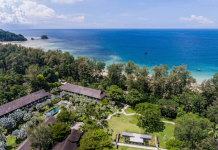
Just 10 minutes from Phuket International Airport on the serene northern coast, this 178-key, Bill Bensley-designed resort offers delegates a quiet, tropical paradise steeped in Phuket’s tin-mining heritage
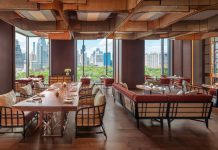
The newly-opened Ritz-Carlton, Bangkok anchors the One Bangkok development with cosmopolitan elegance. Featuring the city's largest ballroom and a spectacular new penthouse suite, it delivers exceptional hardware and deeply authentic, soulful service for business and leisure travellers alike
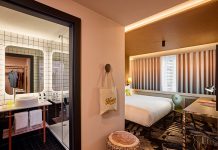
Behind the imposing, Brutalist concrete that defines Zurich’s Oerlikon district lies a surprising secret. While its exterior honours the neighbourhood’s industrial roots, stepping inside Mama Shelter reveals a vibrant, neon-soaked world that is a far cry from its rigid shell




 Weiler returns to the company after previously helping build its destinations segment. She most recently served as chief revenue officer at Zartico and has held senior roles at Tripadvisor and Airbnb.