Asia/Singapore Tuesday, 16th December 2025
Page 3

TFE Hotels appoints new leadership team in Melbourne

0

TFE Hotels has appointed Grant Fleet, Michael Gibson, and Angelo Di Marco to key leadership roles in its Victorian operations team, reinforcing its focus on operational excellence and guest experience across its Melbourne portfolio.

Fleet joins Rendezvous Melbourne as hotel general manager. He brings more than 15 years of hospitality leadership, including senior roles at Yarra Valley Lodge, Mercure Resort Great Keppel Island, Towers of Chevron Renaissance, and several Rydges properties. He will oversee the hotel’s 340 guestrooms, event spaces, and dining venues.

From left: Grant Fleet, Michael Gibson and Angelo Di Marco

Gibson has been named general manager at Quincy Melbourne, with over 20 years of hospitality leadership across Accor, Ultiqa, Marriott, and Mantra Group.

Angelo Di Marco joins Travelodge Hotel Melbourne Docklands as hotel general manager, bringing more than a decade of experience, including his previous role as general manager at Rendezvous Hotel Perth Central and a secondment at Adina Apartment Hotel Britomart in New Zealand.

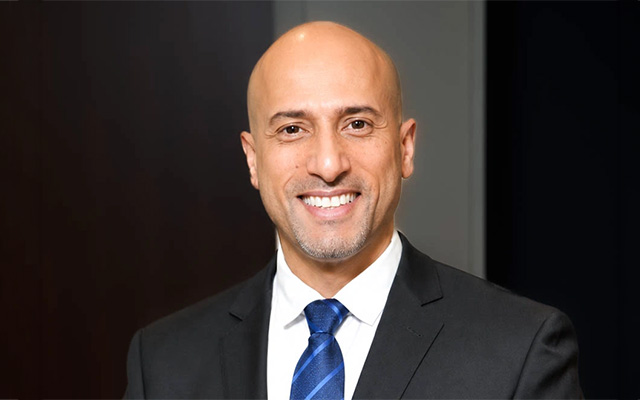
Wong Hong takes helm as director general of AAPA

0

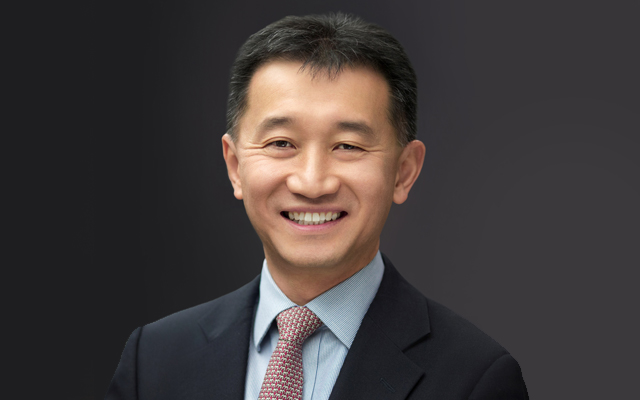
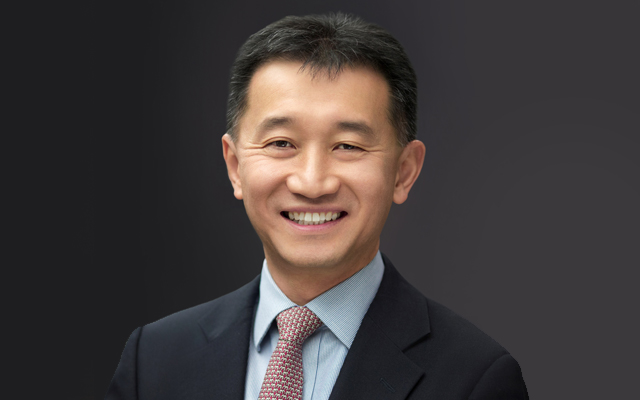
The Association of Asia Pacific Airlines (AAPA) has appointed Wong Hong as director general, effective April 1, 2026, following the decision of current director general Subhas Menon to step down after leading the Association since 2020.

Wong brings over 22 years of international aviation experience, having held senior roles in network planning, revenue management and sales at Singapore Airlines and Delta Air Lines. He most recently served as Delta Air Lines’ president – China, based in Shanghai, leading growth in the Chinese market through a partnership with China Eastern Airlines.

Reporting to the executive committee and the AAPA Assembly of Presidents, Wong will represent the interests of member airlines on aviation policy issues and work closely with industry stakeholders.

Hannah St Hotel expands leadership team ahead of opening

0

Hannah St Hotel has made three senior executive appointments ahead of its opening later this month in Melbourne’s arts precinct.

Lindsay Guy joins as executive assistant manager, bringing extensive experience in guest experience and operational leadership. He has held senior roles at Crown Resorts, Accor Hotels, Ennismore Group, and Marriott International, including at the Hyde Melbourne Place, Pullman Melbourne City Centre, Sheraton Melbourne, Crown Metropol, and W Melbourne.

From left: Lindsay Guy, Bernard Glaude and Sergio Morales

Bernard Glaude has been appointed food & beverage manager, bringing 20 years of international hospitality experience, including Michelin-starred restaurants in New York and consulting on openings with Massimo Bottura and the Gramercy Park Hotel. He will oversee food and beverage operations across the hotel and Queensbridge precinct.

Sergio Morales joins as experience director, responsible for premium concierge services and lifestyle programmes within the mixed-use precinct.

Gyeongju is ready to welcome more global meetings, events and tourists

0
The Bosun Tourist Complex

Brought to you by Gyeongju Convention Bureau

The Bosun Tourist Complex is the first of its kind in South Korea, designed to be an all-inclusive space that includes tourist attractions, hotels, museums, as well as meeting venues

From October 31 to November 1, 2025, the South Korean city of Gyeongju in North Gyeongsang province welcomed world leaders and delegates from all over the world for the Asia-Pacific Economic Cooperation (APEC) 2025 Summit Meeting. 

In preparation for the event, which saw about 20,000 to 30,000 delegates and staff, Gyeongju has been upgrading and enhancing many of its cultural sites, event venues and infrastructure to facilitate the high influx of visitors, as well as continue to attract delegates and groups from around the world. This extensive effort not only solidifies its status as a historical capital, but also as a city developing into a hub of modern technology.

The city, known as a ‘museum with no walls’ has a history that dates back to over 1,000 years. It was formerly the capital of the Silla Kingdom that ruled most of the Korean peninsula from the late 7th century to early 9th century. 

Today, it is home to venues that are not just meeting facilities but are unique sites that showcase its cultural heritage. 

Bomun Tourist Complex: for leisure and tourist needs

A 8,000km2 area surrounding Bomunho, the Bomun Tourist Complex is the first in Korea designated in 1975. It is an all-in-one inclusive space that is home to entertainment attractions such as an amusement park, water parks, botanical garden, golf clubs and various museums. 

Within this stands the Gyeongju Global Convention Landmark that includes the Gyeongju Hwabaek International Convention Center (HICO), the main meeting site for the APEC 2025 Summit, as well as six other integrated facilities including three hotels, two museums – Woo-Yang Art museum and K-POP Museum – and the Gyeongju Expo Grand Park. 

Within the complex are mid- and large-scale hotels including the Hilton, Commodore, and Lahan, that total to around 4,000 rooms and are located within a 15-minute walk of HICO, making it highly convenient for visitors whether they are here for business or leisure. 

Those staying in the Bomun Tourist Complex can combine business with leisure activities given the close proximity to hotels, event venues and recreational facilities. 

Gyeongju Hwabaek International Convention Center: Global venue ready for the world stage

HICO’s design was inspired by the Silla Kingdom – a representation of the city’s cultural heritage

The main venue for the APEC 2025 Summit Meeting, HICO is the only convention centre in South Korea designed and modelled after the Silla Kingdom. The three-storey building can hold up to 4,500 people and has 21 meeting rooms, two exhibition halls of 2,400m2 and 3,000m2 – big enough to host over 3,000 delegates – and three large convention halls totalling 3,500m2 – ideal for both larger and smaller meetings. 

Ahead of the APEC Summit, HICO has undergone a complete transformation for the event, refurbished into a luxurious interior for diplomats and other government officials. Of note is a newly opened external two-floor exhibition hall that was used as the main press centre for the event and to hold about 1,000 journalists. It will continue to function as an exhibition hall and meeting venues.  

Bulguksa Temple: historic Buddhist site

An example of Korean architecture, Bulguksa Temple and the neighbouring Seokguram Grotto, stand as important representations of Buddhism

The Bulguksa Temple, a UNESCO World Heritage Site along with the nearby Seokguram Grotto, is an important cultural relic that was originally built in the year 528 under the Silla Kingdom to celebrate the acceptance of Buddhism as the official state religion. 

While it is a replica of the original, the temple remains an important representation of Buddhism. The large temple grounds comprises several areas and features including bridges, pavilions and halls. 

During the APEC 2025 Summit, Bulguksa Temple was one of the venues for the Spouse programme hosted by South Korean First Lady Kim Hye-kyung for the spouses of the APEC economic leaders who had travelled to South Korea. 

Temple stay programmes are also available – ideal for planners who want to integrate more immersive cultural activities in their programme.


Combine culture and history into programmes at Gyeongju. Visit Gyeongju Convention Bureau for more information.

Four Seasons Resort Bali at Sayan names new resort manager

0

Four Seasons Resort Bali at Sayan has appointed Tim Churchmack as resort manager, where he will oversee the property’s operations.

He joins following a series of leadership roles across the Four Seasons portfolio and will focus on operations and guest experience as the resort enters its next phase.

He most recently served as hotel manager in Chicago.

UFI Global Congress celebrates centenary in Hong Kong; Bahrain to host 2026 edition

0
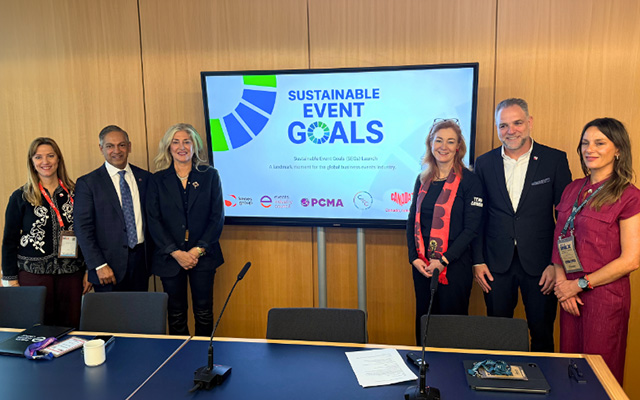
Delegates from Bahrain at the UFI Global Congress in Hong Kong; photo by Prudence Lui

The UFI 92nd Global Congress concluded on a high note in Hong Kong in mid-November 2025, drawing over 600 global industry leaders from 47 countries.

Hosted by AsiaWorld-Expo (AWE), the event marked a double celebration: AWE’s 20th anniversary and UFI’s centenary. The Congress, which returned to Hong Kong after 25 years, was themed Shaping the Future, and featured keynotes, workshops, discussions, and networking opportunities.

Delegates from Bahrain at the UFI Global Congress in Hong Kong; photo by Prudence Lui

Beyond business sessions, the Hong Kong Tourism Board curated post-congress tours, including visits to M+ for the Congress Dinner, Peak Tram, Palace Museum, Tai O, and Tai Kwun. The goal was to showcase reasons for delegates to extend their stay and explore the destination.

UFI’s managing director and CEO, Chris Skeith, said: “Coming to Hong Kong this year particularly is important to UFI as it’s our centenary. We’ve been celebrating the past, honouring the present, but the main thing we’re here today for is to help shape our future.”

Skeith highlighted that Hong Kong has the capability to host large-scale events, and anticipates many UFI members will bring future events to the city.

Richard Ireland, CEO of Clarion Events Asia, echoed this sentiment, calling Hong Kong a “great destination” due to its proximity to the Greater Bay Area, affluent population, and proven ability to host successful large events.

Looking ahead, the 93rd UFI Global Congress will be hosted by Exhibition World Bahrain (EWB) in Sakhir from November 2 to 5, 2026.

Huda Al Shamlan, EWB’s director of marketing, communications partnership, stressed the vital importance of the business events industry to Bahrain.

“When we were established three years ago, we were established to lead the growth of this industry,” she told TTGmice. She noted that EWB is backed by a destination and partners who understand the industry’s significance.

The 2026 edition aims to showcase Bahraini hospitality, regional innovation, and EWB’s modern event environment. Delegates can expect thought-leadership sessions, exposure to emerging technologies, and first-hand insights into Bahrain’s rapidly evolving business events ecosystem.

Al Shamlan confirmed EWB is actively preparing by enhancing operational, technological, and experiential pillars. This includes strengthening AV/technology infrastructure, expanding service offerings for a seamless delegate journey, and deepening partnerships with national stakeholders for integrated logistics, accommodation, and cultural experiences.

Twenty years strong

0

This year marks the 20th anniversary of AFECA. Looking back to its beginnings in 2005, how did the association come about?
AFECA was founded in 2005. At that time, Dylis Yong, who was then president of SACEOS in Singapore, proposed the idea of forming a federation for the Asian business events community. We supported her idea because we believed it was the right move for Asia.

She reached out to associations from six other economies – Indonesia, Malaysia, the Philippines, China, Taiwan, and Japan – and together with Singapore, these seven associations became the founding members of AFECA. Yong served as the founding president, and two years later, in 2007, I succeeded her as president.

Since then, AFECA has grown steadily. Every year, we have added new members and expanded across Asia. I personally helped to connect with China, as my company was involved in organising events there. This led to partnerships with CCPIT and the creation of the China Expo Forum for International Cooperation, which also celebrates its 20th anniversary this year.

What does this 20-year milestone represent for both AFECA, and you on a personal note?
For me, this anniversary is not just a reflection of longevity – it’s about resilience, growth, and collaboration. Over the years, we’ve gone through challenges, but AFECA has continued to bring committed members from across China, India, and South-east Asia together.

It’s about celebrating what we’ve built: a regional platform that connects associations, governments, and industry professionals across 19 (soon 20) economies under one shared vision.

AFECA’s A20 concept has become one of its key initiatives in recent years. Can you explain what it stands for and what it aims to achieve?
A20 stands for Asia 20. It was introduced by our current president, Vincent Lim, about three years ago. The idea is to represent the 20 economies in Asia that contribute to the business events industry. Although we currently have 19 members, we are working to bring in one more to complete the “20”.

A20 is built on two principles – cooperation and collaboration. Each host country brings its own strengths, and together, we showcase Asia’s diversity and potential. This year, A20 was organised jointly with ASPERAPI in Indonesia, alongside the Indonesia Business Event Forum. I think it has been a great success and a strong example of regional partnership in action.

AFECA is also launching its inaugural Annual Awards this year. What inspired this initiative?
Since it’s our 20th anniversary, we wanted to create something meaningful, and honour the pioneers and visionaries who helped shape Asia’s business events industry. Many of these individuals and organisations have been working for more than 20 years, building conferences, exhibitions, and venues that drive economic development.

So we established the AFECA Annual Awards with five core categories (including) Outstanding leaders in conventions, Outstanding contributions to exhibitions, Excellence in contracting and business services, Leadership in venue management, and Visionary contributions to the overall business events ecosystem.

We decided to honour 20 individuals this year – one for each year of AFECA’s journey. Seven of them represent our founding associations, two are past presidents (myself and Yeh), and the remaining 11 were selected through an international jury process.

Our jury includes representatives from UFI, IAEE, ICCA, AFECA’s advisory council, and media partners like TTG Asia Media. Together, they reviewed nominations and selected the honourees. These pioneers are then formally inducted into the AFECA Hall of Fame.

How do you see the role of governments across Asia evolving in supporting the business events industry post-pandemic?
The pandemic was a very difficult period for everyone globally, not just in Asia. But one key reason our industry survived was the strong government support across many Asian economies.

In Singapore, for example, the government subsidised part of our companies’ salaries, which helped us sustain operations for three years. We also saw great examples of public-private partnerships, where the private sector and government worked hand-in-hand to rebuild the industry.

Today, many governments not only provide financial support but also help stimulate demand by bringing buyers and organisers together. Across Indonesia, Singapore, Malaysia, Taiwan, Hong Kong, and the Philippines, public agencies have played a major role in helping the business events ecosystem recover.

We must acknowledge that our industry is an engine of economic development. Events drive trade, investment, job creation, and innovation. When the public and private sectors collaborate effectively, the entire economy benefits.

Looking ahead, what is your vision for AFECA in the next 20 years?
The first 20 years were about building connections. The next 20 should be about empowerment and legacy – nurturing young leaders, strengthening sustainability practices, and ensuring Asia continues to be a driving force in the global business events landscape.

We want to see AFECA become a thought leader, and shape the future of business events through collaboration, education, and innovation.

Asian corporates merge meetings and corporate travel programmes for better synergy

0
Strategic Meetings Management Programs gain ground in APAC

Asian corporate meetings and events (M&E) programmes are playing catch-up with global standards, evidenced by the growing, cross-industry interest in implementing Strategic Meetings Management Programs (SMMP).

Unlike the US and Europe, not many companies integrate Meetings & Events (M&E) with their travel programme, according to a lead member of the Global Business Travel Association (GBTA) APAC M&E Committee, but the practice is gathering pace.

Strategic Meetings Management Programs gain ground in APAC

“It is getting apparent more corporates see it is smarter to leverage both programmes to achieve synergy.”

Sanjay Seth, managing director-Asia Pacific, BCD M&E, said planners are having to do more with less and budget constraints are driving them to seek efficiencies and consolidate spend.

“Events and strategic meetings management are now seen as strategic investments aligned with business goals and greater involvement from procurement, marketing and finance teams.”

Seth advocates for integrating M&E and travel programmes to consolidate spend visibility. This integration enables deeper savings, better supplier leverage, and more strategic decision-making. He also advises aligning travel policies with M&E strategies, using shared data to optimise budgets and logistics, and working with suppliers who offer sustainability credentials, contingency planning, and flexible cancellation policies.

Finally, he recommends using AI for personalisation and automation while maintaining the human touch for immersive experiences, and focusing on tools that streamline planning and reduce friction.

A global travel and meetings manager in the pharmaceutical sector told TTGmice that leveraging programme integration depends on the size of the business and allocation of resources.

“It makes sense to teams working on both programmes as there is so much overlapping. But ultimately it depends on spend, scale of the programmes, what you want out of it and stakeholder buy-in.”

Meanwhile, a Singapore-based regional corporate travel manager (CTM) of a European heavy machinery provider, said the company’s SMMP, launched in November, may appoint a regional lead.

He is now providing cultural and regional knowledge on how things are done to support the global M&E lead in the company’s headquarters.

Describing the company’s “global but decentralised” policy, the CTM said every business unit has its own requirement, budget and design autonomy, so the programme has to be “user-centric”.

Meanwhile, the CTM of a regional bank is launching its SMMP in 2026, to achieve a “more meaningful relationship” with stakeholders and partners.

“Meeting planners may not necessarily be speaking the corporate travel lingo and we are now on that part of our journey where we want to find synergies, track spend and manage both programmes better.

“We may look at the value of engaging the M&E team of our TMC to be recognised as a serious client and premier partner, or adopt a tool like planned.com for potential cost and time savings,” he shared.

Nyaal Banyul highlights Geelong’s regional produce in event menus

0
A sample spread at Nyaal Banyul Geelong Convention and Event Centre

Nyaal Banyul Geelong Convention and Event Centre has unveiled its inaugural F&B menus.

Designed to showcase the best of Geelong and The Bellarine’s regional produce, the menus are a blend of coastal flavours and culinary innovation.

A sample spread at Nyaal Banyul Geelong Convention and Event Centre

The debut menu from head chef Andreas Gober celebrates local growers and makers, and the strong sense of community that is distinctly Geelong.

“Our food philosophy is all about gathering and sharing – connecting people with place,” Gober said. “We’ve worked closely with local farmers, producers and artisans who share our passion for sustainability and creativity. Every dish on our menu captures the freshness and beauty of Geelong and The Bellarine.”

From native fruits and coastal honey at breakfast to refined gala dishes that hero local seafood, grains and seasonal vegetables, the menus are designed to suit every event style, from conferences and networking cocktails to grand celebrations.

Sustainability sits at the core of Nyaal Banyul’s offering, with many ingredients sourced from carbon-neutral suppliers and a focus on seasonal, low-waste menu design.

Plant-based, gluten-free and allergy-friendly options are featured across all menus, ensuring every guest feels welcome at the table.

Singapore harnesses wind energy sector with new flagship conferences

0
The series of wind energy conferences and exhibitions are aimed at accelerating the growth of renewables across Asia-Pacific region; Singapore's Gardens by the Bay pictured

A five-year Memorandum of Understanding (MoU) has been formed between DN Media Group (Recharge), Hamburg Messe und Congress (HMC), Enterprise Singapore (EnterpriseSG), and the Singapore Tourism Board (STB) to establish a series of wind energy conferences and exhibitions in Singapore.

The MoU signing ceremony was witnessed by the first mayor of Hamburg, Peter Tschentscher, and Singapore’s ambassador to Germany, Lee Chong Hock, and signed in Hamburg during the Recharge Wind Power Summit 2025, marking the first expansion of the globally-recognised WindEnergy Hamburg brand outside of Europe.

The series of wind energy conferences and exhibitions are aimed at accelerating the growth of renewables across Asia-Pacific region; Singapore’s Gardens by the Bay pictured

The partnership will see EnterpriseSG and STB support the organisation of the two-day Recharge Wind Power Summit Asia-Pacific, powered by WindEnergy Hamburg, in Singapore in 2026, and the flagship three-day WindEnergy Asia-Pacific powered by Recharge in Singapore in 2027 and 2029. WindEnergy Asia-Pacific will alternate with the biennial WindEnergy Hamburg.

The events will leverage the expertise of WindEnergy Hamburg and Recharge to feature conferences, trade fairs, plenaries, roundtables, networking sessions, and site visits, facilitating business development and policy dialogue among global industry leaders.

These events arrive as wind energy in Asia-Pacific reaches a critical juncture, with countries like Australia, India, Japan, the Philippines, South Korea, and Vietnam announcing substantial wind energy targets. The region is already the world’s largest wind market, with 607.5 gigawatts installed in 2024.

Offshore wind, in particular, is a focus, expected to deliver 50 gigawatts of capacity by 2034, accounting for over 60 per cent of new global offshore capacity additions.

Reviews

Hyatt Regency Kuala Lumpur at KL Midtown

A polished urban retreat designed for business travellers, Hyatt Regency Kuala Lumpur at KL Midtown combines thoughtful design, seamless service, and exceptional facilities.

A versatile powerhouse

Arena @ Expo, a multipurpose concert hall at the Singapore Expo is a flexible space for high octane concerts and lifestyle events.

Amari Bangkok

The five-star property excels in backing its expansive facilities with seamless service and personalised attention, setting the benchmark for luxury in Bangkok.