Asia/Singapore Sunday, 21st December 2025
Page 31

Phillipa Harrison helms as RAKTDA’s new CEO

0

Phillipa Harrison has been appointed as the new CEO of the Ras Al Khaimah Tourism Development Authority (RAKTDA). She will lead RAKTDA’s efforts to position the emirate as a Destination of the Future and is expected to advance its growth targets, including attracting over 3.5 million tourists annually by 2030.

Harrison previously served as managing director of Tourism Australia, a role she held from 2019. She succeeds Raki Phillips, who stepped down in October 2024.

Her leadership is expected to be integral to strengthening Ras Al Khaimah’s reputation as a sustainable and adventure-focused tourism destination. Harrison brings decades of international tourism experience, with expertise in global markets, to her new role.

Manage – not market – destinations for bigger impact, say CVB leaders

0
xxx

Destinations have seen more impactful results in their business events development endeavour when CVBs graduate from a marketing focus to strategic management, observed destination specialists at last week’s ICCA Asia Pacific EvolvDestination Forum, which is part of the Goyang Destination Week 2025 series of events built for business events professionals.

Jin-hun Cho, director, MICE Bureau, Jeju Tourism Organization, recalled how his organisation had in the early days focused on destination promotions, without thought given to where events and delegates were going and spending in Jeju.

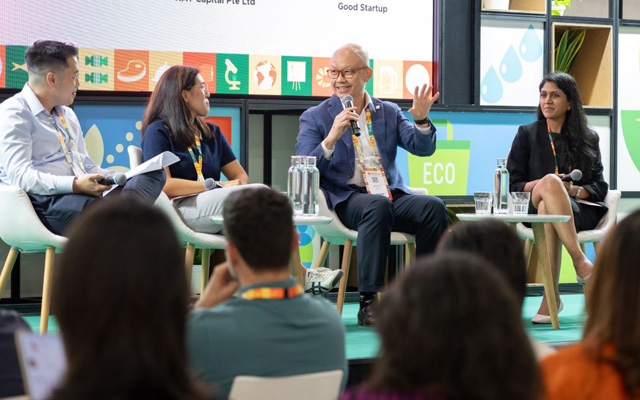
Leonie Ashford, member of the ICCA Board of Directors and special advisor – business events at Tourism New Zealand, leads the session, The Influence Agenda: Elevating national/global visibility through strategic advocacy and innovation at the Goyang Destination Week 2025

“That was a problem, which we corrected by adopting a destination management approach. Now, we work with our local partners – hotels, PCOs, DMCs, tourist facilities and all relevant players – to bring about positive economic, social and sustainability results,” Cho said.

Developing a portfolio of unique venues ready for business events is part of Jeju Tourism Organization’s destination management strategy, shared Cho, who explained that such venues allow event delegates to not only appreciate Jeju’s identity, culture and heritage, but also contribute to the city’s economy and sustainable growth.

“Now, we are inspired by New Zealand’s Tiaki Promise and have started to develop a similar Jeju Promise that is rooted in three things: conservation, co-existence and respect. We see the need for visitors and our tourism industry stakeholders to be committed to protecting destination Jeju. We are just at the beginning stage,” revealed Cho.

The Tiaki Promise states that New Zealand is precious, and everyone who lives and travels here has a responsibility to look after it.

Over in Thailand, Jittanun Techasarin, director, convention department, Thailand Convention & Exhibition Bureau, shared that her organisation recognised eight years ago the importance of grooming Thailand’s own convention community and home-grown business events.

A department was established to focus on “educating and supporting all local MICE industry stakeholders, to help them understand what the industry is about and the benefits business events will bring to their communities. The initial challenge we faced was having to explain that MICE was not just a part of tourism,” Jittanun said.

With consistent communications with the government to expose policymakers to a wide range of business events and the economic outcomes of international business events for Thailand, Jittanun said there is now strong support and understanding from officials and local people.

Fellow speaker, Lorraine Han, director, MICE Bureau, Daejeon Tourism Organization, echoed the crucial role CVBs play today in galvanising relevant stakeholders to work together to advance the local business events industry.

“The most important role of the CVB today is to attract events and visitors to the destination and grow the local community. That’s why South Korea has the Korea MICE Alliance, which is made up of organisations and companies that share the vision of the (national) CVB to lead the development of our industry,” said Han.

Tracking Penang Convention & Exhibition Bureau’s (PCEB) evolution through the years, CEO Ashwin Genasekeran said “it was no longer about the numbers today; we are moving towards contribution of meetings and events to our destination”.

Attention is paid to expanding Penang’s key industries through business events hosted in the Malaysian state. Genasekeran pointed out that his state houses more than 420 multinational companies as well as a free trade zone – this is an advantage PCEB brings to the marketplace when speaking to business event owners.

Besides highlighting the business value Penang offers to business event owners and their attendees, PCEB also lays the necessary groundwork to raise the success rate for Penang’s event bids. An example of this is PCEB’s work to establish a direct flight between India and Penang, so as to enable more Indian business events to be hosted in the destination.

“Indigo flies between Chennai and Penang with daily direct flights. We are a good six months down the road with this direct flight, and it is already flying with more than 85 per cent capacity,” he said, adding that PCEB supports Indigo with presence at the airline’s sales calls.

A recent six-city roadshow in India led by Indigo and attended by Penang’s event partners scored “so much business”, revealed Genasekeran.

Moderator Leonie Ashford, member of the ICCA Board of Directors and special advisor – business events at Tourism New Zealand, commented that CVBs today do not work in silos, and have to “keep communication and collaboration going” to achieve global visibility for the destination.

A city for everyone

0

When I last visited Goyang City in 2023, I learnt about the extent of ongoing developments in the city’s intellectual capital, medical, and digital technology industries. What is your vision for Goyang?
Goyang City has declared its transformation into an industrial-driven city. Recently on July 9, the city announced the G-nomics Five-Year Plan that is centred on innovation. This is more than just a policy; it is a promise of positive change for our citizens through fostering startups and unicorns, an expanded AI ecosystem, expanding cultural infrastructure, and supporting ecological developments.

This new direction will bring strong momentum to the business events industry’s advancement, as developments include the construction of KINTEX Exhibition Hall Three and a new hotel close by, ongoing development of K-Culture Valley, and the rise of the Goyang Sports Complex as a venue for large-scale performance events. They will provide the infrastructure needed to position Goyang as a hub that connects international conferences, cultural content and tourism.

At the same time, Goyang City’s focus on future mobility initiatives and AI-based smart city technologies will make event operations even more efficient, and improve the overall delegate experience. We have also been building a strong and efficient transport network that makes it easy for people to move within the city.

Eco-friendly urban policies and safe living infrastructure are important factors that inspire confidence in international participants.

You can see that our city is working towards two goals at once. A city where citizens are happy naturally becomes a city that is welcoming to visitors. This strengthens Goyang City’s global competitiveness and attracts international events.

I’d like you to know that BBC recently named Goyang City as one of the five outstanding cities that are making the world a better place (based on the 2024 Global Destination Sustainability Index or GDS-Index). That counts for something.

Does Goyang City attract many large-scale events that rely on the city’s sports facilities?
We have a wide range of sports facilities that host many large performances. Coldplay’s Music of the Spheres Would Tour concert was held in April at the Goyang Stadium, with 54,000 people in attendance. There have also been many K-pop concerts in Goyang as well, led by popular artists such as BlackPink, J-Hope and Jin from BTS.

English rock band Oasis will take its one-night-only concert in South Korea to Goyang Stadium on October 21.

You are both the city mayor and CEO of Goyang CVB. How do you as the mayor support Goyang CVB’s work in the business events industry?
As the city mayor, I am fully committed to supporting Goyang CVB both with policy and financial resources, so as to strengthen the city’s competitiveness in the global business events landscape. I also support Goyang CVB’s efforts to actively grow its international network through partnerships with overseas cities and global business events associations.

I will integrate Goyang CVB into the newly established Goyang International Expo Foundation in early October 2025. The purpose of the integration is to strengthen Goyang City’s business events industry. The bureau, formerly operating as an incorporated association, will merge with the Goyang Flower Exhibition Foundation, a public foundation that has successfully hosted the city’s signature Goyang Flower Exhibition for over 20 years.

​This organisational consolidation will also allow the Goyang Flower Exhibition to be elevated into a global expo while the city’s overall exhibition and convention competitiveness will be enhanced.

By leveraging KINTEX, South Korea’s largest exhibition and convention centre, as its central hub, Goyang City envisions this transition as a key milestone toward positioning itself as a leading global business events destination.

There is intense competition among destinations for major regional and international meetings and events. What more do you think Goyang City needs to do to be a more formidable competitor?
For Goyang City to stand out, it is important not only to focus on facilities, but also to create unique value that sets us apart. First, Goyang City needs to become a platform that connects knowledge with strong industry sectors through business events.

Second, we must strengthen the city’s sustainability and eco-friendly practices. International event organisers are placing greater importance on ESG values. Goyang City has an advantage here, as it is already positioning itself as a carbon-city for business events. It ranks 16th in the 2024 GDS-Index of the world’s 40 most sustainable cities.

Third, we should build global networks and nurture talents through cooperation with organisations like ICCA and by developing professional training programmes.

Finally, Goyang City is growing the business events industry with our citizens. When residents take pride and actively participate in business events, international business events can be even more successful here.

What are your thoughts on the annual Goyang Destination Week, and what do you hope overseas attendees had taken home from the conference sessions and activities last week?
Goyang Destination Week has been happening since 2017, and the intention is for it to let us explore together the future direction of growth for the business events industry.

This year’s theme focused on technology, personalisation, sustainability, return on investment, and other key issues shaping this industry. Attendees would have learnt from cases that showed how latest digital tools and smart solutions had optimised event operations and enhanced the delegate experience.

My hope is for Goyang Destination Week to go beyond simple information exchange; I want to see it build global networks, open new opportunities for cooperation, and provide insights that can be applied directly in the business event industry. And through this, we can continue to establish Goyang City as a growing business events hub in the Asia-Pacific region.

You must have attended several business events yourself. What is one event that stood out for you, and why?
Well, the most impressive business event that I have ever attended was the MWC Barcelona in Spain. It is an exhibition that brings together leaders in the high tech industry, who showcase their products and latest technology. This is very impressive for me, but I am also very much taken by the massive space of the venue, Fira Gran Via.

I hope that such a large-scale high tech event (109,000 attendees were reported at the 2025 show) will be held in KINTEX one day.

Well, your dream is possible since KINTEX is expanding with a third hall.
Yes, indeed. Actually, Goyang hosts a similar high tech event now – RAD Korea Week, which integrates five specialised exhibitions under one roof, expanding the exhibition platform and fostering innovation across advanced technology industries.

RAD Korea Week comprises RoboWorld, AI Show, Drone & Urban Air Mobility Expo, Digital Media Tech Show, and Digital Future Show.

This year’s edition is taking place in the later part of this year, from November 5 to 8, at KINTEX Exhibition Center I.

By uniting robotics, AI, drone and urban air mobility, and digital technology industries into a single comprehensive platform, RAD Korea Week 2025 will not only accelerate South Korea’s advanced technology innovation but also strengthen Goyang City’s position as a global hub for technology-driven exhibitions and business events.

I hope that one day this event would grow as large as the MWC Barcelona.

Shift to smart data analysis key to raising quality of business events

0

While quantitative data is more easily understood and welcomed by number-crunching decision-makers, the dean of School of Hospitality and Tourism, Sunway University has urged business events professionals to include more qualitative information in their data collection if they hoped to make informed decisions on improvements to events and business activations.

Dean Daniel Chong, who led a session at the ICCA Asia Pacific EvolvDestination Forum in Goyang, South Korea on August 21, highlighted “three awful truths” about data.

Chong says chasing smart data is a resource-heavy, but beneficial, exercise

First, quantity is not equal to quality. While researchers know that “voices” obtained through open-ended questions can provide “powerful” insights, few would collect them, as “certain business stakeholders prefer to see the numbers”.

Second, statistics are impressive and convey the impression of reliability.

“A survey that has collected 2,000 responses will influence people to think that a lot of work was done in the research, and results must therefore be reliable,” Chong explained.

Third, timing of the survey could jeopardise response accuracy. A survey administered at the closing party of a business event may extract more positive post-event feedback, while one calling for responses just as event attendees are about to leave may see higher rejections or rushed and inaccurate feedback.

Theses awful truths, in Chong’s opinion, underscore the greater advantage of collecting “smart data” to guide future events decisions.

Citing examples to differentiate traditional data from smart data, Chong said a question that elicits the former would be phrased: “Which sessions did you attend?” or “Rate how satisfied you are with the conference overall.”

In contrast, a smart data-focused question would read: “We noticed you attended three sessions and skipped two; why?” or “Which event moment was most memorable and why?”

Open-ended questions allow respondents to flesh out their opinions, providing researchers with “insights that are actionable” so that the right improvements can be made to the delegate journey for future events.

When asked what is stopping business event owners and organisers from shifting to smart data collection, Chong pointed to the lack of the right resources. He explained that the questionnaire design must enable the extraction of qualitative information and there must be capable interviewers to analyse responses on the spot and press respondents for more meaningful answers.

Chong acknowledged that chasing smart data is a resource-heavy exercise, and suggested that business event owners and organisers could start with quantitative data and review findings to identify areas they would want more in-depth feedback on.

He also advised business event owners and organisers to accept that good market intelligence comes at a price, and should consider incentivising their target audience to participate meaningfully in surveys and interviews.

Stepping stones

0

The Singapore Tourism Board (STB) has set an ambitious goal to triple the tourism receipts generated by business events by 2040, aiming for the sector to contribute around 10 per cent of its targeted S$47 billion (US$36.5 billion) to S$50 billion in overall tourism revenue.

To achieve this triple-fold goal, several initiatives to build Singapore’s future pipeline of business events are underway. This includes exploring the feasibility of a MICE Hub in the downtown area, and launching a new Business Events Inspired pilot programme.

Singapore skyline; photo by Richard Whitcombe/shutterstock

When asked about the difference between the MICE Hub, and venues such as Marina Bay Sands and Suntec City Convention Centre which already exist alongside lifestyle offerings, Ong Huey Hong, assistant chief executive, industry development group, STB, indicated that Singapore “needs to continue to look at expanding its MICE capacity”.

“We want to triple our MICE contribution to tourism receipts, so we definitely need to have the capacity. We have observed that MICE travellers do not just visit Singapore for a business event. They are also interested in bleisure offerings, such as F&B and lifestyle experiences, hence we are looking into the development of this MICE Hub,” added Ong.

Together with Singapore Association of Convention & Exhibition Organisers & Suppliers, STB will also be introducing a new Business Events Inspired pilot programme to catalyse and grow the pipeline of business events in Singapore. This will be officially launched at the Singapore MICE Forum this month (July), Ong told TTGmice.

A business event in Grand Hyatt Singapore’s ballroom

Under this pilot programme, event organisers will have access to mentorship, events consultancy services, and seed funding to develop quality events, with the goal of incubating them into impactful international events.

Edward Koh, STB’s executive director, conventions, meetings & incentive travel, told TTGmice at IMEX Frankfurt 2025, that Singapore’s events pipeline is “very busy” up till 2032.

This year, major business events in Singapore include the inaugural World Sleep Congress 2025; LSI Asia 2025, the first edition of this medtech conference in Asia; the World Robot Olympiad International Finals; and the 30th edition of SEMICON South-east Asia, with over 18,000 delegates expected.

Looking ahead, the city-state is set to host the Herbalife Extravaganza 2026 with an anticipated 25,000 arrivals; while Sibos 2027, a major banking and finance conference, is estimated to attract 7,000 delegates.

Several new tradeshows will also be launched next year. Among these is the Passenger Terminal Expo Asia 2026, marking its debut in the Asia-Pacific region and expected to draw 3,500 aviation leaders. German trade fair organiser Messe Berlin, with its Asia Pacific Headquarters in Singapore, will launch Smart Health Asia 2026, a new event aimed at health and tech executives focused on digital innovation in healthcare. Additionally, UK-based event organiser Hyve is bringing its first event to Singapore with Breakbulk Asia 2026, the world’s largest gathering for the project cargo and breakbulk industry, anticipating 3,500 attendees.

When asked about how Singapore’s business events industry is shaping up given global uncertainties, Koh stated: “Singapore’s image is still very strong. Our image is an image of trust, which is a currency in short supply these days, and appreciating. We’re also not changing our brand – our brand of connectivity, accessibility, and innovation – and are trying to deepen it, to provide planners with assurance.”

Wendy Teo, director of sales & marketing, Grand Hyatt Singapore, noted: “Singapore’s strengths as a MICE destination is that it is safe, predictable, and has a stable economy. Our challenge would probably be the higher costs of holding an event here. The reality is when an event planner chooses a different hotel or destination, it always boils down to costs.”

“Singapore remains one of the most desirable MICE destinations, but cost sensitivity is real – especially with the strong Singapore dollar. Organisers are increasingly comparing regional alternatives that offer compelling value,” Piotr Kupiec, general manager for Novotel and Mercure Singapore on Stevens, agreed.

But despite prince sensitivities, Kupiec highlighted STB’s Business Event in Singapore (BEiS) Build Foundation incentive scheme, which helps local stakeholders defray costs when pursuing business events leads.

“While discussions with STB are still exploratory, we are proactively looking at how we can align with the BEiS Build Foundation scheme, particularly in the areas of digitalisation, experiential fam trips, and high-impact programming for emerging industries,” he shared.

Improving Orchard Road’s visibility is a priority for Teo. She explained: “The Marina Bay area usually gets more attention due to the large-scale events it regularly hosts, thanks to the Bay Precinct Strategy. On our end, we need to change the perception that Orchard Road is just for shopping. Many hotels along Orchard Road also offer great meeting facilities, and the best part is that delegates can go out for a good meal, or some retail therapy to wind down.”

Overall, Teo remains “cautiously optimistic” about the hotel’s business events prospects, given that it only reopened a year ago after an extensive refurbishment. While many loyal clients have returned, global uncertainties continue to prompt a “wait-and-see approach”.

For Kupiec, demand remains strong among sectors like FinTech, GreenTech, and Health & Wellness for the rest of 2025.

“If we are losing events in one direction, I would be very concerned. But the industry is very dynamic, and we win some, we lose some. Singapore continues to win a lot of events because (planners) see the value (in holding an event here),” Koh concluded.

IVENDO to boost events industry with IP events and certifications

0
Irvan: accelerate adapt and scale events to suit diverse markets

The Indonesian Event Industry Council (IVENDO) is working towards uplifting the country’s events sector by focusing on creating proprietary event intellectual properties (IP), and expanding workforce certification programmes to strengthen industry professionalism.

Speaking at his inauguration as the 2025-2029 IVENDO chairman in Jakarta recently, Irvan Mahidin Sukamto opined that IP driven strategy would give IVENDO greater control over event content, reduce reliance on government-backed opportunities, and facilitate expansion into international markets.

Irvan: accelerate adapt and scale events to suit diverse markets

He explained: “We believe homegrown IP events can be a catalyst for sustainable growth. By owning the format, we can adapt content for different markets and showcase Indonesia’s creative capacity to the world.”

Moreover, IVENDO will pilot scalable, market-ready event concepts that combine local cultural insights with flexibility for international replication. Each prototype is more than just a fully developed event. It is a way to put Indonesia’s event industries on the map, and bring in investors, government backing, and international partners.

Following this, IVENDO will organise focused group discussions within regional chapters to identify the most promising prototype events that can be scaled commercially and licensed internationally.

“We encourage our regional branches to develop their own IPs rooted in local wisdom, opening new opportunities across Indonesia’s diverse provinces,” Irvan added.

While building homegrown IP is core, Ivendo is also eyeing international expansion, starting with South-east Asia, before branching out to Australia and Europe.

Prior to Irvan’s appointment, some IVENDO members had already begun testing international waters, including organising a concert in Sabah, Malaysia.

Alongside event development, IVENDO is prioritising the professionalisation of its workforce. Over the next four years, the council will offer 500 free certifications in roles like event planning, logistics, marketing communications, and management.

“Raising the standard for our workforce is key if we want to compete and collaborate globally. Certification helps ensure our talents meet international standards, lifting the whole industry,” he said.

The programme also aims to tackle regional skill gaps and uneven access to training, striving to level the playing field and promote inclusive growth.

“Great events alone are not enough. Skilled professionals are the backbone to meet the world’s demands,” Irvan added.

Te Pae Christchurch’s busiest season boosts local economy

0
Te Pae Christchurch

Te Pae Christchurch Convention Centre is helping to combat the usual winter tourism slump by attracting thousands of visitors and generating millions in economic impact for the city.

The centre is currently in the middle of its busiest season since opening in May 2022. Over the four months to November 2025, more than 32,000 visitors are expected to attend over 80 events, with an estimated economic impact of over NZ$43.8 million (US$25.4 million).

Te Pae Christchurch

General manager Ross Steele highlighted the value of the venue in balancing out seasonal fluctuations in the tourism industry.

“The colder months, which are typically the shoulder seasons for leisure tourism, are extremely popular for conference organisers,” said Steele. “This provides a major opportunity to boost visitation year-round.”

Over the next four months, the event schedule includes 36 multi-day conferences, six of which are major international events. These conferences are expected to generate approximately 50,000 hotel nights in Christchurch alone.

“The positive impact is not just confined to Christchurch, with the wider South Island in particular expecting a surge in activity generated from the conference programme,” said Ross.

“For example, from the six major international conferences planned, we know delegates are planning to tie in pre- and post-event touring, often with friends and family, into their itinerary. Overall, visitation for conferences during the period is expected to contribute more than 20,000 guest nights to New Zealand’s accommodation sector outside of Christchurch.”

Marriott invests in Singapore’s MICE sector with upgrades, new property

0
Montal providing updates from Marriott International to media; photo by Rachel AJ Lee

Marriott International has reiterated its commitment to Singapore’s goal of tripling business events tourism receipts by 2040 during a recent media briefing.

The hospitality giant currently has 14 brands in Singapore today featuring a combined 15,377m2 of event space, where in 2024, business events comprised nine per cent of Marriott’s revenue in Singapore.

Montal providing updates from Marriott International to media; photo by Rachel AJ Lee

“Business events are extremely important for us. For the first six months of 2025, business events made up 9.5 of our revenue in Singapore, an increase of 0.5 per cent (over 2024). We are very encouraged by this (figure),” Oriol Montal, regional vice president, luxury, Asia Pacific excluding China, Marriott International, shared.

He added that key inbound source markets for business events were US, Singapore, China, India, and South Korea.

“We believe that every event is different, and our diverse portfolio in different locations around Singapore will help us cater to any event, whatever the need is,” added Montal.

One way that Marriott International is contributing is through the upgrading of properties such as the St. Regis Singapore and W Singapore – Sentosa Cove.

By end 2025, St. Regis Singapore will complete the transformation of its 299 guestrooms, restaurants, bar, spa, and meeting spaces. Several major upgrades, the hotel’s general manager Nick Heath shared, was “installation of filtered potable water taps in all rooms”, and the renovation of the John Jacob Ballroom.

The revamped John Jacob Ballroom now boasts ornamental motifs reminiscent of trailing vines, and the pillarless space can host 400 guests for a formal dinner or 500 in theatre-style. The naturally-lit venue has also been outfitted with two high-resolution LED walls measuring 9.6m by 5.3m, promising captivating visual displays. Ten intelligent lighting systems allow for seamless mood curation, while a state-of-the-art sound system ensures absolute clarity.

Five additional meeting rooms on Level 1 will also debut in October 2025.

Heath added: “Singapore’s strategic geographical location within Asia Pacific, and the city’s established reputation for safety, cleanliness and efficiency, make it a top choice for event planners.”

Over in Sentosa, W Singapore – Sentosa Cove’s guestrooms, spa, restaurants, and meeting venues, are also undergoing revitalisation, which will be completed by early 2026. Its signature Great Room features a striking 14 x 5-metre LED wall and connects to an adjoining foyer and outdoor terrace, while naturally-lit, pillarless meeting rooms overlook tropical gardens. The 500m2 W Lawn also offers an open-air venue for al fresco celebrations.

Christian Metzner, the hotel’s general manager, shared: “The rooms have undergone a complete transformation and now offers a more island feel with a marina design narrative. There’s also going to be a water filter in every room, as well as the largest solar panel system on any hotel roof in Singapore.”

Montal also highlighted the brand debut of The Luxury Collection, making it Marriott’s 15th brand in Singapore.

Part of Resorts World Sentosa, the five-storey The Laurus – A Luxury Collection Resort will feature 183 suites. The property will also have a dedicated events venue, good for 180 guests for dinner or 250 in a theatre-style arrangement, and boast easy access to Resorts World Convention Centre.

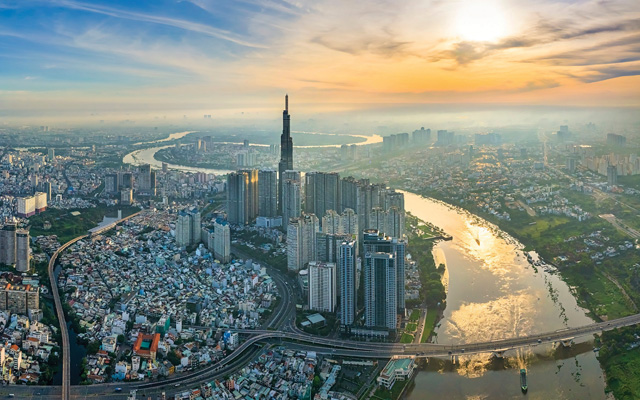
ITE HCMC 2025 to propel Vietnam’s sustainable tourism

0
The event aims to promote Vietnam's tourism and foster international cooperation across Asia

The 19th Ho Chi Minh City International Travel Expo (ITE HCMC 2025) will take place from September 4 to 6, 2025, at the Saigon Exhibition and Convention Center.

With the theme Sustainable Tourism – Vibrant Experiences, ITE HCMC 2025 will focus on eco-friendly travel and cultural preservation. The expo will showcase products that cater to international travellers looking for sustainable and immersive journeys.

The event aims to promote Vietnam’s tourism and foster international cooperation across Asia

ITE HCMC is the only tourism expo in Vietnam with an International Buyers Program. This year, it expects to host over 240 buyers from more than 32 countries. As of August 8, 2025, over 250 companies and brands have confirmed their attendance.

For the first time, ITE HCMC will host major business travel companies like FCM Travel and American Express Global Business Travel, highlighting Ho Chi Minh City’s growing role as a hub for business tourism.

The event will also include B2B meetings and fam trips to key destinations for international buyers. These trips are designed to help buyers experience Vietnam’s tourism firsthand, from exploring Ho Tram to Con Dao.

ITE HCMC 2025 is organized by the Ministry of Culture, Sports and Tourism and the Ho Chi Minh City People’s Committee, in collaboration with the Vietnam National Authority of Tourism and the Ho Chi Minh City Department of Tourism.

Amari Bangkok releases exclusive MICE benefits

0
Amari Bangkok can also offer guests a sustainable EV Tuk Tuk experience

Amari Bangkok is providing exclusive benefits for corporate events and meetings, with offers valid through March 31, 2026.

The accommodation package includes a complimentary room for every 20 paid rooms and a free room with breakfast for the event organizer. Attendees will receive a branded welcome drink, and the group can enjoy private check-in, as well as early check-in and late check-out based on availability.

Amari Bangkok can also offer guests a sustainable EV Tuk Tuk experience

For meetings, the package includes a complimentary secretariat room, an upgraded sustainable meeting package, and free-flow coffee and tea. Additionally, corkage fees are waived, and groups can enjoy a 20 per cent discount on spa treatments and a 15 per cent discount on F&B.

Room rates start at THB 4,500 (US$138) nett per night, including breakfast.

With 564 rooms, Amari Bangkok features over 3,000m2 of event space across 18 meeting rooms. The largest, the Watergate Ballroom, can host up to 1,000 guests. Outdoor spaces are also available for smaller events of up to 300 people.

Reviews

Hyatt Regency Kuala Lumpur at KL Midtown

A polished urban retreat designed for business travellers, Hyatt Regency Kuala Lumpur at KL Midtown combines thoughtful design, seamless service, and exceptional facilities.

A versatile powerhouse

Arena @ Expo, a multipurpose concert hall at the Singapore Expo is a flexible space for high octane concerts and lifestyle events.

Amari Bangkok

The five-star property excels in backing its expansive facilities with seamless service and personalised attention, setting the benchmark for luxury in Bangkok.