 If the liberation of Asia for travel was the main theme for 2022, what would the theme for 2023 likely be?
I see three elements that will define the travel landscape for 2023.
First, the nature of travel is more defined now – it has become more purposeful.
People back on the road first are those that are the front-end revenue drivers, who manage customer relationships and drive sales through networking at conferences.
In fact, a study by Deloitte last year found that the number one reason for business travel was specifically for networking.
We are also witnessing permanent structural change in how people travel for internal purposes, like staff meetings and training. I don’t think these trips are ever going to return for a couple for reasons – there has been a clear acknowledgment that virtual meeting technology is good enough for such purposes, and corporates won’t want to travel as much now that they are also balancing sustainability objectives.
Corporates have to decide what are the trips that deliver the most value for them and how to do more of that, while taking advantage of savings from reduced internal travel.
Two, there is an intense rise in sustainability objectives. In every corporate RFP, there are questions on what CWT can do to help them meet their sustainability objectives, types of analytical capability and sustainability reporting we offer, whether our travel counsellors and electronic point-of-sales tools have the capability to display carbon footprint implications so that travellers make better decisions, etc.
Sustainability used to be lip-service pre-pandemic, but it is now a true priority.
Three, there is a strong focus on diversity, equity, and inclusion (DEI). To what degree do we, as a travel community, contribute to very broad DEI goals? This is also in every RFP we get now – what are our policies around DEI; what are we doing to hire and promote a more diverse workforce; what are we doing to provide a psychologically safe environment for our communities; and what degree do our tools contribute to their DEI objectives.
AT CWT, our profile tools now include gender-neutrality options. We provide guidance to travel counsellors who speak to real people on the other end of the phone, to ensure they capture the right pronouns, for instance. We are also working with our partners to ensure that our LGBTQ+ travellers are alerted to risk factors in specific destinations (destinations that are more sensitive to LGBTQ+ individuals).
Travel ROI was already attracting scrutiny pre-pandemic. But what does the current, even more intense scrutiny mean for travel suppliers, like CWT, that need business to return?
Hey, our cash register rings every time a customer makes a trip. So, you’d think that we would want to promote more trips, yes?
I think there are plenty of opportunities for the travel ecosystem to thrive even if people are not travelling as much now and going forward.
CWT promotes a business model that states a certain amount of revenue that is associated with trips, but also a certain amount of revenue that is associated with the consulting and intelligence that we bring to the table.
The value that we create is less about the booking or transaction. We don’t just facilitate a trip. We help to craft travel policy, identify additional opportunities for corporate savings, etc.
So, I am a lot less concerned about the economics of what that (reduced travel) looks like for us.
In terms of impact on the supply chain, well, we now have a smaller supply chain. Most airlines have reduced their capacity since 2019, and yet they are enjoying some of the highest prices ever.
Furthermore, Covid has created a massive surge in leisure travel. There is pent-up demand for corporate travel but leisure travel tops that and the return of the Chinese outbound market now will (only drive even more leisure travel volume).
Will the move towards more sustainable and purposeful travel objectives shrink the travel industry? No, I don’t think that will ever happen.
You spoke of delivering value that is less defined by the number of transactions. Is that why CWT has started a shift towards a subscription fee model?
The legacy transaction-based fee structure in this industry has existed far too long. Other industries have evolved their pricing model, and the subscription pricing is a very mature model in the software-as-a-service world.
We get consistent feedback from customers that our pricing schedule is very complex. There is an extra fee for every little thing we do for the customer.
We know we can change this. Simplicity is just one objective; we also want to achieve predictability for the customer.
(With the subscription model) we can agree with customers that they would do this much of travel volume over a period and provide them with a bundle. We would review the exchange and make changes on the fly. This will allow customers to do their own budgeting and reduce a massive amount of administration, especially for global corporates that have to reconcile all the different fees and currencies.
We are now bringing this model to the market. We don’t just change en masse. Customers still have a choice. The adoption rate is probably under 20 per cent across the world right now, because few customers want a pricing or procurement change mid-contract. Together, we will evaluate if the subscription model makes sense for each client at renewal.
The subscription model is gaining traction here in Asia-Pacific. In March, we announced that Chinese biopharmaceutical company Antengene Corporation became the first customer in this region to adopt our subscription model.
We are in 2Q now. Air capacity is returning but airfares in Asia continue to stay higher than pre-pandemic times, unlike what we’ve been told to expect. How is this affecting earlier projections for business travel and events?
We had a lot of conversations about this in 4Q2022, when people were preparing their travel budgets for the New Year.
At that time, there was a clear dampening of demand compared to the massive growth seen in the first three quarters of the year. We think a lot of that had to do with the realisation that travel was still really expensive as corporates neared the end of their budget.
Corporates cannot control prices, but they can control the type and frequency of trips they make. Corporates will implement stricter oversight procedures to ensure that approved trips are the ones that deliver the greatest value.
In this regard, we are seeing a decline in one-day trips. At the same time, trips are getting longer and a little more complex. Trips were no longer point-to-point but covering a few more cities for greater productivity. This is called trip-batching.
Trip-batching is a trend that appears to have gained momentum during the pandemic. Complicated and expensive Covid testing and quarantine requirements prompted travellers to visit multiple cities in one go to make the trip worth the cost and hassle.
CWT’s booking data showed that in 2019, there was an almost even split between simple, point-to-point trips and itineraries with multiple stops – but, in 2021, more than two-thirds of business trips were multi-destination. While the proportion of multi-city trips dropped to 56 per cent in 2022 as travel restrictions have been lifted, it still remained above pre-pandemic levels.
As a result of trip-batching, the length of hotel stay has gone up – from an average of 2.3 days in 2021 to over three days now.
Cutting out one-day trip and the practice of trip-batching seem to be the answer to corporates’ desire for more responsible travel.
From both a sustainability standpoint and an ROI standpoint, it is clear that one-day trips had to go.
With sustainability becoming a bigger priority, there’s a good chance we will continue to see more multi-destination trips than we did pre-pandemic. The idea of carbon budgets, similar to spend budgets, is gaining traction. So, a traveller based in New York who is planning meetings in London, Paris and Amsterdam, and who now has to be very judicious with his carbon emissions, may look to combine those meetings into a single trip and do some of that travel by train or car, instead of flying back and forth.
With trip productivity being so critical, are you seeing the trend of blended travel staying strong?
Yes, more now than pre-pandemic. More and more corporates are trying to assess better ways to manage blended travel and to use it to attract and retain talent.
The dispersed workforce has a lot to do with the rise in blended travel. There are so many corporates that have developed flexibility around where one works. It is common for one to be working in a certain city this week or month, and another the next. That lends to blended travel opportunities for the employee.
It is interesting to see that the dispersed workforce has an even bigger impact on events. What do corporates look to do post-lockdown? They want to energise their team, and are bringing their people together through events.
The dispersed workforce is also creating the rise of small meetings. Corporates are seeing the need to co-locate a small group of staff that are based in different places for a short period of time to accelerate productivity on a specific project. The groups are small, perhaps four or five people, and for a day or two.
We anticipate such demand to spike, and are creating technology within the MyCWT platform to allow customers to not only book their trip but also a meeting room and F&B package at the hotel for small events with no more than 10 people.



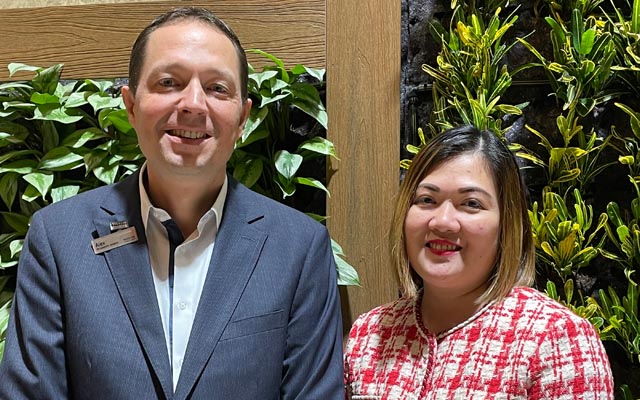


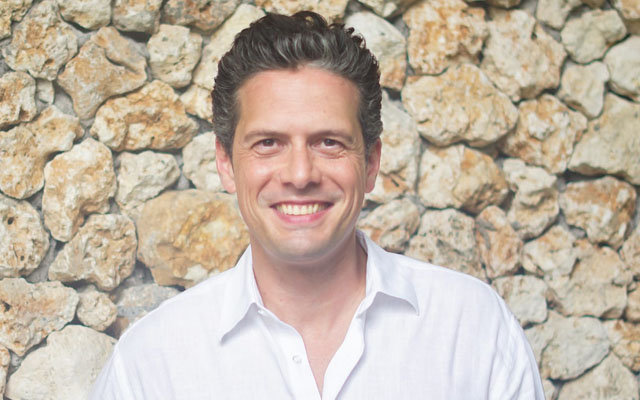
 In his new role, he will oversee the operations of both properties, comprising a total of 512 rooms, seven restaurants and nine meeting rooms.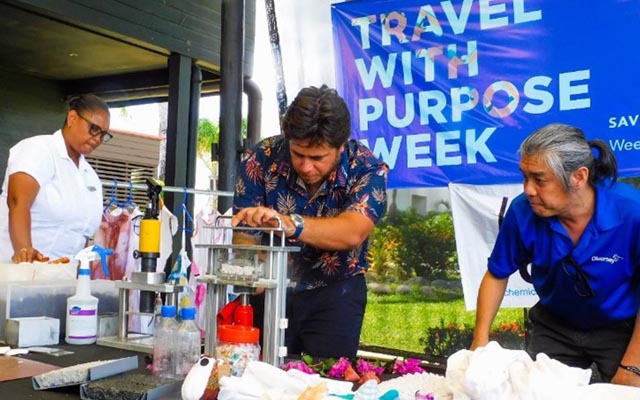

 Applications can be submitted until May 5, 2023 at 17.00 (Indochina time).




Event brief
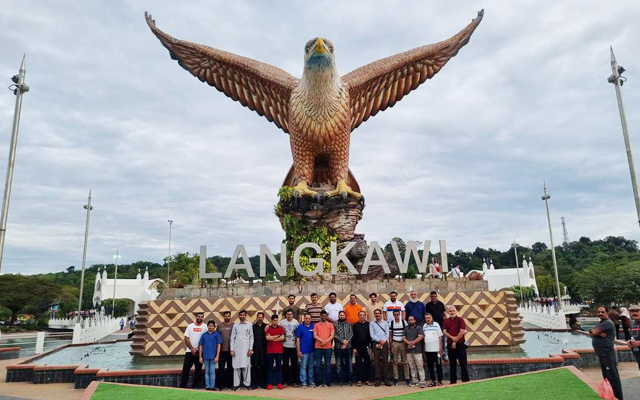
Kuala Lumpur-based DMC, Universal Holidays Travel and Tourism, planned and executed an incentive travel programme to Langkawi and Kuala Lumpur for 250 qualifiers of a manufacturing company from Pakistan. The trip, held from January 26 to February 2, coincided with the Chinese New Year festive season in Malaysia, which also happened to be a peak travel season for both domestic and international travel.
Event highlights
Delegates connected at Kuala Lumpur International Airport Terminal 1 on a domestic flight to Langkawi. There, they spent three days, enjoying nature-based attractions such as a private guided tour of the mangroves and a cable car ride from the foothill of the Machinchang mountain to the Top Station, 708m above sea level.
On their third day, delegates participated in water sports on Chenang Beach. A private session was arranged with local operators so that delegates could enjoy parasailing and riding a jet ski.
Zahira Tahir, founder and CEO, Universal Holidays Travel and Tourism, said for many delegates, it was their first time parasailing or jet skiing.
Universal Holidays erected a marquee on the public beach where delegates could rest and hide from the blazing sun.
Next stop, Kuala Lumpur, where delegates visited the KL Tower Observation Deck for an aerial view of the city and surroundings, and the famous Petronas Twin Towers. They also went on a city tour and spent half a day enjoying the rides and thrills at Sunway Lagoon Theme Park.
One of the activity highlights was a private race at Sepang International Go-Kart circuit. It was the attraction’s first private race for an international corporate group. The full-day event included prize presentation and an on-site lunch.
As a grand finale, the group was hosted to a gala dinner with live musical performances at JW Marriott Hotel Kuala Lumpur a day prior to departure.
Challenges
Securing seats for 250 people to fly from Kuala Lumpur to Langkawi during the domestic travel peak season was a challenge. The group had to be split up, flying on three different airlines.
Sourcing for restaurants in Langkawi large enough to accommodate everyone was another challenge. Options were further limited as some of the large restaurants were closed for holidays, while others in operation had manpower constraints.
Universal Holidays eventually persuaded a few large restaurants to reopen just for the group. This came at a higher cost, as the restaurants had to pay extra for labour.
Zahira recalled that restaurants in Langkawi also relied on the mainland for vegetables, meat and even canned drinks in large quantities. She shared: “At the last minute, I wanted to change a chicken dish to mutton, but the restaurant manager said this could not be done as they would need more time to source for the meat from mainland Kedah.”
Event Incentive travel for a manufacturing company from Karachi
Organiser Universal Holidays Travel and Tourism
Destinations Langkawi and Kuala Lumpur
Dates January 26 to February 2
Attendance 250