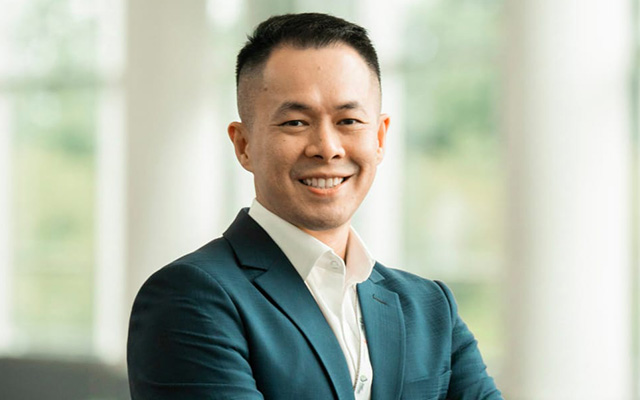
Business Events Sarawak (BESarawak) has announced the appointment of Jason Tan Chin Foo as acting CEO, effective immediately.
The transition follows the departure of long-standing CEO Amelia Roziman, who stepped down on January 31, 2026, after a 20-year tenure to join a global advisory firm.
A veteran of the organisation since 2012, Tan brings 18 years of experience in hospitality and business events. He has held senior leadership roles across business development, research, marketing, and communications, building deep institutional knowledge and trusted industry relationships.
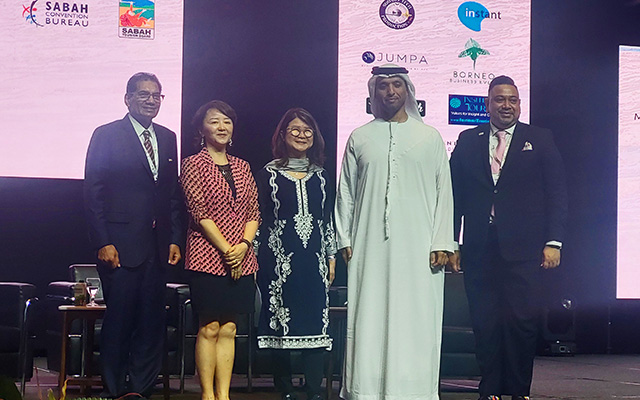
MACEOS’ M Gandhi; Informa Markets Asia’s Margaret Ma Connolly; ICCA’s Waikin Wong (moderator); Abu Dhabi Convention and Exhibition Bureau’s Mubarak Hamad Al Shamsi; and Penang Convention & Exhibition Bureau’s Ashwin Gunasekeran
Strategic collaboration across destinations, governments and industry players are critical to sustaining long-term growth in the global business events sector, as rising costs squeeze margins and force a rethink of how events are planned and delivered.
This was highlighted by speakers at the plenary session entitled The Global Growth Engine: Powering Trade, Investment and Confidence through Business Events at the 3rd International Business Events Forum – BE in Sabah 2026.
MACEOS’ M Gandhi; Informa Markets Asia’s Margaret Ma Connolly; ICCA’s Waikin Wong (moderator); Abu Dhabi Convention and Exhibition Bureau’s Mubarak Hamad Al Shamsi; and Penang Convention & Exhibition Bureau’s Ashwin Gunasekeran
One of the panellists, Margaret Ma Connolly, president and CEO of Informa Markets Asia, said: “From an organiser’s perspective, partnerships must be built around customer value rather than rivalry. For successful B2B events to really thrive, we need to strategically collaborate. Collaboration is not only between organiser and venue, but also with city governments and the entire value chain.”
Another panellist, M Gandhi, president, Malaysian Association of Convention and Exhibition Organisers & Suppliers (MACEOS), emphasised the importance of associations as platforms for collective advocacy.
He stated: “Competitors come together and become members of an association because when we operate individually, we compete for market share, but together we protect and grow the market.”
Using South-east Asia as a primary example, Gandhi stressed that collaboration among small and mid-sized economies is a necessity rather than an option. He noted that while individual markets may lack the standalone scale to attract major global business events, regional cooperation can amplify their collective appeal and competitive edge.
He likened South-east Asia to “many 7-Elevens coming together to form a viable market”, explaining that while a single outlet may be too small to generate meaningful impact, the combined network creates scale, reach and relevance.
Meanwhile, Mubarak Hamad Al Shamsi, director of Abu Dhabi Convention and Exhibition Bureau, said destinations must focus on long-term strategic and legacy impact rather than short-term gains.
He said: “It’s really important for us as destinations to see the real impact and real value of business events, and this can only be delivered through collaboration between government and the private sector.”
Mubarak cited Abu Dhabi Finance Week as an example of how business events can drive long-term economic impact beyond delegate numbers.
Launched in 2022 with around 2,000 participants, the event has since grown to attract approximately 25,000 delegates, evolving into a key platform for global financial services institutions, fintech players and international investors.
This event helped to create channels for engagement between international companies, government bodies and regulators, encouraging several organisations to establish or relocate regional headquarters to Abu Dhabi, said Al Shamsi.
Ashwin Gunasekeran, CEO of Penang Convention & Exhibition Bureau, indicated that true collaboration requires destinations to engage industries as long-term partners rather than passive beneficiaries of support.
“When we move beyond simply supporting industries to collaborating with them, it becomes investment-driven”, Gunasekeran said, noting that this approach allows business events to play a more direct role in strengthening priority sectors in the destination, while delivering broader economic returns for the destination.
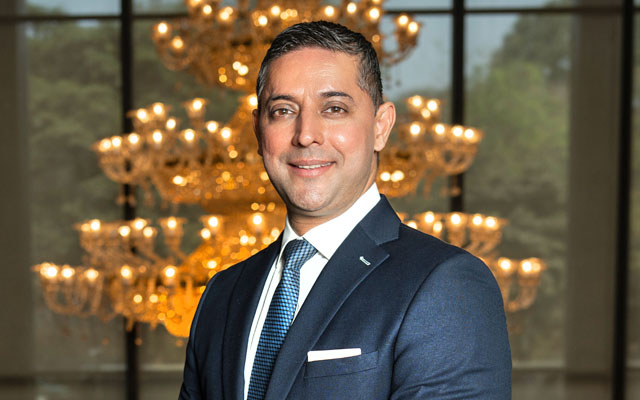
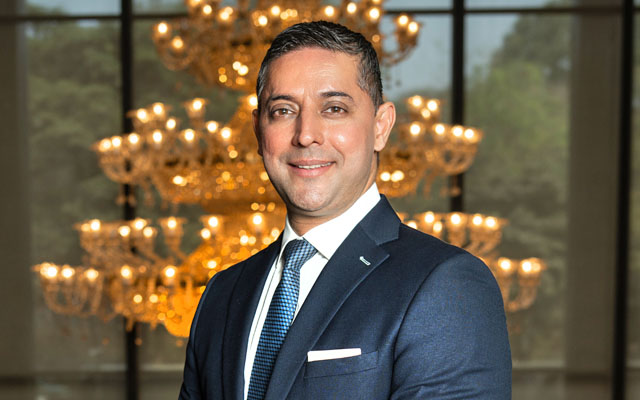
The Ritz-Carlton, Pune appoints Ishwinder Gill as its new general manager. He joins from W Goa, where he also served in the same role.
With over two decades of global hospitality experience, Gill previously served as chief operating officer at Far East Hospitality, overseeing 26 hotels across Singapore, Malaysia, Japan, and Australia, and leading the development of several acclaimed upscale and luxury brands.
An extension will help to shield maturing exhibitions; Hong Kong skyline pictured
With the government’s Incentive Scheme for Recurrent Exhibitions (ISRE) 2.0 set to expire in June 2026, the industry is urging a further extension to navigate a challenging business environment.
Originally announced in the 2024 Policy Address, an additional HK$500 million (US$64 million) was allocated to ISRE 2.0 to attract large-scale international exhibitions.
An extension will help to shield maturing exhibitions; Hong Kong skyline pictured
Exhibition Group’s chairman Carl Wong warned that discontinuing the programme would have an immediate impact, as the market is not yet strong enough to absorb the loss of support.
“For organisers, the financial viability of certain shows will be compromised,” he explained, adding that while public exhibitions are thriving, B2B trade exhibitions face headwinds from geopolitical tensions and economic instability, requiring more resources to remain competitive.
Wong explained that new shows typically take three years to become self-sustaining, hence cutting funding now would jeopardise events just reaching that maturity, suggesting that the ISRE 2.0 be extended for one more year.
In a letter to Hong Kong’s financial secretary Paul Chan ahead of next month’s Budget Speech, the Hong Kong Exhibition & Convention Industry Association (HKECIA) requested an extension of the ISRE, calling for a further HK$500 million to match last year’s investment.
HKECIA Chairman Stuart Bailey highlighted the scheme’s success in the letter, noting that 32 large-scale exhibitions and many major conventions have launched during this period. He also cited an Oxford Economics Group study revealing that the sector supports over 77,000 full-time jobs, underscoring the vital need for continued investment to protect these livelihoods.
Meanwhile, managing director of exhibition organiser Market Hubs, Lierence Li, believes the scheme’s expiration could force growing exhibitions to “go backwards”.
Using the Hong Kong Toycar Salon (Hktoycar) as an example, he noted that transitioning from smaller venues to Tier 1 venues like HKCEC involves exponential cost increases.
“The government subsidy acted as a vital buffer,” Li said, explaining that without it, Hktoycar 2026 will remain at the Hopewell Hotel rather than expanding to a Tier 1 venue.
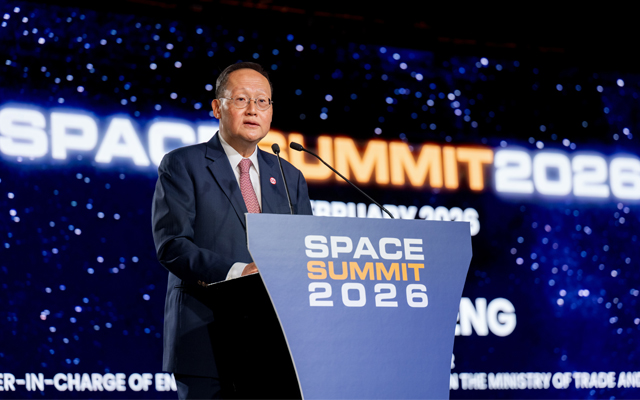
Singapore’s minister for manpower Tan See Leng speaking at the Space Summit 2026
The inaugural Space Summit 2026 concluded at the Sands Expo and Convention Centre, successfully convening over 1,500 attendees and 300 organisations to address the growing interdependence of the global space ecosystem.
The two-day event, themed “New Frontiers: Shaping a Responsible and Inclusive Space Future”, featured representatives from 20 international space agencies and more than 60 speakers who discussed critical issues such as orbital safety, satellite infrastructure, and climate resilience.
Organised by Experia in partnership with the Office for Space Technology & Industry (OSTIn), the summit served as a neutral platform for aligning policy, technology, and talent across the aviation, aerospace, and space sectors.
Singapore’s minister for manpower Tan See Leng speaking at the Space Summit 2026
A landmark development from the summit was the announcement by Tan See Leng, minister for manpower and minister-in-charge of energy and science & technology at the Ministry of Trade and Industry, regarding the upcoming establishment of the National Space Agency of Singapore (NSAS).
Scheduled to launch on April 1, 2026, under the Ministry of Trade and Industry, the NSAS will spearhead Singapore’s efforts to capture a share of the global space economy, which is projected to reach US$1.8 trillion by 2035. The agency is set to assume the current functions of OSTIn while adding new mandates to develop national space capabilities and draft pro-innovation regulations.
Ngiam Le Na, formerly deputy CEO at DSO National Laboratories, was named chief executive (designate) of the NSAS during the event. Her appointment follows her extensive experience in delivering technological solutions for Singapore, including the acquisition and development of Earth Observation satellites.
The summit closed with a focus on regional development in South-east Asia and the long-term sustainability of the in-space economy, reinforcing Singapore’s role as a key node for the global space community.
Language access has become a baseline requirement for all regional business events
For years, multilingual support at events in the Asia-Pacific region (APAC) was treated as a premium add-on, something reserved for major international conferences or high-profile keynote sessions. Today, that mindset is rapidly becoming outdated.
In 2026, multilingual communication across the region is becoming part of the everyday fabric of business events. From internal town halls and training sessions to exhibitions, incentives, association congresses and hybrid conferences, language access is no longer viewed as a technical add-on. Instead, it is increasingly tied to audience experience, delegate engagement and participation outcomes, and is fast becoming a baseline expectation for event organisers working across diverse APAC markets.
Language access has become a baseline requirement for all regional business events
This shift reflects a broader change in how organisations operate. Workforces across APAC are more distributed, more cross-border and more hybrid than ever before. English may still function as a common business language, but relying on a single language often limits engagement, confidence and contribution, particularly in internal meetings and knowledge-sharing environments where participation really matters.
Recent research commissioned by Interprefy highlights the scale of this change. In APAC, 71 per cent of event organisers report strong demand for multilingual support, and internal business meetings are among the fastest-growing use cases for live translation and interpretation. At the same time, frustration levels are high when language access is missing: more than nine in 10 APAC professionals report feeling frustrated when they cannot fully participate in an event due to language gaps or communication barriers.
What’s changing is not just where multilingual services are used, but how. Instead of being planned on a one-off basis, language access is increasingly embedded into meeting design from the outset. Organisers are adopting plan-based approaches that allow multilingual support to be deployed consistently across recurring meetings, training programmes and event portfolios, without having to start from scratch each time.
AI-enabled language solutions are playing a major role in making this possible. Advances in live speech translation and AI-powered captions have dramatically reduced the cost and logistical complexity of providing multilingual access at scale. This has opened the door for organisers to support more languages, more sessions and more formats, including smaller meetings and breakouts that were previously excluded.
However, inclusivity is not just about scale. Language is nuanced, contextual and deeply human. That’s why the future of multilingual events is not an “AI versus human” debate, but a hybrid one. In practice, we are seeing organisers combine AI-powered live translation for broad accessibility with professional interpreters for high-stakes, nuanced or culturally sensitive sessions. This flexible model allows events to be both inclusive and precise.
In APAC, this matters across industries; from technology and finance to education, healthcare and government. As organisations expand regionally and globally, multilingual access supports not only understanding but also equity. It enables participants to engage in their own language, ask questions with confidence and contribute meaningfully to discussions and decisions.
Accessibility expectations are also rising beyond language alone. Live captions, subtitles and searchable multilingual content are increasingly valued by diverse audiences, including people who are hard of hearing, as well as attendees joining remotely or in noisy environments. AI-powered solutions make it possible to deliver these features consistently, without placing additional strain on event teams.
Looking ahead, the events industry in APAC is reaching a clear inflection point. Multilingual communication is no longer a specialist consideration or a discretionary upgrade; it is becoming a core component of standard event delivery.
For event organisers, this shift presents a clear opportunity: to engage more diverse audiences, unlock greater participation and extend the long-term value and reach of their events across borders. Ultimately, access to language is access to opportunity. And as expectations continue to rise in 2026 and beyond, inclusion is no longer optional.
Oddmund Braaten is the CEO of Interprefy. Previously the chief operating officer and a board member, Braaten has been leading Interprefy’s commercial and operational success for five years.
Amari Bangkok has launched a “Plan your MICE” offer following its recognition as one of the top five ASEAN MICE venues at the 2026 ASEAN Tourism Standards Awards.
Valid through October 31, 2026, accommodation rates start at 3,800++ baht (US$120.30), featuring one complimentary room and one upgrade for every 20 paid rooms, plus a dedicated room for the organiser. The package includes private group check-in, branded welcome drinks, and a traditional long-drum ceremony for groups exceeding 300 guests.
Chitralada meeting room at Amari Bangkok
Meeting packages are priced from 1,650++ baht for full-day and 1,450++ baht for half-day sessions. Benefits include a 40 per cent discount on room rentals, a complimentary secretariat room, waived corkage fees, and free-flow tea and coffee. Delegates also receive 20 per cent off at Breeze Spa, and 15 per cent off dining across the hotel’s six F&B venues.
The 564-key property offers 2,667m2 of event space, including a pillarless ballroom for 1,000 guests and 15 breakout rooms.
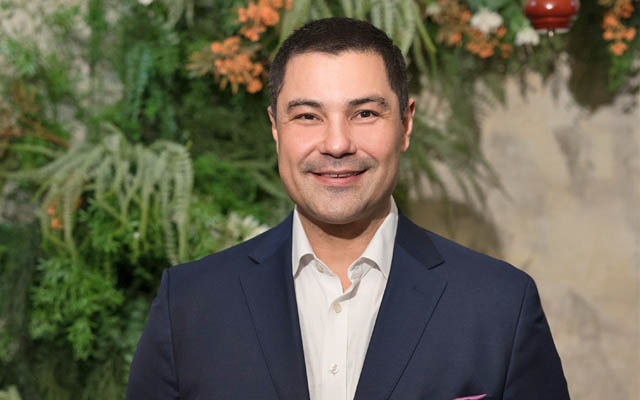
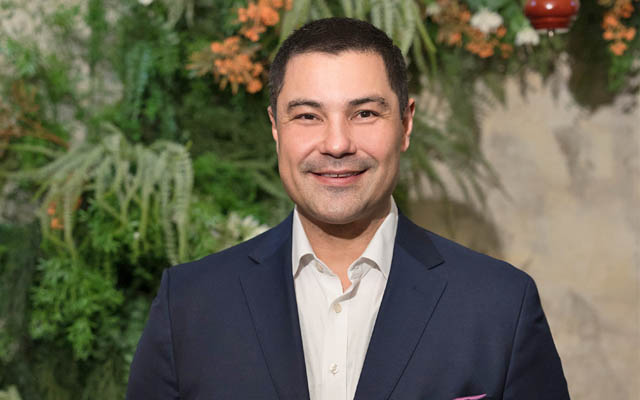
Minor Hotels has appointed Winston Gong as general manager of Avani Kota Kinabalu, ahead of the hotel’s opening in 2Q2026.
Gong will be responsible for overall operations of the 352-key hotel. He was most recently general manager of Crowne Plaza Phu Quoc Starbay, where he led operational performance and market positioning.
Singapore (pictured) is working towards its Tourism 2040 goals
Singapore’s business events sector has emerged as a key pillar in the nation’s record-breaking tourism performance, driving a total of S$23.9 billion (US$18.8 billion) in tourism receipts for 3Q2025.
This 6.5 per cent increase over 2024 represents the highest revenue ever recorded for this period. The sector’s strength was bolstered by prestigious global rankings, with Singapore placing first in Asia-Pacific and third worldwide according to ICCA.
Singapore (pictured) is working towards its Tourism 2040 goals
High-impact events like the Milken Institute Asia Summit and ITMA Asia + CITME, alongside massive incentive movements such as the 6,100-delegate Sun Pharma Star Club Awards, also demonstrated Singapore’s status as a business hub.
The broader tourism landscape supported this momentum, with international visitor arrivals reaching 16.9 million. Mainland China remained the top source market with 3.1 million visitors, followed by Indonesia and Australia.
Spending growth was particularly robust in the sightseeing, entertainment, and F&B sectors, which all saw a 15 per cent surge. The hotel industry remained stable with an 81.9 per cent occupancy rate, even as capacity expanded with new luxury openings like Raffles Sentosa and Mandai Rainforest Resort. Additionally, the cruise industry saw a nine per cent increase in passenger throughput.
Looking ahead to 2026, the Singapore Tourism Board expects 2026 international visitor arrivals to reach between 17 to 18 million, bringing in approximately S$31 to S$32.5 billion in tourism receipts.
This optimistic outlook is fuelled by a massive business events pipeline, including the Herbalife Extravaganza –set to be the city’s largest-ever incentive event with 25,000 attendees – and the recently-concluded Association for the Advancement of Artificial Intelligence (AAAI) 2026 Annual Conference (held for the first time outside the US in its 40-year history).
All six purpose-built business events venues also obtained sustainability certification, while over 80 per cent of Singapore Association of Convention & Exhibition Organisers & Suppliers (SACEOS) members achieved sustainability certification, exceeding the target set for December 2025. The tourism sector’s commitment was further strengthened with the launch of the Attractions Sustainability Roadmap in partnership with the Association of Singapore Attractions to drive industry- wide adoption.
Massive infrastructural investments, such as the US$8 billion expansion of Marina Bay Sands, will also add around 18,580m2 of meeting space, a 570-suite luxury hotel tower featuring rooftop dining, a 15,000-seat arena, and an expanded array of F&B and retail options.
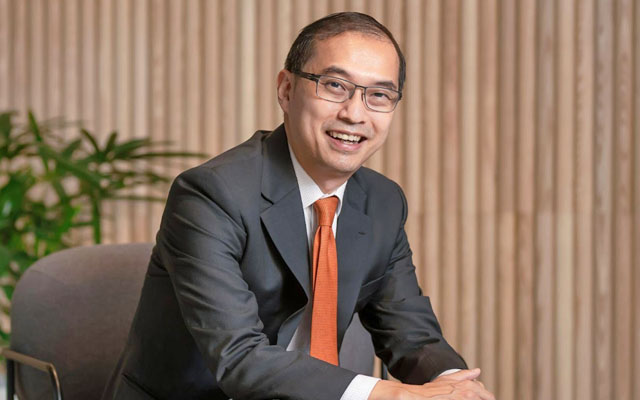
Therme Group has appointed Tan Boon Khai as CEO of Therme Group Singapore. He will lead the development of Therme Singapore at Marina South as part of the group’s expansion in Asia.
Tan has more than 30 years of experience across the public and private sectors in Singapore. He was previously CEO of JTC Corporation.
Just 10 minutes from Phuket International Airport on the serene northern coast, this 178-key, Bill Bensley-designed resort offers delegates a quiet, tropical paradise steeped in Phuket’s tin-mining heritage
The newly-opened Ritz-Carlton, Bangkok anchors the One Bangkok development with cosmopolitan elegance. Featuring the city's largest ballroom and a spectacular new penthouse suite, it delivers exceptional hardware and deeply authentic, soulful service for business and leisure travellers alike
Behind the imposing, Brutalist concrete that defines Zurich’s Oerlikon district lies a surprising secret. While its exterior honours the neighbourhood’s industrial roots, stepping inside Mama Shelter reveals a vibrant, neon-soaked world that is a far cry from its rigid shell



 With over two decades of global hospitality experience, Gill previously served as chief operating officer at Far East Hospitality, overseeing 26 hotels across Singapore, Malaysia, Japan, and Australia, and leading the development of several acclaimed upscale and luxury brands.

 Oddmund Braaten is the CEO of Interprefy. Previously the chief operating officer and a board member, Braaten has been leading Interprefy’s commercial and operational success for five years.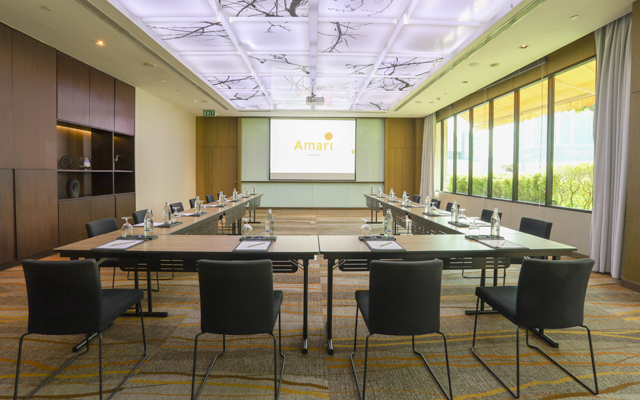
 Gong will be responsible for overall operations of the 352-key hotel. He was most recently general manager of Crowne Plaza Phu Quoc Starbay, where he led operational performance and market positioning.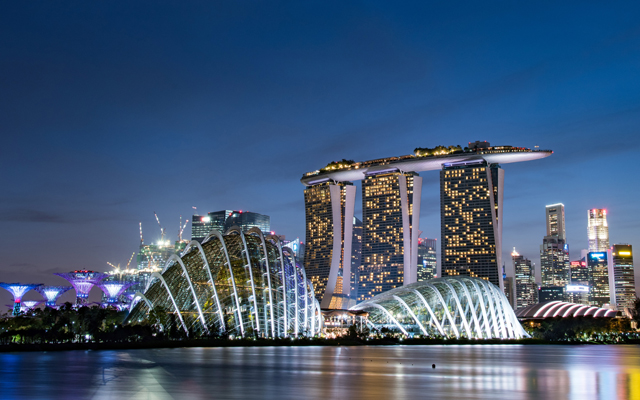
 Tan has more than 30 years of experience across the public and private sectors in Singapore. He was previously CEO of JTC Corporation.




