MyCEB
 Hong Kong Tourism Board
Marilyn Tham, general manager, mega events, MICE & cruise
Hong Kong’s business events industry enjoyed a vibrant 2025, successfully hosting high-profile regional debuts of conventions and exhibitions spanning key sectors such as aviation, fintech, and medical sciences.
This momentum is set to continue in 2026, with several of these events returning for their second year. This reflects a strong vote of confidence from event organisers who are choosing Hong Kong for their global portfolio expansion.
In 2026, Hong Kong will welcome prestigious events, notably the Lions International Convention 2026, alongside the incredible returning events and a strong line-up of flagship events.
Our strategic efforts to recruit Hong Kong Convention Ambassadors in China have also borne fruit, securing multiple conventions for the first time. A prime example is the 15th China Chest Pain Centers Congress, which demonstrates Hong Kong’s unique position as the world’s meeting place and a super connector for organisers.
Other new meetings, conventions, and exhibitions scheduled for Hong Kong in 2026 include the 16th Worldwide Chinese Life-Insurance Congress & International Dragon Award, 2026 World Cancer Congress, and Energy Storage Asia 2026.
On the incentive front, the newly-launched Hong Kong Incentive Playbook 2.0: New Discovery will give agents fresh inspiration to curate itineraries that are set to impress. This includes “Cruise” as a new theme, amid exciting additions of world-class cruise lines homeporting in Hong Kong next year.
In terms of visitor experience, Hong Kong’s appeal will be further enhanced by the seamless integration of business events with the city’s vibrant mega-events. This synergy was highly successful when we invited business event visitors to enjoy the city’s culinary mega-event, the Hong Kong Wine & Dine Festival in October 2025.
With Hong Kong’s unique edge as Asia’s events capital boasting a packed calendar of festivals and events, enhancing hospitality and the overall visitor experience will remain a top priority for 2026. At the same time, promoting Hong Kong as a Muslim-friendly destination is also a key initiative to ensure all travellers feel welcome in the city. – Prudence Lui
 Japan Convention Bureau
Mariko Tatsumi, executive director
According to ICCA’s international conference rankings, Japan continues to rank seventh in the world and first in the Asia-Pacific region.
The Japan National Tourism Organization (JNTO) aims to ensure that a wide variety of business events continues to be held by enhancing promotional activities of new domestic destinations and their unique experiences, alongside other initiatives like support programmes and services.
According to the statistics, visitors from overseas tend to visit the major cities like Tokyo and Kyoto. However, Japan offers a wide range of tourist attractions, from Hokkaido in the north to Okinawa in the south, and can provide different experiences depending on the season.
In the business events sector, many event organisers also prefer the key cities close to international airports, but other local convention destinations also offer convenient conference venues, good hotel options, and cultural experiences which make events unforgettable for international participants. As such, we aim to promote regional tourism by improving information dissemination and increasing opportunities for travel agencies and planners to conduct inspection trips to regional destinations.
As of September 2025, the total number of inbound visitors reached a record-breaking 32 million. Due to this, there is a need to promote new destinations and find new DMCs and accommodation in Japan.
JNTO aims to continue in building and expanding networks with business events stakeholders from diverse markets at major tradeshows. To do that, Japan Convention Bureau – JCB is the business events division under JNTO – will continue to participate in IMEX Frankfurt, IMEX America, and IBTM World as an exhibitor.
At AIME 2026, there will be a Japan pavilion with co-exhibitors, and also plans to organise incentive travel roadshows in eight Asian cities to expand business opportunities between Japanese suppliers and overseas incentive buyers. There continues to be strong demand for incentive travel to Japan from Asia.
Lately, there has also been an increasing number of buyers from Latin America, Eastern Europe, and Scandinavia visiting the Japan stand at major tradeshows.
– Rachel AJ Lee
 Malaysia Convention & Exhibition Bureau
Zain Azrai Rashid, senior director marketing & communications
Malaysia’s business events industry will enter 2026 with strong momentum and renewed confidence. The nation is projected to welcome over 25 million business events delegates, contributing an estimated 76.8 billion ringgit (US$18.6 billion) in economic impact.
With Malaysia having assumed the ASEAN chairmanship in 2025 and now benefitting from the global visibility of the Visit Malaysia Year 2026 campaign, the country is well-positioned to attract a greater share of international conventions, trade exhibitions, corporate meetings and incentives and international sporting events.
Malaysia will host several prestigious international conferences for the first time, including the World Federation of Hemophilia Congress 2026, Global Health Security Conference 2026, 33rd Biennial Congress of International Society of University Colon and Rectal Surgeons, and World Forum 2026.
Additionally, Malaysia will debut homegrown events with international participation such as the Asia Pacific Aerospace Conference and Exhibition 2026, and Rabies in Asia.
MyCEB will also be launching a new campaign aimed at attracting more high impact business events to Malaysia. Details of this strategic initiative will be revealed in due course.
For 2026, the destination is focused on attracting business events from the new markets of Central Asia and Eastern Europe, in addition to its traditional markets.
– S Puvaneswary
 Singapore Tourism Board
Poh Chi Chuan, executive director, exhibitions and conferences
Singapore’s business events industry continues to demonstrate robust growth; business events tourism receipts reached S$1.7 billion (US$1.27 billion) in 2024, representing a S$300 million increase from 2019’s S$1.4 billion.
With Singapore’s ambitious Tourism 2040 goal, the city-state is pursuing bold strategies and accelerating its efforts to capture this substantial growth opportunity. The work to achieve this must begin now, and 2026 represents a critical milestone in this journey.
Singapore Tourism Board’s (STB) 2026 events calendar features a robust and exciting line-up of inaugural shows including Breakbulk Asia, Expo Real Asia, and Passenger Terminal Expo Asia. STB will also host the World Hydrogen Energy Conference, and notably, the Association for the Advancement of Artificial Intelligence Annual Conference – marking the first time in its 40-year history that the prestigious event is held outside the US.
The scale of events continues to expand, with Herbalife Extravaganza set to be the destination’s largest Meeting & Incentive Travel event yet, anticipating 25,000 arrivals. Returning home-grown flagship events such as the Singapore Airshow in February, Food & Hospitality Asia in April, and the Singapore FinTech Festival in November, alongside international shows including ITB Asia and the Milken Asia Summit in October, follows the successful securing of commitments from event organisers Messe Berlin and the Milken Institute to anchor their events in Singapore for the next three years.
Asia-Pacific continues to be a key driver of growth for Singapore’s business events industry. As a global Asia node known for its safety, reliability and strategic location, Singapore offers unparalleled potential for international event organisers and companies to expand their footprint in this region.
South-east Asia’s growth potential – through its expanding middle class and increasing urbanisation – also presents opportunities for the exhibitions industry. The region’s diverse economies offer a fertile ground for industry leaders in sectors such as technology, healthcare, and advanced manufacturing to connect.
Singapore is nestled in the middle of three of the world’s most populous markets – China, India and South-east Asia – which remain important source markets that have potential for growth.
– Rachel AJ Lee
 Thailand Convention and Exhibition Bureau
Supawan Teerarat, president
The year 2026 will be a vibrant year – another year of Thailand’s business events industry attaining new milestones, from targeting measurable event carbon reduction to regional cities outside Bangkok demonstrating their capacity to host global-scale events as mega-events, while festivals gain an even stronger role in Thailand’s business events landscape.
A robust pipeline of large-scale events is emerging, reflecting the evolving needs of today’s business landscape and demonstrating strong confidence in Thailand as a platform for advancing global agendas. These 2026 events, touching on critical themes from sustainability and wellness to energy and finance, will strengthen the ecosystem of the Thai business events industry and elevate Thailand as a high-value, high-impact destination.
In March 2026, Bangkok will host the Amway Leadership Seminar, welcoming over 10,000 Chinese delegates to experience “Slow Living in Bangkok”, followed by Phuket hosting the Global Sustainable Tourism Council 2026 meeting in April. In September 2026, Bangkok will welcome Gastech, one of the world’s largest energy exhibitions, with over 50,000 participants, along with the annual meetings of the International Monetary Fund and the World Bank Group in October.
In November 2026, two major events will take place: the six-month Udon Thani International Horticultural Expo – expected to draw 3.6 million visitors – will kick off, while Phuket hosts the Global Wellness Summit 2026. – Anne Somanas
 Tourism Australia
Robin Mack, managing director
Australia remains a high-performing destination for international business events. Looking to 2026, the industry is capitalising on sustained Asia-Pacific demand, particularly the growing trend of shorter-lead events from key markets in South and South-east Asia.
The Bid Fund Program continues to be a major growth driver, securing a healthy pipeline of confirmed events through to 2029.
Momentum is evidenced by recent successes with key incentive groups from Asia, including 16,000 delegates in Melbourne/Narrm from Amway China – the largest incentive group to visit Australia – 1,200 from Infinitus China in Adelaide/Tarntanya, and nearly 3,000 from Amway Korea in Cairns/Gimuy. With MoUs now in place with both Infinitus and Amway, a strong pipeline of incentive business is expected to continue for years.
Across key markets, there is a growing preference for destinations that offer stability, safety, and reliability – areas where Australia consistently performs well.
According to newly released research findings, international event decision-makers place safety and security at the very top of their list when evaluating potential destinations. Australia’s extensive track record of hosting major global events proves its operational strength, complemented by the friendly, can-do attitude of the Australian people, which ensures a positive delegate experience every time.
As operational expenses continue to rise globally, many destinations around the world are looking to mitigate concerns around event costs. Conversely, Australia sees an opportunity to demonstrate strong value for money. With first-class convention centres in close proximity to iconic landmarks and immersive experiences, event planners can seamlessly integrate bucket-list experiences into their programmes.
Asia remains a key region for growth, particularly in the incentive space. Japan is emerging as a promising source market, with efforts focused on educating and inspiring event planners through targeted training seminars and by hosting key buyers at the Australia Next incentive showcase, held in Melbourne/Narrm in December 2025.
Meanwhile, India is emerging as a critical growth market, driven by increased aviation links and a simplified online visa process. Strategy here focuses on implementing targeted engagement with agents to ensure they have the latest product information and unique experiences to sell to their incentive and corporate clients.
– Rachel AJ Lee



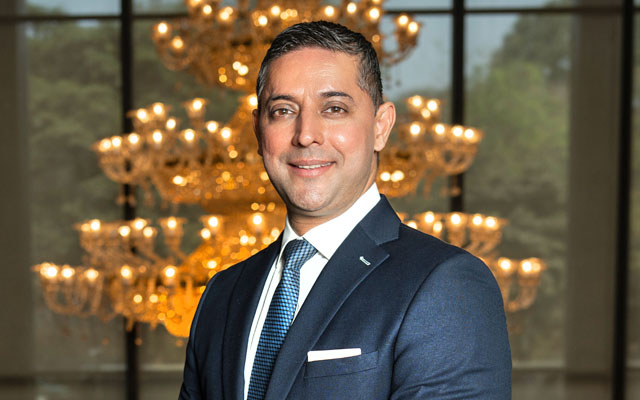
 With over two decades of global hospitality experience, Gill previously served as chief operating officer at Far East Hospitality, overseeing 26 hotels across Singapore, Malaysia, Japan, and Australia, and leading the development of several acclaimed upscale and luxury brands.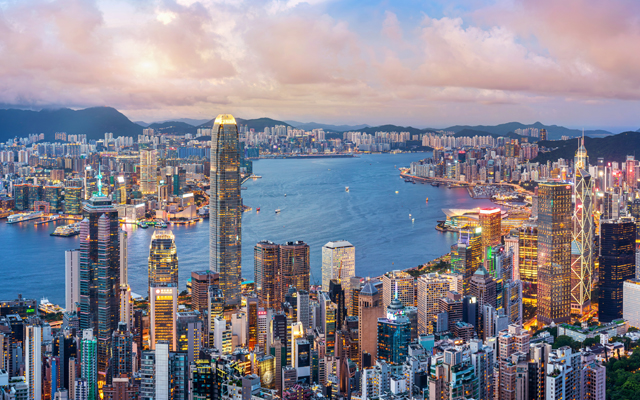

 Oddmund Braaten is the CEO of Interprefy. Previously the chief operating officer and a board member, Braaten has been leading Interprefy’s commercial and operational success for five years.