


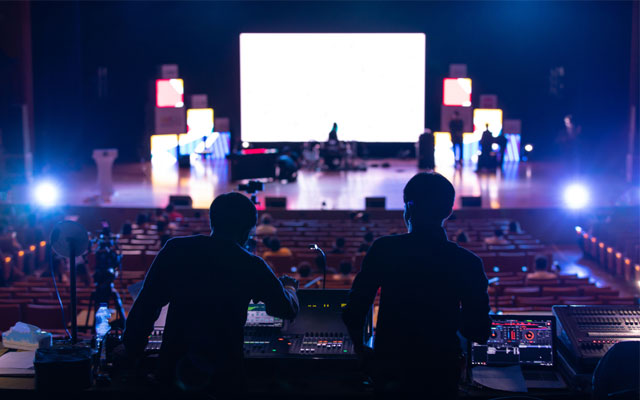
With more live events returning and technology becoming more integrated, 2022 has been a positive year for the events sector. In fact, the annual growth rate for events is predicted to rise by 11.2 per cent between 2021 and 2028.
As discussions about the metaverse and other technologies continue to dominate the event industry, event organisers and marketers are often looking for the next big thing that would elevate the event experience.
However, this often leads to a chaotic, fragmented and noisy event environment. To successfully deliver a dynamic experience to attendees, they need to be more purposeful and strategic about their platforms and tools.
To remain competitive in the ever-changing industry, 2023 will undeniably be a pivotal year for the events industry as event tech continues to evolve rapidly to cater to each unique individual.
Ensure seamless integration of current event tech stack
Event tech stack, when integrated seamlessly, will provide event organisers greater autonomy to reduce time spent on manual and repetitive tasks so they can refocus towards higher value tasks without creating a fragmented experience. With the event tech landscape being saturated with a myriad of companies providing solutions to improve the event experience, it is inevitable that event organisers face the challenge of integrating the right technology within their stack.
For event organisers who are not well versed in event tech, choosing a platform that integrates third-party apps is a more cost-effective solution to ensuring a seamless integration of the tech stack. Through this, event organisers would not have to worry about data being spread across multiple platforms and attendees would not have to go through the hassle of moving from one application to another, a beneficial situation for both attendees and organisers.
For more experienced organisers, the usage of other technologies to fill the gaps in such platforms would create a more holistic solution.
Cater to both app lovers and web lovers
Gravitating towards a hybrid event, organisers that are striving to create an elevated experience should bridge the gap between the physical and virtual landscape. The usage of an omnichannel event platform, typically in the form of a mobile app, would be able to leverage the data collected across attendees’ digital touchpoints and provide a convenient way for them to interact physically.
Though 91.2 per cent of organisers and marketers are aware of the benefits of mobile apps, they often face the challenge of accommodating both attendees who are willing to download mobile apps and attendees who would prefer to use the phone web browser. By having an application that runs on both mobile apps and web browsers, such as having mini-experiences via Gevme’s Event Companion app, organisers would be able to achieve an experience that leaves no attendees behind.
An application with endless possibilities
Undoubtedly, the pandemic created a shift in consumers’ expectations with them wanting more individualised experiences following the increased autonomy and options offered during the remote period.
To address the shift, event organisers are seeking an alternative solution that allows for customisation to adapt to the diverse needs and desires of attendees for different sorts of events. Instead of having multiple applications serving different solutions, a single application on a single device that smoothly integrates all the needed event features and experiences, from registration to agenda reading to live Q&A sessions, should be prioritised.
A foundation for a thriving event scene in 2023
The chance to upgrade present event infrastructure should be at the forefront of event planners’ minds as 2023 draws nearer. Prioritising the need to upgrade the present event infrastructure should come before exploring more complex event tech innovations like the use of the metaverse and other exploratory event experiences.

Veemal Gungadin is the CEO of GlobalSignIn, a tech company with offices in Singapore, Australia, India, Myanmar, and the US.






 Armed with his skills in accounting and cash-flow management, Aebi looks forward to working with the local team and suppliers to offer unrivalled service and facilities, as well as maintain the high standards of the hotel.
 He was most recently director of IHG’s centre of excellence, new hotels, AMEA.
 Bringing with her over 20 years of experience, she was previously general manager of COSI Krabi Ao Nang Beach.




China’s resumption of travel is lifting spirits across Hong Kong’s tourism sector, but players are urging China for more details to help them better plan their operations.
Fanny Yeung, executive director of the Travel Industry Council (TIC), told TTGmice that the announcement this week took the industry by surprise.
“It’s vital that we are able to cope with inbound traffic (from China). With more details from the Central Government, such as daily arrival quota, we can better plan ahead,” she said, adding that Hong Kong has a severe manpower obstacle to overcome due to a talent bleed-out over the past three disrupted years.
She said businesses would need to “offer competitive salaries” to lure people back.
“I reckon it may take us three to four months to ramp up manpower to meet the needs (of returning Chinese travellers),” said Yeung.
However, if all goes well, Yeung expects Hong Kong tourism business to return to pre-pandemic levels in 3Q2023.
TIC’s chairman Gianna Hsu is less worried about the immediate future, as China’s travel resumption will coincide with the Chinese New Year holidays starting January 22, 2023. This is typically a low travel season for group tours from China, and that buys Hong Kong some time to prepare for the market’s return.
Luc Bollen, general manager of The Park Lane Hong Kong – A Pullman Hotel, is upbeat. “According to recent studies (by Trip.com), Hong Kong remains the top-three most popular destination for all Chinese tourists,” he said.
Bollen said his team is well prepared to welcome guests from China. Together with Accor’s regional office, the hotel launched in late-December several room packages aimed at the Chinese.
He expects Chinese guests to combine business and leisure when they return to Hong Kong for their first trip in three years.
Industry players have expressed concerns about the return of sufficient air capacity to support China’s reopening.
Yeung hopes that China’s latest announcement will motivate airlines to accelerate their plans to return to service.
A spokesman with homegrown Greater Bay Airlines said the company would “keep monitoring the market situation and work closely with respective stakeholders to get prepared as appropriate”.
Greater Bay Airlines is current serving only Bangkok and Taipei.
Cathay Pacific has also shed little details on service plans following the December 27 announcement, only saying it would “continue to communicate with relevant authorities and to increase our passenger capacity to and from the Chinese Mainland as much as possible”.
Cathay Pacific is operating at about 30 per cent of its pre-pandemic capacity and has some weekly services between Hong Kong and select Chinese cities, like Beijing and Chengdu, scheduled for January.
In order to keep pace with China’s reopening, Hong Kong will also remove all mandatory PCR test requirements for inbound travellers, quarantine orders and the use of the Vaccine Pass from December 29.