Amex GBT aims to power economic, social and environmental progress through travel
American Express Global Business Travel (Amex GBT) has been awarded a platinum EcoVadis medal for its environmental, social and governance (ESG) standards.
Platinum status is the highest accolade awarded by EcoVadis and this places Amex GBT among the top one per cent of independently assessed companies across the world.
Amex GBT aims to power economic, social and environmental progress through travel
EcoVadis is a provider of business sustainability ratings with a global network of more than 100,000 rated companies across many industries. A rating is derived from an evaluation of non-financial management systems, including environmental, labour and human rights, ethics and sustainable procurement practices. The independent evaluation methodology is based on global standards and guided by the international scientific community.
The EcoVadis platinum medal rounds off a year of ESG initiatives for Amex GBT. In June, Amex GBT with Shell and Accenture launched Avelia, one of the world’s first blockchain-powered book-and-claim digital platforms for sustainable aviation fuel. In October, Amex GBT became the first travel management company to join the World Economic Forum.
Avelia = American Express Meetings and Events – a division of Amex GBT – has also signed the Net Zero Carbon Events (NZCE) pledge, a joint commitment across the events industry to achieve the targets laid out in the Paris Climate Accord. The NZCE pledge, which has the support of UNFCCC Secretariat (United Nations’ Framework Convention on Climate Change), was launched at the UN climate summit COP26 in Glasgow in 2021.
The ASEAN Centre for Biodiversity (ACB) will co-organise the world’s first green travel mart from March 29 to April 2, 2023 in Silang, Cavite, the Philippines.
The International Ecotourism Travel Mart (IETM) is a historic assembly and world festival that pushes ecotourism for the good of the environment and local community. It is co-presented by the Asian Ecotourism Network (AEN) and the International School for Sustainable Tourism (ISST).
Gabor: IETM’s goal is protecting the natural environment while uplifting local community welfare
The event is expected to attract buyers and sellers of ecotourism packages from at least 21 countries; companies specialising in ecotourism-related and sustainability-advancing products; participants, speakers and panellists for IETM’s two-day forum and certificate course; and the general public.
Masaru Takayama, president of AEN, said the event would offer attendees a great opportunity to learn and network across cultures.
IETM participants will also gain crucial information through resource speakers on best practices involving ASEAN heritage parks and protected sites, including their experiences on the pathway to recovery after two years of pandemic.
Mina Gabor, chair and president of ISST, stated that ACB’s vital contribution to IETM fast-tracks the event’s goal of protecting the natural environment while uplifting local community welfare.
Mundita Lim, ACB executive director, added that the event “elevates tourism as a leader in promoting the balance between economic development and harnessing nature as a means to overcome current challenges”.
“With IETM 2023, we hope to help jumpstart sustainable economic recovery in the region with the promotion of a greener and biodiversity-conscious tourism industry. We see opportunities for greater participation of local communities, empowerment of local cultures, and enhancing windows for sustainability and continuity,” said Lim.
Responses point to strong traditional travel risk management practices but reveal shortcomings in support for future work trends
More than three-quarters of business travellers say their employer treats traveller health, safety and security as a priority, but only 36% of travellers say their employer unconditionally takes care of their safety and security when working remotely, according to a recent BCD Travel survey conducted earlier in August.
The survey of 674 business travellers worldwide aimed to examine travel risk management and the traveller experience, as well as a variety of measures that may improve the health, safety and security of business travellers on the road.
Responses point to strong traditional travel risk management practices but reveal shortcomings in support for future work trends
According to the survey respondents, companies are doing reasonably well supporting traditional travel risk management, but there’s a lack of support for newer workforce behaviours, specifically remote work and bleisure travel.
Some 64% of travellers do not know if they are covered by their organisation’s travel security and medical support if they extend their business trip for leisure purposes.
“This survey shows the growing need for a mindset shift from travel risk management to people risk management,” said Mike Janssen, global chief operating officer and chief commercial officer for BCD Travel. “Today’s duty of care policies have to address the realities of hybrid or work-from-anywhere workforces as well as the changing values around traveller well-being.”
A separate BCD survey in March on corporate travel programme priorities among travel buyers placed traveller well-being as the second priority behind duty of care. Although some business traveller respondents from the most recent traveller survey in August said their employers provide post-trip support, such as personal time off (13%), requests for feedback post-trip (11%), or follow-up with on-trip security or medical incidents (10%), 39% said they receive no support. An additional 16% said they don’t know if there is such support.
Other survey highlights include:
75% of travellers rarely or never feel unsafe during a business trip. Of the 23% who sometimes or regularly feel unsafe, a slightly higher percentage of men than women feel unsafe, and an even higher percentage of non-binary/non-conforming travellers feel unsafe.
When travellers do feel unsafe, it is most often when walking in the streets (44%), driving in an unfamiliar location (43%), or using public transportation (40%). Travellers are less likely to feel unsafe at a restaurant (6%) or in a hotel room (6%).
The main actions travellers take to support their own safety include separating their hotel room key from its envelope (50%), taking a taxi or ride-hailing service instead of public transportation (46%), and checking the fire escape route at their hotel (40%).
The top support measures from their organisations that travellers say make them feel safe and secure on a trip are travel alerts and security notifications (61%), a central contact in case of an emergency (53%), pre-trip destination security information (51%), and clear instructions on what to do in an emergency (44%).
People well-being needs to be the top priority at any company. Otherwise, employers risk damaging an employee’s physical and mental health and decreasing job satisfaction, which could lead to talent loss. People who do not feel safe and cared for are unlikely to stay. This can cause reputational damage, rising costs and negatively impact company performance. Managing employee risks correctly, on the contrary, will give organisations an edge in talent recruitment and retention.
Travel buyers can better address duty of care by not only creating and maintaining an effective travel risk management program but by making the programme and policies accessible and part of a culture that promotes health, safety and security. Some of the areas that risk management should address, include hybrid workforces, political unrest, work-from-anywhere policies; and traveller wellness.
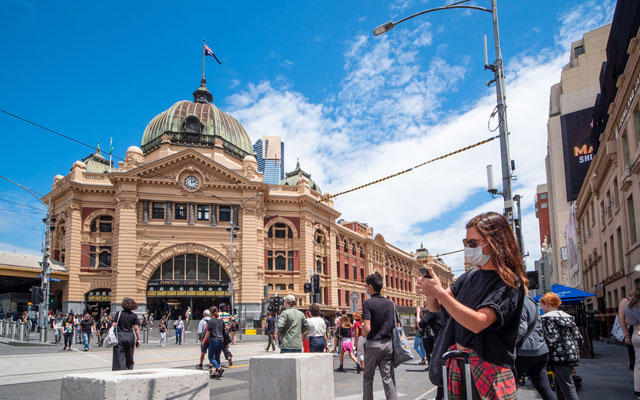
MCB has helped to ensure a pipeline of future events and long-term certainty for Victoria’s visitor economy and its business events supply chain; Flinders Street Station in Melbourne pictured
Melbourne Convention Bureau (MCB) has achieved a 33 per cent increase in economic contribution from secured business events in the 2021/2022 financial year over the previous year.
Economic contribution for the state reached A$203 million (US$136 million) from 110 events secured up until 2028, which is expected to bring over 53,200 visitors to the state and fill over 90,300 room nights. This means that the business events sector is the highest-yielding sector in Victoria’s visitor economy.
MCB has helped to ensure a pipeline of future events and long-term certainty for Victoria’s visitor economy and its business events supply chain; Flinders Street Station in Melbourne pictured
Speaking at the company’s Annual General Meeting, MCB CEO Julia Swanson, said: “We set an ambitious agenda to reaffirm Melbourne’s position as a global leader in business events resulting in significant bid wins across the year and implemented innovative programs to ensure a solid calendar of events to re-open with.”
One of the key highlights was the Asia-Pacific Incentives and Meetings Event 2022, the first international tradeshow since Australian international borders reopened that brought together international and local buyers to access 225 exhibitors from around the world.
She added: “The National Business Events Program contributed significantly to the overall success of this strong pipeline of future events and demonstrates the ongoing commitment and passion of the MCB team to deliver impactful outcomes in supporting our sector through its recovery.”
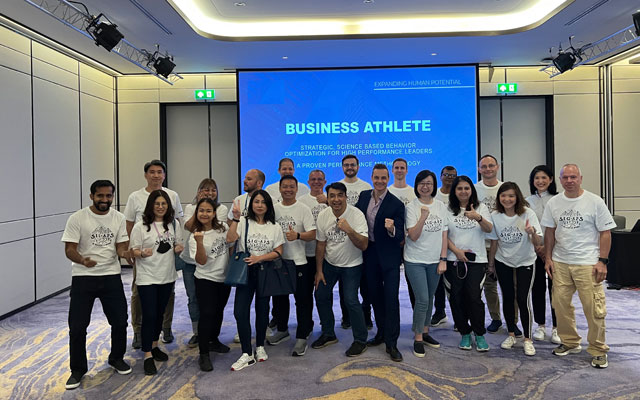
FitCorp’s workshops present participants with ways to release stress, while increase productivity on an individual and team level. Photo: FitCorp Group
Thailand-based corporate wellness company FitCorp’s believes that teambuilding programmes of the future should cater to all levels in a company’s hierarchy, as it believes that the meaning and approach to teambuilding has changed post-lockdown.
General manager of Fitcorp Group, Niels Steeman, opined: “The corporate world has seen an immense shift in how we communicate with each other, and the principles of teambuilding have changed from a primarily offline environment to a hybrid/online environment.
FitCorp’s workshops present participants with ways to release stress, while increase productivity on an individual and team level. Photo: FitCorp Group
“Remote working is here to stay, and this impacts how we are building teams. Engagement, retention, and performance in stressful situations will become the new norm for teambuilding.”
As such, Steeman stressed that companies should plan for teambuilding events that offer “educational value” and that focus on all levels of hierarchy in a company, as “relaxing pods, games rooms and healthy snacks no longer serve a purpose in this changing climate”.
For instance, one of FitCorp’s offerings, The Business Athlete, is aimed at groups ranging from two to 200, and the programme is tailored to hit home with everyone, from the senior executives right down to junior staff.
Typically running for half a day, the workshop includes short workouts, interactive sessions and team-based activities, all of which help participants develop essential habits that help them perform under pressure; demonstrate the sustainable benefits of a healthy lifestyle both at work and at home; as well as communicate empathy and care for each other’s wellbeing, mental health and success.
Prior to the event, participants are required to answer a series of specific questions anonymously, and identify the pain points they have. These pain points will then be addressed during the seminar by Fitcorp’s team of performance coaches, fitness trainers, and corporate wellness specialists.
Meanwhile, for companies with team members spread all over the globe, FitCorp offers a virtual education and wellness offering titled V-Well.
“This cost-effective virtual wellness programme is based on measurable needs and outcomes to increase engagement, confidence, motivation, morale, well-being, productivity and mental health to ensure teams stay well, engaged and perform well,” he explained.
When asked what qualifies as a successful teambuilding event, Steeman indicated that it has to be “sustainable” and “deliver something employees, clients and stakeholders can take home and apply for better performance, health and energy management”.
Companies are keen on running teambuilding programmes post-lockdown because they wish to keep their retention rates as high as possible amid retrenchment and business uncertainty, Steeman observed.
“Retention is the key word for many companies. Moreover, with the hybrid model more common, drawing a line between life and work is even more vague. Working from home increases the feeling of being more plugged in, and this has had an effect on stress levels and mental health. Stress is one of the leading factors of high staff turnover.
“The drive in keeping teams in place has never been as important as it is now,” he said.
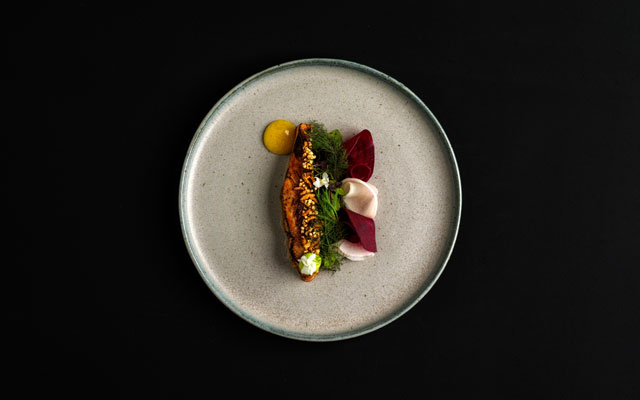
One of the new dishes from the menu, the miso-glazed king salmon
International Convention Centre Sydney (ICC Sydney), managed by ASM Global, has released its low-carbon Menu Collection for next year.
Developed by its in-house team of culinary experts, the collection allows event organisers to make more sustainable and diverse food choices across six core menus.
One of the new dishes from the menu, miso-glazed king salmon
Dishes will be created with fresh and seasonal produce – procured from more than 130 local producers across the supply chain – that has been reviewed to estimate the carbon footprint associated with the farming, harvesting, production, and transportation of ingredients.
ICC Sydney CEO and group director – convention centres, ASM Global (APAC), Geoff Donaghy, said in a press release that the new menu boasts 186 low-carbon options across an entire day, and caters to all event formats and delegate palates. It also complements the venue’s 100 per cent local wine list.
“As part of our ASM Global ACTS schedule of activities and as a signatory to both the Exhibition and Event Association of Australasia’s Sustainable Events 2030 Pledge and Joint Meetings Industry Council’s Net Zero Carbon Events Pledge, we are building on our Feeding Your Performance culinary philosophy, which has sustainability at its core.
“ICC Sydney’s new menu gives event organisers the opportunity to make a positive contribution to our planet, as well as our suppliers, as we continue to add more First Nations businesses to our supply chain,” Donaghy added.
From left: Matt Pearce, CEO | Talk2 Media & Events is pleased AIME’s contribution to the development ofSilke Calder, AIME Event Director
AIME has been awarded both the Australian Event of the Year (2022) and National Winner: Best Congress, Conference or Exhibition (2022) recognitions at the recent Australian Event Awards & Symposium.
From left: Talk2 Media & Events’ Matt Pearce and AIME’s event director Silke Calder
Organised by Talk2 Media & Events, AIME connects international and local buyers with exhibitors from Asia Pacific and around the world. Next year’s three-day event will be held at the Melbourne Convention and Exhibition Centre from February 13-15, 2023, coinciding with the tradeshow’s 30th anniversary.
The Australian Event Awards & Symposium is the national awards programme and conference for the Australian events industry. It is the only opportunity for Australian event professionals to compete directly across the nation and across all facets of the industry to establish which are Australia’s best events and event-related goods, services and innovations.
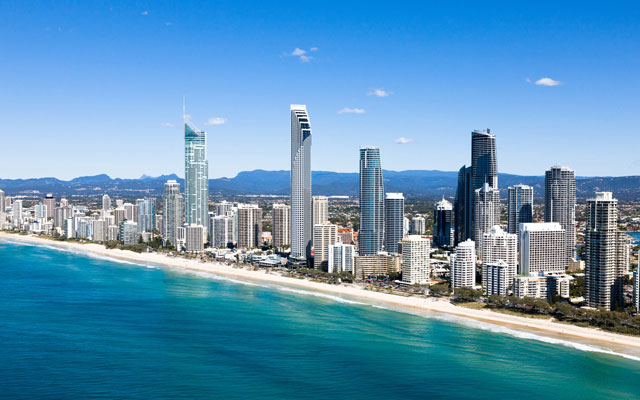
MEA looks forward to fostering the Australian events sector’s resurgence; Gold Coast pictured
Meetings & Events Australia’s (MEA) annual conference, Evolve 2023, will return to The Gold Coast next year from June 7-8.
Next year’s event will mark the return of the conference to the Gold Coast in 17 years.
MEA looks forward to fostering the Australian events sector’s resurgence; Gold Coast pictured
With the real and immediate need for upskilling quickly becoming a priority across all areas of the events sector, Evolve 2023 will present an opportunity for event professionals to reconnect and for businesses to educate and develop their staff on future predictions, latest innovations, and to hear from event experts on trending topics.
The conference programme will include the return of the National MEA Awards Gala Dinner.
More details about the event, venues, and speaker programme will be shared in due course.
Te Atakura – First to Zero is a blueprint that Wellington city – and by extension its business events industry – is following, with the aim of becoming a zero carbon capital by 2050.
This move towards being greener is encapsulated in the soon-to-open Tãkina Wellington Convention and Exhibition Centre, scheduled to open in June 2023. The purpose-built venue is also the first convention in New Zealand to be awarded a 5 Green Star Design certification in 2021.
A panoramic view of Wellington CBD and harbour
The venue’s green star design includes enhanced thermal insulation and high-performance double glazing, as well as efficient, automatically-controlled LED lighting, air conditioning and ventilation systems. When combined, these create a 66 per cent carbon reduction, and 60 per cent in energy savings when benchmarked against a comparable new build.
Tãkina will also sport a rainwater harvesting system estimated to reduce potable water consumption by 30 per cent, while timber materials used in its construction were sourced from sustainable forestry.
When complete, the multi-storey convention centre will boast 10,000m2 of conference space with a plenary seating up to 1,600 people, a 2,500m2 exhibition floor, two large, flexible plenary halls and meeting rooms.
Its project director Danny McComb pointed out that the project has considered the impacts on the environment, as well as the comfort and well-being of the people inside it.
“Increasingly, conference and event organisers are looking at the values, attitudes and approaches to climate change and sustainability of venues and we expect that this will only increase.”
Aside from Tãkina, other venues in the city have reiterated their commitment to being more responsible in areas of waste, water and energy, and are working with local suppliers to help planners achieve zero waste events.
They include four WellingtonNZ-managed entertainment venues – Michael Fowler Centre, Opera House, TSB Arena and Shed 6 – all of which have also attained EarthCheck’s Bronze Benchmark accreditation.
Aside from sustainable venues, Irette Ferreira, Business Events Wellington’s manager, added: “Conferencing in Wellington provides event organisers with an opportunity to make a lasting difference by collaborating with local organisations such as Zealandia, the world’s first fully-fenced urban eco-sanctuary regenerating the city’s biodiversity, and Kaibosh, a food rescue organisation redistributing surplus food to people in need.”
Besides the direct economic benefits business events bring to the city and region, conferences in particular are a catalyst for change, investment and improvement.
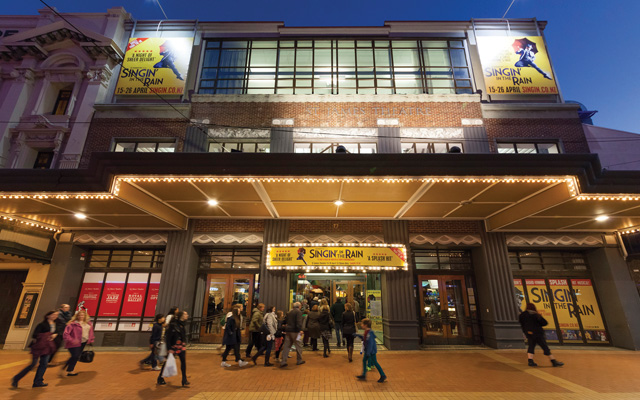
St James Theatre
Through exposure to new or different ways of thinking, sectors grow and develop, new ideas are formed and refined, and governments change policies and regulations. Through new relationships, business is conducted, not only during an event but potentially for years to come.
“Wellington is home to thought leaders who live and work in the city, crown research institutions, central government agencies, national associations and several universities. That means we have access to their knowledge, and a breadth of speakers that live locally,” Ferreira noted.
To date, business Events Wellington has secured more than 40 conferences for the city from 2023 to 2026, with an estimated spend of more than NZ$34 million (US$28 million).
Meetings & Events Australia (MEA) revealed the results of its 2022 Board Director Ballot at its Annual General Meeting (AGM) last week.
There were five contested positions, and nominations were received from seven candidates whose profiles and policy statements were presented to voting-eligible MEA members.
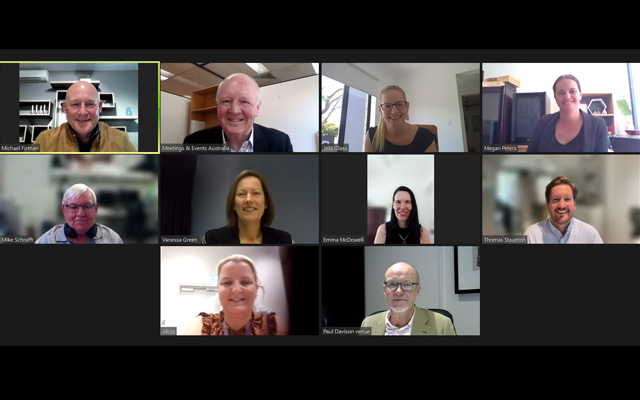
A screenshot of MEA’s new board
The five highest vote counts were received by:
• Alicia Thomas, Royal International Convention Centre
• Emma McDowell, Saxton Speakers Bureau
• Vanessa Green, Cliftons
• Thomas Staunton, SoldOut Events
• Mike Schrafft, VMS Event & Conference Logistics
A meeting of the new Board was held after the AGM, at which the offices of chair, deputy chair, treasurer and company secretary were determined. These role bearers moving forward are:
• Chair: Michael Firman, Harry the hirer
• Deputy chair: Megan Peters, Lateral Event Management
• Treasurer: Paul Davison, Sydney Masonic Centre
• Company secretary: Peter McDonald, Meetings & Events Australia
Jess Glass of The University of Queensland will also continue on the MEA Board for the third year ensuring a full complement of nine directors as required by the Constitution.
Just 10 minutes from Phuket International Airport on the serene northern coast, this 178-key, Bill Bensley-designed resort offers delegates a quiet, tropical paradise steeped in Phuket’s tin-mining heritage
The newly-opened Ritz-Carlton, Bangkok anchors the One Bangkok development with cosmopolitan elegance. Featuring the city's largest ballroom and a spectacular new penthouse suite, it delivers exceptional hardware and deeply authentic, soulful service for business and leisure travellers alike
Behind the imposing, Brutalist concrete that defines Zurich’s Oerlikon district lies a surprising secret. While its exterior honours the neighbourhood’s industrial roots, stepping inside Mama Shelter reveals a vibrant, neon-soaked world that is a far cry from its rigid shell