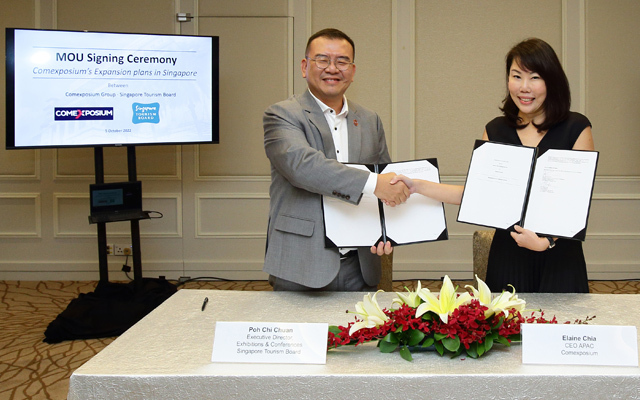
The 2023 event great opportunity to position the Philippines as the culinary center of excellence in Asia
The Philippines has won the bid to host the Worldchefs Asian Presidents Forum in 2023.
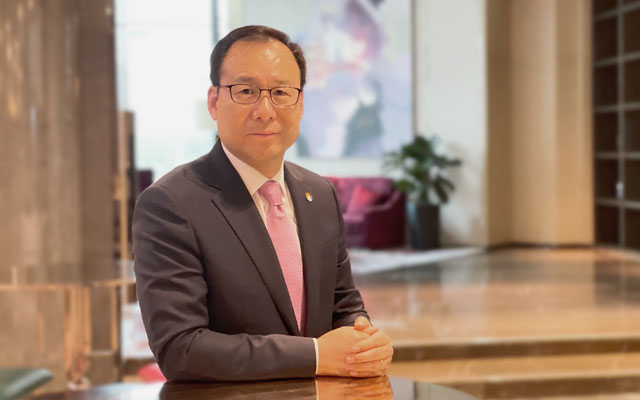
This announcement was made by World Association of Chefs Society (Worldchefs) continental director for Asia chef Willment Leong during the Philippine Culinary Cup awarding ceremony earlier in August at the SMX Convention Center.
The 2023 event is a great opportunity to position the Philippines as the culinary centre of excellence in Asia
The Worldchefs Asian Presidents Forum is a three-day event that aims to foster camaraderie among chefs in the Asia Pacific region with a line-up that includes the presentation of the latest gastronomical trends, knowledge-sharing on sustainability practices, and culinary education sessions.
The forum will bring together delegates from different Asia Pacific chefs associations with around 3,000 expected attendees. Attendees will also have a chance to see the local markets in the Philippines and get a taste of the diversity of the country’s cuisine and culture.
The event was secured through the efforts and collaboration between the Tourism Promotions Board (TPB) Philippines and the LTB Philippines Chefs Association.
The Marriott Grand Ballroom (MGB) within Newport World Resort in Manila, Philippines, has added a new event space, the 3,800m2 MGBX Convention Hall.
The new MGBX Convention Hall is located on the lower Level B1 of the Marriott Grand Ballroom. It has a total floor area of 4,400m2 and is furnished with high-tech audiovisual and lighting systems. It is a tad smaller than MGB, which has a total floor area of 4,7000m2.
An event at MGBX Convention Hall
Bruce Winton, Marriott International’s multi-property vice president in the Philippines, said the company decided to convert an under-utilised space into an exhibition area to “fulfil a growing need as the industry recovers”.
Although the Philippines’ business events industry has not fully returned to pre-pandemic levels, the future is looking bright. Social and milestone events are back in full swing, while domestic corporate meetings, association and governmental events, have picked up. These are complemented by several international corporate events from around Asia-Pacific.
“We are seeing positive signs in 4Q this year, and I think that year-end activity is on track to match 2019 volumes,” Winton told TTGmice.
He added that the hosting of the 2022 WTTC Global Summit in April helped to bring “positive attention” to the Philippines as a business events destination, and highlighted its capability to executive international business events of the highest degree despite pandemic-related setbacks.
Demand for business travel and meetings is back with a vengeance despite rising costs
Global travel prices are predicted to continue to increase in the remaining months of 2022 and throughout 2023, according to the 2023 Global Business Travel Forecast, published by CWT and the Global Business Travel Association (GBTA).
Rising fuel prices, labour shortages, and inflationary pressures in raw material costs are the primary drivers of the expected price growth, according to the report, which uses anonymised data generated by CWT and GBTA, with publicly available industry information, and econometric and statistical modelling developed by the Avrio Institute.
Demand for business travel and meetings is back with a vengeance despite rising costs
Macroeconomic influences
The world economy shrank 3.4% in 2020 in one of the worst declines since World War II. Service sectors, including travel and hospitality, were hit especially hard, but the global economy recovered briskly, rising off the lows of 2020 and increasing 5.8% in 2021.
Economic growth is moderating as the recovery lengthens, although another recession is a growing concern. The current base case scenario for 2022 is for 3% growth, followed by 2.8% growth in 2023. Cautionary notes also highlighted in the 2023 Global Business Travel Forecast, highlight the three main forces exerting pressure on the economy and the business travel industry. These include Russia’s invasion of Ukraine coupled with other geopolitical uncertainties, inflationary pressures that are pushing costs higher, and the risk of further Covid outbreaks that could restrict business travel.
Conversely, with businesses ranking sustainability among their top priorities and reflecting the accelerated importance of combating climate change, the report highlights greater visibility at the point of sale for greener travel options, as well as carbon foot-printing, and environmental impact assessment is an opportunity for the travel industry to actively assist in responsible choice-making.
Meetings and events
Prices have increased in all regions across most categories of spend, fuelled by pent-up demand, a desire to build company culture and an uncertain economic outlook. The cost-per-attendee for meetings and events in 2022 is expected to be around 25% higher than in 2019, and it’s forecast to rise a further 7% in 2023.
Alongside pent-up demand, corporate events are now competing with many other types of events that were cancelled in 2020. And, with many companies having given up office space during the pandemic in favor of remote working, they are now booking meeting spaces when staff gather in person, further fuelling demand.
Shorter lead times for events, varying from one to three months versus six to 12 months, are also contributing to this perfect storm, perhaps underscored by corporate concerns that the situation they face today could change very rapidly. This is particularly noticeable within Asia Pacific, which has been slower than other regions to re-open post-pandemic, with ongoing restrictions in China prompting clients to make sure their events can go ahead, and as quickly as possible.
Air
Business travel airfares fell over 12% in 2020 from 2019 followed by an additional 26% decline in 2021. Economy ticket prices fell over 24% from 2019 to 2021, while premium tickets fell 33%. Prices are expected to rise 48.5% in 2022, but even with this steep price increase, prices are expected to remain below pre-pandemic levels until 2023. Following an increase of 48.5% in 2022, prices are expected to rise 8.4% in 2023.
Rising demand and continued price rises on jet fuel, which have seen prices more than double in some markets to over $160/barrel according to S&P Global, are putting upward pressure on ticket prices.
Premium class tickets comprised over 7% of all tickets purchased in 2019. The share of premium class tickets fell to 6.5% in 2020 and to 4.5% in 2021 but have started to rise in 2022. Through the first half of the year, premium tickets made up 6.2% of all tickets purchased. A rising share of premium class tickets will result in higher average fares as average ticket price comprises economy and premium.
International and cross-border bookings are recovering across most regions which will result in a higher share of international ticket bookings and a corresponding higher average ticket price despite uncertainties caused by the war in Ukraine. Following two years of minimal to no expenditure, business travellers are likely to be willing to spend more on tickets, especially as availability reduces due to labour shortages. This upward trend is largely due to widespread vaccine rollouts and border re-openings.
Hotel
Hotel prices fell 13.3% in 2020 from 2019 and a further 9.5% in 2021, however the report expects them to rise 18.5% in 2022 followed by an 8.2% lift in 2023. Hotel prices have already eclipsed 2019 levels in some areas such as Europe, the Middle East & Africa and North America and are expected do so globally by 2023.
Hotel rates have risen sharply in parts of the world including a 22% rise in North America – and a forecast 31.8% across Europe, the Middle East & Africa – driven by an accelerated recovery coupled with continued capacity constraints.
Hotel rate increases were initially driven by strong leisure travel in 2021 but group travel for corporate meetings and events is improving and transient business travel is similarly gaining healthy pace, putting further pressure on average daily hotel rates.
Ground transportation
Global car rental prices fell 2.5% in 2020 from 2019, before rising 5.1% in 2021. Prices are expected to increase 7.3% in 2022, hitting new highs, and rise a further 6.8% in 2023.
The vehicle industry remains capacity constrained and rental agencies which reduced fleet sizes in the wake of the pandemic, have not yet fully recovered – due in part to component shortages and supply chain disruptions that have reduced global auto production.
Rental agencies have reverted to buying used vehicles to increase fleet sizes and are keeping their vehicles longer. Some agencies are also buying vehicles from auto-makers outside of their historically supported brands.
Skyrocketing prices, vehicle shortages and the need for visibility into carbon emissions from door-to-door are driving corporate travel managers to factor ground transport into full trip planning from the beginning. This is especially true when factoring in the inclusion of electric vehicles, and while widespread adoption may still be a few years away, personal preference should not be underrated.
New Pico ExQ Experience Analytics gives brands the ability to measure the impact and effectiveness of experience on exhibitors, organisers, brands and eventgoers
Pico X, the innovation unit of Pico Group, has expanded the Group’s data services into analytics, machine-learning and applied artificial intelligence with the release of a proprietary ExQ Experience Analytics platform.
ExQ Experience Analytics is a new AI-powered data analytics solution designed to bring data-driven decision-making and measurement into the events industry, which has been deeply impacted by the Covid-19 pandemic. It effectively measures, compares and optimises audience experiences to drive return on experience and return on investment.
New Pico ExQ Experience Analytics gives brands the ability to measure the impact and effectiveness of experience on exhibitors, organisers, brands and eventgoers
In today’s big data environment, with data points proliferating as the events industry moves towards virtual and now metaverse events, the costly resources needed to process and make sense of this data increase exponentially and can be out of reach for many companies.
By using Pico’s ExQ Experience Analytics, event planners will be able to pinpoint project weaknesses using a scoring system based on comprehensive data points. By leveraging first-party data sets, ExQ helps clients understand their data, and improves their brand experiences. Data can now be fully integrated into brand activations and always-on engagement strategies.
Other benefits of ExQ Experience Analytics include access to ExQ Score benchmarks; the live monitoring of audience engagement and experience optimisation insights; insights into data-informed content programming; using machine-learning and AI to identify potential issues; and provide execution transparency to clients and internal stakeholders.
In its soft launch during the last 24 months, ExQ Experience Analytics has been applied to some 70 projects from a wide spectrum of business sectors globally.
To illustrate how the ExQ Experience Analytics platform helps users leverage first-party data to create experience scores and benchmarks, the Pico X team has developed an ExQ Lite Calculator that lets users experiment with project variables and see their outcomes. It quantifies the impact of experiences using the metrics of ‘Relevance’, ‘Attention’ and ‘Interest’.
The Oakwood Premier Phnom Penh in Cambodia has opened, extending the Oakwood Premier brand presence to 10 destinations.
Centrally located in the Cambodian capital’s business and entertainment district, the new-build offers 207 keys across deluxe rooms, studios, one-, two- and three-bedroom apartments. The crowning glory is the 547m2 Penthouse that offers panoramic views of the city skyline.
One-Bedroom Deluxe
Amenities on-site include several meeting rooms, while F&B options include an all-day restaurant, Senses; the Aroma bakery and café; Churchill’s whiskey and cigar bar; and a Residents’ Lounge and executive lounge serving all-day snacks and refreshments. Recreational facilities include an outdoor swimming pool and fitness centre.
Additionally, as part of the brand’s hallmark experience, Oakwood Premier Mobile Bar, a mixologist will deliver seasonal cocktails to each apartment every evening. Slated to launch in November 2022, this “mobile club lounge” service is a first of its kind in Cambodia, complemented by canapés, savouries and sweet treats.
CoSMo40 was repurposed from a deserted factory building
Business events track a steady comeback as Covid-related restrictions for global visitors ease
Unique venues are ready to welcome global events once more
South Korea’s MICE cities promise unique sights and experiences ideal for incentive programmes
Multiple MICE appeals
1 of 10
CoSMo40 was repurposed from a deserted factory building
Arte Museum Yeosu dazzles with mind-blowing immersive digital exhibits
Yeosu Expo Convention Center provides accessible spaces, nearby hospitality offerings and waterfront views (Photo by Kim Jiho-Korea Tourism Organization)
Floating Island Convention boasts impressive views of Hangang River (Photo by Korea Tourism Organization)
Royal Room of King is a hanok-styled hotel in a traditional setting
Panoramic 65 at Oakwood Premier Incheon sits at altitude of 65 storeys
Don the traditional Korean outfit, hanbok, at Jeonju Hanok Village
Paradise City’s Cimer blends European sensibilities with Korea’s jjimjilbang culture (Photo by Paradise City)
Suncheonman Bay Wetland Reserve is endowed with many species of plants and birds
Learn to play the gayageum, a Korean zither, at Gwangju Traditional Culture Center
The removal of many Covid-related restrictions for international visitors in early 2022 has sent events and activities bouncing back into South Korea, noted Kwon Jong Sool, executive director, Korea MICE Bureau.
Playing host to the World Gas Conference 2022 in May, Daegu welcomed 20,000 attendees and 470 companies from over 80 countries. Korea MICE Expo, Korea’s largest MICE industry event, is also slated to return in-person in Incheon from November 9 to 10 this year.
It is prime time for the world’s planner community to remember why South Korea is one of the top destinations for business gatherings – the country boasts world-class event infrastructure, is a safe and sustainable destination, and offers a myriad of unique sights and experiences across various cities.
Organisers in favour of creative event venues are spoilt for choice, from a repurposed old factory to a unique floating convention centre.
Seoul
Seoul is home to the Floating Island Convention, minted as a Korea Unique Venue, for planners who want to host unforgettable events in an unusual location that promises impressive views of the famous Hangang River.
Along with convention facilities and a floating media art stage incorporated with a huge LED screen, the cutting-edge design of the venue, which consists of three man-made islands, makes the Floating Island Convention optimal for banquets, conventions, symposiums, product launches and performances.
The second floor main convention hall is equipped with an under-floor lift large enough to hoist a car into the auditorium.
Another worthy Korea Unique Venue option is the National Museum of Korea, which offers a collection of auditorium, conference and lecture halls that planners can utilise.
For a rare peek into the work spaces of politicians, top achievers on an incentive travel reward can tour the South Korean presidential residence, Cheongwadae (Blue House) in Seoul, which is now open to the public.
Incheon
Panoramic 65 at Oakwood Premier Incheon is a Korea Unique Venue that will excite guests. The venue sits 65 storeys up in Incheon city, offering sweeping sea views by day and captivating skyline by night.
The stylish multi-purpose space includes F&B amenities, semi-private rooms, and a hall. It is perfect for cocktail receptions, intimate parties and corporate banquets.
Yet another memorable venue option in Incheon is CoSMo40, a repurposed 40-year-old deserted factory building that is today a compelling space for creative events. The venue’s contemporary architecture blended with industrial chic allows organisers to design a range of events, from art exhibitions to performances.
For an all-in-one event destination, Paradise City is an attractive consideration. The integrated art-tainment resort boasts a luxury hotel, high-end spa facility, hip club, theme park, performance hall, shopping venues, convention spaces, art gallery and glitzy casino – all under one roof.
Spanning an area of 13,000m², Cimer is the resort’s premium spa where visitors can have a one-of-a-kind wellness experience that blends European sensibilities with Korea’s unique relaxed jjimjilbang (public bathhouse) culture.
Elsewhere in Incheon, Songdo ConvensiA, host venue of the upcoming Korea MICE Expo, impresses as an eco-friendly international conference facility with state-of-the-art capabilities.
Jeonju
Event organisers who prefer a traditional setting will be delighted by the Royal Room of King, a Korea Unique Venue, in Jeonju. Surrounded by awe-inspiring mountains, the hanok-styled hotel is equipped with a modern convention centre, seminar hall, as well as F&B offerings.
Visitors keen to don the traditional Korean outfit, hanbok, and explore Korean wine-making can drop by Jeonju Hanok Village and Jeonju Korean Traditional Wine Museum respectively.
Yeosu and Suncheon
Yeosu Expo Convention Center is a planner’s dream come true, thanks to its accessible and massive spaces that are complemented by hospitality offerings nearby and splendid waterfront views.
Yeosu gained global attention as the host city of the 2012 World Expo, which drew about seven million visitors from around the world. The port city and its numerous islands exude the charms of a scenic coastal retreat, making it a popular incentive travel destination.
A must-visit here is the Arte Museum Yeosu, which dazzles with mind-blowing immersive digital exhibits, layered with impactful visuals, sensuous sounds, and elegant fragrances.
In close proximity is the Suncheonman Bay Wetland Reserve, one of the preserved estuary ecosystems in South Korea. It is endowed with many species of plants and a natural habitat for over 140 species of birds – another great incentive travel option for top achievers eager to explore nature.
Gwangju
Celebrated as the cultural and artistic hub of South Korea, Gwangju is home to Asia Culture Center and Gwangju Traditional Culture Center.
A confluence of international art and cultural exchange, Asia Cultural Center, another Korea Unique Venue, provides large-scale complex facilities for exhibitions, performances, educational events, as well as an outdoor area for other creative line-ups.
To immerse in Korean culture, corporate groups can visit Gwangju Traditional Culture Center to try their hand at the gayageum, a Korean zither, or learn to sing a folk song.
Ulsan and Daegu
Two new venues opened their doors in Ulsan and Daegu last year.
Ulsan Exhibition and Convention Center (UECO), which offers 43,000m² of flexible spaces for events of all sizes, is recognised as a catalyst for the metropolitan city’s advancement as a MICE hub. It is conveniently located a 10-minute walk from KTX Ulsan Station, from which event delegates can access Seoul in two hours and Busan in 20 minutes by KTX.
Over in Daegu, the recent expansion of EXCO’s (Daegu Exhibition & Convention Center) 2nd Exhibition Hall (East Wing) has elevated the centre to a global-standard facility. It now meets the 30,000m² space requirement to host large-scale international events.
Kwon told TTGmice: “Post-Covid-19, delegates to South Korea can expect to find a dynamic, engaging destination that is safe, secure, sustainable and fully-equipped to host events of any kind.”
Japan’s convention bureaus are working to increase the number of in-person attendees at their conferences even as key stakeholders in the country’s business events industry encourage greater uptake of technology for hybrid events in the short- and medium-term.
Japan hosted 3,620 international conferences in 2019, attended by almost two million people, but only 222 in 2020 – mostly in January and February before Covid-19 was declared a global pandemic.
Japan had only 222 international conferences in 2020, and city CVBs are working hard to rebuild in-person meetings; Osaka pictured
With Japan adopting a slow approach to the return of inbound visitors, the country’s Council of Stakeholders for the Resumption and Development of Safe MICE has predicted a continued push for hybrid events and made recommendations to host cities to improve hybrid capabilities while encouraging more in-person attendance from overseas participants.
Asako Shiomi, a spokesperson of the Osaka Convention and Tourism Bureau, said: “We need to try harder to attract on-site attendees, otherwise we will lose the economic impact of MICE.”
She added that the bureau “is now making a new MICE strategy based on the current situation”.
Hironobu Fujimura, director of Business Events Tokyo at the Tokyo Convention & Visitors Bureau (TCVB), said it is “vital for Tokyo to attract large numbers of in-person participants when holding conferences in a hybrid format”.
To achieve this, TCVB will continue to develop engaging experiences and content for Tokyo to appeal to participants and increase in-person participation,” he shared.
However, TCVB expects hybrid events “to dominate for the time being,” he said, adding that a new Tokyo Metropolitan Government subsidy programme for hybrid conferences, which covers expenses for equipment related to live-streaming and recording, is “a driving force in encouraging the hybrid format for conferences”.
Although most destinations are expecting to reach or surpass their 2019 business event revenue by 2023, according to a recent survey of business events venues in three continents by the International Association of Conference Centers, Japan’s business events industry is expecting a slower recovery, perhaps with rebound in 2024 or 2025.
Careful efforts to bring back large-scale events safely amid a pandemic have earned Singapore a vote of confidence from many an event owner, paving the way for a strong return of international business gatherings.
High-profile pilot events that put Singapore’s Covid-safe protocols to the test were instrumental in the city’s success story, and they include Bloomberg New Economy Forum, Milken Institute Asia Summit, and the 50th St Gallen Symposium.
Singapore International Water Week 2022 enjoyed busy show grounds
That sterling track record, along with several positive factors, such as streamlined Covid-19 safe measures for travel and events as well as returning flight capacity, has led Poh Chi Chuan, executive director, exhibitions & conferences with the Singapore Tourism Board (STB), to find recovery swifter than expected.
In fact, Poh expects a full recovery of Singapore’s business events performance in two to three years.
“We have had an encouraging start to 2022, welcoming more than 150 events attended by over 37,000 event delegates in the first three months. To date, at least 66 international events have been lined up for the rest of 2022, with many more event organisers in the advanced stages of confirming Singapore as a destination for their events.
“This is a clear reflection of event organisers’ trust in our vibrant business culture, stable governance, and excellent infrastructure,” remarked Poh.
Notable events held so far include the Singapore Airshow 2022 in February; Singapore International Water Week and CleanEnviro Summit Singapore in April; TFWA Asia Pacific Live in May; and Global Health Security Conference 2022 in June. Coming up in the remaining months are Milken Institute Asia Summit 2022 in September and Singapore Fintech Festival in November.
At Constellar, which develops its own events and manages Singapore Expo and Max Atria, confirmed venue bookings are at 60 per cent of pre-Covid levels in 2019 for 2H2022 alone.
Sands Expo and Convention Centre is also seeing busy months this year, carrying on from an active 2021 when it hosted over 870 events.
It is not just the mega venues that are celebrating the business rebound; business hotels with function spaces are singing too.
Since opening in February this year, Hilton Singapore Orchard, which boasts 16 event venues, has hosted many residential meetings and corporate socials. General manager Cedric Nubul revealed that these are performing 60 per cent above expectations.
“We expect to continue seeing a ramp up of large events almost every month with the easing of social distancing and travel restrictions,” he said.
Indeed, Singapore is on a roll, evident in the “huge increase in requests for site inspections by event organisers to visit Singapore to prepare for upcoming events,” revealed Poh.
As large events make a comeback, STB’s chief executive Keith Tan emphasised that the value of these gatherings be appreciated based on thought leadership, breadth and range of the companies represented, and their outcome, instead of the attendee count.
“Business events, especially high-quality ones, bring companies from around the world to Singapore, creating a marketplace for Singapore’s own companies that would not exist otherwise. Our MICE strategies do not just serve tourism outcomes, but also larger economic outcomes, placing Singapore at the heart of business flows. (These would be) flow of ideas and talents,” he detailed.
For example, the Singapore Airshow brings world aviation leaders and players together, providing a platform for the exchange of ideas and strategies to advance the interests of the global aerospace and defence industry. It also reinforces the city-state’s stature as a trusted aerospace and aviation hub.
Similarly, the Singapore FinTech Festival, which draws fintech innovators, technopreneurs, policymakers, financial industry leaders, investors and academics from around the world, enables an exchange of ideas for a more financially inclusive and sustainable world and boosts Singapore’s reputation as a global fintech hub.
Tan told TTGmice that attention is on events that complement Singapore’s strengths and are aligned with economic strategies and critical sectors, such as sustainability, urban solutions, food security, energy security, fintech and advanced manufacturing.
To do that, STB works with various government agencies to attract relevant industry associations to be headquartered in the city-state. The presence of these professional headquarters “creates critical mass and ideas in these areas”.
Amid bullish business sentiments lie recognition of obstacles in the city-state’s road to recovery. These include an absent market giant China, labour crunch, and short booking lead times.
When asked how big of a shadow does an absent China cast over Singapore, which is looking to grow her position as the global-Asia node for business tourism, Richard Ireland, CEO of Clarion Events Asia, said: “China and Hong Kong are in the top 10 source markets for MICE in Singapore, so any absence will be felt. However, there are also very strong source markets that are fully open, be they in South-east Asia, India, Australia, Europe or the US. And these markets (are eager) to come to Singapore (to do business).”
In response to the same question, Poh said Singapore attracts event attendees that are keen to do business with the whole of Asia and the rest of the world.
While STB does not expect a major uptick in Chinese business travel arrivals in the immediate term, Poh said China remains an important visitor source market for Singapore.
“To prepare for the eventual resumption of travel from China, we have continued with our MICE marketing efforts to build affinity for Singapore and maintain destination mindshare among Chinese event organisers and potential event attendees,” he added.
Meanwhile, the labour intensive nature of the events industry presents a talent challenge as business gains pace. Cognisant of this long-standing issue that has only intensified during the pandemic, STB has programmes with partners like the National Trades Union Congress to facilitate job matching for job seekers to get them back into the industry.
Ong Wee Min, vice president of sales and MICE, Marina Bay Sands (MBS), said: “The imbalance between market demand and supply for the same pool of workers, especially in F&B, and changing mindsets (of talents) due to Covid-19 have all contributed to the manpower issue.
“We have been actively hiring even before the pandemic, and we continue to do so today, especially for our key service departments such as hotel operations, F&B and security, as well as functions under corporate, meetings and attractions. We also continue to invest in our team members through upskilling so that they have the relevant skillsets for our industry today and in the future.”
MBS’ business events team is now armed with a Digital Event Strategist certification, allowing them to cope with an increasingly digital workplace.
Short lead times and a very cautious booking stance are other common laments among Singapore venue operators.
Ang Chee Chiang, senior vice president, centre management, Constellar, elaborated: “We’ve seen a significant increase in enquiries and demand for venue space since restrictions were lifted in April 2022, (but) event organisers and exhibitors are still taking a cautious approach for the rest of 2022 as they have a shorter runway to organise and increase event take-up rate while (considering) resource challenges such as inventory and manpower.”
With changes to travel and health regulations still a possibility, event organisers targeting an international audience have chosen to commit only to minimal space requirements in their venue bookings, with additional space on standby to enable capacity adjustments closer to the event, shared Ang.
Turkish Airlines has launched a new programme, Co2mission, on August 1 to offset the carbon emissions caused by flights – from business trips by the company’s personnel, to allowing the environmentally-conscious customers to fly with peace of mind.
With numerous portfolio options for carbon offset such as renewable energy and forestation, passengers can choose to balance out the emissions of their flight by contributing their desired amount to the project portfolio of their choice and purchasing an emission reduction certification accredited by United Nations.
Turkish Airlines’ new Co2mission programme provides carbon offset options like renewable energy and forestation
The passenger contributions will be used to support the projects accredited by Verified Carbon Standard (VCS) and Gold Standard.
Passengers are able to complete their carbon offset process, regardless of which airline they travelled with – all they require is their flight date information along with arrival-departure stations.
Using the platform, the carbon offset amount is calculated with the International Civil Aviation Organization (ICAO) methodology, which considers route length, aircraft type, fuel consumption and numerous other factors.
Ahmet Bolat, chairman of the board and executive committee, Turkish Airlines, stated: “We are continuing to take the initiative to combat climate change, which stands at the forefront of today’s global problems.
“The projects supported by the carbon offset programme will also show our heartfelt commitment to United Nations Sustainable Development Goals. The decision to implement this programme is the result of our desire to conduct all our operations responsibly.”
The platform is available through Turkish Airlines’ website or directly through the Co2mission website.
The three-day hotel quarantine order for all overseas arrivals into Hong Kong will officially start on August 12, announced the city authorities this afternoon.
The decision was supposed to have been made on August 5, but was disrupted by a system glitch, said sources.
Travellers entering Hong Kong will serve a three-day hotel quarantine from August 12
The current arrival requirement calls for a seven-day hotel quarantine. From this Friday, people entering Hong Kong will only serve three days in a Designated Hotels for Quarantine (DHQ) property, followed by four days of medical surveillance.
Travellers who get an all-clear health report at the end of their DHQ will be given a yellow code on their LeaveHomeSafe app, permitting them to use public transport services and enter certain public facilities such as malls and their work places. However, they will need to continue to provide a daily negative ART/RAT result throughout their four-day medical surveillance, and refrain from entering high-risk establishments such as restaurants, bars and entertainment venues during this period.
A spokesperson of Cathay Pacific welcomed the decision.
“We are asking the government to urgently provide a clear roadmap showing the complete removal of all Covid-related restrictions for aircrew and passengers as soon as it is feasible to protect Hong Kong’s international aviation hub status,” he said.
Other tourism stakeholders are urging the same, saying that Hong Kong’s tourism recovery can only truly begin with quarantine-free arrivals.
Destination China’s general manager and co-founder, Gunther Homerlein, told TTGmice in an interview: “The first question we get from our customers is when quarantine will be removed. When we say we don’t know, it is the end of the conversation. We will not get any return of business until Hong Kong ends the quarantine requirement, like the rest of the world.”
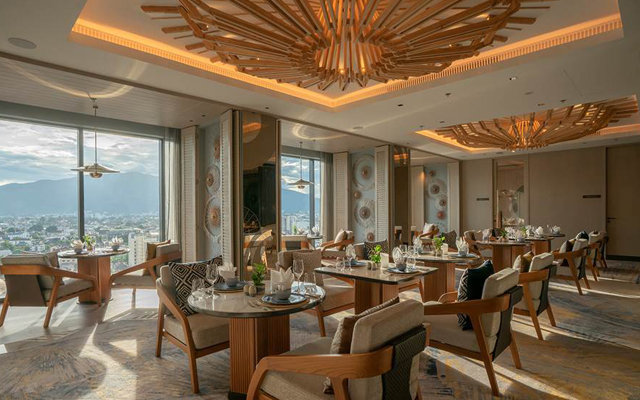
The newly-opened Ritz-Carlton, Bangkok anchors the One Bangkok development with cosmopolitan elegance. Featuring the city's largest ballroom and a spectacular new penthouse suite, it delivers exceptional hardware and deeply authentic, soulful service for business and leisure travellers alike
Behind the imposing, Brutalist concrete that defines Zurich’s Oerlikon district lies a surprising secret. While its exterior honours the neighbourhood’s industrial roots, stepping inside Mama Shelter reveals a vibrant, neon-soaked world that is a far cry from its rigid shell
A polished urban retreat designed for business travellers, Hyatt Regency Kuala Lumpur at KL Midtown combines thoughtful design, seamless service, and exceptional facilities.
Global travel prices are predicted to continue to increase in the remaining months of 2022 and throughout 2023, according to the 2023 Global Business Travel Forecast, published by CWT and the Global Business Travel Association (GBTA).
Rising fuel prices, labour shortages, and inflationary pressures in raw material costs are the primary drivers of the expected price growth, according to the report, which uses anonymised data generated by CWT and GBTA, with publicly available industry information, and econometric and statistical modelling developed by the Avrio Institute.
Macroeconomic influences
The world economy shrank 3.4% in 2020 in one of the worst declines since World War II. Service sectors, including travel and hospitality, were hit especially hard, but the global economy recovered briskly, rising off the lows of 2020 and increasing 5.8% in 2021.
Economic growth is moderating as the recovery lengthens, although another recession is a growing concern. The current base case scenario for 2022 is for 3% growth, followed by 2.8% growth in 2023. Cautionary notes also highlighted in the 2023 Global Business Travel Forecast, highlight the three main forces exerting pressure on the economy and the business travel industry. These include Russia’s invasion of Ukraine coupled with other geopolitical uncertainties, inflationary pressures that are pushing costs higher, and the risk of further Covid outbreaks that could restrict business travel.
Conversely, with businesses ranking sustainability among their top priorities and reflecting the accelerated importance of combating climate change, the report highlights greater visibility at the point of sale for greener travel options, as well as carbon foot-printing, and environmental impact assessment is an opportunity for the travel industry to actively assist in responsible choice-making.
Meetings and events
Prices have increased in all regions across most categories of spend, fuelled by pent-up demand, a desire to build company culture and an uncertain economic outlook. The cost-per-attendee for meetings and events in 2022 is expected to be around 25% higher than in 2019, and it’s forecast to rise a further 7% in 2023.
Alongside pent-up demand, corporate events are now competing with many other types of events that were cancelled in 2020. And, with many companies having given up office space during the pandemic in favor of remote working, they are now booking meeting spaces when staff gather in person, further fuelling demand.
Shorter lead times for events, varying from one to three months versus six to 12 months, are also contributing to this perfect storm, perhaps underscored by corporate concerns that the situation they face today could change very rapidly. This is particularly noticeable within Asia Pacific, which has been slower than other regions to re-open post-pandemic, with ongoing restrictions in China prompting clients to make sure their events can go ahead, and as quickly as possible.
Air
Business travel airfares fell over 12% in 2020 from 2019 followed by an additional 26% decline in 2021. Economy ticket prices fell over 24% from 2019 to 2021, while premium tickets fell 33%. Prices are expected to rise 48.5% in 2022, but even with this steep price increase, prices are expected to remain below pre-pandemic levels until 2023. Following an increase of 48.5% in 2022, prices are expected to rise 8.4% in 2023.
Rising demand and continued price rises on jet fuel, which have seen prices more than double in some markets to over $160/barrel according to S&P Global, are putting upward pressure on ticket prices.
Premium class tickets comprised over 7% of all tickets purchased in 2019. The share of premium class tickets fell to 6.5% in 2020 and to 4.5% in 2021 but have started to rise in 2022. Through the first half of the year, premium tickets made up 6.2% of all tickets purchased. A rising share of premium class tickets will result in higher average fares as average ticket price comprises economy and premium.
International and cross-border bookings are recovering across most regions which will result in a higher share of international ticket bookings and a corresponding higher average ticket price despite uncertainties caused by the war in Ukraine. Following two years of minimal to no expenditure, business travellers are likely to be willing to spend more on tickets, especially as availability reduces due to labour shortages. This upward trend is largely due to widespread vaccine rollouts and border re-openings.
Hotel
Hotel prices fell 13.3% in 2020 from 2019 and a further 9.5% in 2021, however the report expects them to rise 18.5% in 2022 followed by an 8.2% lift in 2023. Hotel prices have already eclipsed 2019 levels in some areas such as Europe, the Middle East & Africa and North America and are expected do so globally by 2023.
Hotel rates have risen sharply in parts of the world including a 22% rise in North America – and a forecast 31.8% across Europe, the Middle East & Africa – driven by an accelerated recovery coupled with continued capacity constraints.
Hotel rate increases were initially driven by strong leisure travel in 2021 but group travel for corporate meetings and events is improving and transient business travel is similarly gaining healthy pace, putting further pressure on average daily hotel rates.
Ground transportation
Global car rental prices fell 2.5% in 2020 from 2019, before rising 5.1% in 2021. Prices are expected to increase 7.3% in 2022, hitting new highs, and rise a further 6.8% in 2023.
The vehicle industry remains capacity constrained and rental agencies which reduced fleet sizes in the wake of the pandemic, have not yet fully recovered – due in part to component shortages and supply chain disruptions that have reduced global auto production.
Rental agencies have reverted to buying used vehicles to increase fleet sizes and are keeping their vehicles longer. Some agencies are also buying vehicles from auto-makers outside of their historically supported brands.
Skyrocketing prices, vehicle shortages and the need for visibility into carbon emissions from door-to-door are driving corporate travel managers to factor ground transport into full trip planning from the beginning. This is especially true when factoring in the inclusion of electric vehicles, and while widespread adoption may still be a few years away, personal preference should not be underrated.