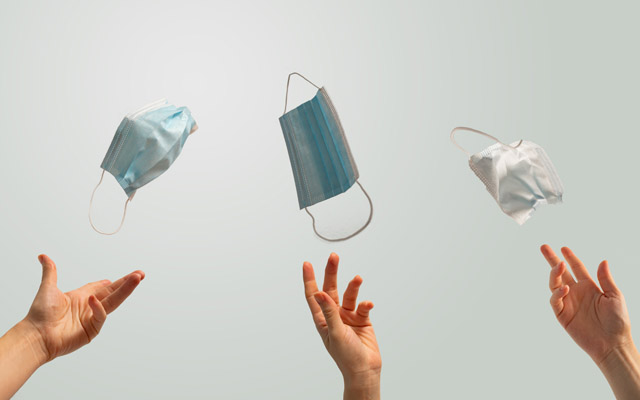
WHO declares monkeypox a global health emergency amid rising cases
The World Health Organisation (WHO) has labelled the monkeypox outbreak a global health emergency, effectively sounding off an alarm for a coordinated international response and the possibility of funding and sharing vaccines and treatments.
More than 16,000 cases have been detected in at least 75 countries, up from about 3,000 at the end of June.
WHO declares monkeypox a global health emergency amid rising cases
The decision by WHO director-general Tedros Adhanom Ghebreyesus on July 23 has not triggered any major travel restrictions or mass vaccination orders in Asia.
While Singapore has eight monkeypox infections at press time, the Ministry of Health said on July 25 that mass vaccination of the population against the viral disease was not recommended. Health minister Ong Ye Kung said the benefits of vaccination do not outweigh the risk, but continued surveillance is ordered.
Thai health authorities, which had on July 24 upgraded the country’s monkeypox alert to the national level, advised against public panic, saying that the “virus does not spread rapidly like Covid”. The Medical Services Department said the country has sufficient medicine and facilities to treat patients in the event of a monkeypox outbreak, according to The Nation Thailand.
Indonesia’s Health Ministry told Jakarta Globe on June 24 that there are no identified cases in the country, but the government has established two labs to detect monkeypox and is preparing detailed guidelines for lab testing.
Australian hospitality company Crystalbrook Collection has rolled out a new event planning service called Meet Mindfully.
Designed to remove the stressors and environmental pressures of conventional corporate meetings, Meet Mindfully encourages meetings with purpose and value.
A guided meditation session at Crystalbrook Byron
No two Crystalbrook meeting experiences are alike, as each property will bring its own personality and local destination experiences to the table, to provide
Highlights include guided sound healing at Crystalbrook Byron on the north coast of New South Wales, local gin blending at Crystalbrook Kingsley in Newcastle – just over two hours from Sydney – and beehive workshops at Crystalbrook Riley in Cairns, Queensland.
Capacity varies based on the activity and ranges from a minimum of 10 people per group to a maximum of 100.
Why is New Zealand the best place to take your incentive? New Zealand is a real surprise. No delegate knows exactly what to expect, and when. There’s such a variety of exclusive activities that incentive planners will have no lack of exciting options to choose from to impress their well-heeled guests.
On top of that, New Zealand’s world-famous hospitality, or manaakitanga, is hard to beat. Our operators go the extra mile to make things special. Delegates arrive as strangers and depart as friends.
Can you give an example of an activity for top achievers? Take them to the top! Celebrate those who’ve reached the pinnacle of success with a Queenstown awards ceremony unlike any other.
Start with an exhilarating jetboat ride. The jetboat comes to a halt. Call for back-up. Helicopters fly in, each with a senior management team on board to ‘bring their teams to the next level’.
The group takes off on a scenic flight, landing on a pristine mountaintop. Champagne is served to toast the high achievers, alongside a feast of fresh New Zealand salmon, oysters and crayfish.
The CEO gives a speech and hands out awards, making it one cool (literally) top of the world experience that’ll never be forgotten.
Hard-to-top experiences
1 of 3
Delegates are treated to a private tour at the Hobbiton Movie Set and a Hobbit-themed lunch
Helicopters can fly your team to Auckland’s Kauri Bay Boomrock to bond over amazing food and activities
Treat your top achievers to a unique experience with a traditional Māori welcome
What other type of exclusive event could be arranged? A magical day starting in Auckland. Delegates are driven in luxury cars to a heli-pad and flown to Hobbiton movie set for a private tour and a Hobbit-themed lunch at The Mill House. Helicopters then fly them to Auckland’s Kauri Bay Boomrock, with its beautiful coastal views.
Delegates receive a traditional Māori welcome and are presented with a special pounamu (greenstone), with designs such as a ‘Koru’ which signifies growth, strength and peace.
The CEO will present the awards, then a celebrity chef will deliver a fantastic meal of the best wine, meat, seafood and fresh produce New Zealand has to offer.
Will my hard-to-impress high-end guests be satisfied? Because New Zealand is small and exclusive, it guarantees a very personalised service. We have great luxury options in terms of accommodation, high quality food and drink choices, complete with attention to detail to make things first-class.
We work with independently validated Qualmark operators and Covid Clean Approved venues to ensure your delegates are in good hands.
We provide destination inspection support so you can personally experience what’s on offer. Book your bespoke familiarisation trip with us today!
Tourism New Zealand’s Edward Kwek can show you the best options to suit your group
Ready for the incentive of a lifetime? For more inspiration, check out The Ultimate Reward – an incentive in New Zealand below:
To discuss an incentive itinerary tailored to your team and objectives, contact: Edward Kwek
Trade Manager Business Events Tourism New Zealand
Contact: +65 9152 9122
Email: Edward.Kwek@tnz.govt.nz
Website: businessevents.newzealand.com
Japan, Singapore and South Korea possess the most powerful passports in the world, according to the latest results from the Henley Passport Index, which is based on exclusive and official data from IATA.
Japan holds the number one spot on the index, with a record-high visa-free or visa-on-arrival score of 193, while Singapore and South Korea come in joint-second place, with a score of 192.
The most powerful passports in the world are Japan, Singapore and South Korea according to Henley Passport Index
Despite the unmatched and unprecedented worldwide access afforded to the citizens of these three nations over the index’s 17-year history, international passenger demand in the Asia-Pacific region has only reached 17 per cent of pre-Covid levels, according to IATA’s latest statistics, having hovered below 10 per cent for most of the past two years.
This figure is far behind the global trend where markets in Europe and North America have recovered to around 60 per cent of pre-crisis travel mobility levels.
EU member states dominate the rest of the top ten spots on the latest ranking, with Germany and Spain in joint-third place, with access to 190 destinations visa-free.
Finland, Italy, and Luxembourg follow closely behind in joint-fourth place with 189 destinations; while Denmark, Netherlands, and Sweden share fifth place with visa-free access to 188 destinations worldwide.
Both the UK and US have dropped down a rank, to sixth and seventh position, respectively.
The UAE passport, which now sits at 15th place on the ranking, with a visa-free or visa-on-arrival score of 176, has been the biggest climber on the index over the past decade. In 2012, it sat at 64th place on the rankings, with a score of just 106.
According to the latest Henley Private Wealth Migration Dashboard, the UAE has also become the focus of intense interest among affluent investors and is expected to see the highest net influx of HNWIs globally in 2022, with a forecast net increase of 4,000 – a dramatic increase of 208 per cent versus 2019’s net inflow of 1,300 and one of its largest on record.
Exclusive research conducted by Henley & Partners reveals that top-ranking passports have almost regained pre-pandemic levels of access. By comparing the current level of travel freedom with the most severe Covid-related restrictions imposed over the past few years, results show that UK and US passport holders now have unrestricted access to 158 destinations around the world – as opposed to just 74 and 56 destinations, respectively, at the height of the pandemic in 2020. Japanese passport holders enjoy unrestricted access to 161 destinations, as opposed to only 76 in 2020.
The study also determined a strong correlation between a nation’s passport power and its peacefulness.
Henley & Partners noted that all of the nations occupying the top 10 spots on the Henley Passport Index can also be found in the Global Peace Index’s top 10 ranking. Likewise, for the bottom ranking nations.
Rising Covid-19 caseloads across South Korea have forced the government to tighten its testing regime for arrivals, with all travellers entering the country from July 25 required to take a PCR test within 24 hours.
Currently, travellers are given up to three days upon arrival to fulfil the test.
South Korea has tightened its testing regime for international arrivals due to recent Covid-19 surge; Jeju International Airport pictured
Travellers must stay in their accommodation until a negative PCR test result is obtained. In the event of a position result, travellers must quarantine for seven days.
To facilitate on-arrival testing, South Korea is expanding the number of test centres at airports across the country. There are now three test centres in Incheon International Airport and one in Gimhae International Airport. Jeju International Airport will get a test centre within this month.
As of July 21, the Korea Disease Control and Prevention Agency has reported 71,170 new Covid-19 infections in the country, including 320 from overseas. New cases have remained above the 70,000 mark for the third straight day on Thursday due to the spread of a highly contagious Omicron subvariant.
According to a notice posted on the Korea Tourism Organization website, the government may limit the 48-hour pre-entry test method strictly to PCR only should the wave persist. Currently, South Korea accepts negative results through either 48-hour PCR or 24-hour RAT/ART test methods that are supervised by health authorities as a pre-entry requirement.
China's zero-Covid strategy is taking a toll on its MICE industry; people walking in Chengdu pictured
China’s beleaguered meetings industry could find a silver lining if “freelancing” becomes a viable route for practitioners who have lost jobs and wish to return when opportunities arise.
China Star founder Liu Ping is proposing the launch of an HR workshop for all sectors of the industry – such as event organisers, simultaneous interpretation companies, and technology providers – to address legal, contractual, remuneration and other questions related to freelancing.
China’s zero-Covid strategy is taking a toll on its MICE industry; people walking in Chengdu pictured
Liu is seeking support from ICCA to invite international speakers who have used freelancers, and a freelancer to share their experience on a panel.
China Star, established in 2005, implemented a freelance programme this year when it had to trim headcount. These team members, exclusive to the company, work from home or remotely in any location.
As part of the deal, Liu said China Star “raised the bonus for each project” freelancers take on, but they had to “pay their own insurance”.
“The government should invest in and pay to train (freelance) staff (who lost their jobs due to the Covid-19 pandemic),” she commented.
Manpower attrition is also affecting expatriates in the industry.
The expatriate founder of a DMC, set up more than 10 years ago will be leaving China soon, while an expatriate director moved home earlier this month.
She said: “It is unfortunate to have to close the company, but there has been no cash flow for the last 10 months. It is expensive and time-consuming to operate in China where you have to have special licences to do things legally. It was not possible to carry on anymore with no government help.”
Meanwhile, Alicia Yao, general manager of IME Consulting, observed the industry is facing a talent war with companies headhunting staff to work on and design meeting programmes.
Yao continued: “Online tech companies have taken over about 50 per cent of traditional meetings business and are trying to hire staff with three to five years of experience.
“But there is not enough talent who can design and manage hybrid events. Staff with 10 to 15 years of traditional industry experience are losing out to juniors who have better English language and digital marketing skills, and are eager to learn.
“There was more demand for incentives in the past,” Yao noted. “But clients are organising more sales and marketing events now, and there is a shortage of the right people who can run hybrid events and design content.”
Yao noted that among those who have managed to stay on are working part-time to manage and run meetings for associations in distribution and retail, sectors that are doing well.
She added: “The challenge in China (because of ongoing Covid-19 outbreaks and a zero-Covid policy) is having to switch meeting dates several times. Attendees still prefer meeting face-to-face and online events are not as popular.”
Despite the challenges, Yao is hopeful China will open for incoming business by end-2022.
Kanokporn: TCEB's focus on 12 targeted S-curve industries allows it to differentiate itself from other MICE destinations in Asia
The Thailand Convention and Exhibition Bureau’s (TCEB) move to align its event acquisition efforts with the country’s most critical industries – known as the S-Curve industries – is paying off as business gatherings gain pace post-lockdown.
In an interview with TTGmice, Kanokporn Damrongkul, TCEB’s director – exhibition department, said Thailand welcomed 11 exhibitions in 2021 and will have 38 for this year and 67 in 2023.
Kanokporn: TCEB’s focus on 12 targeted S-curve industries allows it to differentiate itself from other MICE destinations in Asia
“Most of the shows Thailand has secured fall into the 12 S-Curve industries,” said Kanokporn, who led a team of TCEB representatives and exhibition suppliers to meet with leading PEOs and show owners based in Singapore on July 6.
The 12 targeted S-curve industries include smart electronics; logistics and aviation; biofuels and biochemicals; and robotics.
Kanokporn said TCEB’s approach allows it to avoid “head-on” competition with other Asian MICE cities.
She explained: “There are industries that Thailand is very strong in, such as manufacturing, agriculture, food production and automotive, just to name a few. Our government injects a lot of money into these industries to facilitate trade, investments and research. Naturally, such government support generates business interest and with that comes business activities, like tradeshows.”
Kanokporn also underscored Thailand’s positioning as a business gateway to the increasingly important markets of Cambodia, Laos, Myanmar and Vietnam – an advantage that sets the Kingdom apart from other Asian MICE cities.
For all the exhibitions that TCEB is courting, attention is paid to their potential contribution to the country, its people and the environment.
“We provide an economic impact calculator for every event, which helps us to focus on the return-on-everything concept instead of the size of the show or volume of attendance. Shows held in Thailand must leave a positive legacy and not just benefit the show organiser,” said Kanokporn.
While Thailand’s business events outlook is bright, Kanokporn acknowledges challenges presented by the talent leakage.
“People left the industry during the pandemic, and some are not returning. The industry has to work together to build back the ecosystem, so TCEB has created the Exhibition Organizer: Pro League campaign to support this effort,” she said.
Simply known as EO: Pro League, the campaign is part of the bureau’s effort to strengthen the foundation of the Thai exhibitions ecosystem during the business disruption. It aims to ensure that local capabilities are ready for international collaboration, by providing upskilling, reskilling and cross-skilling opportunities for local exhibition stakeholders. It has a goal of building 25 certified local exhibition stakeholders of global standards by 2023.
EO: Pro League is expected to result in the creation of new shows and expansion of existing ones, and connect local players with foreign businesses looking to expand their operations in Thailand.
Accor and Singapore’s Fragrance Group will open Novotel Devonport in Tasmania’s north-west in 4Q2022. This will be the fifth hotel in Australia under their collaboration.
The 187-room hotel overlooking the Mersey River will feature a restaurant and bar, 24-hour room service and fitness centre, and a meeting room for up to 20 delegates. It is located nearby the Spirit of Tasmania terminal and with direct access to the paranaple convention centre.
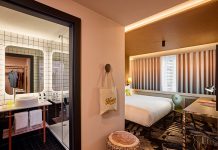
Guestroom
Accor Pacific’s chief executive officer Sarah Derry said: “The presence of this popular international brand will expose Devonport and the greater northern Tasmania region to a broader market and contribute to the region’s ability to attract major conferences, events and groups.”
Novotel Devonport will be tailored to suit both business and leisure travellers, and will fill the gap as a quality accommodation option – something previously lacking in this city despite being a major gateway for tourism and trade.
Fragrance Group’s chief executive officer James Koh said: “We are excited to further develop our partnership with Accor and deliver Novotel Devonport, which will be an elevated addition to north Tasmania’s tourism offering. The city of Devonport is on the precipice of a significant tourism boom, with additional major infrastructure works underway to further enhance the destination. Novotel Devonport is a celebration of innovative interior design, thoughtful detail and, importantly for this location, will provide a great culinary experience for guests and the local community.”
Leading experts and industry players are set to convene in person at the International Built Environment Week (IBEW) 2022 from September 5-9, 2022, at the Sands Expo & Convention Centre in Singapore.
IBEW runs from September 5-9, 2022, with the tentpole IBEW Conference and BEX Asia trade exhibition, from September 6-8, 2022.
A previous edition of BEX Asia
This year, BEX Asia is expected to showcase some 200 brands and solutions from over 20 countries, and host more than 10,000 professionals and decision makers from Singapore and beyond. It will feature a wide range of solutions for the built environment including HVAC, robotics systems, building materials, energy management, IoT sensors, and digitalisation.
A array of tech and digital companies like Autodesk, Cupix and Hitachi Asia will be featuring their latest technologies and solutions. Other well-known names in the built environment sector who will be present include Camfil Singapore, Daikin Airconditioning Singapore, Nippon Paint, Singapore Polytechnic, Wavin Singapore, Ministry of Clean, Procore Technologies and Schindler Lifts (Singapore).
Meanwhile, the IBEW Conference will feature a line-up of over 65 industry leaders and experts such as Moshe Safdie, founder of Safdie Architects, and Pierre-Eric Saint-Andre, chairman & CEO, Bouygues Bâtiment International. Seminars will cover three core pillars, Sustainability & Green Economy, Technology & Innovation and Leadership & Future Growth.
The conference will also bring together some 400 CEOs and senior management for a by invite-only CEOs in Conversation on September 8. Themed Leading Together, Co-creating Success, this session will see leaders from Building and Construction Authority, Ong&Ong, Keppel Land, Obayashi Singapore and McKinsey & Company discussing and sharing what the built environment firms can do collectively to accelerate growth.
Tan: a lot of opportunities for digital enhancement in live events
As the business events industry returns to in-person formats, Singapore-headquartered Jublia – which sets itself up as the first hybrid event platform that focuses on audience engagement through a data-driven process – has chosen to align itself with live events.
Tan Kuan Yan, CEO & co-founder of Jublia, believes that the return to live events – largely offline and inherently more complex to manage – does not mean that all digital and tech enhancements should be disregarded, but instead, integrated into live events to improve and add value to them.
Tan: a lot of opportunities for digital enhancement in live events
This is because no matter how advanced technology becomes, it will never replace live events.
“Event tech providers increasingly need to align themselves with either side of the industry (virtual or live) or risk diluting their efforts,” he added.
In this transition back to live events, Jublia activated its DigitaLIVE masterplan to improve its platform with tracking metrics and data-driven processes to furnish better, tangible insights to event organisers. This is in addition to the business matching, pre-event engagement, event navigation and other capabilities that the platform already provides.
“The forced digitisation of events during the pandemic left the industry with much exposure and awareness in tracking metrics. The DigitaLIVE campaign heightens awareness (for event planners) as to how (we can) improve aspects of their live event. Digital tools serve to empower the live event, and not replace it,” Tan said.
Tan recalled a period of “intense pivot” for Jublia’s technology capabilities in the first six months of the event industry disruption. It ensured Jublia’s business continuity amid event postponements and cancellations, and led to the birth of the company’s Secure, Anticipate, and Future-proof Event planning process at the start of 2021. This process allows clients to organise events with more certainty, as Jublia’s Engagement Hub is able to handle last minute swaps from live to virtual and vice versa.
Audience engagement on Jublia’s platform
“We provided this service at no extra cost amid the uncertain regulatory climate, which also assured our clients that our Engagement Hub is flexible and adaptable to any type of event,” said Tan. A client who organised AntwerpXL in late 2021 benefitted from this process, as they had to hastily switch from a live format to virtual at the very last minute.
Despite constant enhancements to its event management platform, Jublia has maintained its pricing base since it started operations about a decade ago.
Jublia’s constant push for innovation allowed the company to more than double its headcount during the pandemic.
Tan said: “We are mindful that Jublia is not at the centre of the event tech universe, and have to work collaboratively with others. We constantly look outside our domain at factors that can have an impact on our engagement.”
For instance, Jublia compiled its top learning points on registration – a vital part of any event – into an e-book, Orchestrating Registration to Infinity and Beyond to help organisers improve the process.
Agenda discovery on Jublia’s platform
Moreover, in addition to the recent release of Jublia App 3.0, the company has in the pipeline two more event tech releases before 2022 is up.
The first is Scan, a retrieval platform that helps to collect data on qualified leads to help event organisers quantify and measure their event’s success. The second is AI Maps, which can render and route through multi-hall venues, providing navigation convenience to attendees and smoother venue management for organisers.
“I hope providers like us can bring collaboration to the next level for the betterment of the industry. There is no platform that can perform well in all aspects. This will ensure organisers don’t have to choose technology based on their convenience, but based on specialisation and performance towards attendees’ experiences,” Tan concluded.
The newly-opened Ritz-Carlton, Bangkok anchors the One Bangkok development with cosmopolitan elegance. Featuring the city's largest ballroom and a spectacular new penthouse suite, it delivers exceptional hardware and deeply authentic, soulful service for business and leisure travellers alike
Behind the imposing, Brutalist concrete that defines Zurich’s Oerlikon district lies a surprising secret. While its exterior honours the neighbourhood’s industrial roots, stepping inside Mama Shelter reveals a vibrant, neon-soaked world that is a far cry from its rigid shell
A polished urban retreat designed for business travellers, Hyatt Regency Kuala Lumpur at KL Midtown combines thoughtful design, seamless service, and exceptional facilities.