



New Zealand and Australia have succeeded in their joint bid for the largest, most significant worldwide conference on ageing in 2029.
Queenstown, New Zealand will host the pre-Congress Leadership Summit, before the 24th International Association of Gerontology and Geriatric (IAGG) World Congress of Gerontology and Geriatrics takes place in Sydney, Australia in 2029.
The pre-Congress Leadership Summit is expected to attract up to 300 delegates to Queenstown and inject around NZ$1 million (US$617,935) into the local economy. Meanwhile, the Congress in Sydney is then expected to attract around 5,000 delegates over five days.
The quadrennial IAGG World Congress is the largest, most significant worldwide conference on ageing, sharing the latest science, research, training, technology, and policy development presented by experts from around the world.
Delegates will include representatives from medicine, nursing, allied health, aged care, policy and practice fields, and other disciplines brought together to address the latest approaches to improving the experience of ageing for ageing and older people across the globe.
A significant multi-year bidding effort by the Australian Association of Gerontology (AAG), the New Zealand Association of Gerontology (NZAG) and the Australian & New Zealand Society for Geriatric Medicine (ANZSGM) ensured the win, which was decided by vote by more than 80 IAGG member countries at the 2022 IAGG Council and General Assembly.
The bid was also supported by the business events teams at BESydney and Tourism New Zealand.









 He then joined the Sheraton Jeddah Hotel in Saudi Arabia as director of F&B in 2012 and subsequently moved to the flagship properties at Sheraton Grand Sydney Hyde Park in Australia and W Bangkok in Thailand.

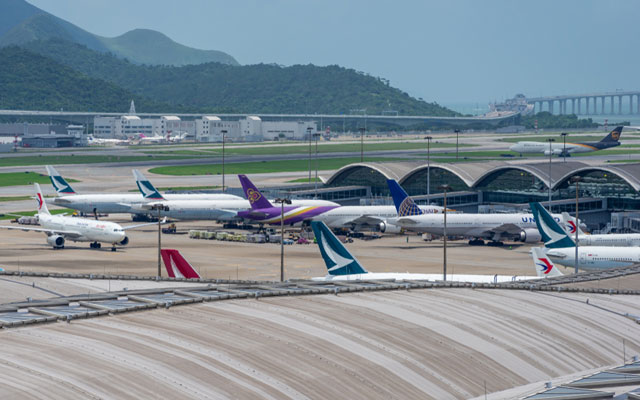









Hong Kong’s authorities will heed science and temporarily lift the city’s flight suspension mechanism from today, choosing to rely on an extra PCR test for arriving travellers to deter the import of Covid-19 infections.
According to a statement from the government, the move is supported by initial statistics and scientific analysis that showed it is more effective to deter Covid-19 transmission through more frequent nucleic acid testing on arriving passengers than flight bans.
Travellers arriving into Hong Kong from July 8 will have to undergo a PCR test on the third day of their quarantine.
The move also takes into consideration the surge in arrivals as students return home for their summer holidays.
Hong Kong’s flight suspension mechanism has been an unpopular one, as it puts both travellers and airlines in a difficult position. The mechanism punishes an airline with a five-day flight route ban when at least five passengers – or five per cent of travellers, whichever is higher – are tested positive for Covid-19 upon arrival in Hong Kong.
Miramar Travel’s general manager, Alex Lee welcomed the move. He said: “This mechanism not only affected incoming traffic but also appetite of outbound travel as clients are worried about cost and time from having to rebook tickets and secure quarantine hotels if they failed to fly back as scheduled. Therefore, scrapping this mechanism may spur the resumption of flight services and frequency. This is turn will make airfares more affordable.”
Wing Wong, managing director of W Travel, predicts a ramp up in flight capacity following the suspension of the flight ban.
“I expect the first wave of arrivals to comprise students returning from overseas and domestic helpers in next eight weeks, followed by businessmen, travellers here to visit relatives, and holidaymakers. My key concern now is for our supply of quarantine hotels to meet demand,” he added.