Asia/Singapore Monday, 12th January 2026
Page 399

Singapore secures steady pipeline of MICE events for 2022 and beyond

0
Singapore's business events sector is gaining momentum as she gains confidence in holding Covid-safe events

Mid-to longer-term prospects for Singapore’s business events industry remain intact, and Singapore is well-placed to maintain its top business events destination status despite the ongoing pandemic.

Last year, the city-state hosted more than 200 business events, welcoming around 50,000 local and international attendees. These included pilot events where new Covid-safe protocols were tested, such as the Bloomberg New Economy Forum, Industrial Transformation Asia Pacific 2021, Milken Institute Asia Summit, and the 50th St Gallen Symposium.

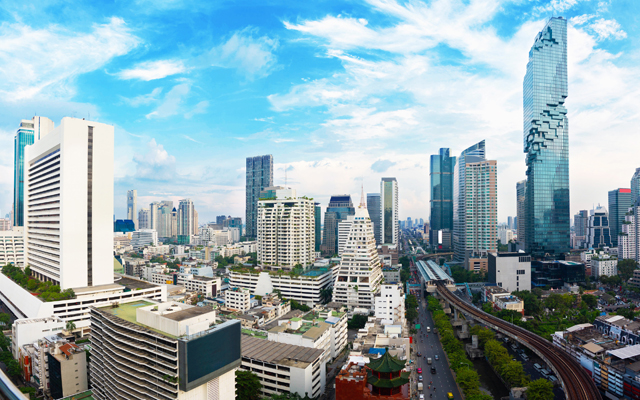
Singapore’s business events sector is gaining momentum as she gains confidence in holding Covid-safe events; Singapore’s skyline pictured

In 2021, the Singapore Tourism Board (STB) managed to secure 26 significant business events, some of which are multi-year deals.

Notable events this year include the Singapore Air Show, Global Health Security Conference 2022, FIND – Design Fair Asia (2022–2024), World One Health Congress 2022, World Cities Summit 2022, 60th International Young Lawyers’ Congress 2022, and Seafood Expo 2022.

Beyond 2022, the business events slate will continue its robust growth with events such as Gastech 2023, Transport Logistic and Air Cargo 2023, SILMO Singapore (2023–2025), World Congress of Dermatology 2023, and Worldchefs Congress and Expo 2024.

At the recent STB media conference, Yap Chin Siang, deputy chief executive, highlighted two other prominent events that will grace Singapore shores – the Rotary International Convention 2024, the largest association convention ever hosted in Singapore; and the 110th Lions Clubs International Convention in 2028.

The former is expected to attract 25,000 members to the city-state, while the latter looks set to welcome 20,000 foreign delegates and generate more than S$50 million (US$37.2 million) in expected tourism receipts.

STB has also been working closely with SACEOS (Singapore Association of Convention & Exhibition Organisers & Suppliers) to support the industry-led accreditation programme SG SafeEvent Standards Certification, where more than 80 organisations have already registered interest. To date, 40 organisations and 3,200 Ambassadors have been certified.

“All these underpin the appeal of Singapore’s MICE destination status and it is a testament to international confidence in our ability to hold high-quality events in a safe way, especially in a post-covid environment,” stated Yap.

CWT promotes Belinda Hindmarsh to COO of RoomIt and China

0

CWT has appointed Belinda Hindmarsh as senior vice president, COO, of RoomIt and China, effective immediately. She reports to president and CCO, Patrick Andersen.

In this newly-created role, Hindmarsh will spearhead commercial development of RoomIt, CWT’s global hotel distribution division, and CWT’s operations in China – seeking to further leverage the growth trajectory and potential of both operations.

She joined CWT in early 2018 to lead Global Sales Effectiveness before becoming senior vice president, global market management & market development in 2020.

Hindmarsh has over 20 years of experience in the travel tech space, having held various international and global operations, marketing, supplier management and commercial roles with Expedia Group and Aer Lingus.

TTGmice breaks for Lunar New Year

0

TTGmice will be taking a break from January 31 to February 2, for the Lunar New Year holidays. News will resume on Thursday, February 3, 2022.

From all of us at TTG Asia Media, we wish all of our readers a happy and prosperous Lunar New Year!

Oddmund Braaten helms Interprefy

0

Interprefy has announced that current COO and board member, Oddmund Braaten, is transitioning to the role of CEO, effective February 1, 2022.

He takes over from Annett Polaszewski-Plath who has resigned.

Braaten has been leading Interprefy’s commercial and operational success for five years, and his appointment brings continuity and the necessary skills to lead the company on its mission of future growth and success in 2022 and beyond.

Renaissance opens second outpost in the Island of the Gods

0

Renaissance Hotels, part of Marriott Bonvoy’s portfolio of 30 hotel brands, unveils its second property in Island of the Gods with the opening of Renaissance Bali Nusa Dua Resort in Indonesia.

The new resort – which overlooks the Indian Ocean – features 310 guestrooms and facilities such as a 24-hour gym, spa, and four thematic pools, making it an apt choice for small corporate groups and bleisure guests with their families in tow.

For events, planners can make use of the 1,120m2 of function space across five event rooms and a maximum of seven breakout rooms. The largest space, the Grand Ballroom, is fully equipped with advanced audiovisual capabilities, and can accommodate up to 1,100 people.

Anchoring the six F&B experiences at the resort is Backstage, an all-day dining restaurant offering local and international favourites at its buffet and live stations. Other options include Lion X which serves Cantonese and Sichuan cuisine with modern twist; authentic Indonesian restaurant, Nusantara by Locavore; Tanah Liat which serves fresh seasonal seafood and plant-based cuisines; pool bar Atomic 17; and lobby lounge space, R Bar.

Situated on the southern part of Bali, Renaissance Bali Nusa Dua Resort is a 15-minute drive away from the Ngurah Rai International Airport.

Flight Centre Travel Group names first global sustainability officer

0

Flight Centre Travel Group (FLT), the parent company of FCM Travel has appointed Michelle Degenhardt as its global sustainability officer.

She is based in FLT’s global head office in Brisbane, Australia.

In the newly-created role, Degenhardt will work closely with teams from FLT and its corporate brands across all levels to help ensure the company’s business practices are economically, environmentally and socially sustainable.

Her job scope includes collaborating with FLT and its subsidiaries’ various stakeholders including senior leadership team, employees, leisure and corporate customers, suppliers and partners to further develop and oversee the execution of strategies to deliver on the organisation’s environmental, social and governance objectives.

Degenhardt has worked for FLT for 17 years and was formerly the company’s culture and employee engagement leader, a role that included oversight of the Flight Centre Foundation in Australia. During her career with FLT, she has been involved in a number of sustainability-related issues and areas, including the development of the company’s Responsible Travel charter and the creation of a head office recycling and waste reduction programme.

Raffles confirms acting GM in Cambodia

0

Raffles Hotels & Resorts has appointed Dennis de Groot as acting general manager of both Raffles Hotel Le Royal in Phnom Penh and its sister hotel Raffles Grand Hotel d’Angkor in Siem Reap.

With more than 15 years of experience in the hospitality industry, de Groot previously held hotel management positions in the Maldives, Azerbaijan and South Africa, including nearly three years at a private game lodge.

De Groot was recruited by the Accor Group in 2016 to oversee the rebranding of the Jumeirah Dhevanafushi as it transformed into the Raffles Maldives Meradhoo.

He then moved to Cambodia in 2018 as hotel manager at Raffles Hotel Le Royal and was appointed the acting general manager in January 2021.

Stay close, stay safe

0

Australia
Australia’s event planners are returning to international meetings with some anxiety, having seen border rules at home change on the fly.

This is despite the Australian government opening travel lanes with Singapore, Japan and South Korea recently, with more travel bubble arrangements planned for 2022.
Some of Australia’s most prominent event planners said they would first like to see a number of things happen domestically before they could become confident about doing events abroad.

“I think we’ve got a little way to go yet… just to show that normal business can be undertaken safely and effectively before they take that commercial risk of taking people offshore,” said Kate Smith, managing director at PCO Waldron Smith Management, and immediate past chair of Meetings & Events Australia.

“The first step is ensuring we can travel around nationally, easily and effectively to attend business events without any great risk. Then I think we’ll start to look at outbound business. That confidence piece is really crucial across the board and the ability to bring people back together in any situation is really important,” continued Smith.

Australia’s domestic borders have been a case of sliding doors, opening and closing to selected states depending on the perceived risk of visitors bringing the Covid-19 virus and its variants into their state.

Of all the states, Western Australia has the strictest border controls and has announced that the earliest date it would welcome visitors would be in February 2022, causing frustration among event planners.

“I think people are ready to travel overseas,” opined Renee Bennett, managing director of Encanta and a board director at Business Events Perth.

“But I believe domestic events will be king for a while, and I personally feel that Western Australia is going to struggle with that because the majority of the population is on the east coast. We’ve lost so much because of uncertainties, with so many events being cancelled or postponed for 2022 because the shutdowns happen very swiftly. That has made it challenging for any of our clients,” she added.

Bennett also said convention bureaus could provide more advocacy around protecting and underwriting events that are on the books at the moment.

“By just cancelling an event 48 hours beforehand when so much has been outlaid (financially), it just makes it not feasible for many to instil that confidence. We’ve got people whose livelihoods and homes are on their line when they invest in events and therefore cancelling an event where we have to refund people and absorb incurred costs isn’t good enough,” lamented Bennet.

Bennett applauded New South Wales, which has offered to underwrite events over the summer period but underscored that this was needed as a national scheme for an industry that contributes A$36 billion (US$26 million) to the economy.

On a positive note, Smith said despite the many challenges, everything is heading in the right direction, and confidence about commercial risks for events is growing quickly. – Adelaine Ng

“Corporate incentives used to mix leisure with teambuilding or motivational sessions. But with additional travel costs, itineraries will need to be simplified to offer mainly leisure (elements).”
Vidya Hermanto, Chief experience officer, Panorama, Indonesia


India
A rebound in business events in 2021 has sparked expectations for a stronger year come 2022, although industry stakeholders predict that domestic gatherings will remain dominant.

S D Nandakumar, president & country head – B2B at SOTC Travel, noted that while corporates are enquiring on international travel, the ongoing Covid situation and restrictions will prompt events to stay on home ground.

Subhash Goyal, chairman of STIC Travel & Air Charter Group, agrees and explains that more international scheduled flights need to resume for international travel and events to return.

Despite the prevailing sense of caution, some overseas business events have occurred.
SOTC Travel delivered two “mega groups” to Dubai recently. More than 600 attendees were involved, and the programme featured a cricket tournament and the Expo 2020. The company also organised a corporate gathering in the Maldives, and Nandakumar expects demand for business events in Switzerland to soar in 2022.

Thomas Cook India is attending to strong interest in overseas events from Indian companies, with destinations such as Dubai, Russia, South Africa, Switzerland and the Czech Republic all earmarked by clients for 2022.

“Outbound demand will grow significantly in 2022, considering that vaccination rates are improving in India and overseas, creating a sense of confidence among corporate event groups,” opined Naveen Manchanda, president, Indian Association of Travel & Tourism Experts.

Goyal echoed the optimism, saying that “things will start coming back to normal” in 2022, and that pre-Covid outbound MICE demand will return by 2023.

Indian PCOs applauded several active tourism boards, such as those in Singapore, South Africa and Dubai, that have continued to engage them during the travel freeze, keeping them updated on the various business events offerings in their destinations.

Going forward, Nandakumar said CVBs and MICE vendors would need to continue to assure the marketplace of hygiene and safety.

“(Valuable information) includes the implementation of health, safety and sanitisation protocols; entry/exit requirements; and optimal group sizes,” remarked Nandakumar, adding that the provision of contactless services and flexible booking options were just as important for rebuilding travel confidence. – Rohit Kaul

“Companies don’t feel comfortable with planning an overseas incentive trip while Covid-19 is still not tamed.”
Adam Kamal, Head of procurement & domestic market, 
ICE Holidays, Malaysia


Indonesia
Interest in conducting overseas business events is growing among local companies but actual conversion in 2022 will depend on the pandemic situation, government restrictions, visa and airline policies as well as company budgets.

According to Indonesian event organisers, the government’s 10-day quarantine requirement presents the steepest obstacle.

Vidya Hermanto, chief experience officer of Panorama, said: “When the government reduced the quarantine period from eight to three days, we had incentive groups travelling to Switzerland and Turkey. When it was increased to seven days and then to 10, a number of clients decided to postpone their plans.”

Yento Chen, CEO of Destination Tour, said lengthy quarantines would make an incentive programme impractical.

“A trip to Europe usually takes up to 14 days,” Chen explained. “When (the return quarantine) is for 10 days, participants will have to be out of office for almost a month.”

Fluid government regulations are not the only issue, according to Agustinus Pake Seko, president director of Bayu Buana Travel Services. Technology companies in Indonesia that have replaced business travel with virtual meetings will continue to meet online, while multinational companies in Indonesia are still putting their overseas trips on hold.

On the bright side, he expects NGOs that have postponed their trips over the last two years to finally resume plans in 2022 – barring yet another wave of infections.

For now, corporate incentive programmes are changing as travel continues to face restrictions. Agustinus said clients have been gifting their staff Bayu Buana membership cards, which allows them to choose their individual reward trips at their own pace.

He expects small incentive group travel to also trend strongly in 2022, evidenced by recent client events for 15 to 30 top achievers at “exotic places” such as Amanwana, Nihi Sumba and Lelewatu Resort Sumba.

Budget constraints will also hamper outbound events recovery, warned Pauline Suharno, president director of Elok Tour and chairman of the Indonesian Travel Agents Association.

“Many companies are facing budget constraints. With Covid-19 tests, increased insurance coverage requirements and pricier airfares, travelling has become more expensive. As such, some companies will hold back outbound travel plans,” she said.

Another change in post-lockdown events structure, according to Vidya, is the simplification of itineraries.

“Corporate incentives used to mix leisure with teambuilding or motivational sessions. But with additional travel costs, itineraries will need to be simplified to offer mainly leisure (elements),” she said. – Mimi Hudoyo

Malaysia
The Malaysian government may have relaxed border restrictions, allowing Malaysians to travel overseas for leisure or business events, but corporate demand for overseas activities has yet to return.

Event planners blame the compulsory seven-day quarantine upon return as well as pricey airfares.

Zahira Tahir, founder and CEO of Universal Holidays, told TTGmice that reduced flight frequencies to overseas destinations have driven up airfares, making them “ridiculously expensive”.

Scant interest in resuming overseas events is also a result of reduced destination promotions by overseas CVBs in Malaysia throughout the travel freeze.

While destinations such as Thailand, Dubai and Turkey have reopened to travellers, destination promotions to lure business events from Malaysia have been dull compared to pre-pandemic times, Zahira said.

The high number of Covid-19 infections in Malaysia as well as worries over new variants are also keeping Malaysian companies from planning any overseas events, observed Mint Leong, managing director at Sunflower Holidays.

To safeguard their staff, companies are choosing to reward their top performers with cash or domestic holidays. And with the pandemic affecting many people financially over the past two years, cash rewards have risen in popularity.

Leong elaborated: “Frequent and long lockdowns in Malaysia have affected many businesses, while those employed have to accept pay cuts and reduced work hours.”

With overseas travel bookings still elusive for her company, Leong thinks that any return in events outside of Malaysia would only be possible at the end of 2022, she said.

Malaysia’s lacking outbound confidence has been further dented by Omicron worries, opined Adam Kamal, head of procurement & domestic market, ICE Holidays. The new variant has led many countries to close their borders or create new restrictions to contain potential spread. Such unpredictable government policies are causing companies to think twice about planning overseas events and sending staff of trips.

In response to travel uncertainties, Malaysian companies are choosing to take their events to domestic destinations such as Desaru, Penang and Langkawi.

Adam said: “These are destinations that are good for both leisure and business, and are easily accessible by road and air from Kuala Lumpur.

“We are also proposing to clients to consider cruising as an option for MICE, especially as Star Pisces has just started operating from Penang to Langkawi in December,” he said. – S Puvaneswary

“Mass corporate event travelling will be kept to a minimum for the time being to mitigate corporate risk.”
Nelson Khoo, Head of events – Singapore & Indonesia, 
CWT Meetings & Events


Singapore
Strong travel sentiments dominate Singapore companies, as borders begin to gradually open across the world, but new Covid-19 variants are again threatening confidence.

Alexis Lhoyer, co-founder & chief business officer of Chab Events, told TTGmice that travel interest hinges on companies’ travel policies and risk appetite. Some conservative clients have not allowed any resumption of corporate travel despite Singapore’s Vaccinated Travel Lane (VTL) arrangements with select countries.

On the flipside, more adventurous clients have gone ahead to Phuket for events in late December, while there has been an uptick in queries for outbound travel, in particular to European destinations with a VTL arrangement with Singapore.

With VTLs still in its “infancy stage”, Nelson Khoo, head of events – Singapore & Indonesia, CWT Meetings & Events, expects domestic events to continue to reign supreme in 2022.

“Mass corporate event travelling will be kept to a minimum for the time being to mitigate corporate risk,” he added.

Travel regulations that can change at a drop of a hat are spooking CWT clients, many of whom are in a “wait-and-see mode” when it comes to travel. Khoo added that companies have had to deal with “steep learning curves on safe management measures and planning processes”.

Khoo expects demand for overseas events to pick up when clients are able to access destinations with a repertoire of successful in-person events, and when VTLs “reach a point of stabilisation and confidence is strengthened (with) minimal changes to travel plans”.

This would likely happen in 3Q2022, he offered.

Also seeing clients taking a wait-and-see approach is Melvyn C Nonis, director of M.I.C.E Matters. He pointed to possible movements in 2H2022, albeit with smaller groups of 80 to 120 pax instead the 250 to 500 attendees seen pre-pandemic. Domestic meetings, conferences and teambuilding events will be a mainstay for 1H2022. Nonis is hopeful that Singapore’s restrictions will be further eased by then.

For outbound events to truly rebound, events specialists in the city-state say consistency in travel policies must first be established.

“We will need accurate, real-time information and updates, especially on SOPs (standard operating procedures), so that there will be minimal inconvenience to organise and manage an event, and keep costs down,” said Nonis.

Lhoyer agrees, saying: “At least a visibility of three to four months to ensure planning won’t get wiped out by new measures would be great. Right now, it is the lack of clarity and visibility that keeps projects in limbo.”

When asked about Omicron’s impact on business events’ recovery, Lhoyer said it presented just another challenge, as Delta has, and expressed confidence in overcoming it.

Meanwhile, Khoo said the new variant would extend decision-making processes and add more caution to event planning. – Rachel AJ Lee

Omicron dampens near-term momentum for business travel: GBTA

0
Ongoing uncertainty, government restrictions and variant impacts continue to challenge business travel’s recovery especially for international travel

New variant developments, government restrictions, and international policy inconsistencies are currently hindering a more accelerated return for global business travel. However, the industry continues to reflect progress and optimism in its long-view expectations for 2022, according to the latest poll from Global Business Travel Association (GBTA).

“Here at the start of a new year, the business travel industry and business travellers continue to face a dynamically changing landscape due to Omicron. One comment received from a poll respondent readily sums it up: ‘Uncertainty is a huge wet blanket on [business] travel,’” said Suzanne Neufang, CEO, GBTA.

“Despite the wave of Omicron and the ripple of challenges it has created, there are positive signs, and industry professionals continue to be optimistic for the long-term outlook of global business travel.”

Ongoing uncertainty, government restrictions and variant impacts continue to challenge business travel’s recovery especially for international travel

This poll is the 25th in GBTA’s Covid-19 Recovery series tracking the pulse of global travel buyers, supplier members and other stakeholders.

Here are some of the highlights from the January poll:

Optimism for the longhaul. Three in four travel managers expect business travel volume at their company will be much (17%) or somewhat (58%) higher in 2022 than it was in 2021. Another one in 10 (12%) expect business travel to remain about the same as 2021, but few (5%) expect it to be lower.

Among travel suppliers and TMCs, three in four expect their company’s revenue in 2022 from business travel to be much (25%) or somewhat (51%) higher compared to 2021. An additional one in ten (13%) suppliers and TMCs expect company revenue to remain about the same as 2021.

Company travel cancellation decreases. Poll results show a decline in the percentage of companies who continue to suspend or cancel business travel. Sixty-eight per cent of GBTA member companies have not yet opened international travel, compared to 79% in the October 2021 GBTA poll, and 29% have not opened domestic business travel versus 38% in October. Less than four in 10 (38% versus 48% in October) of respondents report their company has suspended or cancelled all or most business travel regardless of location.

Current business impacts. Six in ten (60%) suppliers/TMCs report their bookings from corporate clients decreased from the month prior. One in five (21%) characterise their bookings from corporate customers as having increased, but another one in five (19%) report their bookings remained the same. A majority of suppliers and TMCs surveyed are concerned about the impact of Omicron on their company’s revenue.

Seven in 10 respondents report Omicron will likely have a “very negative” (32%) or “moderately negative” (38%) impact on their company’s revenue derived from business travel. An additional one in four individuals feel Omicron will have either a “slightly negative” (20%) or no impact (3%) on business revenue.

Comparing variants. When asked to compare Omicron and Delta variant concerns, respondents were more positive but still divided. Two in five people report they are either less worried (43%) about Omicron compared to Delta or are equally concerned (45%). Only one in 10 (13%) say they are more worried about Omicron versus Delta.

Company guidance largely unchanged. Relatively few companies have introduced new travel restrictions due to the Omicron variant. Only one in four (27%) travel managers/procurement officers report their company has introduced new travel restrictions or requirements, whereas two-thirds (67%) report their company has not. More than half (52%) reported their company is unlikely to do so.

Biggest barriers. When asked to name the single greatest barrier to business travel, 43% of survey respondents cited government policies that restrict travel or make it difficult (such as entry restrictions or mandatory quarantines).

​​​​Other business travel barriers included company policies restricting employees from travelling (24%), employee unwillingness/reluctance to travel (9%), offices not being fully open (9%), and travel budget freeze/cost savings (6%).

Hurdles continue for international travel. When asked to name barriers specifically to international business travel, respondents said policy uncertainty (72%), strict requirements on international visitors (69%), policy inconsistencies across different countries (64%), and required documentation and paperwork (45%).

Getting back out there. Despite Omicron, most travel managers feel employees are willing to travel. Two in three (64%) feel their employees are “willing” or “very willing” to travel for business in the current environment. A majority of seven in ten (72%) GBTA members and stakeholders report they would definitely or probably would travel for business.

Rebuilding APAC’s business travel

0
Expect more use of technology too: APAC TMCs are especially strong believers in progress through automation

The travel industry has proven a tough nut to crack. Resilience has made it strong over the years and enabled it to bounce back every time it encountered a crisis. Travel management companies (TMCs) across the world – and particularly in Asia-Pacific – have used the disruption of Covid-19 to plan and transform technologically and culturally.

This is the overall learning after we engaged with a broad selection of senior TMC executives to understand their viewpoint on how the industry is changing and the road ahead – outlined in our recent e-book Rebuilding Business Travel – Insights from the global TMC leaders on the business travel industry outlook and recovery strategies for 2022.

Expect more use of technology as APAC TMCs are especially strong believers in progress through automation

Managed travel expected to take off
Across the globe, TMCs consider a shift from unmanaged to managed travel to be a major trend for the future of business travel – but nowhere more so than in Asia-Pacific. Historically, fewer companies in our region have followed Western-style managed programmes involving detailed policies or data-driven supplier agreements.

But the pandemic has intensified focus on duty of care – 68 per cent of Asia Pacific TMCs consider this the number one priority for their clients – and thus it may prove the catalyst that finally produces that transformation. This shift brings clear opportunities for TMCs in our region to further improve on their past, expand their content and service offering, and increase their revenues.

The importance of information
It comes as no surprise that health and safety information is considered the top priority for business travellers in Asia-Pacific. This was a viewpoint shared across the globe. And rightly so.

With so many rules concerning vaccination, testing, quarantines and continuously changing country risk levels, clear and correct information is imperative to build traveller confidence. TMCs are making themselves indispensable to clients by providing up-to-date guidance about restrictions and requirements for the destinations they are visiting.

Technology enhancements lead the path to recovery
While TMCs in all other regions see diversification into new revenue sources as their main strategy for the recovery of business travel, in Asia-Pacific technological enhancements came out on top.

Applying the right technology will not only help our TMCs provide higher levels of support to their corporate clients, but also contribute strongly to cost optimisation – ranked as the second most important recovery strategy in our region and seen as more important here than in other regions.

Technology will also be a key enabler to accessing new types of content and developing new services, which in turn will be essential for driving diversification – still considered a key strategy by a majority of Asia-Pacific TMCs.

Although the pandemic is still impacting our lives and our industry, TMCs in Asia-Pacific remain optimistic about the future. They see clear opportunities for success and improvements in a new world of business travel where TMC services and offerings – new or existing – will be appreciated more than ever.

To get more insights from TMC leaders in Asia Pacific and across the globe on the business travel industry outlook and recovery strategies, download Amadeus’ e-book here.


Mieke De Schepper is executive vice president, online travel companies and managing director Asia Pacific, Amadeus IT Group.

The Dutch national has lived in Singapore for almost 15 years, and joined Amadeus in January 2019. She brings more than 17 years of experience in managing B2C and B2B businesses. Before Amadeus, De Schepper worked for Expedia Group, where she held the role of senior vice president and chief commercial officer of Egencia.

Earlier, as the vice president of Expedia Group’s Lodging Partner Solutions, she was responsible for growing and managing the hotel relationships in Asia Pacific.

Prior to Expedia Group, she spent 10 years with Phillips Electronics and held various global, regional and local leadership roles in product, marketing and sales.

Reviews

Mama Shelter Zurich

Behind the imposing, Brutalist concrete that defines Zurich’s Oerlikon district lies a surprising secret. While its exterior honours the neighbourhood’s industrial roots, stepping inside Mama Shelter reveals a vibrant, neon-soaked world that is a far cry from its rigid shell

Hyatt Regency Kuala Lumpur at KL Midtown

A polished urban retreat designed for business travellers, Hyatt Regency Kuala Lumpur at KL Midtown combines thoughtful design, seamless service, and exceptional facilities.

A versatile powerhouse

Arena @ Expo, a multipurpose concert hall at the Singapore Expo is a flexible space for high octane concerts and lifestyle events.