The new platform aims to help organisations grow, engage and monetise audiences through events
Singapore-based events technology company Gevme has rolled out an all-in-one omnichannel events platform featuring their flagship Virtual Event Builder 2.0.
The new platform aims to help organisations develop a robust omnichannel strategy by streamlining the event management processes. Boasting a plethora of integrated apps ranging from attendee management to virtual event builder and data analytics, businesses can then redirect their focus to catering for their audience’s needs.
The new platform aims to help organisations grow, engage and monetise audiences through events
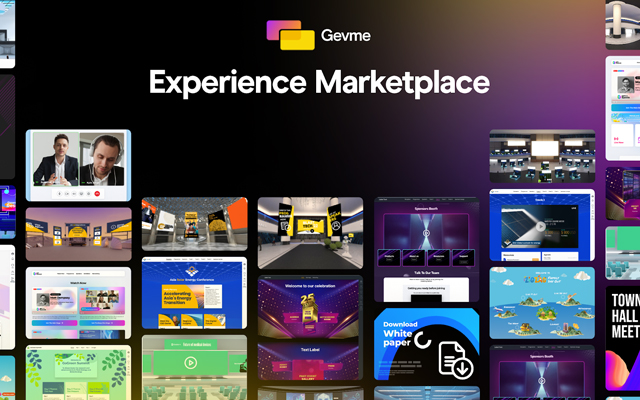
Within the platform is Virtual Event Builder 2.0, which now includes an Experience Marketplace where event organisers can choose from various 2D or 3D templates for all sorts of events – conferences, webinars, career fairs, and town halls. Event organisers can then further customise the experience they selected using their visual editor, allowing them to create unique virtual experiences for every event.
“Attendees today have new expectations, and they desire to experience events on their own terms and across different channels. Unfortunately, organisations that don’t adapt to these changes will likely be left behind with unconnected events and impersonal experiences.
“On the flipside, those that will likely succeed are the ones putting their audience at the centre of their strategy, by adopting an omnichannel event strategy and building communities around their events. They complement their annual face-to-face events with digital experiences all year round,” said Veemal Gungadin, founder and CEO of Gevme.
Novotel, one of Accor’s portfolio of brands, has signed a management agreement for the Novotel Living Singapore Orchard.
The 85-key property is a rebrand from 8 on Claymore Serviced Residences Singapore, and is the first Novotel Living to operate in Singapore.
Earlier in January 2022, Accor commenced white label operations of the property, and since then, it has undergone a soft refurbishment of all rooms and public areas.
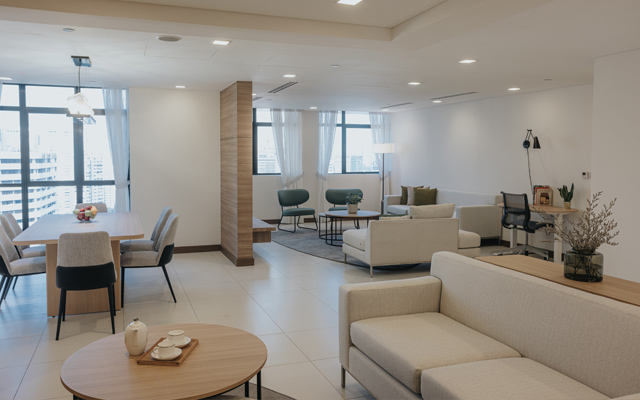
Novotel Living Singapore Orchard features executive studios to two- and three-bedroom apartments. Living areas have been furnished with Herman Miller chairs and electric height adjustable tables (in selected rooms), fully-equipped kitchens, and in-room laundry facilities.
Other property highlights include the fully refurbished relay lobby, located on the first floor; and recreational facilities such as the Clubhouse, gym, and swimming pool with cabanas.
Guests staying at the extended-stay property can also benefit from Accor’s loyalty programme ALL – Accor Live Limitless.
This property will join Accor’s network of 27 properties in Singapore across the Raffles, Fairmont, Sofitel, Swissôtel, Novotel, Mercure and ibis brands.
Sydney will host 72 global meetings over the next 18 months, many of which were rescheduled from the past two years due to the pandemic and travel disruption, shared Lyn Lewis-Smith, CEO of Business Events Sydney, adding that the strong calendar of events is indicative of the city getting back to business.
In this episode of TTG Conversations: Five questions, Lewis-Smith discusses Sydney’s strong brand that has allowed the city to continue winning new events up until 2029, efforts to keep event delegates safe and healthy even as restrictions ease, and new support programmes and destination experiences available for event planners and their attendees.
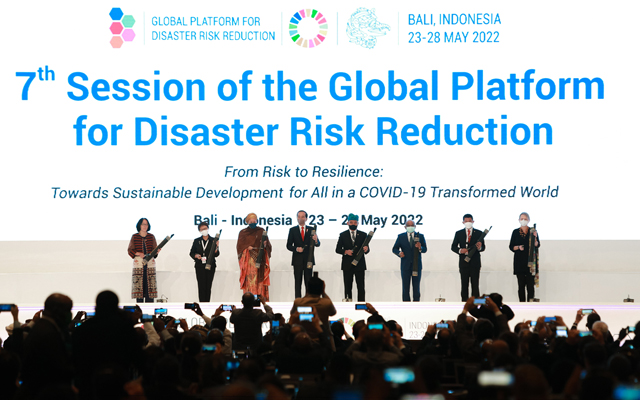
The Global Platform on Disaster Risk Reduction held earlier in May at Bali Nusa Dua Convention Center
Business events stakeholders in Bali are reporting that the number of corporate events returning to the destination has exceeded initial projections, following the easing of Indonesia’s Covid-19 rules and border restrictions.
Speaking at the media briefing of the recent Bali and Beyond Travel Fair, Oriol Montal, multi property vice president, Marriott International and general manager of The Westin Resort Nusa Dua, Bali, said that initial projections of a long recovery were wrong.
The Global Platform on Disaster Risk Reduction held earlier in May at Bali Nusa Dua Convention Center
“A few months ago, when we started to see the opening of various markets around the world, we started projecting what we thought the future would be. We projected that MICE would take much longer to recover, and thought that we would not see events of 300 to 1,000 people arriving in Bali until 2023.
“We were totally wrong,” he declared, adding that the company’s Bali properties are seeing “a large number of event bookings” both from the Indonesian government, as well as from countries like the US and Singapore.
At the Westin Resort Nusa Dua Bali and Bali International Convention Centre alone, events – government, corporate, insurance companies, and association meetings – slated from now until December 2022 range from 50 to 500 participants.
The fact that Bali will be hosting the G20 summit and a series of related events will help Bali recover even faster, Montal pointed out.
Similarly, Conrad Bali has also seen an influx of groups of around 10 to 150 people mainly from small- and medium-sized companies.
Kevin Girard, general manager of Conrad Bali, told TTGmice: “These are primarily domestic groups, but there are some from Singapore, as border restrictions on both sides have eased and travel is easier.“
He added that his initial projections were also wrong, so he has “refrained from making any more.”
“The good news is that we are seeing great booking levels. for the next two to three months, which is encouraging after such a tough period,” Girard added.
Lead times for these corporate events are much shorter now, Girard shared, and most of them are now held outdoors, adding that the “ocean, greenery and beautiful flowers that in Bali are a real draw”, and will be a “refreshing and renewing” experience for most travellers.
Riyanthi Handayani, president director of the Bali Nusa Dua Convention Center (BNDCC), has also reported receiving bookings for corporate meetings and association events, on top of bookings for ministerial meetings.
“We have served a number of international events hosted by the Indonesian government here at BNDCC, and these have boosted business to our (venues) and Bali’s recovery greatly.”
In March, BNDCC hosted the COP-4 Minamata Convention that saw a turnout of 800 delegates from 139 countries, and Global Platform on Disaster Risk Reduction – organised by the Indonesian Disaster Mitigation National Body and UN Office for Disaster Risk Reduction – in May, which was attended by 2,300 participants from 185 countries.
Recently, Panorama Group brought a 1,050-pax incentive group from an insurance company to Bali, where the group stayed for two nights and held an awards night at BNDCC.
Looking at current performance and forward bookings, Riyanthi remains confident that the situation will improve.
Montal too, is positive about Bali’s future as a business events destination, but one challenge he indicated is reestablishing air routes to ensure there are enough seats to bring in more corporate groups.
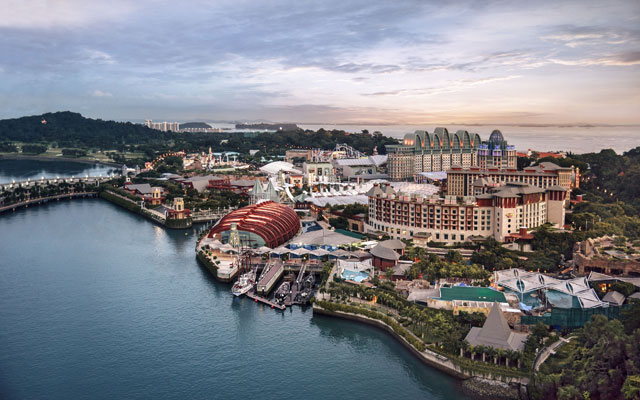
RWS (pictured) will host talks and conferences centred on sustainability and innovation
Resorts World Sentosa (RWS) continues to record a busy business events calendar for 2H2022, having confirmed over 50 conferences and meetings which will bring a total of more than 100,000 international and local delegates to the integrated resort.
These include the World Ocean Summit Asia Pacific, the Business Network International (BNI) Global Convention, 25th International Conference on Medical Image Computing and Computer Assisted Intervention, Singapore Week of Innovation and Technology (SWITCH), as well as Singapore International Bunkering Conference and Exhibition (SIBCON).
RWS (pictured) will host talks and conferences centred on sustainability and innovation
About one-third of these confirmed events are large-scale, such as the annual award and dinner functions of Singapore Institute of Architects, Association of Singapore Marine Industries, Singapore International Chamber of Commerce and USANA Health Sciences.
And in line with RWS’ aim of being a global leader in sustainable tourism, a series of six co-created events with TEDxSingapore focusing on sustainability, innovation, marine science and conservation, marine biodiversity, marine exploration, and climate action will take place at the integrated resort.
RWS has made further strides in its sustainability journey by being the first destination in the world to be certified as a destination which meets both the Global Sustainable Tourism Council’s Destination Criteria and Industry Criteria for Hotels. RWS had also received the SACEOS MICE Sustainability Certificate Intermediate Tier for Venue in 2021 and won the Special Award for Sustainability for the second consecutive year at the Singapore Tourism Awards 2022.
These green accolades reaffirm RWS’ ongoing sustainability efforts as it continues to align its progress with the Singapore Tourism Board and Sentosa Development Corporation’s long-term sustainability plans.
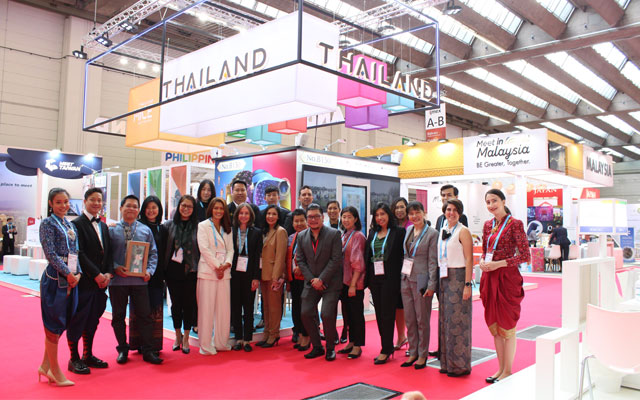
The Thailand team at their pavilion at IMEX Frankfurt 2022
The Thailand Convention & Exhibition Bureau (TCEB) and 14 Thai business events suppliers have chalked up a total of 84 leads worth an estimated 1,873.6 million baht (US$53 million) and 28,388 MICE visitors over the three days of IMEX Frankfurt.
The 14 suppliers included five DMCs, eight hotels, and Queen Sirikit National Convention Center. According to suppliers, interested groups hail from countries such as Singapore, the UK, Germany and US. Some buyers were even able to confirm their plans to Thailand on the spot during IMEX Frankfurt.
The Thailand team at their pavilion at IMEX Frankfurt 2022
TCEB president, Chiruit Isarangkun Na Ayuthaya said: “The number of leads is encouraging as Thailand has been lowering travel requirements to reopen the country, allowing the events industry to operate.”
To strengthen Thailand’s business events proposition and celebrate the reopening of Thailand, TCEB also rolled out a new business events brand – Thailand MICE – Meet the Magic – at IMEX Frankfurt.
“Now (that) the world is travelling again, Thailand is ready to distinguish itself in the eyes of MICE planners with the promise of a superlative and magical experience for all,” he added.
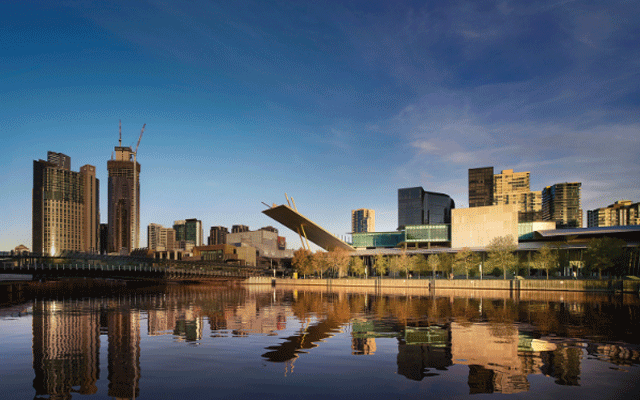
MCEC (pictured) brings both the events and aviation sectors together in this latest win
The 151st International Air Transport Association (IATA) Slot Conference is touching down at Melbourne Convention and Exhibition Centre (MCEC) in November this year.
Scheduled for November 15-18, 2022, the bi-annual conference will see airlines and airports negotiate global flight schedules and air traffic control management, and is set to welcome more than 1,000 aviation delegates across 230 airlines from around the world. The event will deliver an estimated A$4.7 million (US$3.2 million) to the Victorian economy.
MCEC (pictured) brings both the events and aviation sectors together in this latest win
The bid was put together by the Melbourne Convention Bureau who worked in partnership with Melbourne Airport to bring the convention to Melbourne.
Aside from delivering a boost to the state’s hospitality and tourism sectors, hosting the major aviation conference will help keep Melbourne front of mind for airlines to boost their flight services to Victoria, said Martin Pakula, Victoria’s minister for tourism, sport and major events.
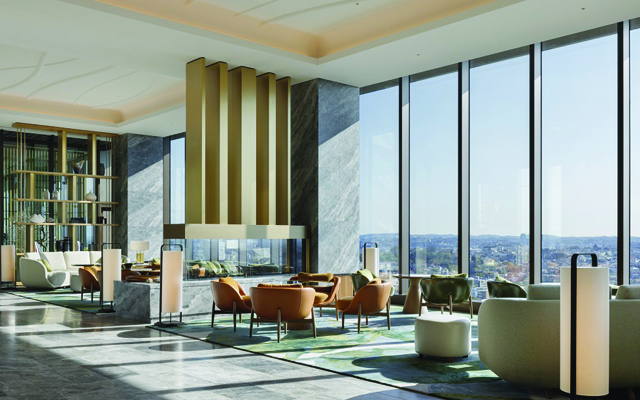
Westin Hotels & Resorts has opened in the port city of Yokohama, a city located south-west of Tokyo, Japan.
The Westin Yokohama offers more than 1,000m2 of meeting space for event planners, comprising indoor spaces such as a Grand Ballroom and four meeting spaces, as well as The Westin Garden with the city’s skyline as the backdrop.
For convenience, delegates can be put up in one of the 373 guestrooms, all of which feature floor-to-ceiling windows, and the brand’s Heavenly Bed.
Wellness takes centrestage here, as the property features a dedicated wellness floor of 900m2, which includes Japan’s first Heavenly Spa by Westin with four treatment rooms. There is also a heated indoor swimming pool, state-of-the-art gym, as well as a RunWestin programme that provides jogging routes around the Minatomirai waterfront area.
Meanwhile, there are five F&B venues on-site, including the all-day dining Brasserie du Quai; izakaya-style Kissui-sen; and signature restaurant Iron Bay which also has a private dining venue for intimate events. Two bars round up the offerings – the lobby bar on the 23rd floor Sugar Merchant; and the speakeasy Code Bar for cocktails.
Tokyo Haneda Airport is within a 25-minute drive and Tokyo city centre is within a 36-minute train ride from The Westin Yokohama.
As international meetings and events faded out of Taiwan over the past two years of the global health crisis, the government turned its attention to something that it could not do during the many years of packed business events calendar – it led a digital transformation in the business events industry.
Through staging virtual and hybrid events over the last two years, the industry was able to identify and rectify gaps in this capability that has shown to be critical for business continuity.
At the same time, Taiwan’s hotels and venues committed to upgrades while new experiences were born, all to prepare for the return of international events and attendees.
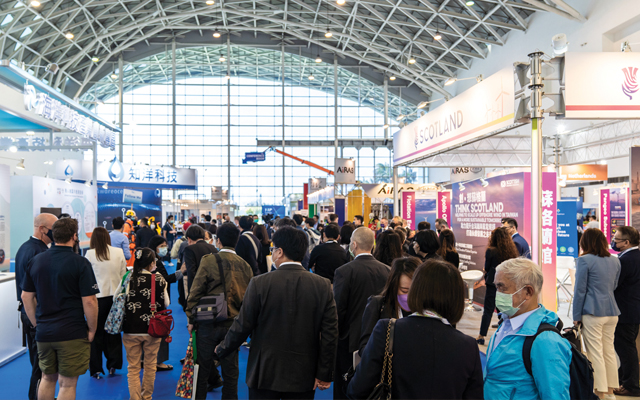
The Kaohsiung Exhibition Center hosted the Wind Energy Asia 2022 in March
Supporting the digitalisation effort is the Taiwan External Trade Development Council (TAITRA), which created an online exhibition platform that provides product displays and online meeting services to enable Taiwan’s industries to communicate with foreign buyers throughout the pandemic. A TAITRA spokesperson also shared that smart technology and big data analysis were introduced to various business activities, which “not only improved the efficiency of events but also captured more business opportunities through precise marketing methods”.
“With the dynamic power of technologies and digitalisation, we will continue to work together with MICE professionals to revitalise the industry and propel it forward in the post-pandemic era,” the spokesperson added.
TAITRA’s digitalisation focus echoes through the industry, with many event venues investing in facility upgrades to ensure they are ready for future events.
Taipei World Trade Center, TAINEX 1, TAINEX 2 and Kaohsiung Exhibition Center are all equipped with 5G communications, allowing event participants and visitors to quickly locate booths on their smart devices.
Also in on the technology game is the 30-year-old Taipei International Convention Center (TICC), which established a brand-new digital studio, TICC 103 iStudio, in 2021 to appeal to meeting planners. The facility can support livestreams, webinars as well as virtual and hybrid meetings.
Set to complete in 2023, Taoyuan Exhibition Centre will boost the destination’s venue portfolio with 10 meeting rooms that can take between 100 and 2,000 attendees.
When Kaohsiung Exhibition Center (KEC) hosted gaming event League of Legends: Wild Rift in November 2021, 5G experiential visits surged past 41,700, including onsite and online livestreaming. The figure was 10 times more than in-person visitors during the physical event.
Come August, KEC will welcome the 11th Creative Expo Taiwan, the largest gathering for the creative industry.
Michael Tu, president of KEC/Interplan Group, told TTGmice that the venue’s digital transformation has bestowed it with various technical solutions, such as 3D 4K Beam Display projection and 360-degree real-time production, to deliver immersive exhibitions and events.
“Along with our 5G infrastructure, we will inspire PEOs and PCOs to create unforgettable hybrid experiences for the satisfaction of visitors and attendees,” Tu added.
However, GIS Group, founder and CEO, Jason Yeh, noted that not all venues in Taiwan are equipped with 5G infrastructure even as demand is moving towards the high-tech end.
Episode Hsinchu
“High-tech exhibitors demonstrating interaction between robots or hosting game shows with Virtual Reality devices require very low‑latency and low-delay. Wi-Fi is not enough to support such exercises, and 5G is the best solution now. But as not all venues are (equipped) with 5G, it results in very high cost for set up on a project basis,” said Yeh.
That limitation aside, Pairry Chiang, director of impact with event organiser Asia Concentrate Corporation, said technology could be harnessed for Sustainable Development Goals (SDGs).
Chiang shared that a proposal was put to MEET Taiwan, the events promotions agency of the Ministry of Economic Affairs, to play a leading role in connecting PCOs with various technology companies to help events meet SDGs.
For instance, the Asia Pacific Social Innovation Summit in May 2022 has made sustainability a key focus this year. It utilised the Taiwan iPass, an electronic ticket loaded with tourism resources, to encourage attendees to rely on mass transportation. Local ingredients were also prioritised in the preparation of lunchboxes.
“There are many things MEET Taiwan can assist to make business events in Taiwan more sustainable,” opined Chiang.
Meanwhile, event planners considering Taiwan will be glad to know that the accommodation scene has not remained stagnant during the travel freeze.
Ten new hotels were opened in 2020 and 2021, with more in the pipeline. Some of the upcoming openings include Hotel Indigo Alishan in Chiayi County, Wyndham Sun Moon Lake and InterContinental Taichung Hotel.
Hyatt Hotels Corporation has also extended its footprint in Taiwan, where on April 1, it opened Episode Hsinchu. Following that later this year is Hyatt Place New Taipei City Xinzhuang, as well as Park Hyatt Taipei, Andaz Taipei, Hyatt Centric Songshan Taipei, and Hyatt Regency Kaohsiung – all set to launch over the next two years.
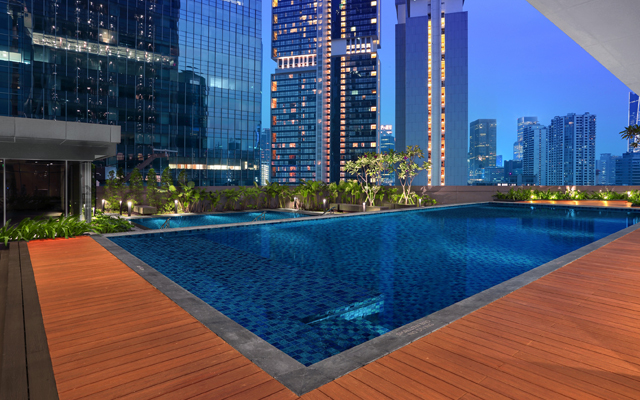
Located within The Newton 1 Tower, Citadines Sudirman Jakarta offers service apartments in options of studios, one- and two-bedroom units, and family suites.
Each apartment has a private balcony and is furnished with amenities such as LED TVs, a microwave oven, an induction stove, a refrigerator and air conditioning.
Guests can enjoy a curated programme featuring key places to explore within the neighbourhood.
The property includes an outdoor swimming pool, kids pool, an outdoor jogging track and fitness corner, launderette and meeting rooms.
Just 10 minutes from Phuket International Airport on the serene northern coast, this 178-key, Bill Bensley-designed resort offers delegates a quiet, tropical paradise steeped in Phuket’s tin-mining heritage
The newly-opened Ritz-Carlton, Bangkok anchors the One Bangkok development with cosmopolitan elegance. Featuring the city's largest ballroom and a spectacular new penthouse suite, it delivers exceptional hardware and deeply authentic, soulful service for business and leisure travellers alike
Behind the imposing, Brutalist concrete that defines Zurich’s Oerlikon district lies a surprising secret. While its exterior honours the neighbourhood’s industrial roots, stepping inside Mama Shelter reveals a vibrant, neon-soaked world that is a far cry from its rigid shell