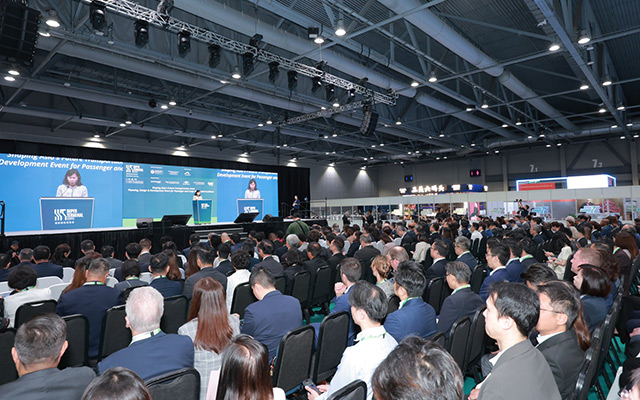
The Asia Pacific Aviation Safety Seminar 2025 (APASS 2025) is set to take place in Manila, the Philippines on September 10 and 11, bringing together more than 200 safety professionals from across various aviation verticals.
The event, organised by the Association of Asia Pacific Airlines (AAPA), will bear the theme, Safety Without Borders: Global Partnerships, Local Impact.
Manila will host the Asia Pacific Aviation Safety Seminar 2025
Sessions will spotlight the most pressing safety challenges today in aviation, including the future of aviation safety leadership and organisational culture, crew performance and decision-making in dynamic environments, fatigue management for crew, maintenance and dispatch, and more.
New features at APASS 2025 include dedicated Flight Operations and Cabin safety components, a joint Engineering/Airlines/MRO collaboration panel, and roundtables involving turboprop and regional jet operators, enhancing the practical value of the seminar to participants.
The event is endorsed by the Flight Safety Foundation, supported by the International Civil Aviation Organization.
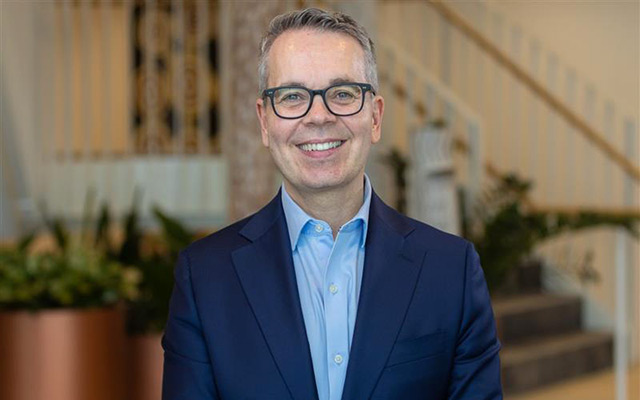
Subhas Menon, director general of AAPA, said: “As the Asia-Pacific region continues its rapid growth trajectory, the need for shared strategies, transparency, and trust across borders becomes ever more important. APASS 2025 will convene leading voices from across the industry to drive meaningful, and objective improvements in safety performance.”
From left: SACEOS Dylan Sharma (moderator); Hong Kong University of Science and Technology’s Donald Low; Yusof Ishak Institute’s Lee Sue-Ann; and Centre for Humanitarian Dialogue’s Wu Ye-Min.
This year’s Singapore MICE Forum went beyond business events to address global issues such as US election’s impact, China’s growing influence, Singapore’s role in shifting paradigms, and strategies for the business events industry.
Panelists on the Beyond Borders: Navigating a Multipolar World yesterday morning offered diverse, yet hopeful perspectives.
From left: SACEOS Dylan Sharma (moderator); Hong Kong University of Science and Technology’s Donald Low; Yusof Ishak Institute’s Lee Sue-Ann; and Centre for Humanitarian Dialogue’s Wu Ye-Min
Donald Low, senior lecturer and professor of practice in public policy, Hong Kong University of Science and Technology, opined that while US president Donald Trump is trying to reset terms of engagement with the rest of the world, “it doesn’t mean the rest of us can’t carry on”.
“I am reasonably optimistic there may be silver linings and it’s not the end of the road for globalisation,” he said.
Lee Sue-Ann, senior fellow and coordinator of the regional strategic and political studies programme, Yusof Ishak Institute, acknowledged that the US is a vital export market for South-east Asia, but countries must move past grief into acceptance.
“Governments must address inequalities. Otherwise, we’ll see the rise of populist leaders. Countries will also become more protectionist; we have to find common ground and move forward,” she added.
Wu Ye-Min, regional director for Asia-Pacific, Centre for Humanitarian Dialogue, commented that Singapore is able to build alliances and bridges, and get consensus. It is good at stewarding and can take a leadership role.
“Singapore is trusted, and also agile, with the infrastructure (for mediation). Such events can take place here. We need people in the MICE industry to help build that trust,” she suggested.
Referring to China as the “dragon in the room”, Low said that over-capacity led China to seek new export markets. It also set up manufacturing plants abroad to circumvent tariffs and other restrictions.
In the multipolar world, “the rules-based international order is not broken; the rules are evolving,” Loh said. Businesses in Singapore need to adapt and take advantage of opportunities, and as people value stability and integrity, it is possible that “Singapore can be a trusted broker”.
In the business events context, Wu suggested looking at international organisations, stakeholders and timelines, as such events “creates the space and has huge impact”, where “Singapore can be the place for breakthroughs”.
Global Hotel Alliance (GHA) has appointed three seasoned executives to key leadership roles as part of its continued growth: Katharina Dein has been promoted to vice president commercial, Jelena Kezika steps into the role of vice president strategy, and Andrea Krenn has been appointed senior vice president communications.
In her new role, Dein will oversee commercial strategy, with a focus on optimising the performance of newly integrated properties, onboarding new brands, and launching new products and services across GHA’s portfolio. A long-serving GHA team member since 2013, she has played a pivotal role in brand relations and developed the alliance’s global online training platform.
From left: Katharina Dein, Jelena Kezika and Andrea Krenn
Kezika will oversee the development of future-facing initiatives to strengthen GHA’s positioning and loyalty ecosystem, while Krenn will lead GHA’s global communications strategy.
Despite mounting challenges in travel and tourism, business leaders and industry professionals continue to maintain a vigorous appetite to learn and grow through virtual and in-person events, observed PATA CEO Noor Ahmad Hamid.
Noor told TTG Asia in an interview that the mood to learn, share best practices and build network is not dampened by concerns about macro-environmental factors.
Asia-Pacific tourism leaders stay committed to growth and knowledge-sharing despite uncertainty
“On the contrary, we believe that growing macro-environmental challenges, whether economic uncertainty, climate change, shifting geopolitical dynamics, or evolving consumer behaviour, only heighten the urgency for the industry to come together, learn from one another, and build stronger networks,” he stated.
Noor added that “fear or uncertainty” are no “barriers to collaboration”.
“In fact, they often motivate deeper engagement and dialogue. Industry professionals are increasingly aware that no single entity can tackle these challenges in isolation. Collective intelligence and cross-sector collaboration are more vital than ever.
“That is why events like the PATA Annual Summit and the PATA Travel Mart continue to draw strong interest. They’re not just about business meetings; they are about building community, trust, and shared purpose, especially in uncertain times,” he said.
The association’s next major trade gathering is the PATA Travel Mart 2025, set for Bangkok, Thailand from August 26 to 28. The event includes the one-day PATA Knowledge Forum on August 26, where a host of industry experts will discuss major trends and developments in the business.
PATA’s calendar of events covers a broad range of topics relevant to the travel and tourism industry. This variety is necessary, according to Noor, to cater to PATA’s diverse membership base across Asia-Pacific, made up of national tourism organisations, airlines, hotels, tour operators, DMOs, academia, and tech innovators.
“Because of this diversity, a one-size-fits-all approach simply does not work; variety in our events is not just a strategy – it is a necessity,” he explained.
Noor expressed commitment to championing learning “as a proactive investment in the future of a more inclusive, resilient, and sustainable Asia-Pacific travel ecosystem”.
PATA’s events line-up will get even more exciting next year, opined Noor, who pointed to the association’s 75th anniversary. He described it as a “significant milestone that reflects our enduring legacy and continued relevance”.
To commemorate the occasion, PATA will host two Annual Summits for the first time – one in Gyeongju and another in Pohang, both cities in South Korea.
The report highlighted both opportunities and complexities for travel programme planning in the coming months
Global corporate travel consulting group Advito’s recently-released Q3 Travel Price Index reveals a nuanced landscape for business travel across the Asia Pacific, characterised by significant pricing variations and a gradual return to pre-pandemic patterns in some locations.
Travel pricing across Asia was far from uniform, with certain markets demonstrating robust strength while others experienced declines.
The report highlighted both opportunities and complexities for travel programme planning in the coming months
Intercontinental airfares originating from Asia are stabilising. While there were modest increases to Europe in both business (+2% year-over-year) and economy (+1% year-over-year) classes, fares to North America saw slight declines. This moderation was partly attributed to slowing global economic activity impacting outbound travel from the continent, with a notable shift as airfares from India were decreasing.
Domestically and regionally within Asia, economy class airfares were trending downwards, largely due to a softening of demand in India and significant capacity growth in key markets like China and Japan. Conversely, domestic and regional business class airfares saw a slight increase (+1% year-over-year).
The hotel sector in Asia also reflected this varied picture. While overall hotel rates in Asia showed a modest increase (+1% year-over-year), several markets experienced strong growth in average daily rates (BAR) compared to 2024, including Japan (+5%), Thailand (+10%), Taiwan (+4%), Hong Kong (+8%), and Malaysia (+16%).
However, major markets such as China (-1%), India (-2%), Vietnam (-4%), and South Korea (-5%) were either flat or showed moderate year-over-year decreases in BAR. It is also worth noting that occupancy levels year-over-year increased in most global regions, with Asia being an exception.
In the South-West Pacific, the business travel sector held firm, yet signs of cooling were evident in economy travel and hotel rates, indicating a return to trends observed before the pandemic.
Intercontinental airfares in the South-West Pacific experienced a slight decline, signalling a move towards more stable and moderate fare changes after the significant airline network recovery seen last year. In contrast, domestic and regional airfares were on the rise (+1% for business, +6% for economy year-over-year), driven by disciplined capacity management and robust travel demand.
The hotel market in the South-West Pacific largely showed decreased average daily rates (-3% year-over-year), reflecting a gradual return to pre-pandemic levels. Most markets in Australia (-3%) and New Zealand (-6%) saw decreases in BAR, with a few exceptions.
Raffles City Convention Centre (RCCC) kicked off its multi-million dollar technology upgrade in July 2024, partnering Unearthed Productions (UP) to oversee all audiovisual (AV) upgrades, operations and maintenance.
Theo Ocks, commercial general manager, Fairmont Singapore and Swissôtel The Stamford, said the initiative was “developed in direct response to increasing client demand for seamless in-house AV solutions”.
Ocks: This investment is about creating an integrated ecosystem to deliver modern and meaningful event experiences
He elaborated: “Clients were looking for cost-efficient AV packages that reduce reliance on third-party vendors, quicker set-up times and bundled support to streamline event execution. Built-in AV was also a priority to cut down on labour and logistics.”
For instance, the Stamford Ballroom’s LED wall has been designed to be split into sections, allowing for varied uses such as branded content, dynamic speaker introductions or real-time social media feeds, shared Ocks.
The strongest user demand, he continued, has come from sectors such as technology and pharmaceuticals, where high technical precision is required; financial services which prioritise seamless and reliable delivery; and luxury and lifestyle brands seeking multisensory guest engagement across AV, cuisine and experience design.
According to Ocks, there has been consistently high demand for AI-driven visuals, motion graphics and interactive LED features.
“A notable example was at Cvent Accelerate (held on July 11, 2025) where RCCC implemented an immersive tunnel with motion visuals to create a high-impact arrival experience,” he elaborated.
“Looking ahead, RCCC is focusing on developing more interactive and sensory-based formats. These will combine AV with curated F&B offerings, music, scent and sustainable staging to craft holistic event journeys that engage all senses.”
The 64th ICCA Congress will take place this year on November 9-12, 2025, in Porto (pictured)
Meeting professionals attending the 64th edition of the annual ICCA Congress later this year in Porto, Portugal will get four days packed with education and destination appreciation, as ICCA builds a unique programme designed to make the host city a stage for all its sessions.
The event will open on November 9 at the Coliseum of Porto, a theatre and concert venue that has played host to many high-profile performances. Here, delegates will attend the Welcome Ceremony, opening keynote, panel session discussing the impact of large-scale events, and the ICCA General Assembly.
The 64th ICCA Congress will take place this year on November 9-12, 2025, in Porto, pictured
In the evening, delegates will adjourn to the historical Stock Exchange Palace for a grand Welcome Reception. There will also be an opportunity to tour the interior of the neoclassical-style building.
Sharing Hubs, a time for all Congress delegates to connect, reflect, and align with one another on key issues impacting the meetings industry, will return this year. It will be held the morning of November 10 at the Alfândega Congress Centre, alongside keynotes and panel discussions.
The Congress then progresses with knowledge sessions in the afternoon, with each of five content tracks set to take place at various iconic venues across Porto. The commute to each venue promises to be a destination experience.
The content tracks are centred around the theme Charting the Course, which is aligned with the ICCA Congress 2025’s theme of purposeful exploration and bold innovation. Tracks include: Impact and Sustainability; Future Leadership and Resilience; Purposeful Business Models and Start-ups; Innovation and Technology; and The Creative Edge.
According to Claudia Bastidas, ICCA’s senior marketing manager, the venue selected for each content track has a connection with the topic.
The Impact and Sustainability track, for example, is held at the Porto Cruise Terminal, which is said to represent Portugal’s commitment to sustainable tourism, research, and forward-thinking design. The terminal is famed for its distinctive spiral design and state-of-the-art facilities including auditoriums, exhibition halls, and panoramic observation decks. It is also home to the Interdisciplinary Centre of Marine and Environmental Research, which advances marine science, climate innovation, and environmental stewardship.
Other iconic venues marked for the different content tracks include Ferreira Cellars for the Future Leadership and Resilience; Alfândega Congress Centre for the Purposeful Business Models and Start-ups track; CeiiA Innovation Centre for the Innovation and Technology track; and the WOW Cultural District in Vila Nova de Gaia for the Creative Edge track.
“The programme design offers delegates an opportunity to really see and enjoy Porto,” remarked Bastidas.
Content tracks on November 10 and 11 will be the same, allowing more delegates to benefit from the session proceedings. Delegates are invited to choose two content tracks to attend and can make their choices during event registration. Seats are available at a first-come, first-served basis.
Delegates will get a valuable evening of networking on November 10, when GalactICCA: Navigating the Future is held at Super Bock Arena against a backdrop of science and innovation.
ICCA Congress’ popular Challenge Night will be hosted by the Amsterdam Convention Bureau on November 11 at Dragão Stadium, home of FC Porto. Delegates who get there ahead of opening may score a tour of the FC Porto Museum.
Further event details and speakers will be unveiled in the lead up to November.
UFI invites its 50,000+ member professionals and colleagues from partner associations to this annual gathering
UFI, The Global Association of the Exhibition Industry, has revealed that its official theme for its 92nd UFI Global Congress will be Shaping the Future.
Set for November 19-22, 2025, in Hong Kong, the event coincides with UFI’s centennial year, bringing together global exhibition leaders.
UFI invites its 50,000+ member professionals and colleagues from partner associations to this annual gathering
The Congress will address the industry’s future, with sessions covering innovation in business models, technology, and customer engagement; the evolution of venues into agile, experience-driven platforms; and sustainability and resilience amid global challenges.
Hosted at AsiaWorld-Expo, the Congress will feature industry and external speakers, global trend briefings, case studies, and collaborative formats. Special centennial moments will reflect UFI’s theme: Honouring the Past, Celebrating the Present, and Shaping the Future.
This year’s Next Generation Leaders winners, who were challenged with the mission Redefining Exhibition Formats, will also look to the future, and showcase innovative event concepts.
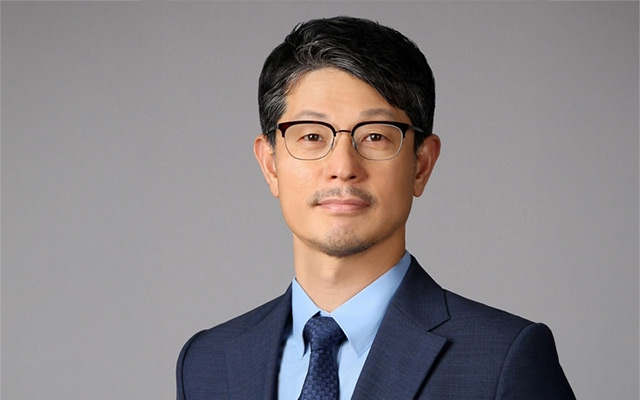
Air France KLM has appointed Steven van Wijk as general manager Greater China, effective August 1, 2025. He will be responsible for overseeing four destinations – Beijing, Shanghai, Hong Kong and Taipei – from his base in Beijing.
van Wijk brings over 15 years of experience in the aviation industry to the role, having joined KLM Royal Dutch Airlines in 2007. He has held multiple key positions, including roles in the KLM Network department and the commercial division of Air France-KLM.
He was most recently commercial director for Air France KLM in the UK and Ireland.
Watson deploying a water sampling and sensor unit off RV Ikatere; photo by Stuart Mackay
The Bay of Islands will host GeoHab 2027, the international conference for Marine Geological and Biological Habitat Mapping.
The event, taking place in Paihia in 2027, will welcome around 200 scientists, industry and technical experts working in marine mapping to support sustainable ocean management and planning.
Watson deploying a water sampling and sensor unit off RV Ikatere; photo by Stuart Mackay
The conference bid was led by Sally Watson, marine geophysicist at Earth Sciences New Zealand and the University of Auckland, with support from Tourism New Zealand Business Events.
The GeoHab conference often takes place in the Northern Hemisphere and Watson hopes that hosting it in New Zealand will encourage greater attendance from Asia and the Pacific – people and nations who really rely on the oceans.
The win comes as part of Tourism New Zealand’s partnership with the Geoscience Society of New Zealand to encourage more earth science events to our country.
“The conference has a strong focus on early career and student participation, and can showcase what New Zealand has to offer in terms of research. Plus, there’s the benefit of having incredible global expertise come to New Zealand, and the opportunity to exchange ideas and forge links with international collaborators…” she added.
Beyond education sessions, Watson is also planning regional excursions, highlighting the area’s renowned boating, diving, and fishing opportunities.
“The Bay of Islands is home to so much of New Zealand that is epic, getting out on the water, the location of the signing of our founding document at Waitangi Treaty Grounds, the kauri forests, and cultural activities. We want to give people a taste of our special features.”
A polished urban retreat designed for business travellers, Hyatt Regency Kuala Lumpur at KL Midtown combines thoughtful design, seamless service, and exceptional facilities.
The five-star property excels in backing its expansive facilities with seamless service and personalised attention, setting the benchmark for luxury in Bangkok.