PHOTO:
Geopolitical risk, AI disruption reshape incentive travel as buyers seek new destinations
The Incentive Research Foundation (IRF) and Society for Incentive Travel Excellence (SITE) have unveiled the 2025 Incentive Travel Index (ITI).
The 2025 edition of the ITI forecasts modest growth through 2027, tempered by mounting concerns around rising costs, global instability, and shrinking optimism. Expectations for 2026 show flat usage of incentive travel programmes in terms of participant volume.
Geopolitical risk, AI disruption reshape incentive travel as buyers seek new destinations
Several powerful forces dominate the 2025 edition: geopolitical risk, trade tensions, AI disruption, and demographic change. Regions are consolidating incentive activity locally, while demand for US destinations is in sharp decline. At the same time, AI is beginning to impact programme design and delivery, and generational shifts are reshaping destination preferences, programme formats, and reward structures.
“While 75% of respondents agree that the value of incentive travel remains strong, they also say the business gets tougher every year,” said Stephanie Harris, IRF president. “Incentive professionals are under pressure to deliver more with less – without compromising quality or impact.”
“Buyers continue to seek out something new,” said Annette Gregg, SITE CEO. “Nearly 70% are seeking destinations they haven’t used before – and 63% already have new ones booked for 2026 or 2027. What hasn’t changed is what matters: direct air access, top-tier accommodations, and a trusted DMC remain top priorities.”
For key insights from ITI 2025 and past editions, click here.
Now in its eighth year, the ITI is a joint research initiative from IRF and SITE, supported by Oxford Economics. The 2025 study, which surveyed professionals in five roles (corporate end users, third-party agencies, DMCs, destination suppliers, and DMOs) between May and July 2025, offers a panoramic global view based on insights from 2,700 professionals across 85 countries.
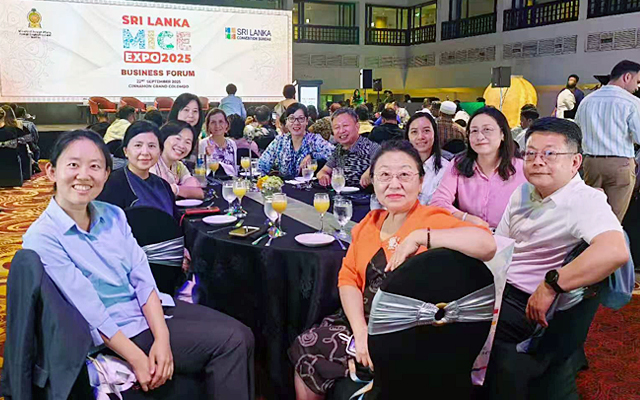
Chinese buyers at Sri Lanka MICE Expo Business Forum; photo by Alicia Yao
Chinese buyers looking for safe and new options for business events and association meetings are eyeing Sri Lanka in Asia and countries in Africa, where the local authorities are keen to support and grow their share of the pie.
Beijing-based IME Consulting, which works with major tradeshow organisers, led 15 buyers from Shanghai, Beijing, Wuhan and Hong Kong to Sanganai Hlanganani World Tourism Expo, dubbed, Kumbanayi, in Zimbabwe last month.
Chinese buyers at Sri Lanka MICE Expo Business Forum; photo by Alicia Yao
According to founder and managing director, Alicia Yao, Zimbabwe – one of three African countries hosting the 2027 Cricket World Cup – wants corporate events and named Victoria Falls as having the requisite infrastructure.
Yao continued: “Victoria Falls has good hotels and special programmes. For week-long corporate incentives, itineraries can be organised to cover one or two cities, including the capital, Harare.”
Industrial development in Wuhan is growing rapidly and Chinese companies, she added, are also investing in Africa, and an incentive group of about 200 people is heading to Zambia next month.
Authorities in Sri Lanka are laying out the welcome mat and 10 Chinese buyers participated in the September 22 to 26 Sri Lanka MICE Expo and fam trip, while another 17 who attended the September 23 to 25 IT&CM Asia in Bangkok went on a post-trip.
Yao commented that Sri Lanka is perceived as “safe”, compared to some other destinations in South-east Asia where news of kidnappings and job scams still linger.
“The price in Sri Lanka is also good,” she commented, adding that the opening of the sprawling Cinnamon Life complex offering 687 luxurious rooms, multiple entertainment venues, and state-of-the-art convention facilities, is a boon.
IME consulting led 64 Chinese association, corporate and incentive buyers to ITB Asia 2025, up from 50 last year. The bulk of 35 buyers were from Shanghai and Beijing – for corporate and association meetings respectively, and the rest from Shenzhen, Guangzhou, Hangzhou, Chongqing, Wuhan and Xi’an.
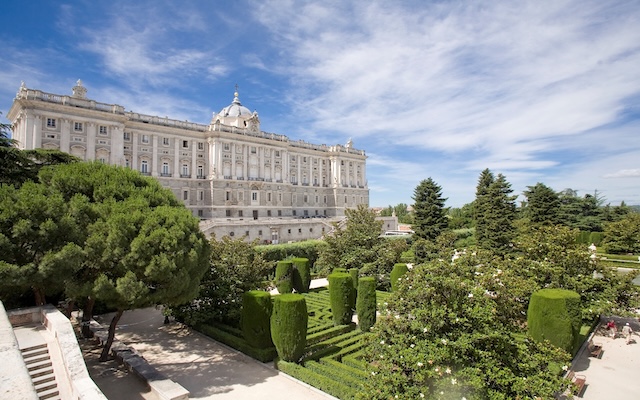
Madrid’s sustainability push preserves and promotes its natural heritage; Palacio Real pictured
Amidst an increasing global demand for sustainable events, leaving a positive impact ranks high on event planners’ agenda.
On a mission to help planners meet their sustainability goals is the Madrid Convention Bureau (MCB). For years, it has been committed to ensuring congresses and incentive trips leave a positive impact on the city, supporting about 250 events each year.
Green metropolis
This is evidenced by Madrid’s 360 Climate Change and Sustainability Strategy. Approved in 2019, it outlines a series of measures to help the capital adapt to climate change, promote renewable energy and energy efficiency, manage water resources, reduce emissions and waste, and encourage sustainable transport. It also promotes the creation of green infrastructure and low-carbon urban renewal, positioning the city as a model for responsible urban development.
These help preserve Madrid’s wealth of green spaces. More than 55 per cent of the city’s streets are tree-lined, with nearly 300,000 trees helping to improve the capital’s air quality, making Madrid home to the world’s second-leafiest streets.
It is also home to more than 200 parks, gardens, and natural spaces covering almost 6,400 hectares, offering serene nature to enjoy. Some of its most famous are El Retiro Park, a UNESCO World Heritage Site, Madrid Río Park, a 10km riverfront park that has seen ecological restoration, and Casa de Campo Park, an expansive 1,500-hectare recreation zone designated an Asset of Cultural Interest with spaces for outdoor recreation.
Reaffirming its commitment to the environment, Madrid was named a Tree City of the World by the Food and Agriculture Organization of the United Nations (FAO) and the Arbor Day Foundation.
Looking ahead, Madrid continues to build its green legacy with the Metropolitan Forest, a 75km green belt encircling the city.
Tools to support green planners
The Spanish capital offers a wealth of cultural heritage and gastronomic delights for an engaging and environmentally responsible programme
In keeping with the city’s firm commitment to environmental protection, MCB developed the MICE Sustainability Guide, to reinforce how companies in the industry can integrate environmental, economic and social sustainability elements in their processes and products aligning with the UN Sustainable Development Goals (SDGs) and Spain’s Strategic Guide for sustainable tourism for 2030.
It outlines sustainability practices, areas for improvement and how organisers and delegates can make each event more responsible and impactful.
Another initiative is PLUS, a digital platform designed for event organisers to manage the social and environmental footprint of their events.
Users can generate sustainability reports for each meeting and see pre-event recommendations to minimise environmental and social impact. Post-event, the platform calculates the meeting’s carbon footprint and is able to classify emissions by scope from Scope 1 to 3 for greater precision and accountability.
In addition, PLUS connects organisers with a catalogue of local social organisations in Madrid, enabling them to integrate positive-impact activities into their programmes. This is complemented by an open directory of the same organisations, ensuring that every event contributes to the city’s social and environmental well-being.
With its green heritage and mission, Madrid’s vibrant city life and rich cultural heritage makes it a natural choice for combining business with leisure. Planners have a diverse variety of options to choose for team building activities and authentic gastronomic experiences.
Meet your event’s sustainability goals in Madrid now. Visit Madrid Convention Bureau to get started.
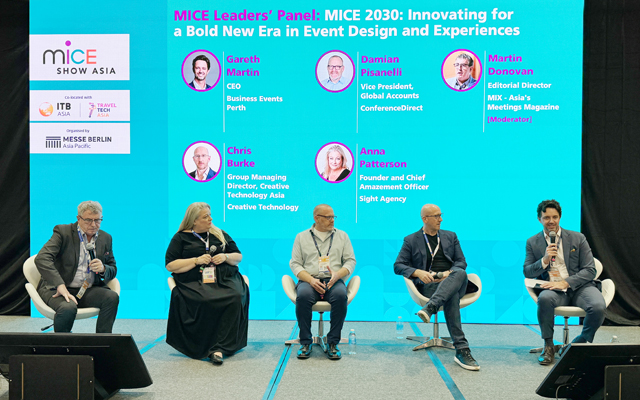
From left: Mix’s Martin Donovan (moderator); Sight Agency’s Anna Patterson; ConferenceDirect’s Damian Pisanelli; Creative Technology’s Chris Burke; and Business Events Perth’s Gareth Martin; photo by Rachel AJ Lee
The future of event design is moving away from mere logistical execution and towards creating authentic, deeply personal, and co-created experiences, according to panellists on the MICE Leaders’ Panel: MICE 2030: Innovating for a Bold New Era in Event Design and Experiences at ITB Asia 2025 this morning.
Anna Patterson, founder and chief amazement officer of Sight Agency, pointed out that this shift demands event planners to play the role of “brand storytellers” and “event architects”, as programmes move beyond an eight-hour confinement in conference rooms.
From left: Mix’s Martin Donovan (moderator); Sight Agency’s Anna Patterson; ConferenceDirect’s Damian Pisanelli; Creative Technology’s Chris Burke; and Business Events Perth’s Gareth Martin; photo by Rachel AJ Lee
“What we are going into now is a bold new era of co-creation, away from operational matters into designing experiences and telling stories. Everyone is asking for authenticity in what we create, and having empathy, and the audience intimately integrated, is how events are created now,” stated Patterson.
She shared how Sight Agency helped a client transform a hall at the Marina Bay Sands Expo and Convention Centre for an event two weeks ago that had a padel court, a stage with lounge chairs, and a nightclub-esque space.
Sight Agency also helped a client, who was inspired by the Vegas Sphere, to recreate a small, three-metre version.
Patterson emphasised that powerful design is “not so much dictated by budget, but the creative thinking of the agency and concept behind it”.
Business events looking to include wellness in the programme can hire a local yoga instructor or engage Karu Nanithi, Marina Bay Sands’ director of wellness, added Patterson, as she shared ideas for this trending focus in events.
Damian Pisanelli, vice president, global accounts, ConferenceDirect, spoke of the needs of the modern attendee, particularly the younger generation.
“It’s all about the experience these days. Gen Zs and millennials look for scope. They are looking to be part of a community, or to be attached to something that gives back. (As event planners), we need to look at the market we’re going into, and how we can find partners to make the conference an experience,” he elaborated.
Meanwhile, Chris Burke, group managing director of Creative Technology Asia, noted that technology is vital because it allows the process “from the visual of the creative idea… through to delivering the end product to look and feel the same”, effectively helping to transform “concept to reality”.
From a CVB’s perspective, the destination is no longer a mere backdrop for business events; it is an essential element of the design and attendee experience.
Gareth Martin, CEO of Business Events Perth, spoke of the power of collaboration and local identity.
“It’s really a collaboration of all suppliers in the chain,” he stated, adding that reimagining event spaces and applying “new themes” will allow fresh opportunities to showcase a destination and provide a different experience for event delegates.
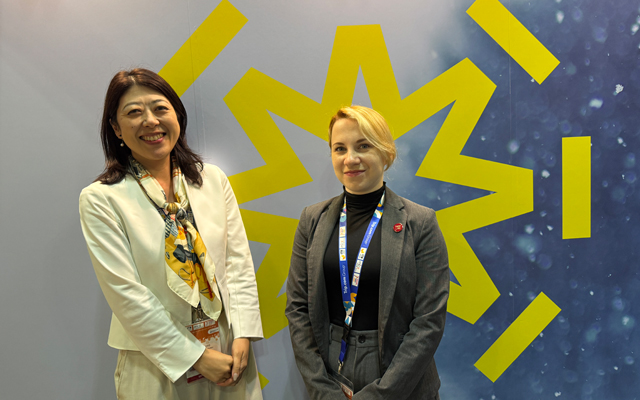
From left: Sapporo Convention Bureau’s Aya Sugimoto and Aloyona Feshina
With Chinese incentive travel groups not “returning anytime soon”, Sapporo Convention Bureau in Hokkaido, Japan has turned its attention towards small- to mid-sized alternatives from the South-east Asian market.
“I’m here at ITB Asia to meet with buyers from South-east Asia, specifically from Singapore, Malaysia, and Indonesia, our top three markets in this region,” Aya Sugimoto, manager incentives and corporate events, told TTGmice.
From left: Sapporo Convention Bureau’s Aya Sugimoto and Aloyona Feshina
She acknowledges one obstacle to her ambition – the need for a Tokyo transit on flights to Sapporo from South-east Asian cities, with the exception of the Bangkok-Sapporo route that is operated by Thai Airways and AirAsiaX.
While airlift from Bangkok enjoys the convenience of direct services, Sugimoto said the market is stronger for leisure FITs, with room for improvement in incentive travel.
Indeed, the Japanese city will have to resolve its air access challenge if it is to do well in South-east Asian markets, which prefer short programmes without the hassle of transit flights, according to Sugimoto.
The Hokkaido prefectural government is working to entice airlines to operate direct flights to Sapporo.
There is also work to be done in changing the perception that Sapporo is only good for the winter season.
She said: “We have so much to offer in the green season (April to October). Groups can opt for canoeing, fruit picking, or cherry blossom viewing. Our cherry blossoms bloom much later in April and May, and we are less crowded (than the main Japanese cities of Tokyo and Osaka).”
While Sapporo Convention Bureau does not dangle cash incentives to lure business events to the city, it does provide other forms of support. For instance, a group that clocks 200 visitor nights or more in the city will qualify for a gala dinner hosted by the bureau or be able to enjoy relevant city tours. Smaller meetings with 100 attendees may also be gifted with an airport welcome.
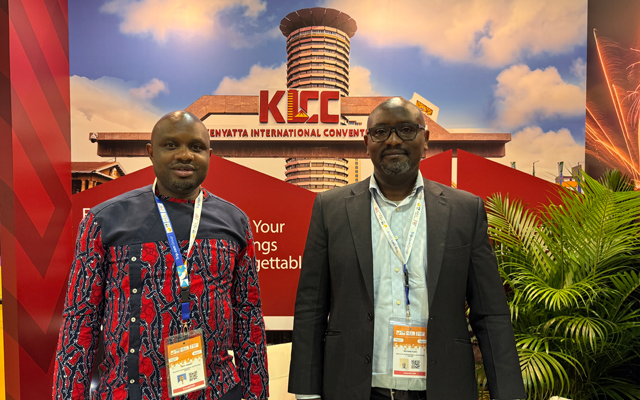
From left: The Kenyatta International Convention Centre’s Jeff Omondi and Wilfred Njau; photo by Rachel AJ Lee
The Kenyatta International Convention Centre (KICC) in Nairobi, Kenya, is keen to grow its business beyond the dominant local and European markets, and is looking to Asia-Pacific to make this happen.
“Exhibitions make up about 60 per cent of our business. We recently held the 8th China Africa Agric Expo and China Trade Week Expo. We also have exhibitions from India, mainly in the agricultural, dairy, machinery, and printing and packaging sectors,” Wilfred Njau, KICC’s customer care assistant, shared with TTGmice.
From left: The Kenyatta International Convention Centre’s Jeff Omondi and Wilfred Njau; photo by Rachel AJ Lee
International meetings take place at KICC as well, with most coming from the Commonwealth countries and global organisations such World Trade Organisation and ICCA, he added.
Njau shared: “Right now, we’re working on attracting meetings and events from Singapore as well as Malaysia- and Thailand-based companies. Many East African students head to these countries for education, and I’m thinking of ways to tap on that (for potential conferences).”
He added that KICC has yet to welcome any business events from Singapore.
KICC is able to offer memorable event ideas. With it being housed within a 30-storey building, event attendees can enjoy panoramic views of the city from an observation deck on the top floor.
KICC is also able to work with planners to build a safari tour of Nairobi National Park – a 10-minute drive away from the venue – for overseas event attendees. The wildlife activity is ideal as a treat to mark the end of the business event.
While KICC is keen to grow its Asian business, Njau acknowledged that the lack of direct flights from business hub Singapore is a challenge. The venue is working to tackle this issue through “regular dialogues” with Kenya Airways, the national carrier.
KICC also works closely with the Kenya Tourism Board on potential event bids.
“I want more awareness in this region that Kenya is ready for meetings,” he concluded.
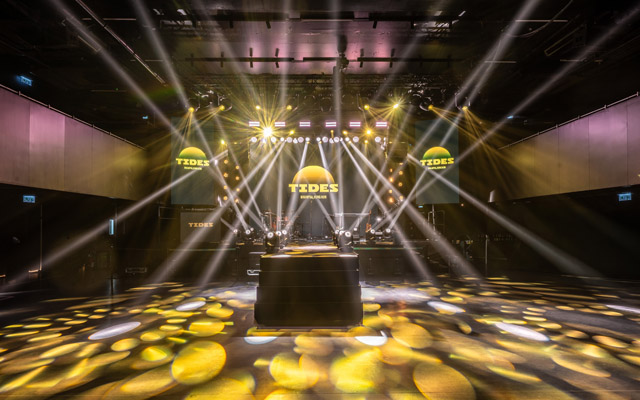
Tides, the new 1,500-capacity mid-sized venue by Live Nation, officially launched on October 14.
Located in Kowloon, the facility is available for corporate functions, brand activations, and mid-scale productions. Inspired by waves, voyages, and journeys, the design theme of Tides pays homage to the sea and the area’s maritime history.
Tides is Hong Kong’s latest mid-size event venue
The 2,787m2 space emphasises plug-and-play efficiency, offering integrated production with 360-degree sound, lighting, and cutting-edge stage technology. This touring-grade infrastructure ensures rapid setup and execution for demanding events.
Key corporate amenities include The Upper Deck, a modern VIP lounge ideal for exclusive client entertainment and private events. Tides’ versatile design makes it an inclusive platform for all event organisers seeking a high-specification venue.
The space also serves as a purpose-built home for live entertainment, providing a platform for emerging acts, but its immediate utility is its capacity to host large-scale, professional non-performance events.
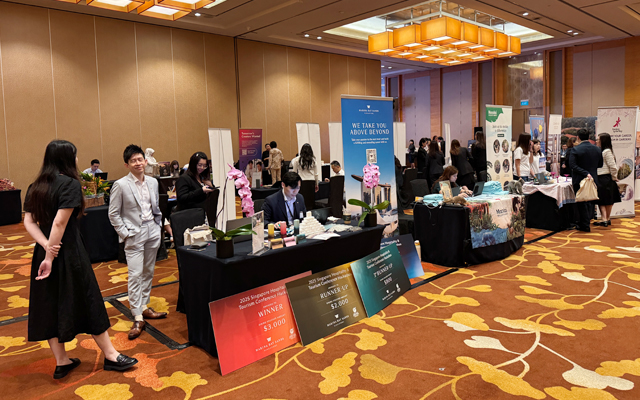
The career fair at the inaugural first Singapore Hospitality & Tourism Conference; photo by Rachel AJ Lee
The inaugural Singapore Hospitality & Tourism Conference (SHTC) 2025 is taking place today at Marina Bay Sands, in conjunction with ITB Asia.
In addition to panel discussions, student attendees also have access to a career fair which offers close to 700 immediate opportunities across more than 20 companies in tourism such as Mandai Wildlife Group, Conrad Singapore Orchard, and Singapore Airlines.
The career fair at the inaugural Singapore Hospitality & Tourism Conference; photo by Rachel AJ Lee
These extensive job opportunities reflect the tourism sector’s strength, supported by strong employment trends, where between June 2023 and June 2025, Singapore’s total tourism workforce grew by more than eight per cent from 69,000 to 75,000. The sector is actively hiring, with over 5,000 job postings covering around 6,700 vacancies available in 2Q2025 on Workforce Singapore’s MyCareersFuture portal.
Rachel Loh, executive director of hospitality and tourism talent at the Singapore Tourism Board (STB), told media during a group interview that, beyond traditional roles such as HR executives, new positions have emerged, including a data scientist at Marina Bay Sands and an international ski and snowboard management trainee at EU Holidays.
Additionally, the hospitality sector, which employs over 43 per cent of the tourism sector’s workforce, is set to grow even further, with another 1,500 new hotel rooms expected to open by end-2026.
Loh asserted that “tourism has a bright future”, backing this claim with IHL statistics that show some 1,500 students now select tourism and hospitality as their top choice – a 66 per cent growth compared to two years ago.
For mid-career individuals, work-study programmes have seen “very encouraging growth”, with participants rising from 70 two years ago to 100 this year (based on Republic Polytechnic figures). This development is supported by accredited courses offered through CET (Continuing Education and Training) centres like the NTUC LearningHub, which has a three-year partnership with STB.
Responding to a query raised by TTGmice about SHATEC’s closure earlier this year, Loh reassured: “There is sufficient supply to continue this pipeline of training, both for students as well as industry professionals, into the broader tourism sector as well.”
In response to another query about how difficult it is to hire within Singapore’s business events sector, Loh acknowledged that while demand is high – driven by the goal to triple business events receipts by 2040 – hiring is challenging because roles are now far more specialised and sophisticated.
Business events are no longer just about basic logistics, but about creating “really good and immersive” experiences, and this shift requires specific competencies in technology, data analysis, and sustainability, forcing the sector to compete for talent with industries that traditionally own those skillsets. Loh cited the creation of specialised audiovisual courses as an example, illustrating how deeply the required skills have evolved.
This inaugural SHTC 2025 evolved from the annual Tourism Transformation event, building on five editions led by the Tourism Sector Coordinator Team, comprising six IHLs (Institute of Technical Education, Nanyang Polytechnic, Ngee Ann Polytechnic, Republic Polytechnic, Singapore Polytechnic, and Temasek Polytechnic).
Now rebranded and enhanced, this iteration with new partners including STB, Singapore Institute of Technology, and Singapore University of Social Sciences, aims to deliver a more comprehensive programme and job opportunities for students, signalling a strong commitment to build Singapore’s talent pipeline for the hospitality and tourism sector.
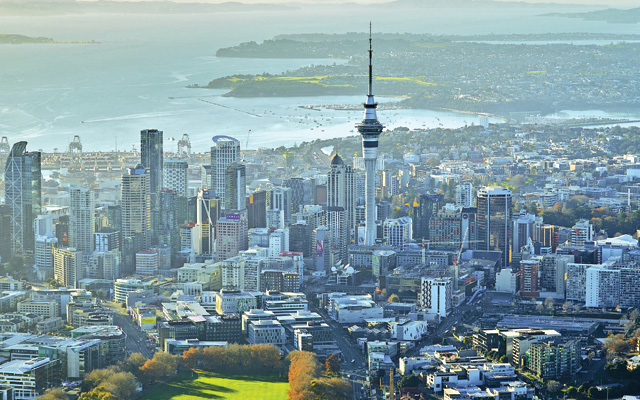
Auckland has added over 5,000 hotel rooms in the past five years
Auckland is entering a defining new chapter in its evolution as a premier business events destination, fuelled by a dynamic blend of strategic vision and new infrastructure, headlined by the upcoming New Zealand International Convention Centre (NZICC).
“We’ve got a really powerful story to tell,” said Ken Pereira, head of Auckland Convention Bureau.
Auckland has added over 5,000 hotel rooms in the past five years
“We want Auckland to be an incubator of ideas born in this part of the world, and to be able to compete with Singapore and Vienna. Tech and innovation are a big focus for our city, and our event strategy is about connecting business events with economic development and broader city aspirations.”
Major transformation is translating into impressive results.
According to Nick Hill, chief executive of Tataki Auckland Unlimited: “This year, we estimate a 35 per cent increase in the economic impact of business events, up from NZ$35 million (US$20.4 million) last year to NZ$48 million. Visitor nights have increased by 48 per cent to reach 113,000.”
The momentum looks set to accelerate, with Hill noting that a strong pipeline forecast will “lock in business for NZ$107 million”.
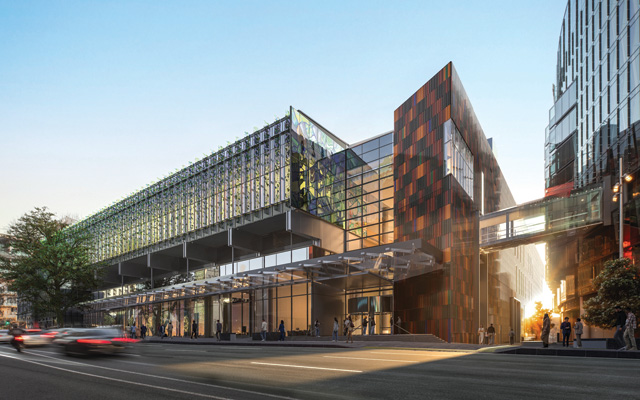
Infrastructure is front and centre in Auckland’s rise. The NZICC, opening in February 2026, is hailed as “game-changing” by Pereira, and is expected to reshape New Zealand’s ability to attract and deliver major global events.
“It will allow us to operate at a scale that no other convention centres in New Zealand can currently match. For both Auckland and New Zealand, it’s a huge opportunity,” said Pereira.
The centre offers 7,000m2 of flexible exhibition space, and a 2,850-seat theatre that can convert into a banquet hall. Already, 23 international events are confirmed between 2026 and 2028, bringing 23,000 delegates, 126,000 visitor days, and an estimated NZ$90 million in economic impact, according to NZICC’s general manager Prue Daly.
A rendering of the New Zealand International Convention Centre
Supporting the venue is an expanded hotel inventory, with more than 5,000 new hotel rooms added in the past five years, many within walking distance. The City Rail Link, nearing completion, will further enhance access to the city centre.
Auckland Airport is also undergoing its most significant transformation in decades, with NZ$300 million committed to expanding terminal capacity and building an integrated domestic jet terminal. The project will deliver 23 per cent more gates, and a 44 per cent increase in passenger processing capacity.
Air connectivity is still catching up. According to Auckland Airport’s chief customer officer Scott Tasker, the current number of airline seats remains 11 per cent below pre-pandemic levels, though routes and capacity are rebuilding.
There is heightened awareness of what is at stake.
“If we do this right, all the other consequential outcomes like visitation numbers, GDP, economic impact – all that good stuff will happen,” said Pereira. “We’re genuinely on a journey to learn from world leaders, to see how they connect investment and tech outcomes through business events. We don’t have to reinvent the wheel.”
South-east Asia is a priority market, especially Singapore, Malaysia, Indonesia, and Vietnam.
“Singapore makes the strongest strategic sense, given its influential role in the region, both for associations and the corporate sector,” Pereira noted.
Thanks in large part to NZICC, Auckland is preparing to host some major events over the coming months, including the International Coral Reef Symposium for the first time, expected to bring 2,500 delegates and 15,000 visitor days in July 2026, generating NZ$6 million in economic impact.
Also confirmed are the International Society for Microbial Ecology next July and the Royal Australian and New Zealand College of Ophthalmologists (RANZCO) 57th Annual Scientific Congress in November 2026 with about 1,700 delegates each.
The newly-opened Ritz-Carlton, Bangkok anchors the One Bangkok development with cosmopolitan elegance. Featuring the city's largest ballroom and a spectacular new penthouse suite, it delivers exceptional hardware and deeply authentic, soulful service for business and leisure travellers alike
Behind the imposing, Brutalist concrete that defines Zurich’s Oerlikon district lies a surprising secret. While its exterior honours the neighbourhood’s industrial roots, stepping inside Mama Shelter reveals a vibrant, neon-soaked world that is a far cry from its rigid shell
A polished urban retreat designed for business travellers, Hyatt Regency Kuala Lumpur at KL Midtown combines thoughtful design, seamless service, and exceptional facilities.




 Bourachi joins from The St Regis Al Mouj Muscat Resort in Oman, where she held the same role.