



Guangdong, Macau business travellers remain cold to Come2hk Scheme

Although The Come2hk Scheme – which enables non-Hong Kong residents to enter the destination via Guangdong Province and Macau – was resumed on September 15, it has yet to yield as much corporate travel traffic as it was anticipated to achieve.
Despite a daily quota of 2,000, government statistics showed that some 4,301 visitors were received between September 15 and 28. Among them, 3,816 arrived via Shenzhen Bay Port while the rest used the Hongkong-Zhuhai-Macao Bridge Hong Kong Port.

China Travel Service (H.K.)’s general manager, George Kai, told TTGmice that the majority of scheme users were Visiting Friends and Relatives (VFR) travellers. Business travellers are reluctant to utilise the scheme, as they would still be subject to quarantines upon their return to Guangdong or Macau.
Kai added that while the pandemic situation has stabilised and more small- to medium-size corporates were restarting their events and exhibitions, those activities were attracting mostly the domestic audience.
What would be helpful in restarting Hong Kong’s business travel and events traffic, Kai suggested, was the reciprocal easing of quarantine restrictions for travellers returning from Hong Kong.
While Wharf Hotels’ president, Jennifer Cronin welcomed the scheme, she pointed out that corporate travel would be slow to return as extra layers of approval are currently required for corporate trips, and many organisations have gotten used to virtual meetings, conferences, and tradeshows.
“The limited corporate travel we see involves longer stays and consolidated itineraries, while there’s still a wait-and-see approach for non-essential travel,” Cronin said.
Cronin added that she’s “hopeful” that Hong Kong’s vaccination rate will improve to a point where the destination will be able to “form travel corridors with other countries” and “alleviate pent-up demand”.
“As long as borders remain restricted, the knock-on effects to society and the economy will be increasingly worrisome,” she said.
More efforts necessary to ensure Beijing retains MICE attractiveness

China’s leading DMC veterans have openly acknowledged that the country is “no longer cheap”, and is now competing with various other global alternatives, during the first Visit Beijing Trade Connect online roundtable discussion on The Future of Beijing MICE last week.
Alicia Yao, managing director, IME Consulting, highlighted the “reasonable rentals” for unique venues like palaces and museums in Vienna, while Frank Feng, CEO of China Star, addressed the high cost of hosting a cocktail event at the iconic Five Dragon Pavilions in Beijing’s Beihai Park.

Meanwhile, Daniel Lim, co-founder and director-MICE of Singapore-based Event and Marketing Solutions (EMS), credited TCEB (Thailand Convention and Exhibition Bureau) for being supportive and was one CVB that impressed him.
He shared that TECB was “engaging”, “very willing to help” meeting planners and have been organising regular supplier updates to “remain connected” during the pandemic.
For EMS’ co-founder and director, MICE and luxury travel, Angela Lee, Australia and New Zealand stands out for good service, creativity and for “having nature”, where different programmes like “cycling and wellness” could be organised.
Apart from not speaking English, Feng said European and US clients needed to know that most Chinese DMCs typically focused on domestic MICE, while Yao said international clients should partner DMCs that could help them understand the different rules and how China operates.
Lee added expectations of overseas meeting groups have to be well managed, citing the example of what to expect during coffee breaks, while Lim added suppliers needed to be “flexible” and help clients “understand what is possible and what can be done”.
Lee also commented that “good controls” and “safe management practices like splitting groups into different hotels” had to be in place.
Yao agreed that a good SOP (standard operating procedure) and standardising it would “make buyers feel safe”, and IME was buying insurance for both the staff and events it was organising.
She continued: “If we run more successful events, we will be more confident and clients will also be more confident to come to Beijing.”
Two new MoUs to bolster Singapore’s business events industry
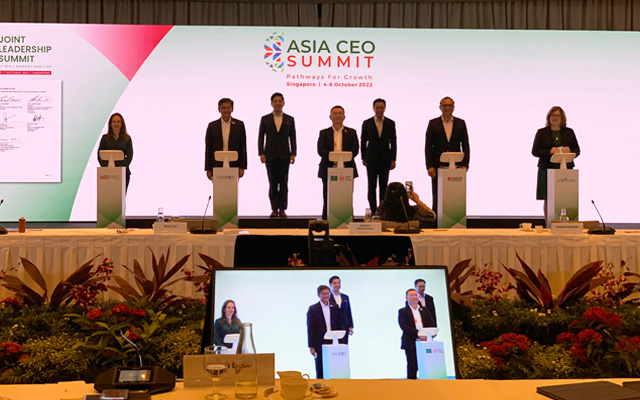
The Singapore Tourism Board (STB) inked two Memoranda of Understanding (MoUs) at the Joint Leadership Summit this morning, providing a boost to the business events industry in Singapore and cementing her status as a launchpad for international event organisers.
For the first, STB has signed a three-year MoU with the Singapore Association of Convention & Exhibition Organisers & Suppliers (SACEOS), and international MICE associations Association of Event Organisers (AEO), Society for Independent Show Organizers (SISO) and UFI, The Global Association of the Exhibition Industry (UFI) to host Asia CEO Summit @ Singapore (ACS@Sg) in 2022, 2023 and 2024.
Next, DMG Events, Enterprise Singapore and STB have signed an MoU to anchor Gastech 2023 in Singapore. Gastech, the world’s largest integrated exhibition and conference supporting the gas, Liquefied Natural Gas, hydrogen and energy value chain, is scheduled to take place at Singapore Expo in September 2023.
It will be attended by energy industry thought leaders, policymakers and industrial energy decision-makers, who will discuss trends, opportunities and pertinent challenges faced by the global energy market.
Yap Chin Siang, STB’s deputy chief executive, said: “As Singapore journeys towards Covid-resilience, we will continue to facilitate the safe and gradual resumption of MICE events. The new partnerships are a testament to our solid economic fundamentals and reflect Singapore’s strong standing as a Global-Asia Node for MICE and business. While the pandemic has changed the way we work and travel, Singapore remains committed to strengthening existing partnerships while forging new ones.”
MICE industry has to hasten digital transformation for future events

The business events industry is still playing catch up with digital transformation, which has become a requisite for event organisers as countries around the world open.
AMR International’s executive chair Denzil Rankine said at the Asian MICE Forum that in 2019, the industry was 98 per cent analogue and two per cent digital. This meant that when the pandemic swept through the globe, it was a “major shock”, as many were not “prepared for a major change” in having to “deliver services digitally.”
And when the industry had to pivot quickly to digital formats during the pandemic, some virtual tradeshows were less than satisfactory, disappointing both exhibitors or sponsors.
Moving forward, Rankine pointed out that tradeshows and exhibitions will remain the highlight of any industry calendar. He further emphasised the need to use to ensure events are digitally ready, not just with the right apps, but also being able to use the data to better understand visitors’ needs and connect them with the right exhibitors.
Many transactions in the US$29 billion tradeshow industry – according to the Globex annual survey in 2019 – revolve around digital transformation, which has seen a strong annual growth of around five per cent, with an attractive profit level of 30 per cent for large organisers, and 20 per cent for small organisers.
Even before the pandemic, there was already a “low level of customer satisfaction”, Rankine said. He advised events organisers to be “consumer-centric” and be “more focused on understanding and satisfying customer needs”.
Regardless, Rankine remains optimistic that the business events industry will continue to grow post pandemic.
“Organisations that make substantial changes in the way they provide services… will (be able) to take quite a substantial share,” he concluded.
PCAAE to hold The Associations Summit 9 in November
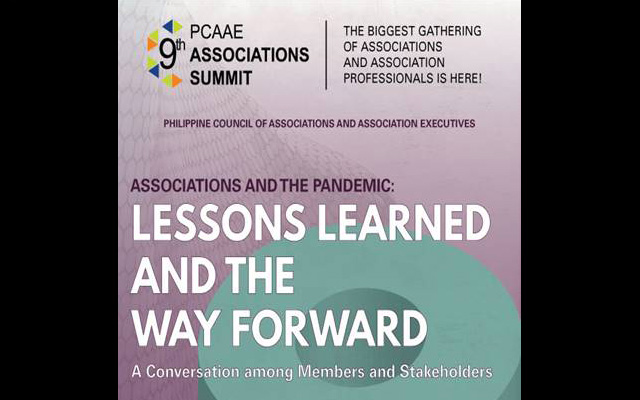
The Associations Summit 9 (AS9), presented by the Philippine Council of Associations and Association Executives (PCAAE), is set to be held on November 24-25, 2021 with the support of the Tourism Promotions Board (TPB).
Themed Associations and the Pandemic: Lessons Learned and The Way Forward – A Conversation among Members and Stakeholders, the virtual Summit is expected to draw more than 200 association leaders and professionals here and abroad.
The Summit will feature plenaries and learning sessions, where speakers will share best practices in association governance, leadership and management. Participating PCAAE members will also earn points that could lead to earning the title, Certified Professional Association Executive (CPAE).
The Summit will also be the fitting venue of the Ang Susi Awards 2021 night. Ang Susi stands for Associations nurture National Growth through Social Unity and Sustainability Innovations” and also symbolises the key role that the association community and its professionals contribute to national economic development.
The awards will be given to membership organisations in six categories for their outstanding achievements in helping the environment, empowering people, serving communities, enhancing trade and industry, developing technology solutions, and being agents of change.
Two individual awards, the Association Board Member of the Year and the Association Executive of the Year, will be bestowed on outstanding career professionals who have sustainably governed and managed an association and produced remarkable results, especially during this pandemic.
“Through AS9, we hope to help associations be “future-ready” themselves by knowing what’s out there in terms of peer best practices, as well as for them to think strategically in terms of increasing their sources of revenue, enhancing their profile, and fulfilling their missions.
“We also invite associations to seize the social and professional development opportunities available from the virtual networking with fellow members of the association community,” said PCAAE founder and CEO, Octavio ‘Bobby’ Peralta.
BEIA postpones November conference to 2022
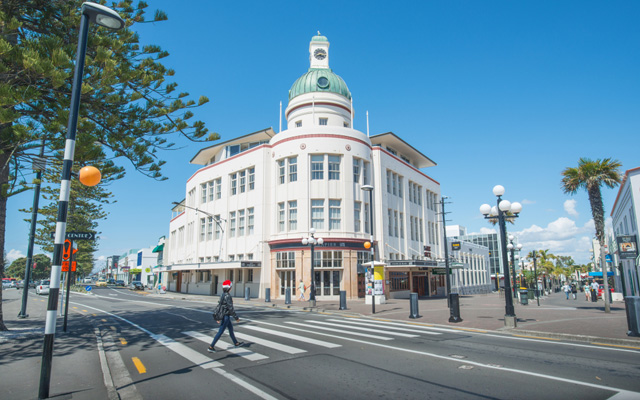
Business Events Industry Aotearoa (BEIA) and Hawke’s Bay Tourism have announced the postponement of BEIA’s 45th Annual Conference in Hawke’s Bay until 2022.
The conference was initially slated for November 1 to 3, 2021. All delegates who have registered and paid for the conference will receive a full refund.
BEIA chief executive, Lisa Hopkins, and Hamish Saxton, chief executive of Tourism Hawke’s Bay shared that the postponement was due to the risks associated with the current Covid-19 outbreak, as well as the continued lockdowns in Auckland and Waikato. There is also uncertainty around travel restrictions that have necessitated this difficult decision.
“It was important to both organisations that we delivered on several key objectives. Firstly, to provide an opportunity for our business events community to come together after what has been a torrid two years.
“Secondly, to enable Hawke’s Bay Tourism to showcase their wonderful region. And finally, it was to provide thought-provoking content, which supported our theme of BEing Bold, Brave and Ready,” Hopkins said.
Currently, the new dates for the show have not been announced. Meanwhile, BEIA’s Annual General Meeting will still go ahead online, and a date for this will be confirmed soon.
Qingpu in Shanghai gets a Novotel
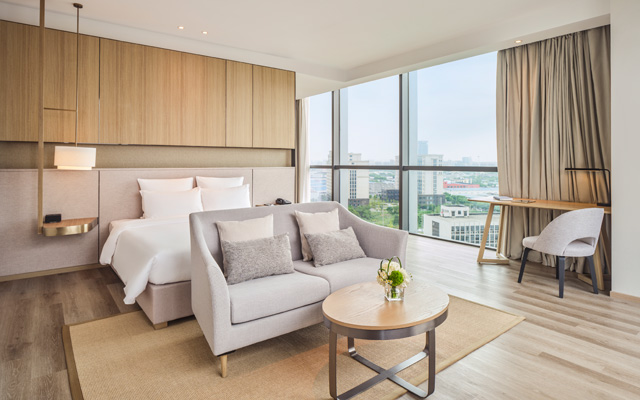
Accor has opened the Novotel Shanghai Qingpu Excellence Hotel, the latest debut in the string of Novotel hotels across Greater China.
The launch of the Novotel Shanghai Qingpu Excellence Hotel completes a new phase of a complex which combines the new Novotel and the existing Pullman Shanghai Qingpu Excellence which opened in 2019.
Together the Novotel and Pullman hotels offer 524 guestrooms and suites including 300 twin rooms, allowing large corporate and MICE functions to host participants on site.
Across both hotels, 2,300m2 of function space is also on offer, and includes spaces such as the 800m2 pillarless grand ballroom, an outdoor terrace space, and 15 breakout rooms.
Within Novotel is also a Gourmet Bar for coffee and drinks, as well as Tang Restaurant which serves Japanese cuisine for lunch and dinner, alongside a daily international buffet breakfast. Pullman has three other options should guests choose to head that way – the Azur Chinese Restaurant, Q Seafood & Grill or Yue Café all-day restaurant.
Rebuilding Thailand inside and out

 What is the state of Thailand’s business events industry today?
Despite the severe impacts on business, the Covid-19 pandemic has given Thailand a chance to focus on the upgrade and development of our products, services, opportunities and attractions which we believe will deliver extraordinary experiences for business travellers once international borders reopen.
We helped to develop five new MICE cities in key regions of the country: Nakhon Ratchasima and Udon Thani in the north-east; Phitsanulok in the north, and Surat Thani and Songkhla in the south. They are brimming with unique products, and are eagerly waiting for travellers to discover them.
Some highlights include Nakhon Ratchasima’s UNESCO World Heritage Sites (Dong Phayayen-Khao Yai Forest Complex), Songkhla’s multicultural experiences, Surat Thani’s agro-industry, Phitsanulok’s traditional Thai wellness specialisation and connection to the Mekong sub-region in Udon Thani.
Thailand’s destination appeal never really ends, especially since the existing MICE cities – Bangkok, Chiang Mai, Pattaya, Phuket and Khon Kaen – have been sharpening their focus on many fronts, from transforming their cultural identity into memorable events, to identifying specific business sectors whose growth can be driven by MICE.
Khon Kaen, for example, is offering growth potential in logistics and medical sectors as well as memorable experience in traditional silk production, while Phuket is playing up her cultural heritage.
In line with MICE city developments, we are working working with them and related bodies to bring in global events that match their growth potential. The International Air Show, for example, is targeted at (spurring growth in) the Eastern Economic Corridor (EEC) near Pattaya.
Thailand’s MICE professionals have also been polishing their skills all these time, and relying on innovative ideas to deliver safe and engaging events. They have been using digital event strategies and normalising health measures as their everyday standard. Their efforts are in support of our MICE Winnovation project and MICE Venue Hygiene Guideline.
TCEB continues to support them through schemes, such as SMILE for meeting and incentive; Convene Plus for conventions; Re-energizing Exhibitions for trade fairs; and Festival Economy for festivals and mega events. All are designed to serve shifting demands as a result of new-normal situation.
It is also worth mentioning is that despite restrictions on travel and gathering activities during Covid-19, Thailand has undertaken several massive infrastructure projects in Bangkok and across key regions, such as the construction of dual rail, high speed train, motorway, sky train and underground train. Accessibility to attractions and destinations across Thailand is far improved.
Let’s talk more about TCEB’s intentions to boost domestic events. Can you flesh out what will be done?
We will continue with our support schemes for domestic meetings and incentives. Since April 2021, we have agreed to support around 645 meetings under this scheme. It is a volume that speaks for itself, how active the domestic MICE market is.
For domestic exhibitions, we have developed schemes to support local trade fairs to help them become more B2B-focused and to become a signature tradeshow in their region. This will boost the economy and distribute income to regional areas – all in line with the government’s policy.
The concept of Festival Economy, which is being rolled out to regional cities, aims to design and create a signature international festival based on each city’s unique resources and cultural identities. The ultimate aim is to have 1 City: 1 License Event.
We have so far undertaken this initiative with Phetchaburi, Prachuab Kirikhan and Ratchaprasong shopping areas in Bangkok. We believe the festival economy will play a part in boosting the local economy and enhancing Thailand’s potential as a preferred MICE destination. We are also promoting the destination through such festivals. TCEB will organise trips for potential clients to experience such destinations. We recently took members of the Joint Foreign Chambers of Commerce in Thailand (JFCCT) to visit local communities in Pattaya, and are supporting Khon Kaen Business Forum, an online event, to connect overseas businessmen from JFCCT with local businessmen in Khon Kaen.
How will post-show tours around Thailand change in a post-pandemic world?
Local and authentic experiences have been multiplying at a scale never seen before. It is a result of our intensive development of new MICE cities, new products under the 7 MICE Magnificent Themes, new routes and new city festivals. We are aware of the pent-up demand people have for local and authentic destination experiences.
Phuket, for example, is ready to showcase her cultural heritage in the old town and gastronomy prowess, especially Michelin-starred restaurants in addition.
Chiang Mai offers an ethnic culinary journey, where one can experience mocktails made from local ingredients, as well as the Floral Bloom Festival.
Pattaya presents opportunities to interact with the local coconut plantation community and to produce fusion coffee.
Khon Kaen is well-versed in transmitting Mud Mee silk production knowledge.
TCEB’s recent Creative Routing Contest, where Thai DMCs competed to craft routes that would appeal to future MICE groups and drive business opportunities to local communities, has resulted in some exciting products. We are pleased to present some newly-developed signature products, such as Phuket Old Town, Khao Yai National Park in Nakhon Ratchasima, Phang-ngan island in Surat Thani, Mudmee Silk in Khon Kaen, green journeys in the suburb of Bangkok, and culture and CSR immersion in Chiang Mai. These will deliver extraordinary experiences in Thailand.
What are TCEB’s plans for 2022?
We announced on August 26, during our MICE Day virtual event, a three-pronged strategy to drive the growth of our MICE industry in 2022. The first one is to reinforce national events by developing MICE cities, creating new events, helping organisers to meet higher standards, and continuing our support for domestic events.
Next, we are partnering international MICE associations to train the workforce and upgrade venues in preparation for the return of international events. We recently signed an MoU with eight alliances on a Carbon Balance Scheme to achieve carbon neutral events.
The third thing we are doing is to intensify the pursuit of international events. An example of this effort is our work with the EEC stakeholders to host the International Air Show.
Which markets will return the fastest?
It is still difficult to identify which markets will recover the fastest. This all depends on the situation of each country, such as local infection rates, vaccination roll-out, as well as departure and entry requirements.
If the situation of the source market and Thailand is a match, which means neither will pose a safety threat to the other, a travel arrangement could materialise.
Economic factor must also be taken into account, since severely affected business would have an impact on travel budget.
In this respect, if the situation between the two sides is conducive for inter-travel and budget is not too much constrained, then I would think that short-haul source markets with small groups look more positive.
TCEB is part of the newly-formed Asian Convention Alliance (ACA). How will this help with bringing back regional events?
Each member of the alliance (currently TCEB, Thailand Incentive and Convention Association, Seoul Tourism Organization, Taiwan External Trade Development Council, and the Malaysia Convention & Exhibition Bureau) will identify and secure at least one convention that could rotate (around the region) and be organised in a member destination from 2022. The qualified convention does not have to abide by a regular rotation pattern.
Each party agrees to provide subvention forms – in cash and in kind – to the convention that is organised in the member country, state, city or territory.
All ACA members have agreed on these terms, and will promote the alliance for the greater benefit of all members.
What international events have been confirmed for Thailand in 2022 and beyond?
Phuket, which has been serving as a sandbox model for tourism reopening, will host the Travel Blog Exchange Asia in March 2022 and the Asia Luxury Travel Mart 2022. These two events are a perfect match for the attributes of the island and we are hoping they will elevate the MICE profile of Phuket.
For trade fairs, we are happy that events in 4.0 industries, which are our target to help drive the government’s policy, will be staged not only in Bangkok but also in the EEC. Manufacturing Transformation Thailand 2022, which will feature smart manufacturing technology, has confirmed its location in Pattaya in September while LogiMAT and Intelligent Warehouse 2022, which will present innovative warehouse systems, will be organised in Bangkok in October.
Visit Beijing unveils platform to connect with global trade

The Beijing Municipal Culture and Tourism Bureau (Visit Beijing), which has been ramping up its online presence in the last two years, launched its Trade Connect (TC) platform on September 28 to promote new products, “lesser-known resources” and tour themes to overseas operators in the run-up to the 2022 Winter Olympics (Beijing 2022).
TC complements Visit Beijing’s educational webinars on a broad range of topics and training to earn the Beijing Tourism Expert e-certification.

Wang Rui, deputy director, Department of Foreign Exchange and Cooperation, Beijing Municipal Culture and Tourism Bureau, said international buyers could access short videos promoting 60 locations under 11 themes under TC.
The themes are traditional Chinese medicine (TCM), performance and cultural venues, sports tourism, cosmopolitan Beijing, MICE, educational travel, intangible cultural heritage, art galleries and museums, 144-hour visa-free travel and tax-free shopping, famous former residences and winter tourism.
Beijing 2022 will take place during Chinese New Year from February 4-20 in the capital and towns in neighbouring Hebei province.
According to bureau spokesperson, Yang Ge, the TC collaterals can be downloaded for marketing purposes and partners can book appointments for webchats and video meetings with local suppliers and win prizes for participating in the programme.
Yang explained: “TC will help us to continue to connect despite the Covid-19 pandemic and help (buyers) strengthen the relationship with the bureau and deepen understanding of Beijing’s tourism resources from a database of products, tour operators, hotels and attractions that showcase Beijing’s most exciting and lesser-known products.”
The bureau has also set up a Linkedin account to collaborate with global travel companies, she added.
TC also includes themed roundtable discussions with local and international speakers and the first on the Future of Beijing MICE took place following the launch. The next roundtable will be held in late-October or November on health and wellness, focusing on TCM.
Reviews

The Ritz-Carlton, Bangkok
The newly-opened Ritz-Carlton, Bangkok anchors the One Bangkok development with cosmopolitan elegance. Featuring the city's largest ballroom and a spectacular new penthouse suite, it delivers exceptional hardware and deeply authentic, soulful service for business and leisure travellers alike

Mama Shelter Zurich
Behind the imposing, Brutalist concrete that defines Zurich’s Oerlikon district lies a surprising secret. While its exterior honours the neighbourhood’s industrial roots, stepping inside Mama Shelter reveals a vibrant, neon-soaked world that is a far cry from its rigid shell
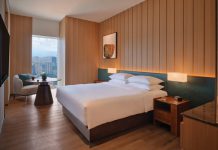
Hyatt Regency Kuala Lumpur at KL Midtown
A polished urban retreat designed for business travellers, Hyatt Regency Kuala Lumpur at KL Midtown combines thoughtful design, seamless service, and exceptional facilities.


Safeguarding mental health has become a priority for Philippine travel and tourism stakeholders who are more susceptible to depression, stress, and anxiety brought about by the consequences of the prolonged lockdown that is now entering its 19th month.
The extent of their suffering is gleaned from the recent Nikkei Asia’s Covid-19 Recovery Index (as of September 30), which ranks the Philippines as the worst among 121 countries in responding to the pandemic. Bloomberg’s Covid-19 Resilience Ranking classifies the Philippines as the worst place to be among 53 countries in containing the pandemic.
Addressing mental health concerns, the Tourism Promotions Board (TPB) and stakeholders’ online meeting every Wednesday has evolved “into a period for retooling and relearning,” pep talks and motivational talks, said chief operating officer Anthonette Velasco-Allones.
The simple act of guesting clinical psychologist Joanna Herrera, who discussed mental health and mindfulness last Wednesday, inspires and “keeps hope alive in the hearts of our stakeholders, including tour operators and travel agents”.
In the predominantly Catholic country where people find solace in spirituality, TPB’s wellness and work-life integration programme for its staff has online fellowship “to keep the team connected” that includes a virtual holy Mass every first Friday of the month and bible studies, Velasco-Allones said.
Many staff find therapeutic the Think Tok (a variant of Tik Tok) that refreshes skills on writing, productivity, powerpoint presentation, Zoom set up, and work from home set up. The most recent was a mindfulness session led by a yogi.
It is understood that the Department of Tourism will be adopting most of the mental health safeguards being practised by TPB.
Cleofe Albiso, group general manager of Megaworld Hotels, shared that they have a Circle of Happiness programme with several projects and activities including webinars for all associates “that allows us to love ourselves, our families, our community and God is at the centre of it”.
Albiso cited the importance of mental health and well-being as most of their properties are fully operational. Ten hotel general managers will attend the MICECON conference in Boracay late this month, for work and leisure for their general well-being.
Recognising that association executives face mental and physical anguish and stress during this pandemic, the Philippine Council of Associations and Association Executives has been balancing its webinar offerings with “hard core management and governance courses plus inspirational and motivation topic representations, such as those concerning personal upliftment and optimism like values and faith, which are part and parcel now of our new normal”, shared founder and CEO Octavio Peralta.
“Concerning faith, which life coach Bo Sanchez delivered, attracted the most number of attendees. We plan to do this more often,” Peralta added.
PATA Philippines Chapter, one of the first that addressed mental health issues for its members and stakeholders, once invited a priest to talk about keeping the faith, as well as celebrities who survived arduous life challenges.