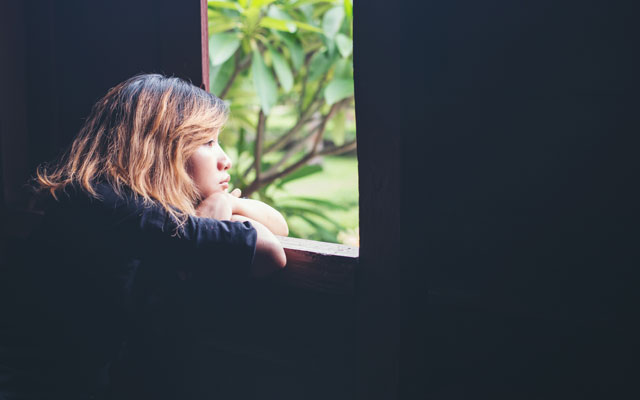
What happens when people are made to function almost daily at home with far reduced social interactions over a long period of time?
Social support is key to many individuals. Social support can take many forms, such as having a heart-to-heart talk with a close friend over a meal or going hiking with friend. It is really about having someone to turn to or lean on. Social support makes getting through tough times and emotional difficulties a little easier.
But with implementation of Covid-19 safety measures, particularly social distancing, reduced visitation at home and working from home arrangements, it limits people’s access to social support. Naturally, with prolonged reduced social interaction, it will reduce one’s ability to manage emotional difficulties.
At work, reduced social interactions can impact the quality of work and relationship with colleagues. Cohesiveness and trust is built through face-to-face interaction, so without enough of that mistrust and miscommunications can set in and give rise to conflict.
And as employees continue to work in silos, they can lose focus on the purpose of the entire group and instead see only themselves. In the long term, this can affect work efficiencies and erode motivation to keep working.
I’ve seen more social media conversations about mental well-being throughout the pandemic. Is there really a growing awareness of mental well-being?
As we observe each of the 21st century pandemics, we see imprints of psychosocial impacts and varying degrees of psychological effects such as anxiety, which is often reported as distress, fear or panic, as well as anger, depression, insomnia, social isolation, loneliness and even post-traumatic stress disorder.
Being more informed of the psychosocial impacts of past pandemics has led more mental healthcare professionals to bring this conversation to the public and to encourage help-seeking behaviour.
It also seems there are more mental health conversations now because of increased used of social media.
Are you seeing more individuals recognising and speaking up about their own mental well-being?
I am. As awareness of mental health grows, employers are showing more care about their staff’s mental well-being, such as by establishing an Employee Assistance Programme to provide accessible avenues for employees to seek help from.
Sometimes, people may not realise they are under stress. They may encounter more body aches, fall sick more often, or suffer more frequent or lasting migraines. People may therefore not go to a psychologist for help. Instead, they will go to a GP. The good thing is, GPs are now aware of the physiological symptoms of mental stress, and will refer patients to the right channel for help.
What can employers do?
First and foremost, employers or people in leadership roles must acknowledge the difficulties of working in current situations.
Second, they will need to connect with individual staff or with the team regularly, not just for work updates but also to find out how they are feeling and coping at home. Doing this brings back human interaction and show that they are not alone in this new and difficult situation. Furthermore, this also serves as a reminder that everyone is working as a team, and not as individuals, and support is available.
Third, they need to provide a helping hand to staff in need.
This was first published on TTGmice July-August 2021, as part of the cover feature, Teams under challenge.
Adrian Toh is a clinical psychologist at Thrive Family in Singapore. He also holds the role of vice president (development) at the Singapore Psychological Society.
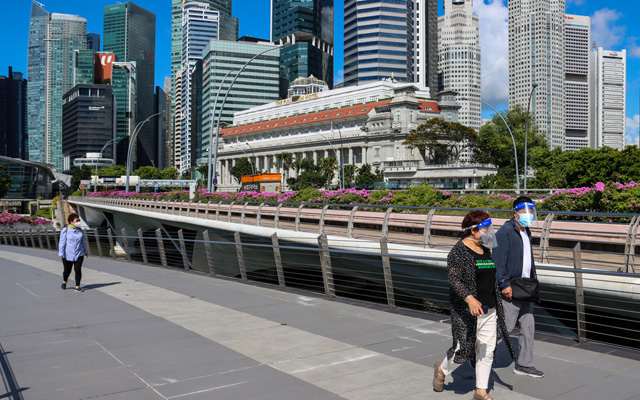
The Singapore government is looking into relaxing rules for the fully-vaccinated in August, and the possibility of quarantine-free travel in the near future, said co-chair of the multi-ministry task force Lawrence Wong who was delivering a ministerial statement in Parliament on Monday.
This comes as 80 per cent of Singapore’s 5.7 million population is expected to be fully vaccinated by September.
Singapore has started moving towards living with Covid-19, with most restrictions expected to be lifted soon
A review will be done in early August, and if the virus situation is stable, Wong shared that the government will look into reviewing restrictions for fully-vaccinated individuals, ahead of August 18 (the supposed end date of Phase 2 Heightened Alert).
This, however, depends on infection clusters being controlled and hospitalisation rates remaining low. As such, individuals who want to dine in at a restaurant or exercise in a gym will also have to be fully vaccinated. The same goes for those who want to attend a large event or religious service with more than 100 people.
There’s also a possibility that Singapore residents who have received two doses would not need to serve a 14-day hotel quarantine when they return from overseas. Eventually, people may also be allowed without masks outdoors.
Should travel corridors be established, it will be with countries or regions where Covid-19 is under control.
Health minister Ong Ye Kung further stated that once effective vaccination of the population has been reached, Covid-19 would be treated like the flu – without contract tracing and quarantine in dedicated facilities. Hospitalisation will only be for those seriously ill.
He added that there will be shifts in health protocols, and if Covid-19 was to be endemic, having 200 or more cases a day may not be unusual. During the influenza season, infection rates numbered around 1,000 a day.
Certain health protocols are already in effect, for instance, the city-state has been admitting more Covid-19 patients aged 17 to 45 directly to community care facilities instead of hospitals. This age bracket will be expanded to age 59.
It has also shortened the length of stays in hospitals and community care facilities from 21 days to 14 days for the fully-vaccinated, and lets those who are fully inoculated serve quarantine at home instead of at government facilities.
However, Wong warned that new variants may also emerge, and could be more transmissible or lethal, which may force the government to reintroduce restrictions from time to time.
Constellar Holdings has retrenched 21 employees, equivalent to 12 per cent of its employees in the Singapore office, citing the prolonged impact of Covid-19 as a reason.
This exercise was conducted in close consultation with the Singapore Industrial & Services Employees’ Union, and with the support of the Employment and Employability Institute, to assist affected employees with advice and counsel in their career transition.
Constellar reiterates retrenchment exercise was a difficult one
Affected and eligible employees will get a retrenchment package based on their length of service. Constellar will also continue to extend medical insurance coverage to them until March 31, 2022, or when they find employment, whichever is earlier.
This move is despite having implemented cost reduction and a freeze on wages and hiring, tapping on government support such as the Jobs Support Scheme, and implementing management pay cuts of up to 30 per cent.
Since the circuit breaker in Singapore was implemented in April 2020, the events industry has been severely upended. Events in Singapore were suspended and were only allowed within strict capacity limits and safe events protocol from October 2020 with travel and border restrictions effectively in place. As a result, the majority of events had to be postponed or cancelled, while others had to be significantly downsized, or go digital or hybrid. This has resulted in a 95 per cent drop in physical events held at its managed venue, the Singapore EXPO & MAX Atria.
With a skeletal pipeline of events and the Covid-19 situation still unpredictable, Constellar said in a press statement that it has had to undertake this exercise to preserve financial resources and get ready to rebuild as the economy recovers.
“Like the rest of the events industry, we’re facing the hard truths of huge uncertainty, cautious sentiment, low business volume and continued cost pressures. The rightsizing decision is a deeply difficult one, after considering all options and scenarios,” a spokesperson for Constellar Holdings said.
will be the best platform for the local team specifically and for the Asia region to learn about the latest developments in bleeding disorders treatment and care in the new normal
The World Federation of Hemophilia (WFH) World Congress will be making its way to Malaysia in 2024 after an uneventful 2020 cancellation due to the pandemic.
The congress will bring the world best’s professionals in hemophilia to Malaysia for the first time to provide local healthcare professionals with opportunities to network, collaborate, share best practices among industry experts and finding solutions to save human lives.
The conference will be the best platform to learn about the latest developments in bleeding disorders treatment and care in the new normal
WFH has a global network of patient organisations in 122 countries and has official recognition from the World Health Organisation.
According to Jeremias Rodriguez, director – congress & meetings for World Federation of Hemophilia, the congress is returning to South-east Asia after a 20-year gap.
The announcement of this event is the first step towards restoring confidence in the nation’s ability to hold in-person events.
According to Malaysia Convention & Exhibition Bureau’s CEO Abdul Khani Daud: “Supporting a health-focused congress such as the World Federation of Hemophilia is especially crucial during the Covid-19 crisis whereby it has made life challenging for people with a bleeding disorder. Unlike many medical congresses, this Congress is unique because it is attended by patients as well as medical experts, researchers, scientist and regulators. It acts as a platform for patients with bleeding disorders to gain new information from the medical aspect and learn about latest developments that could assist them in their daily lives.”
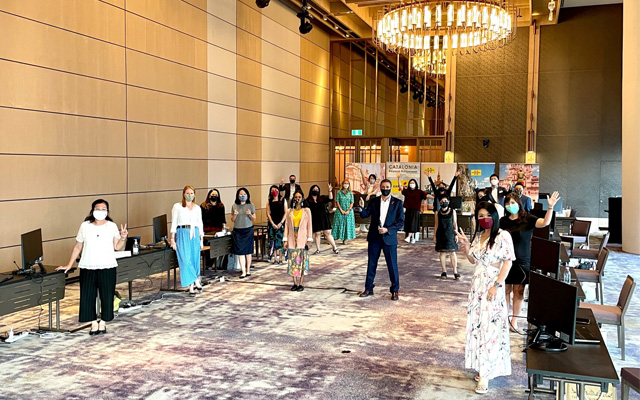
On July 21, the Catalonia Tourism Board (CTB) – in collaboration with the Spain Tourism Board in Singapore and part of ILTM Singapore – managed to launch their first in-person event since the pandemic, one day before Singapore went into lockdown for the third time.
The Catalonia Workplace, held at Andaz Singapore, aimed to stimulate interest in travel to Barcelona and the region of Catalonia, and welcomed a full attendance of 14 MICE and luxury buyers based in Singapore. The event also sought to bring Singaporean tourism professionals together and meet face-to-face, amid new meeting regulations.
At the Catalonia Workplace, CTB also unveiled a new tourism product, The Grand Tour of Catalonia. The Grand Tour of Catalonia offers 2,000km of circular itineraries that link iconic natural and cultural sites in the region, ranging from the Pyrenees mountains to the 500km of Mediterranean coastline.
Attendees got to taste and experience a little bit of the Grand Tour of Catalonia through artisanal gifts, and also a real-time video call from leaders and suppliers of the region.
The tourism board strongly believes that Singaporeans would be the first segment of travellers from Asia Pacific to head to Spain once travel restrictions are lifted. Singapore is one of the 10 countries outside of the European Union that have permission to enter Spain without being vaccinated or undergo quarantine, since European borders reopened on June 7.
Preferred Hotels & Resorts has rolled out WHERE NEXT? Buyouts – the second phase of its global WHERE NEXT? campaign.
Corporate groups and bleisure travellers can now select buyout options inclusive of entire floors, wings, or even full property takeovers at more than 135 independent luxury properties around the world.
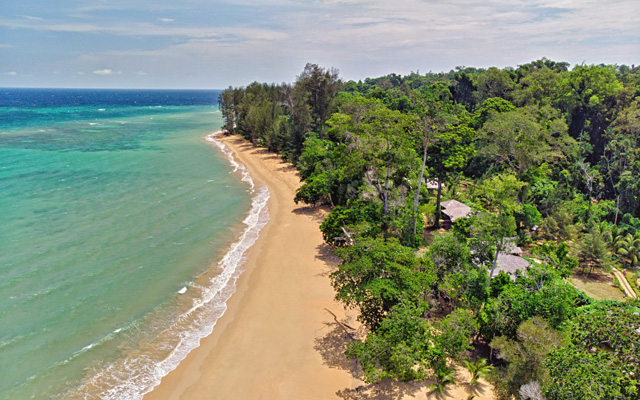
Borneo Eagle Resort in Kota Kinabalu, Malaysia
The WHERE NEXT? Buyouts offer is available for stays through December 31, 2022, with highlights in Asia including the Alma Resort in Cam Ranh, Vietnam; Borneo Eagle Resort in Kota Kinabalu, Malaysia; and The Capitol Hotel Tokyu (Tokyo, Japan).
“Our global sales team has fielded more requests over the last six months for partial or entire hotel buyouts than ever before, so we launched WHERE NEXT? Buyouts to fuel inspiration among travellers and our loyal I Prefer guests while providing them with information on each of the tailored hotel options available to them,” said Alison McDermott, executive director of global merchandising and marketing for Preferred Hotels & Resorts.
“This continuation of the WHERE NEXT? global campaign is designed to appeal to many travellers and caters to different budgets and group sizes to offer exclusive solutions to everyone ready to reconnect and create memories.”
WHERE NEXT? Buyouts follows the May launch of WHERE NEXT? Experiences – an offer for two nights’ accommodation or longer at the best available rate, which extends complimentary daily breakfast for two, a locally-inspired experience for two, and fast track to I Prefer Elite status.
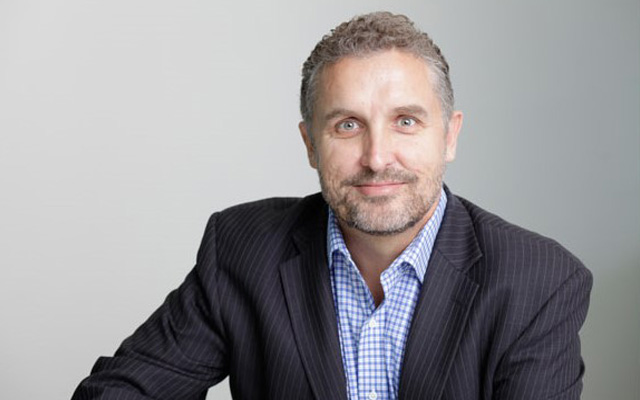
SAP Concur has appointed Matthew Goss as senior vice president & general manager for Asia Pacific Japan and Greater China.
Goss, who has over two decades of experience in the IT industry, will take charge of SAP Concur overall business operations in the region, growing the company’s customer base and market share.
An 18-year SAP Concur veteran, Goss was until his latest appointment, the managing director for SAP Concur Australia and New Zealand (ANZ). In that role, he grew SAP Concur’s ANZ revenue significantly, and established the SMB (Small and Mid-market Business) in ANZ.
Prior to that, Goss was instrumental in the establishment of the Concur shared services centre in the Philippines. The industry veteran has also held regional level senior leadership positions in client delivery.
Hyatt Hotels has opened the Hyatt Regency Tokyo Bay, a newly-renovated property in Urayasu city in the Chiba Prefecture.
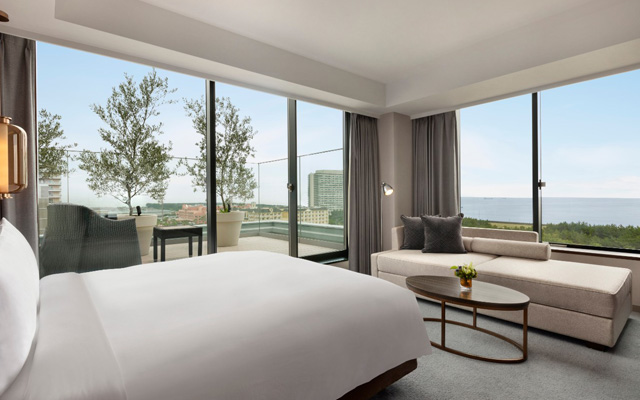
The eighth Hyatt Regency-branded hotel offers 350 guestrooms including 10 suites and 40 club rooms located on the ninth floor and above.
Terrace King Guestroom
Along with the Garden Terrace best suited for outdoor gatherings, Hyatt Regency Tokyo Bay offers two function rooms, each spanning 98m2 of event space. Equipped with projectors, audio equipment and soundproofing, the meeting spaces can be used for hosting virtual meetings and presentations.
Other on-site amenities include the Regency Club lounge, and a 24-hour fitness centre. Guests can also go for a run on the jogging paths along the seafront.
There are also four F&B options – the all-day dining restaurant The Garden Brasserie & Bar; a traditional Edomae sushi restaurant, Sushi Ema; Teppanyaki Fukitei for premium Matsusaka beef, seafood and seasonal vegetables; and a rooftop bar with a panoramic view of Tokyo Bay.
Hyatt Regency Tokyo Bay, 30 minutes by train or car from central Tokyo, stands close to attractions such as the Tokyo Disney Resort, and Makuhari Messe, one of Japan’s largest convention centres.
The Korea MICE Bureau has put forth a brand new digital marketing campaign highlighting its Korea Unique Venue programme, in an effort to showcase Korea’s business events venues virtually to a global audience.
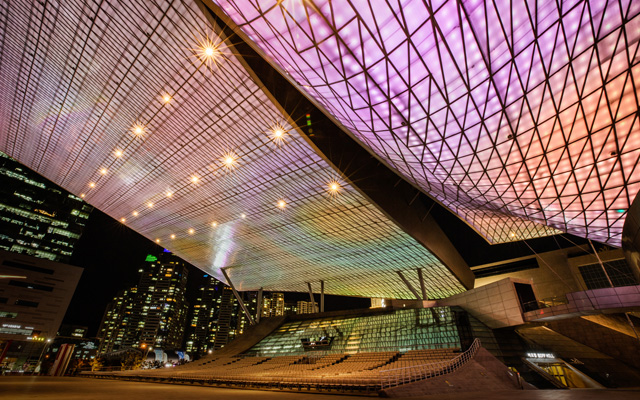
The new promotional video combines the unique charms of the venues in collaboration with dancers to highlight a specific mood and feel for each venue. For example, Busan Cinema Center transforms into a stage for ballet, while street dancers take over the tracks at Inje Speedium.
Busan Cinema Center
In addition, Korea MICE Bureau has also launched a new Korea Unique Venue microsite, which provides convenient access to information on each Unique Venue, including photos, rental facility information, service and equipment and more.
Started in 2018, the Korea Unique Venue programme comprises a list of recommended business events venues in Korea, selected based on their ability to host business events while offering unconventional settings for memorable experiences.
These locations showcase Korea’s rich history, colourful culture and tradition, and the selection includes cruise ships, traditional folk villages to national museums. The programme now comprises 39 venues, up from the initial starting list of 20.
GBTA poll shows non-essential business travel gaining but
critical functions for business continue to be impacted by global travel restrictions
More companies are reporting a willingness and actual return to business travel, with domestic travel taking the lead. However, government restrictions on international travel continue to hinder the ability for companies to conduct key business functions, according to the latest poll from The Global Business Travel Association (GBTA).
This latest poll shows a 12% increase compared to last month in companies opening travel and fewer companies suspending or cancelling all travel. Domestic business travel is now widely allowed and corporate bookings and travel spend continues to rise month on month. And three in four (77%) GBTA members and stakeholders feel their employees are ‘willing’ or ‘very willing’ to travel for business in the current environment.
GBTA poll shows non-essential business travel gaining but critical functions for business continue to be impacted by global restrictions
However, half (52%) of GBTA respondents report that government policies and restrictions relating to international business travel continue to impact their companies’ ability to conduct important business functions such as networking, business prospecting, planning and sales meetings.
“There is clearly an appetite to resume non-essential business travel and in-person meetings to promote collaboration, networking and business opportunities. And interestingly, it doesn’t appear that cost savings are necessarily a key driver in waiting to get travellers back out on the road. However, government policies and restrictions on international travel continue to hinder progress in pursuing activities so important to conducting business,” said Suzanne Neufang, CEO of GBTA.
Indicators show strong demand for business travel’s return OPTIMISM STEADY. GBTA poll respondents continue to be optimistic about the industry’s path to recovery. Half (54%) report they feel more optimistic compared to a month ago whereas two in five (40%) say they feel the same. Only six per cent say they feel more pessimistic about the industry’s path to recovery.
WILLINGNESS TO TRAVEL. Three in four (77%) GBTA members and stakeholders feel their employees are ‘willing’ or ‘very willing’ to travel for business in the current environment. The remaining members feel their employees are not willing (4%), are neutral (12%) or are unsure (7%) of their willingness to travel for business. And the desire to serve their customers is a key driver, with greater willingness to travel for sales and account management (59%) and service trips (56%).
DOMESTIC DOMINATES. Corporate positions concerning business travel vary. And GBTA respondents report that 57% of non-essential domestic business trips are usually or sometimes allowed, compared to 26% for non-essential international business trips.
GETTING BACK OUT THERE. Of the companies that suspended most domestic business trips, nine in 10 plan to resume domestic travel in the near future or are considering resuming domestic travel but have no definite plans. Three in 10 plan to resume international travel within one to three months and, half are considering resuming international travel soon but have no definite plans. One in 10 do not plan to resume international business travel in the near future.
Restrictions continue to hinder international travel and hence business functions Government policies and restrictions relating to international business travel continue to impact GBTA member companies and their ability to carry out important business functions. Over half (52%) of GBTA members and stakeholders report that networking, business prospecting (51%) and business planning and strategising (50%) are impacted by these policies.
Respondents based in Europe were more likely to cite the impact of government policies and restrictions on key business functions compared to those based in North America. And it was significantly higher regarding the ability to network, conduct sales meetings and train or develop employees.
Business travel spending, bookings and the bottom line Seven in 10 (72%) of those surveyed report their company’s business travel spending increased ‘somewhat’ to ‘a lot’ in June 2021 compared to the prior month, whereas one in five (20%) report spending remained ‘the same.’ Less than one in 10 (6%) report travel spend decreased or are unsure (1%).
Among those respondents who note their June 2021 travel spend increased from May, the average increase was 41.8%.
Seven in 10 (70%) suppliers report their bookings from corporate customers have increased from the previous week, whereas one in four (27%) report their bookings have remained the same from the previous week. Less than one in 10 (3%) report their bookings have decreased.
Changing priorities for travel programs as safety remains paramount
Over half (57%) of GBTA respondents are usually or sometimes allowed to conduct non-essential domestic business travel. Two in 10 are rarely allowed (20%) or not allowed (23%).
Non-essential international business travel continues to lag, with one in four (26%) GBTA members and stakeholders usually allowed or sometimes allowed to conduct non-essential international business travel.
Non-essential domestic business travel that can help generate revenue for the company are the key reasons for company travel requests. Seven in 10 of sales/ account management trips are usually or sometimes allowed. Similarly, seven in10 service trips are usually or sometimes allowed. Over half of non-essential trips are for sales, account management and service trips.
Seven in 10 (69%) of GBTA respondents believe that risk management and duty of care are more important than before the pandemic.
Less than two in 10f respondents indicated their employees will need to be vaccinated before travelling for business (18%) or meet with clients and customers face-to-face (16%), compared to more than half who will not. A quarter of respondents do not know their company’s vaccination policies and whether they will be required to be vaccinated for business travel or to meet with clients and customers face-to-face.
Flexible working continues as employees return to office Almost half (45%) of respondents report their company’s office(s) have re-opened but working in the office is optional. One in five (19%) say their company’s office(s) have reopened and most/all employees are required to work from the office at least one day per week. Just one-quarter (27%) report their office has not reopened and most (if not all) employees work from home.
Respondents based in Europe (53%) are more likely than those in North America (42%) to report their company’s office(s) have re-opened and most or all employees currently can choose to work from the office or work from home.
Half (52%) of GBTA members and stakeholders expect most employees will work from the office some days and work from home other days when offices fully re-open. Fewer expect most employees will return to the office full-time on most days (18%), employees will make the decision themselves (13%) or most employees will work from home most days (9%). Fewer respondents report they expect employees will have other working arrangements (6%) or are unsure (3%).
Respondents based in Europe (64%) are more likely than those based in North America (49%) to expect most employees will work from the office some days and work from home other days.
The newly-opened Ritz-Carlton, Bangkok anchors the One Bangkok development with cosmopolitan elegance. Featuring the city's largest ballroom and a spectacular new penthouse suite, it delivers exceptional hardware and deeply authentic, soulful service for business and leisure travellers alike
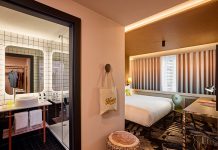
Behind the imposing, Brutalist concrete that defines Zurich’s Oerlikon district lies a surprising secret. While its exterior honours the neighbourhood’s industrial roots, stepping inside Mama Shelter reveals a vibrant, neon-soaked world that is a far cry from its rigid shell
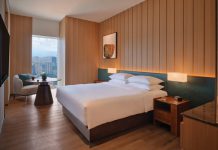
A polished urban retreat designed for business travellers, Hyatt Regency Kuala Lumpur at KL Midtown combines thoughtful design, seamless service, and exceptional facilities.