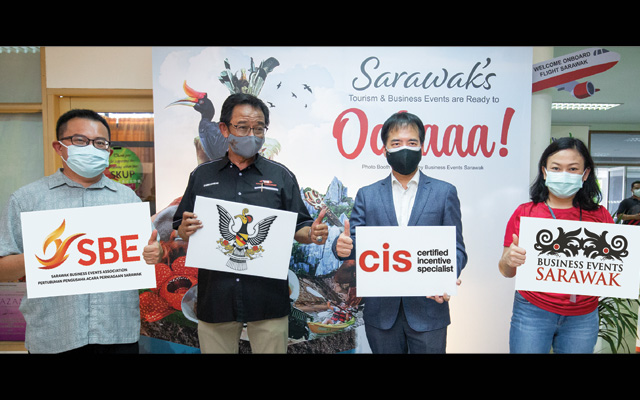
From left: Sarawak Business Events Association's Andee Yeo; minister of tourism, arts & culture Sarawak's Abdul Karim Rahman Hamzah; Ministry of Tourism, Arts & Culture Sarawak's Hii Chang Kee; and BESarawak's Amelia Roziman
Sarawak has beefed up its corporate incentives segment as 26 local industry partners recently graduated from the internationally-recognised Certified Incentive Specialist (CIS) course awarded by Society for Incentive Travel Excellence (SITE).
The latest virtual CIS course took place in Bangkok from July 8-9, 2021, which included an exam. It was a collaboration between by Thailand Convention and Exhibition Bureau (TCEB) and Sarawak Business Events Association (SBE).
From left: Sarawak Business Events Association’s Andee Yeo; minister of tourism, arts & culture Sarawak’s Abdul Karim Rahman Hamzah; Ministry of Tourism, Arts & Culture Sarawak’s Hii Chang Kee; and BESarawak’s Amelia Roziman
The 26 graduates were members of Ministry of Tourism, Arts & Culture Sarawak, Business Events Sarawak (BESarawak), Sarawak Tourism Board (STB), Association of Sarawak Inbound Agencies (ASIA), Malaysian Association of Hotels (MAH), Malaysian Association of Tour and Travel Agents (MATTA) Sarawak Chapter and Sarawak Business Events Association (SBE).
In the Post COVID-19 Development Strategy (PCDS) 2030, corporate incentives are one of the key initiatives to diversify the revenue pool of Sarawak when it comes to business events.
“We are serious about becoming a major player in this region,” expressed BESarawak’s CEO, Amelia Roziman.
“Last year we created a dedicated unit to spearhead corporate incentives and deployed our blueprint of two years to uplift Sarawak as a unique corporate incentive destination under the banner of Tribe Legacy Sarawak campaign. Our marketing and promotional efforts coupled with new incentive ideas and attractive incentivised packages will be instrumental in tapping into this segment with current global trends.”
Amelia further added that “the updated guideline in organising business events in Sarawak and standard operating procedure (SOP) are in place to ensure the success and safety of the groups.”
“Sarawak has a lot of potential and immersive experiences that can be developed with the support of new infrastructure, development and capacity building… We are ready to welcome national corporate incentives to Borneo island in 4Q2021,” said Abdul Karim Rahman Hamzah, Sarawak’s minister of tourism, arts and culture Sarawak.
Western Australia put forward a compelling bid to the International Society of Infrared, Millimeter, and Terahertz Waves; Perth pictured
Perth has been chosen as host city for the 49th International Conference on Infrared, Millimeter and Terahertz Waves 2024 (IRMMW-THz 2024), the world’s largest gathering devoted to the field of ultra-high frequency electronics and applications.
Held annually, IRMMW-THz 2024 will mark 12 years since the conference was last held in Australia. The IRMMW-THz conference has played a major role in bringing together international researchers in many diverse fields, from space science to nuclear fusion and, recently chemistry and biology.
Western Australia put forward a compelling bid to the International Society of Infrared, Millimeter, and Terahertz Waves; Perth pictured
The successful bid will see over 600 delegates from around the world attend the six-day conference, and it is estimated the event will deliver more than A$3 million (US$2.2 million) in direct economic contribution to the Western Australian economy.
The bid was led by Associate Professor Vincent Wallace from The University of Western Australia in partnership with Business Events Perth, Arinex and Tourism Australia, who supported the bid through their Business Events Bid Fund Program.
Western Australian tourism minister David Templeman said in a press statement: “Business events are an important part of the Western Australian economy, bringing high yielding visitors to the State, which is why the McGowan Government funds organisations like Business Events Perth, through Tourism WA, to bid and secure major conferences and exhibitions for our thriving State.”
Mass vaccinations get underway at Cairns Convention Center
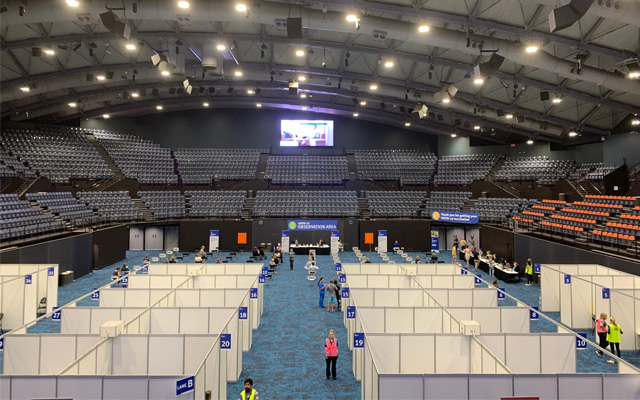
The Cairns Convention Centre has become a mass vaccination hub in a bid to help the business events industry get back on its feet.
Cairns and Hinterland Hospital and Health Service (CHHHS) are using the Centre as a Vaccination Hub for at least four weekends – which started from last weekend – to boost vaccination numbers in the region.
Mass vaccinations get underway at Cairns Convention Center
September 10-12, 2021, was the first weekend the Centre welcomed locals to come through and receive their vaccinations. Over the three days, more than 3,700 people received their vaccinations.
The Cairns Convention Centre Mass Vaccination Hub welcomes walk-ins but is encouraging people to register to get their vaccination.
Janet Hamilton, general manager of Cairns Convention Centre, said: “We are eager to help out in any way we can to support the tourism industry and get Australia to a point where we can safely open our borders and have people visit the region again.”
“We would like to be hosting national and international conferences again as soon as possible. Our team and ready to welcome delegates to the refurbished centre and showcase our new expansion in the following years.”
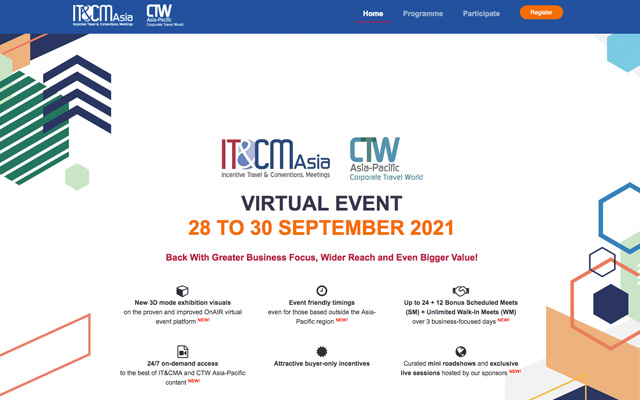
Double-bill trade event, IT&CM Asia and CTW APAC, is ready to throw open its virtual doors from September 28-30 amid ongoing travel restrictions.
This year’s virtual outing will be even larger than last year’s – with more than 150 exhibitors signed up – and will boast the tradeshow’s very first 3D experience.
Delegates to the three-day event will be able to enjoy 24-hour access to on-demand and live knowledge conversations, featuring sessions by ForwardKeys, Global Business Travel Association, International Association of Professional Congress Organisers, International Congress and Convention Association, and Society for Incentive Travel Excellence.
Organiser TTG Asia Media has also created flexible business meeting arrangements that allow for mutually requested scheduled slots and walk-ins; weaved in destination and corporate brand presentations and mini-roadshows; and knowledge sessions.
Join more than 300 qualified international Corporate, MICE and Association buyers and enjoy full-event access to the 3D virtual exhibition. There will also be a best-in-industry incentive scheme exclusively for buyers, featuring cash rewards and prizes, unlimited walk-in meetings and all other event programme highlights.
Here are 9 exciting reasons to participate at the upcoming MICE and Corporate Travel virtual event taking place on 28 to 30 September 2021, 10am to 7pm (GMT+8).
1. Join over 150+ Destinations and Brands from across Asia-Pacific and beyond!
This is a snapshot of our growing exhibitor list. Click on the link for the latest updates.
2. More than 300 MICE, Association and Corporate buyers expected internationally
Buyer Procurement Showcases sessions that spotlight our featured buyers such as A&A Incentives, Meetings & Conferences (United States), Alex Art Agencja (Poland), Hesen Almusafer Travel & Tourism (Saudi Arabia), Sedunia Travel Services (Malaysia), Travel Counsellor (Dubai), and more, on their buying requirements and client interests.
Brand Showcase Presentations filled with the latest highlights and developments by participating destination and corporate brands including Korea Tourism Organization, Penang Convention & Exhibition Bureau, Taipei City Government, Thailand Convention & Exhibition Bureau, Thai MICE Cities, Tourism Promotions Board, Philippines and more.
Non-stop, anytime Networking Conversations with delegates who are online
7. Plenty of live engagement opportunities in addition to the vibrant exhibition zone
Mini Theme Roadshows: discover featured exhibitors from Official Destination Partner: Thailand Convention & Exhibition Bureau, as well as Thai MICE Cities: Northern, Northeastern and Southern in these curated familiarisation sessions, set away from the exhibition zone.
Hosted Live Sessions: join sponsors MEET Taiwan and Thai MICE Cities: Central and Eastern exclusively over games and interactive activities, and stand a chance to win prizes.
Live Knowledge Conversations:watch the on-demand knowledge sessions and then join in the conversation live! Share your insights and have your questions answered with ICCA and SITE.
8. Best-in-industry Buyer incentive scheme
That rewards a buyer’s time and active participation during the virtual event with cash vouchers and prizes! There is no registration fee. In addition, stand to earn as much as USD 220 in cash. Here’s how:
9. Kickstart your business meetings experience from 20 September.
This is when pre-event Scheduled Meeting requests commence for registered Exhibitors and Buyers to firm appointment dates and times with each other. Register early and get a head-start on securing meets with your preferred business potentials.
Personal challenges, remote work are highlighting the critical need for mentorship
Misconceptions about offering and requesting guidance remain
Business leaders identify new ways to connect with teams and mentees
A mentor can be anybody that is experienced in his or her role and life itself
At a time when business survival is being challenged and individuals find themselves tackling new procedures and pressures at work and at home arising from remote work arrangements, mentorship becomes a critical function that is also harder to grasp.
According to industry team leaders, that difficulty is faced by both mentor and mentee – difficulty in offering guidance and difficulty in reaching out for help.
Andrew Chan, founder of ACI HR Solutions, a leading human resource firm specialising in the travel, hospitality and lifestyle industry, explained that the pandemic has had an impact on jobs, resulting in leaders themselves being adversely affected. Furthermore, with lockdowns and social distancing in place, mentorship meetings are disrupted.
“In general, most were just scrambling to survive and deal with their present situation, waiting until the fog lifted a little before seeking or offering mentorship,” Chan observed.
However, the isolation from team members and leaders has only served to emphasise how interactions at the workplace are the critical basis from which deeper collaborations and ideas are born, as well as offer much needed social connection for mental well-being.
Ailynn Seah, vice president of sales, MIC and Associations with Marina Bay Sands in Singapore, who has played mentor to members of her team at work as well as people outside of her work environment, told TTGmice: “I have seen how problems such as mental health compound with isolation. It is more difficult to maintain a positive outlook on the future.
“For example, one of my current mentees who has always been a high performing employee at work suddenly broke down during one of our sessions when she revealed that she had trouble coping with the pressure. And this is why the value of mentoring has been highlighted during the pandemic.”
Compounded difficulties
Even in rosier times, before the pandemic hit and disrupted travel, tourism and business events, team leaders in the industry said mentorship was not an easy function to deliver and access – but difficulties were mostly due to misconceptions.
Chan explained: “One big misconception is that mentors must be managers or are in leadership roles, which is not necessarily true. A mentor can be anybody that is experienced in his/her role and life itself. This discourages potential mentors as they may feel that they are not in a position to offer mentorship.”
Leaders may also keep away from offering constructive guidance due to a lack of personal or professional confidence, as well as poor communication skills, lack of motivation, and lack of space in one’s emotional bandwidth, suggested Benoit Badufle, managing director of Horus Development & Consulting.
Badufle, who was named Highly Commended Mentor 2019 in ACI HR Solutions’ 2019 Mentor of the Year awards, offers this advice to leaders: “If you do not have a natural inclination to mentor younger contemporaries, you may change your idea by understanding that, as a mentor, you nurture people but you also cultivate yourself. That is an absolute certainty.”
On the receiving end, Chan said mentees could likely resist requesting for guidance to avoid being perceived as weak. “Again, this is a misconception, as being able to identify one’s shortcomings and the curiosity to gain knowledge is often seen as a strength by leaders,” he said.
Seah shares the same observation. She elaborated: “On the contrary, I think that accepting a mentor reflects strength and trust. Regardless of the scope of the mentorship, the mentor-mentee relationship and trust are crucial in making the mentorship work. It takes a certain level of trust on the mentee’s end to confide in and reveal their vulnerabilities without the fear of being judged.”
From left: Ailynn Seah; Benoit Badufle; and Andrew Chan believe in the power of mentorship, and how it’ll go a long way in contributing to the recovery of the tourism industry
Different ways to connect
Against a backdrop of safe distancing considerations and remote work arrangements, mentoring sessions are slipping behind screens.
For Badufle, interaction limitations have inspired him to come up with new ways to connect with his team. One of the things he did was to establish a weekly Zoom lunch, during which the team would discuss a classic film that he had recommended days ahead. Through this exercise, Badufle introduced the team to major cinema works such as 2001 a Space Odyssey, The Paths of Glory, Clockwork Orange, and AI Artificial Intelligence.
“These are works that my young colleagues may never have discovered, and sharing these films allowed us to discuss themes such as technological innovation, its possibilities and its perils; war and deception; societal responses to crime, ethics and conscience, etc. They loved it and took much interest as these discussions broadened their intellectual and emotional universe. Mentorship is also about that, developing skills but also (expanding) horizons,” Badufle said.
Online mentorship does not mean a lack of human connection, opined Seah, who said “the inherent kindness and empathy behind each interaction can still be felt through the screen, serving as a strong support system and an opportunity for connection”.
She also emphasised that despite the gloom of the pandemic, the changed environment has given her an opportunity to expand her mentorship contributions.
From having time to mentor only one person pre-pandemic, Seah now has four mentees on hand – one is with Children-At-Risk Empowerment Association (CARE Singapore), a pilot mentoring programme by Marina Bay Sands’ corporate responsibility programme Sands Cares; one with Daughters of Tomorrow; one with PATA SIT Student Chapter; and one with a Christian organisation where Seah guides a lady who lost her job during the pandemic.
“Now more than ever, I see the importance of mentorship, and the mentor-mentee relationship being even more 360 degrees,” said Chan. “The experience and resilience through past crisis from mentors are obviously invaluable, but I also see younger mentees being able themselves to offer insights into how the industry might reshape itself post-Covid, particularly around digitalisation and technology.”
When asked which provided the strongest influence on a positive mentoring culture at the workplace – corporate direction that mandated mentorship through structured programmes or leaders passionate about raising people around them, Seah said neither could exist without the other.
“While having a structured mentoring programme would work, its efficacy and longevity still lie with the individuals delivering the programme. If individuals don’t have the heart or passion, or view the programme as obligatory, then the essence of mentoring and the act of helping another person grow wouldn’t be true to its calling,” explained Seah.
“Likewise, a company may have leaders who are passionate about nurturing the people around them to grow, but leaders are human too. The passion in mentors is like a flame – without a positive environment to fuel the flame, the flame will also eventually burn out. As much as an individual can effect change alone, a company’s culture that celebrates diversity, collaboration and social ties, would benefit many more in the long run,” she added.
Seah revealed she has been personally motivated by like-minded executives at Marina Bay Sands. “In 2018, a few female executives and I started a Women’s Connect Lunch to get to know other female employees at the company. It was a no-agenda lunch, but it helped foster new friendships across departments,” she said.
The company’s pilot mentoring programme for youths, launched earlier in 2021, has also given Seah a sense of fulfilment in being able to mentor a 14-year-old teenager for the very first time.
Giving recognition
As companies in travel, tourism and business events emerge from the initial shock of Covid-19 and begin to chart their recovery, Chan recognised that mentorship would play a critical role in the industry’s talent roadmap.
As such, ACI HR Solutions has brought back its annual Mentor of the Year award, which was put on pause in 2020. The event has received an “overwhelming response” and almost 50 per cent more nominations than previous years.
Chan told TTGmice that there were also “some wonderful and compelling stories from mentees”.
“This just shows me how important mentorship has been during this Covid crisis, and it fills me with confidence that we have the experience and expertise to bring us through it,” he remarked.
Asia see the birth of another regional MICE alliance
Two major MICE powerhouses, Hong Kong and Singapore are absent
Other established alliances welcome ACA with open arms
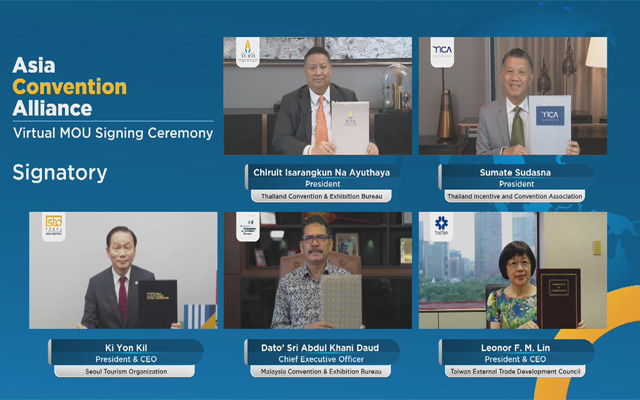
When four Asian convention bureaus and an association signed a Memorandum of Understanding (MoU) on September 2, veteran business events players may have felt a sense of déjà vu: yet another trans-national business events alliance?
The Asia Convention Alliance (ACA), mooted by Thailand Convention and Exhibition Bureau (TCEB) and Thailand Incentive and Convention Association (TICA), includes founding members Malaysia Convention & Exhibition Bureau (MyCEB), Seoul Tourism Organization (STO) and Taiwan External Trade Development Council (TAITRA).
Signatories of the virtual ACA signing last week
Although ACA is not yet a formal body, it signifies the founders’ collaborative intention. TCEB is currently the central contact point, but all members will work together as detailed in the MoUs.
“We primarily focus on driving business among member territories. While each member has its governing body to address development in MICE, this ACA initiative is a team working to formulate new/existing convention rotation within Asia. CVBs/DMOs that share a similar vision can join,” said Nichapa Yoswee, TCEB’s senior vice president – business.
Currently, the three MoUS are between TCEB and STO; TCEB and MyCEB; and TICA and TAITRA. These bilateral partnerships will enable respective parties to focus on creating or rotating convention(s) between their territories, but this could be extended to other members.
Nichapa elaborated: “Beyond the first counterparty, founding members are encouraged to engage with one another and set up additional bilateral partnerships under ACA. This pattern is, and will remain, a key attribute of the Alliance. In addition to business exchange, ACA is also designed as a knowledge exchange platform upon which members gather to share best practices and propose ideas.”
ACA’s first roundtable is expected to take place in 1Q2022.
ACA formation largely welcome
Veteran business events stakeholders spoke positively of the formation of ACA.
Edward Liu, AFECA honorary president, said: “The formation of ACA is indeed a good initiative, given the current difficulties faced by the MICE industry and global economy. Any effort to work together to bring about a revival of the industry is most welcome.
“(But) to be effective, ACA must have the eventual endorsement and support of the respective convention bureaus in the region.”
Industry observer Lloyd Tan commented: “The formation of ACA is in the right direction, provided it remains committed as an authoritative voice for the convention market to benefit PCOs. It should forge partnerships for business opportunities to serve the wants, interests and needs of the project and not look at self-interest. This will differentiate it from established bodies which are more exhibition-centric.”
On why TICA has joined the alliance, Sumate Sudasna, its president, explained: “As TICA works closely with TCEB, we believe the ACA approach is quite visionary and will be beneficial given that all parties mobilise events – more specifically conventions – from their end, and with alliance partners. As a private-sector partner, TICA considers this a privilege to be involved in the alliance which is inspired to bring tangible results for all.”
However, Hong Kong and Singapore are conspicuously absent from ACA’s slate.
Nichapa said: “The MoU signing ceremony was to announce the earlier agreements between founding members and invite others, albeit we recognise and respect the fact that CVBs/DMOs have their own priorities and direction. While adding more members is a continuous work-in-progress, we wish to focus on the four destinations of the five founding members at this early stage.”
Whither other alliances like AFECA and AACVB?
Juxtaposed with long-established bodies like AFECA (Asian Federation of Exhibition and Convention Associations) and AACVB (Asian Association of Convention and Visitor Bureaus), Nichapa said ACA’s core business is driving and bringing more conventions to the region, as well as rotations within Asia.
“We work on tangible business exchange from one member to another, with solid interest from the organiser. We support each other in cross-selling destinations when it comes to potential conventions with possible rotation within the region,” she said.
Established in 2005, AFECA’s mission is to “promote and enhance the MICE industry in Asia”, its website indicates.
In welcoming the “new kid”, Vincent Lim, AFECA president, said: “I offer my heartiest congratulations to MyCEB, TCEB, TICA, TAITRA and STO for the announcement on forming the ACA. AFECA supports this initiative because it serves to bring industry stakeholders closer together and boost regional collaboration during a challenging season.
“An AFECA core value is promoting and developing the growth of the MICE and business events industry in Asia. As such, this strategic alliance formation is applauded. We encourage collaborations to create synergy between partners and new opportunities, while fostering friendship among stakeholders in this industry that we are all championing.”
Meanwhile, AACVB, founded in 1983, has fluctuated between action and hibernation over the past four decades. Its latest awakening was in August 2020 amid the Covid-19 pandemic, when MyCEB offered to formally register AACVB in Malaysia and host its office in Kuala Lumpur. At press time, it is still “in the process of registering”.
“We are in the midst of discussions and (are waiting for) approval from Registrar of Societies and hopefully it will be done in due time,” shared a spokesperson from MyCEB, without confirming if AACVB still aimed to bring business events to Asia and support development of MICE capabilities, as stated previously.
In July 2019, Singapore and four other South-east Asian MICE associations (Indonesia Exhibition Companies Association, Malaysian Association of Convention and Exhibition Organisers and Suppliers (MACEOS), Philippine Association of Convention/Exhibition Organizers and Suppliers, and TICA) signed an MoU, with an espoused focus on research and HR development, but not much has been heard since.
The business events industry is being pushed to the brink during this pandemic, and will collapse without targeted financial assistance to shoulder the strain while waiting for industry reopening, the Malaysian Association of Convention & Exhibition Organisers & Suppliers (MACEOS) said in a press statement.
Under Malaysia’s National Recovery Plan (NRP) – a four-phase exit strategy out of the Covid-19 crisis – business events have been categorised as social activities. As such, these are only allowed to resume in Phase 4 of the plan, but that may be too late, said MACEOS president, Francis Teo.
MACEOS fears that Phase 4 might be too late; lobbies government to classify business events as economic activity
He elaborated: “For the past 18 months of the lockdown, our industry players have not been able to organise events. The business events industry has also not received any dedicated financial assistance during this period. This lockdown may spell a final shutdown of the industry if the government doesn’t recognise our need to resume business and our contribution towards economic recovery.”
Teo opined that the time is ripe for business events to reopen, with 80 per cent of the adult population in Greater Klang Valley – Malaysia’s economic hub – has already been fully inoculated.
“There is huge potential to speed up the economic recovery process when these business events are allowed to operate. After such a prolonged crisis, the economy needs to be resuscitated, and these tradeshows, exhibitions, and conferences play a crucial role to invigorate businesses again,” said Teo.
When the pandemic hit, the business events industry was the first to be immensely affected with event postponements, cancellations, and eventually a total shutdown of the industry. Malaysia’s industry players reported revenue losses of RM4 billion (US$963,855) since the start of the pandemic in 2020.
In a July 2021 survey conducted among members, 55 per cent of respondents reported a drop in business revenue of more than 75 per cent. Without any business or financial assistance for the foreseeable future, industry players will continue to suffer.
“More than 50 per cent responded they would not be able to sustain their operating cash flow for more than three months. We anticipate a huge unemployment wave as a result,” Teo elaborated.
What’s needed is a strategic plan for the reopening of business events, Teo pointed out. MACEOS has been actively pushing for the reclassification of business events as an economic activity – as opposed to social activity – under the NRP.
Teo stressed: “Business Events cannot be compared to social mass gatherings. Our events take place in controlled and safe environments. Attendees can be guided and protected comprehensively with strict SOPs. MACEOS is ready and prepared to take the lead in implementing the gradual reopening of business events – first locally, then internationally – in a safe and secure manner.”
“But we can’t wait till Phase 4 to begin our recovery work. Unlike other businesses that can reopen and operate overnight, business events require up to a few months to plan and organise events. We need to be allowed to reopen in Phase 3 for fully vaccinated individuals at events with 50 per cent capacity and enable interstate travel to such events, abiding by the SOPs.”
Congratulations on your appointment Florence! How do you feel about joining Professional Convention Management Association (PCMA)? Thank you, I am so thrilled to be part of the PCMA community. I’m thankful to Karen Bolinger for guiding PCMA APAC through the early disruption brought by the pandemic, her astute leadership brought our audiences together to share, learn and provide support to each other during this period.
Unfortunately, around the world we are seeing new surges that continue to undermine our ability to gain stability and visibility for the industry. We are still in the eye of the storm; our work is not done. PCMA APAC will continue to focus on preparing our audiences for a different tomorrow, where business events play an even greater role in economic and social transformation and, where end users are going and how we can help solve problems for them.
What will be some of your immediate to-dos? My foremost focus is to further the advancement of PCMA’s growth and engagement with our key stakeholders and audiences in the APAC region. This includes the pursuit of new collaborative partners and deepening existing relationships to better connect and support the industry.
PCMA’s brand is burgeoning in the region, however many of our potential audiences do not fully know us or what we do. On the other hand, PCMA APAC has much more to learn about our audience’s needs and how we can meet them with a stronger PCMA perspective in wider global trends and shaping of the industry.
What are some of the forms of support members are looking for and how is PCMA supporting that? During the height of the pandemic when events flipped online, we knew the need for training in digital events would be critical to help our members adapt, so we created the Digital Event Strategist Certification and adapted it specifically for the APAC region.
Across the industry, as everyone was looking to stay up to date, we delivered the Covid-19 recovery dashboards, and the Business Events Compass. In January 2021, we took the plunge to experiment and broadcasted Convening Leaders from Singapore as the global broadcast centre to audiences around the world. Every step of the way we listen to our members and audiences, and we showed courage among the untested to serve our community.
What do you envision APAC’s business events industry will look like moving forward?
The significant impacts brought by the pandemic are here to stay; there is no returning to what was. The current pandemic situation curtails our ability to be together physically – however, the role of events to connect people with purpose to ideas and opportunities is still strong; we all crave human connections.
Connecting virtually is challenging. However, it’s by understanding our audiences and embracing new technology that we have been able to adapt and still deliver the best outcomes, engagement and ROI. The future is a balance of face-to-face and digital events to deliver the best outcomes for audiences.
Whether that means embracing smaller-sized events with deeper engagement to satiate the human need to meet and allow us to manage risks reasonably; or holding a hybrid conference, it will depend on the vaccination rollout and stability of the Covid-19 situation in each country within the region, there could be more bilateral exchanges before multilateralism returns.
What are some of the business events trends you foresee?
As we return to face-to-face events in the near to mid-term, it’s important to rethink how to provide personalised experiences to enhance engagement but reduce high touch interactions for hygiene and safety needs.
Another notable trend we will see more of is the heightened consciousness of healthy eating and wellness. These desires will continue into the post-pandemic world whereby customers are going to want more healthy food options and wellness activities built into their event programmes.
We also recently launched a joint research project with the Singapore Tourism Board and UFI (The Global Association of the Exhibition Industry) on Reimaging Business Events Through Covid-19 and Beyond that outlines trends including new business models and value propositions, different delegate experiences made possible by digital tools and techniques and its integration with face-to-face events, and the evolution of talent and capabilities.
This industry has always been very competitive. Do you expect more competition in the new environment or will there be more collaboration?
The industry was already fairly fragmented, and the pandemic has accelerated the development and utilisation of technology in our space creating more opportunities, which also means further fragmentation.
However, there will be more collaboration as organisations seek alliances to gain strength and momentum for there is so much unknown and the situation is evolving too quickly for a single entity to muscle alone.
What keeps you awake at night?
I share the same frustration and anxiety with all businesses and individuals – we are now 20 months into the pandemic, and we are still weaving in and out of lockdowns all around the world. Due to the lack of stability, businesses cannot plan with confidence.
Individuals are weary of all the restrictions, screen fatigued and spoilt with digital and online options. Digitalisation has in many instances across other industries disrupted buying behaviours and business models.
IBTM World is slated to take place in-person this year at Fira, Barcelona, from November 30 to December 2, 2021, with the theme of “New Business, New Tech, New World”.
There will be one-to-one business meetings, educational content, and networking opportunities for delegates to reconnect.
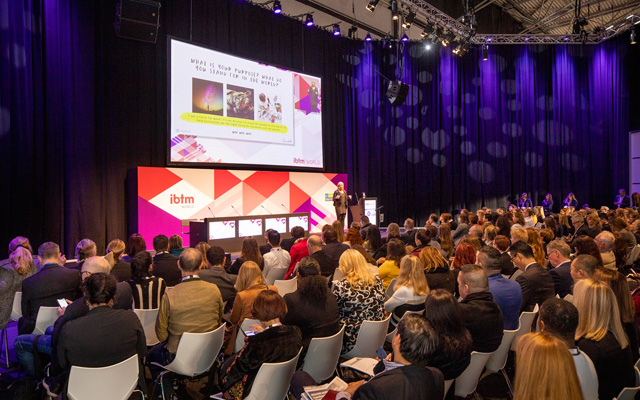
An educational session at a previous IBTM World
IBTM World’s knowledge programme will this year explore four themes: Trends and technology; gamification and engagement; the future of event planning (to include discussions around sustainability, safety and security and government support); and career and personal development. There will be separate buyer-led Association and Elite Corporate Programmes. Further details will be released in due course.
Meanwhile, association buyers who have confirmed their attendance include the International Association for the Protection of Intellectual Property (AIPPI), European Union of Medicine in Assurance and Social Security, China Electronics Chamber of Commerce, and Centers for Disease Control and Prevention.
Meanwhile, corporation buyers will attend from Engie, Oriflame Cosmetics, Knauf, Citigroup, BBVA France and Saudi Aramco. Agency buyers include HelmBriscoe and HPN Global – World, and First Incentive Travel.
Global suppliers and destinations attending include Ras Al Khaimah Tourism Development Authority, Melia Hotels & Resorts, Conference Compass, Bahrain Tourism & Exhibitions Authority, Munich Convention Bureau, Latvia Tourism and Flanders Meeting and Convention Centre.
David Thompson, event director, said: “We’ve had an incredibly positive response to IBTM World so far, which shows there is a huge appetite from the industry to return to in-person meetings and events. We have received an exceptionally strong response from exhibitors, many of whom are returning with larger stands than before or additional sharers.”
RX (Reed Exhibitions; the organisers of IBTM World) has worked with industry peers to create a safe working standard called “All Secure” for holding events in a Covid-impacted world, and IBTM is working closely with the local authorities and the Fira Barcelona to implement all necessary precautions.
Just 10 minutes from Phuket International Airport on the serene northern coast, this 178-key, Bill Bensley-designed resort offers delegates a quiet, tropical paradise steeped in Phuket’s tin-mining heritage
The newly-opened Ritz-Carlton, Bangkok anchors the One Bangkok development with cosmopolitan elegance. Featuring the city's largest ballroom and a spectacular new penthouse suite, it delivers exceptional hardware and deeply authentic, soulful service for business and leisure travellers alike
Behind the imposing, Brutalist concrete that defines Zurich’s Oerlikon district lies a surprising secret. While its exterior honours the neighbourhood’s industrial roots, stepping inside Mama Shelter reveals a vibrant, neon-soaked world that is a far cry from its rigid shell