Meetings & Events Australia (MEA) has appointed Peter McDonald as CEO.
McDonald comes to the business with extensive experience in member industry peak bodies, events, and professional and tertiary education.
In addition to working with MEA’s members and collaborating with partners to underwrite the resurgence and collective success of the Australian events sector, McDonald added he aims to deliver “events-natured vocational learning and professional development programmes that students and industry practitioners can practically apply in the workplace”.
Melbourne Convention and Exhibition Centre (MCEC)has appointed Melissa Sweetland to the role of chief commercial officer.
The role will bring together all the commercial aspects of MCEC’s business under one hat, including IT, sales and marketing.
Sweetland joins MCEC from her own strategic advisory firm. Prior to that, she was deputy vice chancellor, engagement & vice president at RMIT University.
She has had extensive senior leadership experience and has worked across a variety of sectors including education and banking.
While face-to-face business events have gradually returned, wide-sweeping changes caused by the pandemic will challenge event organisers and planners to rise up and meet evolving customer needs across different event formats.
As life returns to the business events industry, Kai Hattendorf, managing director of UFI, said stakeholders must find a balance between physical and virtual events moving forward – especially as the digital components of events are here to stay.
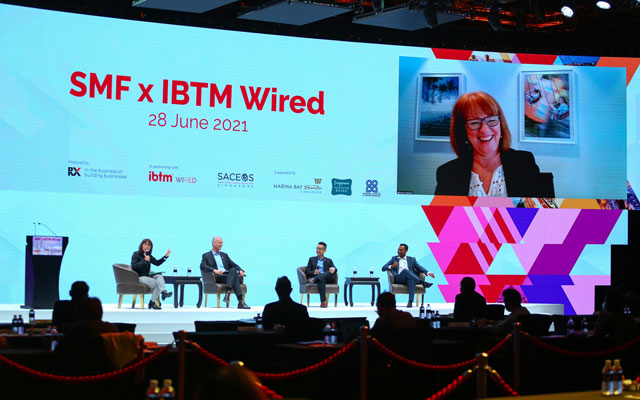
Panellists at the SMF X IBTM Wired session: (second from left) UFI’s Kai Hattendorf, STB’s Andrew Phua, GEVME’s Veemal Gungadin, and PCMA’s Karen Bolinger (beamed in)
Hattendorf had shared his views at this morning’s SMF (Singapore MICE Forum) X IBTM Wired session, Reimagining Business Events – Through Covid-19 and Beyond Navigate.
“It will also have to be rebalanced according to the needs of the customers in different parts of the world,” he added.
“It’s significant to note that most of our events going forward in this region will have a hybrid component, but how long that appetite will last for is a different question, due to the diversity of our region,” said fellow speaker Karen Bolinger, managing director Asia Pacific, PCMA.
Veemal Gungadin, CEO of GEVME, who was also on the panel, agreed that the digital components are here to stay, as attendees are seeing value, sponsors and exhibitors are starting to extract value, while event organisers are learning how to achieve the best ROIs.
He shared: “A company named Explori studied the NPS (net promotor score) of events throughout 2020, (and found that) satisfaction scores were the same for both physical and virtual events.”
On a broader scale, Singapore Tourism Board (STB) is trying to strike a balance in how digital enablers will work for B2B events, and decide if a new hybrid or sustainable business model is needed in the long run, shared executive director Andrew Phua.
Panellists also pointed out that deeper community engagement is crucial moving forward, regardless of the event format – physical, digital, or hybrid.
Citing an example, Hattendorf said tradeshow attendees in China are “totally focused on the physical experience while they are there” but supplement the experience with their smartphones as they navigate the showfloor.
“We need to discuss how to evolve that opportunity (of connecting buyers and sellers) beyond the showfloor, not just pre- and post-show, but all year round,” noted Hattendorf.
Bolinger underlined the fact that the business events industry will not return to the past, and face-to-face interactions must be reimagined.
“(What online meetings have shown is that) we all can listen, but what we really want to do is exchange those ideas and thoughts, so new formats will probably have to have a format that would allow more of these meaningful (conversations) and knowledge exchanges,” Bolinger stressed. She added that if customers could obtain value by sitting behind a screen, there would be no reason for them to turn up at a face-to-face event.
Hattendorf said: “If we’re able to convey the (joy of meeting face-to-face) to our customers, it’s an additional incentive to get them travelling again as soon as possible.”
Phua relayed that he experienced zoom fatigue from the many virtual meetings last year, but one memorable virtual event stood out with its multisensory experience – it had South American music playing during the event and local food delivered to attendees’ home.
The industry also needs better data management and standards for planners and organisers to align to, panellists urged.
“We need currencies to show the value of digital interaction, so that we can monetise that show and then charge for the value. (But we need to) find an answer for this as an industry,” stated Hattendorf.
Bolinger concurred: “(Without data), I think that’s why sometimes it’s a challenge for us as an industry, as we don’t get taken as seriously as some of the other sectors. Data is so, so important for us going forward as it will start to influence the shape of our business going forward.”
Gungadin pointed out that everyone “has their own definitions of what engagement is and how it can be measured”, but for sponsors, that does not change how much business or leads are generated. He added that it would help if UFI and PCMA could develop a definition of success and ROI for hybrid events.
“With real-time statistics and information, we can bring events to the next level. (For example), we can also look at bespoke experiences and look into doing something more interesting or engaging after event hours, such as a virtual fishing tour,” Phua proferred.
The panel also discussed talent acquisition, ideas and capabilities, as the whole digital transformation process during this pandemic has revealed an urgent need for individuals with technology skills such as broadcasting, strategic narrative building, content production, data management and cybersecurity.
Hattendorf opined: “We really need to sell the upside of our industry to make it attractive. Whether it’s a G20 summit, a local tradeshow, or Formula One, we (the events industry) make it happen.”
While Phua added that it’s “good to look at ideas outside of the MICE industry”, Gungadin and Bolinger stressed the need to hire versatile individuals who possess critical thinking skills and an ability to handle crisis management.
Gungadin added: “Reimagining talent has to come from the mindset and willingness to change, which has to come from the organisation.”
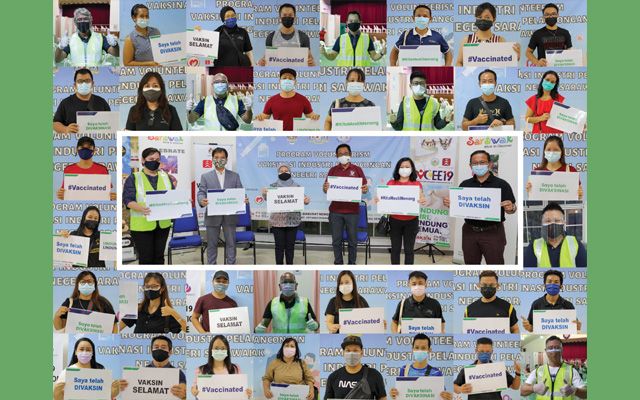
Frontliners in Sarawak who have taken their vaccine shots
Sarawak’s business events and tourism industry became the first industry in Malaysia to initiate the Industrial Covid-10 Vaccination Centre programme.
Over 2,000 industry frontliners have voluntarily registered for the Industrial Vaccination Programme through their respective employers, and are expected to be vaccinated during this four-day programme which began on June 24 at the Association of Churches Sarawak.
Frontliners in Sarawak who have taken their vaccine shots
This initiative is being led by the Ministry of Tourism, Arts and Culture Sarawak in collaboration with the Ministry of Tourism, Arts and Culture Malaysia, Sarawak Tourism Federation, Ministry of Health Malaysia and Timberland Medical Centre in Kuching.
Sarawak’s minister of tourism, arts and culture, Abdul Karim Rahman Hamzah said in a press statement: “The Sarawak Government recognises that the business events and tourism industry is one of the state’s core economic sectors. The vaccination programme is an imperative step to successfully protect over 2,000 industry frontliners; an assuring sign that Sarawak will be ready to open for business activities once more.
“Vaccinating the industry is in tandem with the Sarawak Government’s target to vaccinate at least 80 per cent of the local population by the end of August.”
More than one million people in Sarawak have been vaccinated so far, and the industry is hopeful that Sarawak will be able to relax travel restrictions so that regional business events can be hosted at the end of this year.
Sarawak’s business events industry is already laying the groundwork to prepare for the reopening of business travel.
Amelia Roziman, acting CEO of Business Events Sarawak, shared: “When events return to our shores, we will have the SOPs ready for implementation, and business events planners can take advantage of our incentivised packages. Even our industry partners are gearing up by getting involved in extensive education programmes to strengthen their professionalism.”
Amelia also added that discussions are being held between Business Events Sarawak and the Malaysia Convention and Exhibition Bureau to forge a possible interstate collaboration.
The Thailand Convention and Exhibition Bureau (TCEB) holds high hopes for China’s outbound business events market, and has predicted that incentives will be the first sector to bounce back when the country reopens next month.
According to TCEB’s president Chiruit Isarangkun na Ayuthaya, Bangkok and Pattaya are expected to remain of interest to Chinese incentive groups, alongside Phuket – barring the success of the Phuket Sandbox initiative to welcome vaccinated visitors, allowing them to bypass quarantine requirements.
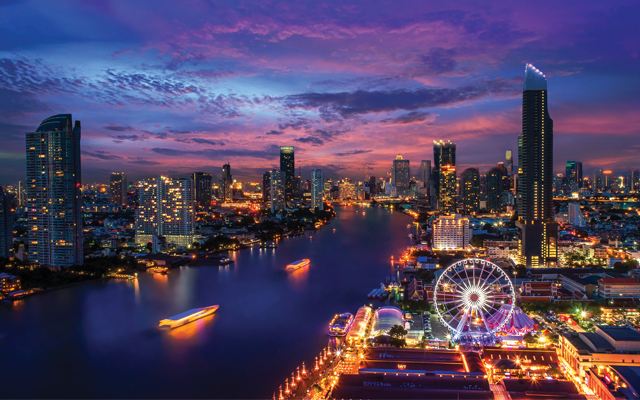
Bangkok (pictured), Pattaya and Phuket will continue to appeal to Chinese incentive groups
To continue engaging the Chinese market, TCEB appointed a Guangzhou marketing representative in May 2021, joining its Beijing headcount. The new representation will make inroads in certain markets in southern China, such as Shenzhen. It is in the midst of conducting market activities with key partners, and meeting with decision-makers looking to organise overseas events.
TCEB has also set up a virtual marketplace – TIME 2021 Business Exchange Chinese Speaking Edition – on June 22 and 23 to connect 42 Thai entrepreneurs with 22 Chinese buyers.
In addition, the bureau is working with the private sector to develop a support package for incentive groups, to be rolled out by end-2021. Although details have yet to be firmed up, TCEB is looking at sponsoring two nights of accommodation for Chinese groups with a minimum of 30 travellers.
Additional assurances are required in such times to get corporate travellers moving again
Resuming international business travel safely will depend on when destinations can unite to provide an assurance of epidemic prevention, and whether insurance companies can develop a new product to provide ample coverage in the event of Covid-19.
Speaking at IT&CM China’s International Safe Travel Insurance Cooperation knowledge session last week, Alicia Yao Hong, vice president, China Business Event Industry Committee, underscored the need for a unified standard of procedures especially on food, accommodation, transport, shopping and entertainment to provide business travellers with a peace of mind.
Additional assurances are required in such times to get corporate travellers moving again
She also cited the importance of having an insurance product designed for corporates, as well as one for leisure travellers, that can provide ample information and 24/7 support considering that the World Health Organization has stated that the pandemic may be around for decades.
Maria Rosa Azolina, managing director of Italy-based Private Incentive Milano, relayed an example of how the European Union (EU) has developed an EU Digital Covid Certificate that will soon be made available to all its member states. This digital proof will state if an individual had been vaccinated against Covid-19, received a negative test result, or had recovered from a Covid-19 infection.
Azolina added that in Europe, travellers are also able to purchase travel insurance policies from tour operators for as little as nine euros (US$10.70). Most hotels provide insurance coverage for guests who fall sick in their hotel or have their bookings cancelled at the last minute due to Covid-19.
Christine Yang, head of marketing and communication, Greater China, International SOS, added that in order to build a traveller’s confidence, a reliable and adaptable app for health and medical services as well as security risk management is also necessary.
She urged destinations to adopt solutions such as the ICC AOKpass, an app that allows passengers to carry a secure record of their Covid-19 test results obtained from a partner laboratory, in order to quicken the reopening of borders.
Hokkaido has long attracted Chinese business groups thanks to its natural environment, delicious cuisine and snow sports. Now, with new experiences, facilities and expertise, the island is gearing up to offer an even more appealing experience.
Close to New Chitose International Airport, the slopes and city experiences, Sapporo was often the choice for corporate meetings, incentives and teambuilding pre-pandemic, and the city hopes for that to continue. The Adventure Travel World Summit in September 2021, which is being hosted virtually by Hokkaido, is expected to provide an extra image boost.
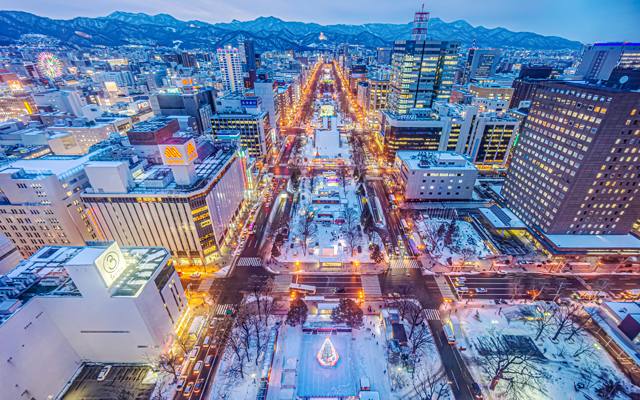
Sapporo has long appealed to Chinese business groups, and will continue to appeal post-pandemic
“We have been flexing our muscles in sports and adventure tourism especially, by making best use of the extraordinary nature in Hokkaido,” said Ayako Kurosawa, a member of the incentive and corporate events team at Sapporo Convention Bureau.
“We’re sure that the high quality of powder snow will captivate the Chinese market more than ever; as the Beijing 2022 Winter Olympics gets closer, winter sports will gain more popularity.”
Kurosawa’s team is banking on growing interest among the Chinese corporate events market for “diverse natural surroundings and unforgettable outdoor adventures in both green and white seasons”, to grow Sapporo’s appeal.
Glamping site Takibi, a two-hour drive from Sapporo, near Niskeo, has been revamped, and now sports a website in Chinese. With views of Mount Yotei, the camping ground offers numerous cottages, bell tents, an event space and walking paths.
The area has also expanded its team-building and incentive programmes, adding an “ice carousel” in Onuma Quasi-National Park, on which guests can lie down and look up at the sky. Meanwhile, Rutsusu Resort Amusement Park has launched charter bookings from summer 2022 starting from ¥1 million (US$9,190).
According to Kurosawa, Sapporo remains strong in offering other “wow experiences” too, such as snowball fights and photo scavenger hunts, which were popular with Chinese business groups pre-pandemic.
Sapporo’s Odori Park and Niseko’s Mount Yotei
Hirofumi Watanabe, hotel general manager of Kiroro Resort, a 75-minute drive from Sapporo, is working with partners in China to develop cross-promotions, including discounted ski passes for Chinese guests once international travel resumes.
Kiroro Resort is also using fresh produce from the local Akaigawa area, another attractive offering as Chinese groups are big fans of fresh Hokkaido produce, shared Kurosawa, adding that seafood, Sapporo beer, lamb barbecue, local vegetables and dairy items such as ice cream are among the products frequently requested.
“Aside from skiing, the Chinese business market is particularly keen on Hokkaido crab,” added freelance travel consultant Cameron Stadin.
Sapporo Convention Bureau continues to train its staff to be ready to offer “flexible, interactive and tailor-made support,” noted Kurokawa, adding that it is now equipped with the expertise to make business events more sustainable.
The island of Jeju has found a strong pillar of support in its local CVB, which has kept busy with transformational tools, subsidy schemes and venue campaigns to promote the safe and effective return of hybrid events to the destination.
For instance, Jeju CVB introduced a slate of support programmes to strengthen businesses in its ecosystem, enabling them to establish digital foundations such as a company cloud drive, a wireless office network and hybrid meeting technology applications. As further backing for the rise of hybrid events, it has also widened the scope of its special support programmes to include streaming technology, online platforms and digital content for meetings and exhibitions.
Grand Hyatt Jeju is one of the latest openings with a pleathora of business events facilities
“In the new-normal era, hybrid meetings and virtual events are growing so fast. (Accompanying) this change, local providers in the Jeju MICE Alliance need to be prepared for the digital working environment and renovate their marketing tools to catch up with new trends,” said Changdeog Ko, secretary general, Jeju CVB.
He added: “(The support schemes have) helped them to be ready for the non-contact business market. To prepare local exhibition providers – such as PCOs and PEOs – for meeting technology, we plan to provide educational learning programmes and marketing skills in virtual events.”
For in-person events, organisers must now consult the Jeju MICE Event Prevention Guide released early last year. Local providers have also been participating in regular meetings with Jeju CVB to receive updated prevention measures and guidelines for each industry.
Ko shared: “This year, we are running a prevention support programme for meetings. All delegates of meetings of more than 100 pax are given personal hand sanitiser, and we provide an exclusive shuttle bus to minimise contact between delegates and the Jeju locals. Lastly, we sterilise meeting rooms before, during and after the event.”
With robust measures and support in place, Jeju has remained confident in promoting notable venues in its ecosystem. Last year, its CVB spotlighted eight sustainable activities ranging from teambuildings to tours. These are designed for small groups of 30 attendees, and to last for three to four hours.
It has also handpicked 13 unique venues – such as Camellia Hill, Jeju Folk Museum and Jeju Hwanswang Forest Park – to award a maintenance fund with professional consulting in preparation for in-person events. These venues are now “well-prepared to hold various types of events, from exclusive incentive groups to large meetings, which will be expected to be held in Jeju this year”, expressed Ko.
Infrastructure on the island has continued to evolve, with the emergence of more hotels that promise a fully kitted-out meeting experience. In December 2020, Grand Hyatt opened its largest Asia-Pacific property 10 minutes from Jeju International Airport, offering 1,600 rooms and suites, eight residential-style meeting spaces and 14 restaurants and bars. This year, Grand Josun Jeju opened its doors in January, and is a refreshing offering for groups hankering for a luxury resort experience.
To push its latest offerings out to the Chinese market, Jeju CVB has clocked its attendance at virtual events, such as IT&CM China and IT&CM Asia, while rolling out promotional materials and updated information through its tourism offices in Beijing, Shanghai, Guangzhou, Chengdu, Shenyang and Taiwan. This comes on top of regular Zoom conferences sharing the latest insights about the Chinese market and discussion of sales strategies. From the beginning of June, the CVB also plans to upload MICE content targeting the Chinese market on its social media channels.
From left: Giovanni Beretta; Kristina Snaith-Lense; and Olivier Dumonceaux
Swire Hotels has announced a trio of promotions in its senior management team across The House Collective and East brands.
First up is Giovanni Beretta, who will be relocating with his family to Hong Kong as the new group director of operations. In his new role, Beretta will oversee all of the brand’s hotels and restaurants in Hong Kong, mainland China and Miami.
From left: Giovanni Beretta; Kristina Snaith-Lense; and Olivier Dumonceaux
With over 25 years of hospitality experience, Beretta first joined the brand as the general manager of East Miami and vice president of Swire Hotels in the US in 2015.
Meanwhile, rising to the position of general manager, Kristina Snaith-Lense will oversee all aspects of The Upper House and Pacific Place Apartments.
Snaith-Lense has worked with the brand for nearly 10 years, starting her career with the company as the assistant director of guest experience at The Upper House in 2012. In 2017, she spearheaded the pre-opening operations of The Middle House in Shanghai as the hotel manager, before returning to Hong Kong in 2019 to take on the role of hotel manager at The Upper House.
Last but not least, Olivier Dumonceaux will step into his new role as general manager at The Opposite House.
Starting his hospitality journey in Lyon, France, Dumonceaux has worked across nine countries. Following the success of The Opposite House’s renovation, where he has been the hotel manager since 2018, Dumonceaux was promoted to become the property’s general manager earlier this year.
He joined the Swire Hotels team in 2014 as the director of R&B at The Temple House, and was then promoted to executive assistant manager after working to secure the success of the property’s opening.
Travellers entering Singapore from higher-risk locations need only serve a 14-day quarantine starting June 24
Singapore will shorten the stay-home notice period for travellers from higher-risk countries or regions from 21 days to 14 days, starting June 24.
These travellers will be required to test themselves on days three, seven and 11 of their arrival in Singapore with self-administered antigen rapid test (ART) kits, said the Ministry of Health (MOT). This is in addition to the existing polymerase chain reaction (PCR) tests they have to take on arrival in Singapore, and on day 14, before their stay-home notice ends.
Travellers entering Singapore from higher-risk locations need only serve a 14-day quarantine starting June 24
This is “to identify potential infection cases early and provide infected travellers with appropriate medical care as soon as possible”, given the higher transmissibility of new variants of concern, MOT added.
The new testing requirement will be implemented for travellers who arrive from 23.59 on June 27.
All countries and regions are considered higher-risk except Australia, Brunei Darussalam, Hong Kong, Macau, mainland China and New Zealand.
Meanwhile, travellers arriving from Taiwan and Israel will be able to apply to serve their 14-day stay-home notice at their place of residence instead of a dedicated facility. They must apply before arrival and must have spent the last 21 days prior to travel in Taiwan or Israel to be eligible.
Travellers must also be occupying their place of residence alone or with household members with the same travel history who are also serving the same stay-home notice duration. They will also have to undergo testing using the same regular self-administered ART kits and PCR tests.
The newly-opened Ritz-Carlton, Bangkok anchors the One Bangkok development with cosmopolitan elegance. Featuring the city's largest ballroom and a spectacular new penthouse suite, it delivers exceptional hardware and deeply authentic, soulful service for business and leisure travellers alike
Behind the imposing, Brutalist concrete that defines Zurich’s Oerlikon district lies a surprising secret. While its exterior honours the neighbourhood’s industrial roots, stepping inside Mama Shelter reveals a vibrant, neon-soaked world that is a far cry from its rigid shell
A polished urban retreat designed for business travellers, Hyatt Regency Kuala Lumpur at KL Midtown combines thoughtful design, seamless service, and exceptional facilities.