The Malaysia Convention & Exhibition Bureau and the Kuala Lumpur Convention Centre will be co-organising a three-day virtual IAPCO (International Association of Professional Congress Organisers) Edge Seminar from August 25-27, 2021.
The programme will be a mix of lectures and practical workshops, and feature international business events industry leaders who will share real-life experiences and case studies. A wide range of topics will be discussed, such as current trends and state of the industry, conference marketing in a changing world, successful project management, finance and budgeting and much more.
The seminar is another great opportunity for Malaysia’s industry professionals to enrich their knowledge and skillset
It is directed at helping Malaysia’s meetings and events professionals to advance their knowledge and develop more skills to help bring more international events to Malaysia.
Martin Boyle, CEO of IAPCO shared: “(This seminar) is a truly unique collaborative initiative applying a multi-level approach to understanding the needs in the marketplace and designing a long-term programme that builds upon existing knowledge and skillsets while developing enhanced learning and new skills all of which will provide Malaysia with a competitive advantage moving forward.”
The IAPCO EDGE Seminar is the latest initiative in the tri-partite collaboration between MyCEB, the Centre and IAPCO. This follows the IAPCO Continued Professional Development programme, as part of Malaysia Business Events Week in August 2020 and the launch of the unique online education platform, IAPCO WebEDGE in May 2020.
If hotels are rolling over their corporate rates in 2022 during the current RFP season, what are corporate travel managers to do when supplier’s website rates are lower, and whether next year’s hotel programme is based on dynamic or static rates, were some of the questions raised recently at an online hotel forum.
Asian corporate travel managers TTGmice spoke to said there was no one-size-fits-all answer, as the hotel programme strategy has to be based on “corporate need” as companies, industries and countries emerge from the Covid-19 pandemic.
Hotel RFPs will be built differently based on clients’ needs as everyone emerges from the pandemic
Philippa Johns, director of enterprise solutions, Australasia and South-east Asia, HRS, advised “not to lock in fixed rates” which had seen “drops of between 30 and 35 per cent” when she spoke at a recent CTC Masterclass on evolving corporate travel policy.
Looking at the whole hotel programme, Johns said to negotiate for “dynamic rates” and “not LRA” (last room availability).
However, HRS still negotiated “fixed rates” for non-traditional programmes like long-stays, green stays, Covid-19 stays on behalf of corporate clients, Johns added.
Benson Tang, executive director – corporate travel, Informa Markets (IM), said the organiser of global exhibitions was “putting on hold its hotel RFP and will roll over rates for another year”.
As the company’s TMC Egencia is part of Expedia, Tang shared that IM travellers could access its corporate rates, as well as Expedia’s international offers.
Tang noted: “The level of international travel expenditure is still low and our hotel partners, who are very flexible, have agreed that all bookings will be calculated as part of the agreed target.
He noted transient, as well as exhibition attendee targets, are also taken into account during hotel negotiations.
Meanwhile the regional CTM of a new MNC “spin-off”, responsible for 13 countries in Asia, said he was counting on his global team’s support as he had no track record to bring to the negotiating table.
“I’m hopeful. But I’m also bracing for the worse in my negotiations for dynamic and static rates, and to be able to enjoy the lower of the two by convincing our suppliers to play the long game with us,” he commented.
Sarawak becomes first Malaysian State to join Global Destination Sustainability Index
Sarawak has joined the Global Destination Sustainability Index (GDS Index) for Business Events and Tourism, and has launched the GDSI Partnership Programme – Sarawak Region (GDSI-Sarawak Partner).
GDSI-Sarawak Partner initiative comprises 30 committee members – local government ministries and agencies, associations, and industry partners – who will combine efforts to lead the state’s sustainable future through data consolidation, stakeholder engagements and communication. This initiative is a world-first for Malaysia.
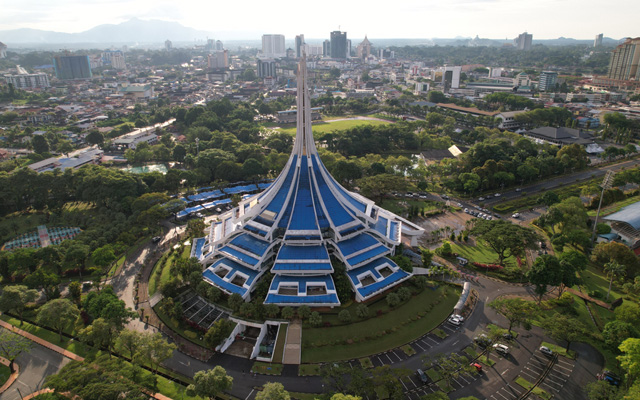
Sarawak becomes first Malaysian State to join the GDS Index; Kuching pictured
To kickstart the GDS Index, Kuching has been selected as part of the pilot project, positioning the city as one of 75 progressive destinations in the world to undertake the GDS-Index.
The globally recognised benchmarking system will rank Sarawak’s business events and tourism sustainability performance. The assessment will be based on 71 indicators across four key areas – environmental performance, social progress performance, destination supplier performance, and destination management performance.
Upon successful completion, the assessment will be expanded to other cities in Sarawak such as Sibu, Miri, and other major towns.
Abdul Karim Rahman Hamzah, minister of tourism, arts and culture Sarawak and GDSI-Sarawak Partner’s patron, clarified that while the Index prioritises business events and tourism, its underlying value will benefit “every industry in Sarawak”.
“For business events and tourism, our move towards a sustainable future will drive Sarawak’s visibility and branding around the world. It will give us the power to create strong destination stories and position Sarawak as a potential role model for other second-tier destinations to implement a similar action.”
Sustainability isn’t new to the Sarawak Tourism Board (STB), as it has been actively advocating responsible tourism among visitors and stakeholders through its various green initiatives.
STB’s CEO Sharzede Salleh Askor, shared: “STB has actively organised various environmentally-oriented and skill-based programmes to not only advocate sustainability in tourism to urban, sub-urban and rural Sarawakians, but also empower the lower-income groups with the ability to upscale their income and have a sense of responsibility to fulfil the Responsible Tourism agenda to the fullest.”
“Sustainable conventions, exhibitions, corporate meetings and corporate incentives are a must,” stressed Amelia Roziman, Business Events Sarawak’s CEO.
“More business events planners are making decisions based on sustainability performances and this matter goes as deep as evaluating social inclusiveness and the return on investment of their events. These factors also affect international and national delegates’ decision to visit Sarawak for business events.”
To date, GDSI-Sarawak Partner is in the process of data consolidation and the result of Kuching’s performance is expected to be released by October. The initiative will hold bi-annual check-ins to compile results, recommendations, and update policies that encourage a pledge of commitment from all involved parties and stakeholders.
The MICE courses deepen specialist skills and acquire new competencies in the MICE industry.
SkillsFuture has opened applications for study awards for the MICE and events industry, to help Singaporeans develop and deepen specialist skills needed for future economic growth.
Singaporeans with at least two years of work experience in the MICE industry are invited to apply. Applicants also have to be currently employed, or previously employed in a MICE, or MICE-related company.
The courses will help deepen specialist skills and acquire new competencies in the MICE industry
The courses chosen should be relevant to the needs of the MICE industry and to the applicant’s current/ future job function. Courses relating to emerging skills identified in the Skills Framework for tourism and/or required in a post-Covid world (such as but not limited to Data Analytics, Digitalisation and Experience Design), will be favourably considered.
Other courses eligible for the award include these four run by Singapore Association of Convention & Exhibition: Professional Exhibition Management (PEM), Professional Conference Management (PCM), Certified in Exhibition Management (CEM), and Professional Event Management (PEvM).
Applications are now open, and will close on September 27, 2021. Courses must be registered and paid for no later than October 31, 2021.
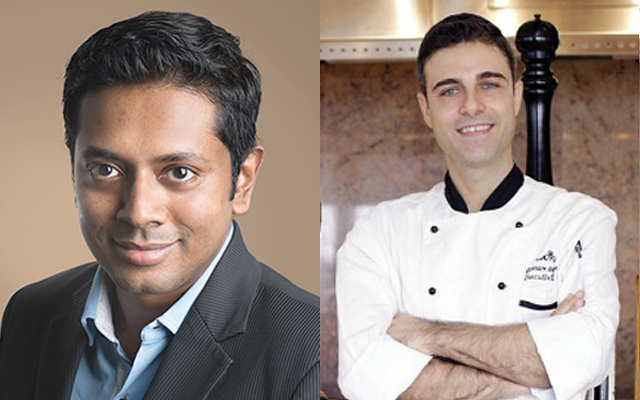
From left: Ranjeet Viswanathan; and Gennaro Avagnale
Hyatt Regency Phuket Resort has filled two leadership positions, the director of sales and marketing, and executive chef.
Ranjeet Viswanathan, an Indian national with more than two decades of sales and marketing experience has joined the resort as DOSM. Prior to joining Hyatt Regency Phuket Resort, Viswanathan was commercial director at Hilton Phuket Arcadia Resort & Spa, Phuket for two years.
From left: Ranjeet Viswanathan; and Gennaro Avagnale
Throughout his career, he has held many sales and marketing roles in Phuket, Thailand and overseas, including director of sales and marketing at Anantara Mai Khao Resort Phuket, director of business development at Conrad Maldives, and senior cluster revenue manager at Hilton RMCC, Shanghai.
Meanwhile, Gennaro Avagnale, an Italian national with more than two decades of culinary experience has been appointed executive chef. Prior to joining Hyatt Regency Phuket Resort, Avagnale was executive chef at ANA Crowne Plaza Osaka for more than three years where he managed six restaurants including a one-Michelin-star restaurant.
Previous tenures as executive chef include InterContinental ANA Ishigaki Resort in Okinawa, Japan, Keraton at the Plaza, The Luxury Collection, Starwood in Jakarta, Indonesia, and before that executive sous chef roles at Conrad Sanya Haitang Bay Double Tree Resort by Hilton in Hainan, China, and Savoy Resort & Spa in Mahe, Seychelles.
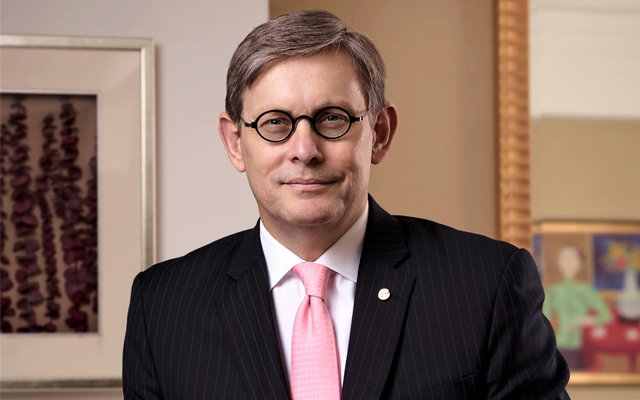
Langham Hospitality Group (LHG) has welcomed Brett Butcher back as CEO.
Butcher previously served in the same role for five years from 2009, but left the group in 2014, and returned as CEO of GE Hospitality Asset Management Limited in 2017, a position that he will continue to hold.
No stranger to LHG, Butcher will provide guidance in the operations of the group’s hotels, spearhead all hotel owner relations, and solicit new management contracts in key destinations around the world.
The Australian has grown with LHG as senior vice president of sales, marketing and brand, as well as managing director of Langham Place, Mongkok, Hong Kong (later rebranded Cordis, Hong Kong.)
Prior to LHG, Butcher served in various operational and executive roles for nearly 20 years across the Pacific, North America, and China.
Melbourne, Victoria, Australia, 24 July 2021: Empty Melbourne streets in bourke street mall in the CBD city centre during Victoria’s 5th lockdown. Selective Focus.
Tourism groups in Victoria are calling for more financial support from the government and flexible employment arrangements as the state braces for more lockdowns before Christmas.
The Victorian state government has confirmed it will extend its current lockdown – its sixth iteration – until September 2. A curfew has also been imposed from 09.00 to 17.00 for the two-week duration. At press time, there are currently 205 active Covid-19 cases in Victoria, compared to more than 7,000 in New South Wales.
Victoria enters its sixth lockdown; empty Melbourne’s Bourke Street Mall pictured
Businesses have also been warned to expect snap lockdowns to be the new normal until Christmas, when a target of 70 to 80 per cent vaccination rates are expected to lead to a change in government policies about imposing sudden lockdowns.
The government initially responded to the latest lockdowns with a A$400 million (US$294 million) package for almost 100,000 impacted businesses, co-funded by state and federal coffers. A further A$367 million was offered when the seven-day lockdown was extended. But tourism representatives say the measures are not enough.
“While these business support programmes are welcomed by the industry, the reality is they don’t really come anywhere near compensating the businesses for the losses that they incur from all these lockdowns,” said Felicia Mariani, chief executive of the Victoria Tourism Industry Council.
“The businesses that support the state’s visitor economy have reached the end of their ability to bounce back from these rolling lockdowns and residual restrictions. There is simply little or nothing left in the tank for tourism businesses to continue under the weight of these recurring setbacks.
“We’re calling for a much more comprehensive, targeted and sustained programme for tourism, hospitality and events. We also need to see both state and federal governments reintroduce a wage subsidy scheme, similar to the NSW JobSaver program, targeting those industries most affected by the pandemic restrictions. As well, we need to see flexibility in Fair Work provisions reintroduced to ensure that businesses can tread water until we accomplish the rates of vaccination,” she lamented.
Apart from more funding, Adventure Tourism Victoria (ATV) is also calling for more hospitality businesses to be considered eligible for compensation.
“There are certain parts of the tourism industry that have been forgotten,” said ATV’s president Alex Hill. “If you don’t have a liquor license with a food license in Melbourne, then a lot of these grants aren’t available to you. For example, if you just have an accommodation venue, or one with a small lobby bar or if you’re a nightclub then a lot of these grants just don’t apply to you.
“(Plus) you’ve still got a lot of operators that are chasing lockdown grants from three lockdowns ago. All these business owners and operators are digging into their own capital or their own savings or building more debt trying to keep their staff employed,” he continued.
The Macao Government Tourism Office (MGTO) has reiterated its commitment to fostering more cross-sector integration between the tourism industry and other sectors like business events and sports.
And as it awaits the reopening of borders, the city has been busy diversifying its offerings to better support the integration, which has led to the opening of new attractions and revamping of others.
A landmark on one of the Macao Highlight Tours
The end of May this year saw the opening of the Studio City Water Park, part of a major revamp of the attractions at the integrated Studio City Macau resort. On June 1, the refurbished Grand Prix Museum reopened with interactive displays and virtual reality racing stations. The museum has been closed for renovations since 2017.
Other soon-to-open attractions – this time located at Lisboeta Macau – include ZipCity, a 388-metre-long zipline ride with spectacular audiovisuals, and GoAirborne, described as the first indoor skydiving experience in Macau.
Meanwhile, larger infrastructure projects like the Galaxy International Convention Center is moving ahead with its third phase, and is slated to open towards the end of the year. The Grand Lisboa Palace is also slated to open by 3Q2021, having recently been delayed by a licensing process.
Bruno Simoes, managing director of smallWORLD Experience, commented on the recent developments: “Macau has a number of new offerings like Lisboeta, Studio City Water Park, the new Grand Prix Museum, (which will) appeal to incentives.
Simulation experience at the Grand Prix Museum
“And with the opening of Galaxy International Convention Centre, we expect an interesting competition between the two main players (Galaxy and Sands China) in the market. Overall, that is a positive sign for event organisers, and for Macau in general.”
MGTO has also partnered with local travel trade groups – Macau Travel Agency Association, Association of Macao Tourist Agents and Travel Industry Council of Macau – to develop more themed and tailor-made itineraries for visitors.
Operating in small-sized groups, the Macao Highlight Tours allow bleisure and corporate visitors to experience Macau’s history, cultural landscape and “tourism+” projects, in turn stimulating the economy in local communities.
At present, Macao Highlight Tours feature four itineraries: Amazing one-day tour with MAK MAK; Explore the history of Macao’s handover and secrets of the Macau Grand Prix; Strolling in the Historic Centre of Macao and enjoying enchanting scenery on maritime tour; and Dive into the beauty of Coloane and explore the ancient architecture of Nossa Senhora Village of Ká-Hó.
Indoor skydiving attraction GoAirborne
Visitors can also opt for private tours that feature customised itineraries. Private tour participants can sign up for a chartered helicopter ride, each able to accommodate up to 12 passengers per tour. Tour options include a half-day tour around alleys and lanes imbued with local aroma, a culinary tour to sample signature delicacies, a green wellness tour, and a luxurious shopping tour.
MCI Group’s general manager for Hong Kong & Macau, Olinto Oliveira, said a greater variety of attractions is always a plus for any destination.
Previously, Macau already had “a rich selection of resident shows and touring concerts and shows”, staged at the integrated resorts and venues such as the Macau Cultural Center, noted Oliveria.
But with the beefing up of the city’s portfolio, Oliveria believes that Macau will be “more attractive” to a wider range of audiences.
“Macau has wisely used the slower pandemic period to address and improve its offerings, and that’s an exciting prospect for a destination that is already a major player in Asia-Pacific’s MICE market. So as we continue to come closer to reopening borders, big things are definitely ahead for Macau,” Oliveira stated.
Corporate groups can opt for a Helicopter Sightseeing Tour
Sands China’s senior vice president of hotel operations, Kris Kaminsky, shared similar sentiments: “The addition of new world-class meeting offerings and facilities such as the Londoner Arena are helping position Macau as Asia’s most innovative and engaging meetings, conventions and leisure destination. Combined with Macau’s cultural offerings, these new attractions will appeal to a wide variety of visitors, with something for everyone.”
Looking ahead, Kaminsky pointed out that it would be “vital” to “redefine travel logistics” and ensure safety practices to provide planners and delegates a safe and worry-free stay in Macau.
Currently, only FITs from China are permitted to enter, but DMCs have started preparing for the return of regional business. For instance, smallWORLD Experience is investing in their capabilities to deliver more digital services such as broadcasting for hybrid events.
Meanwhile for MCI, Oliveira shared: “As regional MICE returns, our team is gearing up by staying updated in terms of health and safety measures, but also actively learning and researching how to engage audiences in new ways as hybrid (events) will continue to grow throughout the industry’s recovery phase.”
The Macao Trade and Investment Promotion Institute (IPIM) has also kept busy, having visited mainland Chinese cities Guangzhou, Dongguan and Zhongshan in 1H2021 for promotional marketing activities.
IPIM will expand its activities to other Chinese cities such as Xiamen, Tianjin, Chongqing, Chengdu and Taiyuan in the later half of the year.
Chiruit: The expanded agreement aims to boost the employment opportunities for qualified MICE professionals, enhance and harmonise the quality of MICE education, and to grow the region's MICE workforce.
Business events entrepreneurs have teamed up with tech entrepreneurs in Thailand to develop innovative ways to continue hosting business events online amid the current pandemic, a result of Thailand Convention and Exhibition Bureau’s (TCEB) MICE Winnovation initiative.
According to Jaruwan Suwannasat, director for MICE intelligence and innovation department at TCEB, the MICE Winnovation project is all about promoting the utilisation of innovation and technology when it comes to organising business events in Thailand.
One of the projections mapped onto the East Asiatic Building
Since MICE Winnovation was launched in March 2021, TCEB has brought together 152 pairs of MICE entrepreneurs and tech entrepreneurs, as well as received applications to support 35 events.
Among the 18 events that have happened, 15 have utilised virtual or hybrid technology, while three events deployed crowd management technology to improve hygiene safety and reduce infection risks.
CEO and co-founder of ZipEvent Parote Denskoon shared that the initiative is a good opportunity to showcase their ideas. For instance, ZipEvent was matched with Yimsamer Studio, which led to both companies collaborating for the virtual event Bangkok Projection Mapping Competition 2021 (BPMC 2021).
BPMC 2021 was a competition held in June, which saw motion graphics or animation content projected onto the historic East Asiatic Building in Bangkok.
“Technology has become an essential tool for event organisers so as to communicate and deliver memorable experiences to visitors,” said Thanapong Panichob, co-founder and CEO of Yimsamer Studio.
Chiruit: The expanded agreement aims to boost the employment opportunities for qualified MICE professionals, enhance the quality of MICE education, and grow the region’s MICE workforce
This move to bolster Thailand’s business events sector comes as the Thai cabinet recent approved an amendment to the ASEAN Mutual Recognition Arrangement of Tourism Professionals (ASEAN MRA-TP) that will benefit business events professionals and event professionals.
When the agreement was originally signed by ASEAN Tourism Ministers in 2012, the ASEAN MRA-TP only covered workers in two tourism categories – travel services and hotel services. To date, the ad referendum has been signed by seven countries: Indonesia, Singapore, Malaysia, Cambodia, Thailand, Vietnam and Brunei.
To translate the expanded agreement into action, every ASEAN member country will be required to follow a common competency standard. Thailand and Indonesia have been tasked with the development of the competency standards for MICE – Thailand in events and incentive travel, and Indonesia, in conventions and exhibitions. This will take place over the next three years.
Chiruit Isarangkun Na Ayuthaya, president of TCEB, shared that with the MRA-TP, a tourism professional’s qualification will be recognised by all ASEAN countries, which will boost cross-border employment and capacity-building of the business events sector.
“A vital economic driver for many countries, MICE has a bright future in ASEAN… To enable a MICE professional to find successful employment throughout the region, we must start with a common standard and mutual recognition of qualifications. With close cooperation among member countries, I hope we can transform ASEAN into a world’s leading destination for MICE by embracing the expanded ASEAN MRA-TP.”
offer event professionals easy way to organize multi-city hybrid meetings more effectively
The Malaysia Convention & Exhibition Bureau plans to strengthen its business events position by getting four cities in Malaysia to join the Hybrid City Alliance.
The four cities are Kuala Lumpur, Penang (Penang Convention & Exhibition Bureau), Kuching (Sarawak Convention Bureau) and Kota Kinabalu (Sabah Tourism Board).
The alliance promises to offer event professionals an easier solution when it comes to organising multi-city hybrid meetings
“MyCEB is thrilled to join the like-minded global convention bureaus in the Hybrid City Alliance, to work as a team for the recovery of the meetings industry, share our passion and resources and actively collaborate to attract more business events in our city and the region.
“With this new international alliance, Malaysia’s business events industry is even more prepared to advance feasible digital solutions which will resonate well with our Malaysia Business Events Strategic Marketing Plan 2021-2030,” said Abdul Khani Daud, CEO of MyCEB.
Launched in December 2020, the Hybrid City Alliance offers international events organisers a solution when organising hybrid events regionally and internationally. The city partners in the Alliance are ready to act as one point of contact to streamline and simplify the clients’ interaction with multiple cities regarding one hybrid event.
Just 10 minutes from Phuket International Airport on the serene northern coast, this 178-key, Bill Bensley-designed resort offers delegates a quiet, tropical paradise steeped in Phuket’s tin-mining heritage
The newly-opened Ritz-Carlton, Bangkok anchors the One Bangkok development with cosmopolitan elegance. Featuring the city's largest ballroom and a spectacular new penthouse suite, it delivers exceptional hardware and deeply authentic, soulful service for business and leisure travellers alike
Behind the imposing, Brutalist concrete that defines Zurich’s Oerlikon district lies a surprising secret. While its exterior honours the neighbourhood’s industrial roots, stepping inside Mama Shelter reveals a vibrant, neon-soaked world that is a far cry from its rigid shell