support from the experts and the opportunity to network with peers
With the addition of regional experts, Professional Convention Management Association’s (PCMA) Digital Event Strategist (DES) course can now cater specifically for APAC business events and marketing professionals planning a hybrid or digital meeting.
The five regional experts appointed by PCMA include Deanna Varga, managing director and founder of Mayvin Global; Darren Chuckry, founder and managing partner, HK Initiative; Justin Choy, managing director of Hong Kong at Creative Technology; Jayson Chau, senior manager of digital at Sinclair Comms; and Deborah Caldwell, Asia Pacific head of event marketing, Bank of America.
Students taking the DES course will have support from the experts and the opportunity to network with peers
These APAC experts provide “expert hours” which include opportunities for mentoring, discussion and conversation on business events challenges from a local perspective.
DES is a six-week course of self-paced materials, with weekly expert hours. It will cover six modules from business planning and technology to marketing and measurement. Upon successfully completing the DES course, participants will remain certified for two years.
In the last 12 months, some 2,000 individuals have completed the course globally, and PCMA managing director APAC Karen Bolinger and her team have been working hard to tailor the DES program for the Asia Pacific region.
“The APAC Experts are a vital addition to the already popular course. In APAC we have unique challenges and are working through our post-COVID plans at different speeds to the rest of the world.”
Moreover, Bolinger added that “hybrid and digital events aren’t going anywhere”.
Varga said she is looking forward to helping shape the business events industry as a DES APAC Expert.
“I’ll be the DES Expert for ‘Business Planning and Monetisation’ and will help participants implement sustainable commercial strategies to drive revenue, profit and visitor engagement. I believe these skills are more important than ever before as we navigate the post-COVID environment.”
Ecklund: essential for the corporate travel industry to be highly adaptable to rapid change
Travel management company FCM is expecting a significant rebound in its global corporate travel business by year-end, with vaccination programmes well underway in key markets.
The gain in momentum is also leading to an increase in consumer confidence.
Ecklund: essential for the corporate travel industry to be highly adaptable to rapid change
The business, which operates in more than 95 countries, believes sales will continue to increase globally and is targeting 50 per cent of pre-COVID levels by the end of the year. Recent wins for the company include large and high-profile accounts, such as Procter & Gamble and Atos.
Marcus Eklund, FCM global managing director, said: “Based on early signs that vaccines are effective in preventing symptomatic infection, and with healthy vaccine rollout rates in key markets such as Australia, New Zealand, the US and UK, we expect health risks to reduce. In the absence of disruptions such as new strains, this should lead to an easing of government-imposed restrictions on domestic and international travel, and a partial rebound of the global business travel market by year-end.
“Based on our experiences, travel immediately rises by 20-30 per cent when restrictions are relaxed. A healthier rebound will occur if international borders remain open.”
FCM’s diverse customer base is playing a key role in future growth, with recent focus groups indicating high levels of pent-up demand.
Eklund said: “The mining, construction, pharma, energy and resources, FMCG manufacturing industries and their associated supply chains, together with governments and other growth companies, were responsible for most business travel activity during 2020. They will also drive early growth in travel activity this year, as their C-suite, customer-facing and sales executives recommence their traditional customer and team engagement.
Global research has also revealed the emergence of a new hybrid working model, with more than half of all employees expected to work from home several days a month.
As a result, Eklund expects some pre-pandemic travel activity will shift to virtual working models, leading to further consolidation in the corporate travel industry, as organisations increasingly seek travel management providers that are secure and demonstrate a strong duty of care.
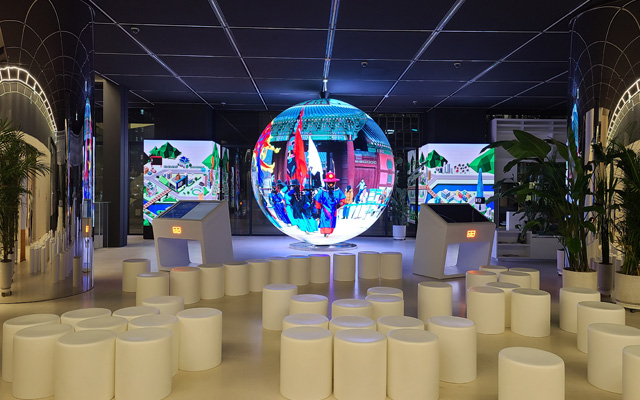
The capital of South Korea recently opened the Seoul Tourism Plaza, which is to serve as a new hub and meeting point for stakeholders in the tourism sector.
Thie one-stop plaza was built around four key points – communication, governance, incubating and innovation – with the aim of establishing a robust ecosystem for the local tourism industry.
A peek inside Seoul Tourism Plaza
On the first floor will be a tourism information centre and a souvenir shop, and there will be broadcasting studios, as well as numerous meeting rooms and lounges dotted throughout the building. These spaces will be open for classes and workshops to exchange information and knowledge.
The Seoul Tourism Organization will also be located in this building, while another two plaza floors will be dedicated to startups and professionals working on various tourism projects. Another government agency that will call Seoul Tourism Plaza home is the Seoul Tourism and MICE Center, which will offer professional consulting and counselling services for MICE stakeholders.
The launch of Connect@Changi – the first bubble facility dedicated to business travel – made waves when it was announced in Singapore in February 2021. Featuring a closed ventilation system, airtight meeting rooms split by glass walls and hotel room modules, the facility is set to shape the way Asian corporates travel for work in the new world.
Aloysius Arlando, chief executive, venues, SingEx-Sphere Holdings, shares how Singapore’s pioneering business travel bubble facility will help revive MICE traffic in Asia and position the country as a meeting point for the region’s corporates, as well as serve as a “living laboratory” for global Covid-19 management strategies.
Kicking off the May 2021 season of TTG Conversations: Innovator Chat, Arlando speaks with TTGmice to share how Connect@Changi is jumpstarting business travel.
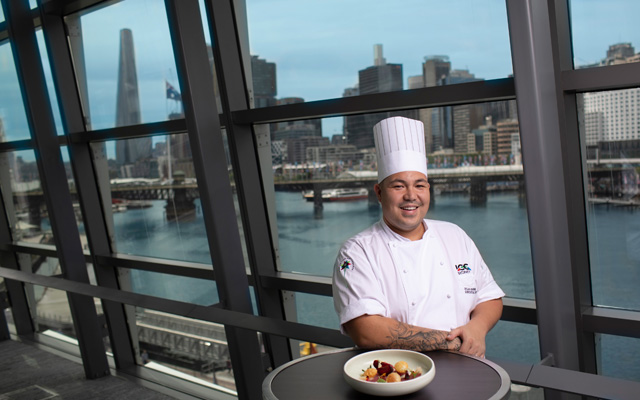
International Convention Centre Sydney (ICC Sydney) has promoted Dylan Sanding to executive chef.
In his new role, he will move from driving kitchen operations to spending more time collaborating with clients on event catering needs.
Dylan Sanding
Currently in the role of executive sous chef, Sanding will be joined by Rakesh Pillai, who will transition from chef de cuisine to executive sous chef.
Sanding has been working with ICC Sydney since before the venue opened in 2016. He played a key role in establishing ICC Sydney’s Feeding Your Performance philosophy, and plans to continue taking guests on a gastronomic tour of the venue’s surrounding regions with the refreshed 2021 menu.
As part of our project "Journey to reopen the exhibition industry"
The Exhibition Think Tank (ETT) Club is hosting two panel discussions next week, focusing on how event technology can restore exhibitions and the role event services play for the restart of the events industry.
The panel on event technology will take place on May 11, 14.00 (UK time), featuring speakers such as Grip’s Tim Groot and Konduko’s Matt Harris.
These two panels are part of ETT’s “Journey to reopen the exhibition industry” project
The panel on event services will take place on May 13, 14.00 (UK time), featuring speakers such as Freeman’s Ken Holsinger and Rogers India’s Ravinder Sethi.
These panels are part of ETT Club’s project, ETT Journey to reopen the exhibition industry.
As a worldwide e-platform that brings exhibition industry professionals together for networking and knowledge sharing, ETT Club conducts a host of online and in-person events to allow members to discuss hot topics and current issues as well as produce reports and analyses to inform business recovery and advancement decisions.
Centara Hotels & Resorts has appointed Wayne Duberly as area general manager of Centara Grand Mirage Beach Resort Pattaya, and Centara Sonrisa Residences & Suites Sriracha.
The British national started his career with Centara Hotels & Resorts as general manager in 2011 at Centara Anda Dhevi Resort & Spa Krabi, before he was transferred to helm the Centara Seaview Resort Khao Lak in 2013.
In 2015, he moved to Centara Karon Beach Resort Phuket as area general manager, where he also oversaw operations for both Centara Kata Beach Resort Phuket and Waterfront Suites Phuket by Centara.
PEOs the vaccination programme is a huge driver in opening up the world and enabling the return of global exhibitions
The global vaccination roll out is fuelling confidence in the return of in-person events towards the end of this year, with many PEOs expecting attendance to still be dominated by a domestic audience.
As a result, PEOs told TTGmice that a virtual or online element will remain for their upcoming events. Some, based on this projection, have gone on to kick off fresh, virtual-only shows.
The vaccination programme is a huge driver in opening up the world and enabling the return of global exhibitions
Claude Blanc, portfolio director, IBTM and WTM, said: “We are optimistic that our in-person IBTM World event – a flagship event on the IBTM calendar – will be able to go ahead in Barcelona this December, alongside a hybrid element.”
Similarly for Carina Bauer, CEO of the IMEX Group, she is confident that their next live show – IMEX America scheduled to take place from November 9 to 11 – will be able to proceed as planned.
Bauer elaborated: “The vaccine programme is a major determining factor as it builds confidence in the ability to travel and meet in person. We’re confident the programme will have significantly progressed by the time IMEX America takes place in November.”
This sentiment is echoed by Blanc, who has observed a “renewed sense of optimism in our industry and will continue to be a major factor in rebuilding confidence”.
However, event owners are bearing in mind the volatility of the pandemic, which could bring about sudden lockdowns or border closures.
Michael Duck, executive vice president, commercial development for Informa Markets, said: “Our strategy is to stay close to our markets, follow the government and relevant health authorities’ advice, as well as listen to our customers’ view on whether they feel confident enough to return.”
Meanwhile, Martin Ecknig, CEO of Messe Berlin, asserted that for exhibitors, the delivery of a safe event is not the “ultimate challenge”. This is because the “uncertainty lies with individuals and their willingness to travel”.
In clear indication that virtual events will be around even when in-person events return in full force, Ecknig shared that Messe Berlin is developing new concepts under Messe Plus, which “include virtual elements and address the basic need to make direct contact”.
Similarly, IBTM has permanently added the IBTM Wired event to its portfolio. The inaugural event will take place from June 28 to June 1, 2021, and bring business events professionals together for networking sessions, and a programme of live and on-demand education sessions.
“Incorporating online as part of the mix will give our community the opportunity to engage with new markets like never before by offering more flexibility and extra layers of engagement,” Blanc said.
In preparation for IMEX America, Bauer shared that the team will be launching “a series of digital activations” that will “pave the way” for the live show in November.
Duck added that Informa has been deploying a hybrid model since its return to the show floor, since its “strong comeback” in various markets.
“Our events in mainland China and Japan, including China Beauty Expo, CBME and PROJECT Tokyo, have attracted almost as many participants as before the pandemic, albeit mainly domestic exhibitors and visitors while travel restrictions remain in place. We have also held tradeshows in Thailand and Taiwan.”
All shows were concurrently opened to international participants through digital channels to help buyers and sellers connect. Duck said digital experiences, while complementary, will not replace live events, and added that they will remain part of Informa’s long-term strategy.
Despite the strengths of virtual events, Ecknig warned that the “consumption of online content is approaching a saturation point”.
PEO chiefs also agree that there is no replacement for real-life meetings and face-to-face experiences, and are eager for in-person events to return soon.
“Virtual has many advantages, but you can’t beat the excitement of a live event, and the chance meetings that occur as a result,” noted Blanc.
Bauer noted: “Virtual events…can’t offer the same depth of experience or interaction that meeting face-to-face does. There is a pent up demand to meet in person – to be able to look someone in the eye and shake their hand is a powerful way of connecting people, building relationships and creating memories.”
To restart the exhibitions industry, Duck said exhibition organisers need to work collaboratively with governments, health authorities and industry associations to reopen tradeshows. He cited Singapore as an example of having restarted events in a safe manner and that the country’s safe events plan is a “great catalyst for reigniting the industry”.
Auckland has won the bid to host the 36th Annual Scientific Meeting for the Epilepsy Society of Australia.
The event, which will be held in November 2022, will bring together 250 specialists involved in the diagnosis, treatment and research of epilepsy from Australia and New Zealand. It is expected to generate over NZ$415,000 (US$297,895) in economic impact for Auckland, including a total of 1,000 visitor nights.
Auckland will welcome the epilepsy conference next year
The bid was secured by Auckland Convention Bureau – a division of Auckland Unlimited – in partnership with Epilepsy Society of Australia, and with support from Tourism New Zealand.
Auckland Unlimited’s head of major and business events, Richard Clarke, said attracting international conferences is important for Auckland’s business events sector.
“It’s fantastic to see Auckland secure such a significant Australasian conference to further cement our position as a leading business events destination,” Clarke noted.
Tourism New Zealand’s general manager domestic and business events Bjoern Spreitzer said that it is pleasing to welcome Australasian business events back to New Zealand.
“These are important platforms for trans-Tasman collaboration, driving research and innovation in our region.”
One question many event organisers face today is: “How do I keep remote audiences engaged?”
Online attendees face many distractions, and they’re always one click away from leaving your event.
Online networking and virtual events will be around for a long time to come
It’s no surprise that deeper engagement is the number one way organisers want to improve their digital meetings and events, cited by 68 per cent of respondents in a new global survey by Aventri.
While producing a riveting virtual experience may seem daunting, new tools and smart event design make the job much easier. Try these eight tips below:
Short, snappy sessions work well with this audience. Build an engaging event agenda with live-streaming and on-demand content. Mix keynotes and main stage presentations with interactive meetings and small, collaborative breakout sessions.
People today are hungry for interaction. Keep sessions lively with insta-polls, Q&A’s, chat, social feeds, gamification and other interactivity tools.
Use matchmaking software to connect like-minded eventgoers. Attendees who opt in can get suggestions, view profiles, click a button and start a video chat. With targeted recommendations, they can interact naturally over shared interests, like they do at in-person events.
Keep it simple. Matchmaking software uses artificial intelligence to analyse profiles of attendees, sponsors and exhibitors and find networking opportunities based on mutual interests. Modern all-in-one platforms collect data across your portfolio of virtual, hybrid and in-person events. This means you capture more data for more precise recommendations.
Equip virtual breakout rooms with video chat and interactivity tools to foster meaningful connections. Attendees can meet up for one-on-one conversations or gather around a whiteboard to solve mutual industry problems with experts and peers.
Provide real-time, multilingual interpretation and closed captioning capabilities to make events accessible to diverse audiences. Cloud-based technology helps organisers scale events easily for a large global audience.
Energise the experience with creative content. Options abound, such as live concerts, deejays, improv comedy teams, photo contests, mini yoga sessions, teambuilding challenges, mixology classes, and more.
Finally, don’t let new contacts go unnoticed. Integrate your virtual event platform with marketing automation and customer relationship management (CRM) systems. You’ll streamline follow-up and keep conversations going after your event.
Complexity doesn’t work in a challenging economy, when planning teams are smaller. For successful events, thoughtful event design and technology help you do the heavy lifting.
The newly-opened Ritz-Carlton, Bangkok anchors the One Bangkok development with cosmopolitan elegance. Featuring the city's largest ballroom and a spectacular new penthouse suite, it delivers exceptional hardware and deeply authentic, soulful service for business and leisure travellers alike
Behind the imposing, Brutalist concrete that defines Zurich’s Oerlikon district lies a surprising secret. While its exterior honours the neighbourhood’s industrial roots, stepping inside Mama Shelter reveals a vibrant, neon-soaked world that is a far cry from its rigid shell
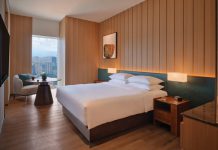
A polished urban retreat designed for business travellers, Hyatt Regency Kuala Lumpur at KL Midtown combines thoughtful design, seamless service, and exceptional facilities.