The updated Roadmap will Recommend strategies for the recovery and development of the Philippine MICE Industry
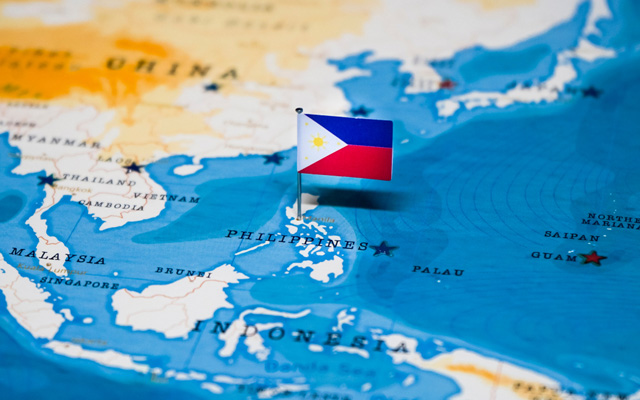
The Philippines’ MICE Roadmap 2030, which laid down the strategies to position the country as a desirable business events destination in Asia and the Middle East within the decade, will be updated taking into account the impact of the global pandemic.
Raquel Tria, acting MICE head, Tourism Promotions Board (TPB), said the update should include a Covid-19 impact assessment on, and inclusion of, proposed measures on Covid-19 responses and recovery for Philippine MICE stakeholders.
The updated Roadmap will also recommend strategies for the recovery and development of the Philippines’ MICE industry
The updated version should assess the feasibility and relevance of the Roadmap targets, re-identify targets for each of the four segments (meetings, incentives, conventions and exhibitions), and update the statistical data and pertinent information,” Tria shared with TTGmice.
First unveiled in 2018, the MICE Roadmap 2030 is a comprehensive 10-year programme that prioritises the expansion of economic opportunities from MICE, as well as strengthens Philippines’ global competitiveness. It was initiated by PACEOS (Philippine Association of Convention/Exhibition Organizers and Suppliers) in partnership with the Department of Tourism, its marketing arm TPB, and the Department of Trade and Industry.
TTGmice understands that PACEOS’ members agree that it is necessary to update the Roadmap, and will be meeting to discuss the issue.
PACEOS’ board member Orly Ballesteros said: “The pandemic brought to a halt the growth of MICE in the country. At the same time, the change in the MICE landscape (which saw the incorporation of) digital is another critical area that must be discussed in the recalibration.”
“The government should allot additional resources to the marketing and revival of the tourism sector. The strategic recalibration will be critical as we face a new world in the tourism industry, a world where health and safety, and sustainability, are the main (drivers that will help us reclaim the) growth momentum that we have experienced before pandemic,” Ballesteros added.
The e-catering platform, which is expected to launch in the region in the next one or two months, according to CEO Bernard Quek, will allow event planners to develop an F&B menu with a participating hotel, grant their remote event delegates the freedom to pick and chose what they would like to enjoy, and have the meal or refreshment delivered to different addresses within a set time frame.
Having seen success in moving hotel partners towards online retailing and F&B delivery throughout the pandemic’s recurring lockdowns and continued travel restrictions, Singapore-based Global Hospitality Solutions (GHS) is now preparing to launch an e-catering platform that will enable Asian hotels to revive some of their lost on-site events business.
Established in 2002, GHS specialises in technology that helps hotel partners be present in the entire customer journey in travel and tourism, from engaging travellers to driving purchase and eventually rewarding for loyalty.
GHS will make it easier for event planners to feed their remote event attendees
The e-catering platform, which is expected to launch in the region in the next one or two months, according to CEO Bernard Quek, will allow event planners to develop an F&B menu with a participating hotel, grant their remote event delegates the freedom to pick and chose what they would like to enjoy, and have the meal or refreshment delivered to different addresses within a set time frame.
GHS will provide the technology – supported by its existing WhyQueue Hotel e-Store solution – to facilitate e-catering, as well as manage the operations to ensure the right transport vendors are used to carry through hotel partners’ brand standards in the delivery service.
WhyQueue powers a private e-store for both hotel companies and individual properties, and have enabled hotels to develop different and more stable revenue sources during the travel and tourism crisis.
Quek said GHS’ move to create an e-catering platform was inspired by the rise in “Zoom parties” – online gatherings with entertainment and catered food, involving a number of people dialling in from different locations.
While the platform is still in its final phase of development, the GHS team had a taste of what’s to come when a hotel partner received an order for 400 meals that had to be delivered to 400 different locations at the same time on a particular day as part of a remote event.
“This service supports the future of entertainment, the future of work, and the future of business events,” he remarked.
He added: “(Business events) is a big piece of business for hotels, but (it is) gone for so many hotels in cities that have been going in and out of lockdown and have almost zero international arrivals. E-catering could bring back events revenue, especially now that remote parties and events with F&B are growing in frequency.”
Quek said there have been some expressions of interest from hotel partners that have benefitted from WhyQueue during the pandemic.
WhyQueue now supports various hotel companies and properties, such as Grand Hyatt Singapore, Grand Hyatt Jakarta in Indonesia, and Wyndham Hotels and Resorts across Asia-Pacific. It recently won over Marco Polo Hotels and will be establishing an online store for the chain’s properties in Manila.
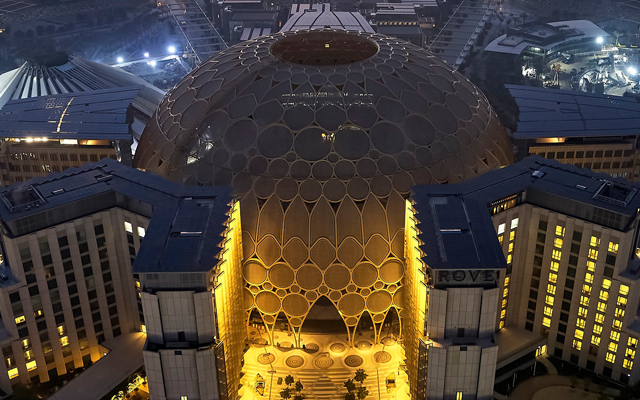
The Sustainability Pavilion at the World Expo 2022
More than 370 delegates from around the world travelled to Dubai to attend the sixth International Participations Meeting (IPM) in-person, the final IPM before the October 1 opening of Expo 2020.
The IPM was held on May 4-5 at Dubai Exhibition Centre, and those present represented 173 of the Expo’s 190-plus participating countries, with others attending virtually.
The Sustainability Pavilion at the World Expo 2022
During the two-day IPM, attendees were briefed on the latest in operations, security, city readiness, marketing and communications, and programming, while organisers also presented the stringent measures being taken to ensure the health and well-being of Expo’s workforce, participants and visitors, in line with the UAE’s wider efforts to combat Covid-19.
The World Expo will be one of the first mega-events to take place since the onset of the Covid-19 pandemic, and it will welcome more than 200 participants, including nations, multilateral organisations, academic institutions and businesses.
For the first time in the 170-year history of World Expos, each participating country will have its own pavilion – a dedicated space where it can showcase its culture and progress to the world, creating partnerships and exploring solutions relevant to its circumstances and people.
It is also the first World Expo to be held in the Middle East, Africa and South Asia, and the largest event to be held in the Arab world.
Expo 2020 Dubai will run from October 1, 2021, to March 31, 2022, coinciding with the 50-year anniversary of the founding of the UAE.
People are keen to travel again, but Restrictions and Low Vaccine Uptake Remain a Serious Barrier
New research released by Collinson’s Priority Pass has revealed that pre-pandemic frequent flyers are ready to get back on a plane, as 77% of travellers in Asia-Pacific expect to travel more in the next 12 months (from March 2021).
Yet, despite travellers longing to hit the skies, entry restrictions – such as the need to be a resident – remain in place for many countries in the region; with most requiring several weeks of quarantine upon entry.
The global survey took into account the opinions of over 46,000 members of Collinson’s Priority Pass traveller experience programme. Further findings include leisure travel is projected to make up more than half of trips (55%) taken in the next year. And while business travel will recover more slowly, there is demand for it to return, with the expectation that business travel will account for 45% of flights taken in the next year globally.
People are keen to travel again, but restrictions and low vaccine uptake remain a serious barrier
Confident and excited – the world’s travellers are ready for a reboot After more than a year since Covid-19 first hit the travel industry, vaccination roll-outs have brought a glimmer of hope – with 41% of APAC respondents stating that being vaccinated against Covid-19 would be the top reason for encouraging them to travel, while 33% said that the lifting of international travel bans would be their top reason.
When questioned on the possibility of travelling by air in the next 12 months, 78% of members globally expressed feelings of excitement and 61% felt confident.
Globally, international travel will likely increase year-on-year. However, survey respondents project that domestic travel is still set to make a greater recovery than international travel during the next 12 months – at 64% versus 59%, when compared with 2019 travel levels, respectively.
Travel experience expectations for the immediate future have changed dramatically Around the world, the desire to keep health risks to a minimum has resulted in key changes to the way people experience airport travel, with the aim of keeping external contact to a minimum.
Since the pandemic began:
24% are more likely to use unmanned facilities, such as biometric passport kiosks
48% are more likely to use airport lounge access than they did before the pandemic
20% are more likely to pre-order and collect their food and drinks before departure
49% indicated that social distancing and contactless transactions at the airport are of a relatively high importance when travelling
Vaccinations are creating an environment of hope Despite Asia’s low vaccination rate in comparison to the EU and US, 79% of travellers cite growing confidence in the safety of air travel as more people are vaccinated.
While vaccines have yet to be fully rolled out globally, their availability continues to generate hope, as do the discussions around digital health certificates; with 82% of APAC respondents saying they would be happy to use one – which is even higher than the global average of 74%.
Globally, 76% of members say they would feel confident to travel internationally if getting vaccinated became a mandatory measure. This sentiment is echoed by a further 64% of travellers who agree that Covid-19 testing and the use of digital health certificates would encourage them to travel abroad.
Quarantines seen as ineffective, unnecessary, and a barrier to recovery The survey also shows that while quarantine regulations continue to be enforced around the world, 60% of APAC travellers do not feel it is an essential safety measure; while a further 69% see it as a major deterrent for international travel. When reasons behind this largely negative sentiment towards quarantine are explored in depth, 83% blame the additional costs involved and 69% also cite the unpredictable nature of quarantine rules, while 62% are reluctant to spend so much time indoors; a finding which is likely linked to an increasing emphasis on mental wellbeing when travelling.
“In APAC, it is clear that travellers are ready to get moving again if the right protocols are in place – so we need to focus our efforts on delivering a return journey that is seamless, safe, enjoyable and helps build on these initial signs of traveller confidence and excitement,” said Todd Handcock, president, Asia Pacific of Collinson.
“Working together to help reduce the impact of identified barriers will prove essential; as will communication and collaboration between all players in the travel ecosystem, governments and other relevant bodies to enable to implementation of globally consistent and accepted travel health solutions.”
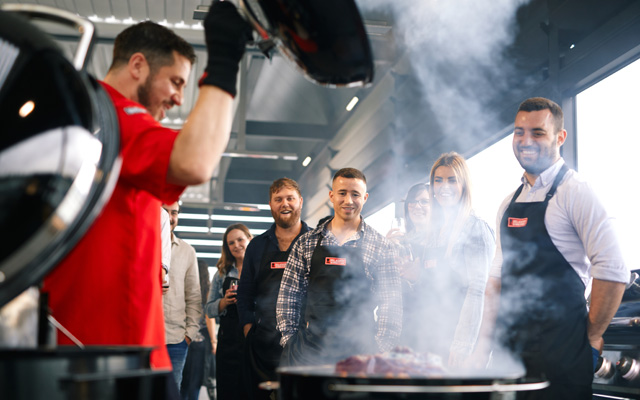
Whether it is gas, charcoal or electric, South Australia’s recently launched Weber Grill Academy is offering corporate delegates and incentive groups the chance to become a barbecue master.
The academy offers interactive BBQ experiences on their spacious 120m squared all-weather balcony, with spectacular views across parklands to the city of Adelaide. All that’s required is a curiosity for grilling methods and an appetite for delicious food cooked with smoke.
Delegates get hands-on experience under the guidance of Weber’s grill experts who provide tips and tricks to the perfect steak. They will also demonstrate techniques for roasting crunchy pork crackling, fire roasting pizzas, and baking a chocolate brownie or pavlova.
An adjacent al fresco area serves as a dining area complete with a full bar, catering facilities and AV equipment. Groups can compete in team food challenges, or enjoy an entire day’s delegate package based on barbecued dishes created from quality Australian produce.
The academy prides itself in sourcing local ingredients, including from the famed Adelaide Central Market, and celebrating South Australian beer and wines.
Interactive experiences are limited to about 20 guests, to ensure maximum interaction with barbecues and grill specialists. However, capacities for events and meetings will be adjusted as required to meet Covid-19 restrictions.
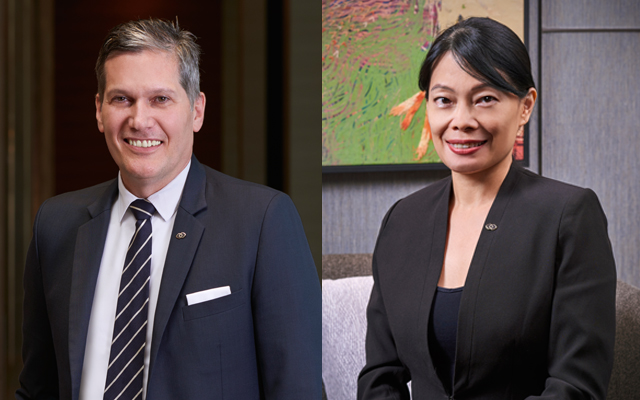
Sofitel Kuala Lumpur Damansara has appointed George Koumendakos as general manager, and Vivian Choa as director of sales and marketing.
In his new role, Koumendakos is responsible for the daily operations and strategic directions of the hotel. Koumendakos’ main priority is to ensure a safe and secure environment for his guests and colleagues, while driving more business opportunities in the domestic market.
From left: George Koumendakos, and Vivian Choa
A 35-year veteran of the hospitality industry, Koumendakos was most recently the general manager at Mövenpick Hotel Colombo, Sri Lanka.
Meanwhile, Choa is responsible for overseeing all sales, marketing, communications, and events management activities for the hotel, reporting to Koumendakos.
With over 20 years of experience in hotel sales and marketing, Choa most recently headed the sales and marketing team at Invito Hotel & Residence, overseeing the repositioning and rebranding of the hotel.
Other hotel groups Choa has worked for include Marriott International, Hilton Hotels & Resorts, and Starwood Hotels & Resorts.
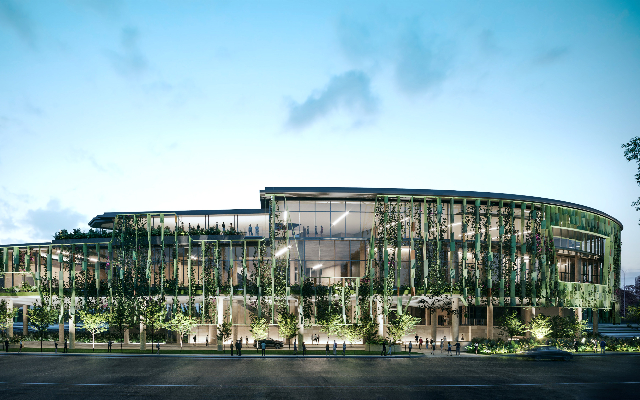
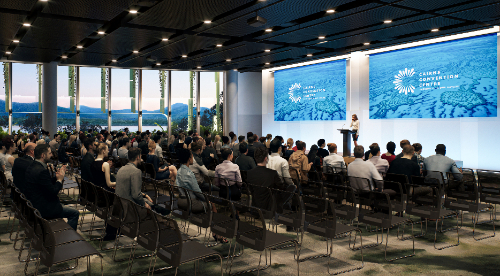
The Cairns Convention Centre has re-opened after an extensive refurbishment. The Centre closed last April to begin the $176 million refurbishment and expansion. The refurbishment is now complete and the Centre has been fitted with state-of-the-art technology and a refurbished contemporary designed interior. Delegates are being treated to the latest audio-visual equipment and a fresh new menu featuring tropical local produce.
CCC Exhibition Space
The Australian Banana Growers Congress (May 12-14) was the first event in the renewed Centre. Moving forward the Centre is set to host more national conferences, concerts and other public events including the Cairns International Art Fair in August.
As the Cairns Convention Centre starts hosting events again the Centre’s multi-million-dollar expansion is well underway. The expansion has been designed to bring more of the region’s beautiful tropical environment inside and the inspiration for the Centre’s new façade will feature tropical plants from the region.
CCC Plenary
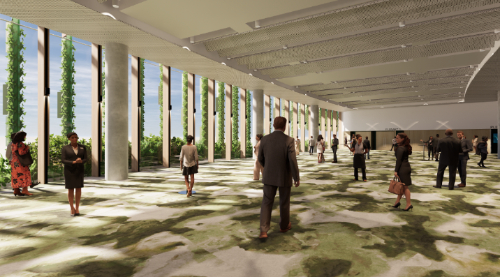
The Cairns Convention Centre expansion will include a new 410-seat plenary on a flat floor that can be split into two equal rooms. Next to the new plenary is an exhibition space for up to 30 booths. Also on this level are three new meeting rooms that can each hold more than 110 people theatre style. The flexible design of the rooms allows them to combined or made into various configurations.
With beautiful views, the Trinity Room is ideal for gala dinners and large cocktail functions. The room is able to host up to 470 people. There is also a large pre-function space outside the doors. The Trinity Terrace has stunning views over the Trinity Inlet. The tropical outdoor area is ideal for cocktail functions, lunches or unique events wanting to enjoy Cairns’ beautiful tropical weather.
The entire Centre will hold 2,500 delegates comfortably while the refurbished arena takes up to 5,000.
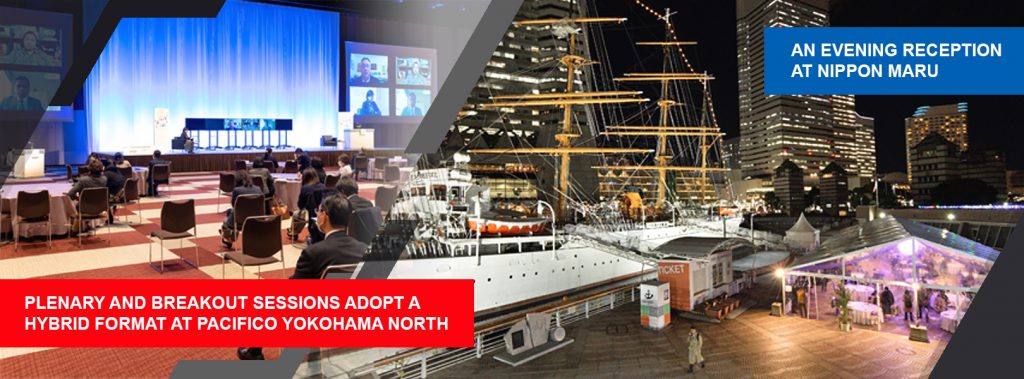
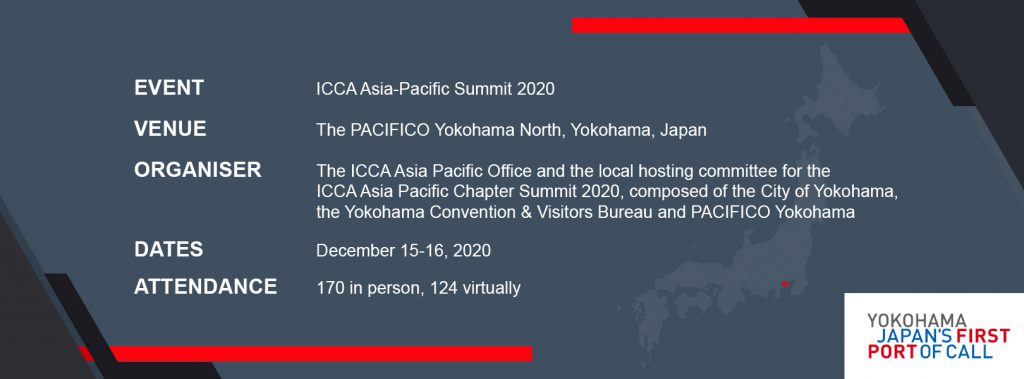
The health of participants was of the utmost importance, yet the situation did permit PACIFICO Yokohama to create an inclusive hybrid environment that brought together in-person and online participants.
Safety first
Hosting a major international event during a global health crisis posed a range of new problems to the challenges already associated with such an important occasion. The health and well-being of all the participants and staff was the top priority and PACIFICO Yokohama was swift to pioneer advanced safety measures to ensure that the venue was in compliance with government and industry protocols.
In collaboration with local health experts, additional protocols were devised specifically for Yokohama and the venue, including a contact tracing system via a smartphone app and the use of a QR code registration system to minimise contact.
Other measures included temperature screening, enforcement of social distancing, the provision of hand sanitiser throughout the facility, effective ventilation, advanced cleaning protocols and contingency planning.
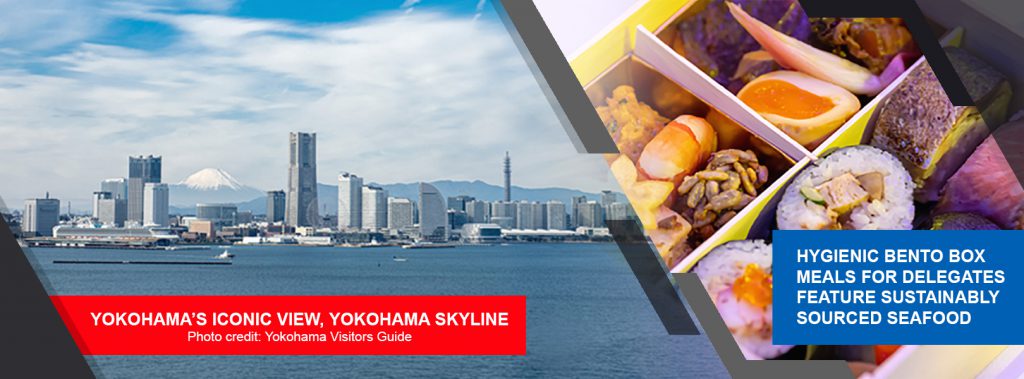
The most challenging component surrounded networking and social events as well as meal times – which are also arguably the most important part of this kind of event. The utmost care was taken during coffee breaks and at meals, with individual meals served in “bento” boxes and cookies individually wrapped. Participants were given plenty of space and invited to not speak during the meal but only after finishing and putting a mask on.
An emergency plan was put in place that involved the prefectural health authorities – but the preparation and precautions proved effective as there were no reports of any participants being taken ill.
PACIFICO certification
The PACIFICO Yokohama complex has gone through the rigorous process required for GBAC STAR accreditation, a performance-based validation benchmark for the cleanliness of facilities created by the Global Biorisk Advisory Council. Certification ensures that protocols across 20 different areas are being effectively implemented and, as well as covering best-practices for cleaning and disinfection, provides a framework for leadership, strategy, planning, accountability and documentation.
Facilities and features
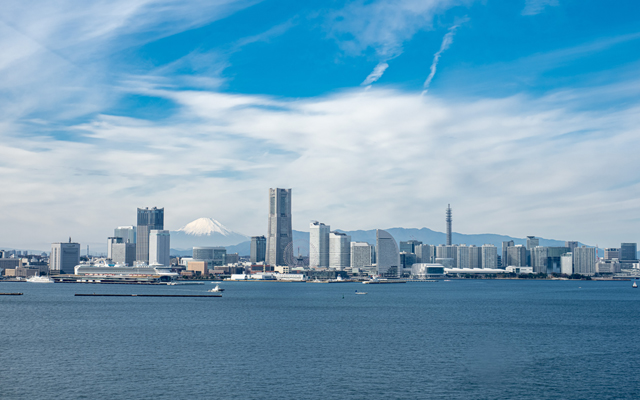
Already recognised as one of the top convention centres in the Asia-Pacific region, with more than 90 meeting rooms and 144,700m2 of floor space, PACIFICO Yokohama is also at the very heart of the historic, cosmopolitan and friendly port city that has been the gateway to Japan for more than a century.
Yokohama has nearly 100 hotels with more than 18,000 guest rooms across all budgets, with the convention centre within easy walking distance of many of the city’s hotels and its must-see attractions, including shops, restaurants, museums, art galleries, waterfront spaces and sporting and nightlife venues.
Unique venue, unique entertainment
Mindful of the need for an outdoor venue with plenty of space, but also the participants’ desire to communicate with colleagues and enjoy a meal and entertainment, the organisers’ solution was to secure the services of the Nippon Maru Memorial Park. The facility is alongside the stunningly preserved former Japanese sail training vessel, which is permanently docked at what was once a Mitsubishi shipyard but is now, due to the rapid development of Yokohama, surrounded by skyscrapers.
Originally launched in 1930, the ship survived a world war, trained 11,500 cadets and sailed the equivalent of more than 45 times around the Earth. Retired in 1984, the sailing ship has never before the focus for such an event, but there are high hopes that it will serve as a unique venue again in the future.
The organisers ensured that participants had ample space for distancing and see-through dividers were positioned on tables. Tents set up on the dockside were well ventilated but also heated to keep guests comfortably warm.
Traditional Japanese cuisine was served in individual bento boxes, including sustainably sourced seafood, while the lively dinner show was provided by the Yokohama Sisters.
“After all these months of the industry being at a total standstill, we were able to have this beautiful social event – it felt like clouds of darkness and depression were lifted,” said Keiko Nishimoto, deputy chair of the ICCA and treasurer of the Asia-Pacific chapter.
“For the first time in months, I could look around and see this event and I thought – we can do this! It’s possible.”
Commitment to sustainability
The summit also pioneered sustainability measures, becoming the very first associations meeting to purchase offset credits under the Yokohama Blue Carbon Offset System. Established by the city, the scheme offsets carbon emissions through funding initiatives linked to the ocean, such as planting seagrass that absorbs CO2 and supports a sustainable harvest.
Under the scheme, five Euros from every delegate’s registration fee was set aside to offset the carbon footprint of the event.
For more information on Yokohama and ideas on how you can elevate your next business event in the city, visit business.yokohamajapan.com, write to mice@ycvb.or.jpor call (81 45) 221 2111
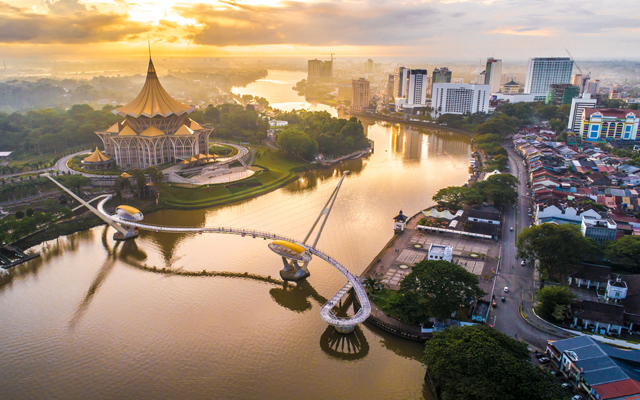
Morning sun lights up the landscape in Kuching, the capital of the state of Sarawak
Against a backdrop of a global business events industry disruption, Sarawak’s industry stakeholders have persevered in maintaining the destination’s presence in the mind of event owners and planners. Business Events Sarawak’s (BESarawak) most prominent move last year was to speak to the hearts of industry partners through the Business Events Build Stronger Communities campaign, which sought to spread messages of hope and positivity across the stricken industry. Through this campaign, yet another was borne – Tribe Legacy Sarawak and the related hashtag #TRIBESPIRIT spun out to bring industry players together.
Positive branding was paired with subvention and other necessary support to enable the development of in-person and hybrid events in a challenging landscape. Three incentive packages were offered for events of varying sizes as well as inaugural editions.
These efforts are paying off, with the Malaysian state raking in 95 confirmed business events in 2020 – an undeniably challenging year for the travel, tourism and business events industry. Most of these events are set to take place from 4Q2021, and are estimated to attract at least RM112.9 million (US$27.6 million) in direct delegate expenditure, RM12.5 million in tax revenue, and create approximately 16,346 jobs in Sarawak.
Big picture developments BESarawak has mapped out seven strategies that will guide the business events community out of the current crisis and into a brighter future. These include intensified destination marketing; domestic and international business development; capacity building; destination development; industry digitalisation; fortified stakeholder collaboration; and increased financial support for business events.
Support never ends Maintaining its collaborative stance to ensure a strong recovery for the state’s business events industry, BESarawak has devised programmes to provide event planners with extra support, future-proof local industry partners, and align business event goals with government aspirations.
A highlight this year is the roll-out of incentive packages in March to ease event execution in a post-pandemic environment. Building multisensory delegate experiences as well as health and safety measures into programmes of tomorrow will be a breeze with new financial support.
The two-pronged Tribe Homegrown Incentivised Package is designed to support Sarawak-based associations and corporate organisations, and cultivate a crop of quality home-grown business events.
The Convention Category, a collaboration between the Ministry of Tourism, Arts & Culture Sarawak and BESarawak, works to advance the local tourism, arts and culture scene through home-grown association meetings. On the other hand, the Corporate Meetings & Corporate Incentives Category is designed to encourage corporate organisations and destination management companies, travel agents and incentive houses, among other subsectors, to organise and host business events.
Further assistance from BESarawak will come in the form of the Tribe Collaborate Incentivised Package to help Sarawak-based industry partners boost their event advertising, marketing and promotional activities and to leverage digital marketing solutions.
A health and safety promise Understanding that health and safety are more than ever a priority for everyone, Sarawak has enforced strict measures at every event, such as compulsory temperature checks, visitor check-ins, food safety measures, reduced visitor touch points, and daily surface cleaning. On its part, BESarawak provides Delegate Wellness Packs as an additional form of health and safety assurance for in-person attendees.
Miri in northern Sarawak provides a sweet escape into nature for meeting attendees, with its star draws being diving among coral reefs, trekking in UNESCO World Heritage Site Mulu National Park and many more
Powering up a talented support structure Sarawak’s successful move towards the future of digital events is facilitated by a proactive community of industry partners who are fast to adapt and apply event technology into hybrid event models. Many have also committed to fortifying their skillsets and elevate the promise of professional guidance for clients.
Altogether, these new initiatives will set Sarawak on course to achieving her 2021 target of 60 secured business events that will drive RM179.2 million in total economic impact and generate 14,224 new job placements.
Benefits of these events could be extended with the help of the Business Events Sarawak Legacy Initiative, a critical tool recognised and supported by the International Congress & Convention Association for establishing a lasting positive impact on the business events industry and society at large.
To apply for Tribe Homegrown (Convention Category), contact Donny Tan; Tribe Homegrown (Corporate Meetings & Corporate Incentives Category), Crystal Phang; for Tribe Collaborate, Jason Tan.
This collaboration will help drive transformation of the aviation and corporate travel sector, support a net-zero emissions future and deliver a new solution to customers in support of their own energy transition and carbon reduction ambitions
American Express Global Business Travel (GBT) and Shell Aviation have collaborated on a plan to increase the supply and use of sustainable aviation fuel (SAF), and accelerate the aviation industry’s pathway towards net-zero emissions (NZE).
This collaboration combines the buying power of airlines and GBT’s corporate business travel customers at scale to drive a step change in production and usage of SAF. This, in turn, would enable airlines and corporations to make progress towards long-term emissions targets.
This collaboration will support a net-zero emissions future and deliver a new solution to customers in support of their own energy transition and carbon reduction ambitions
For many companies, a return to flying for essential business travel is a crucial driver of economic growth. However, options to reduce air travel emissions, in line with wider net-zero emissions targets, are currently limited. Lower or zero-carbon technologies such as hydrogen and electric flight are unlikely to impact at scale until mid-century.
This leaves SAF as the only viable, in-sector, option for reducing emissions in the short- to medium-term. SAF can be made from a variety of feedstocks and a number of different technology pathways. Compared with conventional jet fuel derived from fossil fuels, SAF has the potential to cut lifecycle emissions from aviation by up to 80 per cent. However, today it represents less than 0.1% per cent of aviation fuel used and is produced using one technology type.
Anna Mascolo, president, Shell Aviation, said: “We want to help decarbonise the aviation sector and believe this collaboration could deliver new solutions for our customers to reach net-zero emissions. SAF has incredible potential to drive the decarbonisation of aviation. Even if all publicly announced projects today actually materialise, SAF would still account for just one per cent of the jet fuel market by 2030.
“If the aviation sector wants more SAF by 2025, significant new investments are needed today. This collaboration with GBT aims to create the environment that supports new investment in SAF production and new technologies.”
GBT’s chief executive Paul Abbott added: “Our approach with Shell could provide a turnkey solution for corporations working towards net-zero emissions. We believe aggregating corporate and airline demand is the most efficient way to drive the volume of investment needed to bring change at scale. By working with Shell, we aim to enable corporations and airlines to plot a course towards their own emissions targets, while acting as climate leaders and creating real change.”
Just 10 minutes from Phuket International Airport on the serene northern coast, this 178-key, Bill Bensley-designed resort offers delegates a quiet, tropical paradise steeped in Phuket’s tin-mining heritage
The newly-opened Ritz-Carlton, Bangkok anchors the One Bangkok development with cosmopolitan elegance. Featuring the city's largest ballroom and a spectacular new penthouse suite, it delivers exceptional hardware and deeply authentic, soulful service for business and leisure travellers alike
Behind the imposing, Brutalist concrete that defines Zurich’s Oerlikon district lies a surprising secret. While its exterior honours the neighbourhood’s industrial roots, stepping inside Mama Shelter reveals a vibrant, neon-soaked world that is a far cry from its rigid shell







 Positive branding was paired with subvention and other necessary support to enable the development of in-person and hybrid events in a challenging landscape. Three incentive packages were offered for events of varying sizes as well as inaugural editions.