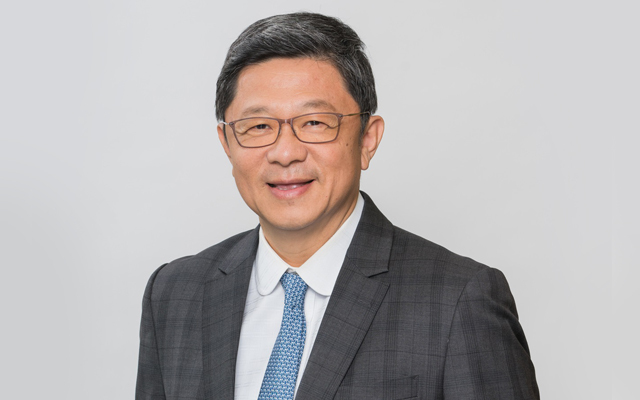
SingEx has appointed Robin Hu as the chairman of SingEx Holdings; previously its deputy chairman.
Hu is currently head, international policy & governance at Temasek International. Before joining Temasek in 2016, he was the CEO of the South China Morning Post Group in Hong Kong. He was also previously the senior executive vice president, Chinese newspapers and newspaper services at Singapore Press Holdings.
Robin Hu
Hu replaces Bob Tan Beng Hai, chairman of the SingEx Board since 2010. During his tenure, Tan oversaw the growth and expansion of SingEx’s venue management business, and the expansion of SingEx’s trade-events organising business such as the Singapore Fintech Festival and Industrial Transformation ASIA-PACIFIC, as well as the establishment of regional offices in Indonesia, India and China.
Indonesia President Joko Widodo’s cabinet reshuffle has produced six new ministers and five new vice ministers, including a fresh minister of tourism and creative economy/head of Tourism and Creative Economy Board.
Sandiaga Uno, a politician and former vice governor of Jakarta with a prominent business background, has taken over from Wishnutama Kusubandio, who has held the post since October 2019.
Sandiaga Uno (right) now leads Indonesia’s tourism and creative economy industries
Speaking during the hand-over ceremony on December 23, Sandiaga revealed that his first assignment from the president was to have the country’s five super-priority destinations ready for tourism business, in terms of infrastructure, cultural attractions, service readiness and talents, within a year.
His second assignment was to create calendar of events, ranging from small scale to national and mega world-class events.
Meanwhile, Sandiaga shared that Indonesia vice president Ma’ruf Amin had emphasised on the importance of making the creative economic sector the engine of tourism development and job creation. As such, product innovations like halal tourism and village tourism were areas of focus for the vice president.
While Sandiaga acknowledged that tourism recovery would be very challenging amid the pandemic, he expressed commitment to the ministry’s development programmes and to overcoming the crisis.
To achieve his goals, he has developed a strategy of technology innovation and will be focusing on health and safety as priority, and will be collaborating with all related parties.
The rapid take up of hybrid events in 2H2020 has not gone unnoticed across Accor’s business events properties in Singapore, Indonesia, and Malaysia.
MGallery Singapore
And as this trend is expected to continue even when borders eventually reopen. As such, Accor is poised to meet this demand with souped-up technology and reimagined spaces that allow for the comfortable hosting of hybrid and virtual events.
Garth Simmons, CEO, South-east Asia, Accor, pointed out that the hotel company now has to be more creative in how they package hybrid events and reimagine events spaces, as well as provide the right technology to allow the “virtual world to blend seamlessly with its live elements”.
“It is also important to have flexible cancellation policies to give people reassurance that should things change, they could cancel or postpone their event if necessary, without a big penalty,” he added.
In light of the pandemic where hygiene is of the utmost priority, Accor also launched ALLSAFE, its cleanliness and prevention label centred around a range of actions including more rigorous cleaning and sanitation, temperature screening, reinforced food safety procedures and social distancing in common areas.
“Event organisers need assurances that enhanced safety measures are in place,” Simmons noted.
For a greater peace of mind, Accor has also partnered with insurance company AXA to offer free tele-medical consultations for all guests staying or meeting onsite.
This hygiene ethos and technology shift will carry on to two new properties opening soon in South-east Asia.
For example, the Pullman Bandung Grand Central in Indonesia will feature two ballrooms, 16 function rooms and meeting technology such as a giant video wall, built-in multiscreen video walls and digital flipcharts.
Meanwhile, MGallery Singapore is set to open next year with 168 keys. It will boast natural furnishings, lush gardens and a cantilevered rooftop pool to evoke a feeling of wellness, which also doubles up as unique spaces. Guests will be able to enjoy health and medical treatments provided by Fullerton Healthcare Group.
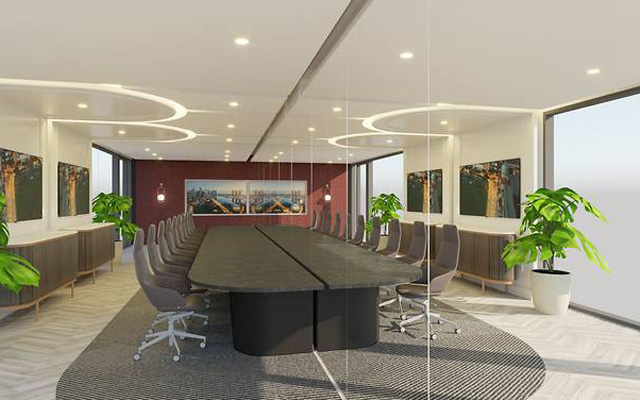
A rendering of the boardroom at Connect@Changi separated with air-tight, floor-to-ceiling windows. (Photo: Connect@Changi)
Singapore will launch a new segregated travel lane, as well as set up several segregated facilities, for business travellers on short-term stays.
The travel lane, or the Connect@Singapore initiative, will be open to a limited number of business, official and high economic value travellers from all countries who are staying in Singapore for up to 14 days.
A rendering of the boardroom at Connect@Changi separated with air-tight, floor-to-ceiling windows. (Photo: Connect@Changi)
Applications for the segregated travel lane will open in the middle of January 2021, with the first travellers expected to arrive from the second half of January.
Travellers who use the segregated travel lane will be housed within dedicated facilities for the duration of their stay, undergo regular testing and observe all prevailing safe management measures.
Travellers will have to stay within their pre-declared travel group of up to five within the segregated facility, and are not allowed to mingle with others. They will also have to abide by all prevailing national safe management measures, and use Trace Together and Safe Entry.
At the segregated facilities, travellers will be able to conduct meetings with local visitors and other traveller groups with safe management measures in place. For instance, there will be floor-to-ceiling dividers separating travellers from locals in the boardrooms.
Travellers will also have to present a valid negative Covid-19 polymerase chain reaction (PCR) test before leaving their home country, and take another PCR test after arriving in Singapore. While in Singapore, they will take antigen rapid tests on days 3, 5, 7 and 11 after their arrival.
Elsewhere, Temasek announced the development of a short-stay facility that would facilitate business exchanges between international travellers and Singapore residents.
Located at Singapore EXPO Halls 7 and 8, the first phase of the Connect@Changi pilot short-stay facility will launch in 1Q2021.
The first phase will see more than 670 guestrooms and about 170 meeting rooms that can accommodate meetings of about four to 22 attendees. When fully constructed in mid-2021, the facility will have more than 1,300 guestrooms and about 340 meeting rooms.
Connect@Changi is developed by a Singapore consortium led by Temasek, made up of The Ascott Limited, Changi Airport Group, Sheares Healthcare Group, SingEx and Surbana Jurong.
Stringent protocols and procedures will be in place to ensure the safety of guests and employees. Contact between guests and frontline staff will be minimised, with self-service meeting rooms and no-contact meal delivery.
Entrances, exits and ventilation systems for both guests and Singapore-based visitors will also be separated, and travellers can meet Singapore-based individuals and travellers from other groups in meeting rooms outfitted with air-tight glass panels.
Room charges at Connect@Changi for a stay under three days start from about S$390 per night (US$292) for an Executive room and S$430 per night for a Premier room. This includes the cost of testing, three meals per day and transfer to and from the airport.
Hybrid events are helping to keep international engagement in the interim; Tokyo pictured
Hotels in Japan, particularly Tokyo, are seeing encouraging green shoots in the business events sector, despite current restrictions on international travel.
Many share that they have hosted more events or secured more bookings in recent months, mostly for small-scale meetings and F&B functions for the domestic market, and hybrid events.
Hybrid events are helping to keep international engagement with travel restrictions still in place; Tokyo pictured
For the Sheraton Grande Tokyo Bay Hotel, it has seen an uptick in sales since the October launch of its “Connect with Confidence” initiative, which applies vigorous anti-virus countermeasures by Marriott International and the local government to help prevent the spread of Covid-19.
Kate Coughlan, the hotel’s director of international sales, says hybrid events have taken precedence for short-lead events in 4Q2020 and 1Q2021, “allowing local guests to attend and connect with events happening simultaneously throughout key Asia Pacific locations in order to create a large-scale event that would have previously been a live attendee event in one venue.”
Business tracks, or reciprocal green lanes, launched in recent months to facilitate short-term essential business between Japan and a number of other Asian countries have also brought board meetings to the hotel.
Coughlan considers such steps “a positive start to opening up to the wider business community on a global scale for future MICE business.”
The resumption of large-scale events in the summer following the easing of the Japanese government’s limits on capacity, has also helped bring events back to large venues.
The Osaka Convention and Tourism Bureau reports having supported exhibitions and events to come to Osaka in recent months. It is also receiving a growing number of inquiries from corporates based in Japan and overseas.
Asako Shiomi, a spokesperson of the Osaka Convention and Tourism Bureau, pointed out that domestic exhibitions and hybrid events are returning with vigour.
Hotels and other venues are also recognising that, until in-person international business events fully resume, domestic and hybrid events will play an important role in sustaining their operations, prompting them to be increasingly flexible with meeting clients’ needs.
ICCA’s regional director Asia Pacific, Noor Ahmad Hamid, moderated the session
Even if borders reopen and travel restrictions are lifted, it will take some time for people to be confident enough to travel to attend business events abroad, with pre-pandemic travel levels still a reach.
This was agreed on by panellists speaking on the topic “Facing risks head on – preparing for live association meetings in a time of crisis”, a session held during the recently-concluded BE@Penang, organised by Penang Convention & Exhibition Bureau. In its fifth edition, the event was held virtually.
ICCA’s regional director Asia Pacific, Noor Ahmad Hamid, moderated the session
Regunath Kandasamy, secretary at the Neurosurgical Association of Malaysia, related an example of delegates needing to transit through a few airports before arriving at their final destination, may be apprehensive over the health risks they are exposing themselves to just to attend at event.
And while he acknowledged that virtual and hybrid events are the way forward for associations and other business events, it has its poros and cons. While going virtual will have a wider audience reach and saves time and costs, it could also result in “online fatigue” and technical disruptions.
But eventually, face-to-face meetings will return. However, to reinstil confidence in a destination for international MICE events, Regunath pointed out that the destination would need to have business events SOPs in place and adhered too. The government should also have a proven record for rapid contact tracing to control the spread of the Covid-19 virus.
Tourism New Zealand’s international business events manager, Leonie Ashford, added that the onus fell on organisers and CVBs to convince potential overseas delegates that they are taking all the necessary health and safety precautions.
However, Mona Abdul Manap, founder and CEO of Place Borneo, a PCO headquartered in Kuching, Sarawak, said she did not expect face-to-face international business events to return to Malaysia before 2022.
This is because some of her clients are apprehensive about planning for events due to the uncertain nature of the MICE industry in Malaysia, where lockdowns were lifted and later reimposed as Covid-19 numbers rose.
Mandarin Oriental Hotel Group has appointed Martin Cramer as general manager of the Mandarin Oriental Pudong, Shanghai.
A seasoned hotelier with a hospitality career spanning more than 30 years, Cramer was most recently in charge of the Emirates Palace in Abu Dhabi, which became part of the Mandarin Oriental portfolio on January 1, 2020.
Prior to that, Cramer spent three years with the Grand Millennium Muscat as area general manager, where he supervised the operation and growth of the company within the Sultanate of Oman, growing its portfolio from two to five properties.
He has also held managerial roles at Sheraton Abu Dhabi Hotel & Resort, Sheraton Oman Hotel and Sheraton Pretoria Hotel & Towers.
Destination Gold Coast (DGC) has appointed Patricia O’Callaghan as its new CEO, effective since November 23.
Set to commence her duties in early February 2021, O’Callaghan will build on the current strong position of DGC and the City of Gold Coast, through a focused approach on the company’s future strategies and plans.
Stepping into the role during an unprecedented time, she will work with stakeholders to rebuild the city’s visitor economy, with a focus on attracting the domestic crowd ahead of international recovery.
That will entail ensuring there is a sharp focus on the continued development of experiences and infrastructure investment to optimise the benefits for the city’s businesses, residents, workers and other key stakeholders.
Previously, O’Callaghan was the CEO of Townsville Enterprise over the past six years, where she had been instrumental in attracting major investment to the region and achieving economic growth for her hometown.
South-east Asia has become an increasingly important market for Switzerland, with a noticable increase in corporate groups from the region choosing it for their incentives.
An insurance company from Thailand that chose Switzerland for its reward programme, said that the “dream destination” was one of the safest and cleanest in Europe. One of its cities, Lausanne, also holds a special place in their hearts.
Sledding down a Swiss mountain makes for a memorable incentive moment
Its spokesperson added: “Lausanne is where Thailand’s beloved King Rama 9 studied and lived for many years. We could not deny selecting Lausanne as a destination to take our top agents there to follow in his footsteps.”
Over in Indonesia, Ary Leonardo, vice president MICE from AntaVaya, spoke of how accommodating suppliers were, when it came to adhering an incentive group’s dietary requirements.
“The group was extremely impressed how restaurants, even the remote mountain ones, were able to come up with delicious Muslim-friendly meals. The highlight for the group was a gala dinner that showcased Swiss traditions and cuisine in a farm near Zurich,” he shared.
But a farm-style gala dinner is just a small part of the rich variety of landscapes and cultures that a five-day programme can pack in. It takes only four hours to cross the country from East to West, and three hours from North to South.
There is also a range of social programmes available, such as skiing in the morning, cow-milking in the afternoon, and a evening dinner cruise.
Backing the country’s myriad offerings are Switzerland Convention & Incentive Bureau’s and its partners’ varying support policies.
For example, groups of 300 pax will be given access to an additional airport counter for tax refunds, while a 500-strong group will be provided with an award ceremony with folklore music group as entertainment.
Meanwhile, Lake Lucerne Navigation Company offers a 10 per cent discount on charter cruises excluding F&B and additional services, while over in Lake Geneva, Glacier 3000 offers a free Snowbus ride on the glacier.
In light of the pandemic, Switzerland’s tourism suppliers have also implemented a Clean & Safe protocol.
Reto Kaufmann, Kuoni Tumlare’s vice president sales and operations, South-east & South Asia, summarised: “Switzerland offers MICE organisers from Asia a value for money proposition. Critical supply such as hotels, transportation, venues, F&B as well as entertainment can be found in a wide quality and price range, which is key to building enticing incentive programmes.”
Business events leaders in Indonesia and beyond will come together for an online panel on December 15 to discuss how regional and local trends, challenges and opportunities will shape strategies to get the industry up and running once more.
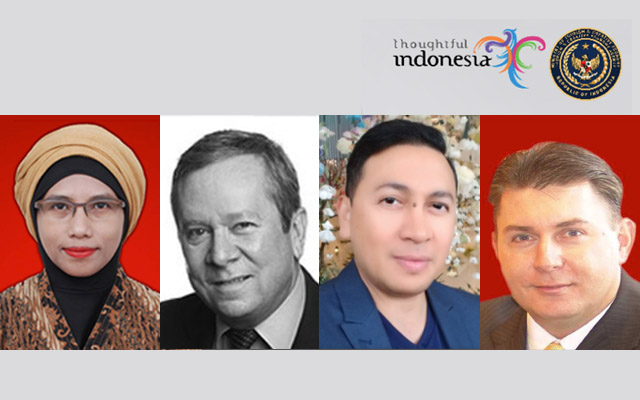
(From left) Ministry of Tourism and Creative Economy of the Republic of Indonesia’s Masruroh; GainingEdge’s Gary Grimmer; Bali Convention and Exhibition Bureau’s Levie Lantu; and Jakarta International Expo’s Ralph Scheunemann are speakers on this panel
The event, branded under Travel Spark by TTG Asia Media, a new initiative to support trade players in their efforts to spark off travel and events desire, and speed up business recovery, will be hosted by Mimi Hudoyo, editor-Indonesia of TTG Travel Trade Publishing, TTG Asia Media.
She will be joined by panellists Masruroh, director of MICE, Ministry of Tourism and Creative Economy of the Republic of Indonesia; Gary Grimmer, executive chairman, GainingEdge; Levie Lantu, CEO, Bali Convention and Exhibition Bureau; and Ralph Scheunemann, chief marketing director, Jakarta International Expo.
The event is free to attend, but comes with limited seats.
The newly-opened Ritz-Carlton, Bangkok anchors the One Bangkok development with cosmopolitan elegance. Featuring the city's largest ballroom and a spectacular new penthouse suite, it delivers exceptional hardware and deeply authentic, soulful service for business and leisure travellers alike
Behind the imposing, Brutalist concrete that defines Zurich’s Oerlikon district lies a surprising secret. While its exterior honours the neighbourhood’s industrial roots, stepping inside Mama Shelter reveals a vibrant, neon-soaked world that is a far cry from its rigid shell
A polished urban retreat designed for business travellers, Hyatt Regency Kuala Lumpur at KL Midtown combines thoughtful design, seamless service, and exceptional facilities.












Indonesia President Joko Widodo’s cabinet reshuffle has produced six new ministers and five new vice ministers, including a fresh minister of tourism and creative economy/head of Tourism and Creative Economy Board.
Sandiaga Uno, a politician and former vice governor of Jakarta with a prominent business background, has taken over from Wishnutama Kusubandio, who has held the post since October 2019.
Speaking during the hand-over ceremony on December 23, Sandiaga revealed that his first assignment from the president was to have the country’s five super-priority destinations ready for tourism business, in terms of infrastructure, cultural attractions, service readiness and talents, within a year.
His second assignment was to create calendar of events, ranging from small scale to national and mega world-class events.
Meanwhile, Sandiaga shared that Indonesia vice president Ma’ruf Amin had emphasised on the importance of making the creative economic sector the engine of tourism development and job creation. As such, product innovations like halal tourism and village tourism were areas of focus for the vice president.
While Sandiaga acknowledged that tourism recovery would be very challenging amid the pandemic, he expressed commitment to the ministry’s development programmes and to overcoming the crisis.
To achieve his goals, he has developed a strategy of technology innovation and will be focusing on health and safety as priority, and will be collaborating with all related parties.