Asia/Singapore Friday, 10th April 2026
Page 525

TCEB appoints new Singapore rep

0

Thailand Convention and Exhibition Bureau has appointed Thread Asia as their representative in Singapore.

They will help to facilitate event planners and organisers to deliver the best possible meetings and incentives programmes to Thailand.

Thread Asia is a boutique sales and marketing representation company in Asia for hotels, resorts, destinations, and DMCs.

Thailand wins hosting rights for next year’s Travel Blog Exchange

0
Thai Hotel Association's Kongsak Khoopongsakorn; Phuket City's mayor Somjai Suwansupana; TCEB's Chiruit Issarangkun Na Ayuthaya; Phuket governer Narong Woonciew; TAT's NIithee Seeprae; TCEB's Nichapa Yosswee; Phuket Tourist Destination's Bhummikitti Ruktaengam; and TBEX's Rick Calvert

Thailand has won the bid to host blogger-focused event, Travel Blog Exchange 2021 (TBEX Asia 2021), from October 20-22, 2021, in Phuket.

This marks the country’s first winning event since the beginning of the Covid-19 pandemic, and was the result of a partnership between the Thailand Convention and Exhibition Bureau (TCEB), Phuket Province and Tourism Authority of Thailand (TAT).

From left: Thai Hotel Association’s Kongsak Khoopongsakorn; Phuket City’s mayor Somjai Suwansupana; TCEB’s Chiruit Issarangkun Na Ayuthaya; Phuket governer Narong Woonciew; TAT’s NIithee Seeprae; TCEB’s Nichapa Yosswee; Phuket Tourist Destination’s Bhummikitti Ruktaengam; and TBEX’s Rick Calvert

Phuket was selected as the host city of the TBEX Asia 2021 under the concept of “Diversity of the South, Phuket & Beyond.” As such, TBEX Asia 2021 will underline arts, cultural diversity, event venues, food, and ways of life of not only in Phuket, but also the whole southern Thailand region.

The city is currently preparing for tourism in the new normal. Businesses are upgrading their sanitary standards to comply with the requirements laid down by the Ministry of Tourism and Sports and the Ministry of Public Health.

A multi-screening process is conducted at checkpoints in collaboration with the provincial public health officials, while safety and security measures for water, air and land transport have been heightened to assure travellers that Phuket is a safe destination.

Chiruit Isarangkun Na Ayuthaya, TCEB President, said: “We are going to show the world that Thailand is ready to come back, after Covid-19 has passed, to host international events and Phuket is ready to serve as a festival city.”

To boost the confidence of media and international bloggers, TCEB, TAT, and Phuket will also be organising a Media and Blogger Inspection Trip from October 6-8, 2020.

Polaszewski-Plath takes over the helm at Interprefy

0

Annett Polaszewski-Plath will be joining Interprefy as its CEO, effective November 9, 2020.

Polaszewski-Plath will take over from Kim Ludvigsen, who founded the firm in late 2014 and led the business for six years, moving Interprefy from a start-up to a global leader in multi-language online and hybrid event solutions.

Annett Polaszewski-Plath

Prior to joining Interprefy, she most recently led the DACH division of global ticketing and event tech platform Eventbrite. Polaszewski-Plath has also held multiple commercial leadership roles in global tech companies like eBay and PayPal.

Acting CEO Ludvigsen will transition from the role of CEO and continue to serve Interprefy as vice-chairman of the board, leading strategic partnerships as well as business development programs.

Four Points by Sheraton opens 600-key resort in Patong

0
King Room

Four Points by Sheraton has opened an outpost in Patong Beach, one of Thailand’s top tourism destination.

Overlooking the Andaman Sea, Four Points by Sheraton Phuket Patong Beach features 600 guestrooms and suites, including pool access rooms with private terraces, as well as Ocean View suites offering sweeping vistas of the beach and sea.

King Room

With 1,200m2 of flexible function space including two ballrooms and over 1,000m2 of outdoor events space, the hotel offers venues for all types of corporate events. The Akara Grand Ballroom, foyer and pre-function area can cater up to 500 people, while the Kathu Junior Ballroom can accommodate up to 170 delegates. Seven other meeting rooms can be adapted for a range of function types.

There are five dining venues on-site: Chao Leh Kitchen, an all-day restaurant with a focus on Phuket cuisine, along with pan-Asian and Western favourites; Sears & Co., offering a casual dining experience with indoor and alfresco seating; as well as The Deck Beach Club Patong for light bites and signature cocktails. Alternatively, there is also the Lobby Bar and the Pool Bar, the latter featuring a seven-seat swim-up counter.

Other facilities include The Deck Beach Club Patong, 24-hour gym, a trio of swimming pools, including a saltwater lagoon pool.

Business travellers with their young ones in tow will be able to keep them entertained at the Little Sea Gypsies Kid’s Club, where activities range from cooking classes to face painting, kids’ boot camps and more. There are also Family Suites, which have a dedicated kids’ room including boat beds and children amenities.

Tech adoption crucial for TMCs

0

The pandemic has catalysed technology upgrades and adoption among TMCs that are looking to be better prepared for the return of business, observed industry leaders in business travel.

Gloria Slethaug, CEO, Connexus Travel, noted that many TMCs are “going beyond booking tickets, with many doubling down on technology investments and reworking their operations” during this lull period.

From left: Connexus Travel’s Gloria Slethaug, and Reed & Mackay’s Jane Warren presenting at the ITB 2020 session

Jane Warren, managing director, Reed & Mackay Travel Singapore, opined that the technology rush could have stemmed from the desire of employers to know where their staff are at any given time in today’s volatile and risky environment.

“Whether it’s a change in the country’s status due to Covid-19, natural disaster or political unrest, a TMC can provide data to ensure the traveller’s safety throughout, as well as locate and communicate with impacted employees,” Warren elaborated.

Technology can also provide pre-trip risk assessment; point-of-sale intelligence on Covid-19 safety measures for both air and hotel; dynamic trip alerts; and multi-channel communication to help corporate travellers make informed choices.

At the same time, TMCs can rely on technology to track their carbon emissions and enforce offset programmes should reduction not be possible.

And in fragmented Asia-Pacific, technology could smoothen operations, opined Slethaug.
She elaborated: “The region’s business travel markets – China, Australia, Japan, Singapore and India, for example – all operate differently (in terms of) technology systems, GDS, fare structures, and language capabilities.”

Citing further examples, Warren said that Singapore is “slightly behind the curve in adopting technology for business travel programmes” while Australia already has online adoption due to its domestic market. To better navigate the different business travel landscape in this region, she encouraged companies to rely on a TMC that is pro-technology.

Slethaug added: “More companies are expecting their corporate travel programme to assist with their business assessments in the future, so TMCs should rethink how to use the right technology, that’s relevant to the local market, to deliver extraordinary services for their clients.”

Live exhibitions are here to stay: UFI

0
It is encouraging to know that live events are still the preferred method of networking and conducting new business

Exhibition visitors and exhibitors overwhelmingly prefer live events, according to the first edition of the Global Recovery Insights 2020 report by live event research specialists, Explori, in partnership with UFI, the Global Association of the Exhibition Industry, and supported by SISO, the Society for Independent Show Organizers.

The findings, based on more than 9,000 responses from across 30 countries, show that both exhibition visitors and exhibitors continue to prefer live events, and that there is no evidence of a major shift away from face-to-face meetings. Although the intended frequency of participation has dropped for both groups, this is only marginally the case for exhibitors, indicating a clear desire among exhibiting companies to return to on-site showfloors.

It is encouraging to know that live exhibitions and business events are still the preferred method of networking and conducting new business

The social aspect of events remains a critical draw for both groups, who rely on live events to create connections within their communities. Study participants, globally, believe that this aspect of events cannot be served effectively by digital events. There is a clear message from visitors that the quality of exhibitors is paramount, while exhibitors are now also valuing visitor quality, over quantity.

There are signs that budgets will also be restored quickly, with 53 per cent of exhibitors expecting their show investments to return to pre-COVID-19 levels within 12 months, while 28 per cent report that their investments will return as soon as tradeshows start running again. While funds allocated to live events have been put on hold, overall marketing budgets were yet to see severe cuts as of late summer.

Both visitors and exhibitors will look at their previous experiences when deciding to return to a show. They will turn to show brands they trust to deliver both robust safety measures, and, perhaps more importantly, a high-quality audience.

“This study delivers important insights and reassurance to organisers and the wider industry, as they plan ahead in these uncertain times. It underlines the clear preference and importance of being able to meet in-person to do business, and the desire for both visitors and exhibitors to again meet face-to-face. It also underlines the negative impact all industries are experiencing as a result of industry events not going ahead,” said Kai Hattendorf, CEO and managing director at UFI.

The full report will be shared with UFI and SISO members in coming days.

Melbourne’s scientific sector scoops up two conference wins

0
MCEC (pictured) will be hosting both scientific conferences

The Australian city of Melbourne has won host city bids for the International Mass Spectrometry Conference 2024, and International Symposium on Lepton and Photon Interactions 2023.

Combined, these events will deliver an estimated economic contribution to the state of A$13.2 million (US$9.4 million), 6,650 hotel room nights, and drive bring 1,750 delegates to the city. Both events will be held at the Melbourne Convention and Exhibition Centre.

MCEC (pictured) will be hosting both scientific conferences

Physicists from around the world will gather at International Symposium on Lepton and Photon Interactions 2023 to discuss the latest advancements in particle physics, nuclear physics, and astrophysics. Melbourne’s strong particle physics community played a critical role in winning this event.

The International Mass Spectrometry Conference 2024 will provide a forum for scientists and academics to discuss research in their field. It will be the first time the conference has been held in Australia in its 66-year history.

Mass spectrometry is used in many fields including biotech where Melbourne leads the nation as home to more than 40 per cent of Australia’s biomedical researchers, 650 biotech companies, and 10 major medical research institutes.

The conferences were secured by the Melbourne Convention Bureau with support from the Victorian State Government and Tourism Australia’s Business Events Bid Fund Program.


Leading by example

0

Hot idea
Consider a hybrid event for on-site delegates to network in-person if the situation and country allows for it, as opposed to an entirely virtual endeavour


Brief
The APACMed (Asia Pacific Medical Technology Association) Virtual Forum was designed to cover topics from innovative technological advancements in the healthcare industry to the larger impact of US-China relations on the entire medical supply chain.

This year’s event echoed APACMed’s objective of obtaining greater engagement each successive year, with not just healthcare professionals and industry representatives, but also a large number of government representatives and start-ups; and meet its target focus to share learnings and to grow as a community to achieve its mission to continuously improve standards of care for patients, and to jointly shape the future of healthcare in Asia-Pacific.

Highlights
The event featured five global CEO keynotes, as well as 50 conference sessions (of which 20 per cent were about digital health solutions). Over 75 trade associations and industry regional leaders also shared their leadership journeys.

According to Maryline Marquet, vice president, operations Asia-Pacific, APACMed, most countries wanted to share their opinions and insights to pave a common working path forward, with this year’s virtual road trip on digital innovations showing what the industry will continue to see moving forward, be it AR, 3D, digital therapeutics, remote monitoring or telehealth.

Challenges
This was not only an unprecedented event for APACMed but the industry as a whole. This meant that APACMed had to learn on the job, as it was the forerunner to attempt a full-day hybrid conference.

Marquet elaborated: “We had a whole new set of requirements due to the virtual aspect of the conference. Even though all of us have used Zoom for months, when you have people connecting from around the world at the same time, panellists who have never met and who need to build a rapport virtually, you need to prepare relentlessly.

“Everything needs to be rehearsed, briefed technically, and tested comprehensively. In short 130 speakers meant 130 briefs, which mean 130 connections, and if the sound disappears or any technical glitches occur, you have to be prepared to activate Plan B to ensure the audience doesn’t disengage.”

Plan B meant that APACMed had half of its content pre-recorded in case of any technical errors in the live sessions. If anything went wrong, the pre-record session would be played across multiple tracks.

Marquest shared that one of the live roundtable sessions ended up going on for much, much longer than the delegated time because of the engaging conversation.

She added: “But we couldn’t get them to stop since it was a virtual event and we didn’t want to interrupt the active discussion.”

Marquest further revealed that participation was maintained throughout the day, with attendees staying online from 09.00 to 17.00.

The key takeaway, Marquet commented, is that a virtual conference is beyond any doubt a worthy alternative in the current climate and probably the future.

“The entire morning was attended by over 90 per cent of registered participants and as the content continues to be available for 30 days post-event, we continue to see daily viewers on the platform,” she shared.

It shows the eagerness in people to take time and digest the information shared, she pointed out.

Event APACMed Virtual Forum
Organiser Asia Pacific Medical Technology Association (APACMed)
Date September 24, 2020
Attendance 1,450 attendees from 34 countries, organised in Singapore as a hybrid event with 50 studio attendees

A recovery dream yet fulfilled

0

Early predictions by industry observers that meaningful travel would come into favour as tourism recovers, inspired by reflections on life and responsibility to Mother Nature during the lockdown, are turning out to be a dream that is yet to be entirely fulfilled.

Desire for meaningful travel to support responsible tourism development has been weaker than predicted

In the third article by TTG Asia Media for the PATA Crisis Resource Center, TTG Asia and TTGmice reporters hear from Asian travel and tourism professionals that domestic travel appetite today is being whetted by self-drive opportunities, accessible destinations, island resorts in particular, and attractive promotions. Desire for meaningful travel to support responsible tourism development has been weaker than predicted.

While sustainable tourism development may take a backseat to economic recovery for some industry stakeholders struggling with the current business fallout, leading travel and tourism organisations urge destinations and suppliers to look ahead and make the effort for a sustainable tourism reset.

Will sustainability really be the new tourism? is now available at the PATA Crisis Resource Center.

Connecting the travel dots

0
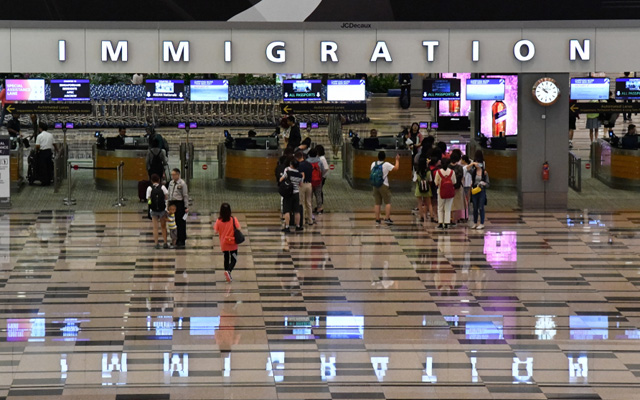
Changi Airport's Terminal 3 would be buzzing with passengers in better times

For many business travellers before the pandemic, going on a business trip was as easy as grabbing your cup of everyday coffee. Something we had perhaps taken too much for granted. On a recent trip, I had to take due to personal family reasons, I experienced the journey in a completely unfamiliar environment, which made me wonder how the new norms for future travel would be like.

This is by far the longest time I have gone without boarding a plane in 15 years, and like a lot of you, I am extremely passionate about travelling. This flight experience was one that I may never experience again in this lifetime.

Changi Airport’s Terminal 3 would be buzzing with passengers in better times

Since April, there have been no flights and it was impossible to fly between Singapore and New Zealand. On June 9 and 14, Singapore Airlines resumed their Singapore-Auckland and Singapore-Christchurch routes respectively.

Only New Zealand citizens, Permanent Residents, or those on pre-approved essential travel permits (health workers etc) can enter the country and all arriving passengers would be placed in a government-funded two-week isolation stay at a hotel.

Checking out the check-in experience
The itinerary for my trip was Singapore to Christchurch at 23.00 on a Sunday night. I decided to arrive earlier at Changi Terminal 3 (20.45) as I expected there may be additional check-in requirements.

The airport terminal was like a ghost town. The few staff who were around seemed genuinely excited to help and I guess for many of them, any sign of return to travel is welcome! There were two staff manning the check-in desks and with no queue, it only took a total of five minutes to get my boarding pass. When I asked if there were many passengers on the flight, the staff said there should be “less than 15”. I breezed through immigration with no further questions asked.

At the boarding gate, there were eight to nine staff at security point. Everyone was very enthusiastic with a lot of friendly questions! When I settled into the gate lounge, there was only one other person with me, and the number of passengers slowly grew to five. This will probably be the only time I get to enjoy experiences onboard an A350 with only five passengers!

Onboard experience redefined
Onboard, there was approximately 13 staff (including four captains in the cockpit). Every crew member was wearing a mask and we were each given a small care pack that contained a bottle of sanitiser, two wipes and a mask, to be worn at all times during the flight.

Meals were served almost as normal with two choices, except that drinks were served at the same time, on the same tray and not separately as it had been done in the past, in order to minimise contact with passengers. The crew was extremely attentive and in a conversation with one of them, she said this was her first time back to work in three months. In fact, almost everything looked the same onboard, except the lack of hot towel service, inflight magazines and other reading collaterals, as well as passengers!

The long-awaited arrival into Christchurch
Our plane was the first international flight into Christchurch since March. When we arrived, there were a lot of excited staff and Ministry of Health officials waiting to greet us. Temperatures were taken and everyone was marked with an ‘A’ (strict quarantine for those who displayed Covid-like symptoms) or ‘B’ (managed isolation in a hotel with no symptoms). Marked with a ‘B’, I boarded a bus that was taken to Commodore Hotel where I remained isolated for 14 days. Quarantine is mandatory and government-funded for all incoming passengers into New Zealand.

During my quarantine, I was tested twice for Covid-19 – once on day three and again on day 12. I was allowed to take walks between 09.00 and 16.00 everyday within the fenced perimeters throughout. Masks were to be worn at all times, and no one was allowed to leave the premises.

On day 14, I had a final health check and was given a departure time. This was subject to being tested negative for both the Covid-19 tests I took during the quarantine (those who were tested positive during the 14-day quarantine would be immediately transferred to the nearest hospital).

During check-out, I was escorted out of the hotel by a military personnel before finally being released into freedom. For the first three days upon release, I received daily calls from the Ministry of Health to monitor my condition and ensure that I was feeling well with no symptoms.

This is certainly a once in a lifetime experience for me, and it is a big change from what myself and many regular business travellers are used to.

However, I believe that with adequate preparation in safety and procedures, along with the right expectations and mindset, business travel in a new normal will become possible again, especially as we start to see border restrictions slowly being lifted across many destinations around the world.

The return journey to Singapore
After an extended break to spend time with my family in New Zealand, it was time to book my return flight to Singapore. The application for return to Singapore was simple and quickly approved on the first try. I believe returning from the South Island of New Zealand made this process easier as the South Island had no Covid community cases for over six months.

My return flight was on a Singapore Airlines A350 on September 8 from Christchurch to Singapore. With a departure time of 10.50, I arrived at Christchurch airport at 09.00 to a very quiet check-in area. Other than having all airport staff in masks and doing a temperature test before being allowed to proceed for check-in, the process was quite straightforward.

I was required to present my printed copy of the approval to re-enter Singapore which was thoroughly checked before airport officials checked me in. The heath care kit containing sanitiser, wipes and mask was given to me at check-in this time instead of onboard.

I was surprised to hear that the flight was reasonably busy due to the repatriation of 130 Russian fishermen via Singapore who were booked in economy. At that point, I was highly relieved to find my points upgrade had come through to Premium Economy so I could avoid the crowd!

There were only eight passengers in Premium Economy, and I was fortunate to have a row of three seats to myself. Wandering back through the economy cabins gave me a sense of normality to being back in the air again as it was interesting to note there was no social distancing in economy. The cabins were buzzing with excited chatter from the jovial fishermen who were finally able to return home after what I presumed would have been months at sea.

On our arrival into Changi airport, we remained seated for several minutes while a group of health officials entered the aircraft to ensure passengers in transit were properly tagged before disembarking. Those of us who indicated Singapore as the final destination disembarked first and instructed to make our way directly to the arrival area.

In arrivals, we had to complete an electronic health declaration. This could be done via the SG Arrival Card (SGAC) e-service via a downloadable app. The app was easy to navigate and questions included details about your recent travel including all countries and towns visited. There were several assistants on standby to assist travellers through this process. Once completed, you are given an electronic pass status on the app which must be shown at the immigration desk before being whisked away for the Covid-19 test.

I was led to an immigration waiting area where I had to show my electronic receipt for the test (you can pre-pay for this before arrival into Singapore) and given a green sticker before being led to an area for testing. My temperature was recorded before being ushered into a small curtained-off area where the test was performed.

This was my third Covid-19 test and it does not get more comfortable over time! With my eyes stinging, I was then led back through immigration and allowed to collect my luggage and return directly home where I was to stay put until my result was sent electronically. This happened the next afternoon and I was thankfully negative, which meant that I could take a walk around the park within two days after arriving in Singapore*.

Overall, the travel experience was incredibly well-supported and as a New Zealander residing in Singapore, I was lucky to have had a simple and straightforward process for the travel journey.

Still, I couldn’t help thinking to myself as the cotton swab was pushed up into my nostril, with stinging eyes and jetlagged after a 10-hour flight – is this what travel looks like now, in its easiest state? And if so, how many people will volunteer to return to the skies frequently if allowed?

It is a tough question and one that would no doubt be answered differently by everyone. I have been in the travel industry for 15 years working in different cultures around the world. Having experienced the joy of sitting next to an adult who is taking his very first ever flight, watching his expression as we took off with hands gripped tightly on the edge of the seat, his eyes expressing the absolute wonder of it all, today still feels like a privilege to me and is a scene that will forever be etched vividly in my mind and heart.

So my answer is simple. I look forward to being able to return to the skies freely no matter what the departure and arrival process looks like. For me, the slight discomfort and additional processes will be well worth it.

*The above quarantine regulations in Singapore are accurate at the point when this article was written. New Zealanders who have obtained approval to return to Singapore and fulfilled all criteria are tested at Changi Airport on arrival; they are isolated at home until their test results are given and provided negative, only then can they move about freely.


Vicki Parris has extensive experience in numerous leadership positions in the 14 years she has been with Flight Centre Travel Group. Her knowledge in operations spans across New Zealand, India and South-east Asia.

Reviews

The Ritz-Carlton, Bangkok

The newly-opened Ritz-Carlton, Bangkok anchors the One Bangkok development with cosmopolitan elegance. Featuring the city's largest ballroom and a spectacular new penthouse suite, it delivers exceptional hardware and deeply authentic, soulful service for business and leisure travellers alike

Mama Shelter Zurich

Behind the imposing, Brutalist concrete that defines Zurich’s Oerlikon district lies a surprising secret. While its exterior honours the neighbourhood’s industrial roots, stepping inside Mama Shelter reveals a vibrant, neon-soaked world that is a far cry from its rigid shell

Hyatt Regency Kuala Lumpur at KL Midtown

A polished urban retreat designed for business travellers, Hyatt Regency Kuala Lumpur at KL Midtown combines thoughtful design, seamless service, and exceptional facilities.