Asia/Singapore Wednesday, 8th April 2026
Page 558

Vakkaru Maldives appoints new DOSM

0

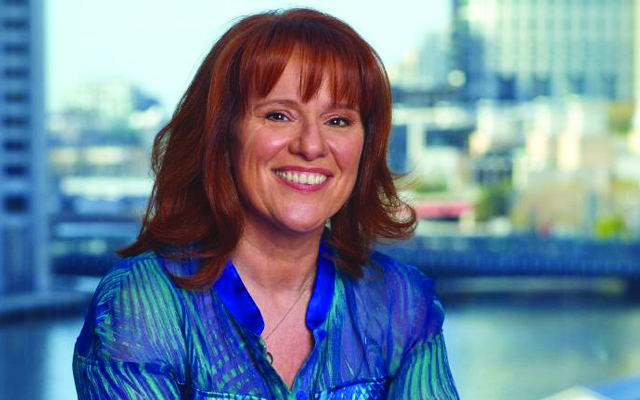
Janice Tan has joined Vakkaru Maldives as director of sales and marketing.

The hospitality veteran has been in the industry for 20 years, having first embarked on her career at the Mandarin Oriental.

Her experience includes launching luxury resorts in the Maldives including Anantara Naladhu, during her tenure as Anantara Group’s cluster director of public relations; as well as Velaa Private Island and Accor’s Raffles Maldives Meradhoo, where she served on both occasions as director of sales and marketing.

She also spent time as regional director of sales and marketing for Como Hotels and Resorts’ Como Maalifushi and Como Cocoa Island.

She is currently based in both Singapore and the Maldives.

Destination Rotorua moves into virtual familiarisation

0
A surprise package from Rotorua was sent to clients in Sydney

Industry familiarisations of the virtual kind are expected to gain momentum after Destination Rotorua successfully hosted its first virtual destination showcase for targeted, high-value clients.

The activity was a collaboration between Destination Rotorua and The Virtual Famil (TVF), which was created by three veteran event and tourism managers based in Australia and New Zealand.

A box of surprises from Destination Rotorua was sent to luxury incentive agents based in Sydney

“We were thinking of innovative solutions…to stay in touch with our clients,” said Katie Neeley, sales coordinator for business events at Destination Rotorua. “Obviously we were doing webinars but when TVF approached us with this new idea, it was perfect timing and very different to your typical Zoom meeting or webinar that we’re all probably a bit fatigued with by now”.

Held earlier this month, the familiarisation experience was sent to a small group of luxury incentive agents in Sydney, from a list curated by TVF.

Participants received an interactive goodie box the day before their online Zoom session which included products from Polynesian Spa, a bottle of wine from Rotorua’s Volcanic Hills, and cooking ingredients.

“I suppose that served as an element of surprise (that you normally get with familiarisations) because they didn’t know exactly what these things were going to be used for until they were actually on the familiarisation,” said Neeley.

Once online, the 30-minute experience started with a Maori greeting followed by a live wine tasting, a cooking demonstration hosted by Terrace Kitchen using the ingredients in participants’ boxes, and an overview of accommodation and other product offerings.

This pilot experiment has led to enquiries for similar events in the absence of on-the-ground experiences, which have been on hold since Covid-19 lockdowns crippled most of the airline and travel industry.

Neeley shared that clients went on to cook, using the ingredients from the goodie box, and pairing their food with the complimentary wine, and finally posting their experience on social media.

“(It) was cool…to see them still thinking about the experience after the event was over,” she remarked, adding that the positive feedback has encouraged Destination Rotorua to consider hosting more virtual familiarisations.

“We’re definitely thinking about expanding this for our businesses events team. Our international trade team is looking into that as well; (we’re) just thinking about the different ways we can coordinate this,” Neeley continued, adding that tailored experiences are also being considered for the Asian market.

Meantime TVF co-founder Ganessan Suppiah told TTGmice that “solid leads” have emerged from Destination Rotorua’s virtual familiarisation, with more CVBs enquiring about organising similar experiences.

TVF, which provides a full production team to manage all live feeds for guests and presenters, is also hoping to expand to Asia.

“Asia would be a key and very important region both as participants and as destinations with so many iconic and bespoke products,” said Suppiah.

“We expect virtual familiarisations to be the new norm even after Covid-19 restrictions are lifted and with Asia, the cultural aspect with traditional cuisine would be extremely successful,” he concluded.

Photo of the day: CTC’s milestone in the new normal

0
From left: SMACT's Zhang Hao; Camloy International's Nixon Chung; SMACT's Patrick Chen; Accor's Ken Wong and Sunny Cai; and CTC's Benson Tang

The Corporate Travel Community’s (CTC) by-invitation buyers’ event, held at the Fairmont Peace Hotel in Shanghai on June 17, marked the return of a face-to-face meeting for corporate travel managers.

From left: SMACT’s Zhang Hao; Camloy International’s Nixon Chung; SMACT’s Patrick Chen; Accor’s Ken Wong and Sunny Cai; and CTC’s Benson Tang

The event was attended by 38 buyers from SME and MNC companies, according to Benson Tang, executive director, CTC, who is Hong-Kong based and spent 14 days in quarantine to meet Shanghai’s entry requirements.

In his welcome address, Patrick Chen, director of marketing and promotion, Shanghai Municipal Administration of Culture and Tourism (SMACT), reinforced the health and safety measures the city has taken and that convention and exhibitions centres have reopened for business.

94% of NZ companies keen to meet in next 18 months: Tourism New Zealand

0
Auckland, New Zealand

New Zealanders are optimistic and keen to get back to the meeting room, with face-to-face events remaining more important than ever, according to new research conducted on the business events sector for Tourism New Zealand.

The survey of more than 230 New Zealand-based organisations found that overall, 94% are planning to hold a business event in the next 18 months. Of these, 29% plan to hold events before December 2020, with the rest planning events for 2021.

New Zealand companies are overwhelmingly ready to meet; Auckland pictured

Currently, New Zealand has no current restrictions on mass gatherings in the country, and business events can go ahead without social distancing.

The survey also found that after New Zealand’s two-month lockdown, the appetite to meet face-to-face remains, or has even grown.

Seventy-nine per cent of those surveyed consider face-to-face conferences and offsite meetings important for their organisation; while 39% said they appreciated the importance of face-to-face conferences and offsite meetings more now than pre-Covid-19.

Even so, events in the next 18 months will be smaller and less frequent compared to pre-Covid-19 activity, as businesses expect event budgets to be reduced. Associations also predict less interest from their members as they will feel the effects of closed borders on international attendance.

There are, however, other barriers to booking business events that the industry can influence.

Challenges and opportunities in booking business events
Nearly half, or 45%, of respondents said that Covid-19 pandemic affected what they look for in a destination for meetings and conferences. Many are more price-sensitive; a large number are planning events “closer to home”; there is more focus on supplier’s health & safety standards, and a greater need for teleconferencing technologies.

Regardless of the pandemic being under control in New Zealand, delegates are still wary, and health and safety remain a priority for event organisers.

In response to a push for standardised health and safety information in the events sector, Conventions and Incentives New Zealand (CINZ) has released a new Voluntary Code for event organisers to safely deliver events by following best practice expectations, which are based on Ministry of Health guidance to reduce Covid-19 related risks.

Inflexible cancellation policies were recognised as one of the key factors holding back organisations from committing to business events, with respondents signalling that more favourable cancellation policies to share risk would help.

Other assistance options likely to persuade organisations to hold business events in the next 18 months included:

  • Providing added value such as free catering or transport
  • Offering special rates for venues and activities
  • Financial assistance such as risk analysis, funding sponsorship

The rise of technology and ‘death by Zoom’
Technology is a growing factor in business event decision-making, where 82% of organisations said that it will be important for conference venues to offer technology that enables hybrid conferences. However, feedback suggested this could be an opportunity to build a larger, multi-channel, audience, rather than a drain on numbers.

Suppliers are therefore urged to address concerns over the perceived high cost and low quality of the technology options at some venues, with organisers wanting excellent, high-speed Internet connections and multi-media delivery platforms that can combine livestream, on-demand, and interactive physical attendance.

The majority (67%) of respondents said that technology is unlikely to replace the need for face-to-face conferences in the long-term. And while 86% believe face-to-face will remain vital for their organisation; only 15% believe technology will replace face-to-face meetings in the long-term.

Respondents noted: “Associations need to offer virtual components to their face-to-face meetings. But to work well, it needs to leverage off a physical event. The two go hand-in-hand. No one likes ‘death by zoom’. Humans like to meet.”

The results drew on 232 decisions-makers from New Zealannd-based organisations who held a business event (conference, meetings, incentive trip) domestically or internationally in the last three years.

Setting new course

0

TTG Asia Media, through its TTG Events business unit, been organising and executing business events for more than two decades now. How has the pandemic changed the way the company, and the events industry at large, approach business events and technology?
This pandemic has forced many companies and organisations to really look at new ways of doing things. I think this has been said in many webinars. Over the years, we have seen many evolutions in technology, but this pandemic is forcing businesses to take it seriously as an option for doing virtual meetings and events. There’s no other option – either you’re in it, or you’re out.

In some way, it has expedited and pushed everybody to start adopting technology. For those who are already working with technology, we’re looking at fine-tuning platforms that can help virtual events move and grow much faster than before.

One of TTG’s tentpole events is IT&CM China, which was originally scheduled for March 2020. How have you navigated this crisis to salvage and reposition the event?
From the early onset of the pandemic, we realised that physical events were going to be a challenge, especially those in China. This was about a month before IT&CM China was scheduled to happen, and the reality of how to approach it probably didn’t sink in for a few more weeks. We had hoped that we could still defer (the physical event) to August, but it became quite clear that we will not be able to do that as the situation evolved and we could see the severity of the whole crisis.

From there, we noticed what other industry professionals were doing, and also took from what China themselves have found success in. Webinars were one of our first forays into online events. That was our first experience with anything virtual for an event. At the same time, we were planning for a virtual exhibition that will eventually turn the August event into a virtual show.

Speaking of China, big news for Singapore is the business fast-lane with China. What are your thoughts on this announcement?
China has started to open up and resume events, but this has taken a slight backstep because of Beijing’s recent second wave (of infections). There’s some reversal in trying to proceed further, and there should be a lot of caution in learning what we can from these examples. The situation is evolving rapidly – it can be fine to go on the first day, but the next day the news comes out and things change.

Although technology is expected to become a mainstay even when physical events return, what traditional elements do you believe will still hold a place?
The business objectives for sending someone to attend an event will still remain – things like business sourcing, appointments, meetings, learning and networking. The formats of how these are going to run have already started changing, but this year, because of the physical distancing requirements at venues, the capacity of people that can attend such events is going to reduce significantly.

Face-to-face meetings will not change, but it all depends – perhaps, in the future, when there is a vaccine for Covid-19 and the world is free to travel again – the adoption of virtual hybrid (tools) will help take events to a different level.

I believe there’s a proportion of people who still want to do face-to-face meetings, but for those who are not able to, hybrid elements will give them the option to actually attend the event through virtual means. It would allow greater participation from more sellers and buyers who would be otherwise constrained by time and budget.

Industry experts are predicting that the industry will see more small, fragmented events – meaning more competition. What are your thoughts about this?
If adopting technology is easy and not too expensive, there’s a great possibility of a lot more smaller events on the sidelines taking place. Instead of waiting for big organisers like TTG or IMEX to get everybody together, some suppliers may hold their own smaller online events, like the virtual roadshows they’re doing now.

I also have an inclination that these smaller-capacity events will be just for the short- to medium-term. After a couple of years, I think people may start pushing back on guidelines as the situation evolves. The call for ROI is also going to push (smaller-capacity events) out, but it’s anyone’s guess at this point.

In the near term, how do you envision that will change the attendee mindset?
In terms of outreach and to make the event more inclusive, businesses will have to do hybrid (events). TTG’s international shows have local and foreign delegates, but our ratios will be different. For IT&CM China, we used to host 20 per cent international buyers (and the rest Chinese). But because of more (travel and venue) constraints now, the delegate-attendee mix is likely to change.

Going forward, delegates are going to be more discerning about the events they would want to travel for. We envision that there will be people who will now choose to attend virtually. So, it’s up to the event organisers to make a very strong proposition for delegates to be there physically.

What would make a strong proposition?
In order for organisers like us to be successful in the future, I think there’s a need to make sure that our platform – apart from the content – allows buyers and sellers to successfully conduct business. We’ll need to put in elements to set it apart from smaller events. So, this is a challenge, of course, to event organisers to make sure that that we’re able to attract the right delegates to our event.

For instance, IT&CM China will bring the business meeting opportunity and validation of buyers into the online space. Some other shows are less structured in organisation, but we will consolidate the high points of what have made the physical event a success and translate them online.

The main driver for exhibitors coming to our show is the business appointment element. Buyers will pay a token registration fee that is fully refundable when they complete their appointment fulfillments. There will be incentives and surprises for participating in events, either by earning points for lucky draw prizes or doing more appointments for a cash prize.


IT&CM China 2020 Virtual Event will be held on August 3-5, 2020. Interested participants can register at www.itcmchina.com/register.html.

Stronger corporate governance is need of the hour for GBTA

0
To avoid mismanagement, good corporate governance is necessary to enable companies operate more efficiently

Asian corporate travel managers and former members of the Global Business Travel Association (GBTA) – and its previous iteration National Business Travel Association (NBTA) – indicate that stronger corporate governance is needed to get the association back on track.

This and more were brought to light due to the recent exposé on GBTA’s hostile working environment and the management style of CEO Scott Solombrino.

Associations like GBTA should have stronger corporate governance to operate more efficiently and avoid mismanagement

A buyer who received his corporate travel expert certification from NBTA commented that board members’ meeting only once or twice a year would not be scrutinising the association’s operations.

“As a not-for-profit organisation with board members who are volunteers, corporate governance was probably not as strong as it should be,” he said, adding that budget cuts resulting in GBTA’s departure from Asia in late-2019 and its US-centric research and White Papers offered Asian members less value.

Another corporate travel manager, whose GBTA membership lapsed five years ago, observed: “As a not-for-profit association, GBTA became commercial and less relevant for what I wanted, whereas ACTE (Association of Corporate Travel Executives) was more beneficial.”

The travel manager added that GBTA’s annual conventions in the past were “a useful platform for Asian hospitality companies trying to reach US buyers and they could get up to 100 RFPs”.

On the allegations, former GBTA board member Paul Tilstone, commented: “The challenge here is that the issue goes beyond the communications we have witnessed in the press, so any response from the board solely with regards to the CEO is unlikely to satisfy the deeper challenges it faces with industry sentiment.”

Tilstone, who is the managing partner of UK-based travel and meetings management company, Festive Road, added: “The CEO allegations require strong corrective measures but additionally the whole GBTA construct needs change. A not-for-profit driven by profit will continue to make mistakes and be driven by the wrong outcomes.”

“Naturally, every supplier needs to consider its own position based on its own values. From our point of view, before the email, we were already uncomfortable with various GBTA positions so Festive Road withdrew from the convention back in February (pre-Covid-19) as soon as GBTA applied surcharges to exhibitors to pay for the opening reception.

“It wasn’t the cost of the surcharge, but the principle. And it’s this overall attitude that concerns a number of the members,” Tilstone elaborated.

Pullman Bangkok King Power releases hybrid meeting packages

0
An example of a hybrid meeting set-up at

Pullman Bangkok King Power has teamed up with B-Concept Media Entertainment Group to launch a Hybrid Meetings package that will be able to meet current market demand and meeting logistics.

There are several full- and half-day options, and included in the package price is the set-up according to social distancing guidelines; stage setting with backdrop wording or logo; stationary; hand sanitizer gel dispenser; audio production; video live-streaming suite; and an on-site production team from B-Concept.

An example of a hybrid meeting set-up at Pullman Bangkok King Power

The hotel will also throw in a one-time entry to Thailand’s highest rooftop on the 78th floor of King Power Mahanakhon for a Welcome or Farewell Party, as well as one complimentary glass of cocktail or soft drink per person. Coffee breaks and lunches are excluded in the price.

Prices start at 170,000 baht (US$5,509) nett for a Micro-Hybrid Meeting for up to 20 people and one camera, up to 320,000 baht nett for a Conference Hybrid Meeting of up to 50 people and four cameras.

This offer is available for new bookings made at Pullman Bangkok King Power and King Power Mahanakhon Bangkok until December 31, 2021. It can also be booked without guestrooms, but cannot be used in conjunction with any other promotion or offers.

Western Australia throws out event capacity limits in July

0
Perth pictured

The Western Australian (WA) State Government will remove all venue capacity limits from July 18, as the state moves further down its Covid-19 recovery roadmap.

In phase four, which commences June 27, WA will do away with the existing 100/300 rule, which restricts gatherings to up to 100 people per single undivided space, and no more than 300 people in all, as well as permit all events except for large-scale, multi-stage music festivals.

Optus Stadium and other major venues in Perth may be released from the 50 per cent capacity limit in Phase 5 starting July 18

A 2m2 safe distancing rule will apply to staff at venues that accommodate more than 500 patrons, while WA’s major sport and entertainment venues will be allowed to operate at 50 per cent capacity.

The safe distancing rule will, however, be removed from July 18, when WA moves into Phase 5.

The Exhibition and Event Association of Australasia (EEAA) welcomes the announcement. In a press statement, chief executive Claudia Sagripanti said the news provided momentum towards restarting the business events industry.

“Nigel Keen, EEAA board member and general manager of Perth Convention and Exhibition Centre, has been actively working with the Western Australian Government and minister Paul Papalia to achieve this milestone for Western Australia, and we are delighted that the intensive lobbying work carried out is starting to gain traction,” said Sagripanti.

Sagripanti herself has also been actively working with the state’s chief medical officers and state government ministers to negotiate the return of business events under CovidSafe guidelines in all Australian states.

“Exhibitions and business events are the key to rebuilding economies, so the focus of our lobbying work with the government has been to highlight the sector’s capability to restart the economy – a top priority for business and governments in the current climate,” she added.

Australia’s business events sector contributes more than A$35 billion (US$24.2 billion) to the national GDP, runs over 430,000 events annually, and employs more than 229,000 people, according to EEAA.

Rethinking a postponed event

0
Margaret Court Arena is one of the multipurpose facilities under Melbourne & Olympic Parks

As we move into these unprecedented times, supporting businesses and industry has become more important than ever. With the weeks and months that lie ahead, there will be a lot of uncertainty – but what’s for sure, is that we’ll all be tested on how we work together and embrace opportunity.

Margaret Court Arena is one of the multipurpose facilities under Melbourne & Olympic Parks

Here are some ideas on rescheduling events to ultimately support and keep the industry afloat.

1. Contact your event partner, even if you don’t know what the future holds.
Venues, suppliers and partners are all doing it tough, just like you. While you might not know if you can reschedule your event, or if your event at a later date is going to be impacted, contact your partner to discuss your options. Weigh up the possible scenarios – and begin to problem-solve together.

2. Keep moving.
Detail a new timeline, even if only rough. We must remember that venues will re-open and events will happen again soon. With this in mind, begin to map out new timelines, even if only rough. It’s important to keep on top of key dates and update your event partners accordingly. To avoid congestion when everything is back to normal again, don’t be afraid to begin locking in dates. While there are still a lot of unknowns, confirming sooner than later will ensure that you have your top pick for your next event.

3. Be flexible, prepare for the what-if.
Remember a lot of event organisers will be facing the same challenges. Once life returns to normal, demand will be high for venues and event resources – this means dates and availability may be limited and you might not get your first, or second, choice on dates. Use this time to prepare for the what if, and be flexible. Remember, dates can change. It’s the experience your event offers that will be unique to your brand and the point-of-difference. Think about the busy and quieter periods of your industry and the 12-month calendar. You may even find some of your later choices in date pique interest of customers and drive a larger audience attendance.
4. Get planning.
Your event might not be happening next week or month, but that doesn’t mean you can’t continue to refine the experience to make it the best event yet. At Melbourne & Olympic Parks, we have five venues and all venues are busy rescheduling and planning events for when this all blows over. Our business is operating from home, and the team is available to take enquiries, plan rescheduling events or just be there for a chat over a cuppa – and a virtual hug if needed! Ultimately, while it might not feel like business as usual, venues are here and available to continue planning as normal. Most businesses are operating remotely, with the benefit of having the time to really invest on your event. Use this ‘downtime’ as an opportunity to brainstorm how to make your event the best one yet.

5. Think differently and embrace change.
When we emerge from this, the world will have changed and we will have adapted along the way. Embrace the changes and think about how you can incorporate them into your event. Some of your attendees may not be able to travel due to budgets, health or simply because travel won’t be a priority for their business. Work with your event partners on ways to enhance your event experience, such as working with a charity partner, local suppliers, or incorporating the digital space into your event with a live stream.

6. Be empathetic and kind.
We’re all in this together. People may be slower at getting back to you than usual or battling personal and professional challenges on different fronts. Be empathetic and be kind, and remember that our actions now will shape our industry’s future.


Lara Burnes is the general manager of premier events and experiences at Melbourne & Olympic Parks. Currently, she is driving the newest venue Centrepiece at Melbourne Park, scheduled to open late-2021.

No stranger to the events space, Burnes has over a decade’s worth of experience, her most recent role a business development manager with Pan Pacific Hotels Group in Perth.

Wellness to take on larger headspace in event planners’ checklists

0
Duneier: believes that

From meditation domes to laughter labs, wellness objectives have been steadily making their way into meeting agendas in recent years. And like most pre-Covid trends, this is expected to intensify in the new normal.

Right now, most event professionals are focused on the physical health and safety protocols needed to kickstart the industry, but even when the face masks come off, the desire to stay safe and well will remain.

Hyatt Hotels has plans to launch specialised wellness packages for meeting and conference attendees. Photo credit: Grand Hyatt Singapore

According to Bill Barnett, managing director at hospitality consultancy, C9 Hotelworks, this will create opportunities to embed ambient wellness into venues and hotels.

“The past few months have allowed us to reflect on what’s really important in life,” he said. “That’s why we believe health and wellness is the new luxury.”

Event planners too will need to consider health-boosting factors such as airflow, natural light, and “bringing the outside in” when designing event spaces.

Duneier: green spaces has numerous benefits that we may not be aware of

A long-time believer in the healing power of nature, Debra Duneier, founder and president of EcoChi, a New York-based interior firm, says “green spaces” can leave people feeling less stressed and more focused.

Evidence-based studies conducted by the Global Wellness Institute also illustrate the health benefits of the natural environment, including mood elevation and lower blood pressure.

“The amazing thing is, when we’re indoors and have a symbol or representation of nature, the same thing happens,” Duneier said. “Loving nature is part of our DNA.”

Focused on purposeful design, Duneier combines classical Feng Shui, environmental psychology and sustainable practices when creating a space – and in a post-Covid world in need of healing, event planners may be required to do the same.

For the 2017 Global Wellness Summit at The Breakers Palm Beach in 2017, Duneier designed meeting spaces that were based on the “sacred geometry” of the site to ensure a balance of energy.

As well as the celebrated “wow” moment, creating space for reflection, meditation and renewal will become increasingly important.

At last year’s Global Wellness Summit at The Grand Hyatt Singapore, breakout rooms housed nightly gong performances to ensure delegates could unwind before bed. Meanwhile, a biophilic design was also used for networking spaces to create a sense of calm and recall Singapore’s Garden City reputation.

Earlier this year, Hyatt Hotels announced a global partnership with Headspace, a leader in mindfulness and meditation, to offer exercises, guided meditations and sleep content to employees and guests. Specialised wellness packages for meeting and conference attendees will be launched later this year.

During Singapore’s Circuit Breaker, The Grand Hyatt Singapore created a #WellnessWednesday campaign on social media, sharing meditative videos and tips. In preparation for the reopening of events, the hotel’s culinary team is also drafting new event menus, where locally-sourced, healthy ingredients are served as individual portions – think rice paper kimchi rolls, house-made ‘instant noodles’, and plant-based sherbet.

The lingering effects of prolonged isolation and social distancing will also shape the future of incentive travel.

When the Hong Kong Tourism Board unveiled its MICE recovery plan in May, general manager, MICE and cruise, Kenneth Wong said a series of wellness-themed incentive itineraries will soon be introduced. These will include agricultural tours on Lantau Island, and guided forest bathing or tea pairing in Taipo.

Droga: Business travellers value wellness more highly now as compared to a few years ago

Katherine Droga, the founder of the Wellness Tourism Summit (scheduled for September 3-4, 2020 in Queensland, Australia), opines that wellness will become a critical decision-making factor when it comes to business travel.

“Based on a recent survey we conducted, 65 per cent of people value wellness as part of their work environment more than they did five years ago,” she said. “Forty per cent of respondents said wellness offerings influence their choice of accommodation when planning a business trip.”

Wellness sabbaticals could also become the new incentive, where work is blended with wellness programming.

Droga added: “The wellness sector is being referred to as a ‘second responder’ to the Covid-19 crisis because the ability to rejuvenate and reconnect will help society heal and move business forward.”

Reviews

The Ritz-Carlton, Bangkok

The newly-opened Ritz-Carlton, Bangkok anchors the One Bangkok development with cosmopolitan elegance. Featuring the city's largest ballroom and a spectacular new penthouse suite, it delivers exceptional hardware and deeply authentic, soulful service for business and leisure travellers alike

Mama Shelter Zurich

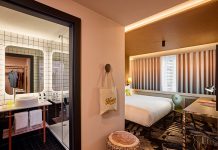
Behind the imposing, Brutalist concrete that defines Zurich’s Oerlikon district lies a surprising secret. While its exterior honours the neighbourhood’s industrial roots, stepping inside Mama Shelter reveals a vibrant, neon-soaked world that is a far cry from its rigid shell

Hyatt Regency Kuala Lumpur at KL Midtown

A polished urban retreat designed for business travellers, Hyatt Regency Kuala Lumpur at KL Midtown combines thoughtful design, seamless service, and exceptional facilities.